Brno Diocese invests CZK 2.5 billion in real estate and infrastructure to secure financial future

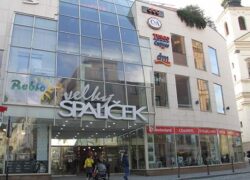
The Brno Diocese is ramping up its real estate investments, channeling nearly CZK 2.5 billion in 2023 as it prepares for a future without state funding. Facing a gradual reduction in government financial support, the diocese is turning to property development as a key strategy for long-term financial independence. Through its companies, the diocese currently manages the Velký Špalíček department store in central Brno and is constructing production and storage halls in Mikulov, located in the Břeclav region, near the D1 and D2 motorways. Church officials shared the plans with reporters today.

The diocese’s financial turnover, which includes its charitable organizations, schools, and parishes, totals CZK 2.467 billion. The financial outlook is currently in the black, with the diocese receiving CZK 93 million from the state last year for operational purposes.

By 2030, state contributions for operations will cease, and by 2043, restitution payments for property not returned to the church during post-communist settlements will end as well. To ensure financial sustainability, the diocese is focusing on self-management through investments in real estate, stocks, bonds, and business ventures—marking a shift in both strategy and mindset for clergy and parishioners alike.

“I’m not aiming to make the diocese rich, but to ensure it functions effectively,” said Bishop Pavel Konzbul. Unlike other dioceses that received significant forest lands through restitution, Brno received fewer natural resources and has instead focused on diversifying its economic activities.

One of its major real estate ventures is the acquisition of the Velký Špalíček department store, which the church purchased from a private investor. The diocesan real estate company, Urbanon, is also exploring retail projects on church-owned land in rural areas, potentially leasing these developments to retail chains.

In Brno’s city center, Urbanon is spearheading the construction of the Augustin House dormitory on Jaselská Street, although progress has been slowed by a court decision that overturned one of the four building permits. Securing work continues, but full construction is delayed. Additionally, the company is working on transforming the former Voršilek convent and connecting it to Novobranská Street and Roman Square.

“We aim to invest the compensation funds ethically, focusing on diversification in three main areas: industrial, residential, and retail projects,” explained Petr Prokš, chairman of Urbanon’s board.

Looking ahead, the church continues to expect financial support from congregants, donors, and sponsors. “The church has never solely relied on donations but has always engaged in economic activities,” noted Vicar General Pavel Kafka. The diocese also plans to continue utilizing grants from local, state, and other funding sources for the maintenance of monuments, and the operation of schools and social services.

In education, the diocese is investing in expanding school facilities. New vocational classrooms are being constructed at the Bishop’s Grammar School on Barvičov Street in Brno, with plans to increase the capacity of the associated kindergarten. The project’s estimated cost exceeds CZK 100 million.

Source: CTK
Photo: CBRE

Savills Report: Five positive trends driving Warsaw’s office market in Q3 2024

According to Savills’ latest Warsaw Office Market report for Q3 2024, the Polish capital continues to thrive, marked by stable rental prices, a growing demand for flexible office space, and increasing investments in green construction. These positive trends are positioning Warsaw as a regional leader in Central and Eastern Europe, providing a solid foundation for the sector’s future growth. Here are five key insights from the report that highlight Warsaw’s potential.

1. Revival of Pre-Letting and Strong Supply Growth

The Warsaw office market has seen a significant revival in pre-letting activity. In Q3 2024, around 38,600 sq. m. of office space was pre-leased, primarily in central Warsaw locations in projects still under construction. This uptick brought the share of pre-leases to 9% of total office take-up from the start of the year to September.

“Tenants are becoming more optimistic about the business landscape and are more confident in signing pre-leases for modern office space,” said Jarosław Pilch, Director and Head of Tenant Representation at Savills Poland. New buildings are filling the gap left by delayed projects in previous quarters. However, the limited availability of prime office space is creating competition for top-class locations.

By the end of Q3, the market saw 75,000 sq. m. of new office space, surpassing 2023’s total of 61,000 sq. m. Major projects completed this year include the third phase of Lixa (26,300 sq. m.), Saski Crescent (15,500 sq. m.), and Vibe A (15,000 sq. m.), with over 70% of new supply concentrated in central Warsaw.

2. Stable Rents in Prime Locations

Rental rates in Warsaw’s key office districts have remained stable, particularly in the Central Business District (CBD), where prime office space costs between EUR 22.50-26.00 per sq. m. per month. This stability is attracting both domestic and international companies seeking high-quality office space in prestigious locations.

Despite ongoing development and new space coming onto the market, the increasing demand for larger offices in prime areas may push rents higher over the next two years. In non-central areas, however, competition is likely to keep rents steady as tenants seek more affordable alternatives.

3. Growing Demand for Flexible Office Space

Demand for flexible office solutions, including coworking spaces, has surged in 2024, with 22,400 sq. m. leased by operators this year. This trend reflects companies’ shift to hybrid working models and the need for adaptable office space.

While flexible office operators are mainly focused on central locations, building owners in other parts of the city are creating their own coworking spaces to reduce vacancies and offer tenants quick access to additional space if needed.

4. Sustainability Takes Centre Stage for Investors

Sustainability has become a key priority in Warsaw’s office market. Increasingly, new projects are incorporating environmental certifications like BREEAM and LEED, making these buildings more attractive to tenants. Owners of older office buildings are also modernizing to meet new standards, improving energy efficiency and implementing green solutions.

“As long as owners invest in modern, energy-efficient solutions, they can remain competitive in leasing their space,” said Daniel Czarnecki, Director and Head of Landlord Representation at Savills Poland.

5. Continued Demand and Stable Vacancy Rates

Despite challenges, demand for Warsaw office space remains robust. From January to September 2024, 492,200 sq. m. of office space was leased, with high demand coming from the financial, IT, business services, and manufacturing sectors. As one of the key business hubs in Central and Eastern Europe, Warsaw continues to attract tenants with its high-quality office spaces and competitive pricing.

By the end of Q3, the vacancy rate stood at 10.7%, with central areas faring better at 8.9%. Although vacancy rates increased slightly in non-central areas, developers are reactivating previously delayed projects to meet ongoing demand.

Warsaw still the leader

Warsaw’s office market in 2024 is a picture of stability and growth potential. Strong pre-letting activity, stable rents, increased interest in flexible workspaces, and a focus on sustainability are all positive signs for the market’s future. As one of the leading office markets in Central and Eastern Europe, Warsaw continues to attract investors and tenants, positioning itself for continued success.

Brno to borrow Up to CZK 8.8 billion for major investments

The city of Brno is set to borrow up to CZK 8.8 billion to finance a series of major investments planned over the coming years. The city council approved a draft medium-term budget outlook for 2025 to 2029 on Tuesday, which includes preparations for the loan agreement with the European Investment Bank (EIB). The repayment of the loan is expected to begin after 2029.

The borrowed funds will support key infrastructure projects, including the construction of the Janáček Cultural Centre (JKC), a multi-purpose sports hall, flood control measures, and a new retention reservoir. These investments are critical for the city’s future development, according to Brno Mayor Markéta Vaňková (ODS), who spoke to reporters following the council meeting.

Brno has a history of working with the EIB, having secured a CZK 2.5 billion loan in 2005 and an additional CZK 3 billion in 2010. As of the end of 2024, the city’s outstanding debt to the EIB will stand at approximately CZK 1.9 billion. For this year, the city budget includes a short-term loan of CZK 1.1 billion, primarily allocated for the JKC and the multifunctional hall at the exhibition centre.

The new loan of up to CZK 8.8 billion is intended to cover investments between 2025 and 2027. However, Mayor Vaňková noted that the full amount may not necessarily be used, as some planned investments could be delayed. “We will use the maximum credit framework to ensure we can plan for the necessary investments,” Vaňková explained, adding that discussions are ongoing about funding other projects, such as a social and health complex at Červený vrch.

The approved budget outlook indicates that Brno’s debt could rise to CZK 10.2 billion by 2027, approaching the legal limit for municipal debt. Alongside the increase in debt, the city expects operating costs to rise with the new infrastructure, though Vaňková assured that the city is prepared for this. She also pointed to potential relief through new legislation, such as the law on public cultural institutions, which could allow for multi-source funding for cultural organizations.

In terms of revenue, the medium-term budget forecasts CZK 21.5 billion in income for 2025, rising to CZK 22.8 billion by 2029, with expenditures of CZK 24.8 billion in 2025 and CZK 22.5 billion in 2029. From 2026 onwards, the draft does not include significant revenues from the sale of municipal assets, such as apartment buildings, which have been a key source of funding for the city’s Housing Construction Fund.

However, the city has not ruled out selling land at the Technology Park. “We are still debating the future of the Technology Park. No final decision has been made, but I believe the site could be divided into two parts—one for science and research and the other for housing development,” Vaňková said.

Source: CTK

HCLTech extends lease at Kraków’s O3 Business Campus for five more years

HCLTech, a global technology leader, has renewed its lease at Kraków’s O3 Business Campus for another five years, securing over 7,000 square meters of space across four floors in the modern Class A office complex. The transaction, facilitated by real estate consultancy Colliers, reaffirms the attractiveness of O3 Business Campus as a prime business location.

Managed by EPP, O3 Business Campus continues to draw major tenants with its wide range of amenities and sustainable features. The complex is certified BREEAM In-Use at the Excellent level and meets WELL Health-Safety Rating standards, with 100% of its energy sourced from renewables. HCLTech’s decision to stay underscores the campus’s ability to meet the evolving needs of companies focused on digital transformation and IT solutions.

“The renewal of HCLTech’s lease for another five years highlights our commitment to understanding and addressing the needs of our business partners. Sustainability is a priority we share with HCLTech, and our campus is designed to support these values,” said Maciej Sałata, Senior Leasing Manager at EPP. “We also prioritize fostering a dynamic work environment, organizing events that bring people back to the office and create a vibrant community.”

HCLTech, known for providing advanced IT solutions and digital services worldwide, has been a tenant at O3 Business Campus for the past seven years. The company values the complex not only for its office space but for its active community involvement.

“O3 Business Campus is more than just an office for us. Together with the management, we actively support local communities and organize events promoting health and active leisure. These initiatives enhance our work culture and engagement,” added Aneta Dziedzic, PMO & CSR Lead & DEI Champion at HCLTech. “We also contribute outside the office, participating in blood drives and other charitable activities. We’re proud to be part of this living structure.”

The O3 Business Campus, located in the northern part of Kraków at the junction of Opolska Street and 29 Listopada Avenue, is a prominent business hub offering nearly 57,000 square meters of leasable space across three 12-storey buildings. With its high-quality facilities, green spaces, and recreational areas, the complex continues to be a top choice for companies in the region.

“Kraków remains Poland’s largest regional office market, and renegotiations like HCLTech’s accounted for 50% of the demand for office space in the first half of this year,” said Anna Galicka-Bieda, Partner and Regional Director at Colliers in Kraków. “We’re pleased that O3 Business Campus continues to meet HCLTech’s current and future needs after seven successful years.”

As Kraków’s office market remains competitive and robust, O3 Business Campus continues to attract companies looking for top-tier, sustainable office environments that support both business growth and community engagement.

Endava Romania renews lease at UBC Cluj-Napoca in major office market deal

British software services company Endava has renewed its lease for another five years at the United Business Center (UBC) building, part of the Iulius Mall Cluj development. The transaction, brokered by real estate consultancy firm Colliers, involves 4,300 square meters of office space, enabling Endava to strengthen its presence in Cluj-Napoca and continue expanding its local team.

This lease renewal is one of the most significant office deals of the year, reflecting a broader trend in the market where many companies are opting for contract renewals amid uncertainties surrounding hybrid working. Endava, a key player in Romania’s IT sector, has been a tenant in the UBC building since 2013, forming a long-term partnership with developer IULIUS, a major real estate operator in Romania.

IULIUS is known for its large-scale, mixed-use urban regeneration projects across Romania, including Iulius Town Timișoara and Palas Iași, as well as its national network of Iulius Mall centers. The company’s portfolio also includes 15 Class A office buildings, and sustainability is a core focus, with its projects LEED® or EDGE certified.

“Endava sought a location that met its needs in terms of quality, location, and services,” said George Didoiu, Director of Tenant Services at Colliers. “After an in-depth market analysis, Endava decided to remain at UBC, cementing its partnership with IULIUS. Cluj-Napoca’s economic growth, which has been remarkable both nationally and across the European Union, adds to its appeal as a business hub.”

Endava’s decision to renew highlights the demand for high-quality office spaces in Cluj, Romania’s second-largest business center after Bucharest. Cluj has become a base for leading IT companies and is increasingly attracting real estate investors. The deal also reinforces IULIUS’s reputation for offering office spaces that integrate seamlessly with retail and recreational areas.

Silviu Băbțan, Office Buildings Manager at UBC Cluj, emphasized the importance of the continued partnership with Endava: “We are proud that Endava has chosen our offices in all cities where we operate UBC centers—Iași, Cluj-Napoca, and Timișoara. Our ongoing collaboration for another five years confirms the quality and uniqueness of our offices. The integration of workspaces with diverse services, from dining and social facilities to parks and medical services, ensures a high level of satisfaction for employees.”

The renewal reflects broader trends in Romania’s office market. Roughly half of the leases signed in the first half of 2024 were renewals, compared to a pre-pandemic average of 28%. Although hybrid working has led some companies to reduce office space, the feared “office apocalypse” has not materialized.

“Cluj-Napoca’s office market remains stable and mature, with vacancy rates below 3% in premium locations,” added Didoiu. “The city continues to meet the high standards demanded by tenants, maintaining stability in its real estate sector and ensuring that large tenants retain their spaces.”

Endava’s lease renewal signals confidence in both the company’s long-term growth and the strength of Cluj-Napoca’s office market.

Photo: George Didoiu, Director of Tenant Services at Colliers

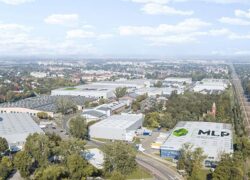
Parker Lane Poland joins tenants at MLP Pruszków I logistics center

Parker Lane Poland, an international leader in comprehensive resale solutions for the fashion and off-price industries, has leased approximately 3,600 square meters of space at the MLP Pruszków I logistics center. The company is set to move into the facility within the next few weeks, with the transaction facilitated by Triflow agency.

Parker Lane Poland will utilize over 3,200 square meters for warehousing and an additional 344 square meters for office and social areas. The warehouse space is expected to be fully operational by mid-November, while the office areas will be ready by March 2025. This marks a significant milestone for Parker Lane, as the company expands its operations within Poland’s booming logistics market.

Parker Lane specializes in managing the resale of excess production, consumer returns, and online returns within the fashion industry. The company offers a seamless and transparent supply chain for well-known brands, with both direct-to-consumer (D2C) and business-to-business (B2B) strategies designed to maximize resale value.

Tomasz Pietrzak, Leasing Director at MLP Group S.A., commented: “MLP Pruszków I is one of our flagship projects, and despite being completed many years ago, it remains a highly sought-after location. The facility is regularly modernized and meets the highest standards we offer in Poland and abroad. It’s rare to have available space, as the center is almost always fully leased.”

Miłosz Borkowski, Business Development Director at Triflow, added: “We are thrilled to have helped Parker Lane find the ideal warehouse space. The facility not only meets all their technical requirements but also offers excellent accessibility for employees, optimizing business processes and supporting the company’s growth.”

MLP Pruszków I, located just 19 kilometers from Warsaw, is one of the most popular logistics centers in Poland. Spanning nearly 170,000 square meters, the center is home to almost 40 tenants from various industries. Over the past 20 years, the site has developed into a fully functioning logistics hub, featuring its own internal infrastructure, including electric vehicle charging stations powered by photovoltaic energy, and a city bike rental station.

MLP Group’s “build & hold” strategy ensures that all completed logistics parks, including MLP Pruszków I, remain in its portfolio for long-term management. The group’s logistics parks are known for their strategic locations, tailored build-to-suit solutions, and dedicated tenant support throughout the lease term.

Parker Lane’s move into MLP Pruszków I reflects the continued growth of the logistics and warehousing sector in Poland, driven by the expansion of e-commerce and the increasing need for flexible, high-quality storage solutions.

International Workplace Group expands hybrid workspace in Budapest with new Regus office

International Workplace Group (IWG), has announced the opening of a new Regus office in Budapest. As the demand for hybrid working continues to grow in Hungary, IWG’s latest addition, Regus Madarász, is set to provide a range of top-tier facilities, including co-working spaces, private offices, meeting rooms, and creative areas, catering to both start-ups and established businesses.

The new workspace is located in the 13th district, just outside the bustling central business area, expanding Budapest’s Váci út office corridor. This strategic location is part of IWG’s response to the rising demand for flexible work environments, as businesses increasingly embrace hybrid working models. This opening follows a successful partnership with Proform Ingatlanbefektetési Zrt., marking the third collaboration between IWG and the property investment group.

Mark Dixon, CEO and Founder of International Workplace Group, highlighted the significance of the new location: “Budapest is a key business hub, and we’re thrilled to expand our presence here. As hybrid working becomes the new normal, the need for high-quality flexible workspaces has never been greater. This partnership with Proform Ingatlanbefektetési Zrt. allows us to further develop the Regus brand and offer cutting-edge workspaces to meet growing demand.”

The launch of Regus Madarász comes on the heels of IWG’s record-breaking first half of 2024, during which the company signed 465 new locations globally and posted its highest-ever revenue, cash flow, and earnings growth. IWG’s flexible workspace solutions have surged in popularity as businesses seek to reduce traditional office space and adopt hybrid models that offer cost savings and increased flexibility.

The new Regus office features IWG’s “Design Your Own Office” service, allowing tenants to customize their workspaces to suit specific needs. In addition to offering flexible leases, tenants will benefit from IWG’s technology platform, which integrates sales, marketing, and design support to maximize real estate returns.

As Béla Szamosváry, a representative of Proform Ingatlanbefektetési Zrt., expressed: “We are delighted to partner with IWG to bring a premium hybrid working facility to the 13th district. The demand for top-quality workspaces in this thriving area has grown significantly, and this partnership ensures we can meet those needs effectively.”

IWG is the global leader in flexible workspaces, with over 4,000 locations in more than 120 countries. As businesses worldwide transition to hybrid work, IWG’s rapid expansion is set to continue, with projections suggesting that 30% of commercial real estate will be dedicated to flexible workspaces by 2030. The shift away from traditional office models has positioned IWG to capitalize on a market with an estimated value of more than $2 trillion.

Globalworth launches new flexible office space brand in Poland

Globalworth is introducing a new flexible office space offering in Poland. Set to debut in the second half of October, this new business line will provide fully furnished, work-ready offices with flexible leasing terms, aimed at meeting the growing demand for adaptable office solutions.

The new brand is designed to cater to the evolving needs of companies, offering lockable offices for start-ups, small and medium-sized businesses, coworking zones, and corporate spaces. This marks a significant shift in Globalworth’s service portfolio, as it responds to the increasing preference for scalable office environments that suit businesses of various sizes and industries.

“The demand for flexible workspaces has been a clear and growing trend in recent years. With our new brand, we aim to meet this demand by offering modern office solutions that will not only serve as incubators for growing companies but also as swing spaces for clients awaiting the completion of their own offices in our buildings,” said Artur Apostol, Managing Director – Real Estate Operations Poland at Globalworth.

The flex office offering is particularly suited for businesses facing fluctuating staffing levels, providing a practical alternative to traditional long-term leases.

Globalworth’s new brand will allow tenants to access high-tech, fully furnished office spaces equipped with additional services, such as reception facilities and meeting rooms, without the burden of long-term commitments. This solution is ideal for companies operating in fast-changing markets or seeking temporary office space.

By launching this new business line, Globalworth aims to enhance its comprehensive office portfolio, catering to the needs of both large corporations and smaller businesses, including freelancers, looking for prestigious and flexible workspaces in Poland’s prime locations.

Romania’s industrial and logistics stock to hit 8 million Sqm by 2025

Romania’s industrial and logistics space is on track to reach 8 million square meters by the end of 2025, provided the current annual development pace of 500,000 sq. m continues. As of mid-2024, more than 7.125 million sq. m were operational across the country, with over half of that stock concentrated in the Bucharest-Ilfov and West regions, according to a new report from real estate consultancy firm Cushman & Wakefield Echinox.

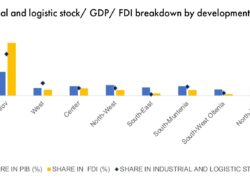
Despite the growing demand for logistics and industrial spaces across various regions, the Bucharest-Ilfov region remains dominant, accounting for 49.2% of the total stock, followed by the West region at 14.7%. Other significant hubs include South-Muntenia (10.6%), Center (9%), and North-West (8.9%). Meanwhile, the North-East (3.3%) and South-East (1.7%) regions remain the least developed, with stock levels in these areas comparable to that of Chitila, a small town near Bucharest.

The report forecasts that Romania’s 2024 new supply will reach around 500,000 sq. m, with over half of these new developments located in Bucharest-Ilfov, the West, and South-Muntenia regions.

“The gap between Romania’s eight development regions, in terms of GDP share and foreign direct investment, is reflected in the uneven distribution of industrial and logistics spaces,” said Vlad Saftoiu, Head of Research at Cushman & Wakefield Echinox. “This sector has greatly contributed to the success of areas with strong business growth and foreign investments. However, without addressing these regional economic disparities, it will be challenging to see significant surges in new supply.”

Transactional activity remained strong, with companies leasing about 1.5 million sq. m of industrial and logistics space between 2023 and the first half of 2024. During the same period, over 520,000 sq. m of new space was constructed, driving the national vacancy rate down to below 5%, creating development opportunities in regions with less industrial infrastructure.

Bucharest-Ilfov led the leasing activity with 48% of the total volume over the last 18 months, followed by the West region with 20%, and the Center region with 10%.

The largest owners of industrial and logistics spaces in Romania are CTP and WDP, who together control nearly two-thirds of the market, with a combined portfolio of almost 5 million sq. m. However, other developers, including VGP, ELI Parks, Logicor, and Oresa Industra, are increasingly expanding their presence. Additionally, a number of new players have announced plans to enter the Romanian market, with these investments expected to materialize by late 2024 or early 2025.

The industrial and logistics sector continues to be a cornerstone of Romania’s economic infrastructure, with its growth closely tied to the performance of the country’s strongest regions and the influx of foreign investment.

CIJ Awards Czech Republic to spotlight residential excellence with dedicated jury for 2024

This year’s CIJ Awards Czech Republic will introduce a significant change, as the residential categories will be separated from the development categories, receiving their own dedicated jury committee. The residential awards will undergo a thorough evaluation process, including two comprehensive meetings, before a final independent vote by respected professionals from the residential sector.

Now celebrating its 24th year, the CIJ Awards Czech Republic, organized by CIJ EUROPE, has established itself as a benchmark for excellence in the real estate industry across Central and Eastern Europe. Known for recognizing exceptional quality, innovation, and leadership, the awards are highly regarded within the sector.

“We are excited to host the CIJ Awards Czech Republic 2024, an event that continues to highlight the incredible talent and innovation within the Czech real estate market,” said Robert Fletcher, CEO/Editor-in-Chief of CIJ EUROPE. “These awards celebrate the dedication and vision of the companies and individuals shaping the future of the industry, and we look forward to recognizing their outstanding contributions.”

The CIJ Awards Czech Republic 2024 Gala will be held on November 27th at the Prague Marriott Hotel, located in the heart of Prague, Czech Republic.

This year’s winners will be selected through a four-stage jury process. Three separate committees, representing services, development (office, retail, and warehousing), and residential, will evaluate the entries, with a final online vote conducted by CIJ readers to conclude the process.

Winners from each category will advance as nominees for the prestigious Best of the Best CIJ Hall of Fame (HOF) Awards, which will take place in Bucharest in May 2025 during the CEDER Conference & Exhibition. The Hall of Fame Awards marks the culmination of the CIJ Awards series, where the top projects and companies from across Central and Eastern Europe compete to determine who truly stands out as the “Best of the Best.”

front page info
LATEST NEWS