Ministry of Health projects CZK 11 bil. deficit in health insurance for 2024, aims recover in 2025

The Ministry of Health has announced that public health insurance is projected to run a deficit of CZK 11 billion this year, with total expenditures expected to reach CZK 502.6 billion. The Ministry plans to recover the shortfall in 2025, anticipating revenues of CZK 529.7 billion. However, only CZK 5 billion will be available for increases in healthcare reimbursements, according to Tomas Troch, Director of the Price Regulation and Reimbursement Department at the Ministry.

The proposed reimbursement decree for 2025, which outlines how healthcare funds will be distributed, has drawn criticism from some sectors of the healthcare industry. General practitioners (GPs) and outpatient specialists have expressed their dissatisfaction, threatening to close their clinics in protest by the end of October. Small hospitals are also considering a petition to the Constitutional Court. “We will continue negotiations with GPs and outpatient specialists in the coming days,” Troch said, emphasizing that the decree serves as a baseline and additional funds may be set aside by insurance companies.

The Ministry’s proposal to increase reimbursements by 3.3% year-on-year is backed by an April government resolution, which instructed the Ministry to ensure the public health insurance system remains balanced in 2025.

Troch explained that CZK 3 billion of this year’s deficit is attributed to an agreement with hospital doctors that led to salary increases, adding, “This is a mandated cost we must account for in 2025, not just for VZP, but for all health insurers.”

Next year, the state’s contribution for state-insured individuals is set to rise by just 2.7%. This increase is based on inflation and real wage growth over the past two years. As a result, total year-on-year revenues are expected to grow by CZK 27.4 billion. However, only CZK 5 billion will be allocated for growth in healthcare payments, representing an average increase of just 1.1%—the smallest in recent years.

The final version of the decree is scheduled to be published by the Ministry of Health at the end of October. The current proposal outlines the largest increase of 11.5% for center-based drugs, which include modern treatments for serious diseases that can only be prescribed by select medical centers. Aftercare services are set to increase by 11%, followed by prescription drugs (5.8%) and medical devices (5.5%). Among healthcare areas, physical therapy (5.4%) and outpatient specialists (4.6%) are seeing the most growth. General practitioners, many of whom are protesting the proposal, will see a more modest reimbursement increase of 2.8%.

Source: CTK
Moravian-Silesian region to demolish 72 buildings after devastating floods

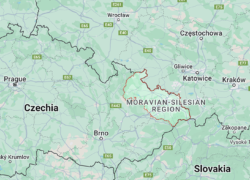
Following the catastrophic floods that struck Moravia and Silesia in mid-September, authorities in the Moravian-Silesian Region have decided to demolish 72 buildings, including 37 family homes. Radim Kuchař, director of the Moravian-Silesian firefighters, announced the decision today, stating that the majority of the buildings set for demolition are located in the upper reaches of the Opava River in the Bruntál district. Hard-hit areas include the towns of Zátor, Široká Niva—where even the local cinema was destroyed—Brantice, Holčovice, Karlovice, and parts of Vrbno pod Pradědem.

In addition, six buildings in Nová Ves, Ostrava, will also be demolished. According to Kuchař, two dozen demolitions were carried out directly by firefighters, especially in cases where structures posed a threat to nearby buildings. The remaining demolitions were handled by private companies or homeowners themselves.

Larger towns were not spared from the destruction either. In Krnov, three buildings have been or will soon be torn down, including one owned by the town hall. “The city of Krnov has recorded its first municipally-owned building that was so severely damaged by the floods that demolition was necessary. The property on Minorite Square, formerly a pet shop, will be demolished. We are working to find alternative premises for the tenant,” said city spokeswoman Dita Círová.

Josef Bělica, Deputy Governor of the Moravian-Silesian Region, reported that nearly 400 soldiers with 98 pieces of equipment are still active in the region. In Holčovice, 121 properties remain without gas, including a senior home currently relying on gas supplied by tanker trucks. Gas services are expected to be restored to most of the affected homes by the end of October.

Electricity remains cut off in 31 houses in the region. Bělica noted that the electricity grid’s capacity is sufficient to allow residents to use electric heating if necessary. He also mentioned that energy provider CEZ has already replaced 3,000 water-damaged electricity meters, with more replacements underway.

Flood Damage Estimated at CZK 2.9 Billion

Meanwhile, state-owned enterprise Povodí Moravy (Morava River Basin) has estimated property damage caused by the September floods at CZK 2.9 billion. This figure is still being refined as assessments continue. The Šumperk region was hit hardest, with damage estimates reaching CZK 2 billion. Key rivers affected include the Branná, Krupá, Desná, Morava, Merta, and Mírovka, according to Jana Kučerová, head of external relations at Povodí Moravy.

“The floodwaters severely damaged the banks and infrastructure of these rivers, including retaining walls, flood protection dams, and various structures within the river channels such as steps and weirs,” Kučerová said. “In many places, significant deposits of debris need to be cleared, and bank collapses must be repaired.”

Reconstruction efforts to repair the damage are expected to take significant time and resources, with the total cost of repairs still to be confirmed.

Source: CTK
Image: Google maps

Industry leaders weigh in on ECB’s interest rate decision

The European Central Bank’s (ECB) anticipated interest rate decision has drawn reactions from key players in the real estate and finance sectors. As the ECB opted for a widely expected 25 basis point cut, industry leaders weighed in on the potential implications for the economy and real estate market.

Peter Axmann, Head of Real Estate Clients, Hamburg Commercial Bank, highlighted that the decision had already been factored into current interest rate levels for long-term maturities. “Given the decline in inflation to below the critical two percent mark, today’s move was no surprise,” he stated. “With an inverted yield curve in play, we do not anticipate any drastic reduction in long-term rates, although a slight decline of up to 0.25 percentage points by year-end remains possible.”

Prof. Dr. Felix Schindler, Head of Research & Strategy at HIH Invest, echoed similar sentiments, noting that the ECB’s rate cut reflects the slowing inflationary pressures and a weak economic environment. “The focus will likely remain on core inflation, which remains high,” Schindler said. “The cut aids in normalising the yield curve and reduces variable financing costs, which should help provide a boost to the real estate markets. Long-term capital market yields have already dropped significantly, offering additional support for real estate investments.”

Francesco Fedele, CEO of BF.direkt AG, expressed cautious optimism about the decision, stressing that while the ECB has often been criticized for delayed reactions, it’s better to be late than early when combating inflation. “A premature rate cut could undermine market confidence in the ECB’s commitment to controlling inflation, potentially driving long-term interest rates upward,” Fedele warned. “For the real estate sector, particularly concerning ten-year financing, market confidence in the ECB’s inflation strategy is crucial.”

Sascha Nöske, Chairman of the Board at STRATEGIS AG, pointed out that the real estate transaction market has been facing challenges due to a disconnect between supply and demand prices. “Interest rates play a vital role in bridging this gap,” Nöske remarked. “The ECB’s latest rate cut is a key step towards revitalizing the residential property market, particularly benefiting private homebuyers.”

As the ECB moves to manage inflation while promoting economic growth, the real estate sector will likely be closely watching how these rate changes play out in the coming months.

New Polish planning act brings major changes to spatial planning and the real estate market

The real estate market in Poland is set for significant shifts following the enactment of the new Planning Act on 24 September 2023. This legislation, aimed at streamlining and standardising spatial planning processes, will have a direct impact on developers, investors, and local governments, particularly affecting industrial project investments. The new law seeks to enhance transparency, shorten procedures, and align spatial plans with real development needs, while also introducing fresh challenges and restrictions. Jacek Szkuta, Director of the Land Department at AXI IMMO, sheds light on what the market can expect as these changes take full effect by 2026.

Current Issues in Spatial Planning

The existing spatial planning system is primarily governed by three documents: provincial spatial development plans, municipal development studies, and local spatial plans. However, the lack of legal standing for development studies allowed for land development condition (LDC) decisions that often contradicted long-term strategies, leading to urban chaos. As a result, municipalities have struggled with disorganised development, particularly in cases where non-industrial areas were used for industrial projects.

New Rules: General Plans

Under the new law, general plans will replace the current condition studies, bringing more precision and accessibility to planning processes. Municipalities that currently lack comprehensive local master plans must adopt them by 1 January 2026. These plans will dictate local development and zoning decisions, limiting the flexibility seen in previous years. Existing local development plans will remain in force until they expire.

“Local general plans will define planning zones with clear parameters such as development intensity, building height, and biologically active areas,” explains Jacek Szkuta. “This will reduce the possibility of arbitrary interpretations by officials and impose a five-year validity period on LDCs, curbing land speculation and pushing for quicker project execution.”

Development Addition Zones: A New Approach

A key feature of the new law is the introduction of development addition zones, designed to encourage infill development in existing built-up areas. Each municipality will be required to establish such zones based on urban studies, allowing for a variety of functions, from residential to industrial uses. For the industrial sector, this marks a significant change, as LDCs outside these designated zones will be restricted.

Exceptions to this rule will allow for some flexibility in reconstructing or expanding existing buildings. Moreover, LDCs issued before the law comes into force will not be subject to the new five-year expiration rule.

Integrated Investment Plan: A New Tool for Investors

While the new regulations introduce stricter zoning rules, they also offer tools to facilitate investment projects. The integrated investment plan (IIP) allows investors to negotiate project conditions with municipalities, provided the projects align with general plans. This new mechanism replaces the previous “Lex Developer” law and applies to all types of investments, not just residential.

“The integrated investment plan enables faster project implementation through cooperation with municipalities, with investors covering infrastructure costs,” says Szkuta. “This law encourages better space management and long-term strategic planning, but also requires flexibility from investors and effective management from municipalities.”

Impact on the Industrial Investment Market

The new regulations offer both opportunities and challenges for the industrial real estate sector. On the one hand, greater transparency and predictability will benefit investors, providing clearer guidelines and potentially reducing wait times for planning permissions. On the other hand, limiting land development outside designated zones could shrink the pool of available land, driving up competition and prices in key locations.

For those opting to use the IIP, there is an opportunity to develop more complex projects in areas not traditionally earmarked for industrial use, provided they can meet infrastructure requirements.

“The 2023 Planning Act introduces reforms that will improve investment predictability and streamline spatial planning,” concludes Szkuta. “While the changes present opportunities for increased transparency and administrative efficiency, they will also challenge the market by limiting available land for new projects, particularly in the industrial sector.”

Source: AXI IMMO

Czechs increase investments in funds as NEMO fund reaches 11,000 investors

Investments in funds across the Czech Republic are seeing substantial growth. Data from the Capital Market Association (AKAT) indicates that the volume of assets in collective investment funds surged by CZK 46 billion in the second quarter of 2024. As of 30 June, Czech investments in these funds totaled CZK 1.064 trillion, with individual investors holding 89% of the volume. Real estate funds, in particular, have shown a strong upward trend, with assets increasing by CZK 2.6 billion in the same period. Among the standout performers is the NEMO real estate fund, founded by the investment group Českomoravská Nemovitostní, which focuses on office properties in Prague. Over the past 12 months, NEMO achieved a 6.38% return as of 30 September 2024.

The rising interest in fund investments, especially in real estate, is clearly reflected in NEMO’s success. “The growing confidence in NEMO is demonstrated by the increasing number of investors. The fund recently surpassed 11,000 investors, a significant milestone for us,” said Josef Eim, Vice-Chairman of the Board at Českomoravská Nemovitostní. NEMO aims to continue offering attractive investment opportunities for clients seeking reliable and profitable ways to grow their funds. “The popularity of dependable investment funds has steadily increased in recent years, as shown by the data from the Capital Market Association,” added Eim.

AKAT Chairman Jaromír Sladkovský also commented on the broader trends in the investment landscape. “In the second quarter of this year, the strong asset growth trend that began in 2023 persisted. We expect further interest rate cuts across key markets to sustain this growth. The recent sharp declines followed by a rapid recovery demonstrate investors’ confidence in the economy’s stability and growth potential,” said Sladkovský. The markets are currently factoring in a potential 100 basis point rate cut from the Czech National Bank over the next two years, which could further boost economic activity in the real estate sector.

The NEMO fund, which celebrated its five-year anniversary in June 2024, has become a prominent player in the Czech real estate investment market. Over this period, the fund has accumulated a significant portfolio, including properties such as the Apeiron office building, Corso Karlín, and the Aragonit office building. The value of assets under NEMO’s management now exceeds CZK 2.6 billion, and the fund plans to expand its portfolio of Prague office properties by the end of 2024.

Poland’s retail parks see record high growth in new projects

The retail park market in Poland is experiencing unprecedented growth, with new projects reaching record highs, according to a recent report titled Retail Parks and Convenience Developments, prepared by Avison Young in collaboration with the Polish Council of Shopping Centres (PRCH). Contributions from legal and financial experts at Squire Patton Boggs and the Polish Sustainable Development Forum (POLSIF) also highlight the expansion.

Retail parks in Poland trace their origins back to the political changes of the 1990s, with the first developments appearing at the end of that decade. These early retail parks were strategically located on the outskirts of major cities, forming the foundations of Poland’s modern retail landscape. By 2019, the sector had grown to encompass 1.5 million square meters of gross leasable area (GLA) in parks over 5,000 sq m.

The COVID-19 pandemic marked a turning point for retail parks, as their design—featuring units with direct parking access and no shared common spaces—allowed them to remain operational under strict health measures. This shift in consumer preferences and investor perceptions catalyzed rapid sector growth, with supply increasing by 1.1 million sq m between 2020 and 2023, and an additional 180,000 sq m completed in the first half of 2024. Another 300,000 sq m is expected by the end of 2024, with a record 500,000 sq m projected for completion in 2025.

Since 2020, the development of retail parks has accelerated, with over 70% of new projects falling between 5,000 and 10,000 sq m. Investors have primarily focused on smaller towns with populations under 50,000, where modern retail offerings remain scarce. Out of more than 100 new parks, 68 have been developed in these smaller municipalities. Larger parks, ranging from 10,000 to 20,000 sq m, accounted for 32% of new supply, while 15% of the space was contributed by eight projects ranging from 20,000 to 40,000 sq m.

Currently, there are 260 large retail parks in Poland, collectively offering 2.9 million sq m of GLA. This format now represents 18% of modern retail space in Poland, up from 9% in 2010. Over 80% of ongoing construction in the retail sector is dedicated to retail parks, underscoring their growing importance.

In 2024, larger retail parks are gaining momentum, with 35 parks above 5,000 sq m under development, 13 of which exceed 10,000 sq m. The largest project under construction is PH Osada in Żyrardów, covering 33,000 sq m. These larger parks now account for 57% of the retail space under construction, reflecting a trend toward building larger, more comprehensive retail destinations.

Retail parks have emerged as an appealing alternative to traditional shopping centres, offering tenants lower operating costs and access to previously untapped markets. The sector has attracted a wide range of tenants, from budget fashion brands to service providers like gyms, playgrounds, and childcare facilities, further diversifying the tenant mix.

Smaller retail parks and convenience centres, ranging from 2,000 to 5,000 sq m, are also expanding rapidly. With 1.1 million sq m of GLA in Poland, these formats are becoming increasingly popular, particularly in towns with populations between 10,000 and 50,000. The convenience model is gaining traction in larger cities as well, aligning with the “15-minute city” concept, which prioritizes access to basic services within a short distance.

Investor interest in retail parks and convenience centres remains high, with many viewing them as stable, long-term investments with attractive WAULT (Weighted Average Unexpired Lease Term) periods. The dynamic growth in both large and small retail parks reflects their strong performance and increasing role in Poland’s modern retail landscape.

Photo: Paulina Brzeszkiewicz-Kuczyńska, Research and Data Manager at Avison Young

Study finds Czechs renting smaller apartments for the same price as in 2019

The ongoing economic challenges in the Czech Republic are having a noticeable impact on the rental housing market. According to a survey by Generali Investments, tenants today are renting significantly smaller apartments compared to 2019, despite paying the same amount. On average, Czechs now rent apartments that are 16 square meters smaller for the same price.

This shift in rental affordability comes as rising energy costs, inflation, and high interest rates put increasing pressure on household budgets. While there have been signs of economic stabilization, over a quarter of Czechs continue to cut back on their housing expenses, the survey revealed.

Czechs Cutting Back on Housing

The survey, conducted by Generali Investments CEE in September, highlights that 25% of Czechs are reducing their housing demands due to the ongoing economic strain. Factors such as energy prices, inflation, and interest rates remain elevated compared to pre-pandemic levels.

“Although the economic situation in the Czech Republic has improved slightly compared to previous years, we are still far from pre-COVID levels. However, it is worth noting that fewer people are reducing their housing demands this year compared to last,” said Marek Bečička, Director of Real Assets at Generali Investments CEE.

Rental Market Downsize: 2019 vs. 2024

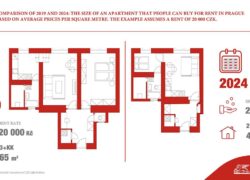
The deterioration in the rental market is clear. In 2019, tenants in Prague could rent a 65-square-meter apartment for CZK 20,000. Today, for the same amount, renters can only secure a 49-square-meter apartment. This represents a 16-square-meter reduction in living space, according to data from the Czech Statistical Office and Deloitte.

The survey’s findings reflect a broader trend of shrinking apartment sizes as the economic squeeze continues to impact Czech consumers, especially in major cities like Prague. While the situation has shown some signs of improvement, many households remain under pressure, forced to make sacrifices in their living arrangements to cope with rising costs.

Gide Loyrette Nouel and Norton Rose Fulbright extend leases at Metropolitan Warsaw

Two prominent international law firms, Gide Loyrette Nouel and Norton Rose Fulbright, have extended their leases at Metropolitan Warsaw, securing over 3,000 sqm of premium office space in one of the capital’s most prestigious locations. The firms will continue to operate from the iconic building situated on Piłsudski Square for several more years, reinforcing their long-standing presence in Warsaw’s legal and business landscape.

Metropolitan Warsaw, renowned for attracting top-tier brands and industry leaders, will remain the headquarters for both law firms. Joanna Kowalska-Szymczak, founder and CEO of EBRU Capital, which manages the building, expressed her pride in the continued partnership. “We are honored to extend our cooperation with Gide Loyrette Nouel and Norton Rose Fulbright. Their reputation for excellence aligns perfectly with the standards of Metropolitan Warsaw. We are delighted to provide both firms with private, comfortable spaces on the top floors, complete with dedicated terraces that enhance client meetings and employee comfort,” she said.

Gide Loyrette Nouel, a tenant of Metropolitan Warsaw since 2006, has signed a new seven-year lease, continuing to occupy the 6th floor of Building 1. With views over Piłsudski Square, the Raffles Europejski Hotel, and the Presidential Palace, this prime office location has become synonymous with the firm’s Warsaw operations. Colliers International advised on the lease negotiations.

“The 6th-floor office at Metropolitan Warsaw has become a hallmark of our firm. It blends history with modernity, offering proximity to both the business and historical districts of the city. We look forward to continuing our work here, creating a space for collaboration, inspiration, and client meetings,” commented Dariusz Tokarczuk, Partner at Gide Loyrette Nouel.

Similarly, Norton Rose Fulbright has also renewed its lease for another seven years. The firm’s office, located on the top floor of Building 2, offers stunning views of Saski Garden, the National Theatre, and Warsaw’s skyline. JLL advised Norton Rose Fulbright during the lease renewal process.

“We are thrilled to maintain our presence in this prestigious location, which continues to impress our clients and staff alike. Since 2006, this office has provided the perfect environment for our team, combining an outstanding location with excellent amenities. We are eager to continue working from this exceptional space,” said Grzegorz Dyczkowski, Managing Partner of Norton Rose Fulbright.

Metropolitan Warsaw offers 33,600 sqm of top-quality office space, along with 3,300 sqm of luxury retail and service areas. The development includes exclusive boutiques, a fitness club, cafes, and 441 underground parking spaces. The building is also equipped with electric vehicle charging stations and cyclist-friendly infrastructure. Recognized for its sustainable and safety-focused design, Metropolitan Warsaw holds prestigious certifications, including a BREEAM Excellent rating, WELL Health-Safety Rating, and a WiredScore Platinum certification for digital connectivity.

With these recent lease extensions, Metropolitan Warsaw continues to solidify its reputation as one of the most sought-after office spaces in the city, providing a premium environment for leading international firms.

Construction of Designer Outlet Kraków reaches key milestone

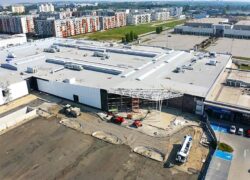
Kraków’s highly anticipated Designer Outlet has reached a crucial phase of its development, marking significant progress in the construction of the Małopolska region’s future shopping destination. With earthworks completed, paving of the above-ground car park is now underway, and the underground garage, a central part of the project, has been finished. Installation work is currently ongoing within the garage.

Shoppers will have access to both the underground garage and an above-ground parking area designed to serve the outlet and two retail parks located nearby. This dual parking solution will offer convenience and easy access for visitors, whether they are stopping by the outlet or exploring the broader retail complex.

Interior work on the project has also advanced, with electrical and plumbing systems being installed, while finishing touches are being applied. In the next coming weeks the commercial spaces will be handed over to tenants to begin interior arrangements.

The project aims to create a modern shopping experience, poised to attract both Kraków residents and tourists alike. “We are pleased with the progress and are confident that everything will be completed on time. Designer Outlet Kraków will not only be the city’s main outlet center but also a space for meeting and relaxation. The development is on track, and we eagerly anticipate the opening, which will enhance the region’s retail offering,” said Krzysztof Gaczorek, CEO of KG Group, the developer behind the project.

According to the developer, construction remains on schedule with no expected delays. The facility is set to open in spring 2025, promising to become a major addition to Kraków’s shopping scene.

Piotr Tarkowski appointed President of Dekpol Deweloper, succeeding Sebastian Barandziek

Piotr Tarkowski has been named the new president of Dekpol Deweloper, a key division of the Dekpol Group, replacing outgoing president Sebastian Barandziek, the company announced.

Dekpol SA President Mariusz Tuchlin expressed gratitude to Barandziek for his pivotal role in navigating the company through challenging times, including the COVID-19 pandemic and the war in Ukraine. “Sebastian’s knowledge and dedication were instrumental in securing Dekpol Deweloper’s current market position and its significant contribution to the Group’s overall performance,” said Tuchlin. He added that Tarkowski’s leadership, alongside the committed team, would ensure continued success in maintaining Dekpol’s standing as a leading developer in Poland. The company remains focused on delivering innovative, high-quality solutions to customers while ensuring stable growth for shareholders.

Tarkowski, an economist with 17 years of experience in the residential real estate sector, particularly in the premium and investment segments, brings a wealth of expertise to the role. He has held various directorial positions in real estate, manufacturing, and services, successfully building and managing organizations throughout his career.

Dekpol operates in three main segments: general contracting services, manufacturing of scales and accessories for construction machinery, and real estate development. Listed on the Warsaw Stock Exchange since 2015, the company recorded consolidated revenues of PLN 1.57 billion in 2023.

Source: Dekpol and ISBnews

front page info
LATEST NEWS