EC Będzin acquires property from EC Będzin Wytwarzanie for PLN 10.22 million

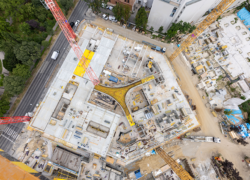
EC Będzin has announced the acquisition of property from EC Będzin Wytwarzanie for PLN 10.22 million. The deal involves the perpetual usufruct rights to plots covering a total area of 27,531 hectares, along with the buildings and infrastructure located on the land in Będzin.

“This transaction highlights our commitment to the company’s stable development. By investing in strategic assets like this property, which could serve as a site for future production sources, we are reinforcing EC Będzin’s position and supporting the energy transition toward full decarbonization,” said Marcin Chodkowski, President of EC Będzin, in a statement.

The completion of the transaction was made possible by EC Będzin Wytwarzanie’s successful negotiations, including obtaining consent from the Będzin starost to separate the purchased plots from a larger estate and establish individual land and mortgage registers for them. This enabled the finalization of the contract, as outlined in the company’s release.

The acquisition was fully financed by EC Będzin’s own funds, and the property is intended for the development of new production facilities. The purchase aligns with the company’s strategic goals of decarbonization and improving energy efficiency. This investment marks another step towards introducing modern, eco-friendly solutions in heat and electricity production.

The property transfer is expected to be completed by the end of 2024.

SourceL EC Będzin and ISBnews

Tomáš Cár, 365.Invest joins the CIJ Awards Slovakia 2024 jury committee

Tomáš Cár, 365.Invest joins the CIJ Awards Slovakia 2024 jury committee

Tomáš Cár is a real estate professional specializing in real estate transactions at 365.invest Slovakia, a prominent investment management company. With extensive experience in the Slovak property market, Tomáš focuses on handling large-scale real estate deals, including acquisitions, sales, and portfolio management. His expertise covers both commercial and residential property sectors, and he plays a key role in driving investment strategies and securing high-value assets for the firm. Tomáš is known for his in-depth knowledge of market trends, regulatory landscapes, and financial structures that impact real estate investments in Slovakia and Central Europe.

At 365.invest, Tomáš contributes to the firm’s mission of delivering sustainable and profitable investments, ensuring that clients receive tailored solutions that align with their financial goals. His ability to manage complex transactions and navigate the dynamic real estate market has established him as a respected figure in the industry.

The CIJ Awards Slovakia 2024, the premier event honoring excellence in real estate development, is set to take place this year on the 20th November at the Radisson BLU Carlton Hotel, Bratislava, bringing together the most influential players in the Slovak property market. As the most anticipated industry event of the year, the CIJ Awards continue to recognize and celebrate outstanding achievements in real estate, development, and property management across Slovakia.

Now in its 20th year, the CIJ Awards Slovakia is organized by CIJ Europe, the leading real estate news and event platform in Central and Eastern Europe. The awards have become a benchmark for excellence, with a reputation for highlighting the highest standards of quality, innovation, and leadership in the real estate sector.

For more information about the CIJ Awards Slovakia 2024, including details on how to enter, sponsorship opportunities, and event registration, please visit the official CIJ Awards website on the link below:

Growing Demand for Shopping Parks in Slovakia: Insights from Miroslav Tavel of OPC Holding

The demand for new shopping park developments in Slovakia is being driven by a convergence of factors, according to Miroslav Tavel, Managing Partner at OPC Holding in an exclusive CIJ EUROPE interview. As the first wave of retail parks in the country approaches the 12- to 15-year mark, many tenants are seeking to relocate due to outdated store concepts. Additionally, a new influx of tenants entering the market is contributing to the growing demand. Tavel notes that Retail Parks offer significantly better commercial conditions for tenants compared to traditional shopping centers, with many retailers focusing on discounted goods that attract a price-sensitive customer base.

When selecting locations for new shopping parks, OPC Holding takes a comprehensive approach. The company analyzes existing retail projects in the area to assess competition, as well as the city’s development plans from a residential perspective. By evaluating tenant interest, OPC Holding identifies regions with the most potential for retail park growth. Currently, Tavel highlights that the eastern part of Slovakia is showing the most promise for future developments.

OPC Holding is committed to designing Retail Parks that harmoniously integrate with their surroundings. Tavel emphasizes the importance of visibility from major roads, convenient parking, and an efficient internal road system. The company also engages closely with tenants to ensure a diverse tenant mix, providing customers with a wide variety of goods. This strategic approach aims to avoid saturating individual parks with multiple retailers offering similar products.

Despite the rise of e-commerce, Tavel asserts that foot traffic and sales performance at their Retail Parks have remained strong. Many tenants continue to report higher turnover within their stores. He attributes this resilience to the conservative shopping habits of Slovak consumers, who often prefer to visit stores in person to “touch and feel” products. Tavel suggests that any future changes in retail space usage will likely involve reducing sales areas while increasing storage space.

Incorporating sustainability and energy efficiency into developments is a priority for OPC Holding. Each new building features elements such as green roofs, photovoltaic systems, rain gardens, and heat pumps, with the aim of achieving a BREEAM Very Good rating for sustainability.

Tavel acknowledges that the Slovak retail market may soon face saturation, leading to a potential slowdown in new construction. He also notes that tenant consolidation may occur as the market becomes crowded with similar goods. Additionally, the economic landscape in Central and Eastern Europe, coupled with domestic political factors, could influence foreign investment in Slovakia.

As consumer behavior evolves, Tavel anticipates that Retail Parks will increasingly cater to everyday needs, while shopping centers may shift their focus to high-end goods and leisure activities. Despite the pressures from e-commerce, he believes retail parks will remain sustainable from an operational standpoint.

OPC Holding is currently progressing on nine Retail Parks projects at various stages of development, from permitting to construction, demonstrating its commitment to expanding its footprint in Slovakia’s retail market.

Foreign investment continues to accelerate the pace of expansion in Slovakia’s retail sector. Tavel points out that foreign equity plays a critical role in driving new projects, particularly in a market where domestic equity products are limited and do not fully meet investor needs. Foreign capital is often more accessible, providing advantageous interest rates and larger volumes for development.

Tavel notes that regulatory processes, such as the Environmental Impact Assessment (EIA), land acquisition from the Slovak Land Fund, and new infrastructure connections, can significantly delay projects. These factors can extend timelines by a year or longer. Additionally, potential changes in taxation could affect future developments, although the full implications remain to be seen.

As OPC Holding navigates these challenges, it remains poised to capitalize on the growing demand for Retail Parks in Slovakia, reinforcing its position in the evolving retail landscape.

Source: ©CIJ EUROPE

Prague sees surge in new flat sales: 5,350 units sold, double year-on-year

The demand for new flats in Prague has skyrocketed this year, with 5,350 units sold in the first three quarters, nearly double the number sold in the same period last year. This marks a 34% increase compared to the entirety of 2023, according to data presented by property developers today. The sharp rise in demand has also driven up prices, with the average price per square meter in a new apartment building now standing at CZK 160,720—an increase of 6.8% year-on-year and 2.5% compared to the previous quarter.

Despite a traditionally slower summer period, 1,850 new flats were sold in Prague during the third quarter alone, just 50 fewer than in the second quarter. However, compared to the same period last year, this represents a significant increase of more than 75%.

“Interest in new flats remained extremely strong in the third quarter, even during the quieter summer months. This year’s sales figures are approaching the record levels of 2021, when residential projects were nearly sold out,” said Petr Michálek, Chairman of the Board of Skanska Residential. He added that given the current market conditions, the strong demand is expected to continue in the coming months.

Developers attribute this surge in demand to several factors, including postponed purchases from previous years when the market was hindered by high mortgage rates and unfavorable macroeconomic conditions. As buyers return to the market, the increased interest has accelerated price growth beyond expectations. By the end of the third quarter, the prices of new apartments in Prague exceeded the 5% growth forecasted by the Czech National Bank for 2024.

A significant factor in the price increase is the depletion of cheaper flats, with approximately two-thirds of the available units seeing price hikes. New projects launched during the third quarter were on average 3% more expensive than previously available flats, further contributing to the upward trend in prices. Developers predict that prices will continue to rise by several percentage points in the near future, driven by high demand and limited supply.

In addition to demand pressures, developers are also facing challenges in increasing supply. At the end of the third quarter, 5,750 new flats were added to the market in Prague, a modest 1% quarter-on-quarter increase and 2.7% year-on-year growth. Despite this, the overall supply of flats has grown at its fastest rate in six years over the last two quarters.

Developers have long called for streamlined construction processes and faster permitting to keep up with demand, but they argue that the current state of digitalization and recent changes to the building law have not been helpful. Without further reforms, they warn, the pressure on prices is likely to persist.

Source: CTK

Prague airport shifts focus as Czech Airlines faces bankruptcy

Prague’s Václav Havel Airport has undergone a significant transformation following the bankruptcy and decline of its once-dominant domestic carrier, Czech Airlines (ČSA). Once a key player in the airport’s operations, providing numerous transfer connections across Europe, ČSA’s diminishing presence has forced the airport to rethink its strategy, now focusing on attracting passengers within a two-hour travel radius.

According to Jiří Vyskoč, director of air commerce development at Prague Airport, the airport has seen a dramatic shift over the past 15 years. “In 2008, ČSA controlled 43% of the airport’s market share. Today, that figure has plummeted to less than 1%,” Vyskoč told the Czech News Agency. This drop, he explained, has been compounded by the airline’s first major cuts in 2012 due to poor financial results, and later by the COVID-19 pandemic, which devastated the global aviation industry. As a result, the airport has had to rely on other airlines to fill the void left by ČSA, particularly for long-haul connections.

On Saturday, October 26, ČSA will operate its final commercial flight under its iconic “OK” flight code, marking the end of an era for the airline. From Sunday, October 27, all ČSA flights will transition to the “QS” code of Smartwings, its new parent company. Despite retaining its historic brand colors and logo, ČSA will no longer function as an independent carrier. Smartwings, which took over the majority of ČSA in a recent restructuring, will provide all operational services for the fleet.

Marketing experts fear this transition could diminish the value of the ČSA brand. “The ČSA brand holds great historical significance, but this change in the business model could be seen as the end of an era, potentially lowering the brand’s value,” commented Rozálie Kloučková of AMI Communications. The sentiment was echoed by Josef Trejbal, director of ticket sales platform Letuška.cz, who remarked that ČSA’s ambitious expansion, particularly during the leadership of Jaroslav Tvrdík, ultimately contributed to its downfall. “The final blow to ČSA came during the COVID period when the airline received no compensation for canceled flights,” Trejbal noted, adding that countries that supported their national carriers during the pandemic are now reaping the benefits.

Czech Airlines, founded in 1923 as Czechoslovak State Airlines, is one of the world’s oldest carriers. However, despite its rich history, the airline has been unable to recover from years of financial turbulence and the challenges brought by the pandemic. In May 2024, ČSA announced its transition to the Smartwings Group, effectively ending its century-long independent operations.

Source: CTK

Develia launches rre-sale for third stage of Południe Vita development in Gdansk

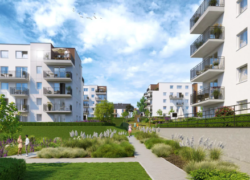
Develia has announced the pre-sale of 186 apartments in the third stage of its Południe Vita development, located in the green district of Orunia Górna-Gdansk Południe. The new phase features three-story buildings with mezzanine apartments on the top floors, surrounded by city parks and well-connected transportation infrastructure. The units are expected to be ready for delivery by Q4 2026, with prices starting at PLN 7,699 per square meter.

The Południe Vita estate offers a range of apartment sizes, from 26 to 100 square meters, all equipped with balconies, terraces, or gardens, and mezzanine spaces on select top-floor units. Residents will benefit from underground parking garages, above-ground parking spots, low-noise elevators, and additional storage rooms. The development is situated near Oruński Park and the Tri-City Landscape Park, providing access to nature while maintaining quick and easy access to central Gdansk and surrounding areas through the well-developed road and public transport networks.

“Living in the green suburbs is no longer just an alternative to the city center. Increasingly, people are seeking homes that offer proximity to nature, a tranquil environment, and convenient access to key locations. The Południe Vita estate aligns perfectly with these desires, as demonstrated by the strong demand for the previous phases of the project,” said Anna Samulak, Head of Sales at Develia.

The area around the development is rich in amenities, including schools, shops, services, and healthcare facilities. Additionally, plans for future transportation improvements, including the extension of the Pomeranian Metropolitan Railway, are set to further boost the appeal of the location.

The newly available apartments are expected to be ready by late 2026, with prices starting at PLN 7,699 per square meter.

Logistics industry raises €70,000 for Nicolaidis YoungWings Foundation at supply chain CX event

The “Logistics on the Move” initiative has once again inspired logistics companies across Germany to engage in a charitable fundraising campaign, raising €70,000 for the Nicolaidis YoungWings Foundation. This marks the fifth consecutive year that companies have participated in sporting activities to support the foundation, which helps individuals coping with the loss of a life partner or parent.

From July 1 to September 30, 2024, logistics professionals covered more than 160,000 kilometers by running, cycling, hiking, and even horse riding. Their efforts resulted in the collection of donations, which were presented at the Supply Chain CX event in Munich.

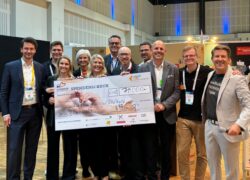
Kuno Neumeier, CEO of Logivest and founder of the initiative in 2020, joined forces with Sven Eisfeld, CEO of Hellmann Logistics Germany, to hand over the €70,000 check to Karin Neumeier, chairwoman of the Nicolaidis YoungWings Foundation. The event also featured former ski racer and foundation ambassador Thomas Dreßen, who shared his personal experiences with grief during a conversation with Sky presenter Michael Leopold.

Karin Neumeier expressed her gratitude, stating, “I am deeply impressed by the logistics industry’s continued support, even in challenging times. This generosity means so much to us and to those we support.”

Neumeier highlighted the industry’s commitment, saying, “Especially in economically difficult times, it’s important to focus on what truly matters. I’m proud that our sector continues to show such dedication to helping others through generous donations.”

Participants from across Germany took part in various physical activities, logging their distances through fitness apps and sharing their progress on social media under the hashtag #LogistikinBewegung. The flexibility of the donation model allowed companies to determine how much they would contribute based on their employees’ efforts.

Among the companies that participated and donated were Baytree Logistics Properties LLP, fabrikon GmbH, Four Parx Holding GmbH, Geis Gruppe, Hellmann Worldwide Logistics Germany GmbH & Co. KG, Logivisor.com, Loxxess AG, P3Logistic Parks GmbH, teamtosse GmbH, and Logivest GmbH.

The funds will support the Nicolaidis YoungWings Foundation in providing grief counseling and assistance to young adults and children who have lost a parent or partner, continuing the vital work it does across Germany.

KINGSTONE RE acquires residential developments in Mannheim, Nuremberg, and Fürth from Ten Brinke

KINGSTONE Real Estate (KINGSTONE RE), has acquired three residential development projects located in Mannheim, Nuremberg, and Fürth. The purchase, valued at approximately €74 million, marks a strategic expansion for KINGSTONE’s newly launched institutional real estate fund, “KINGSTONE Bezahlbares Wohnen Deutschland.” The seller, Ten Brinke, is both the developer and contractor for the projects.

The acquisition encompasses 180 residential units across a total rental area of 15,700 square meters, with the majority of the apartments designated as affordable housing. The portfolio is bolstered by construction grants exceeding €10 million and low-interest loans amounting to over €30 million, providing significant financial advantages to the investment.

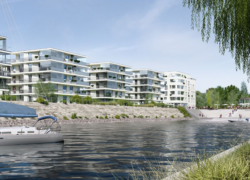
The Mannheim development, located along the Altrhein river, will feature 60 apartments, while the Nuremberg project will offer 77 residential units in a prime central location. In Fürth, 43 units are being developed. The Mannheim and Fürth properties will adhere to the KfW Efficiency House 55 EE standard, while the Nuremberg development will be built to the higher KfW Efficiency House 40 NH standard, reflecting a commitment to sustainable construction.

Simon Lieb, Managing Director at KINGSTONE Residential Investments, expressed enthusiasm for the new acquisitions: “Our new fund has generated strong interest from institutional investors. Subsidized housing is a particularly appealing segment due to its secure, predictable cash flows and attractive yields. These new developments not only address the urgent demand for affordable housing in Germany but also align with ESG standards, making them highly sustainable investments.”

Ansgar Pape, Managing Director at KINGSTONE Residential Investments, highlighted the financial structuring behind the deal: “We leveraged subsidies and low-interest loans to balance the developer’s requirements with investor return expectations. The long fixed-interest periods on the development loans also protect us from fluctuating debt financing rates.”

Jens Wantia, Managing Director of Ten Brinke Projektentwicklung Deutschland, emphasized the importance of collaboration in delivering affordable housing: “The demand for affordable apartments in Germany’s metro areas is significant. The successful development of subsidized housing depends on strong partnerships between public authorities, funding bodies, investors, and developers.”

The “KINGSTONE Bezahlbares Wohnen Deutschland” fund, advised by KINGSTONE Residential Investments in partnership with Pallino Real Estate, is poised for further growth in the subsidized housing market. Legal and tax due diligence for the acquisition was handled by Heussen Rechtsanwaltsgesellschaft mbH, with Case Real Estate, Arcadis Germany, and iib Consult conducting technical due diligence.

This transaction underscores KINGSTONE’s commitment to expanding its portfolio of affordable, sustainable housing in key urban areas across Germany, meeting both investor demand and pressing social needs.

Czechia Q3 2024: Construction pipeline surges ahead of new supply

Q3 2024: Construction Pipeline Surges Ahead of New Supply

October 2024 – The third quarter of 2024 saw a significant rise in the amount of space under construction, far outpacing the volume of newly delivered supply. This trend signals an ongoing construction boom, particularly in sectors such as office, industrial, and residential real estate, as developers race to meet growing demand despite persistent market challenges.

According to industry data, the total space currently under construction across major markets is substantially larger than the supply delivered to date in 2024. This gap reflects both the robust demand for new properties and the lengthier timelines required to complete large-scale developments, many of which are slated for delivery in late 2024 or 2025.

Experts attribute the surge in construction activity to several factors, including sustained demand for modern, sustainable office and industrial spaces, as well as strong interest in high-quality residential projects in key urban areas. However, developers are also contending with ongoing supply chain disruptions, labor shortages, and rising construction costs, which have delayed some project completions.

“The volume of space under construction demonstrates the confidence that developers and investors have in the market’s future growth. Despite the hurdles, the pipeline remains robust, driven by demand for better and more sustainable buildings,” said a market analyst.

As the year progresses, it is expected that the gap between under-construction space and new supply will begin to narrow, with several large projects slated for completion in the coming months. However, the significant volume of space still in development suggests that the construction boom will extend into 2025 and beyond, as the real estate sector continues to evolve in response to changing market demands and sustainability targets.

Source: Industrial Research Forum

LeopoldQuartier sets new standard for timber hybrid construction in Vienna

Timber is increasingly being recognized as a renewable and deconstructable building material with immense potential in structural engineering, though its full capabilities remain largely untapped. However, large-scale projects like Vienna’s LeopoldQuartier are providing valuable insights and demonstrating what timber can achieve in modern construction.

Austria is witnessing a surge in timber construction, with about 25% of the floor space in high-rise buildings now incorporating wood, particularly in the residential sector, which accounts for 53% of these projects. “Sustainable urban living spaces can be efficiently developed using timber, a material that aligns with the principles of the circular economy,” said PORR CEO Karl-Heinz Strauss. “Every year, 30 million cubic meters of wood regrow in Austria, with 90% of it used and recycled. This equates to the creation of 2,000 single-family homes daily, contributing to a ‘second forest’ of houses that also sequesters carbon dioxide.” However, the rarity of large-scale timber projects has limited comprehensive experience, product approvals, and certifications.

Leading this movement is LeopoldQuartier, Europe’s first timber-framed urban district, under development by UBM on Vienna’s Donaukanal. Covering nearly three hectares, the project aims to set a benchmark for sustainable construction. “Choosing LeopoldQuartier means actively contributing to the fight against climate change,” said Peter Schaller, CEO of UBM Development AG.

The centerpiece of the project is a 22,000 sqm office building featuring a timber hybrid construction. The load-bearing structure, composed of laminated timber columns, cross-laminated timber walls, and timber-concrete composite ceilings, will rise from the first to the ninth floor. Approximately 2,800 cubic meters of timber will be used, with CO2 savings estimated at 2,700 tons compared to conventional reinforced concrete construction. The office building is slated for completion by October 2025.

LeopoldQuartier’s residential component, known as LeopoldQuartier Living, includes 253 apartments, making it Austria’s largest timber-based residential project. It will utilize 3,800 cubic meters of prefabricated timber elements, including 20,000 sqm of cross-laminated timber ceilings and walls, and 7,000 sqm of timber frame exterior walls. The rapid assembly of 204 prefabricated bathroom units is expected to accelerate the construction timeline, with completion anticipated in early 2026.

Sustainability extends beyond construction materials in LeopoldQuartier. The project will be powered by 200 geothermal probes and three wells, complemented by photovoltaics and heating/cooling panels. The office building is targeting DGNB Gold certification, a mark of sustainable building practices.

UBM is positioning itself as Europe’s leading developer of timber hybrid buildings, with an ambitious EUR 1.9 billion project pipeline. Over 90% of its developments are located in Germany and Austria, with 59% dedicated to residential spaces and 41% to light industrial and office buildings. Notable projects include Timber Factory in Munich, and Timber Peak and Timber View in Mainz.

PORR, a pioneer in timber and timber hybrid construction, is at the forefront of eight major projects across Austria, including LeopoldQuartier, the “Vis à Vis” in Vienna and Graz, and the European Patent Office in Munich. These projects provide a testing ground for the evolving standards and certifications required for large-scale timber construction.

LeopoldQuartier offers PORR a rare opportunity to execute an office and residential project on an unprecedented scale in Austria. “Flagship projects like this push the boundaries of current construction standards and help refine serial timber construction methods, unlocking the full potential of timber for large-scale developments,” Strauss emphasized.

With each successful timber project, the industry moves closer to realizing timber’s vast potential as a sustainable building material for the future.


front page info
LATEST NEWS