Empira Research: Stabilisation in German residential investment market amid economic tensions

Germany’s residential investment market is showing signs of recovery, according to the latest report from Empira Group. The Swiss-based investment manager reports an impressive €5.9 billion in investments across residential portfolios with 30 or more units in Germany for the first three quarters of 2024, marking a 50% year-over-year increase. Yet, as demand pressures mount in major cities, the sector’s future remains uncertain.

Despite ongoing inflation control measures, the German economy faces challenges, with the government revising its 2024 growth projection to -0.2%. In contrast, the U.S. economy is set to grow by 2.5%, a stark comparison against Germany’s cautious outlook. “Germany’s economic climate shows stagnation signs, but in the real estate sector, we’re beginning to see price stability and rising demand,” commented Prof. Dr. Steffen Metzner, Empira Group’s Head of Research. Metzner noted that in the U.S., economic forecasts are heavily tied to the approaching presidential election, adding layers of uncertainty.

Residential Market Demand Grows Amid Supply Shortfalls

Supply shortages are further straining Germany’s top metropolitan areas. The new construction sector remains cautious, with the business climate index barely above last year’s figures. In August alone, 50.6% of companies reported order deficits, while cancellations affected 11.7% of firms. New housing completions are on a downtrend, with expectations dropping from 225,000 units this year to 175,000 by 2026.

Even with these constraints, residential investment in portfolios over 30 units rose notably, though it remains 51% below historical norms. “The market appears to be gradually stabilising,” stated Metzner, noting investor interest remains high even as long-term volumes remain below average.

Rental Prices Climb in Germany’s Major Markets

In Germany’s top-tier cities, rental rates are rising, outpacing the national index, which recorded a 2.2% increase over the past year. Frankfurt and Hamburg led the trend, with rents climbing by 5.1% and 4.2%, respectively. Meanwhile, purchase prices in major cities are mixed, with notable declines in Hamburg (-7.5%) and Cologne (-3.0%), while Berlin, Munich, and Stuttgart saw stable prices.

While uncertainties persist, Empira’s data indicates resilience within Germany’s residential investment market, offering cautious optimism for investors navigating the economic complexities of 2024.

VeloBank and Nest Bank eye Citi Handlowy’s retail segment

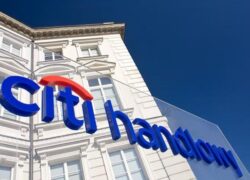
The owners of VeloBank and Nest Bank—Cerberus Capital Management and AnaCap Financial Partners, respectively—have shown interest in acquiring the retail segment of Citi Handlowy, according to reports by Puls Biznesu.

Cerberus Capital reportedly signaled its intent to Citigroup, and AnaCap Financial Partners has also submitted an offer. While it remains unclear whether these offers are binding or preliminary, the interest highlights a potential shift in Poland’s retail banking market.

Both Citigroup and Cerberus declined to comment on the matter. AnaCap partner James Culverhouse also refrained from commenting on what he described as market speculation.

Citi Handlowy first announced plans to divest its retail banking segment in 2021, following Citigroup’s decision to exit retail banking in 13 markets. After briefly pausing, Citi Handlowy resumed its search for a buyer in November 2023. Talks with potential investors were anticipated early this year, according to Citi Handlowy’s CEO, Elżbieta Czetwertyńska.

Established from a merger of Bank Handlowy in Warsaw and Citibank Poland, Citi Handlowy has been a key player on the Warsaw Stock Exchange since 1997. At the end of 2023, the bank held assets totaling PLN 73.39 billion.

Source: ISBnews, VeloBank and Nest Bank
Photo: Citi Handlowy

Poland: Special purpose loans drop by 2.1%, cash loans surge by 40.7% in September

Loan companies saw a sharp divergence in lending trends in September, with special-purpose loans falling 2.1% year-on-year while cash loans experienced a substantial increase of 40.7%, the Credit Information Bureau (BIK) reported.

In total, companies granted 691,000 special-purpose loans, a 25% drop in volume, totaling PLN 0.489 billion, a 2.1% decrease from last year. Conversely, cash loans surged by 20.5%, with 485,000 loans issued, amounting to PLN 1.291 billion. The average special-purpose loan value in September was PLN 707, marking a 30.4% increase over last year, while the average cash loan rose to PLN 2,661, a 16.8% increase.

For the first nine months of 2024, the lending landscape expanded notably, with loan companies granting 6.1 million loans totaling PLN 4.383 billion, a year-on-year increase of 62.6% in volume and 74.1% in value. Cash loans specifically saw significant growth, with 4.2 million units issued at a total of PLN 10.87 billion, representing a 54.9% increase from the previous year.

In terms of volume, special-purpose loans remained the most commonly issued, while cash loans dominated in overall value, according to BIK.

Source: BIK and ISBnews

Poland: Bank Millennium reaches 24,600 settlements with Swiss Franc borrowers by Q3 2024

Bank Millennium finalized 1,088 new settlements with Swiss Franc mortgage borrowers in Q3 2024, bringing the total to 24,600 since the program’s launch. This reflects the bank’s ongoing effort to mitigate legal risks associated with foreign currency mortgage loans, Bank Millennium President João Bras Jorge announced.

“With these additional settlements, we have now resolved 40% of the active Swiss Franc credit agreements as of the program’s launch,” said Jorge, noting that legal claims related to foreign currency mortgages have decreased to under 1,500 cases. An increasing number of these claims now involve repaid loans, which make up 19% of all active claims.

Bank Millennium’s quarterly report highlighted that expenses tied to foreign currency mortgage portfolios, including reserves, settlements, and legal costs, dropped by 13% year-over-year to PLN 738 million before tax. Despite this decline, legal risks continue to weigh on the bank’s core operations. Cumulative legal risk reserves reached PLN 533 million before tax in Q3, while total reserves for 2024’s first nine months stood at PLN 1.656 billion, reflecting updated estimates on potential claims.

Bank Millennium, a major player in Poland since its 2003 rebranding, is backed by Portuguese shareholder Banco Comercial Português (Millennium bcp), Portugal’s largest commercial bank. The bank reported total assets of PLN 125.5 billion as of year-end 2023.

Source: Bank Millennium and ISBnews

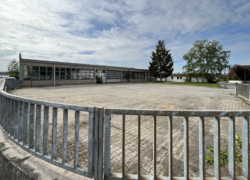
Logivest facilitates Deufol’s logistics hub in Nittenau

Global logistics provider Deufol has expanded its operations in the Upper Palatinate, securing a 5,000-square-meter property for logistics and storage in Nittenau, with assistance from real estate advisor Logivest. The property, located at Bayerwaldstraße 4 and owned by a private individual, offers Deufol close proximity to a key client, a prominent machinery and component manufacturer, enabling efficient goods flow management within the region.

The site includes a robustly built 2,500-square-meter hall with ground-level access gates, complemented by an additional 2,500 square meters of open space. “Positioned between major routes B16 and B85 and near the A93 freeway, the location provides quick access to Regensburg, where Deufol operates several branches,” said Alexander Meiringer, Consultant for Industrial and Logistics Letting at Logivest. “The proximity to the Czech border also enhances its value for international logistics.”

Deufol has already commenced operations at the new facility, strengthening its strategic foothold in the region.

Poland’s GDP to grow 3.1% in 2024 with rate cuts expected by March, EY forecasts

Poland’s economy is projected to expand by 3.1% in 2024, with growth accelerating to 3.6% in 2025 before moderating to 2.9% in 2026, according to EY economists. Inflation is expected to remain a challenge, with forecasts suggesting it will peak at 5% in 2025 — the highest rate in the EU. EY predicts the National Bank of Poland (NBP) will initiate an interest rate cut cycle in March 2025, starting with a 25-basis-point reduction.

“Central and Eastern Europe (CEE) is set to lead in GDP growth, driven by strong wage growth and inflation expected to stay below 5%,” EY noted. The region’s growth will be bolstered by EU fund absorption, relaxed monetary policies, and a rebound in Western European export demand.

Poland’s competitive labor market is enhancing productivity, as shown by a 9% rise in real GDP per hour in Q2 2024 compared to pre-pandemic levels. This outpaced gains in both the U.S. and Europe. The report highlights that Polish economic expansion is fueled by increasing real income, continued wage growth, rising investments, and robust exports supported by the EU Recovery Fund and defense spending.

Meanwhile, EY forecasts the euro area to see modest growth rates of 0.8% in 2024, 1.3% in 2025, and 1.5% in 2026. Germany faces particular economic challenges, with issues in key sectors and a restrictive fiscal approach dampening its recovery, according to EY’s Chief Economist for Europe and Central Asia, Marek Rozkrut.

Poland, Hungary, Croatia, and Slovakia are experiencing significant price pressures, particularly in services, driven by wage increases above 10%. EY anticipates Poland to record the highest inflation rate in the EU in 2025, with energy price deregulation adding to the pressure.

The National Bank of Poland is expected to introduce four rate cuts of 25 basis points from March to September 2025, followed by a larger 50-basis-point cut in 2026, aiming to curb inflation below 3.5% by that year. Interest rates are projected to settle at 4.25% by 2026, reflecting Poland’s strong economic momentum, EY concluded.

Source: EY and ISBnews

Polish government moves to strengthen homeland defense with recruitment and education amendments

The Polish government aims to adopt an amendment to the Homeland Defense Act and Higher Education and Science Act in the fourth quarter, aiming to streamline recruitment for military service and offer financial incentives for soldiers pursuing studies abroad. The proposed changes are outlined in the Council of Ministers’ legislative agenda.

The draft amendment proposes enhancements to the Armed Forces’ recruitment process, including provisions for soldiers to study abroad with potential reimbursement upon completion, stronger data privacy protections, and funding support through the Armed Forces Support Fund. It also includes measures for improved participation in training exercises and the creation of new disciplinary bodies with clearly defined competencies.

Additional updates include easing regulatory requirements by reducing certain administrative steps in granting allowances and incentives for both professional and non-professional soldiers. Military education is also a focal point, with the amendment clarifying that subsidies to military universities for educating civilian students will not count as defense spending.

Other proposed adjustments address military family support, such as limiting simultaneous travel assignments for soldier spouses caring for young children, and allowing inactive reserve soldiers to take on roles within NATO, EU, and international organizations stationed in Poland.

The amendment reflects the government’s ongoing commitment to strengthening Poland’s defense readiness and supporting the personal and professional development of its military personnel.

Source: ISBnews

Budimex Mobility eyes expansion with nearly 500 new e-car charger locations

Budimex Mobility, the electric vehicle (EV) charging division of Budimex Group, is preparing to significantly expand its network with nearly 500 potential new charging station locations currently under review. The company already operates 170 active chargers and anticipates reaching 460 stations by the end of 2026, according to Cezary Łysenko, Board Member and Director of Infrastructure Construction.

“Today, Budimex Mobility operates 170 active chargers, including both AC and high-speed DC chargers,” said Łysenko in a press conference. “We are seeing greater demand for DC chargers, so we are transitioning some AC stations to DC to meet this need. Currently, we are evaluating nearly 500 new sites for expansion.”

Łysenko added that Budimex is considering partnerships with external investors to fund further mobility projects, given the capital-intensive nature of the business. The company projects its EV charging network will reach profitability around late 2026 or early 2027.

Budimex, a prominent player on the Warsaw Stock Exchange and part of the WIG20 index, is majority-owned by Spain’s Ferrovial. In 2023, the company reported consolidated revenues of PLN 9.8 billion.

Source: Budimex Mobility and ISBnews

Emotional farewell as Czech Airlines ends flights under iconic code OK

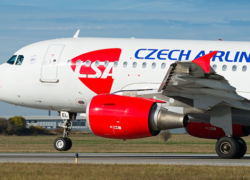
In an emotional farewell, the final Czech Airlines (CSA) flight landed at Prague Airport late Saturday night, marking the end of nearly a century of operations under the iconic code OK. Arriving from Paris just before midnight, the fully booked flight was met by dozens of aviation enthusiasts, former employees, and members of the public who gathered to commemorate the airline’s legacy.

Among the passengers was Michal Pupcsik, who flew to Paris specifically to experience the final CSA flight. “I’m completely moved now,” Pupcsik said upon arrival, recalling the captain’s emotional message to the passengers, urging the Czech people to remember the importance of the airline’s legacy. Similarly, frequent flyer Petr Lang, who also booked a seat on the flight, expressed disappointment that the traditional “Vltava” tune was not played upon arrival, a hallmark of CSA landings.

A crowd of onlookers watched from the observation deck, many clapping and waving as the plane touched down. Former steward Jiří Veselovský, who served CSA for over 40 years, described it as a “funeral for the CSA we remember,” joined by ex-colleague Daniela Koláčová, who reflected on the company’s struggles in recent years. Fans, including Mr. Jaroslav from Plzeň, also came to witness what he called a “milestone, albeit a sad one.”

With this final flight, CSA operations will be fully transferred to its parent company, Smartwings, which will use its own code, QS, though CSA’s logo and branding will remain. Founded in 1923, CSA was one of the world’s five oldest airlines. Following financial turmoil and changes in ownership, the airline has now been fully integrated into the Smartwings Group.

The farewell was also marked by the Czech Civil Aviation Authority, which flew the national and European Union flags at half-mast in honor of CSA’s long legacy in Czech aviation.

Source: CTK

Czech older property prices surge amid rising demand and accessible mortgages

The Czech real estate market has seen a continued rise in the price of older properties throughout the third quarter of 2024, largely driven by increased demand and improved mortgage availability. Apartment prices climbed by an average of 11% year-on-year and 5% since the previous quarter, with regional areas seeing the highest surges in prices, outpacing traditionally popular locations, according to data from real estate platform Bezrealitky.cz.

The average price of older flats in Prague reached CZK 128,000 per square meter, marking a 1% quarterly increase and a 9% jump from last summer—equivalent to the price of new-build apartments in the capital. In the Central Bohemian Region, flat prices surged 6% from the second quarter and 9% year-on-year, crossing CZK 80,000 per square meter for the first time. Meanwhile, in Brno, prices climbed to around CZK 94,000 per square meter, up 9% quarterly and nearly 16% annually.

Notable regional hikes were recorded, with six areas experiencing double-digit percentage increases. The Ústí nad Labem region saw prices rise by 20%, followed by Liberec at 18% and České Budějovice at 17%. Year-on-year, flats in the Moravian-Silesian and South Bohemian regions have become more than a quarter more expensive. Bezrealitky analysts attribute these surges to pent-up demand from weaker housing activity earlier in the year.

Single-family home values also rose significantly, up by 10% compared to last year and 1% quarter-on-quarter, though some regions saw slight declines. Home prices fell by 2% year-on-year in both the Ústí nad Labem region and Vysočina, while Pardubice and Olomouc saw increases of nearly 33% over 2023, with values in Moravian-Silesian and Plzeň regions up by a quarter.

Rising property values have also put pressure on the rental market, which has seen a marked increase in interest this year. Demand for rentals traditionally cools in summer but remained high, continuing into the start of the fourth quarter without seasonal dips.

“Rental price maps are being completely rewritten,” said Bezrealitky director Martin Ponzer. “Over the past five years, monthly rent for a 65-square-meter apartment has risen by over CZK 6,000 in Prague, CZK 5,000 in Brno, and CZK 4,300 in Central Bohemia. The country is moving toward the Western model, where rent makes up over half of household expenditures.”

Demand in Prague remains high, with about 73 people vying for each rental apartment. The city saw rental prices increase by 5% this quarter, averaging CZK 386 per square meter. In Brno, rental rates rose by 6% to CZK 301 per square meter, with 35 applicants per unit, while Central Bohemia saw a 5% increase, reaching CZK 271 per square meter.

Source: CTK

front page info
LATEST NEWS