Panattoni Begins Speculative Development of Large Logistics Unit at Coventry Site

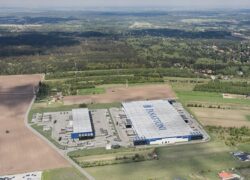
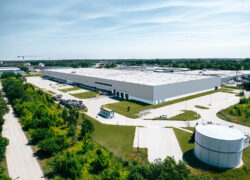
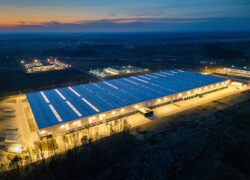
Panattoni has started construction of a speculative logistics facility at Panattoni Park Coventry, located at Junction 3 of the M6 in Coventry.

The scheme will deliver approximately 538,000 sq ft of space and is scheduled for completion in the first quarter of 2027. It is one of several large-scale logistics developments currently underway in the Midlands, a region that continues to see limited availability of units above 500,000 sq ft.

The site forms part of the UK’s central logistics corridor, often referred to as the “Golden Triangle”, and offers direct motorway access. It is positioned to support national distribution networks, with connections to the M1 and wider road infrastructure.

The development is being delivered without a pre-let, reflecting ongoing supply constraints in the market for large, Grade A logistics space. Developers have increasingly used speculative construction to provide ready-to-occupy buildings and reduce lead times for occupiers.

The facility has been designed to accommodate a range of operational requirements, including high-bay warehousing and automated systems. Specifications include a 15-metre clear internal height, a yard depth of 55 metres, and power capacity of 5.3 MVA. The building is also expected to support significant storage volumes.

Sustainability and digital infrastructure form part of the project design. The building is targeting BREEAM ‘Outstanding’ and EPC ‘A+’ certifications, as well as net zero carbon in construction. It is also aiming for WiredScore ‘Platinum’ certification, which relates to digital connectivity standards.

Patrick Clews, Development Manager at Panattoni, said: “There remains a clear shortage of high-quality speculative space of this scale in the Golden Triangle, particularly in locations offering immediate motorway access. Panattoni Park Coventry addresses that gap, delivering a building directly on the M6.

This is a prime logistics location with an established occupier base, and we are seeing sustained demand for large, well-located units that can be delivered quickly. By developing speculatively, we are able to provide occupiers with immediate, future-ready capacity in one of the UK’s most important distribution corridors.”

The scheme is being marketed by Newmark and APEX.

Dekpol Developer launches Silva Maris project on Sobieszewska Island

Dekpol Developer has begun development of the Silva Maris residential and hospitality project on Sobieszewska Island, located near Gdańsk. The scheme is positioned within a coastal and forest setting close to the Ptasi Raj nature reserve and approximately 500 metres from a Blue Flag-certified beach.

The area is characterised by protected natural habitats, including bird migration routes and coastal ecosystems. Local infrastructure includes walking trails, cycling routes and observation points.

The Silva Maris complex is planned to comprise nine buildings, including seven apartment buildings with around 500 units, a commercial building with a restaurant, and a hotel with wellness facilities. Building heights will range from one to five storeys. In the first phase, units will range from approximately 33 sq m to 122 sq m, with launch prices starting from PLN 1,059,000 gross.

The development will include surface and underground parking, as well as new access infrastructure, including a road connection from Turystyczna Street, street lighting and a pedestrian walkway.

“The apartment can function as a private second home or as an investment property in a rental model, and the support of a professional operator provides the owner with flexibility and ease of daily operation,” said Rafał Skonieczny, Sales Director and Member of the Management Board at Dekpol Developer.

The architectural concept draws on principles of biophilic architecture, with design elements intended to integrate the buildings into the surrounding landscape. Materials such as wood, stone and glass are planned, alongside features including green roofs, rainwater collection systems and electric vehicle charging points. The layout includes irregular building placement and landscaped areas incorporating dunes, coastal vegetation and pine trees.

“In such a sensitive natural setting, there could only be one starting point—biophilia. From the outset, we knew that the goal wasn’t to place architecture alongside nature, but to allow it to grow from the landscape in an organic and respectful way. I believe that the less we disrupt the ecosystem of this place, the more it will ultimately give back to people—peace, balance, and a sense of being part of a greater whole. For us, biophilia is not an aesthetic, but a way of thinking about space that restores the bond between humans and nature,” said Paulina Czurak-Czapiewska, architect and board member at Dekpol Developer.

The site previously accommodated a military facility and later the Alma II resort, which ceased operations in 2015. The land has since remained undeveloped. The current project aligns with local zoning provisions and reintroduces a defined use for the area.

Dekpol Developer has previously delivered projects on Sobieszewska Island, including the Solmarina complex, located approximately 2.5 kilometres from the Silva Maris site.

The development is planned in phases. Completion of the initial phase is scheduled for the second quarter of 2026, with full project completion expected in the first quarter of 2028. The architectural design has been prepared by Paulina Czurak-Czapiewska in collaboration with Ideograf studio.

Ioana Roman: “Deals don’t fail on price anymore – they fail on risk.”

In a market shaped by overlapping global and local uncertainties, Romania’s real estate sector has entered 2026 in a state that resists simple definition. In a recent interview with CIJ EUROPE, according to Ioana Roman, Partner and Head of the Real Estate Practice at Filip & Company, the current environment reflects both a recovery phase and a filtering process, where only well-structured and carefully assessed transactions are progressing.

“It’s both, but what’s different now is the level of discipline the market requires,” she said. “We are navigating a much more complex environment.”

That complexity is not limited to Romania. While local uncertainty has long been part of the market’s DNA, the current cycle is defined by a broader shift in how risk is perceived and managed. Investors are no longer assessing only domestic factors, but a wider framework shaped by geopolitical tensions, regulatory changes, technological shifts and macroeconomic volatility. “What used to be mostly local is now fully interconnected at a global level,” Roman explained. “Uncertainty is no longer the exception, it directly influences how transactions are structured and negotiated.”

This shift is reshaping how transactions are executed. Risk allocation, once something that could be refined later in the process, is now a central element from the outset. According to Roman, failing to address this early can derail transactions entirely, leading to delays, increased costs or even abandoned deals.

“Risk is no longer something you adjust along the way, if it’s not clearly allocated from the beginning, transactions either stall or become significantly more expensive to close.”

The impact is visible in execution timelines as well. Transactions that a decade ago could be completed within a few months now frequently take six months to a year, often influenced by external factors such as elections or broader geopolitical developments.

From an international perspective, Europe continues to be seen as a relatively safe destination for capital. However, Romania is rarely the first point of entry. Investors typically establish themselves in more mature markets such as the UK or Poland before expanding into Central and Eastern Europe. Romania remains on the radar, but entry decisions are closely tied to individual risk profiles and strategic positioning.

On pricing, the gap between buyer and seller expectations has narrowed compared to previous years, although it has not disappeared entirely. Roman points to land transactions as a key area where misalignment persists, particularly in Bucharest and its surrounding areas. Sellers tend to price based on development potential, while buyers’ factor in permitting risks and execution challenges. In response, more sophisticated legal structures are being used to bridge the gap, including conditional agreements and requirements for sellers to secure planning approvals before closing. In many cases, obtaining at least a zoning plans or even a building permit has become essential to completing a deal.

Financing has also taken on a more central role in shaping transactions. Rather than being treated as a final step, it is now a structuring variable that must be addressed from the beginning. Banks are more rigorous in their assessments, often requiring additional due diligence and placing greater emphasis on security packages. This has extended transaction timelines and increased complexity. At the same time, alternative lenders are gaining ground, offering more flexible but more expensive financing solutions, sometimes with structures that allow debt to convert into equity if projects perform well.

One of the most significant constraints on the market remains the urban planning and permitting environment in Bucharest. The absence of a clear and updated General Urban Plan, combined with delays and inconsistencies in permitting, continues to weigh on development activity.

“This is one of the key structural constraints shaping investment decisions in Bucharest today,” Roman said. While Bucharest remains the most liquid and attractive market in Romania, the current situation has effectively slowed development, forcing investors to adapt their strategies or look at alternative locations.

Regional cities such as Cluj-Napoca, Iași, Timișoara and Brașov are increasingly attracting attention, although not solely because of Bucharest’s challenges. These markets have developed in their own right, supported by strong local fundamentals and established investment ecosystems. In some cases, they are capturing projects that cannot currently move forward in the capital, but their growth is largely driven by their own momentum.

Looking ahead, Roman expects industrial and logistics to remain among the strongest performing sectors, supported by infrastructure development and shifting supply chains. Retail continues to attract interest, although selectively, with retail parks standing out as the most sought-after assets. Residential and mixed-use developments are also expected to remain active, despite a temporary slowdown in sales following recent fiscal measures that have affected purchasing power.

Beyond these sectoral dynamics, Roman highlights several risks that investors must carefully assess. Fiscal uncertainty remains a key concern, particularly in relation to new property tax rules that can significantly affect asset valuations if not properly accounted for. At the same time, inconsistencies between legislation and its practical application at the municipal level create what she describes as administrative legal risk. This is especially evident in permitting and construction processes, where lack of uniform practice can introduce delays and unexpected costs.

In this environment, the difference between successful and unsuccessful transactions often comes down to preparation. Thorough due diligence, early risk allocation and close coordination between legal, technical and commercial advisors are no longer optional but essential.

Despite the challenges, Roman remains confident in Romania’s long-term prospects. She argues that the market is well adapted to operating in uncertain conditions and that this resilience should not be underestimated. “

Challenges don’t block transactions in themselves — what matters is whether they are identified early and properly built into the deal structure,” she said.

She also points to growing interest from new sources of capital, particularly from Asia, with Chinese investors increasingly analysing opportunities in Romania, even if entry remains complex due to regulatory requirements.

Her message to investors is clear. Romania continues to offer strong opportunities, but success depends on a disciplined and realistic approach. “Romania should not be overlooked because of uncertainty — but it does require a more disciplined approach to risk,” she said. “The difference is no longer in identifying opportunities, but in how realistically risk is assessed and priced in each transaction.”

In a market where uncertainty has become structural rather than cyclical, the ability to assess, structure and execute transactions with precision is emerging as the defining factor for success.

© 2026 cij.world

Delhi-Meerut Rapid Rail Corridor Begins to Influence Development Patterns Across NCR

The rollout of the Delhi-Meerut Regional Rapid Transit System (RRTS), operated by National Capital Region Transport Corporation, marks a notable shift in how infrastructure is shaping urban expansion across India’s National Capital Region (NCR). While the full corridor is still being delivered in phases, the sections already in operation are beginning to alter both commuting patterns and real estate activity along the eastern axis of the region.

Designed to link Delhi with Meerut through a high-speed regional rail system, the corridor will ultimately span more than 80 kilometres, connecting key urban nodes including Ghaziabad and Muradnagar. Once fully operational, the line is expected to significantly reduce travel times between these cities, positioning them within a practical daily commuting range of the capital.

The project is supported by a mix of domestic and international financing, including institutions such as the Asian Development Bank, the Asian Infrastructure Investment Bank and the New Development Bank. It has been conceived as a regional mobility system rather than a metro network, with higher operating speeds and dedicated infrastructure intended to support inter-city movement.

As parts of the line have opened, early changes are visible in locations closest to operational stations. Areas such as Ghaziabad and nearby suburban clusters have seen increased residential interest, particularly from buyers seeking more affordable housing options within reach of Delhi. Improved accessibility has also begun to attract attention from developers, although activity remains uneven and concentrated in specific micro-markets.

The relationship between transport investment and property values is not new, but in this case the scale of the corridor is extending that effect beyond traditional city boundaries. That said, the extent of price growth varies widely depending on location, connectivity and the stage of infrastructure delivery. Increases reported in certain neighbourhoods reflect a combination of factors, including improved road links and broader expansion of the NCR, rather than the rail project alone.

At a planning level, the corridor aligns with wider efforts to concentrate development around transport hubs. Long-term strategies for Delhi and its surrounding region increasingly emphasise higher-density construction near major transit points, alongside a mix of residential, commercial and service functions. This approach is intended to reduce pressure on central areas while supporting more balanced urban growth.

Despite these early signals, the longer-term impact of the Delhi-Meerut RRTS will depend on the completion of the full route and its integration with existing transport systems. Commuter adoption, supporting infrastructure and the pace of development around stations will all play a role in determining how far the project reshapes the region.

For now, the corridor is contributing to a gradual shift in how people and businesses view locations beyond Delhi’s core. Whether this evolves into a more structural redistribution of demand across the NCR will become clearer as the network moves closer to full operation.

Source: CIJ.World India Research & Analysis Team

Swiss Life Asset Managers Acquires Healthcare Property in Mannheim

Swiss Life Asset Managers has acquired the Salutem Medical Clinic in Mannheim for its Swiss Life ESG Health Care Germany V fund. The seller and developer of the project was Erhard & Stern Group.

The property, located on Neckarauer Straße, offers approximately 11,000 sq m of leasable space and is currently around 93% occupied. It accommodates a range of medical services, including uro-oncology, radiology, laboratory services, orthopaedics, and rehabilitation therapies, alongside fitness and office uses.

The asset includes the Manfred Fuchs Clinic, a specialist centre for urological cancers within the Heidelberg-Mannheim university hospital network. The facility is equipped with digital operating rooms and robotic surgical systems designed for minimally invasive procedures, with expected annual patient volumes of more than 2,000.

Nikolai Schmidt said: “With the Salutem in Mannheim, we are acquiring an outstanding property with features unique in Europe. We would like to thank everyone involved for their excellent cooperation. The combination of cutting-edge medicine, state-of-the-art facilities, and a building concept consistently geared towards integrated care is an ideal fit for our strategy in the healthcare sector and expands our portfolio with a high-quality and modern property. We will remain active in the market in the coming months to achieve this goal.”

The building is designed to support a multi-tenant healthcare environment, with full accessibility across all floors and integrated parking facilities for patients and visitors.

This acquisition adds to Swiss Life Asset Managers’ existing presence in the Rhine-Neckar region, where it already holds a similar asset in Heidelberg.

The transaction and development process involved Swiss Life Asset Managers’ healthcare technical asset management team, with CBRE Turner & Townsend acting as technical partner and Peter Gross Hochbau Mannheim as general contractor.

IAG GBS Poland Extends Lease at O3 Business Campus in Kraków Following Renegotiation

IAG GBS Poland has extended its lease at O3 Business Campus in Kraków, where it occupies 2,246 sq m of office space. Savills advised the tenant during the renegotiation process.

The decision followed an analysis of relocation options and a comparison of total occupancy costs across alternative buildings. The advisory process also included a review of employee needs and potential adjustments to the office layout.

The renegotiation focused on reducing operating costs and improving cost predictability, while maintaining flexibility for potential future expansion.

Wojciech Mazur, Associate in the Office Agency Department at Savills, said: “In the current market conditions, the decision to relocate isn’t always the most effective solution. Increasingly, the best results are achieved through a rigorous analysis of total costs and renegotiation of terms in the current location. In Krakow, we’re seeing a growing willingness among landlords to adopt a flexible approach, especially with established tenants from the business services sector.”

Piotr Tomaszewski added: “As a shared services center supporting the operating companies of International Airlines Group, we prioritize efficiency and stability. The decision to extend our lease in Krakow is the result of a detailed analysis of our needs. We are pleased that the negotiated terms not only allow us to optimize costs but also provide space for further growth within IAG’s structure in Poland.”

From the landlord’s side, EPP noted the importance of tenant retention. Olga Adamek said: “The best proof of the quality of a location is the decision to stay, and IAG GBS Poland’s lease extension at O3 Business Campus is precisely that. In the case of O3, we’re talking not only about the address but also about a proven operating environment and the relationship with the tenant, which we have been building since day one. We want companies that choose O3 to feel that their working and business conditions are as important to us as they are to them.”

IAG GBS provides financial, HR and operational services to airlines within International Airlines Group, including British Airways, Iberia, Vueling and Aer Lingus.

DL Invest Group Extends Leases Across 142,000 sq m of Portfolio Space

DL Invest Group has extended lease agreements covering more than 142,000 sq m of commercial space across its portfolio in recent months, reflecting continued tenant retention across its core asset classes.

The renewed leases include over 125,000 sq m of logistics space, approximately 12,900 sq m of offices and around 4,700 sq m of retail space. Tenants involved in the extensions include DHL, Avio Polska, Electropoli Poland and Marelli.

The company reports an occupancy level of above 97% across its standing assets. Logistics properties account for more than 85% of the portfolio, which has a total value exceeding EUR 1.2 billion.

Wirginia Leszczyńska said: “Such a high level of lease extensions and a sustained occupancy rate above 97% are a direct confirmation of the quality of our assets and the long-term relationships we build with tenants. It is the result of a consistently implemented investor strategy that manages real estate throughout its entire lifecycle – from design, through development and commercialization, to long-term operational management. What is crucial for us is not only the structure of the portfolio itself, but above all its ability to generate stable cash flows and maintain high tenant retention over the long term.”

DL Invest Group operates an integrated business model covering development, leasing and asset management, alongside investment, legal and financial functions. The company also maintains financing relationships with institutions including the European Bank for Reconstruction and Development, BNP Paribas and Santander.

In 2025, the group issued EUR 350 million in eurobonds, attracting demand exceeding EUR 500 million. The company states that it continues to diversify its funding sources through both bank financing and capital markets.

DL Invest Group is also in the process of negotiating additional leases and exploring activity in other sectors, including data centres and hospitality.

Warsaw Office Market in Q1 2026: Activity Slows as Central Supply Tightens

Data from AXI IMMO indicates that office leasing activity in Warsaw declined in the first quarter of 2026, while limited availability in central locations continued to place upward pressure on rents.

Gross office take-up reached 130,000 sq m in Q1 2026, representing a 9% year-on-year decrease. Demand was concentrated in central zones, including the Central Business District, although no transactions above 10,000 sq m were completed during the quarter. This reflects a more cautious approach among occupiers when making long-term commitments. The IT sector accounted for 20% of total take-up, followed by business services at 13% and the financial sector at 12%.

Emilia Trofimiuk, Research Manager, Market Research and Analysis Department at AXI IMMO, said: “The year-on-year decline in occupier activity is visible in both gross and net take-up; however, this does not indicate a structural weakening of the market. The current result is largely due to the absence of large transactions and the continued high share of lease renewals and renegotiations.”

Limited Supply and Low Development Pipeline

At the end of Q1 2026, Warsaw’s modern office stock totalled approximately 6.28 million sq m. Around 40,000 sq m of new space was delivered during the quarter, largely in central locations.

Recent completions included Studio A (24,000 sq m) by Skanska, Vena (15,400 sq m) by Polski Holding Nieruchomości, and a refurbished office building at 26A Przemysłowa Street in Solec (3,500 sq m). At the same time, older and less efficient buildings continue to be withdrawn, keeping overall supply broadly stable.

Development activity remains limited. Approximately 120,000 sq m was under construction at the end of the quarter, marking a 46% year-on-year decline. The largest scheme underway is Afi Tower (50,000 sq m), part of the Towarowa 22 mixed-use project, scheduled for completion in 2028. No new office developments were launched in Warsaw during Q1.

Filip Kowalski, Associate Director, Office Agency at AXI IMMO, said: “Such low development activity means that the availability of modern office space, particularly in central Warsaw, will remain limited in the coming years. This factor is already influencing landlords’ rental expectations.”

Diverging Conditions Across Locations

At the end of March 2026, the overall vacancy rate stood at 9.5%, down 1.0 percentage point year-on-year. However, vacancy levels varied significantly between locations. In central areas, vacancy was 6.5%, compared with 12.2% in non-central districts.

Limited availability in prime buildings continues to support rental levels. Asking rents range between EUR 10.00 and EUR 28.00 per sq m per month, depending on location and building quality. In central, higher-specification buildings, rents start at around EUR 19.00 per sq m per month and can exceed EUR 30.00 per sq m per month on upper floors.

Trofimiuk added: “Warsaw is increasingly becoming a two-speed office market. In central locations, the supply of high-quality, prestigious office space is strengthening, with rents remaining high and expected to rise further. Outside the city centre, competition will be driven primarily by price, service charges and the quality of modernisation.”

Outlook

Despite the slower start to the year, leasing activity is expected to improve over the coming quarters. AXI IMMO forecasts that total take-up in 2026 could match or exceed 2025 levels, supported by ongoing negotiations and the anticipated completion of lease agreements.

Study Finds Women Remain Underrepresented Across Germany’s First Responder Professions

Women remain underrepresented across first responder professions in Germany, particularly in the fire service, according to research by German Institute for Economic Research (DIW Berlin). Data analysed by the institute shows that female participation typically does not exceed one-third of the workforce in police and emergency medical services, and is significantly lower in firefighting roles.

Recent figures indicate that women account for around 34 percent of ambulance service personnel, approximately 28 percent in the Federal Police, and about 35 percent across state police forces. In contrast, the proportion in the professional fire service is around three percent, with volunteer fire services reaching roughly 11 percent.

The study highlights a notable gap between early engagement and long-term participation. While girls represent about 30 percent of youth fire service members, this share declines sharply in adult and professional ranks. According to the authors, this suggests the presence of structural or institutional barriers affecting career progression within the sector.

The research identifies several contributing factors. Entry requirements, including technical qualifications or academic backgrounds, may limit access, particularly given the lower share of women in relevant fields of study. Recruitment processes, such as standardised aptitude testing, are also cited as potential constraints. In addition, equipment and working conditions have been identified as areas that may not be adequately adapted.

The report also considers workplace risks and job demands, noting that while first responder roles generally involve exposure to stress and risk, these factors alone do not explain the variation in female participation across different services.

Beyond equality considerations, the findings are linked to labour market pressures. First responder professions in Germany face ongoing staffing challenges, and the report points to the low participation of women as a potential source of untapped labour supply.

The authors suggest that reviewing entry pathways, addressing structural barriers and improving outreach could support broader participation. Measures such as targeted information campaigns and initiatives aimed at increasing visibility are also identified as potential steps to encourage more women to enter these professions.

Garbe Industrial Real Estate Tops Out 16,600 sq m Business Park in Holzgerlingen

Garbe Industrial Real Estate has held a topping-out ceremony for its business park development in Holzgerlingen, near Stuttgart, approximately six months after construction began. The project, located in the Buch industrial estate, is scheduled for completion in the third quarter of 2026.

The scheme comprises two buildings with a total area of around 16,600 sq m, including approximately 14,300 sq m of warehouse space. Additional space includes about 560 sq m for offices and social areas, along with roughly 1,700 sq m of mezzanine levels intended for storage. The development will provide 12 dock levellers, seven ground-level loading doors and 124 parking spaces.

Warehouse units can be subdivided from approximately 1,300 sq m, with a floor load capacity of six tonnes per square metre. The buildings are expected to meet the BEG-40 energy efficiency standard and will not rely on fossil fuels for heating, instead using air-to-air heat pumps. A rooftop photovoltaic system with a planned capacity of around 1.2 MW is also предусмотрено. The developer is targeting DGNB Gold certification.

The business park forms part of the third phase of a wider development on a site of approximately 100,000 sq m, which Garbe Industrial acquired in 2021. Earlier phases, including an existing building and a new property completed in 2023, have already been leased.

According to Ioannis Delakos, the project supports the continued development of the Buch industrial estate and strengthens the local business environment. Discussions with potential tenants are ongoing.

Holzgerlingen is located south-west of Böblingen within the Stuttgart metropolitan region, with access to the A8 and A81 motorways via the B464. The location provides connections to Karlsruhe, Stuttgart Airport, Ulm and Munich, and is served by nearby public transport links.

front page info
LATEST NEWS