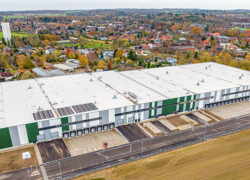
Passerinvest portfolio largely aligned with EU taxonomy standards

Passerinvest Group has completed an assessment of its office portfolio in cooperation with EY, evaluating compliance with the EU taxonomy framework for sustainable investments.

The review covered assets in the Brumlovka and Nové Roztyly districts of Prague. According to the company, 92 percent of the buildings assessed meet the criteria set out under the European classification system. This equates to approximately 200,000 sqm in Brumlovka and a further 23,000 sqm in Nové Roztyly.

The remaining portion of the portfolio consists of a single building that is scheduled for refurbishment to achieve the same environmental standards. Passerinvest stated that similar sustainability criteria are being applied to projects currently under development, including the Hila mixed-use scheme in Brumlovka and the Sequoia office building in Nové Roztyly.

Commenting on the process, Eva Vyskočilová said the scale of the assessment is notable within the Czech market, adding that the use of detailed data allows the results to support both regulatory reporting and long-term sustainability management.

The EU taxonomy provides a standardised framework for defining environmentally sustainable economic activities and is increasingly used to guide investment decisions, financing, and asset management strategies across the European real estate sector.

Deka Immobilien appoints new operator for W Amsterdam

Deka Immobilien has signed a new lease agreement with Corendon Hotels & Resorts for the operation of the five-star W Amsterdam.

The hotel, located in the centre of Amsterdam, occupies two listed buildings that were converted from office use into a hospitality scheme in 2015. The property includes 238 rooms, of which 66 are suites, alongside a spa and two restaurants.

Situated adjacent to the Royal Palace Amsterdam and near Dam Square, the hotel is positioned in one of the city’s most visited areas.

Under the agreement, Corendon will operate the asset on a long-term lease while maintaining the existing W Hotels branding.

The property has been held in the Deka-ImmobilienGlobal portfolio since 2017.

Rapid Urbanisation Is Reshaping Housing, Infrastructure and Living Standards in India

Rapid urbanisation continues to redefine the economic and social landscape of India, with major metropolitan regions expanding in both scale and complexity. Since the economic liberalisation reforms of 1991, cities such as Mumbai, Delhi, Bengaluru and Chennai have emerged as primary engines of growth, attracting investment, labour and infrastructure development.

According to the World Bank, India’s urban population is projected to expand significantly in the coming decades, with estimates suggesting that cities could house close to 50 percent of the population by 2050. This transition would make India one of the largest contributors to global urban growth.

Urban Expansion and Demographic Shifts

India’s urban population currently accounts for roughly 35-37 percent of the total population, depending on methodology and projections from institutions such as the United Nations. Over the next 25 years, the country is expected to add hundreds of millions of urban residents, driven by both migration and natural population growth.

Government analysis, including findings referenced in the Economic Survey of India, points to a clear pattern of outward expansion in major metropolitan regions. Growth is increasingly concentrated in peri-urban and suburban corridors, particularly along transport infrastructure, reflecting both affordability constraints in core areas and improvements in connectivity.

Housing Demand and Structural Shortages

Urbanisation continues to place significant pressure on housing supply. Estimates from government-backed assessments indicate an urban housing shortage of approximately 18–20 million units, with the deficit heavily concentrated in economically weaker sections (EWS) and lower-income groups.

Affordability remains a key challenge, particularly in high-cost cities. In markets such as Mumbai, price-to-income ratios are among the highest globally, limiting access to formal housing. Regulatory constraints, including floor space index (FSI) limits and complex approval processes, have historically restricted supply, although gradual reforms are underway.

Large-scale programmes such as Pradhan Mantri Awas Yojana aim to address these gaps, but delivery has been uneven relative to demand.

Infrastructure Pressures and Investment Needs

Urban infrastructure continues to lag behind population growth in many cities. Challenges related to transport congestion, waste management and access to basic services remain persistent.

Cities such as Bengaluru have become emblematic of infrastructure strain, with congestion resulting in measurable economic losses. Studies cited by NITI Aayog highlight the significant productivity impact of traffic delays in major urban centres.

At the same time, investment in mass transit systems has accelerated. India’s metro rail network has expanded rapidly, now spanning over 1,000 kilometres across multiple cities. Projects such as the Delhi-Meerut Regional Rapid Transit System (RRTS) are expected to further improve regional connectivity, although private vehicle usage continues to dominate urban mobility patterns.

Living Standards: Gains and Trade-offs

Urbanisation has contributed substantially to economic growth. Estimates from institutions including Asian Development Bank indicate that cities generate more than 60 percent of India’s GDP, a share expected to increase over time.

However, improvements in income and access to services are offset by rising concerns around quality of life. Air pollution, congestion and limited access to affordable housing continue to affect living conditions in major metropolitan areas.

India is also home to one of the world’s largest informal housing populations, reflecting structural gaps in housing delivery and urban planning. While estimates vary, the scale of informal settlements remains a critical policy challenge.

A Structural Transition with Long-Term Implications

India’s urban transition represents a structural shift that will define its economic trajectory over the coming decades. While cities are expected to remain central to growth, the sustainability of this expansion will depend on coordinated reforms in housing policy, infrastructure investment and urban governance.

Improving affordability, increasing density through planning reforms and strengthening transport linkages with secondary cities will be essential to managing future growth. Without such measures, the gap between economic output and living standards is likely to persist.

Source: CIJ.World India Research & Analysis Team

Can India Emerge as a Global Manufacturing Hub Amid Supply Chain Realignment?

India is increasingly being positioned as a potential beneficiary of global supply chain diversification, as multinational companies reassess production strategies in response to geopolitical tensions, cost pressures and the need for resilience. While the country has historically transitioned from an agriculture-led to a services-driven economy, recent policy initiatives and investment trends suggest a renewed focus on manufacturing.

Global Supply Chain Reconfiguration

Over the past decade, and particularly following the COVID-19 pandemic and ongoing trade tensions between the United States and China, companies have accelerated efforts to diversify manufacturing bases. This “China+1” strategy has seen countries such as Vietnam, Thailand and Mexico attract significant investment.

India has emerged as a complementary destination within this shift, supported by its large domestic market, expanding middle class and demographic profile. According to analysis by the World Bank and UNCTAD, supply chain diversification is now driven as much by risk management as by cost efficiency, creating opportunities for multiple regional manufacturing hubs rather than a single dominant location.

Policy Support and Industrial Strategy

Government-led initiatives have played a central role in repositioning India’s manufacturing sector. The “Make in India” programme, launched in 2014, alongside Production Linked Incentive (PLI) schemes across key sectors, aims to boost domestic production and attract foreign investment.

According to the Ministry of Commerce and Industry India, PLI schemes have generated substantial investment commitments and increased production across sectors such as electronics, pharmaceuticals and automotive manufacturing. While headline figures cited by government sources point to large-scale investment and output gains, independent assessments suggest that the full impact is still evolving and varies significantly by sector.

Competitive Advantages

India’s structural advantages remain central to its manufacturing ambitions. These include a large and relatively young workforce, a growing consumer market and improving infrastructure. Foreign direct investment inflows into manufacturing have remained robust over the past decade, supported by regulatory reforms and sector-specific incentives.

Manufacturing activity indicators also point to steady expansion. Purchasing Managers’ Index (PMI) readings have generally remained in expansionary territory in recent periods, reflecting continued industrial activity despite global economic uncertainty.

Logistics efficiency has improved in recent years, although estimates vary. While some government sources suggest logistics costs are approaching single-digit levels as a share of GDP, external assessments, including those referenced by the World Bank, typically place India’s logistics costs higher than those in more established manufacturing economies.

Structural Challenges

Despite progress, several structural constraints continue to limit India’s ability to fully capitalise on global manufacturing shifts.

Infrastructure gaps remain a concern, particularly in terms of multimodal connectivity, port efficiency and energy reliability. Although large-scale investments are underway, execution timelines remain uneven across regions.

Labour productivity and skills development also present challenges. According to various studies, including those cited by the International Labour Organization, the proportion of the workforce with formal vocational training in India remains significantly lower than in developed economies.

Regulatory complexity and approval timelines continue to affect project execution, although reforms aimed at improving ease of doing business have led to gradual improvements. Comparisons with Southeast Asian economies such as Vietnam indicate that India still faces competition in terms of speed and predictability of approvals.

A Multi-Hub Manufacturing Future

While India is well-positioned to benefit from supply chain diversification, most analysts agree that it is unlikely to replace China as a single dominant manufacturing hub in the near term. Instead, the global manufacturing landscape is expected to evolve into a multi-hub system, with India playing an increasingly important role alongside other emerging economies.

The country’s ability to scale its manufacturing sector will depend on continued policy execution, infrastructure delivery and improvements in labour productivity. If these factors align, India could significantly expand its share of global manufacturing output over the medium to long term.

Source: CIJ.World India Research & Analysis Team

Upwards-Only Rent Review Ban Receives Royal Assent

Legislation prohibiting upwards-only rent reviews in commercial leases has received Royal Assent, marking a significant shift in property law across England and Wales. The reform forms part of the English Devolution and Community Empowerment Act 2026, which was formally approved on 29 April 2026.

Despite the milestone, the new rules are not expected to take effect immediately. Market participants anticipate implementation will follow secondary regulations, with commencement likely in 2027.

The ban will apply to commercial leases, including renewals, but will not affect agreements currently being completed. Leases entered into before the legislation comes into force will remain outside its scope, offering a transitional window for landlords and tenants negotiating terms under the existing framework.

However, the Act introduces a limited retrospective element. Where a lease is granted under an option or agreement concluded on or after 17 March 2026—and involving an existing tenant occupying all or part of the property—the new provisions will apply. In such cases, mechanisms that would otherwise fix rent on an upwards-only basis will be converted into arrangements allowing both upward and downward adjustments.

The reform represents one of the most notable changes to commercial leasing practice since the Landlord and Tenant Act 1954, which has long governed business tenancies in England and Wales. In addition to banning upwards-only rent reviews, the legislation also prohibits the use of rental floors or “collars,” a feature often used to limit downward movement in rent.

For example, if a lease granted after 17 March 2026 includes an option to renew, the initial lease may still contain upwards-only review provisions if completed before the ban takes effect. However, any subsequent lease triggered by that option would fall within the new regime, requiring rent review mechanisms to allow both increases and decreases.

By contrast, agreements entered into with new tenants before the ban comes into force will not be affected, even if the resulting lease is completed at a later date.

Further clarification may follow. Industry participants expect the government to consult on the treatment of rent caps and collars, although the current legislation prohibits such mechanisms. Any adjustment would require additional secondary legislation.

The introduction of the ban is expected to have a material impact on lease structuring, valuation assumptions, and investor expectations, as the market adjusts to a more flexible approach to rent reviews.

Zeitraum Enters Slovak Rental Market Through Bratislava Project

Zeitraum, a Central European provider of professionally managed rental housing, has entered the Slovak market as an operating partner in a large-scale serviced apartment project in Bratislava. The development is located in the Nesto district and is being delivered by Lucron. The move marks Zeitraum’s first activity in Slovakia, where the institutional rental housing segment remains limited.

“Slovakia is one of the countries with the highest share of owner-occupied housing in Europe – only around 8–10% of the population lives in rental housing and professionally managed rental housing has been lacking here. Bratislava shows strong and growing demand potential: more than a fifth of the city’s population is made up of people aged 25 to 39, who are more mobile, are postponing starting a family and are looking for flexible forms of housing,” said Zdena Noack, co-founder and CEO of Zeitraum.

The company currently operates a portfolio exceeding 2,000 beds across the Czech Republic and Poland, including student housing in Prague, Kraków and Warsaw, as well as serviced apartments in central Prague and Plzeň. According to the company, occupancy levels across its portfolio range between 90% and 98%.

“Professionally serviced rental housing has become the absolute standard in many European cities. Slovakia has similar demographic and economic dynamics and at the same time a unique opportunity to set this segment up right from the start. We are happy to have a part in this,” Noack added.

Construction of the Bratislava project began in March 2026 and is expected to deliver more than 300 rental units. Zeitraum joined the scheme during the preparation phase and is involved in shaping the layout, overall concept and service offering. The development is aimed at a mix of tenants, including students, young professionals and expatriates.

“Our ten-year experience in the Czech and Polish markets has shown us what tenants really need: stability, predictability of conditions and quality service. This is exactly what we want to bring to the Slovak market. Cooperation with the developer Lucron allows us to be involved from the very design of the project, which is absolutely crucial for successful operation,” Noack said.

The Slovakia entry forms part of Zeitraum’s broader expansion strategy, which also includes planned entry into Switzerland in the coming years.

ECB Holds Interest Rates as Real Estate Sector Weighs Inflation Risks and Geopolitical Uncertainty

The European Central Bank has left its key interest rates unchanged following its latest monetary policy meeting, a move widely anticipated by market participants but one that underscores the growing uncertainty surrounding inflation and global economic stability.

Industry experts point to geopolitical tensions, particularly the ongoing conflict involving Iran and the potential disruption of key trade routes such as the Strait of Hormuz, as a central factor shaping the ECB’s cautious stance.

Prof. Dr. Felix Schindler, Head of Research & Strategy at HIH Invest, said the central bank’s decision to pause should not be interpreted as a definitive shift in direction. “Postponed is not cancelled,” he noted, highlighting that while inflation increases have so far been driven primarily by rising energy and commodity prices, underlying core inflation has yet to reflect these pressures. However, rising consumer inflation expectations remain a key concern.

Schindler added that a prolonged disruption to global trade could increase the likelihood of interest rate hikes later in the year, particularly if second-round inflationary effects begin to materialise. He also pointed out that capital markets have already adjusted, with higher rates largely priced into long-term real estate financing.

A similar assessment was offered by Prof. Dr. Steffen Sebastian of the IREBS Institut für Immobilienwirtschaft, who described the current macroeconomic environment as transitional. He warned that the global economy may be shifting from a period of slow growth and moderating inflation toward a phase characterised by heightened stagflation risks.

According to Sebastian, the duration of the conflict will be decisive. A short-lived disruption might have resulted in only temporary inflationary pressure, but a prolonged crisis could embed rising costs throughout supply chains, ultimately forcing central banks and capital markets to respond more aggressively. He also noted that ECB President Christine Lagarde had already signalled in April that further data would be required before any policy adjustment.

From a financing perspective, Francesco Fedele, CEO of BF.direkt AG, emphasised that markets are already anticipating additional rate increases this year. He pointed to a noticeable rise in the ten-year swap rate since the outbreak of the conflict, a key benchmark for real estate financing.

Fedele cautioned that even in a scenario where the ECB refrains from raising rates despite higher inflation, long-term borrowing costs could continue to increase as capital markets price in elevated inflation expectations. He added that expectations of rate cuts, which had been forecast prior to the conflict, are now likely to be delayed or may not materialise at all, signalling a longer-term shift away from the low-interest-rate environment that characterised previous years.

For lenders and investors, the ECB’s decision offers only temporary relief. Stefan Hoenen, Head of Commercial Real Estate at Hamburg Commercial Bank, described the move as a “pause” that provides short-term stability in financing costs and supports planning certainty for ongoing transactions.

However, he warned that this stability is fragile. “The pressure on pricing and yield expectations remains high,” Hoenen said, noting that elevated energy costs and inflation expectations continue to weigh on market sentiment. He suggested that the current pause should be viewed less as a signal of easing conditions and more as a prelude to potential tightening later in the year, with subdued market activity likely to persist.

Ulrich Creydt, Managing Director of Ypsilon Steuerberatungsgesellschaft, expressed some surprise at the ECB’s decision, citing a range of indicators that had pointed toward a possible rate increase, including rising inflation, supply chain disruptions and volatility in equity markets.

He suggested the central bank may be aiming to project confidence that geopolitical tensions have not yet translated into severe economic consequences for Europe. Nevertheless, Creydt warned that uncertainty remains high ahead of the ECB’s next policy meeting, with the possibility of a rate increase still firmly on the table. In the current environment, he advised borrowers to act decisively if favourable financing terms are available.

While the ECB’s decision provides a temporary pause for the real estate sector, the broader outlook remains closely tied to geopolitical developments and inflation dynamics. Market participants increasingly expect that monetary policy could tighten later in 2026 should external pressures persist.

Photo: Left to right- Prof. Dr. Felix Schindler, Head of Research & Strategy at HIH Invest; Francesco Fedele, CEO of BF.direkt AG; Ulrich Creydt, Managing Director of Ypsilon Steuerberatungsgesellschaft; Stefan Hoenen, Head of Commercial Real Estate at Hamburg Commercial Bank and Prof. Dr. Steffen Sebastian of the IREBS Institut für Immobilienwirtschaft

Mumbai Records Strong February Property Sales as Demand Remains Resilient

Mumbai recorded one of its strongest February performances in over a decade, with residential demand continuing to underpin activity in India’s largest real estate market.

According to data published by Knight Frank India, the city registered just over 13,000 property transactions in February 2026, marking the highest February total in more than ten years. The surge in activity translated into stamp duty collections exceeding ₹1,100 crore, reflecting continued strength in buyer sentiment despite elevated property values.

Residential units continued to dominate transaction volumes, accounting for roughly 80 percent of total registrations. The data also indicates an ongoing shift towards higher-value housing, with an increasing share of transactions recorded in the mid- to premium segments. Homes priced above ₹5 crore saw a modest increase in share, while the ₹1–5 crore bracket continued to form the core of the market.

Demand Patterns and Location Shifts

Activity remained concentrated in suburban markets, particularly in the western corridor, which continues to benefit from infrastructure upgrades and improved connectivity. Industry data suggests that the western suburbs accounted for more than half of total registrations, while central locations saw a relative decline in share.

This trend reflects a broader structural shift in Mumbai’s residential market, where affordability constraints in core areas are pushing demand towards peripheral and suburban locations.

Infrastructure as a Key Catalyst

Ongoing infrastructure development remains a central driver of market activity. Projects such as the Mumbai Coastal Road, the Atal Setu and the continued expansion of the metro network are improving connectivity across the metropolitan region.

These upgrades are supporting residential absorption in previously underpenetrated micro-markets, particularly in areas linked to Navi Mumbai and extended suburban corridors. Improved accessibility is also contributing to gradual value appreciation, although the extent varies significantly by location and project quality.

Macroeconomic and Financing Context

India’s broader economic environment has remained supportive of housing demand, with steady employment in sectors such as financial services, technology and media underpinning end-user demand. Mortgage availability has remained relatively stable, although interest rates are still above the lows seen during the pandemic period.

While earlier estimates of GDP growth above 8 percent reflect strong momentum, current projections from institutions such as the World Bank and the International Monetary Fund suggest a more moderate but still robust growth trajectory in the range of 6–7 percent for the near term.

Affordability and Structural Constraints

Despite strong transaction volumes, affordability remains a key constraint. Mumbai continues to rank among the least affordable housing markets globally, with a high price-to-income ratio. Elevated land costs, combined with limited land availability, continue to put upward pressure on pricing.

Rental yields remain relatively low, typically in the range of 2–3 percent, limiting the attractiveness of residential assets for yield-driven investors. As a result, the market remains largely end-user driven.

Development and Regulatory Challenges

The supply side continues to face structural challenges. Redevelopment activity, particularly in older parts of the city, remains complex due to fragmented ownership structures and regulatory requirements. In addition, rising construction costs and periodic liquidity constraints among developers are impacting project timelines.

While recent momentum reflects underlying demand strength, the sustainability of growth will depend on a combination of continued infrastructure delivery, regulatory efficiency and improved affordability.

Source: CIJ.World India Research & Analysis Team

India-EU Trade Talks Could Reshape Real Estate Demand if Agreement Is Finalised

The proposed free trade agreement between India and the European Union remains one of the most closely watched bilateral negotiations, with potential implications extending beyond trade into sectors such as real estate, manufacturing and logistics. While discussions are ongoing and no final agreement has yet been concluded, policymakers on both sides have signalled continued commitment to reaching a comprehensive deal.

Negotiations, which were relaunched in 2022 after a prolonged pause, aim to reduce trade barriers, improve market access and create a more predictable investment framework. According to statements from the European Commission and India’s Ministry of Commerce and Industry India, the agreement is expected to cover goods, services and investment, with a focus on facilitating long-term economic cooperation.

Bilateral trade between India and the EU is already significant, with annual volumes estimated in the range of €120–140 billion. Both sides have expressed ambitions to expand this further over the coming decade, although projections remain contingent on the final scope of the agreement and broader global economic conditions.

Industrial and Logistics Demand

If concluded, the agreement could reinforce India’s position within global supply chains, particularly as companies continue to diversify production strategies beyond China. This “China+1” approach has already contributed to increased interest in India’s manufacturing sector, supported by government-led initiatives such as production-linked incentive (PLI) schemes and infrastructure investment.

In this context, demand for industrial and logistics real estate is expected to remain strong. Increased trade flows and potential relocation or expansion of European manufacturing operations could translate into higher absorption of warehousing, distribution and light industrial space, particularly in established hubs such as the National Capital Region, Chennai and Pune.

Industry estimates suggest that trade liberalisation could support additional leasing activity across Grade A warehousing assets, although the scale and timing will depend on the pace of implementation and investor response.

Office Market and Corporate Expansion

The agreement could also support growth in India’s office sector, particularly through the expansion of European occupiers. Multinational companies are already increasing their presence through Global Capability Centres (GCCs), research and development facilities and regional headquarters.

Cities including Bengaluru, Hyderabad and Chennai have emerged as key destinations for such investment, driven by talent availability and cost competitiveness. A more favourable trade and investment framework could further encourage European firms to scale operations, supporting demand for high-quality office space.

Residential Spillover Effects

While the direct impact of a trade agreement on residential real estate is less immediate, indirect effects could emerge over time. Growth in manufacturing and services employment tends to drive urbanisation and income growth, which in turn supports housing demand.

Industrial corridors and logistics hubs, such as those around Gurugram, Noida and Pune, may see increased residential development activity if job creation accelerates. However, this remains dependent on broader economic factors including financing conditions, affordability and infrastructure delivery.

Investment Flows and Market Outlook

From an investment perspective, a comprehensive agreement could enhance India’s attractiveness as a destination for foreign direct investment, in line with broader global trends identified by organisations such as UNCTAD. Greater regulatory clarity and reduced trade frictions typically support long-term capital deployment, including in real estate-linked sectors.

At the same time, the scale of impact should not be overstated. The benefits for real estate will depend on the final terms of the agreement, the speed of execution and the broader macroeconomic environment. Factors such as interest rates, domestic policy and global trade dynamics will continue to play a significant role.

A Medium-Term Structural Shift

Although the India–EU FTA is still under negotiation, its potential significance lies in its ability to reinforce structural trends already underway in India’s economy. Manufacturing growth, supply chain diversification and the expansion of global corporate operations are all key drivers of real estate demand.

If successfully concluded, the agreement could act as an additional catalyst, supporting sustained activity across industrial, logistics and office segments, while contributing indirectly to residential growth in emerging urban corridors.

Source: CIJ.World India Research & Analysis Team

Bucharest Reports Strongest Hotel Revenue Growth in CEE in 2025

Bucharest recorded the highest growth in hotel revenues among major Central and Eastern European markets in 2025, with revenue per available room (RevPAR) increasing by 12% year-on-year, according to analysis by Cushman & Wakefield.

Across the CEE-6 region, RevPAR rose by 8.9% in 2025, supported by higher average daily rates (ADR) and improved occupancy. Alongside Bucharest, other cities such as Warsaw and Prague also recorded notable growth, while Prague and Budapest remained the strongest markets in absolute RevPAR terms.

Bucharest ranked third among regional capitals for both ADR and RevPAR, behind Prague and Budapest, and fourth in occupancy. Compared with 2019 levels, RevPAR in the Romanian capital is approximately 26% higher, while ADR has increased by more than 27%. Occupancy remains slightly below pre-pandemic levels, although the gap has narrowed.

Growth in 2025 was primarily driven by an increase in room rates, with additional support from improving occupancy levels.

Alina Cazachevici, Partner and Head of Valuation & Advisory, Hospitality & Alternatives, CEE/SEE at Cushman & Wakefield, said: “Bucharest’s hotel market continues to outperform, with total tourist overnights up 6.3% year-on-year and RevPAR exceeding pre-Covid levels by 26.1%, with both local and international overnights exceeding pre-pandemic levels. Nevertheless, political and macroeconomic uncertainty continue to temper investment sentiment and influence pricing expectations. In line with broader CEE trends, the market remains predominantly driven by domestic capital and private sector buyers, while international investors remain disciplined and return oriented.”

The market’s performance is supporting new development activity. More than 2,000 hotel rooms are expected to be delivered in Bucharest by 2028, representing an increase of around 17% in supply across segments ranging from midscale to luxury.

Projects in the pipeline include developments under brands such as Hyatt, Swissotel, Novotel and Radisson Red, alongside mixed-use schemes incorporating hotel components. In 2026, new supply includes the Mercure Bucharest Cantemir and Hilton Garden Inn Militari, adding approximately 165 rooms.

One of the key openings in 2025 was the Corinthia Grand Hotel du Boulevard, located in the city centre, which has contributed to upward pressure on room rates in the capital.

From an investment perspective, Bucharest recorded hotel transaction volumes of approximately EUR 46 million in 2025, representing a significant increase compared with the previous year. Activity was driven by a limited number of transactions, including portfolio deals and individual asset sales across midscale and upscale segments.

At a regional level, hotel investment volumes across CEE increased substantially in 2025, led by activity in the Czech Republic and Hungary. Prime yields in core markets, including Prague, Budapest and Bucharest, showed signs of compression, while other capitals remained relatively stable.

Market participants expect continued activity into 2026, supported by improving financing conditions and ongoing investment processes.

front page info
LATEST NEWS