WDP to Develop 32,000 m² Distribution Centre for FAN Courier near Bucharest

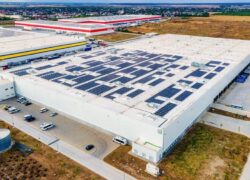
WDP has announced the development of a new 32,000 m² distribution centre in WDP Park Bucharest – Ștefănești for FAN Courier Group, one of Romania’s leading courier and logistics operators. The two companies already collaborate on a facility in Timișoara, and this new investment further strengthens their partnership.

The project, valued at around €22 million, will be built on WDP-owned land in northern Bucharest. Construction is scheduled to begin in early 2026, with completion expected later that year. FAN Courier will occupy the property under a 10-year triple-net lease. The facility is designed to support the company’s expanding delivery operations and will reinforce Ștefănești’s role as a key logistics hub serving the capital and surrounding regions.

According to Jeroen Biermans, Country Manager of WDP Romania, this new project deepens the company’s relationship with FAN Courier and expands WDP’s footprint in northern Bucharest. He added that the development aligns with WDP’s cluster strategy and marks the completion of the park’s first phase, which highlights sustained demand for modern logistics space in the area.

WDP Park Bucharest – Ștefănești has become the company’s largest logistics cluster, with more than 400,000 m² of leasable space. It accommodates both small units and large distribution centres and hosts tenants such as Decathlon, Auchan, LPP, and several industrial suppliers. The FAN Courier facility finalises the park’s first development phase and positions Ștefănești among WDP’s largest sites, alongside WDP Park Bollène in France.

WDP is now working to expand its Bucharest cluster through additional land acquisitions. Within the current park, another 30,000 m² of space is planned for existing clients, while a new site north of Ștefănești is under development, beginning with a 54,000 m² project for the retailer Action.

Beyond its logistics function, the park has become a model for sustainability and biodiversity in industrial real estate. It features over 12 MWp of solar panels, 10,000 trees, and 5,000 shrubs across 150,000 m², forming Romania’s largest biodiversity project of its kind. These initiatives reflect WDP’s long-term approach to integrating environmental goals into its logistics infrastructure.

BF Group and FOX Group Form Joint Venture to Finance Logistics Real Estate Developments

BF Group and FOX Group have announced the formation of a joint venture focused on financing logistics real estate projects across Germany. The new company, BF.infrastructure finance, will combine FOX Group’s development pipeline and property identification expertise with BF Group’s experience in lending and financial structuring. Senior management will include representatives from both partners.

The joint venture will create debt structures designed for professional investors, providing access to financing opportunities in logistics property development while supporting developers with tailored funding solutions. The initiative addresses the growing demand for alternative financing in the sector, as traditional banks remain cautious despite high capital needs and strong underlying demand.

According to the partners, the logistics segment offers favourable risk-adjusted returns, driven by sustained demand for modern storage and distribution space and relatively short investment horizons.

Francesco Fedele, CEO of BF.direkt AG, said the collaboration aims to fill a clear financing gap in the market. “We see a significant need for alternative lending solutions in logistics property development. Through this joint venture, we intend to make efficient and attractive financing options more widely available.”

Jörn Reinecke, Managing Partner of FOX Group, highlighted the investment appeal of the sector: “Financing logistics developments offers a compelling balance. The returns are higher than those from investments in standing properties, while the risk remains lower than with direct equity participation.”

The new venture is part of FOX Group’s broader strategy to expand its logistics real estate operations. It complements the activities of its FOX Industrial Real Estate division, which focuses on the development of big-box logistics centres, light industrial buildings, and business parks.

Images: BF.direkt AG (Francesco Fedele), FOX Group (Jörn Reinecke)

Deka Immobilien Sells Frankfurt Office Building to IMAXXAM

Deka Immobilien has completed the sale of the Lighttower office building in Frankfurt’s Ostend district. The property, formerly part of the Deka-ImmobilienEuropa open-ended real estate fund, was acquired by IMAXXAM for its German Small Asset Invest (GSAI) fund. The parties have not disclosed the purchase price.

The Lighttower offers more than 10,000 m² of leasable space and 87 parking spaces. It is nearly fully occupied by 13 tenants, with Frankfurt Economic Development as the main occupier. The property is situated on Hanauer Landstraße 126–128, close to the European Central Bank and Frankfurt Ostbahnhof railway station. Originally built in 1966, the building was extensively modernised between 2002 and 2005, including the addition of an extra floor.

The sale marks part of Deka-ImmobilienEuropa’s ongoing strategy to streamline and optimise its portfolio. According to Deka Immobilien, the property delivered a solid overall return for investors over the course of its holding period.

Europe’s Hybrid Work Reset: From Flexibility to Structure

Across Europe, the landscape of work in 2025 reveals a shared reality: hybrid work is no longer an experiment but a structured norm. The balance between home and office has stabilized, though the rhythm varies widely from country to country. The pandemic’s remote revolution has given way to a subtler, more regulated hybrid model—anchored in two or three in-office days per week for most desk-based jobs.

In the United Kingdom, the hybrid model has become standardized rather than optional. Job listings across sectors now specify office presence as a condition, with most employers expecting two to three office days per week. The ultra-flexible one-day arrangements that flourished during the pandemic have almost vanished. Analysts say the UK’s pattern reflects both cultural adaptation and the realities of collaboration—businesses want teams together, but not full-time.

In Germany, hybrid work has proven remarkably resilient. Roughly a quarter of the workforce now works from home at least part of the week, a rate that has held steady since 2024. The country’s engineering and manufacturing base still demands physical presence, but the white-collar core of its economy—finance, professional services, and IT—has embraced long-term hybrid patterns. The result is a model that prioritizes predictability over novelty, with two or three remote days seen as the practical ceiling.

France has settled into a similar rhythm. While homeworking rates dipped from the pandemic peak, telework remains embedded in corporate structures. French employees in eligible roles typically spend about two days per week at home, sustained by collective agreements that protect the right to disconnect and limit unpaid overtime. For many companies, this compromise between flexibility and structure has become part of their employment brand.

Further north, Belgium remains one of Europe’s most hybrid-friendly markets. Surveys show that most employees there work remotely one or two days per week, with Brussels—where cross-border commuting is heavy—showing even higher averages. The practice has eased traffic pressure and become part of the capital’s sustainability agenda.

Southern Europe paints a different picture. In Spain, about a quarter of the workforce teleworks in some capacity, with younger workers most likely to split their week between home and office. Italy continues to use its own “smart working” framework, though adoption varies sharply by company. Many Italian firms now treat two home days as a reasonable middle ground, while public administration and smaller enterprises have returned more firmly to traditional office setups.

In the Netherlands, hybrid working is now woven into the national culture. The Dutch legal framework grants employees the right to request remote work, and around a third of workers now exercise that option regularly. The country’s mature infrastructure and long tradition of part-time arrangements make flexibility the default, not the exception.

Sweden and its Nordic neighbours maintain similarly flexible systems. Major cities like Stockholm see regular remote work in well over 10–15 percent of jobs, and although the frequency of full-week telework has dipped, the hybrid model remains a cornerstone of professional life. Nordic firms continue to link workplace flexibility with employee well-being and productivity rather than with short-term efficiency drives.

Central Europe shows the hybrid model’s uneven integration. In Poland, surveys indicate that nearly half of employees prefer hybrid schedules, yet employers—especially outside large cities—often insist on more in-office time. Czechia mirrors this tension: hybrid roles attract far more applicants than fully on-site ones, but many firms still push for a return to three or more office days. Hungary is mid-transition, with hybrid arrangements widespread in corporate sectors but inconsistent across public and manufacturing jobs.

What unites these markets is a quiet recalibration of what “flexible” really means. The early 2020s were defined by freedom—work anywhere, anytime. The mid-decade reality is defined by expectation: how many office days, which days, and for what purpose. Europe’s capital cities have all reached the same conclusion from different directions. Too much home working risks isolation and weak cohesion; too much office time undermines retention and morale. The sweet spot, it seems, lies somewhere around the middle of the week.

Yet this convergence hides wide local contrasts. Northern and Western Europe continue to enjoy higher flexibility and better digital infrastructure; Southern and Central Europe, more hierarchical management cultures, move slower. The direction, however, is shared. Employers are not abandoning hybrid work—they are professionalising it.

If the pandemic forced remote work on Europe, 2025 marks the year when the continent truly learned to govern it.

Source: comp.

Europe Under Pressure: Security Tests on All Fronts

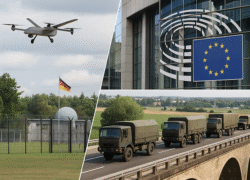
A series of incidents across Europe has deepened unease about the continent’s security and political stability. Within the span of a few days, reports surfaced of drones flying over a Belgian military base, Polish investigators uncovering a plot to smuggle explosives hidden in corn tins allegedly linked to Russian operatives, and a backlash in the European Parliament after several members met privately with Russian lawmakers. At the same time, France has proposed the creation of a new EU post — a military mobility coordinator — to ensure troops and equipment can move quickly across Europe in the event of crisis.

Each event has its own context, yet together they paint a picture of a continent facing simultaneous tests of its resilience. Belgium’s drone sightings point to the probing of NATO’s defensive infrastructure. Poland’s case reveals the ongoing shadow war being waged through covert means. The Parliament’s controversy exposes political vulnerabilities within the EU itself. And France’s call for faster military coordination underscores how slow Europe remains in translating its security ambitions into practical capability.

Belgian defence officials confirmed that roughly fifteen drones were detected over the Elsenborn training range near the German border during routine surveillance operations. The flights were described as “unusual” and “potentially coordinated,” prompting an investigation into their origin. Similar sightings have been reported in Germany and the Czech Republic in recent months, suggesting a pattern of reconnaissance activity near strategic facilities. Though no state has been officially blamed, the incidents have reignited concerns over hybrid warfare and intelligence gathering in European airspace.

In Poland, prosecutors disclosed an investigation into what they described as an attempted smuggling of explosives disguised as canned corn. The materials, reportedly of Russian origin, were allegedly meant for sabotage operations within the country. While the motive remains unclear, officials hinted that Poland’s high-profile military support for Ukraine may have made it a target. The case follows a series of arrests of suspected Russian agents earlier this year accused of plotting attacks on logistics hubs linked to Ukraine’s supply chain.

Meanwhile, in Brussels, the European Parliament is grappling with its own crisis after news broke that a small group of MEPs had met Russian Duma members despite ongoing sanctions and diplomatic restrictions. The meeting, which took place outside official EU channels, has drawn condemnation from within the Parliament. Critics say it undermines the EU’s unified stance against Moscow and risks normalising contact with officials from a sanctioned government. The controversy reflects a deeper challenge: as Europe hardens its external posture toward Russia, internal divisions continue to test the limits of its political cohesion.

Amid these tensions, France has stepped forward with a plan aimed at strengthening Europe’s operational backbone. Paris wants the EU to appoint a military mobility coordinator who would oversee cross-border movement of troops and equipment, cutting the current transit time — which can exceed ten days — down to just five. French military officials argue that Europe’s response capacity is dangerously slow, dependent on fragmented national approvals that could delay reinforcements in an emergency. The European Commission is expected to present formal proposals in November to simplify these procedures and establish dedicated “mobility corridors” across member states.

The convergence of these developments suggests a wider pattern of stress across the European security landscape. Drone incursions challenge military readiness, sabotage attempts expose domestic vulnerabilities, political outreach to sanctioned actors strains institutional integrity, and bureaucratic bottlenecks hinder rapid defence coordination. Though none of the incidents are directly linked by evidence, they collectively illustrate the complex spectrum of modern European insecurity — where the battlefield extends from the skies to the corridors of power.

Analysts see these overlapping events as signs that Europe is being tested both from without and within. Some warn that hostile actors may be using hybrid tactics to probe defences, spread confusion, and erode public trust. Others argue that the real issue lies in Europe’s slow adaptation to a new security reality that demands not only military strength but also political unity and logistical readiness.

As investigations continue in Belgium and Poland, the European Parliament weighs its internal response, and France pushes for structural reform, one conclusion is difficult to escape: Europe’s security front line no longer runs solely along its eastern borders. It now extends through its skies, its institutions, and its infrastructure — wherever resilience, coordination, and resolve are being tested.

Editorial Note: Views expressed are prospective and for information only.

U.S. Government Shutdown: Why Washington Is Deadlocked Again

The United States has entered another government shutdown, forcing many federal services to close or scale back as Congress fails to agree on new funding. The standoff, now stretching into several days, highlights deep partisan divisions and competing ideas about the role and size of government.

The shutdown began when lawmakers in the House and Senate failed to pass the spending bills that keep federal agencies running. Without these appropriations or a short-term extension, government departments lose the legal authority to spend money. As a result, hundreds of thousands of public employees are working without pay or have been furloughed, while everything from national parks to research programs and small business loan offices are shuttered.

Republicans, many aligned with former President Donald Trump’s populist faction, argue that the shutdown is a necessary confrontation over what they describe as unsustainable government spending. They want deep cuts to discretionary programs, stricter border controls, and a rollback of environmental and social initiatives passed under President Joe Biden. For Trump and his allies, this is not only about budgets but about political principle — a test of whether Washington can be forced to change through fiscal confrontation. They argue that the United States, with a national debt now exceeding $34 trillion, cannot continue on its current path.

Democrats, led by President Biden and the Senate majority, counter that the shutdown is reckless and self-inflicted. They accuse House Republicans of holding essential services hostage to ideological demands, warning that such tactics erode public trust and damage the economy. The administration’s position is that negotiations over spending should happen while the government remains open, not during a crisis. Democrats also point out that much of the contested spending includes bipartisan priorities such as defense and veterans’ programs.

The consequences are already visible. Federal workers are bracing for missed paychecks, national parks have closed, and some air traffic and border operations are being maintained only by staff working unpaid. Economists warn that a prolonged shutdown could drag on growth in the final quarter of the year, delay consumer tax refunds, and rattle financial markets. Past shutdowns have shown that while federal workers eventually receive back pay, contractors and small businesses that rely on government work often do not, compounding the long-term economic cost.

Political observers note that shutdowns rarely achieve their stated goals. In previous decades, similar confrontations ended with neither side gaining a clear advantage but with public frustration growing. The longer they last, the more likely voters are to punish whichever party is perceived as responsible.

For now, both sides appear entrenched. Republicans insist that reducing government spending is a moral and fiscal necessity. Democrats insist that stability must come first and that budget discipline should not come at the expense of essential services. Between these two positions, the machinery of government has once again ground to a halt — a symbolic reminder of how polarized U.S. politics has become, and how high the cost of political brinkmanship can be.

Editorial Note: Views expressed are prospective and for information only.

Sanae Takaichi: Japan’s First Female Prime Minister and the Return of Conservative Power

Japan is on the verge of a political milestone. For the first time in its history, the country is preparing to swear in a woman as Prime Minister after Sanae Takaichi secured victory in the ruling Liberal Democratic Party’s leadership contest. But while her appointment breaks a barrier in Japanese politics, it also signals a return to a more traditional and nationalist era that could redefine Japan’s domestic and foreign direction.

Takaichi’s rise marks the culmination of a career spanning three decades. Born in Nara Prefecture, she first entered politics in the early 1990s, eventually holding senior cabinet roles including ministerial posts overseeing communications and economic security. Known for her disciplined image and admiration for former Prime Minister Shinzo Abe, Takaichi built her reputation as a conservative loyalist rather than a reformist outsider.

Her ascent reflects both continuity and disruption. Within the Liberal Democratic Party, she has long represented its right-leaning faction, advocating a stronger military, a more assertive foreign policy, and closer alignment with Japan’s post-war traditional values. Yet her position as the country’s first woman to lead a government that has resisted female advancement for decades brings deep contradictions. She opposes key gender reforms such as dual surnames for married couples and female succession to the imperial throne, even as she becomes a symbol of women’s political advancement.

Economically, Takaichi inherits a delicate balance. Japan’s slow growth and rising cost pressures have frustrated households, while the Bank of Japan faces scrutiny over its gradual retreat from ultra-loose policy. During her campaign, she promised direct support to consumers, including potential tax cuts and cash handouts, rather than fiscal restraint. Her critics warn that these populist measures could strain public finances in the world’s most indebted major economy, while supporters view them as overdue stimulus for an economy long trapped in deflationary caution.

On the international stage, Takaichi is expected to adopt a more assertive tone. She has argued for strengthening Japan’s defensive capabilities and revisiting the constraints of the post-war constitution, which renounces war. That stance aligns with a growing consensus inside the security establishment but risks unsettling relations with China and South Korea, both sensitive to signs of Japanese militarisation. Her record includes visits to the controversial Yasukuni Shrine, a gesture that may play well with nationalists at home but often triggers diplomatic protests abroad.

Domestically, her leadership could test the unity of a party that has lost some of its post-Abe cohesion. Moderates in the LDP have expressed concern that her hardline positions may alienate centrist voters, particularly younger urban Japanese who prioritise social inclusivity and economic reform over ideology. Yet Takaichi’s disciplined style and reputation for decisiveness may also help stabilise a government shaken by successive leadership changes.

Her challenge will be to demonstrate that Japan’s first female prime minister can deliver more than symbolism. Supporters expect her to revive economic confidence and give Japan a stronger voice on the world stage. Critics fear she will consolidate conservative power while offering little in terms of gender equality or structural reform.

The coming months will show whether Takaichi can bridge that divide. Her victory has already reshaped Japan’s political narrative; the question is whether she can reshape its trajectory. As the world’s third-largest economy faces demographic decline, security uncertainty, and social change, her tenure will test whether Japan’s future will look more like its modern ambitions—or its traditional past.

Source: comp.

Europe’s Hotels in 2025: Higher Rates, Leaner Services, and Shifting Value Propositions

Hotel performance across Europe’s capitals remains elevated by historical standards, but the underlying product has evolved in ways that matter for both operators and investors. Since 2019, the standard definition of hotel service has shifted from full daily provision to a more balanced model shaped by sustainability, energy management, and structural cost pressures.

Daily housekeeping is no longer guaranteed in much of the mid-market. Many city hotels now clean on request or on alternating days, while luxury operators have restored full service as a brand differentiator. Plastic miniatures have disappeared almost entirely, replaced by refillable dispensers in line with EU environmental directives. These shifts, initially temporary responses to the pandemic and energy crisis, have since hardened into operating norms.

Energy remains a central driver. Since the 2022 energy shock, hotels have invested heavily in efficiency. Climate control now runs within stricter ranges, corridor lighting has been reduced, and linen reuse is promoted as standard. Behind the guest-facing changes lies a capital shift: retrofits in heating systems, solar installations, and EV charging infrastructure are now integral to hotel investment pipelines.

Digitisation has moved from optional to mandatory. Mobile check-ins, app-based room keys, and contactless payments allow operators to offset staffing shortages and improve operational margins. Breakfast service and bars, largely restored, run on shorter timetables with leaner teams. EV chargers, almost absent five years ago, are becoming as important as car parks in positioning urban hotels for demand.

Pricing remains strong. STR and HRS confirm that average daily rates across Europe rose again in 2025, albeit at a slower pace than in 2023–24. London, Paris, and Nordic capitals continue to sit at the top of the scale, while Warsaw, Vilnius, and Riga are the most affordable among major capitals. Weekend and bank-holiday stays illustrate how compressed demand drives volatility: three- or four-day breaks often trigger double-digit price lifts, especially in markets hosting events or with constrained supply.

In Southern and Eastern Europe, dynamics vary widely. Athens remains among the priciest SEE markets, with ADRs nearing €200 in peak months, further elevated by a national accommodation levy introduced this year. Bucharest has recorded rate growth well above inflation, supported by strong occupancy, while Sofia and Belgrade remain at the value end of the market. Zagreb has softened, with rates falling six percent in the first half of 2025, despite higher arrivals, while Ljubljana’s mid-market positioning is reinforced by trade fair-driven seasonality.

For investors, the outlook is clear: European hotels remain resilient, but growth is uneven and highly event-driven. Markets with diversified demand bases, such as London, Paris, and Berlin, continue to support premium pricing. Central and Eastern capitals retain their value positioning but are experiencing upward pressure as modern stock comes online and international brands expand footprints. In Southeastern Europe, policy interventions such as taxes are increasingly material to investment returns, while volatility around events is more pronounced.

Seasonality remains a decisive factor. Rates peak in spring and autumn and dip in late summer where leisure demand cannot offset weaker corporate traffic. Yet pricing discipline has become a consistent feature of the market. Even where occupancy dips, operators have largely avoided aggressive discounting, signalling structural confidence in demand.

The European hotel market of 2025 presents a redefined value proposition. Guests are paying more for rooms, but operators are delivering sustainability, digitisation, and energy efficiency rather than unlimited frills. For investors and developers, the challenge is to recognise where this recalibration strengthens margins and where it risks eroding guest satisfaction.

The sector’s ability to hold elevated rates through a period of structural change confirms hospitality’s enduring resilience as an asset class. But the balance between affordability, service delivery, and environmental responsibility will shape the next investment cycle across Europe’s urban markets.

Editorial Note: Views expressed are prospective and for information only, not financial, legal, or investment advice.

U.S. Homeowners Associations Search for Ways to Curb Rising Fees

Monthly costs for homeowners living in association-governed communities have continued to climb across the United States, prompting a wave of scrutiny and debate over whether the increases reflect genuine expenses or poor financial management.

While critics often accuse homeowners’ associations (HOAs) of inflating fees, housing and policy analysts say the real picture is more complex. Costs are being driven upward by expensive insurance markets, stricter safety rules, and rising prices for materials, utilities, and professional services. In most cases, experts argue, the trend stems less from profit-seeking and more from structural and regulatory pressures.

A growing number of professionals now point to practical reforms that could ease these burdens without undermining property standards or long-term maintenance. One approach gaining traction is regional pooling of insurance policies, allowing multiple associations to negotiate coverage together. Early pilots in states such as Florida and California have reported premium reductions of up to one quarter compared with individual policies.

Financial transparency is another recurring theme. Several states are tightening requirements for public budgets, third-party audits, and open disclosure of reserve funds. Where residents can see how their fees are allocated, disputes tend to drop and satisfaction improves. Analysts note that even small associations benefit when they follow clear accounting standards rather than relying on volunteer boards alone.

Technology is also emerging as a cost-control tool. Associations adopting shared service contracts for utilities, security, and maintenance are seeing meaningful savings, while digital energy systems are helping to reduce consumption and repair costs. New federal and state incentives—such as community retrofit grants—encourage investment in energy-efficient upgrades, easing pressure on future budgets.

In parallel, several states are experimenting with targeted loan programs and matching funds to help older buildings meet new reserve and safety requirements without imposing sudden, steep assessments on owners. These initiatives are intended to balance public safety with affordability after recent structural-failure tragedies prompted tighter oversight.

Specialists in property governance stress that improving training and accountability among HOA boards remains critical. Well-managed associations tend to maintain stable fees and higher property values, while those lacking oversight often face financial shocks and homeowner frustration.

For now, the consensus among housing experts is that fee inflation can be moderated—but not by simple caps or blanket controls. The most effective path appears to combine professional financial management, regional cooperation, and incentives for long-term efficiency.

In short, the rising cost of living in community-managed housing reflects the same pressures affecting the broader U.S. economy: insurance volatility, construction costs, and climate-related risk. Addressing these factors transparently, say analysts, is the only sustainable way to keep HOA living both safe and affordable.

Editorial Note: Views expressed are prospective and for information only, not financial, legal, or investment advice.

Service Charges in Central Europe’s Apartments: Rising Costs and Weak Oversight

Across Central Europe, residents of apartment buildings are paying more each month as service charges climb, driven by energy, insurance and renovation costs. While these increases often reflect genuine expenses, concerns remain about the lack of transparency and the potential for mismanagement in some housing associations.

Austria offers the clearest benchmark, with official statistics showing average operating costs of around €2.5 per square metre per month in 2025, roughly €165 for a mid-sized flat. In Poland, the Czech Republic, Hungary and Slovakia, no unified datasets exist, leaving residents reliant on local administrators and housing cooperatives. Charges vary widely, from Czech repair-fund contributions of 10 to 50 CZK per square metre, to Polish examples where monthly bills for a 75 m² flat can reach close to PLN 900. Hungarian common costs start around HUF 7,000–15,000, with sharper rises in buildings affected by higher insurance premiums.

Much of the recent growth stems from energy and insurance markets, along with new safety and maintenance requirements. Still, isolated corruption cases—such as investigations into Polish cooperatives by the Central Anti-Corruption Bureau—have fueled suspicion. Though case-specific, they highlight weaknesses in oversight and management practices.

Tenant organisations and consumer advocates report increasing frustration over unclear billing. Even where charges are legitimate, explanations are often lacking. In response, some governments are tightening rules. Hungary has introduced a national register of condominium managers, Slovakia and the Czech Republic legally define eligible uses of repair funds, and Austria publishes detailed cost data that allow residents to benchmark their payments.

The European Union’s climate policy is another factor shaping charges. Under the Energy Performance of Buildings Directive and the Renovation Wave initiative, apartment associations are expected to prepare for major efficiency upgrades. These measures may increase contributions today but are intended to reduce long-term energy costs.

Compared with Western Europe, Central Europe’s average charges are not unusually high, but the lack of consistency and transparency remains a challenge. Germany and the Netherlands, for instance, require detailed annual statements that can be contested in housing courts. In Central Europe, the absence of comparable standards leaves residents more exposed to disputes and uncertainty.

The outlook suggests that rising service charges will remain a feature of the region’s housing market. Experts argue that transparency, professional management and regional benchmarks are essential to protect affordability while ensuring buildings remain safe and prepared for Europe’s climate goals.

Editorial Note: This analysis reflects independent and prospective views. It is intended for informational purposes only and should not be considered financial, legal, or investment advice.

front page info
LATEST NEWS