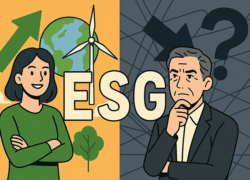
Europe Debates the Future of ESG: Reform or Retreat?

Once seen as the universal language of responsible business, the concept of ESG—environmental, social and governance—has entered a moment of reckoning in Europe. Policymakers, investors, and campaigners now find themselves debating whether the framework needs refinement, redefinition, or replacement.

At the heart of the discussion is a simple question: has ESG delivered measurable progress for the planet, or has it become another label diluted by marketing and regulation fatigue?

European officials warn that the risks of ignoring sustainability remain severe. “Surface water scarcity alone puts almost 15 percent of the euro area’s economic output at risk,” said Frank Elderson of the European Central Bank earlier this year. His remarks underline the central bank’s growing concern that climate and resource shocks could hit growth, financial stability, and long-term competitiveness.

Some of Europe’s largest investors agree that ESG cannot be abandoned even amid political pushback. “We are in the middle of an ESG backlash… it impacts the market, it impacts companies, it impacts investors,” observed Carine Smith Ihenacho, governance chief at Norway’s sovereign wealth fund. For her, the challenge is not whether to engage but how to keep the focus on long-term value rather than shifting headlines.

Corporate leaders, meanwhile, are calling for a more pragmatic approach. Carine de Boissezon, Chief Impact Officer at EDF, argued that rules can evolve without losing ambition: “Where there is room for smart simplification, let’s tweak the regulation, but we need to stay the course.”

Others are less forgiving of what ESG has become. Sir Douglas Flint, chairman of Aberdeen, admits the finance industry “made a huge mistake with extravagant claims about saving the world,” noting that early enthusiasm often turned into a public-relations exercise detached from measurable results.

Environmental groups warn that retreating from sustainability commitments now would be costly. “Europe simply cannot afford to dismantle the very laws that protect its people, nature and economy,” said Ester Asin, who leads WWF’s European policy office.

Across the continent, regulators are tightening disclosure standards, investors are reassessing portfolios, and firms are learning to translate broad sustainability pledges into concrete targets. Whether ESG survives in its current form—or evolves into a new framework focused more on outcomes than optics—will determine how Europe balances growth and responsibility in the years ahead.

Source: comp.
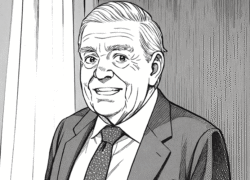
Klaus-Michael Kühne: Expanding Influence Across Europe’s Transport Sector

German businessman Klaus-Michael Kühne has become one of Europe’s most powerful private investors in logistics and transport. Through his holding company based in Switzerland, Kühne now controls significant stakes in shipping, aviation, and freight management, reinforcing his position as a central figure in the region’s interconnected trade industries.

Kühne remains the majority owner of Kuehne + Nagel, the logistics group founded by his grandfather in 1890. With operations in more than 100 countries and a workforce of tens of thousands, the company continues to rank among the world’s leading providers of sea, air, and contract logistics. Kühne Holding owns just over half of the company’s shares, securing long-term control over its strategy.

His influence also extends to Europe’s maritime and aviation sectors. He holds roughly 30 percent of Hapag-Lloyd, the container shipping line based in Hamburg, and around 15 percent of Lufthansa, Germany’s flagship airline. The investments link air, sea, and land transport under a single investor’s umbrella, giving Kühne a unique role in shaping how Europe’s trade flows connect.

While the businessman keeps a relatively low public profile, his economic footprint is substantial. He was among the first major shareholders to call for stricter management discipline at Lufthansa during the airline’s post-pandemic restructuring. His holding company’s engagement in Hapag-Lloyd has also aligned with the global container shipping boom, which expanded sharply during and after the COVID-19 period.

Beyond his commercial interests, Kühne finances a foundation that supports research and education in logistics, medicine, and the arts. The Kühne Foundation, based in Schindellegi, contributes to universities and cultural institutions in Hamburg, Zurich, and St. Gallen.

Public interest in Kühne’s fortune has recently intensified amid renewed scrutiny of how German family enterprises grew during the 20th century. Independent historians have called for continued transparency in examining how the Kühne family business developed through the wartime and post-war years.

Now in his late eighties, Kühne remains active in corporate and philanthropic affairs, overseeing one of Europe’s largest privately controlled transport portfolios. His combined holdings in logistics, shipping, and aviation give him a level of cross-sector influence unmatched in the continent’s transport economy.

Source: comp.

Construction Progresses at Panattoni Business Park Prague Airport II

Construction of a new hall at Panattoni Business Park Prague Airport II has reached its next stage with the installation of the first column of the supporting structure. The facility is being built for Kuehne+Nagel, a global logistics company that has operated in the Czech Republic since the early 1990s and employs around 400 people in the country.

The new building will provide 10,600 square metres of leasable space, including 9,000 square metres of warehouse area and additional office and mezzanine space. It is the seventh building within the industrial park and the second developed there with Accolade. Once complete, the park’s total leasable area will be close to 140,000 square metres.

Work on the site began in August 2025, with completion and handover scheduled for April 2026. A second phase of technology installation is planned to follow immediately afterwards, with full operations expected in June 2026.

The hall is designed to incorporate sustainable features, including heat pumps for both offices and warehouse areas, a rainwater retention reservoir, photovoltaic panels, charging points for electric vehicles, and measures to support biodiversity such as beehives. The project is targeting BREEAM New Construction certification at the Excellent level.

Located near Pavlov in Central Bohemia, the park is situated on the D6 motorway, about 15 minutes from Prague Airport. It is also served by a nearby railway station with direct links to Prague and local bus connections, offering employees access by public transport.

Rising Tensions Put Europe’s Security to the Test

A series of recent developments across Europe highlight how the conflict in Ukraine and its spillover effects are reshaping both military strategies and civilian security.

Reports from Western officials indicate that Russia has been modifying its short- and medium-range missile systems in ways that make them harder to intercept. The upgrades are said to involve changes in flight paths and targeting, which complicate the work of Ukraine’s Western-supplied air defense units. Analysts describe this as part of a continuing cycle of adaptation between offensive weapons and defensive systems.

At the same time, the United States is expanding its role in Ukraine’s long-range strike capability. According to people familiar with current planning, Washington is prepared to provide intelligence to help Kyiv identify and strike targets deeper inside Russia, including energy and infrastructure sites. This marks a more assertive posture compared with earlier phases of the war, when Western capitals were hesitant about enabling attacks beyond Ukraine’s borders.

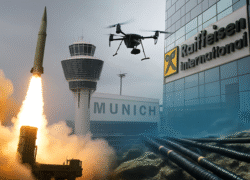
Concerns about infrastructure vulnerability are also growing well beyond the frontlines. European security services have tracked Russian vessels and drones conducting surveillance of subsea cables and pipelines. These undersea connections carry much of Europe’s internet traffic and energy supply, making them potential weak points in any future escalation. The presence of Russian reconnaissance ships near key routes has revived debate over how well Europe is prepared to protect its critical networks.

Meanwhile, reports of temporary disruptions at Munich Airport following drone sightings underlined the potential risks posed by unmanned aerial systems in civilian airspace. While official confirmation of a prolonged closure was lacking, the incident reflects the broader unease in European capitals about drones being used for disruption or sabotage.

In financial circles, speculation has surfaced around how the European Union might respond to banks facing losses tied to their Russian operations. Austrian lender Raiffeisen, one of the most exposed Western banks in Russia, has been at the center of these discussions, though no formal EU policy has been announced.

Taken together, the stories reflect a common theme: the blurring line between direct battlefield operations in Ukraine and the wider set of security risks confronting Europe. Missile modifications, intelligence coordination, and surveillance of physical and digital infrastructure all form part of a contest that extends far beyond the trenches. For governments and businesses across the continent, the challenge is how to adapt quickly enough to protect both strategic interests and everyday stability.

Disclaimer: This article is based on publicly available information at the time of writing. Details may change as events develop.

Central European Central Banks Hold Rates Amid Wage Pressures and Fiscal Risks

Central banks in Central Europe are keeping interest rates steady this autumn, with policymakers emphasising caution as inflationary pressures persist alongside signs of weaker economic momentum.

In the Czech Republic, the National Bank has held its main policy rate at 3.5 percent since May. Minutes from the most recent board meeting indicate that members believe the current level, together with a strong koruna, is restrictive enough to contain price growth. The currency has been trading around 24.3 CZK/EUR, firmer than the central bank’s forecast. Board members pointed out that a stronger koruna itself dampens inflation, reducing the urgency to act. Still, wage growth running above 7 percent in the first half of the year and a widening fiscal deficit were identified as potential risks to the outlook.

Poland’s central bank has also kept rates unchanged, with its benchmark at 4.75 percent. After cutting aggressively in late 2023, the Monetary Policy Council shifted to a holding pattern in 2024 as inflation slowed but remained above target. Policymakers are weighing the effects of resilient consumer demand and government spending against a slowdown in exports. Analysts note that the zloty’s relative stability has allowed the bank to avoid further adjustments this year.

Hungary continues to operate with the highest policy rate in the region at 6.5 percent. The central bank paused its cycle of cuts in September, signalling that it wanted to consolidate stability after years of double-digit inflation and volatile market conditions. The forint has been steadier in recent months, but officials remain cautious about further moves until they see more durable disinflation.

For Slovakia, decisions are set in Frankfurt. The European Central Bank’s deposit rate remains at 2 percent after being lowered in June. Policymakers there have paused since, watching whether euro area inflation continues to converge toward the 2 percent medium-term target. Energy prices, wage settlements and geopolitical tensions are seen as key factors that could sway the outlook.

Across the region, central banks are treading carefully. Inflation has retreated from the peaks of 2022–2023, but pressures from wages, fiscal deficits and energy policy changes remain. In the Czech Republic, concerns have also been raised about the costs of new European climate rules, while in Poland and Hungary the balance between domestic spending and external demand is under close scrutiny.

Analysts expect that most of the region’s central banks will maintain their current settings at least into the end of the year, with the possibility of gradual easing only if economic growth slows more sharply and inflation continues to decline.

Central Europe’s Vegetable Trade Deficits Deepen

Central European countries remained heavily dependent on imports of fresh vegetables last year, with trade statistics pointing to widening deficits across the region.

In the Czech Republic, the shortfall reached a new peak. Imports of more than one million tonnes of vegetables were recorded, while exports covered only a fraction of that volume. The value of goods brought in exceeded 19 billion crowns, compared with roughly 5 billion crowns in sales abroad. As a result, the trade gap in this category climbed to nearly 13.8 billion crowns – the highest on record and continuing a rising trend seen since 2020.

Similar patterns are visible in neighbouring states. Eurostat data confirm that Poland, Hungary, Slovakia, Austria and Slovenia all imported substantially more vegetables than they exported in 2024, leaving each country with a negative balance. The structure is consistent: southern and western European producers such as Spain, Italy and the Netherlands remain the main suppliers to central markets, complemented by shipments from Morocco.

The underlying reasons are comparable across borders. Domestic production in Central Europe is constrained by shorter growing seasons, limited acreage and rising input costs, leaving the region unable to cover demand throughout the year. While greenhouse projects have expanded in recent years, they have not offset structural pressures, particularly in years of poor weather or higher energy prices.

Poland remains the largest player in terms of both imports and exports, given its scale of farming and role as a transit country, but still records a deficit in value terms. Hungary and Slovakia, with smaller agricultural bases, show proportionally larger gaps. Austria and Slovenia are likewise dependent on imports to satisfy consumer demand, despite investments in regional supply chains.

The European Union as a whole is a net importer of vegetables, with southern member states acting as major exporters to the rest of the continent. Central European countries continue to reflect this divide: they are consumers first and foremost, relying on external supply while their own output struggles to compete in terms of volume, cost and year-round availability.

Cavatina Holding Secures €270m Loan for Office Portfolio Refinancing

Cavatina Holding S.A. has signed a loan agreement worth €270 million with a consortium of international banks, including Erste Group Bank AG, Berlin Hyp (part of Landesbank Baden-Württemberg), and Raiffeisenlandesbank Niederösterreich-Wien AG.

According to the company, a substantial portion of the financing – €237.5 million and PLN 12.5 million – will be used to refinance existing debt across selected office projects within its portfolio.

The loan is structured for repayment in quarterly instalments beginning on 31 December 2025, with final repayment due no later than 31 December 2030. Interest is set at 3M EURIBOR plus the lenders’ margin. Disbursement of funds remains subject to conditions outlined in the agreement.

Cavatina stated that the refinancing allows for optimisation of its financing structure and cost base. The company noted that the transaction is among the largest refinancing deals involving office assets on Poland’s regional markets.

Legal advice in the transaction was provided by Wolf Theiss, with Centuria Investment & Corporate Advisory acting as financial advisor.

Cavatina Holding is one of Poland’s largest development groups, with projects in Warsaw, Kraków, Łódź, Wrocław, Gdańsk, and Katowice. While continuing to deliver and commercialise office projects, the group has been expanding into the residential segment. Current developments include three residential projects totalling 25,000 sqm of usable floor space (more than 650 apartments), with a further 47,000 sqm of residential space in preparation.

ATAL Launches Zakole Wisły Residential Project in Krakow

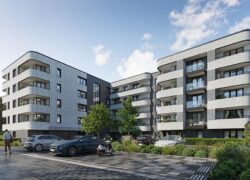
ATAL has opened sales for its latest residential development in the city, Zakole Wisły ATAL. The scheme will deliver 134 apartments in a two-segment, five-storey building located near Nowohucka Street, one of Krakow’s key transport corridors.

The project offers a wide mix of unit sizes, ranging from 28 sqm studios to 126 sqm five-room apartments, with prices between PLN 13,000 and PLN 18,000 per sqm in developer standard. Completion is scheduled for Q2 2027.

The design is described as contemporary with classical elements, using high-quality finishing materials and large glazing. All units are planned with outdoor space in the form of balconies, terraces or private gardens. The development will also include an underground car park and outdoor parking spaces.

According to ATAL, the location provides direct access to both central Krakow and nearby districts such as Kazimierz and Podgórze, as well as proximity to green and recreational areas. Shops, services, gyms, restaurants and co-working spaces are also in the vicinity.

Buyers can take advantage of the ATAL Design programme, which offers four optional turnkey finishing packages: Basic, Optimum, Premium and Invest.

Construction Underway at UrbanBox Park Gliwice

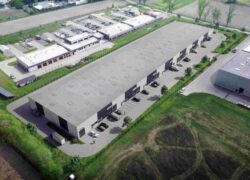
Construction has started on UrbanBox Park Gliwice, the latest Small Business Units (SBU) development by ILD. The project is located on ul. Rolników, directly at the A1/A4 motorway junction and approximately six kilometres from the centre of Gliwice, according to the developer.

The scheme will comprise around 30 modular units tailored to small and medium-sized enterprises, with sizes ranging from about 206 to 252 sqm. Completion of the first units is scheduled for winter 2025, UrbanBox confirmed.

The complex is being marketed by AXI IMMO, which lists the Gliwice site as offering a total warehouse area of around 6,500 sqm. “UrbanBox Park Gliwice is a brand-new product in the local market, designed specifically with SMEs in mind,” commented Anna Cholewa, Advisor, Industrial & Logistics at AXI IMMO.

Published specifications include 7 metres clear height, 5t/sqm load-bearing floors, electric sectional doors (3.5 × 4.2 m), and individual loading zones for each unit. The park will also feature utility connections (gas, water, electricity, telecoms, sewage) and two private parking spaces per module, with the option of turnkey fit-out packages.

UrbanBox positions Gliwice as a strategic location for SMEs, with direct access to the Silesian metropolitan area and quick links to neighbouring markets in the Czech Republic, Germany and Ukraine.

Piotr Wawrzyniak, Country Manager Poland at ILD, said: “UrbanBox Park Gliwice is our next development of this kind in Poland. Based on the success of our previous projects, we’re confident the concept will attract strong interest in this location. With its strategic positioning and robust industrial base, Gliwice is poised to become another success story for us.”

Beyond the Peak: Why Social Media is Losing Its Grip

For almost two decades, social media has been the beating heart of online life. Platforms promised connection, creativity, and a voice for everyone. Yet in 2025, there are growing signs that the tide has turned. What once felt essential is beginning to feel exhausting, and the numbers suggest users are spending less time scrolling.

Studies tracking global online behaviour show that the average time devoted to social networks has stopped growing and in many regions has already begun to decline. The trend is most visible among younger generations, who were once the most active. In North America, usage remains high and even continues to grow, but in Europe, Asia, and Latin America, the hours people devote to social platforms are slipping.

The reasons are not hard to find. The experience of using these platforms has changed. Early on, feeds were filled with posts from friends, local groups, and creative voices. Today, many are dominated by recycled video clips, automated accounts, and low-quality entertainment designed simply to grab attention. What used to feel spontaneous now feels mass-produced.

Another factor is the way platforms amplify anger. Content that provokes a reaction tends to spread faster than calm discussion. Posts that make people furious, fearful, or disgusted get more shares, more comments, and more time on screen. Over years, this dynamic has reshaped feeds, pushing extreme or emotionally charged material to the top while quieter, thoughtful contributions are drowned out. The result is an online atmosphere that feels more combative than conversational.

This shift has consequences for trust. Users who once turned to social media for community increasingly say they feel drained after using it. Some have begun to step back, limiting their time or leaving altogether. For others, the fatigue is subtle but constant — a sense that logging on has become more of a habit than a pleasure.

Researchers examining online debates describe a pattern in which small disagreements quickly spiral into mass hostility. What starts as an exchange of views often escalates into public condemnation, with thousands joining in. Even attempts to correct false information can fuel this cycle, because rebuttals themselves generate more conflict.

It is important to note that this picture is not uniform. In some countries, especially the United States, the appetite for social media remains strong, often linked to political polarization and the demand for provocative content. In other regions, users are withdrawing, shifting instead toward private messaging apps or smaller communities where conversations feel safer and less overwhelming.

The broader lesson is that social media no longer holds the same promise it once did. The very mechanics that made it so successful — algorithms rewarding what keeps us glued to the screen — have reshaped it into something far less appealing. Many people now describe feeling trapped between boredom and outrage whenever they open their apps.

What comes after this turning point is uncertain. We may see the growth of smaller, more private networks that return to the idea of genuine connection. Or the large platforms may double down, betting that enough users will keep watching, even if reluctantly. What is clear is that the era of constant expansion is ending.

Social media has reached its high point. What follows may not be collapse, but it will be something different: a gradual move away from the open town square and toward quieter, more controlled spaces. For a generation raised on the promise of global connection, that shift marks the beginning of a new chapter in digital life — one where logging off may feel less like loss and more like relief.

front page info
LATEST NEWS