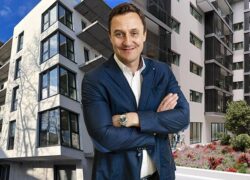
Knight Frank Poland appoints Aneta Nougarou as Chief Financial Officer

Knight Frank has announced the appointment of Aneta Nougarou as Chief Financial Officer (CFO) for its Polish operations. As a member of the management board, she will be responsible for developing the company’s financial strategy, overseeing financial operations, and supporting the organisation’s ongoing growth.

Aneta Nougarou brings more than 15 years of experience in finance, strategic planning, reporting, and implementing IT solutions. Her career has included roles in financial management across Central Europe, with responsibilities spanning controlling, budgeting, accounting, and restructuring regional finance functions. She spent a significant part of her career at Unibail-Rodamco-Westfield, managing financial operations for assets such as Westfield Arkadia, Westfield Mokotów, Galeria Wileńska, and Centrum Ursynów in Warsaw, as well as Wroclavia in Wrocław.

In her role at Knight Frank, Nougarou will oversee financial performance analysis, budget planning, and the optimisation of financial processes. She will also lead initiatives focused on enhancing reporting systems and developing financial technologies to support the company’s strategic objectives.

Knight Frank has operated in Poland for over 30 years, providing services in investment advisory, valuation, and leasing and sales brokerage. The Polish office employs more than 80 real estate professionals, with plans for further growth.

Commenting on her new role, Aneta Nougarou said she looks forward to contributing her expertise to support Knight Frank’s operations and strategic decision-making in Poland and across Europe.

Developers reassess plans as building permits decline and project timelines shift

The number of building permits issued and housing projects started is declining, raising questions about whether developers are adjusting their plans and delaying the completion of new investments, and if so, why; the article includes comments from companies addressing these issues and provides insight into which projects are expected to enter the market later this year

Zbigniew Juroszek, President of the Management Board of Atal
We are constantly launching new projects or subsequent stages of existing housing estates, with several investments planned for this year. Our investment activity results from the scale on which we operate in the eight largest Polish markets and from our strategy. It assumes an intensified market presence at the expense of smaller and medium-sized players who have not launched or started any new investments for two years. This is an opportunity for us to increase our market share. We are consciously preparing for the recovery, which we believe will begin in the second half of this year and last until 2026-2027.

The launch of many new development projects in the last several months was also due to the availability of subcontractors and construction material prices. This protects us from the cost impact that may occur in connection with the launch of the National Recovery Plan and other EU funds, as well as the start of large infrastructure projects.

Tomasz Kaleta, Managing Director for Sales and Marketing at Develia
We are launching all projects on schedule, and some are even ahead of schedule. Any delays are due to prolonged administrative procedures.

This year, we plan to expand our offer in Gdańsk by launching the next stage of the Południe Vita housing estate in Gdańsk and two completely new investments. We will also offer our customers the next stages of projects in Warsaw’s Bemowo district and the Central Park housing estate in Krakow. Our goal for this year is to launch a total of 3,100-3,300 apartments and commence construction.

Renata Mc Cabe-Kudla, Country Manager at Grupo Lar Polska
The time needed to obtain a building permit in Warsaw has increased significantly in recent years, due to environmental decisions, road agreements and other factors related to, for example, the infrastructure accompanying the investment. This has a significant impact on the number of building permits issued. We believe that the processing of building permits will accelerate in the coming years, which will allow us to increase our offer to customers. We plan to launch one new investment this year and at least three next year.

Marcin Malka, President of the Management Board of Real Management S.A.
The single-family home market is not as susceptible to economic changes, but of course we feel the indirect impact of the cooling mood in the entire housing sector. This affects project management, but does not cause changes in schedules or start dates for new investments. From our perspective, the length of the investment preparation process and the associated extensive bureaucracy remain a greater challenge. We are currently in the second stage of the Neo Natolin single-family housing estate. We are also preparing further stages comprising 130 houses with a total living area of 30,000 sq m.

Joanna Chojecka, Sales and Marketing Director for Warsaw and Wrocław at the Robyg Group
According to available market data, there has been a noticeable decline in the number of building permits issued and new investments launched. This is due to, among other things, uncertainty related to construction costs, rising material prices and limited access to financing on the part of buyers, especially in the last dozen or so months, when the mortgage market was under considerable pressure.

However, we take a long-term and strategic approach to investment planning. We are a large, stable organisation with experience and resources that allow us to carry out new projects even in less favourable market conditions. Instead of halting development, we are adapting our activities to the changing reality. We analyse local demand, manage schedules flexibly and respond to market signals.
In 2025, we plan to launch further residential investments, both in Warsaw and in other large cities. Our actions are consistent with the assumption that, despite temporary slowdowns, the housing deficit in Poland, especially in the largest agglomerations, remains significant. This means that the demand for new flats will not disappear, but will actually grow.

When deciding to launch new projects, we are always guided not only by profitability analysis, but also by the needs of future residents. The investments we are planning today will respond not only to demand, but also to new expectations, such as sustainable development, energy efficiency, access to green spaces and extensive social infrastructure.

In total, in 2025, the TAG Group in Poland will have approximately 7,300 residential and commercial units under construction. The Group’s portfolio of rental apartments amounted to over 3,350 units. Currently, ROBYG has approximately 1,900 units on offer. In the first quarter of 2025 alone, new stages comprising 1,100 apartments were added to the offer, including in the following investments: Modern City and Modern Life in Warsaw, Początek Piątkowo in Poznań, and Leszczyńskich and Szumilas in Gdańsk. In addition, we have building permits for approximately 2,100 units.

Andrzej Gutowski, Sales Director, Ronson Development
We are observing that in the current market conditions, developers are delaying the start dates of new investments. The process of obtaining the required permits and administrative decisions is not getting any shorter – on the contrary, it is often getting longer. We have been drawing attention to this problem for a long time. The lack of real systemic measures, such as simplifying administrative procedures or speeding up the issuance of decisions, significantly limits developers’ ability to respond quickly to market needs.

Nevertheless, there are first signs of recovery, including movements in interest rates, which may have a positive impact on investment activity in the medium term. We expect that the turn of 2025 and 2026 will bring greater momentum to the market, provided that the scale of activities is adjusted to the absorption capacity of individual local markets.

Despite the difficult conditions, we plan to launch new projects. In Warsaw, we are continuing the Zielono Mi II investment and starting new projects in Bemowo and Białołęka. In Wrocław, we are preparing to launch a new project, while in Poznań and Szczecin we are developing the next stages of existing investments.

Mariusz Gajżewski, Head of Sales, Marketing and Communication, BPI Real Estate Poland
We do not intend to change our plans to continue our operations in the residential real estate market. We will focus primarily on the implementation of premium and high-standard investments, which, thanks to a strong emphasis on the quality of finish, excellent location and high energy efficiency, remain the preferred choice among buyers and are more resistant to fluctuations in demand. We are actively working on acquiring new plots for future investments in Warsaw, where we are continuing the implementation of our latest project, PianoForte, near Morskie Oko Park and Łazienki Królewskie. We are also preparing to launch a new multi-stage project in the Tri-City later this year, which, depending on the stage of development, will have mixed functions and offer both high-standard and premium premises.

Damian Tomasik, President of the Management Board of Alter Investment
We are currently observing a decline in the number of building permits issued and residential projects launched. This is primarily due to high construction costs and restrictions on access to mortgage loans. However, our strategy is to actively seek new, attractive locations and flexibly adjust our investment schedules to the real needs of the market.

We have recently finalised the purchase of land in the centre of Władysławowo. We plan to launch this land on the market before the summer holidays. It is an attractive proposition for both investors and individual customers looking for unique locations by the sea. At the same time, we are preparing another project – a building for institutional rental (PRS) in Gdańsk, in an excellent location at the new tram terminus on Warszawska Street. This investment responds to the growing demand for modern rental premises in the city’s dynamically developing districts.

Despite market challenges, we are maintaining our investment activity and responding flexibly to the changing economic environment. We believe that this will enable us to keep our offer attractive to a wide range of customers.

Jacek Bugajski, Project Development Director at Archicom
Despite the challenges, we are consistently implementing our growth strategy and launching new projects. This year, we have already started sales of further stages of the Modern Mokotów housing estate in Warsaw and Zenit in Łódź, as well as new projects such as Gutenberg Apartments as part of Towarowa 22 in Warsaw, the 29L investment in Krakow and Esencja II in Poznań.

We constantly analyse local demand and the macroeconomic environment, and we make investment decisions taking into account the potential of a given market. We have an extensive land bank and strong financial backing, which allows us to remain ready to launch new investments. We adjust the pace of their launch to the realities, not only of the market, but also of the administrative environment. We are observing a significant lengthening of procedures, such as obtaining building permits, which is affecting implementation schedules across the entire industry.

Source: dompress.pl
Photo: Bukowinska Mokotow – Matexi Polska

Grid Dynamics leases space in Warsaw’s Skyliner office building

Grid Dynamics, a global digital engineering company listed on the NASDAQ stock exchange, has leased a full floor of office space in the Skyliner complex in Warsaw. The company has taken approximately 1,500 square metres in the building’s first phase, developed by Karimpol Group at Daszyńskiego Roundabout.

Grid Dynamics provides digital engineering services, including artificial intelligence implementation, application modernisation, and cloud architecture solutions for clients in sectors such as retail, finance, technology, and healthcare. The company is expanding its presence in Europe, identifying Warsaw as an important market.

Sergii Taradai, Senior Director of Global Real Estate & Facilities at Grid Dynamics, noted that the firm sought office space that aligns with its focus on innovation and modern workplace standards, which Skyliner was able to provide.

The Skyliner complex consists of two phases. The first tower, completed in January 2021, offers 45,000 square metres of office space and holds a BREEAM Excellent certification. It operates entirely on renewable energy. Construction of Skyliner II began in February 2024, with completion planned for late 2026. The second tower will stand 130 metres tall, with 28 floors and 24,000 square metres of leasable space, primarily offices. Ground-floor retail and service units will cover nearly 1,000 square metres, while the upper floors will feature terrace gardens totalling around 900 square metres. The development has received an Outstanding BREEAM rating, and renewable energy will also be used to power the building.

The main contractor for the second phase is WARBUD S.A., with architectural design by APA Wojciechowski Architekci. CBRE Polska is managing the commercialisation of the new phase. Karimpol was advised by Argon Legal during the lease process with Grid Dynamics.

Grid Dynamics is the tenth technology-focused tenant to join the Skyliner complex, which has become a notable location for IT, high-tech, and AI businesses in Warsaw.

House prices and rents continue upward trend across the EU in early 2025

House prices and rents continued to climb across the European Union in the first quarter of 2025, according to data released today by Eurostat.

Between January and March, house prices rose by 5.7% compared to the same period in 2024, while rents increased by 3.2%. On a quarterly basis, house prices were up by 1.4% and rents by 0.9% compared with the fourth quarter of 2024.

Since 2010, house prices in the EU have risen by a cumulative 57.9%, while rents have grown by 27.8%. Although rents have shown steady growth over the past 15 years, house prices have experienced more pronounced fluctuations, with a sharp surge between early 2015 and the third quarter of 2022, a brief dip and period of stabilization, followed by renewed growth since 2024.

Over the period from 2010 to the first quarter of 2025, house prices increased more than rents in 21 of the 26 EU member states for which data are available. The most significant gains were recorded in Hungary, where house prices surged by 260%, and in Estonia, where they rose by 238%. House prices at least doubled in nine other countries, including Lithuania (+194%), Latvia (+154%), Czechia (+147%), Portugal (+130%), Bulgaria (+125%), Austria (+113%), Luxembourg and Poland (both +102%), and Slovakia (+100%). Italy was the only EU country to see a decline in house prices over this period, with a drop of 4%.

During the same timeframe, rents increased in all 26 EU countries except Greece, where they fell by 11%. The strongest rises in rental costs were recorded in Estonia (+220%), Lithuania (+184%), Hungary (+124%), and Ireland (+115%).

Eurostat’s full dataset and further details can be accessed via the Statistics Explained article on housing price statistics.

Slovakia’s retail turnover continues to decline in May, while wholesale and hospitality sectors grow

Retail turnover in Slovakia fell for the fourth consecutive month in May 2025, declining by 1.8% year-on-year after adjusting for inflation. The drop reflected persistent weakness across several smaller segments of the retail sector, though the overall decline was partly offset by gains in the two largest retail categories, including hypermarkets and supermarkets.

Compared to April, seasonally adjusted retail turnover slipped by 1.3%.

Six out of nine retail segments reported lower turnover in May compared to the same month last year. Among the hardest-hit categories were hobby markets, furniture, and electrical goods stores, where turnover fell by 10.6%. E-commerce and mail-order businesses also saw a 4.6% decline, while specialized stores selling sporting goods, books, and toys registered a steep drop of 23.2%.

Despite these declines, turnover increased by 3.1% in hyper- and supermarkets and by 1.6% in specialized stores selling items such as footwear, textiles, drugstore goods, and pharmaceuticals.

Over the first five months of 2025, total retail turnover in Slovakia was down 1.3% year-on-year, with six of nine retail segments showing declines.

In contrast to retail, other areas of internal trade posted stronger results in May. Turnover rose in the sale and repair of motor vehicles by 2.1% year-on-year and grew significantly in wholesale, which recorded an 11.4% increase. The accommodation sector saw a 2.1% rise, while turnover in food and beverage service activities increased by 3.4%.

On a month-on-month basis, accommodation turnover grew by 11.5% in May after seasonal adjustment. Food and beverage services also recorded a smaller monthly increase of 2%. However, turnover declined by 1% in the sale and repair of motor vehicles and by 0.8% in wholesale.

For the first five months of 2025, turnover rose by 0.5% in the sale and repair of motor vehicles, by 9% in wholesale, by 1.2% in accommodation, and by 1.9% in food and beverage service activities.

Data for this report were provided by the Statistical Office of the Slovak Republic, based on monthly surveys. Retail and most service figures reflect constant prices, while wholesale figures are presented in current prices.

Residential property prices in Poland: Regional trends in Q1 2025

Statistics Poland has released data on price indices for residential premises across Poland’s voivodships for the first quarter of 2025. The detailed figures are available in the annex accompanying the official announcement.

The report provides insights into regional differences in the residential property market, highlighting where prices have increased or decreased compared to previous periods. While the national average has shown moderate growth, certain regions stand out for stronger upward trends driven by local demand, economic factors, and investment activity.

Major urban centres like Warsaw, Kraków, and Wrocław continue to report higher price levels, sustained by strong demand for both new developments and existing housing stock. In contrast, some smaller voivodships have seen more stable or even slightly declining price trends, reflecting localized market dynamics and varying economic conditions.

The data serve as an important tool for prospective buyers, developers, and investors assessing opportunities in the residential real estate market. Analysts note that factors such as interest rate movements, wage growth, and government housing initiatives are likely to influence price trends throughout 2025.

Czech industrial production rises 2.2% in May despite monthly dip

Industrial production in the Czech Republic rose by 2.2% year-on-year in May 2025, though it fell by 1.6% compared to April. New orders increased by 5.0% year-on-year.

“The growth in May was partly influenced by a low base of comparison from the previous year, especially in electricity, gas, steam and air conditioning supply. Additionally, output in the manufacture of other transport equipment, driven by the completion of significant long-term orders, and the manufacture of electrical equipment contributed to the rise,” said Veronika Doležalová, Head of the Industrial Statistics Unit at the Czech Statistical Office (CZSO). However, production decreased year-on-year in the manufacture of computer, electronic and optical products. Overall, manufacturing output grew by 1.5% compared to May 2024.

The value of new industrial orders in current prices rose by 5.0% year-on-year in May. Non-domestic orders increased by 7.2%, while domestic orders were up by 1.0%. Month-on-month, however, the value of new orders fell by 3.9%. “Growth in new orders was led by the manufacture of motor vehicles, trailers and semi-trailers, also supported by last year’s lower base. There was also an increase in orders for fabricated metal products and electrical equipment,” noted Irena Stupňánková from the CZSO.

Employment in the industrial sector declined by 2.0% year-on-year in May.

According to Eurostat, industrial production across the EU27 rose by 0.6% in April 2025 compared to the previous year. Ireland and Finland saw the strongest growth, with increases of 18.4% and 10.2%, respectively. Czech industry grew by 2.0%, while Germany’s output dropped by 2.4%. The largest decreases were observed in Denmark (11.6%) and Bulgaria (10.5%). Among specific industries, EU27 production of basic pharmaceutical products rose by 7.7%, while the manufacture of wearing apparel declined by 6.7%. Eurostat is scheduled to release data for May 2025 on 15 July 2025.

Czech trade surplus grows in May 2025

The Czech Republic recorded a trade surplus of CZK 13.3 billion in May 2025, an increase of CZK 2.1 billion compared to the same month last year, according to preliminary figures released by the Czech Statistical Office (CZSO).

The improvement in the trade balance was driven largely by higher surpluses in motor vehicles, which rose by CZK 6.0 billion year-on-year. Additionally, the trade deficits in computer, electronic and optical products and in refined petroleum products both narrowed by CZK 2.8 billion.

However, the overall surplus was partly offset by lower surpluses in fabricated metal products and electrical equipment, which declined by CZK 3.4 billion and CZK 2.5 billion respectively. The trade deficit in crude petroleum and natural gas also widened by CZK 2.1 billion.

Trade with European Union member states contributed positively to the balance, increasing by CZK 4.2 billion year-on-year, while the deficit with non-EU countries narrowed by CZK 0.7 billion.

Exports in May rose by 2.0 percent year-on-year to CZK 389.8 billion, while imports grew by 1.5 percent to CZK 376.5 billion. May 2025 had one fewer working day compared to the same month last year.

“After three consecutive months where imports outpaced exports, May saw a reversal in favour of exports. The strongest growth was recorded in exports of motor vehicles and their parts, up CZK 5.2 billion, and electrical equipment, which increased by CZK 2.2 billion,” said Miluše Kavěnová, Director of the CZSO’s International Trade Statistics Department.

On a month-to-month basis, seasonally adjusted exports fell by 0.2 percent, while imports declined by 1.0 percent.

For the first five months of 2025, the trade surplus stood at CZK 116.2 billion, which is CZK 8.0 billion lower than in the same period last year. Over this period, exports rose by 3.7 percent, while imports increased by 4.4 percent.

Czech construction sees double-digit growth in May 2025

Construction activity in the Czech Republic rose sharply in May 2025, with output increasing by 11.6 percent compared to the same month last year, according to figures released by the Czech Statistical Office (CZSO). Compared to April, output was up by 2.3 percent.

Petra Kačírková from the CZSO’s Construction Statistics Unit noted that both civil engineering and building construction contributed to the year-on-year growth, which was partly influenced by a low base from the previous year. Specifically, production in building construction increased by 10.8 percent year-on-year, while civil engineering construction grew by 13.1 percent.

Despite the growth in construction activity, the value of building permits issued in May fell to CZK 32.0 billion, representing a decline of 39.6 percent compared to the same month in 2024.

In terms of housing, construction began on 2,673 new dwellings in May, a decrease of 5.2 percent year-on-year. However, the number of completed dwellings rose to 3,051, an increase of nearly 5 percent. Petra Cuřínová, Head of the Construction Statistics Unit at the CZSO, explained that this growth was largely driven by modifications and alterations to existing buildings, while new construction remained subdued.

Across the European Union, construction output increased by 2.5 percent year-on-year in April 2025, according to Eurostat data. Eurostat is expected to release figures for May 2025 on 18 July.

German residential investors look abroad as domestic challenges persist

German residential property investors are increasingly shifting their focus to foreign markets due to persistent challenges in the domestic sector. High construction costs, lengthy approval processes, regulatory uncertainties, and changing political requirements are making it more difficult to develop new housing projects in Germany. These issues were discussed during the online press conference “Beyond Germany: Why residential investors are shifting their focus abroad.”

Industry experts Pepijn Morshuis (CEO of Trei Real Estate), Felix Meyen (Managing Director of HIH Invest Real Estate), Michael Keune (Managing Director at Catella Investment Management), and Gerhard Lehner (Head of Germany at Savills Investment Management) shared insights into current market trends and their international strategies.

Germany Faces Approval Delays

Pepijn Morshuis highlighted how prolonged approval procedures hinder residential development in Germany. He described how development plans, particularly in Berlin, can face delays of over a decade, with standard projects often taking six to eight years from planning to completion. Authorities, he said, frequently proceed cautiously out of fear of making errors, while shifting political priorities further complicate the process.

By contrast, Morshuis noted that in Poland and the United States, comparable approvals are completed within months. Trei Real Estate has therefore increased its focus on regions like southeastern U.S. cities, including Charlotte, and Polish cities such as Poznan, where development timelines are considerably shorter.

“In the U.S., projects can be completed in under five and a half years, including planning and approvals—a timeframe in which you might not even secure a permit in Germany,” Morshuis explained.

Investors Seek Stability and Returns Abroad

Felix Meyen described how institutional investors remain interested in residential projects but are finding fewer viable opportunities in Germany’s major cities due to supply shortages, rising costs, and limited returns. HIH Invest Real Estate is expanding its focus to other European capitals known for regulatory clarity and stable conditions.

Meyen pointed to Vienna’s “Quartier 11” as an example of a project that combines clear regulatory guidelines with moderate costs and sustainable living features. HIH Invest is also exploring opportunities in cities like Amsterdam, Copenhagen, London, and Dublin, where stable demand and positive demographic trends offer strong fundamentals for residential investments.

Scandinavia and Ireland Offer Attractive Alternatives

Michael Keune highlighted the advantages of Nordic and Irish markets. Catella assesses European markets based on regulatory factors, price dynamics, and ownership structures. Finland, in particular, has limited regulatory intervention, contributing to market transparency and stability.

“Ireland currently presents unique opportunities, especially in student housing,” Keune said. “Demand in Dublin is outpacing supply, creating potential yields exceeding eight percent.”

Japan Stands Out for Stability

Gerhard Lehner discussed Savills Investment Management’s investments in Japan. He noted Tokyo’s stable housing demand, low vacancy rates, and limited regulatory complexity as attractive features for investors seeking steady returns. Savills manages 56 properties in Tokyo, maintaining high occupancy rates under its Residential Evergreen Fund, targeting annual distributions above four percent.

“Tokyo combines stability and strong demand, making it one of the world’s most reliable metropolitan markets,” Lehner said.

Call for Political Action in Germany

The speakers agreed that substantial reforms are necessary to restore Germany’s attractiveness for residential investment. They emphasized the need for faster, digitalized approval processes and a reassessment of building standards that drive costs without proportional benefits. They also urged increased investment in social housing and more active cooperation between public authorities and private developers.

“It’s not enough to acknowledge the housing shortage,” Morshuis stated. “The public sector must take responsibility, including financial support and direct involvement in housing construction.”

While Germany remains significant for residential investors, ongoing challenges are prompting greater international diversification as firms seek stability, predictability, and viable returns in other markets.

Photo: Pepijn Morhsuis, CEO, Trei Real Estate, Felix Meyen, Managing Director, HIH Invest Real Estate, Michael Keune, Managing Director, Catella Investment Management and Gerhard Lehner, Head of Germany, Savills Investment Management

front page info
LATEST NEWS