Worldbox opens store at Auchan Legnica Shopping Centre

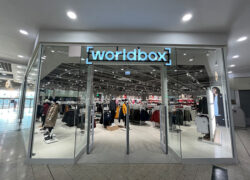
The Auchan Legnica Shopping Centre has added a new tenant with the opening of a Worldbox store occupying more than 450 sq m. The retail space offers clothing, footwear and accessories from a range of sports and casual brands.

The shopping centre is managed and commercialised by Nhood Services Poland, which is responsible for tenant relations and the ongoing development of the centre’s retail mix.

The Worldbox store opened in December 2025 and operates as a multi-brand concept focused on athleisure and everyday sportswear. Its assortment includes products for women, men and children from brands such as Adidas, Puma, Reebok, Kappa, Hunter, DC and Beverly Hills Polo Club.

Operating for more than 20 years, Auchan Legnica Shopping Centre serves residents of Legnica and the surrounding area. In addition to fashion and footwear, the centre’s tenant mix includes health and beauty, pet supplies and service outlets. An Auchan hypermarket operates on site, while a Decathlon store is located nearby.

Lukoil agrees to sell international assets to Carlyle Group

Lukoil has signed an agreement to sell its international assets to the U.S. investment firm The Carlyle Group, the Russian oil producer announced on its website on 29 January 2026. The transaction excludes Lukoil’s assets in Kazakhstan, which will remain under the company’s ownership.

The value of the deal has not been disclosed. According to Carlyle, completion of the transaction is subject to the outcome of an internal audit and approval by the U.S. authorities, as reported by Reuters.

The sale follows international sanctions imposed on Russia’s energy sector after the invasion of Ukraine. In October 2025, the United States added Lukoil to its sanctions list, a move that accelerated the company’s efforts to divest assets outside Russia.

Lukoil’s foreign operations are managed through Lukoil International GmbH, based in Vienna. The unit controls refineries in Europe, stakes in oil fields in countries including Uzbekistan, Iraq and Mexico, as well as a network of hundreds of fuel stations worldwide. Including the assets in Kazakhstan, the total value of Lukoil’s international portfolio has previously been estimated at around USD 22 billion.

Carlyle stated that its priority following the acquisition would be to ensure continuity of operations, protect jobs and stabilise the assets. The firm added that it intends to oversee the portfolio to support safe and reliable operations.

Interest in Lukoil’s international assets has been reported for several months. In October, the company accepted an offer from Swiss-based Gunvor, which was later withdrawn. Other potential buyers mentioned in media reports included Hungary’s MOL Group and Austrian investor Bernd Bergmair.

While Lukoil and other major Russian energy companies were added to the U.S. sanctions list in October, some restrictions affecting Lukoil were partially suspended in December. The exemption was intended to allow fuel stations outside Russia to continue operating, provided that revenues do not flow back to Russia. This waiver is valid until 29 April 2026.

Lukoil previously operated a network of fuel stations in the Czech Republic, which was sold to Hungary’s MOL Group in 2014.

Source: CTK

Poland’s real estate investment volume declines in 2025 despite stable activity

Poland’s commercial real estate investment market recorded a total transaction volume of €4.5 billion in 2025, representing a year-on-year decline of 13% compared with 2024. Market liquidity, however, remained stable, with 151 transactions completed during the year, broadly in line with the 154 deals recorded in the previous year.

According to market data compiled by Avison Young, the lower investment volume reflected the continued absence of large institutional capital rather than a contraction in market activity. While 2024 marked a return to relative stability following several challenging years and a sharp slowdown in 2023, the recovery in 2025 was characterised by a higher number of mid-sized transactions rather than landmark deals.

More than 40% of the annual investment volume was recorded in the fourth quarter. Unlike 2024, when the ten largest transactions accounted for nearly half of total turnover, 2025 was defined by a broader spread of smaller deals. Several larger transactions initiated during the year are expected to close in early 2026.

Domestic investors increased their presence in the market, accounting for 18% of total investment volume in 2025, up from 9% a year earlier. This trend was visible across multiple sectors, particularly offices and smaller-format assets.

Office sector leads investment activity

The office sector was the largest contributor to investment volumes in 2025, accounting for approximately 40% of total turnover, equivalent to €1.8 billion, up 7% year on year. Most activity was concentrated in Warsaw, which accounted for 30 of the 51 office transactions completed during the year.

After strong interest in value-add and opportunistic office assets in 2023, investment activity in 2024 and 2025 shifted towards core and core-plus properties, reflecting market repricing and closer alignment between asking prices and achievable transaction values. Demand also remained for older office buildings with redevelopment or conversion potential, particularly among domestic buyers targeting smaller assets.

Major office transactions exceeding €100 million included the acquisition by Mennica Polska of a 50% stake in Mennica Legacy Tower, the sale of Wola Center to Trigea Real Estate Fund, and the repurchase of a 49% stake in a CPI portfolio, which represented more than a quarter of the sector’s total investment volume. Other notable transactions involved office buildings in Warsaw, Kraków and Wrocław.

Domestic capital accounted for around 30% of office investment volume and half of all office transactions, reflecting a growing focus on value-add opportunities outside the residential sector.

Industrial market remains resilient

The industrial and logistics sector maintained a stable position in 2025, building on its strong performance during the more challenging market conditions of 2023. Total investment volume reached approximately €1.5 billion, up 10% year on year.

Activity was supported by continued interest in sale-and-leaseback transactions and increasing investor focus on secondary logistics locations, which accounted for nearly 40% of industrial investment volume. Only two transactions exceeded €100 million, including a landmark sale-and-leaseback deal involving two Eko-Okna properties acquired by Realty Income. This transaction was the largest sale-and-leaseback deal completed in the CEE region to date.

Market participants report a strong pipeline of industrial transactions, with expectations that narrowing pricing gaps and renewed foreign capital inflows could support higher volumes in 2026.

Retail investment shifts towards parks and convenience formats

Retail investment accounted for close to 20% of total transaction volume in 2025, down from 32% in 2024. Total retail investment volume reached €859 million, representing a year-on-year decline of nearly 50%.

The reduction was largely due to the absence of prime shopping centre transactions, which had driven volumes in the previous year. Instead, activity focused on retail parks and convenience retail, which accounted for around 70% of completed deals. Two major portfolio transactions dominated the sector, including the sale of 25 retail parks by Trei Real Estate to Ares Management Corporation and Slate Asset Management.

Another significant transaction was the acquisition of Galeria Libero in Katowice by Summus Capital, one of only two retail deals exceeding €100 million in 2025. Market participants expect further activity in retail parks and well-positioned shopping centres with stable fundamentals.

Living and PRS sector moves toward a milestone

Investment in Poland’s living sector reached €223 million in 2025. Around €150 million was allocated to three PRS (private rented sector) projects in Warsaw, including two transactions completed by AFI Europe and one acquisition by Xior Student Housing. Additional activity included co-living assets in Gdańsk acquired by Urban Partners.

A major PRS transaction announced in 2025, involving the planned acquisition by Vantage Development of 18 Resi4Rent assets, is expected to represent a milestone for the sector once completed. The deal would account for more than 20% of Poland’s operational PRS stock and signals growing interest from both domestic and international investors.

Outlook for 2026

Poland is expected to remain an attractive investment destination in 2026, supported by solid economic fundamentals. Market participants anticipate that interest rate cuts in the eurozone and Poland, combined with potential geopolitical stabilisation, could encourage the return of larger institutional investors.

Domestic capital is expected to remain active, particularly in small and mid-sized assets offering higher returns or value-add potential. Continued interest is also expected from regional investors across Central and Eastern Europe, as well as from Western European capital.

Several transactions launched in 2025 are scheduled to close in early 2026, suggesting a more dynamic start to the year. The office sector is expected to remain active, while retail parks and convenience formats are likely to continue driving retail investment. The industrial sector, which has shown consistent resilience, is also projected to improve its performance further in the year ahead.

SOURCE: Avison Young

Leading economic indicator rises in January despite mixed fundamentals

The Leading Economic Indicator (LEI), which tracks short-term expectations for economic activity, increased by 3.8 points in January 2026 compared with the previous month. The rise was driven mainly by improved assessments of the overall economic outlook and company prospects, growth in the M3 money supply, and continued favourable conditions on the stock market.

The most notable change was recorded among managers in the manufacturing sector, who reported a marked improvement in their views of both the general economic situation and the outlook for their own companies. While negative assessments still outweighed positive ones, the gap narrowed significantly—from 10.5 percentage points in December 2025 to 2.6 percentage points in January 2026.

This improvement stands in contrast to other survey indicators. Data show no recovery in new orders, with the pace of decline in orders even accelerating. One explanation may be stronger-than-expected sales results in December 2025, which appear to have influenced expectations at the start of the year. The highest levels of optimism were reported in industries that recorded relatively strong December sales, including manufacturers of computers and electronic equipment, food producers and pharmaceutical companies.

At the same time, companies’ financial assessments did not improve. According to the January survey conducted by Statistics Poland (GUS), negative opinions on firms’ financial conditions deepened, with the balance falling from around minus 9.9 points in December to approximately minus 11.5 points in January. This suggests that the more positive sentiment regarding the overall economic situation is not yet supported by higher turnover or profitability.

Monetary data for December showed a sharp increase in the M3 money supply. In real terms and after seasonal adjustment, M3 rose by 3.3% month on month and nearly 10% year on year. The increase was mainly driven by higher deposits held by companies and households. This development is partly attributed to elevated bonus payments to employees at the end of 2025, which temporarily increased corporate and household liquidity. Analysts note that this effect is likely to be temporary rather than a sustained trend.

Market sentiment has also been supported by the ongoing positive performance of the Warsaw Stock Exchange, which has remained relatively strong for almost three years. Despite occasional short-term fluctuations, there are currently no clear signs of a reversal in this trend.

Source: BIEC

Romania adopts legal framework for EU SAFE programme, opening access to EUR 16.7 bn in funding

Romania has adopted Law No. 4/2026 approving Government Emergency Ordinance No. 62/2025, establishing the national legal framework required to implement the EU’s Security Action for Europe (SAFE) instrument. The legislation aligns Romanian procedures with Council Regulation (EU) 2025/1106 and enables access to EU SAFE financing for defence and strategic investments.

Under the SAFE programme, Romania has been allocated approximately EUR 16.68 billion, representing the second-largest national allocation among EU member states. The funding is intended to support defence modernisation while also financing critical infrastructure projects with strategic relevance.

The newly adopted framework sets out the responsibilities of relevant public authorities and defines the procedural, coordination and procurement rules applicable to projects financed through SAFE. It aims to ensure compliance with EU requirements while facilitating the rapid implementation of urgent and large-scale public investments in the defence sector.

SAFE funding is provided in the form of long-term, favourable loans, featuring extended maturities and grace periods designed to limit short-term pressure on public finances during the defence modernisation process.

As approved by Parliament, GEO 62/2025 introduces several key measures. These include defining the roles of public authorities involved in the planning, coordination and implementation of SAFE-eligible projects; regulating institutional cooperation between ministries, the Supreme Defence Council and other relevant bodies; and establishing specific public procurement rules for defence and security projects covered by SAFE, including provisions reflecting urgency linked to the current security environment.

The legislation also introduces procedures governing industrial cooperation, with the aim of supporting local production and increasing the participation of domestic industry in strategic investments. In addition, it provides for special rules and exemptions applicable to procurement procedures financed through SAFE, including derogations from offset regulations that normally apply under Romania’s defence procurement framework.

Romania’s investment plan under SAFE has already been approved by the European Commission. The authorities plan to allocate the available EUR 16.7 billion across a broad range of defence and strategic priorities, combining military capability development with industrial and infrastructure investment.

A significant portion of the funding is expected to be directed towards the acquisition of advanced defence equipment and the strengthening of national defence capabilities. At the same time, the programme is intended to support the domestic defence industry by expanding local production capacities and strengthening integration into European defence supply chains.

In parallel, Romania plans to channel substantial resources into large-scale dual-use infrastructure projects, particularly strategic highway corridors aimed at improving military mobility and regional connectivity.

Source: CMS

Cordia UK secures Lloyds CGFI financing for Bradford Works redevelopment

Cordia UK has secured a £5.25 million Clean Growth Financing Initiative (CGFI) loan from Lloyds to support the redevelopment of Bradford Works in Birmingham. The financing will fund the conversion of a former industrial building into a shared living scheme as part of the developer’s wider Great Hampton Street Masterplan.

Bradford Works is located at the junction of Harford Street and Barr Street on the edge of Birmingham’s Jewellery Quarter. The project will redevelop a vacant industrial property into a 54-unit shared living scheme targeting postgraduate students and young professionals.

The CGFI facility is designed to support projects demonstrating measurable environmental performance, including improvements in energy efficiency, carbon reduction and responsible material use. According to the lender, the loan reflects the project’s retrofit-led approach and low-carbon design strategy.

The redevelopment includes the removal of a mansard roof, conversion of existing floors and basement space, and the addition of two new storeys clad in black terracotta with perforated metal detailing. The design aims to integrate contemporary materials while retaining the building’s historic structure, which dates back to the early 20th century when it was occupied by Fattorini & Sons Ltd.

By reusing the existing structure, the project reduces embodied carbon compared with full demolition and rebuild. The energy strategy includes a central air source heat pump system, localised ventilation, and a 37 kW rooftop solar photovoltaic installation, expected to generate approximately 34,600 kWh annually. Cordia estimates this will reduce carbon emissions by around 6.1 tonnes per year. All residential units are expected to achieve EPC A ratings.

Communal amenities will include co-working and wellness spaces in the basement, shared kitchens and lounges on residential floors, and a rooftop terrace. Rents will be all-inclusive, covering utilities and council tax, and are expected to be approximately 20% lower than average one-bedroom build-to-rent units in the area.

András Kárpáti, CEO of Cordia UK, said the project demonstrates how historic buildings can be adapted for contemporary residential use while improving energy performance.

Nigel Johns, Relationship Director at Lloyds, commented that projects such as Bradford Works support Birmingham’s regeneration objectives by reducing embodied carbon and delivering new housing within existing urban fabric.

Bradford Works forms part of Cordia UK’s broader development pipeline in Birmingham, where the company is focusing on refurbishment-led schemes and sustainability-driven residential projects.

Czech industrial market records third-strongest demand year as vacancy rises

The Czech industrial real estate market recorded its third-strongest year on record in terms of net demand in 2025, while vacancy rates increased and construction activity remained broadly stable, according to data released by the Industrial Research Forum (IRF) .

Total modern industrial stock in the Czech Republic reached 13.28 million square metres by the end of the fourth quarter of 2025. During Q4 alone, 229,000 sq m of new space was delivered across 11 industrial parks, representing a 75% increase quarter on quarter. For the full year, new completions totalled approximately 813,500 sq m, up 53% compared to 2024.

Gross take-up in Q4 2025 amounted to 642,000 sq m, reflecting a 47% year-on-year increase. For the full year, gross take-up reached nearly 2.1 million sq m. Net take-up for 2025 exceeded 1.2 million sq m, making it the third-strongest year ever recorded on the Czech market. Manufacturing companies accounted for more than 49% of annual net demand, followed by retail and e-commerce operators with 25% and third-party logistics providers with 16%.

Jan Hrivnacky, Head of Industrial Leasing at CBRE, noted that manufacturing demand, particularly from the automotive sector, remained the primary driver of leasing activity, while demand from retail and e-commerce recovered during the year .

At the end of Q4 2025, a total of 1.25 million sq m of industrial and logistics space was under construction, broadly unchanged quarter on quarter but 22% higher year on year. Around one-third of this volume is expected to be delivered in the first quarter of 2026. Speculative development accounted for 27% of space under construction, while approximately 341,500 sq m remains in shell-and-core condition awaiting tenant commitments.

The national vacancy rate rose to 4.77% by the end of 2025, up 101 basis points year on year, with nearly 634,000 sq m of space available for immediate occupancy. Vacancy remained below the national average in Prague and the Central Bohemian Region at 2.6%, while Moravia-Silesia recorded the highest vacancy rate at close to 14%.

Prime headline rents remained stable for the fifth consecutive quarter, standing at €7.00–€7.50 per sq m per month in Prague. Prime rents in selected regional locations ranged between €5.60 and €6.60 per sq m per month, while rents for mezzanine office space stood between €9.50 and €12.50 per sq m per month .

Hart Logistics leases space at MDC2 Park Gliwice

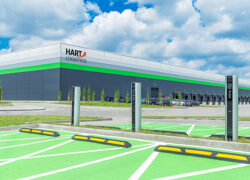
Hart Logistics has leased 8,100 sq m of warehouse space at MDC2 Park Gliwice, located in Upper Silesia at the junction of the A1 and A4 motorways. The park is owned by a fund managed by Invesco Real Estate and developed by MDC².

MDC2 Park Gliwice comprises three buildings with a total leasable area of approximately 59,000 sq m. The facility has received a BREEAM New Construction certification at the Outstanding level, with a score of 92.6%, placing it among the highest-rated industrial buildings in Poland.

Hart Logistics, which provides freight forwarding, contract logistics, warehousing and e-commerce services, is expanding its operations in response to business growth. The new location marks the company’s entry into southern Poland for contract logistics, complementing its existing operations near Poznań and Warsaw.

According to Hart Logistics, the selection of MDC2 Park Gliwice was influenced by the site’s transport connectivity and the environmental performance of the buildings. The company indicated that ESG considerations and working conditions for employees and drivers were factors in the location decision.

The buildings at MDC2 Park Gliwice incorporate a range of energy- and resource-efficiency measures. These include enhanced thermal insulation, passive design solutions, and systems aimed at reducing energy and water consumption. The developer reports that final energy demand is significantly lower than reference buildings, while water-saving fixtures and leak detection systems have been installed. The construction process also included a high level of waste recycling and the use of FSC- and PEFC-certified timber.

The park includes supporting infrastructure such as bicycle facilities, electric vehicle charging stations and landscaped areas designed to support local biodiversity. Additional amenities include outdoor spaces intended for employee use.

MDC² stated that the location and technical specifications of the park are intended to support logistics and distribution operations while meeting current environmental standards. Hart Logistics has indicated that it is continuing to evaluate further expansion opportunities as part of its development plans for 2026.

Viladomy Voborského residential project in Prague’s Modřany reaches structural completion

The Viladomy Voborského residential project developed by FETTERS management has reached the stage of structural completion. Construction is proceeding according to schedule, with final delivery planned for the fourth quarter of 2026.

The project comprises two villa-style residential buildings with a total of 12 apartments, offering 3+kk and 4+kk layouts. The development is located in a residential area of Prague 4 – Modřany. According to the developer, approximately half of the units have already been sold.

At the current construction stage, windows have been installed in both buildings, while interior partition walls and plastering works have been completed. The project is now moving into the phase of installing technical building systems.

The two buildings have three and four above-ground floors and are equipped with elevators. Apartment sizes range from 78 to 116 square metres. Each unit includes a terrace, balcony or private garden, as well as a cellar and a parking space in the underground garage.

The architectural and interior concept was developed in cooperation with LOXIA. The design makes use of natural materials, including solid wood on terraces and balconies, large-format windows, brick fencing and stone-paved access walkways. Landscaping is planned for the shared outdoor areas.

Standard equipment includes a camera and chip access system, video intercoms and electrically operated exterior blinds. The project is designed with a focus on energy efficiency, privacy and functionality, according to the developer.

Viladomy Voborského is located within walking distance of the Vltava riverbank and approximately 15 minutes by car from Prague’s city centre. The surrounding area offers basic civic amenities and access to green spaces, including nearby parks and natural areas.

EU and India agree comprehensive free trade agreement

The European Union and India have concluded a comprehensive free trade agreement, marking a significant step in strengthening economic relations between the two markets after negotiations that began in 2007 and were repeatedly suspended.

According to Sonali Chowdhry, trade expert at DIW Berlin, the agreement comes at a strategically important moment for both sides. India is expected to maintain strong economic growth in the coming years and is projected to become one of the world’s three largest economies by the end of the decade, increasing the importance of EU access to the Indian market.

Trade relations between the European Union and India are already extensive, with more than 170,000 buyer-supplier relationships between companies on both sides. The agreement aims to deepen these ties by reducing tariffs and non-tariff barriers across a range of sectors.

For EU exporters, the deal is expected to improve market access in industries such as automotive, engineering and beverages. At the same time, Indian exports including pharmaceuticals, IT services and textiles are set to benefit from improved access to the EU market.

Beyond direct trade effects, Chowdhry notes that the agreement also has a broader systemic role. By establishing binding commitments on transparency and market access, the agreement is intended to enhance predictability in international trade at a time when global trade rules are increasingly under pressure. In this context, the EU–India agreement is seen as a counterweight to rising protectionist trends and a measure to support the stability of the global trading system.

Source: DIW Berlin

front page info
LATEST NEWS