Construction sector in Germany remains under pressure as insolvencies rise

The German construction industry continues to face significant challenges, with the impact of the federal government’s special investment fund yet to translate into tangible relief for the sector. Between January and October 2025, 3,174 insolvencies were recorded in construction, representing an increase of 9.3% compared with the same period a year earlier, according to data cited by Atradius.

Frank Liebold, Country Manager Germany at Atradius, said that sentiment across the sector has deteriorated, although he noted that conditions could stabilise and improve slightly in the course of 2026. He pointed to continued pressure from rising material costs, a persistent shortage of skilled labour, and lengthy approval and permitting procedures, all of which are contributing to payment delays and higher insolvency risks.

After a relatively stable period in 2020 and 2021, the construction industry has experienced growing financial stress. Atradius reports that non-payment notifications have nearly doubled over the past five years, reflecting tighter liquidity and weaker payment discipline among market participants.

Residential construction remains weakest segment

Residential construction continues to be the most challenging part of the market. Government targets of 400,000 new homes per year have been missed consistently, with an estimated 220,000 units completed in 2025. Industry estimates suggest that Germany will require around 800,000 additional homes by 2027–2028.

At the same time, the German Construction Industry Association reported that 215,500 residential and non-residential units were approved between January and November 2025, an increase of 11.3% year on year. While this points to some improvement in forward indicators, industry leaders remain cautious. Peter Hübner, CEO of Strabag, described 2025 as a lost year for the sector.

Commercial real estate construction also remains subdued. Demand for office space has declined since the pandemic, reflecting structural changes in working patterns, including the sustained use of remote and hybrid work models.

Gradual recovery expected from 2026

The financial scope created by the government’s special fund is expected to affect the construction sector only gradually. So far, this has not been reflected in order books or business surveys, partly because existing backlogs must be worked through before new projects can start.

According to forecasts from Oxford Economics, total construction output in Germany is expected to increase by around 1.4% in 2026, with stronger growth anticipated in subsequent years. Residential construction, which contracted by an estimated 4.3% in 2025, is forecast to return to modest growth of around 1.1% this year. The rise in building permits and the effects of monetary easing suggest that investment activity may have reached a low point.

Oxford Economics also expects non-residential construction to grow by 2.4% in 2026, while civil engineering output is projected to increase by 1.2%. In the longer term, civil engineering is likely to benefit most from public investment, particularly given Germany’s infrastructure needs. Estimates indicate that around 4,000 bridges require renovation in the short to medium term.

Structural constraints remain

Despite these more positive medium-term expectations, Atradius warns that structural obstacles continue to limit the sector’s capacity to respond. The shortage of skilled workers remains a key constraint, raising concerns about whether planned housing and infrastructure projects can be delivered at the required pace.

Bureaucratic requirements also continue to slow project delivery. Civil engineering projects typically require between 15 and 25 permits and technical approvals before construction can begin, while road projects may need more than 30 permits and expert assessments.

According to Atradius, addressing labour shortages and streamlining approval processes will be critical if the construction industry is to benefit fully from public investment programmes and achieve a more sustainable recovery.

Source: Atradius

CAERUS Debt Investments appoints Markus Kreuter as Chief Operating Officer

CAERUS Debt Investments AG has appointed Markus Kreuter to its Management Board as Chief Operating Officer (COO), effective 1 February 2026. He will succeed Bernhard Berg, who is scheduled to retire in spring 2026.

Kreuter brings more than 35 years of experience in financing, including around three decades in commercial real estate finance. Prior to joining CAERUS, he served for over four years as Managing Director of Zinsbaustein GmbH in Berlin.

His professional background includes senior roles in credit risk management, client services, project development finance and transaction advisory. He has previously held positions at Deutsche Bank AG, DekaBank, Vivico Real Estate GmbH (now CA Immo Deutschland), Jones Lang LaSalle SE and The Flag Group.

Kreuter is a qualified real estate economist (ebs) and completed the Executive Management Program in International Real Estate (EMPIRE) at IREBS in cooperation with Bocconi University and ESSEC Business School in 2015. In addition to his executive roles, he has been active as a speaker and moderator at industry events and teaches at academic institutions including IREBS and EBS. He is also a member of gif Gesellschaft für immobilienwirtschaftliche Forschung e.V. and immoebs e.V.

Michael Morgenroth, CEO of CAERUS and Managing Partner at CapMan Real Asset Debt, said that Kreuter’s appointment will support continuity in the company’s management and ensure a smooth transition following the planned retirement of the current COO.

ElectroPutere Mall in Craiova expands following EUR 22 million investment

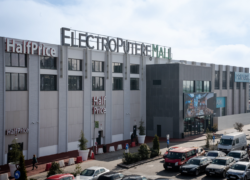
Catinvest has completed a 10,500 sq m extension of ElectroPutere Mall, following a total investment of EUR 22 million. As a result of the expansion, the shopping centre’s total retail area has increased to approximately 62,000 sq m, placing it among the three largest retail malls outside Bucharest.

The new extension introduces two international retailers to Craiova and Dolj County for the first time. Primark and Half Price will open their first stores in the region within the mall.

Alongside the increase in retail space, the project includes an expansion of parking facilities. ElectroPutere Parc now provides more than 3,150 parking spaces. A new access point from Decebal Boulevard has also been added to improve accessibility and traffic circulation.

With the completion of the latest phase, ElectroPutere Parc exceeds 110,000 sq m of total retail space, combining the shopping mall and adjacent retail park. The tenant mix includes brands such as Auchan, Leroy Merlin, Decathlon, Media Galaxy, H&M, C&A, Bebe Tei and Farmacia Tei, as well as Inspire Cinema. The expansion strengthens the role of the site as a regional retail and leisure destination in south-west Romania.

Bertrand Catteau, CEO of Catinvest Group, said: “This extension represents a strategic step in the evolution of ElectroPutere Parc and reflects our confidence in Craiova’s potential as a regional retail hub. By increasing the retail area, attracting major international anchor tenants and investing in infrastructure and accessibility, we are developing a long-term retail destination.”

Catinvest Eastern Europe continues to focus on phased development of retail projects adapted to local market conditions. The company’s strategy emphasises flexible retail formats intended to support long-term performance and regional economic activity.

Catinvest owns and operates several retail assets in Romania, including Orhideea and Esplanada Pantelimon in Bucharest, Tom in Constanța and ElectroPutere Mall in Craiova. Within ElectroPutere Parc, the group also operates ElectroPutere Offices and Aparthotel Craiova. Internationally, its portfolio includes projects such as Savoya Park in Budapest and Borska Pole in Plzeň. Overall, the group owns and manages more than 525,000 sq m of retail space across France and Central and Eastern Europe.

Cushman & Wakefield Echinox: Office operating costs in Bucharest rose by around 17% in 2025

Office operating costs in Bucharest increased by approximately 17% in 2025, driven by inflation, rising labour expenses and changes in fiscal policy, according to an analysis by Cushman & Wakefield Echinox.

Operating costs represent expenses charged to tenants in addition to base rent and include property tax, technical maintenance, insurance, cleaning, security, internet services and property management. Property taxes account for the largest component of these costs and can represent up to 50% of total operating expenses.

According to the consultancy, high inflation has had a broad impact across nearly all cost categories, from utilities and materials to specialised services. Personnel costs also increased following a 9.46% rise in the minimum wage, which directly affected service providers, particularly in cleaning and security. At the same time, higher occupancy levels in offices—exceeding 50% in most cases and reaching full occupancy in some buildings—led to increased consumption of materials and greater staffing requirements.

Maria-Raluca Mihai, Director Property Management at Cushman & Wakefield Echinox, said: “Operational costs have remained the main challenge in office building management. In 2025, the rise in service and material prices, together with the increasing number of employees returning to office, put pressure on budgets. A proactive approach from property management teams continues to be essential for maintaining the competitiveness of buildings.”

She added: “When managing costs, it is crucial to have tools that can process financial information quickly and accurately, so that optimisation decisions can be made without delay. The global economy is currently affected by unpredictable factors, and digitalisation remains the solution for organisations to keep pace and adapt efficiently.”

Additional pressure has come from higher maintenance and repair costs for HVAC systems, rising insurance premiums and increased VAT, which was raised to 21%. Anticipated tax increases in 2026 are also expected to affect operating budgets for both tenants and property owners.

The consultancy’s findings are supported by the fourth edition of the Real Estate Investors Sentiment Barometer conducted by Cushman & Wakefield Echinox. In the latest survey, 51% of investors identified optimal management of operating costs as the main challenge in managing their property portfolios, up from 39% in 2024. A further 28% cited the complexity of legislative regulations as a key concern.

When asked about trends expected to have the greatest influence on commercial property management services, investors pointed primarily to tenant experience and behaviour, mentioned by 48% of respondents, compared with 36% in 2024. Technology and digitalisation ranked second, cited by 30% of respondents.

In response to rising costs, Cushman & Wakefield Echinox highlights several market practices aimed at improving efficiency. These include organising regular tenders for service contracts, typically every 18 months, consolidating services under single providers to achieve volume discounts, and implementing energy-efficiency measures such as LED lighting, motion sensors, optimised HVAC scheduling and upgraded building management systems.

The consultancy also notes that structured maintenance planning can reduce the risk of costly repairs, while clear and well-documented service charge reconciliations allow tenants to better understand and track operating expenses.

Bucharest land transactions decline in 2025 as developers focus on prime locations

The volume of land transactions in Bucharest fell by 13.4% in 2025 compared with the previous year, marking the lowest level recorded in the past seven years, according to data compiled by Crosspoint Real Estate, the international associate of Savills in Romania.

The decline reflects a combination of factors, including the increasingly limited availability of land within the city and rising development costs. Another key driver has been the maturation of the residential sector, which remains the main source of demand for land in Bucharest. This shift is also evident in the residential sales market, where volumes have stabilised since 2024 following a peak in late 2023, pointing to demand driven more by end users than by speculative investment or low-cost financing.

According to Crosspoint, recent data indicate that the residential market has become more selective. “The market is no longer characterised by speculative volumes,” said Ionuț Stan, Partner and Head of Land Development at Crosspoint Real Estate. He noted that developers are increasingly competing for well-located plots that can support pricing acceptable to more informed buyers, reflecting a transition towards a replacement and upgrade market with greater long-term stability.

Crosspoint’s analysis shows that enthusiasm for apartment purchases eased in the second half of 2025, reinforcing the trend toward market maturity. As a result, developers are placing greater emphasis on product quality, which in turn has increased the importance of land characteristics such as location, planning status and surrounding infrastructure.

Ilinca Timofte, Head of Research at Crosspoint Real Estate, said that many of the larger land transactions in 2025 involved smaller plots than in previous years, but were concentrated in key areas of Bucharest. In some central locations, land prices per square metre reached record levels, reflecting strong competition for scarce, well-positioned sites.

One of the notable transactions illustrating this trend was the acquisition by Cordia Romania of an 8,179 sq m plot near Bucharest Mall and Alba Iulia Square, completed in September 2025. The land was acquired from Bog’Art Place and already benefited from an approved building permit. Cordia has since begun construction of the Centropolitan project, which will include 274 apartments and 3,345 sq m of retail space.

Crosspoint advised Cordia on the transaction, which ranks among the largest land deals recorded on the Romanian market in 2025. According to Mihai Dumitrescu, co-founder of Crosspoint Real Estate, the deal highlights developers’ preference for plots with established urban planning documentation, proximity to public transport and access to key services. He added that Crosspoint’s total land transaction portfolio in 2025 amounted to approximately 100,000 sq m.

Looking ahead, Crosspoint expects that higher land prices, limited availability of plots with approved planning documentation and increased taxation on residential properties held by commercial entities will reduce the attractiveness of apartments as pure investment products. In the medium term, this is likely to encourage a more cautious approach among residential developers and extend the time required to secure suitable land, as acquisition costs need to align more closely with current market conditions.

Skanska divests the office building Equilibrium 2 in Bucharest, Romania, for EUR 37M, about SEK 400M

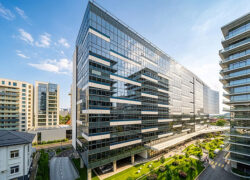
Skanska has divested the second phase of the Equilibrium office complex in Bucharest, Romania, for EUR 37M, about SEK 400M. The buyer is Magyar Posta Takarék Real Estate Investment Fund, managed by Gránit Asset Management. The transaction will be recorded by Skanska Commercial  Development Europe in the first quarter of 2026. The transfer of the property is scheduled for the first quarter of 2026.

The second building, completed in the fourth quarter of 2022, offers approximately 20,000 square meters of premium leasable office space across eleven floors. It is distinguished by its forward-looking approach to sustainability, inclusive design and digital connectivity, validated by LEED Platinum, Access4you Silver and WiredScore Platinum certifications. The building is almost 50 percent leased.

The office complex, which consists of two phases, has become a landmark in the Northern part of the capital, being located right at the entrance to the most vibrant office submarket, Floreasca-Barbu Vacarescu, often called the new Central Business District in Bucharest. It offers 3,500 square meters of accessible green space, sustainable solutions, and is designed to focus on flexibility.

The first building of the complex, delivered in 2019, was sold in April 2025 to Gordiusz Private Equity Fund, managed by Gránit Asset Management.

LIP Invest acquires logistics property near Dresden for institutional fund

LIP Invest has acquired a transshipment logistics property in Thiendorf, near Dresden, for the LIP Real Estate Investment Fund – Logistics Real Estate V, which is managed by INTREAL. The asset was purchased off market from the Bremen-based developer and investor Peper & Söhne.

The transaction was supported by REIUS (legal advice), Forvis Mazars (tax advice), Mocuntia (technical due diligence) and Enviro Sustain (ESG due diligence).

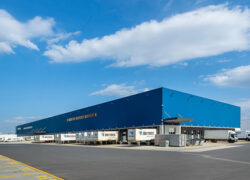
The property, completed in 2024, provides approximately 11,400 sq m of total lettable area, including around 9,000 sq m of warehouse space. It is designed for high-throughput logistics operations, with loading access on all four sides via 83 dock levellers, one ground-level gate and 16 sectional gates for vans.

The building meets current construction and sustainability standards. A photovoltaic system is installed on the warehouse roof, while the associated office, gatehouse and technical annex feature green roofs. The property is equipped with building automation systems, offers charging infrastructure for cars, vans, trucks and bicycles, and has been awarded DGNB Gold certification.

Hermes Germany signs long-term lease

The property is fully leased on a long-term basis to Hermes Germany GmbH, which operates the facility as a regional transshipment depot. The site has created around 90 new jobs and is equipped with a sorting system capable of handling more than 200,000 parcels per day. Approval for 24/7 operations allows for continuous parcel processing.

Strategic location in Saxony

The logistics facility is located in Thiendorf, north of Dresden, within the region often referred to as “Silicon Saxony”. The site benefits from direct access to the A13 motorway towards Berlin and the A4 east–west corridor, positioning it as a distribution hub for eastern Germany and neighbouring Central and Eastern European markets. Additional transport options are supported by proximity to Dresden Airport, the local freight village (GVZ) and the Port of Dresden.

Photo: Logistics property near Dresden. Copyright: Goldbeck

Skanska and Entra to develop office project in central Oslo

Skanska and Entra have agreed to jointly develop an office project at Christian Krohgs gate 2 in Oslo through a 50/50 joint venture. The total investment volume for the project is approximately NOK 1.8 billion (around SEK 1.7 billion).

Skanska will carry out the construction works under a contract valued at around NOK 900 million (approximately SEK 830 million). The contract will be included in Skanska’s Nordic order bookings for the first quarter of 2026.

The project involves the redevelopment and expansion of existing office and commercial buildings, providing a total lettable area of approximately 21,200 sq m. The property is located close to Oslo Central Station and is intended to offer modern, flexible office space with strong access to public transport.

The development targets a BREEAM-NOR v6.0 certification at the “Very Good” level and includes plans for a fossil-free construction site. The partners also aim to reduce greenhouse gas emissions from construction materials compared with a reference building, increase material reuse, minimise waste volumes and achieve energy class A through efficient energy solutions.

Construction is scheduled to start in the second quarter of 2026, with completion expected around the end of 2029 or early 2030.

Zeitraum marks 10 years on the Czech market

Zeitraum, an operator of student accommodation and serviced apartments, has marked ten years of activity in the Czech Republic. Over the past decade, the company has expanded its portfolio to include student residences and serviced apartments in the Czech Republic and Poland.

Zeitraum currently operates three apartment buildings in Prague and Pilsen, as well as four student residential buildings in Prague districts 3, 7 and 8. Outside the Czech Republic, the company operates two student buildings in Krakow and one in Warsaw. Across both countries, its portfolio comprises ten properties with a total capacity exceeding 2,000 beds.

According to the company, Zeitraum plans to expand into additional university cities in the Czech Republic and abroad, with a target to add between 700 and 1,000 beds over the next three years.

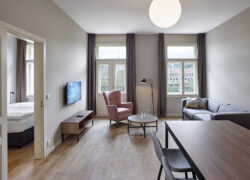
Zeitraum entered the market with a focus on privately operated student housing offering fixed-price rents, shared services and flexible lease terms. Its student residences provide furnished rooms and apartments, common facilities such as study and leisure areas, 24-hour reception services and utilities included in the rent. The concept has since been complemented by serviced apartments aimed at short- and long-term stays.

Under the Zeitraum Apartments brand, the company operates three aparthotel properties: Franz by Zeitraum and Karl by Zeitraum in central Prague, and Zeitraum Kotkova in Pilsen. These units are targeted at tourists, business travellers and longer-term guests, offering fully equipped apartments with hotel-style services.

The company reports full occupancy across its student housing portfolio for the upcoming academic year, with bookings made several months in advance. It also notes increasing demand for serviced apartments from both individual and corporate clients in the Czech Republic and Poland.

Zeitraum states that its future strategy focuses on further geographic expansion while continuing to develop services at its existing locations.

Sonar acquires ‘Australhaus’ office property in Hamburg for institutional investor

Sonar Real Estate has acquired the ‘Australhaus’ property in Hamburg on behalf of a special fund managed for a German institutional investor. Sonar acted as investment and asset manager for the vehicle, which is administered by Institutional Investment Partners.

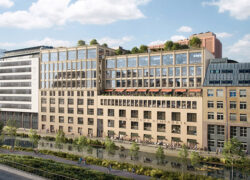
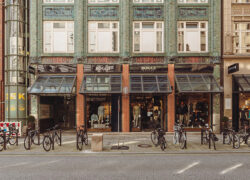
The listed five-storey building was completed in 1906 and modernised in 2015. It offers a total rental area of approximately 1,600 sq m, of which around 60% is used for office and medical practice space. The remaining area comprises retail and storage space. Current tenants include the Italian fashion brand Boggi Milano on the ground floor and a dental practice. Existing vacancy totals roughly 600 sq m of office or practice space and about 150 sq m of retail space.

Australhaus is located on Poststraße in Hamburg’s city centre, within the arcade district between Gänsemarkt and Rathausmarkt. The property benefits from access to the city’s public transport network via the nearby Jungfernstieg and Gänsemarkt stations.

According to Matthias Gerloff, Managing Partner at Sonar Real Estate responsible for German institutional business, the acquisition aligns with a long-term investment strategy and offers scope for income and value enhancement through active asset management.

Legal advice for the transaction was provided by Jebens Mensching PartG mbB, while technical and environmental due diligence was carried out by TA Europe. CBRE acted as broker, and JLL provided commercial advice to the buyer.

front page info
LATEST NEWS