REALOGIS brokers warehouse and office space in Ginsheim-Gustavsburg to Sovereign Network

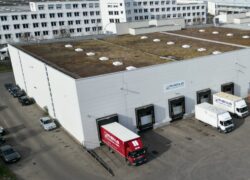
REALOGIS Immobilien Frankfurt GmbH has brokered the lease of approximately 2,220 sq m of warehouse and office space in Ginsheim-Gustavsburg. The premises form part of a logistics property offering around 9,575 sq m of total usable space. REALOGIS was exclusively mandated by M7 Real Estate to market the asset.

The tenant is Sovereign Network GmbH, a company specialising in transport and handling services for courier and logistics operators. The lease comprises about 1,850 sq m of warehouse space and 350 sq m of office space, along with 22 parking spaces. The new site is intended to support the company’s operations linked to Frankfurt Airport, where it already maintains a branch in Cargo City South.

Ginsheim-Gustavsburg is located near the cities of Mainz and Wiesbaden and has a population of around 17,000. The municipality is connected to the regional road network via the A60 and A671 motorways, while the B43 federal road runs through the Gustavsburg district.

HIH leases 1,733 sq m at KORYFEUM complex in Unterschleißheim

HIH has signed a lease for 1,733 sq m of office and warehouse space at the KORYFEUM office and commercial property in Unterschleißheim, north of Munich. The tenant is an international provider of security system services, with occupancy planned for summer 2026. HIH has been responsible for asset management and leasing of the property since summer 2025.

KORYFEUM comprises two building sections with a total lettable area of approximately 24,500 sq m and was completed in 2023. The complex includes 277 underground parking spaces as well as charging points for electric cars and e-bikes. The buildings hold DGNB Gold certification and WiredScore Silver certification for digital infrastructure.

The available premises are designed for multi-tenant use and can be divided into units of around 400 sq m, allowing for a range of office and mixed-use layouts, including research and light industrial functions. The ground floor offers ceiling heights of over five metres, and the property includes a roof terrace. Plans also include the addition of a central service building with catering, meeting and lounge areas, as well as landscaped outdoor areas.

According to HIH, around 13,000 sq m of space remains available for lease. The company notes that the building’s technical standards and transport connections are among its main features.

Unterschleißheim is located in the northern part of the Munich metropolitan region and is served by S-Bahn rail connections as well as the A9 and A92 motorways. The surrounding area includes companies from the technology, automotive and research sectors, along with local amenities such as schools, childcare facilities and fitness centres.

CBRE acted as leasing agent and advised the tenant in the transaction.

Periskop appoints Philipp Loth as Director Logistics & Light Industrial

Periskop Partners has appointed Philipp Loth as Director Logistics & Light Industrial within its logistics platform. He joined the company on 15 January 2026 and is based primarily in Frankfurt am Main. Loth reports to Dr. Kilian Mahler, Managing Partner of Periskop Logistics.

Loth has around 20 years of experience in investment and asset management in the logistics and light industrial real estate sectors. Most recently, he was a member of the management board and Head of Investment Management Germany at GARBE Industrial Real Estate in Frankfurt, where he also led the local branch office. Earlier in his career, he held roles at Schroder Property Investment Management, focusing on pan-European logistics funds, and at the Archon Group, part of Goldman Sachs. Over the course of his career, he has been involved in real estate transactions with a combined volume of approximately €5.5 billion, including around €4 billion in logistics assets and €750 million in the light industrial segment.

At Periskop Logistics, Loth will be responsible for developing the company’s investment activities in logistics and light industrial real estate and will serve as a contact point for property owners, investors and advisers in these sectors.

Dr. Kilian Mahler stated that Loth’s market experience and transaction background support the company’s plans to expand its logistics activities. Philipp Loth said his focus will be on working with the team to identify investment opportunities across different risk profiles, including core, core-plus and value-add assets, as well as sale-and-leaseback transactions.

Deka Immobilien sells Edison Höfe property in Berlin

Deka Immobilien has sold the Edison Höfe office and commercial complex in Berlin-Mitte to an institutional investor. The asset was held in the portfolio of the open-ended real estate fund WestInvest ImmoValue, which is aimed exclusively at institutional clients. The parties agreed not to disclose the transaction price.

The property is located at Invalidenstraße 116–119 and Schlegelstraße 26, 26A–C and comprises eight office and commercial buildings with approximately 27,700 sq m of leasable space and 129 parking spaces. The complex includes the Torhaus, a gatehouse building completed in 2012, and a former AEG factory building dating back to 1880 that was comprehensively refurbished between 2002 and 2004, including the addition of an extra floor.

According to the company, the sale follows a holding period of nearly 13 years and was executed as part of portfolio management activities within the WestInvest ImmoValue fund.

Record demand and limited new supply on the Wrocław office market

The Wrocław office market recorded its highest level of tenant activity to date in 2025, with total leasing volume reaching nearly 180,000 sq m, according to a report by Savills. At the same time, the market continues to face a relatively high vacancy rate and very limited new supply, contributing to a widening difference in rental levels between newer and older buildings.

At the end of 2025, total office stock in Wrocław stood at approximately 1.33 million sq m. The largest share of space is located in the central zone, accounting for 36 percent of the market, followed by the western zone with 33 percent and the southern zone with 22 percent. No new office buildings were delivered during the year, while total leasing volume reached 179,600 sq m, up 23 percent year on year. The fourth quarter accounted for 75,600 sq m of signed agreements.

The structure of transactions indicates that many occupiers focused on renewing existing leases rather than expanding. Renegotiations represented 57 percent of total leasing activity, while new leases accounted for 30 percent and expansions for 10 percent. The most active tenant sectors were business services, information technology and manufacturing.

Savills notes that the absence of new completions and the dominance of renegotiations reflect a period of cost control and space optimisation among tenants. Newer buildings in central or well-connected locations have generally maintained higher rental levels, while older properties in secondary locations have faced increased competition and downward pressure on rents.

Supply remains limited, with only two office projects under construction in the southern zone, providing a combined 20,400 sq m of space. Both schemes, Swobodna SPOT and The Park Wrocław 2, are scheduled for completion in 2026. There are currently no confirmed deliveries for 2027, and several projects planned for 2028 remain uncertain.

Despite the lack of new completions, the overall vacancy rate increased to 19.9 percent, equivalent to around 266,300 sq m of available space. Approximately four-fifths of this vacant stock is located in older buildings and office complexes, which are more difficult to lease amid a continued preference for higher-quality space. Prime headline rents rose to around EUR 17 per sq m per month, while rents in less central Class A locations declined to approximately EUR 13.50 per sq m. Service charges stabilised in the range of PLN 20–30 per sq m.

For 2026, Savills expects lease renegotiations and space optimisation to remain common, with hybrid working models continuing to influence demand patterns. Buildings with immediately available space are likely to attract increased attention due to the limited development pipeline.

Photo: The Park Wrocław 2

NEINVER appoints Natalie Schmidt as Retail Director

NEINVER has appointed Natalie Schmidt as Retail Director. In this role, she will work with Joan Rouras, Leasing and Retail Director at the company.

Schmidt will be responsible for contributing to NEINVER’s retail strategy and overseeing the brand and tenant mix across the 21 outlet centres the company manages in six European countries: Poland, Spain, Germany, France, Italy and the Netherlands.

Joan Rouras said Schmidt’s experience in international retail and product management would support the company’s cooperation with brand partners and the development of its retail operations.

Schmidt has more than 20 years of experience in the retail sector in both domestic and international markets. Before joining NEINVER, she served as Deputy Retail Director at Wertheim Village in Germany, part of The Bicester Collection, where she was involved in sales strategy for premium brands.

Her previous roles include positions in product distribution and commercial management at companies such as VF Corporation, Oysho (Inditex Group) and Mango. She later held management functions at Desigual, including Global Monobrand Director and Global Retail Outlet Director, overseeing operations in Europe, the United States, Japan and Canada. She also worked at CBRE.

Schmidt holds a degree in Psychology from Ramon Llull University and a master’s degree in Mediation and Conflict Resolution from the University of Barcelona. She has also completed additional courses in retail innovation and sustainable management at ESADE.

According to the company, the appointment is part of an ongoing expansion of its management team as it continues to develop its retail activities in Europe.

Data4 publishes life-cycle environmental analysis of a data centre

Data4, a European data centre operator, together with engineering consultancy APL Data Centre, has published a document presenting a life-cycle assessment (LCA) of a 5 MW data centre. According to the companies, the report applies recognised international standards and is intended to provide a broader view of the environmental impact associated with this type of facility.

The publication comes at a time of increasing demand for digital infrastructure linked to the expansion of cloud services and artificial intelligence technologies. The study argues that the environmental impact of data centres should be assessed across their full life cycle rather than through selected operational indicators alone.

The report, titled “Data Centres: Measuring impacts for more effective actions,” evaluates environmental effects from the extraction of raw materials and construction, through operation, to eventual dismantling. The methodology follows ISO 14040 and ISO 14044 standards for life-cycle assessment.

According to the findings, excluding servers, the production of construction materials and equipment such as concrete and steel accounts for 39 percent of the total carbon footprint calculated over a 20-year period. Operational emissions account for 48 percent over the same horizon. The study also indicates that direct water consumption at the analysed facility represents less than 0.1 percent of total impact, with most water use occurring indirectly through electricity generation.

Linda Lescuyer, Head of Environment and Innovation at Data4, said the aim of the publication is to provide a detailed measurement framework that can support design and operational decisions within the sector. Thomas Martin, Deputy CTO and Head of Sustainability and Innovation at APL Data Centre, stated that life-cycle assessment and carbon footprint analysis can help identify areas where environmental performance can be improved.

The white paper forms part of Data4’s “Data4Good” programme, under which the company reports it has introduced measures including the use of lower-carbon concrete, renewable energy power purchase agreements and the development of water-free cooling systems.

The report is also relevant to the Polish market, which has seen increased data centre investment in recent years driven by demand from businesses, public institutions and cloud service providers. Industry representatives note that broader environmental assessment methods may influence future project planning and regulatory discussions. Adam Ponichtera, Director of Data4 Poland, said the analysis highlights the importance of comprehensive environmental measurement in the development of digital infrastructure.

Piotr Aftewicz joins Walter Herz management team

Walter Herz has appointed Piotr Aftewicz as Managing Director as part of an expansion of its management structure. Aftewicz has more than 20 years of professional experience in the IT sector, product management and commercial leadership, with a focus on business process design and optimization in both growing companies and large international organisations.

In his new role, Aftewicz will oversee the development of the company’s organisational structures and the introduction of operational changes intended to support further business growth. His responsibilities are to include work on sales strategy, the creation of dedicated business lines and measures aimed at improving client service efficiency and advisory quality in the commercial real estate and investment segments.

He will work with the management board on operational processes, including closer coordination between marketing, sales and customer service functions. Part of these efforts will involve the implementation of a RevOps-type operating model intended to streamline internal workflows.

During his career, Aftewicz has led transformation and organisational projects in the financial, industrial, retail and technology sectors. He previously held senior management roles overseeing sales, marketing, product development and IT. At Awareson he served as Chief Commercial Officer, where he was responsible for revenue growth strategy. Earlier, at Billennium, he worked as CIO and Chief Product Officer, managing cross-functional teams and implementing CRM and business intelligence systems. He also held roles at Sciamus and Sygnity S.A. Aftewicz is a graduate of the Military University of Technology in Warsaw.

Bartłomiej Zagrodnik, Managing Partner and CEO at Walter Herz, said the appointment supports the company’s plans to strengthen its operational capabilities. Aftewicz stated that his objective is to further develop the firm’s operating model and support its position in the commercial real estate market.

Romania updates tax rules and electronic invoicing deadlines through new ordinance

Romanian authorities have introduced a set of fiscal and administrative changes at the beginning of February 2026 through a new government ordinance that affects companies, individual entrepreneurs and property owners. The measures modify how certain business expenses are treated for tax purposes, adjust deadlines for digital invoicing and introduce new procedures for payroll reporting.

One of the most significant changes concerns the treatment of expenses paid to affiliated companies abroad for services such as intellectual property, management or consultancy. A restriction that previously limited how much of these costs could be deducted when calculating corporate taxes has been removed. From the first quarter of 2026, these expenses are again assessed under the standard rules applied to other business costs.

The ordinance also introduces targeted local tax relief for residents in two protected regions of the country — the Danube Delta Biosphere Reserve and the Apuseni Mountains. Owners of homes used as their primary residence in these areas, as well as the land attached to them, are eligible for a reduced local tax rate. The measure also extends to one privately owned vehicle per household, provided the assets are not used for commercial purposes.

In the area of digital administration, the government has postponed the deadline for certain individuals who conduct ongoing economic activities to register and issue invoices through the national electronic invoicing platform. The new deadline has been set for 1 June 2026, giving affected taxpayers additional time to adapt to the system. After that date, invoices will have to be submitted electronically, with financial penalties foreseen for non-compliance by both sellers and buyers.

Another amendment concerns employers operating several branch offices within the same municipality. These businesses will now be required to appoint a single branch responsible for declaring and paying salary-related taxes on behalf of all local units. Companies that already have multiple offices must notify tax authorities of their chosen reporting unit by the end of June 2026. During the transition period, sanctions for non-registration are temporarily suspended.

The package of measures is intended to clarify existing rules and simplify certain compliance processes while offering limited tax relief in designated regions. At the same time, the continued rollout of electronic systems signals the authorities’ broader effort to move administrative procedures further into digital formats.

Source: Deloitte

Czech state budget posts surplus in January as provisional spending limits take effect

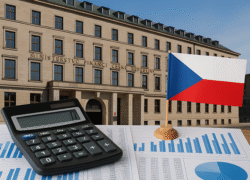
The Czech state budget recorded a surplus of CZK 32.4 billion in January, influenced largely by the temporary budget provisional that restricts government spending, the Ministry of Finance announced. It is the first January surplus since 2022, which also began under provisional budget rules. In January last year, the budget showed a deficit of CZK 11.2 billion.

Total revenues in the first month of the year reached CZK 181.4 billion, representing a year-on-year increase of 12.1 percent. The growth was driven mainly by higher tax collection and increased inflows from European Union funds. Government expenditures totalled CZK 149 billion, a decline of 13.9 percent compared with the same period last year.

Analysts expect the balance to weaken once the provisional regime ends and regular spending resumes. Komerční banka analyst Jaromír Gec noted that expenditure is likely to rise after the provisional is lifted, while the current boost in EU-related income may also prove temporary as it reflects reimbursements for projects financed in previous periods.

Revenue increased by nearly CZK 20 billion year-on-year in January, with EU transfers accounting for a significant portion of the rise. The Czech Republic received CZK 24.1 billion from the EU during the month, CZK 13.3 billion more than a year earlier. Finance Minister Alena Schillerová stated that prioritising the use of European funds contributed to the higher income figure, describing the result as a return to more typical levels rather than an exceptional peak.

Among tax categories, personal income tax showed the fastest growth, reaching CZK 17.5 billion, up 8.5 percent year-on-year, reflecting wage increases. Social insurance contributions amounted to CZK 68.8 billion, an annual rise of 5.8 percent. Value-added tax collection grew by 3.9 percent to CZK 43.6 billion, while excise duties generated CZK 16.4 billion, up 5.6 percent from the previous year.

Expenditure trends were shaped by the provisional budget framework, which limits monthly spending to one-twelfth of the previous year’s total. The Ministry of Finance indicated that this particularly affected current spending, including temporary reductions in allocations for education, research and innovation.

Social benefits remained the largest expenditure item at CZK 82.5 billion, an increase of 3.8 percent year-on-year. Of this amount, pensions accounted for CZK 64.1 billion, rising by 3.1 percent compared with January last year. Capital expenditures rose to CZK 8.3 billion, CZK 6 billion higher than a year earlier, including CZK 4.4 billion transferred to the State Fund for Transport Infrastructure. The ministry noted that investment spending is typically lower at the beginning of the year, with most projects implemented later in the budget cycle.

The Czech Republic entered 2026 under provisional budget rules after the government rejected the previous draft budget proposal. A new budget plan has since been approved by the cabinet and is expected to be finalised by parliament in March. In 2025, the state budget closed with a deficit of CZK 290.7 billion, the fourth-largest shortfall since the country’s establishment.


front page info
LATEST NEWS