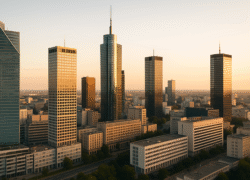
Daniel Libeskind to Shape Prague’s Future Skyline on Rohan Island

The transformation of Rohan Island in Prague is gaining momentum, with an ambitious new phase designed by world-renowned architect Daniel Libeskind. The project, developed by Sekyra Group, aims to turn a long-abandoned riverside site into a vibrant new district combining housing, leisure, and green public space.

The development, known as Rohan City, will stretch along the Vltava River between Karlín and Libeň, replacing what was once an industrial area with modern buildings and landscaped parks. At its heart will stand four distinctive residential towers created by Libeskind’s studio in New York. Their dynamic form will define the skyline and serve as the focal point of a new central square dedicated to Simone Weil, continuing the district’s theme of naming streets and parks after great thinkers.

The wider plan envisions a mixed community with homes, offices, shops, cafés, and cultural facilities surrounded by open green areas. The riverfront promenade will connect to existing parks and cycle routes, creating a continuous path along the Vltava. Nearly half of the entire site is planned as open space, making greenery a central part of the district’s design.

Local and international architecture firms are contributing to different phases of the project, each responsible for residential or mixed-use blocks that will form part of the evolving neighbourhood. Among them are Jakub Cigler Architekti, edit! architects, and Podlipný Sladký Architekti, who are designing a new section with several hundred apartments overlooking the river.

Construction on the site has been advancing gradually since the first buildings were approved, with completion of the full district expected by 2035. Once finished, Rohan City will provide homes for more than 10,000 people, transforming a neglected part of the capital into a modern, sustainable extension of the inner city.

Sekyra Group describes the development as a model for contemporary Prague — a place that connects architecture with the natural landscape while offering new spaces for culture and community life. Libeskind’s design will give the area a distinctive identity, marking one of the most significant additions to the city’s skyline in years.

Photo: Rohan City – Sekyra Group

Germany’s Poverty Risk Remains High for Refugees and the Unemployed Despite Years of Economic Growth

Germany’s long-running prosperity narrative continues to conceal deep divisions. According to updated research from the German Institute for Economic Research (DIW Berlin) based on the Socio-Economic Panel (SOEP), the overall risk of poverty has barely changed since 2020, holding steady at around 17 percent of the population. Yet among refugees and the unemployed, the rates remain three to four times higher — a structural imbalance that economic growth alone has failed to resolve.

“It is clear that work protects against poverty,” said DIW economist Markus M. Grabka, who leads the annual evaluation of wage and income data. “But integration into the labour market and a fair transfer system are essential. As it stands, increases in working hours have little effect on the wallets of those in the lower income bracket.”

The DIW findings show that while hourly wage inequality has narrowed in recent years—thanks in part to the minimum wage and improved pay in eastern Germany—the real purchasing power of households has eroded under the weight of high inflation in 2021–2022. Statistisches Bundesamt confirmed that real incomes fell for the first time in nearly a decade, a setback that hit low-income groups hardest.

The share of people facing financial insecurity has stagnated since the pandemic period. Among those without a migration background, the poverty risk remains below 13 percent, but for people with a migration background, it hovers around a quarter of the population. For refugees, the picture is starker. The IAB-BAMF-SOEP Refugee Survey, which tracks their economic situation, estimates that as many as 60 percent of refugee households live below the poverty threshold — an improvement from earlier years, yet still alarmingly high.

“The good news is that since 2020, the poverty risk among refugees has fallen slightly, which is likely due to increasing labour market integration,” Grabka told DIW Berlin’s Distribution Report.

Experts note that the income gap in Germany is not widening further but remains “stuck” at a high level. Studies from DIW Berlin and Destatis suggest that stagnant wage mobility, part-time work, and limited access to full employment continue to trap many households at the lower end of the income scale.

The data reveal what analysts describe as a “two-speed” Germany: a stable middle-income majority and a growing minority struggling with rising costs, insecure jobs, and limited prospects for advancement. DIW Berlin concludes that stronger policies to promote full-time employment and reform the benefits system could help translate economic growth into real income gains for all.

“Germany’s economy is still growing, but not everyone feels the benefit,” Grabka warned. “Reducing inequality and poverty will require more than a good labour market—it demands structural change.”

Source: DIW Berlin

Poland’s Job Market Shows First Signs of Cooling, Young People and Women Feel It Most

The Polish labour market is beginning to show early signs of a slowdown. Although many workers say they found their current jobs relatively quickly, a growing number believe that job-hunting today takes longer than in recent years — especially among the youngest adults and women.

According to the latest edition of the Barometr Polskiego Rynku Pracy published by Personnel Service, employee sentiment has weakened since mid-2025. More than two in five respondents believe that finding a new job is now more difficult than two or three years ago. This perception is particularly widespread among people aged 18 to 24, who are entering a softer job market after years of strong hiring.

Official data support the impression of a labour market losing some momentum. The Central Statistical Office (GUS) reported that the number of job vacancies fell to 95,700 in the second quarter of 2025 — down by more than 15,000 compared to the same period last year. The vacancy rate now stands at 0.78 %, its lowest level in several quarters.

While Poland’s overall unemployment rate remains low by European standards — at 5.4 % in July 2025, according to GUS — economists warn that the youth jobless rate is still in double digits. Under the EU’s harmonised Labour Force Survey (BAEL) methodology, unemployment among people aged 15-24 hovers around 11 %, signalling difficulties for new entrants.

“The first groups to feel a slowdown are always the youngest, whose lack of experience makes them more vulnerable when companies scale back recruitment,” said Krzysztof Inglot, labour-market expert and founder of Personnel Service. “It’s a warning signal that the market is becoming more selective.”

The company’s earlier survey results also suggest that women perceive greater difficulty in finding work than men. Analysts link this to structural shifts in services and administrative sectors, where automation and cost-cutting are reducing hiring activity.

Despite these challenges, most respondents said they found their current jobs within three months, and overall employment in Poland remains high. Yet growing concern about slower hiring suggests a turning point after several years of near-record job creation.

Economists expect the cooling trend to continue into 2026, in line with weaker GDP growth and tighter budgets in many industries. However, they note that Poland’s strong manufacturing base and foreign investment pipeline could help cushion the slowdown, especially if inflation and interest rates continue to ease.

Source: Personnel Service

Greenbox JV Secures Planning Approval for New Logistics Scheme in North Yorkshire

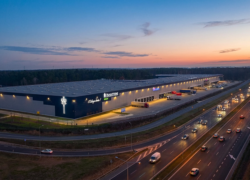
Greenbox JV has received full reserved matters planning consent from North Yorkshire Council (NYC) for GB181, a 181,742 sq ft logistics and industrial building at Greenbox Thirsk. The approval marks another step in the company’s ongoing national expansion and follows its recent progress at Greenbox Darlington.

The 52-acre Greenbox Thirsk site now holds consent for multiple phases: GB365 (365,000 sq ft) and GB181 (181,742 sq ft) are fully approved, while a Section 106 Agreement for GB272 (272,504 sq ft) is nearing completion. Together, these projects will deliver a combined 820,000 sq ft of industrial and logistics space. The site retains flexibility under its outline consent, enabling the delivery of units ranging from 12,000 sq ft for SMEs to a single large-scale building of up to 820,000 sq ft—making it one of the few locations in Yorkshire capable of accommodating such a development.

All Greenbox projects are designed to meet BREEAM Excellent, EPC A, and Net Zero standards for construction and operation. At Thirsk, supporting infrastructure is already in place, including a new access route via Eldmire Lane and landscape planting to integrate the site into the surrounding environment.

Located close to the A1(M) and A19, Greenbox Thirsk offers strategic access to northern and midlands markets, with Leeds, Manchester, York, and Hull all within 100 miles. The local economy includes a strong manufacturing and logistics base, with employers such as Severfield PLC, Inspired Pet Nutrition, Cleveland Steel & Tubes, and Cargill already established in the area.

“Securing planning at Greenbox Thirsk represents another important step in our strategy to deliver modern, Net Zero logistics hubs,” said Alex Reynolds, Development Director at Citivale. “The scheme strengthens Yorkshire’s logistics network and provides occupiers with the opportunity to access high-quality, sustainable space in a well-connected location.”

The new facility can be delivered within 12 months and is expected to attract manufacturers and distribution companies seeking large, efficient, and environmentally responsible premises in North Yorkshire.

Experts Question Transparency and Value of Hungary’s Infrastructure Push

As Hungary embarks on one of its largest waves of infrastructure spending in recent years, industry observers and governance experts are voicing concerns about the programme’s transparency, efficiency, and long-term benefits.

The government has announced plans to revive hundreds of projects in 2025, focusing on highways, rail links, and digital networks. Officials say the investments will drive competitiveness and regional growth. But professionals across the construction, finance, and policy sectors warn that weak oversight and opaque procurement processes continue to undermine confidence in how public funds are used.

Analysts note that infrastructure contracts in Hungary are frequently awarded without sufficient public scrutiny, raising questions about competition and accountability. Critics argue that a lack of disclosure over costs and contractor selection has become a recurring feature of large public projects, increasing the risk of inefficiency and favoritism.

Some of the skepticism centres on high-profile ventures such as the Budapest–Belgrade railway, which has been described as strategically significant but economically uncertain. Experts question whether the investment will generate returns proportional to its cost, especially as freight and passenger volumes along the route remain limited.

Economists also point to an imbalance in regional development. While major highways and cross-border routes receive substantial funding, smaller communities often see little improvement in local infrastructure. This uneven distribution, they argue, deepens existing economic divides between central Hungary and outlying regions.

International watchdogs have also highlighted concerns about corruption and the concentration of political influence in public procurement. Reports suggest that a small number of contractors dominate state-funded construction, which can discourage competition and inflate project prices.

Beyond the financial risks, professionals stress that long-term infrastructure success depends on stronger institutional capacity and independent oversight. Without consistent auditing, project evaluation, and enforcement of fair bidding standards, new investments could repeat past mistakes of cost overruns and delays.

At the same time, environmental and technological priorities remain secondary in many projects. Although the government has pledged to integrate sustainability and digital innovation into transport and energy infrastructure, experts say practical implementation often lags behind political declarations.

Despite the criticism, few dispute the need for investment. Hungary’s transport networks and energy systems require significant modernization after years of underfunding. What divides professionals is not the ambition of the programme, but whether it can be delivered with transparency, balanced development, and value for money.

As one urban planner put it privately: “Hungary doesn’t need fewer roads or railways—it needs better governance of how they are built.”

UK Economy Shows Uneven Growth as Services Hold Firm and Industrial Output Falters

The UK’s latest economic figures for August reveal a divided picture between the services sector and industrial production, underlining the fragile balance within the broader economy.

Official data released this week shows that the services sector, which represents roughly four-fifths of Britain’s economic output, continued to expand modestly through late summer. Professional and technical services, health, and accommodation contributed most to the steady performance. However, the pace of growth remains subdued, with limited momentum from consumer-facing businesses such as retail and hospitality.

In contrast, industrial output showed renewed weakness after signs of recovery earlier in the summer. Manufacturing activity slipped slightly as energy-related production cooled, and supply chain bottlenecks resurfaced across several sub-sectors. Analysts noted that output declines in machinery, transport equipment, and basic metals weighed particularly on August’s industrial figures.

The divergence between services and production highlights the broader structural imbalance in the UK economy. While services have remained a consistent source of growth, the industrial sector continues to lag behind, constrained by high input costs, uncertain demand, and limited investment.

Economists say the overall outlook remains cautious. Businesses continue to report steady but fragile demand, while tighter financial conditions and persistent inflation pressures weigh on confidence. Energy-intensive industries, in particular, have struggled to regain the momentum seen earlier in 2025 when falling wholesale energy prices briefly boosted production.

Despite the mixed results, the economy avoided a significant contraction in August. The gradual rise in services activity helped offset industrial weakness, keeping the UK’s growth trend on a modestly positive path. However, forecasters warn that sustained recovery will depend on stronger business investment, improved productivity, and further easing of inflation-related costs.

As policymakers prepare for upcoming data on GDP and inflation, the August figures serve as a reminder that Britain’s post-pandemic economy remains uneven—resilient in parts, yet vulnerable to headwinds from both global and domestic pressures.

Source: OGL

UK Construction Output Softens in August as Maintenance Work Offsets Declines in New Projects

The UK’s construction industry recorded a slight downturn in August, as weaker activity in repair and maintenance offset limited growth in new building projects. According to the latest official data, the sector’s overall output slipped compared with July, though it remains modestly higher over the broader three-month period.

Analysts say the figures point to a mixed picture for Britain’s builders. Demand for small-scale maintenance and renovation projects held up well, particularly in private housing, while larger developments faced continued headwinds from higher borrowing costs, planning delays, and cost pressures.

The report shows that while construction has avoided a sharp contraction, activity levels remain subdued across several key areas, including infrastructure and commercial building. In contrast, home repair and refurbishment work provided a partial cushion, growing strongly over the summer months and helping sustain output through August.

Over the three months leading up to August, construction volumes edged up slightly, supported mainly by residential maintenance and public-sector repair projects. However, new building work, which accounts for the largest share of industry activity, was flat or declining in most categories, reflecting investor caution amid uncertain demand forecasts.

The data follows the UK’s latest GDP update, which showed the broader economy expanding marginally in August. Construction contributed to that limited growth but remains one of the more volatile components of the economy.

Industry observers note that persistent labour shortages and regulatory barriers continue to weigh on productivity, even as material price pressures have begun to ease. Many contractors remain focused on completing existing projects rather than taking on new ones, particularly in the private sector.

While the headline figures suggest that the industry is stabilising after months of uneven performance, the balance between refurbishment and new investment remains fragile. The coming months will test whether easing inflation and improved financing conditions can revive demand for large-scale developments heading into 2026.

Source: OGL

Vilnius Strengthens Water Infrastructure with €50 Million European Investment Bank Loan

Lithuania’s capital is advancing its water management systems through a new €50 million loan from the European Investment Bank (EIB). The funds will support an extensive modernization program across Vilnius and nearby communities, including upgrades to water supply stations, expansion of wastewater networks, and the rollout of digital monitoring systems aimed at reducing water loss and improving efficiency.

The investment will help Vilniaus vandenys, the city’s main water utility, carry out key infrastructure works through 2028. Among the planned projects are improvements to the Viršuliškės and Šalčininkai stations and the extension of services in growing residential areas such as Gulbinai. Additional construction will include new pressure pipelines and a balancing reservoir to improve wastewater management and reduce environmental impact.

Half of the funding is earmarked for smart infrastructure, such as automated meters and data systems that allow real-time tracking of consumption and leak detection. The initiative also emphasizes sustainability, with the goal of ensuring reliable water service while maintaining affordable tariffs for residents.

Vilniaus vandenys CEO Saulius Savickas said the upgrades will enhance long-term resilience and service reliability in the face of rising demand and climate pressures. The EIB, which has supported numerous infrastructure projects in Lithuania, described the loan as part of its wider effort to promote clean water and environmental protection across the European Union.

The project aligns with EU-backed climate objectives under the InvestEU framework, which aims to accelerate sustainable development across member states. By 2028, the improvements are expected to expand coverage, improve water quality, and strengthen Vilnius’s ability to adapt to changing weather patterns.

Comparable EIB projects across Europe—such as those in Athens, Riga, and Berlin—highlight the growing trend toward modernizing urban water systems to balance growth with environmental responsibility. With this new financing, Vilnius joins that effort, focusing on smarter networks and greener infrastructure to secure its water future.

Source: EIB

Croatia’s Inflation Rises to 4.2%, Reaching Highest Level Since 2023

Inflation in Croatia picked up again in September, reaching 4.2% year-on-year, its highest level since late 2023, according to data from the Croatian Bureau of Statistics. The figure marks a slight increase from 4.1% in August, confirming preliminary estimates released earlier this month.

The main drivers behind the uptick were higher prices in housing, utilities, and energy, which recorded some of the sharpest annual gains. Food and non-alcoholic beverages also continued to rise, though at a slower pace than in previous months.

On a monthly basis, consumer prices rose 0.4% compared with August, suggesting steady upward pressure across several categories despite easing inflation in some essentials. Non-food goods excluding energy saw one of the largest month-to-month increases, while prices for services and food showed modest declines.

The inflation pattern reflects a mix of domestic and imported pressures. While global energy costs have stabilized, housing and utility prices in Croatia remain elevated, rising by nearly 9% compared with the same month last year. Food prices, up about 5.7% year-on-year, continue to strain household budgets, though the pace of growth has eased slightly.

The country’s harmonised inflation rate, which allows for EU-wide comparison, stood at 4.1%, underscoring that Croatia’s price growth remains above the euro area average. Cumulatively, consumer prices increased 3.4% from January to September, while the 12-month average inflation rate for the period from October 2024 to September 2025 was 3.8%.

Economists note that the latest figures confirm a gradual slowdown from the high inflation peaks seen in 2022, but the persistence of energy and housing costs continues to delay a return to the European Central Bank’s 2% target. Croatia’s inflation trajectory in the final quarter of 2025 will likely depend on global energy markets, domestic wage pressures, and the pace of consumer demand.

Inflation in Slovakia Accelerates Slightly to 4.3% in September 2025

Consumer prices in Slovakia rose faster in September, with inflation edging up to 4.3% year-on-year — the second-highest level recorded this year, just behind July’s 4.4%. The increase was driven mainly by higher fuel and beverage prices, as well as persistent cost growth in restaurants, cafés, and canteens. However, food and housing prices showed signs of moderation, providing some relief to households.

Month-on-month, consumer prices grew by 0.2%, marking a slight acceleration compared to August. According to the Statistical Office of the Slovak Republic, price growth was registered in eight of the twelve monitored expenditure categories, with the steepest rise of 3.7% in the education sector, coinciding with the start of the new school year. The most significant increases were observed in secondary education fees, up by 8.6%, while kindergarten, primary, and language course fees also climbed.

The catering and hospitality sector recorded the third-highest increase of the year, with prices up 0.9% overall. Canteen meal costs rose by 2.3%, and restaurant services also saw steady increases. Meanwhile, bank fees pushed prices in the miscellaneous goods and services category up by 0.7%, reflecting a 3.8% rise in financial service costs.

On the other hand, food prices fell for the first time in five months, down 0.4% month-on-month, thanks to lower costs of vegetables (-2.5%), confectionery (-1.5%), and bread and cereals (-0.4%). Meat and cooking oils were also cheaper, although milk, cheese, and eggs became more expensive. Non-alcoholic beverages rose by 0.9%, continuing their upward trend.

Transportation costs decreased by 0.4% overall, as air travel became more affordable despite rising fuel and passenger transport prices. A similar 0.4% decline occurred in recreation and culture, mainly due to cheaper package holidays and office supplies.

Compared to September 2024, prices were higher in all twelve expenditure groups. Education saw the strongest growth at 9.8%, followed by restaurants and hotels, and financial and insurance services. Transport prices increased 4.2% year-on-year, reversing several months of declines, as rising fuel prices once again began to push inflation higher.

Food and non-alcoholic beverages — which account for the second-largest share of household spending — rose by 3.6% annually, a slower pace than in previous months. Within that category, milk, cheese, and eggs jumped more than 9%, while bread and cereals rose 1.6%. Vegetable and fish prices fell, while non-alcoholic beverages surged more than 20%, marking a record increase.

Core inflation, which excludes volatile and regulated items such as energy and taxes, stood at 3.6% in September, while net inflation — excluding food prices as well — was 3.5%. Month-on-month, both indicators showed modest increases.

For the first nine months of 2025, overall inflation averaged 4.1%. Despite the slight acceleration in September, analysts note that the broader inflation trend remains moderate compared to the peaks of 2023, when food and energy prices surged amid global market instability.

Source: SOSR

front page info
LATEST NEWS