Fewer scams, bigger losses: Czech banking fraud shifts in scale

Online fraud affecting bank customers in the Czech Republic rose slightly at the start of 2026, but the financial impact increased at a much faster pace, indicating a change in how scams are being carried out.

Figures published by the Czech Banking Association show that close to 24,000 cases were recorded in the first quarter, representing a modest increase compared with the same period last year. However, the total amount lost climbed sharply to around CZK 800 million, reflecting a significant rise in the average value per incident.

At the same time, banks succeeded in stopping a far greater volume of attempted fraud, preventing transactions worth approximately CZK 3.4 billion. This gap between losses and blocked activity highlights both the scale of attempted attacks and the growing effectiveness of monitoring systems.

The nature of these schemes is also evolving. Rather than relying on large volumes of low-value attempts, perpetrators are increasingly targeting individuals with more convincing scenarios, often posing as trusted institutions and creating a sense of urgency to prompt transfers.

Insights from Mastercard suggest that younger users are among those most exposed, despite their familiarity with digital tools. Engagement with suspicious links and messages remains relatively common within this group, pointing to behavioural factors rather than technical limitations.

The latest data underscores a broader shift in the risk landscape, where the number of incidents is growing slowly, but the financial consequences are becoming more severe.

Germany’s growth outlook softens as recovery loses pace

Germany is preparing to scale back expectations for its economic performance this year, with expansion now likely to come in at around 0.5 percent, reflecting a slower and more fragile recovery than previously anticipated.

Earlier projections had pointed to a stronger rebound, but recent data has highlighted ongoing pressure across key sectors of Europe’s largest economy. Output in manufacturing remains muted, while export activity continues to face headwinds linked to softer global demand.

Recent assessments by institutions such as the Ifo Institute, DIW Berlin and the German Council of Economic Experts point to only limited expansion in the near term, with growth expected to remain below long-term averages.

The weaker outlook reflects a combination of cyclical and structural factors. German industry is still adjusting to changes in energy supply and costs, while higher borrowing costs have slowed investment decisions. At the same time, labour shortages continue to constrain productivity across several parts of the economy.

External conditions are also playing a role. Demand from key trading partners has not fully recovered, particularly in Asia, reducing momentum for export-driven sectors. While geopolitical tensions are contributing to uncertainty in energy markets, economists generally see these as adding volatility rather than fundamentally altering the underlying trajectory.

Looking ahead, any meaningful acceleration will depend on a recovery in global trade and a stabilisation of industrial output. For now, the outlook suggests a period of modest expansion rather than a strong rebound.

The implications extend beyond Germany. As a central hub in European supply chains, weaker growth in the country is likely to influence economic activity across Central and Eastern Europe, where many markets remain closely tied to German industrial demand.

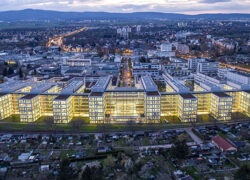
HIH Invest secures full occupancy at Hanse-Forum in Hamburg

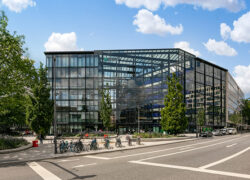
HIH Invest Real Estate has achieved full occupancy at the Hanse-Forum office building on Axel-Springer-Platz in Hamburg following the signing of a new lease with Hurtigruten.

The cruise and shipping operator will occupy approximately 600 sqm of office space on the second floor, taking the final available unit in the property. The leasing transaction was brokered by NEWMARK.

Located in Hamburg’s central business district, the Hanse-Forum comprises around 15,000 sqm of total lettable area and is primarily configured for office use. The building also includes ground-floor retail and fitness facilities, while a large central atrium connects its various sections.

A representative of HIH Invest noted that the latest lease completes the occupancy of the asset, highlighting the continued appeal of centrally located, modern office space with flexible layouts. The deal reflects sustained tenant demand for well-connected city centre properties despite broader market adjustments.

Completed in 2002, the Hanse-Forum is considered a prominent office scheme in Hamburg’s core market. The tenant mix spans multiple sectors, with WeWork among the main occupiers.

Hungary’s Supreme Court extends abuse-of-rights doctrine to consumer complaints

Hungary’s top court has ruled that the general prohibition on abuse of rights applies to financial consumer protection, establishing a precedent that affects how complaint-handling obligations are interpreted across the sector.

The decision by the Hungarian Supreme Court confirms that consumers’ rights, including the right to file complaints, may be exercised in an abusive manner and therefore may not trigger the usual legal consequences.

The case originated from a dispute between a credit institution and a former client who, after terminating all contractual relations, continued to submit a large volume of complaints, repeatedly contact the institution’s call centre and visit its branches. The institution concluded that the behaviour was excessive and intended to exert pressure, and therefore declined to provide substantive responses.

The matter was brought before the Central Bank of Hungary in its supervisory capacity. The authority initially held that sector-specific regulations did not allow consideration of abuse of rights in complaint handling, meaning the institution remained obliged to respond.

That position was upheld by lower courts. However, the Supreme Court overturned both the administrative decision and earlier rulings, stating that authorities must assess whether procedural rights are exercised in good faith and prevent their misuse.

The court noted that the prohibition of abuse of rights applies across the legal system and extends even to fundamental procedural rights, including the right to administration and the right to lodge complaints.

The ruling is expected to have broader implications for financial institutions and other service providers subject to statutory complaint-handling obligations, including insurers and investment firms. Consumer protection authorities will now be required to assess whether complaints are submitted in line with their intended legal purpose.

In practical terms, the decision allows service providers to introduce safeguards within their complaint-handling processes to address submissions deemed abusive or made in bad faith.

The judgment may also prompt legislative changes to formally incorporate the abuse-of-rights principle into complaint-handling regulations, providing clearer guidance for both consumers and service providers.

The credit institution in the case was represented by the litigation team of CMS.

Source: CMS

CA Immo sells bus station and car park at Frankfurt Central Station

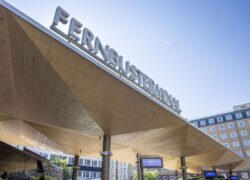
CA Immo has completed the sale of a long-distance bus station and a multi-storey car park located at Frankfurt Central Station. The transaction was concluded at a premium to the combined book value of the assets.

The disposal aligns with the company’s strategy to focus on high-quality Class A office buildings in central locations, alongside the divestment of non-core assets.

Hedwig Höfler, Group Head of Investment Management at CA Immo, said: “The transaction is another logical step in the implementation of our portfolio strategy. With the sale of these non-core assets, we are strengthening our capital allocation and creating additional scope for investments in our core business – modern, sustainable Class A office properties in central European metropolitan locations. This also includes our current project developments such as the Anna Lindh Haus in Berlin. At the same time, this transaction marks the sale of the last parking garage in our German portfolio.”

Both assets were originally developed by CA Immo, which owns the wider site, including the neighbouring InterCityHotel. The company had previously considered developing an office tower on the site of the car park, as part of Frankfurt’s high-rise framework plan under the “Campanile” project, which envisaged a building of up to 85,000 sqm and a height of 160–200 metres.

However, due to delays in the planning process, uncertainties related to Deutsche Bahn AG’s redevelopment plans for the station, and changes in market conditions, CA Immo decided not to pursue the project and instead proceeded with the sale.

The car park provides 349 spaces across 11 levels and includes a bicycle parking facility on the ground floor. It is located on a 4,100 sqm plot on Stuttgarter Strasse, south of the station. The adjacent long-distance bus station occupies approximately 1,200 sqm and is leased long-term to FlixBus.

BNP Paribas Real Estate GmbH advised on the transaction, while McDermott Will & Schulte provided legal counsel to CA Immo.

Frontex extends lease at Warsaw Spire B for three years

The Frontex has extended its lease for nearly 21,500 sqm of office space in the Warsaw Spire B, part of the CA Immo portfolio, for a further three years. The agency remains the largest tenant in CA Immo’s Polish portfolio. Both buildings owned by CA Immo within the complex, Warsaw Spire B and C, are fully leased.

Located at Rondo Daszyńskiego in Warsaw’s central business district, Warsaw Spire B has been fully occupied by Frontex for several years.

Agata Wołos, Senior Asset Manager at CA Immo in Poland, said: “For us, this lease extension is the best confirmation that the office buildings in the Warsaw Spire complex offer the highest standards of security and working comfort, meeting the rigorous requirements of EU agencies. Our aim is to build lasting relationships with tenants and provide them with infrastructure that supports their development in a stable and modern environment. Among other things, this means continuously maintaining the building’s structural integrity and modernizing its systems.”

The full occupancy of both buildings reflects a stable leasing position within CA Immo’s Warsaw portfolio. The company continues to focus on sustainability and certification, with Warsaw Spire B meeting high standards, including energy efficiency requirements.

Warsaw Spire B forms part of the wider Warsaw Spire complex, which received the MIPIM Awards 2017 award for Best Office & Business Development. The building provides approximately 21,600 sqm of gross lettable area, primarily office space, alongside a smaller retail and storage component, as well as 263 underground parking spaces. It is located close to Plac Europejski and benefits from access to public transport, including the second metro line, as well as tram and bus connections.

Speedwell plans lakeside residential scheme in Corbeanca with phased delivery

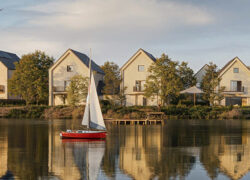
Speedwell is preparing a new residential development in Corbeanca, near Bucharest, marking its entry into the local low-density housing segment with a lakeside project designed around green space and community amenities.

The scheme, named Glenwood Estate, is planned on a 14-hectare plot along the shore of Corbeanca Lake and is expected to include roughly 200 individual homes. The units will be delivered in several configurations, with interior areas ranging between approximately 140 sqm and 220 sqm, alongside private gardens that bring total plot sizes to over 300 sqm.

The development is being structured as a controlled-access neighbourhood, with more than half of the site reserved for landscaped areas, including both private and shared green zones. The project will also benefit from direct access to the lake, with around 700 metres of waterfront incorporated into the masterplan.

Construction is expected to progress in stages, with an initial batch of homes scheduled for completion in 2026. Early phases will focus on establishing the residential core of the project, followed by the rollout of additional community facilities.

The wider concept includes a range of amenities intended to support day-to-day living within the development, such as recreational areas, shared spaces and services for residents. Plans also include pedestrian routes and cycling infrastructure integrated into the internal layout.

Didier Balcaen, Co-Founder and CEO of Speedwell, said the company is responding to evolving expectations among buyers: “We are seeing an increasing focus on quality of life, where buyers are not only looking for a home, but for a complete living environment that integrates nature, comfort and community.”

The site is located on Tufelor Street in Corbeanca, with access to the DN1 road linking Bucharest to Ploiești, and is within a short drive of Henri Coandă International Airport. The surrounding area provides access to schools, medical services and retail facilities.

Environmental considerations form part of the development approach, with the project expected to incorporate energy-efficient systems and renewable energy solutions, alongside measures aimed at reducing resource consumption and supporting local biodiversity.

The architectural design has been developed internally by Speedwell’s FUSE Architecture & Interior Design team. The developer has been active in Romania since 2014 across residential, office and mixed-use segments.

Romania’s short-term rental market expands in 2025, with Brașov leading regional performance

Romania’s short-term rental market continued its upward trajectory in 2025, with total revenues in Bucharest reaching EUR 66.8 million, up 20 percent year-on-year, according to an analysis by Crosspoint Real Estate, the International Associate of Savills in Romania.

At a national level, Bucharest remains the largest urban market, while Brașov leads among regional destinations, generating EUR 20.4 million in total revenues and recording the highest average annual income per property, at nearly EUR 10,500.

“Demand for serviced apartments has grown steadily across all major urban centers, supported equally by domestic tourism, foreign visitors and business mobility”, said Ilinca Timofte, Head of Research at Crosspoint Real Estate. “What we are seeing now is a maturing market, owners understand that performance depends not only on location, but also on the consistency of the quality offered and on the ability to capitalize on local events.”

Bucharest: strong growth and rising supply

In 2025, Bucharest generated EUR 66.8 million from short-term rentals, more than double the level recorded in 2022. The number of listed units rose to 5,507, up by 541 compared with the previous year.

Tourism remained a key driver, with 2.06 million visitors recorded in 2025, including over 1.1 million international tourists, an 8 percent increase year-on-year. September was the strongest month, supported by the George Enescu International Festival, which attracted more than 120,000 attendees.

The market recorded an average daily rate (ADR) of EUR 56.5 and an occupancy rate of 62 percent, resulting in an average monthly income of approximately EUR 1,006 per property. While supply remains concentrated in central areas, listings are gradually expanding across the city, with eastern districts still underrepresented.

Regional markets: diverse drivers and performance patterns

Crosspoint’s analysis highlights significant variations across Romania’s main regional markets, reflecting differences in tourism profiles, seasonality and event-driven demand.

Brașov stands out for its year-round appeal, with 1,946 listings, up 7 percent year-on-year, and the highest average annual revenue per unit, at EUR 10,471.

Cluj-Napoca ranks second, with 1,306 listings and an average annual revenue of EUR 9,910 per property. Performance is strongly influenced by major events such as Untold Festival and Electric Castle, which together attracted around 800,000 participants in 2025 and drove peak revenues during the summer months.

On the Black Sea coast, Constanța, including Mamaia and Mangalia, benefits from longer average stays of 6.5 days, compared with around three days in other cities. This contributes to solid annual revenues of EUR 8,980 per property, despite more pronounced seasonality. August remains the peak period, with ADR reaching EUR 103.8.

Timișoara shows a stable performance, supported by business travel. The market includes 837 listed properties and generates average annual revenues of EUR 8,220 per unit. While August is the busiest month, the highest daily rates are recorded in December, indicating diversified demand.

In Iași, the number of listings increased by 6 percent to 563 units, but the city recorded the lowest occupancy rate among those analysed, at 47.4 percent. October marks the seasonal peak, with the highest ADR of EUR 51.3. For centrally located properties, long-term rentals remain a competitive alternative, with monthly rents for two-room apartments ranging between EUR 650 and EUR 850.

Market entering a consolidation phase

“August remains the best-performing month nationwide, due to the overlap between the summer season, music festivals and the main holiday period. The difference compared with previous years is that this peak performance no longer offsets a weak off-season. We are seeing a more even distribution of revenues throughout the year, which is a sign that Romania’s short-term rental market has moved beyond its early stage and is entering a phase of consolidation”, Timofte added.

The findings point to a maturing market, where performance is increasingly driven by asset quality, operational consistency and the ability to capture demand linked to events and tourism flows, rather than location alone.


JYSK to open new store at Turawa Park in August 2026

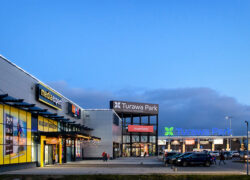
JYSK will open a new store at Turawa Park in August 2026, expanding its presence in regional retail locations. The unit will comprise 994 sq m of space within the scheme.

Located near Opole, Turawa Park is a mid-sized retail destination combining shopping, services and leisure. The centre forms part of the portfolio of Focus Estate Fund, which focuses on convenience-led retail assets serving local communities.

JYSK, which operates more than 3,400 stores across over 45 countries, offers a range of home furnishings, including furniture, bedding and accessories. The new store will provide customers with access to its product range in a local setting, including in-store browsing and order collection.

Sylwia Filimon, Communications Director at JYSK Poland, said: “We’re excited to open our doors at Turawa Park and introduce a fresh, customer-focused retail experience. Our new store combines convenience, inspiration, and quality to better serve the needs of today’s shoppers.”

Maxim Shkolnick, General Partner at Focus Estate Fund, added: “We are delighted to welcome JYSK to Turawa Park. Their 994 sq m store will further enrich the centre’s diverse mix of around 60 shops and services, giving local customers even greater access to high-quality home furnishings and everyday essentials. This addition reinforces Turawa Park as a convenient and attractive destination for everyday shopping.”

The opening marks a further step in the development of Turawa Park as a regional retail hub, reflecting continued demand for accessible, community-oriented shopping formats.

Office market outlook: hybrid use, space efficiency and repurposing shape future strategies

Europe’s office property market is undergoing a structural shift, as rising vacancy levels, evolving occupier requirements and stricter quality standards challenge traditional workplace concepts. New strategies are increasingly focused on hybrid use, space efficiency and alternative functions, according to insights shared at a press conference organised by RUECKERCONSULT.

Industry representatives from AUKETT + HEESE, CELLS Group, Covivio, FAY Projects and HIH Projektentwicklung highlighted how refurbishment, mixed-use concepts and repurposing are becoming central to maintaining asset value.

A key theme is the economic importance of expanding usable space. Much of Europe’s office stock dates back to before 2000 and is increasingly considered outdated in terms of layout flexibility and building systems. Anna Lena Stoephasius of AUKETT + HEESE noted that comprehensive refurbishments now aim to combine improved space efficiency, user experience and ESG performance.

Projects such as Karlsgärten in Berlin demonstrate this approach, where retaining the core structure while adding new floors and usable areas has generated additional lettable space and improved overall viability. According to Sebastian Nau of AUKETT + HEESE, the challenge lies in transforming rigid structures into flexible, sustainable work environments through targeted structural and façade interventions.

Developers are also focusing on space expansion as a key value driver. At the “Am Holstenwall” project in Hamburg, developed by CELLS, the building’s structure has largely been preserved while adding terraces and communal areas. The refurbishment increased the lettable area by more than 40 percent to 11,700 sq m, with the scheme reaching an 83 percent pre-letting rate ahead of completion in Q2 2026. The project combines office, retail and leisure functions.

The shift towards mixed-use developments is gaining traction across the sector. Covivio is applying this strategy at its “ICON” project in Düsseldorf, where office space is being complemented by hospitality-style services, catering and shared amenities. Katharina Greis, COO Offices Germany at Covivio, said such concepts are essential to maintaining long-term competitiveness by aligning properties more closely with occupier expectations.

However, not all assets can be repositioned through refurbishment or mixed-use integration alone. In some cases, a fundamental change of use is required. FAY Projects is repositioning its “CANNION” development in Stuttgart, originally planned as a single-use office scheme, into a mixed-use project incorporating a hotel, restaurants, fitness facilities and long-stay accommodation.

Repurposing is also gaining importance, particularly for structurally vacant or obsolete assets. HIH Projektentwicklung is converting a former office building on the HANOMAG site in Hanover into a school, reflecting growing demand from the education sector. Similarly, CELLS is transforming the former Deutsche Börse headquarters in Frankfurt into a campus accommodating three schools, with completion scheduled for May.

At the same time, restructuring of distressed or stalled developments is becoming more common. HIH Projektentwicklung is overseeing the repositioning of the KORYFEUM scheme near Munich, where original plans for additional office space are being revised in favour of alternative uses, including light industrial.

The overall direction of the market points to a more flexible, asset-specific approach. As traditional office demand patterns continue to shift, landlords and developers are increasingly required to tailor strategies to individual properties, combining refurbishment, functional diversification or full repurposing to ensure long-term viability.

front page info
LATEST NEWS