Stuttgart Kodak Site Competition Concludes with NUWELA Winning Design

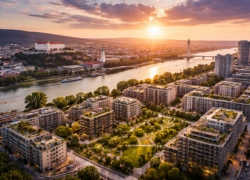
Art-Invest Real Estate, in partnership with the City of Stuttgart, has completed the urban planning and open space design competition for the redevelopment of the former Kodak site in Stuttgart-Wangen, marking a key milestone in the transformation of the historic industrial location.

The final jury meeting, held on 13 March 2026, selected Munich-based planning firm NUWELA as the winner, recognising its proposal for a mixed-use urban quarter that combines heritage preservation with contemporary design. The concept integrates parts of the original Kodak complex, dating back to the 1930s, into a broader development that aims to create a cohesive and functional neighbourhood.

The competition attracted 16 planning teams from across Germany and internationally, reflecting a wide range of architectural and urban planning approaches. Following an initial evaluation phase, two finalist concepts were shortlisted and subsequently refined before the jury made its final decision.

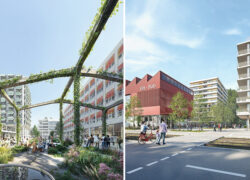
NUWELA’s proposal stood out for its structured yet adaptable layout, centred around a green axis designed to connect different parts of the neighbourhood. The plan combines residential, research and commercial uses, with more than 400 apartments envisioned as part of the scheme. A community-oriented approach is also embedded in the design, including a central meeting space intended to support local interaction.

Urban climate considerations played a significant role in the selection process. The winning concept incorporates ventilation corridors and landscaping strategies aimed at improving microclimatic conditions, while also responding to the site’s topography. The integration of new buildings into the hillside setting was highlighted as a key strength of the proposal.

City representatives emphasised the project’s broader importance for the surrounding districts, noting its potential to act as a catalyst for further development in Stuttgart-Wangen and neighbouring areas. The scheme is expected to contribute both architecturally and functionally to the city’s evolving urban fabric.

Art-Invest Real Estate indicated that the project will now move into the next phase of the planning process in coordination with local authorities. The development is positioned as a long-term regeneration initiative, aimed at delivering a balanced environment for living and working while retaining elements of the site’s industrial identity.
Montenegro Edges Closer to EU Membership as Brussels Advances Preparations

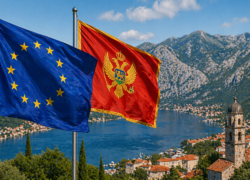
Montenegro has moved a step nearer to joining the European Union after member states agreed to begin work on the framework that would underpin its future entry into the bloc.

The decision, taken by EU ambassadors in Brussels, sets in motion the next phase of the process by establishing a specialised team to prepare the groundwork for a formal agreement. Although largely procedural, the step is regarded as an important sign of renewed momentum in the Union’s expansion efforts.

António Costa described the development as a notable advance, pointing out that progress on enlargement has been limited in recent years. The move is also intended to demonstrate to other aspiring members that accession remains a realistic objective.

Montenegro has long been considered one of the frontrunners among countries seeking to join the EU. Over the past decade, it has worked through a wide range of policy areas required for alignment with European standards, making steady, if gradual, progress.

Government representatives in Podgorica have welcomed the latest step, reaffirming their ambition to secure membership before the end of the decade. Achieving that goal will depend on completing the remaining reforms and meeting the conditions set by the Union.

The initiative comes as Brussels looks to reassert the strategic importance of enlargement, particularly in the Western Balkans. By advancing Montenegro’s position, the EU is signalling a willingness to move forward with candidates that demonstrate consistent progress.

While further stages remain before membership can be finalised, the latest development highlights a shift toward a more active approach, with Montenegro now closer than at any point in recent years to joining the European bloc.

Slovakia and Germany Call for Coordinated Action on Energy and Economic Pressures

Representatives of Slovakia and Germany have reaffirmed the strength of their bilateral relationship, while warning that rising energy costs and broader economic challenges are placing increasing strain on Europe’s industrial base.

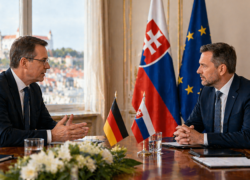
During discussions in Bratislava, Marek Eštok and Gunther Krichbaum highlighted the importance of close cooperation in navigating current pressures affecting the European economy. Both sides emphasised that maintaining competitiveness will require a coordinated response, particularly in sectors heavily exposed to energy costs.

Germany continues to play a central role in Slovakia’s economy, with strong trade links and a significant presence of German companies across the country. This interdependence reinforces the need for aligned policies, especially in areas such as industrial development and investment.

Energy supply remains a key concern. Disruptions linked to infrastructure such as the Druzhba pipeline have underscored the vulnerability of the region to external shocks. Officials stressed that ensuring reliable and affordable energy is essential not only for economic stability but also for sustaining long-term growth.

The talks also covered regional cooperation, with Slovakia preparing to assume leadership of the Visegrád Group. The government signalled its intention to strengthen dialogue within the bloc while continuing engagement with key partners such as Germany on wider European issues.

Geopolitical developments remain an important backdrop to these discussions. The ongoing conflict in Ukraine continues to shape policy priorities, with Slovakia expressing support for the country’s future integration into the European Union, provided necessary conditions are met.

Looking ahead, both countries pointed to the importance of unity within the EU in addressing shared challenges. Future budget discussions will be a critical test, particularly in balancing investment needs with efforts to reduce regional disparities.

The meeting reflects a broader recognition that Europe’s economic outlook will depend on its ability to manage energy risks, protect industrial capacity and maintain coordinated action among member states.

Bratislava Housing Market Settles into Steady Rhythm After Late-Year Surge

The pace of residential development in Bratislava has eased at the start of 2026, following a particularly active end to the previous year. While fewer new apartments changed hands in the opening months, overall demand has remained consistent, pointing to a market that is adjusting rather than weakening.

Sales activity in the first quarter came in slightly below the levels recorded at the end of 2025, yet still aligned with what is typically seen in a stable market cycle. Developers continue to release new phases of projects, but the overall number of available units has held broadly steady, suggesting that supply and demand are currently in closer balance.

Prices, meanwhile, continue to edge upward. New apartments are being marketed at levels approaching €5,700 per square metre on average, with transaction values not far behind. The increase is gradual, reflecting steady buyer interest rather than speculative pressure.

Smaller homes remain the most competitive segment. Compact apartments command the highest rates per square metre, with entry-level options becoming increasingly difficult to find. Units at the lower end of the pricing spectrum are steadily disappearing, as construction costs and land values continue to influence development economics.

Prime locations retain a clear premium. In the historic centre, top-tier developments are achieving close to €7,800 per square metre, underlining the enduring appeal of central addresses. At the same time, other districts are also seeing upward movement, particularly where new infrastructure or regeneration projects are improving the local environment.

Developers remain active, with several established players continuing to lead sales across the city’s largest schemes. The structure of demand is also evolving slightly, with buyers showing interest in somewhat larger units, although affordability continues to shape purchasing decisions.

Financing conditions are likely to play a growing role in shaping the market’s direction. While monetary policy in the eurozone has stabilised, lending conditions at the local level are beginning to tighten, which could temper demand in the short term.

Overall, the market appears to be transitioning into a more sustainable phase. After a period of strong growth, current trends suggest a shift toward stability, where pricing, location and product quality will increasingly determine performance.

Bratislava Plans Major Sports Complex at Zlaté Piesky

A large-scale sports development is set to reshape one of Bratislava’s best-known recreational areas, as city authorities move forward with plans for a multi-functional complex at Zlaté piesky.

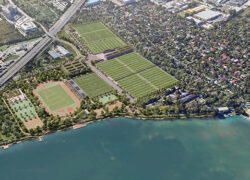
The project envisions a comprehensive sports hub built on currently underused land along the southern edge of the lake. The area, long considered underutilised despite its strong leisure appeal, is expected to be transformed into a modern destination for both organised sport and public recreation.

At the centre of the development is a major youth football academy led by ŠK Slovan Bratislava. The facility is planned to include up to seven full-size pitches, spectator stands and supporting infrastructure such as training facilities, accommodation and technical areas. The city intends to lease the land to enable the club to deliver the project, marking another step in its broader effort to strengthen football infrastructure.

City officials have framed the initiative as a long-term investment in youth sport and community wellbeing. The project is also positioned as part of a wider strategy to expand accessible sports infrastructure, following earlier support provided to clubs across different districts.

Beyond football, the plans extend to athletics. In cooperation with Slovak Athletics Association, the city is considering the construction of a full-scale stadium meeting international competition standards. This would include an eight-lane 400-metre track, sprint facilities and dedicated spaces for field disciplines, alongside spectator seating and athlete support areas.

The broader concept also includes a multi-sport indoor arena designed to host a range of disciplines at competitive level, as well as additional outdoor pitches for football and recreational use. Together, these elements aim to create a flexible, year-round sports destination capable of hosting both grassroots and organised events.

The development is expected to extend beyond formal sports facilities. Plans include the revitalisation of the lakefront, with improved public access and new routes for running, cycling and skating along the shoreline of Zlaté piesky. However, parts of the land remain outside municipal ownership, meaning further coordination with private stakeholders will be required.

Overall, the initiative reflects a broader push to reposition Bratislava as a city investing more heavily in sports infrastructure. If delivered as planned, the Zlaté piesky project could significantly expand capacity for youth development, improve public access to recreational space and address long-standing gaps in facilities for both football and athletics.

Young Entrepreneurs Gain Ground Across Europe, with Poland Near the Top

Eurostat data for 2025 shows that entrepreneurship is becoming an increasingly important entry point into the labour market for young Europeans. Across the European Union, around 2.06 million people aged between 20 and 29 were self-employed, representing 7.9 percent of all entrepreneurs.

In Poland, approximately 266,200 young people were running their own businesses, accounting for 9 percent of the country’s self-employed population. This places Poland just outside the top ten in terms of share, but among the leading countries in absolute numbers, ranking third behind France and Italy.

The highest proportion of young entrepreneurs was recorded in Slovakia, followed by Malta and Romania, highlighting a strong presence of youth-led businesses across parts of Central and Eastern Europe.

Analysts note that entrepreneurship is increasingly seen not only as a personal choice driven by independence and creativity, but also as a practical response to a changing labour market. As entry-level roles become less available, partly due to automation and technological shifts, more young people are turning to self-employment as a viable career path.

Despite the relatively strong position, Poland has seen a decline in the number of young entrepreneurs compared to recent years. The figure has fallen from over 300,000 in 2023 to its current level, marking the lowest reading since 2020, although still above pre-pandemic levels.

At the same time, broader employment indicators show a mixed picture. Across the EU, the employment rate for people aged 20–29 reached 65.6 percent in 2025, continuing a gradual upward trend over the past decade. Poland stands slightly above this average at 69.1 percent, though it still trails leading markets such as the Netherlands and Germany.

Overall, the data points to a shifting dynamic in Europe’s labour market, where entrepreneurship is playing a growing role in absorbing younger workers. However, sustaining this trend will depend on economic conditions, access to financing and the ability of young business owners to scale their activities in an increasingly competitive environment.

Tokyo office strength underpins Japan property groups as cost pressures build

Japan’s largest property companies are entering a period of steady performance, supported by strong domestic leasing conditions, even as rising borrowing costs begin to test financial resilience.

Demand for office space in Tokyo continues to recover, with vacancy levels tightening and rental values moving upward across prime locations. The improvement reflects a return of corporate activity and a renewed focus on high-quality workplaces, as companies seek to attract employees back to central business districts.

At the same time, the development pipeline remains relatively constrained. Fewer large projects are expected to be delivered in the near term, partly due to higher construction costs and labour shortages. This limited supply is helping sustain favourable conditions for landlords, particularly for well-located, modern assets.

Investment activity has remained active, with both domestic and international buyers continuing to target Japanese real estate. The market’s relative stability, combined with favourable financing conditions compared with other regions, has helped sustain investor interest despite a gradual shift in interest rate trends.

However, the sector faces growing financial pressures. Developers are maintaining elevated levels of borrowing as they continue to invest in new projects and expand portfolios. As financing costs rise, the ability to maintain profitability will increasingly depend on continued rental growth and disciplined capital management.

Earnings are expected to remain supported by ongoing development activity and asset sales, although this introduces greater variability compared with traditional rental income. This shift highlights a balancing act between growth and stability, as companies seek to enhance returns while preserving financial strength.

Compared with other major markets, Japan’s property sector continues to benefit from relatively stable fundamentals. Office demand remains more resilient than in the United States, where occupancy has yet to fully recover, while oversupply continues to weigh on parts of the Asian market.

The outlook remains broadly positive, but the coming years will test whether income growth can keep pace with rising costs, shaping the financial trajectory of Japan’s leading real estate groups.

Poland’s non-bank lending surges in early 2026 on rising incomes and demand

Poland’s non-bank lending sector recorded strong growth in the first quarter of 2026, supported by rising wages, resilient consumer demand and stable credit quality.

Data published by Biuro Informacji Kredytowej shows that loan companies granted approximately 4.6 million loans in the first three months of the year, with a total value of PLN 7.4 billion. In March alone, lending reached around 1.67 million loans worth PLN 2.7 billion.

The figures translate into year-on-year growth of 15.2 percent in the number of loans issued and 21.1 percent in value terms for the quarter, indicating that not only more loans are being taken, but also that average loan sizes are increasing. On a monthly basis, March recorded particularly strong dynamics, with increases of 16.9 percent in volume and 24.2 percent in value compared with a year earlier.

The expansion is closely linked to improving household incomes. According to data from Statistics Poland, average wages in large enterprises reached PLN 9,652 gross in March, up 6.6 percent year-on-year, marking a record level. The combination of rising earnings and a relatively stable labour market has strengthened borrowing capacity and supported consumer activity.

At the same time, expectations of further price increases, partly driven by higher fuel costs, have encouraged households to bring forward spending, adding momentum to the lending market. Analysts also point to a noticeable increase in demand for cash loans, suggesting that some households are using short-term financing to support day-to-day budgets.

Despite the rapid growth, the overall quality of loan portfolios has remained stable, with no significant deterioration in repayment performance reported. This indicates that, for now, higher lending volumes are not translating into increased credit risk.

Industry analysts caution, however, that the current environment requires careful financial management. While access to credit has expanded alongside incomes, sustained reliance on short-term borrowing could create vulnerabilities if economic conditions weaken.

The latest data confirms that Poland’s non-bank lending segment continues to expand, reflecting both stronger household finances and persistent consumption pressures in the broader economy.

Europe’s housing gap widens as climate pressure meets affordability constraints

Europe’s housing stock is coming under growing pressure as climate exposure rises faster than the ability of households to adapt, revealing a widening gap between environmental risk and financial resilience.

Survey findings from Eurofound show that a large majority of residents have already been affected by extreme weather, while a significant share report being unable to maintain comfortable indoor conditions during periods of high heat. The burden is most acute among lower-income households, where affordability constraints limit access to cooling and energy-efficient upgrades.

For property markets, the issue is becoming increasingly structural. A large portion of Europe’s urban population lives in rented accommodation, where investment decisions sit with landlords, while tenants carry the cost of inefficient buildings. This disconnect continues to slow renovation activity, despite rising demand for more resilient and energy-efficient housing.

Data from the European Environment Agency points to intensifying climate patterns across the continent, with heat events, flooding and storms becoming more frequent. At the same time, progress in upgrading existing buildings remains gradual, even as the sector accounts for a substantial share of energy consumption.

Regional differences are sharpening the divide. Southern Europe is facing more extreme heat stress, while northern and western markets are increasingly exposed to water-related risks. In Central and Eastern Europe, awareness and local preparedness are relatively strong, but financial capacity to implement upgrades remains more limited.

For investors and policymakers, the data underscores a shift in focus. Climate resilience is no longer a peripheral consideration but an emerging factor in asset value, tenant demand and long-term urban planning. Bridging the gap between exposure and adaptation will depend on targeted incentives, regulatory adjustments and scalable financing models that can accelerate renovation without pricing out vulnerable households.

Czech Republic keeps deficit in check as debt edges higher

The Czech Republic maintained a controlled fiscal position in 2025, with the budget gap holding at 2.1 percent of GDP, signalling a pause in consolidation but continued compliance with European fiscal limits.

Data validated by Eurostat and released by the Czech Statistical Office shows that the deficit totalled CZK 183.7 billion last year, while public debt rose to 44.3 percent of GDP.

The figures confirm that, although the pace of deficit reduction has slowed following a sharper adjustment in 2024, the country remains comfortably within the EU’s fiscal framework. At the same time, the gradual increase in debt reflects ongoing borrowing needs, even as overall levels remain well below the European average.

For investors and regional markets, the data reinforces the Czech Republic’s position as one of the more fiscally stable economies in Central and Eastern Europe. However, the stabilisation of the deficit, rather than further improvement, suggests that future progress will depend on sustained budget discipline and the management of longer-term spending pressures.

The latest notification forms part of the EU’s regular fiscal reporting cycle and provides a benchmark for assessing how member states are navigating the balance between economic support and fiscal consolidation.

front page info
LATEST NEWS