Poland: Inflation Pressures Rebuild Amid Geopolitical Uncertainty

The Future Inflation Index (WPI), which forecasts the direction of changes in consumer goods and services prices several months in advance, rose by 0.6 points in April 2026 compared to the previous month, marking the second consecutive month of reversing the earlier downward trend in inflation.

The main driver of this shift is the conflict in the Middle East and the resulting volatility in the region. Market participants have become highly sensitive to developments related to the conflict. Even if the situation stabilises, its effects are likely to persist for some time across many economies worldwide, including Poland.

The increase in commodity prices on global markets has had the most significant impact on the higher WPI reading. The IMF’s commodity price index has risen sharply in recent months, driven primarily by increases in oil and gas prices. Other commodities have also recorded gains, including fertilisers (up 26% year-on-year) and copper (by nearly 30%). The longer the conflict continues, the greater its impact is likely to be on prices across a broader range of commodities. This reflects not only rising raw material costs but also increasing expenses related to transport and processing.

In March, consumer inflation expectations rose noticeably. In particular, there was an increase in the number of people expecting prices to rise faster than previously observed. In February 2026, around 16% of respondents anticipated an acceleration in price growth, while in March this figure increased to 26%. A similar trend is likely to be reflected in the April survey.

Inflation expectations among manufacturing companies have also strengthened. The gap between firms planning price increases and those expecting to reduce prices has widened to more than 12 percentage points, compared with around 8 percentage points a month earlier. The strongest intentions to raise prices are seen in the oil refining and metal processing sectors. The clothing sector remains the only one expecting a slight decline in prices.

At the same time, increased geopolitical uncertainty has contributed to higher government bond yields. This may translate into rising financing costs across the market, including higher borrowing costs for both households and businesses.

City Point Okęcie Receives BREEAM Outstanding Certification

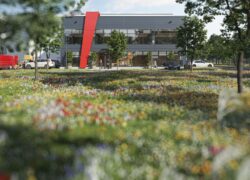
City Point Okęcie in Warsaw has been awarded a BREEAM Outstanding certification, achieving a score of 92.3%, placing it among the highest-rated industrial buildings in Poland.

The project forms part of a logistics portfolio held by a joint venture between Partners Group and Peakside Capital Advisors. The wider portfolio also includes City Point Targówek, Logistics Point Raszyn and Logistics Point Piaseczno, which together represent a network of urban logistics assets in the Warsaw area.

Located near Warsaw Chopin Airport, City Point Okęcie comprises more than 11,000 sqm of warehouse and office space and is fully leased to Welcome Airport Services.

The certification reflects the building’s environmental performance and technical specifications. The scheme includes heat pumps for heating and cooling, supported in part by an on-site photovoltaic installation. Energy use is managed through automated systems, while water consumption is reduced through recycling solutions and efficient sanitary fittings.

The building also incorporates materials aimed at lowering its environmental impact, including façade elements produced with reduced-emission steel. Indoor conditions are supported by the use of low-emission materials.

Design features include measures intended to address heat build-up, such as reflective roofing and landscaped elements. The project also provides facilities for employees, including outdoor areas and infrastructure supporting alternative forms of transport.

City Point Okęcie was developed with Depenbrock Polska as general contractor, alongside a team of design, advisory and engineering consultants. Financing for the project was provided by mBank.

The certification highlights the continued focus on environmental standards within new logistics developments, particularly in urban locations where operational efficiency and regulatory requirements are becoming increasingly relevant.

SCF Investment Group Appoints Jan Šimandl to Strengthen Leasing Operations

SCF Investment Group has appointed Jan Šimandl as Senior Leasing Team Leader, reinforcing its commercial real estate capabilities as the company continues to expand its presence across Central and Eastern Europe.

Based in Prague, Šimandl assumed the role in March 2026 and is responsible for leasing activities across SCF’s commercial property portfolio. His appointment reflects the group’s focus on enhancing asset management and supporting growth in both the retail and office segments.

Šimandl brings close to a decade of experience in leasing and property management. He previously worked at CPI Property Group, where he held the position of Letting Manager. In that role, he oversaw leasing strategies for shopping centres, led contract negotiations and coordinated commercial, technical and legal aspects of leasing transactions, while maintaining relationships with tenants and partners.

Earlier in his career, he gained experience at CBRE, focusing on advisory and leasing activities.

He is a graduate of Charles University and speaks English and Italian in addition to his native Czech.

The appointment supports SCF’s broader strategy of strengthening its internal expertise as competition intensifies across the region’s commercial real estate market.

CPI Europe Exits Italian Retail Park Segment with Sale of Two Assets

CPI Europe AG has completed the sale of two retail parks in Italy, marking its exit from the country’s retail park segment as part of a broader portfolio repositioning strategy.

The divested assets include STOP SHOP San Fior and STOP SHOP Terminal Nord Udine, which together offer nearly 60,000 sqm of gross leasable area. STOP SHOP San Fior was developed in phases between 2017 and 2019 as a convenience-led scheme, while STOP SHOP Terminal Nord Udine, originally opened in 2008, was added to the company’s portfolio in 2022 and ranks among the larger properties within its STOP SHOP platform.

According to the company, the disposal was completed under favourable market conditions and reflects ongoing efforts to actively manage its portfolio. Proceeds from the transaction are expected to be used primarily to reduce debt and support investment in core markets.

CPI Europe indicated that future capital allocation will focus on expanding its retail park presence in Central and Eastern Europe. The company currently has four projects under development in Croatia, with additional schemes planned across Serbia, Hungary and Croatia in the coming years.

The transaction forms part of a wider strategy aimed at lowering leverage while redirecting capital towards markets and assets with stronger growth potential, alongside continued efforts to upgrade and improve the sustainability profile of its portfolio.

Poland’s Court Dispute Signals Deeper Institutional Strains

The latest tensions surrounding Poland’s Constitutional Tribunal point to a longer-running challenge within the country’s legal framework, where disputes over judicial appointments continue to intersect with political change.

Recent efforts by parliament to fill positions on the court have been accompanied by questions over procedure and timing. Legal observers and political opponents have raised concerns about how vacancies were addressed and whether established steps were fully respected. The situation has also drawn attention to the role of the President of Poland, whose involvement is required before judges can formally take up their roles, adding another layer of uncertainty to the process.

The roots of the issue trace back to 2015, when the outgoing Civic Platform-PSL government moved to appoint several judges shortly before losing power. The incoming Law and Justice administration challenged those decisions and advanced its own nominations, setting off a dispute that would reshape the court’s position within the state. Subsequent rulings confirmed that some of the earlier appointments were valid while others were not, leaving a contested institutional legacy that has carried through to the present.

European institutions have since examined the situation more closely. The Court of Justice of the European Union has highlighted concerns about how judicial appointments were handled, indicating that certain irregularities could affect the court’s independence. Similarly, the Venice Commission has pointed to risks for democratic safeguards when disputes over constitutional bodies remain unresolved. In addition, the European Court of Human Rights has addressed individual cases in which the composition of judicial panels raised questions about whether they met the required legal standards.

Following the 2023 elections, the current governing coalition has taken a critical view of the Tribunal’s present structure. This has included decisions not to recognise certain rulings, reflecting a continuation of institutional friction seen in earlier years. While the court has continued to function, its standing within the legal system remains a matter of debate among policymakers and legal experts.

Research into the evolution of the dispute suggests that what began as a disagreement over appointments has developed into a broader issue concerning the balance of power between institutions. The ongoing uncertainty highlights how changes in political leadership can have lasting effects on bodies intended to remain independent.

The consequences extend into the economic sphere. For investors, confidence in the legal environment plays a central role in decision-making, particularly in markets that rely on long-term planning and regulatory stability. Questions over how consistently laws are interpreted and applied can influence perceptions of risk and, in turn, investment activity.

As the situation continues to evolve, the challenge for Poland lies in reinforcing the credibility of its institutions. Restoring clarity around the functioning of the Constitutional Tribunal will be an important step in strengthening both legal certainty and broader confidence in the country’s governance framework.

Source: WEI

GEMO to complete oncology centre at Motol and Homolka University Hospital in summer 2026

Construction company GEMO is nearing completion of the National Oncology Centre at Motol University Hospital and Homolka University Hospital, with delivery scheduled for summer 2026.

The project combines a new building with the refurbishment of an existing structure to create a single complex for cancer treatment. The facility is designed to bring together inpatient and outpatient services, diagnostic units, operating theatres, laboratories and a clinical trials centre within one location.

The scheme also includes shared public areas such as a central internal corridor with amenities, along with landscaped terraces and roof spaces intended to improve the hospital environment. The layout integrates both the original and newly constructed sections around an internal atrium.

According to the contractor, construction progress has accelerated following revisions to project coordination and documentation, as well as closer cooperation with hospital representatives and medical staff. Adjustments to the design were made during the build process to better reflect operational requirements.

Hospital management indicated that oncology care will form the core function of the new centre, supported by expanded diagnostic capacity, including imaging and screening facilities. Dedicated areas for the preparation of specialised treatments, including advanced therapies, are also planned.

The centre is intended to support a more coordinated treatment process, from initial diagnosis through to therapy, while also accommodating clinical research and specialist care. Prevention and screening programmes are expected to be part of the overall concept.

In addition to patient care, the facility will include space for training and professional events, with lecture capacity and staff amenities incorporated into the design.

Once completed, the oncology centre will operate alongside existing medical services at both hospitals, forming part of a broader healthcare cluster serving patients from across the Czech Republic and beyond.

HIH Real Estate appoints Markus Diers to strengthen asset management leadership

HIH Real Estate has expanded its asset management leadership team with the appointment of Markus Diers, who rejoined the company on 1 April 2026. He takes on the role of Managing Director of Asset Management, working alongside Carolin Dose and Frank Kindermann within a three-person leadership structure.

The division oversees a team of around 130 employees and manages approximately €15 billion in assets, covering roughly 400 properties across 12 European countries. The company indicated that the updated leadership structure is intended to support the ongoing development of its asset management platform and portfolio performance.

Diers brings more than two decades of experience in asset management, with a particular focus on retail and international retail property. He joins from Union Investment Real Estate, where he led retail asset management. Prior to that, he held a senior role at Redos Real Estate, overseeing a substantial portfolio. He previously worked at HIH between 2016 and 2021, including as Head of Retail Asset Management.

In his new position, Diers will oversee residential, logistics and retail asset classes, as well as areas including governance, service provider management and human resources.

Dose, who has been with HIH for nearly two decades and has served as Managing Director since 2023, continues to lead the office segment and is responsible for internal processes and coordination with fund management. Kindermann, who has held a managing director role since 2007, remains responsible for international activities, technical asset management, construction-related functions and leasing.

Commenting on the appointment, Dose said: “With Markus Diers, we are welcoming back a highly experienced colleague who knows our company and our structures inside out. Successful asset management depends on identifying at an early stage which developments will affect a property and deriving viable strategies from this. It is also crucial to take users’ needs into account and design processes efficiently. Markus Diers brings precisely this expertise to the table and will provide important impetus.”

Kindermann added: “Markus Diers is the ideal addition to our management team. This will enable us to further optimise and specialise our asset management and consistently drive forward the strategic development of our portfolios.”

Diers said: “I am delighted to be returning to HIH and to actively develop asset management together with the team. My focus will be on implementing sustainable usage concepts and on close, collaborative partnerships with our investors and tenants.”

Photo: The new trio leading HIH Real Estate’s asset management division (from left to right): Frank Kindermann, Carolin Dose and Markus Diers

Data4 advances Warsaw-area data centre campus with second facility

Data4 has begun operations at its second data centre on its campus in Jawczyce, near Warsaw. The new building has an IT capacity of 10 MW and forms part of the company’s phased expansion of the site in the municipality of Ożarów Mazowiecki.

The project follows the launch of the first facility in 2023 and reflects the company’s continued rollout in Poland. Data4 has invested around €200 million in the country to date and plans to increase this to approximately €600 million by 2030. The wider campus is being developed on a 4-hectare site and is expected to reach a total capacity of 60 MW, with around 50,000 square metres of gross floor area.

Demand for digital infrastructure in Poland is rising, supported by the expansion of cloud services and artificial intelligence. Industry estimates suggest that total data centre capacity in the country could grow from roughly 300 MW today to close to 500 MW by the end of the decade, with a growing share linked to AI-related workloads.

Andrzej Domański said: “Poland is already a leader in Central and Eastern Europe, accounting for over a third of the region’s data centre capacity. We want to continue actively strengthening the competitiveness and technological sovereignty of Poland and Europe. In a world where data and computing power are becoming critical resources, digital infrastructure supports both the economy and national security. Investments such as this one in Jawczyce create space for Polish companies to adopt modern solutions and catch up on their digital backlog.”

The campus is being developed in stages, with the second building aligning with the broader expansion plan. Adam Ponichtera said: “The expansion of the campus in Jawczyce is a clear signal that Poland remains one of Data4’s key markets in Europe. We are developing our infrastructure in a phased and predictable manner, combining high technical standards with a responsible approach to the environment and cooperation with the local community in the municipality of Ożarów Mazowiecki. A stable technological infrastructure is now a prerequisite for the further development of the digital economy.”

At group level, Olivier Micheli added: “The launch of another building on our campus in Poland is of strategic importance to us. With the rapid development of artificial intelligence and cloud services, digital infrastructure is becoming one of the cornerstones of the European economy’s competitiveness. That is why we are consistently expanding the Data4 campus network across Europe, responding to the growing demand for computing power.”

The new facility has been developed to meet BREEAM environmental standards and has received an ‘Excellent’ rating. It is also the first project within Data4’s European portfolio to be delivered under this certification framework. The building incorporates a modular construction approach, with a significant share of prefabricated components used during development.

Operational metrics from the first building indicate a power usage effectiveness level below 1.30, in line with industry targets set for the end of the decade. Water consumption levels are also reported to be below typical market benchmarks.

Beyond construction, the project includes cooperation with local authorities in Ożarów Mazowiecki. Planned initiatives include infrastructure upgrades in Jawczyce and support for local emergency services.

Paweł Kanclerz said: “The development of the Data4 campus in Jawczyce is an important investment for our municipality. We are delighted that this project not only strengthens the local infrastructure but also contributes to the region’s economic development. We appreciate the cooperation with the investor, which translates into concrete actions for the benefit of residents.”

Dekpol Deweloper opens sales for Eterna project in Gdańsk’s Młode Miasto

Dekpol Deweloper has started sales for its Eterna residential scheme, located on Stępkarska Street in Gdańsk within the Młode Miasto district. The project will consist of a single building with 170 apartments, supported by nine ground-floor commercial units, an underground parking garage and additional storage space.

The development is situated on former shipyard land that is being redeveloped into a mixed-use urban area. The location is close to several established points of interest, including the Museum of the Second World War, the European Solidarity Centre and the Motława riverfront.

The scheme includes a range of shared facilities, such as a fitness area, a sauna and communal spaces designed for residents. Retail units on the ground floor are intended to complement the residential component. Apartments are offered in a mix of layouts, from one- to four-bedroom units, with the largest reaching approximately 100 square metres. Entry-level pricing starts at PLN 616,000.

Rafał Skonieczny, sales director and member of the management board at Dekpol Deweloper, said: “In this part of Gdańsk, parking issues are of significant importance, which is why the underground car park is a key element of the development. We have placed equal emphasis on solutions that enhance the comfort of everyday life – from elegantly finished communal areas to a fitness zone and a residents’ meeting space.”

The design references the industrial background of the area, with materials such as brick, steel, concrete and wood incorporated into the interiors. The building’s form is intended to support practical apartment layouts while reflecting the character of the surrounding district.

Construction is scheduled to begin in April 2026, with completion planned for the first quarter of 2028.

Cities Must Move Beyond Short-Term Thinking to Safeguard Long-Term Urban Value, Skanska Says

Cities, developers and investors are being urged to rethink how urban value is created, shifting away from short-term delivery models toward approaches that prioritise long-term resilience, adaptability and sustained economic performance.

In its latest report, Shaping Sustainable Places, Skanska argues that a narrow focus on immediate project outcomes risks eroding long-term competitiveness and undermining the broader value that cities generate over time. The study highlights a widening disconnect between how projects are delivered across Europe and the United States and how urban environments are expected to perform socially, environmentally and economically in the decades that follow.

According to Claes Larsson, Executive Vice President at the group, urban development is entering a new phase where success is no longer defined by completion timelines or initial returns. Instead, the emphasis is shifting toward creating places capable of adapting to future pressures while continuing to deliver value for occupiers, investors and wider society.

The report identifies four core principles that should underpin this transition. Designing for flexibility and long-term change is seen as critical to protecting asset value and limiting costly retrofits. Early collaboration between stakeholders is also highlighted as a means to improve predictability and ensure developments perform effectively over time. In parallel, engaging local communities at the outset is framed as a way to reduce planning risks and support sustained demand. Finally, the integration of environmental, social and economic metrics into decision-making is presented as essential to achieving durable outcomes.

From an investment perspective, the report reflects a broader market shift. Lena Hök, Executive Vice President for Sustainability and Innovation, notes that climate risk is increasingly being priced into financial systems, influencing everything from insurance to regulatory frameworks. In this context, assets that are not designed to adapt may face declining value, while those aligned with long-term resilience criteria are likely to attract capital.

The findings are aimed at institutional investors and policymakers navigating a more complex risk environment, where urban performance is measured not only by financial returns but also by its ability to respond to climate pressures, demographic change and evolving user expectations.

As capital becomes more selective and regulatory scrutiny intensifies, the report suggests that the long-term success of cities will depend less on how quickly projects are delivered and more on how effectively they endure.

front page info
LATEST NEWS