Saturday, 19 September 2026
Air travel remains the preferred gateway to summer holidays for millions of Europeans, but a growing body of research suggests that the journey to the destination is becoming an increasingly stressful part of the experience.
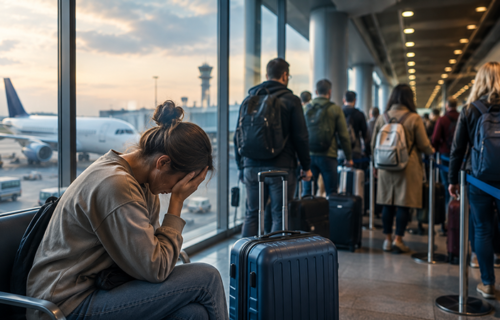
A recent Czech survey conducted by Ipsos for Lagardère Travel Retail found that around 82% of respondents experience some level of stress when travelling by air. Nearly half cited concerns linked to airport procedures, security checks and time pressure before departure, while roughly one quarter were primarily worried about the flight itself. Only 18% reported feeling completely relaxed throughout the travel process.
The findings highlight a broader trend that extends well beyond the Czech Republic. Across Europe, airports and aviation organisations are increasingly focusing on passenger well-being as congestion, security procedures and growing passenger volumes place additional pressure on travellers.
Stress Begins Before Passengers Reach the Terminal
According to the Czech survey, one of the strongest sources of anxiety is the fear of missing a flight. Nearly one-third of respondents identified this as their primary concern, while others worried about forgetting important travel documents, dealing with illness before departure or navigating crowded airport environments.
These findings align with wider international research. Airport technology and passenger experience specialists report that travel-related anxiety often begins before travellers even arrive at the airport, driven by concerns over timing, transport connections, baggage requirements and security procedures. Studies examining airport access behaviour have also identified reliability, waiting times and transfer complexity as key factors affecting passenger satisfaction. (EMMA Systems)
For Prague’s Václav Havel Airport, these concerns may be amplified this summer due to the ongoing reconstruction of the Aviatická intersection near the airport, which is expected to affect road access until 2027.
European Airports Invest in Passenger Experience
Recognising the growing importance of traveller comfort, airports across Europe have invested heavily in improving the passenger journey. Industry bodies such as the Airports Council International (ACI) Europe increasingly view passenger experience as a critical component of airport competitiveness. (aci-europe.org)
Recent global passenger surveys conducted by ACI World show that travellers are looking for more personalised and supportive airport environments. Beyond efficient processing and digital services, passengers increasingly value proactive staff assistance, clear information and environments that reduce anxiety and uncertainty. (ACI World)
Several airports have introduced dedicated relaxation spaces, wellness zones and enhanced customer-service programmes. One of the most widely publicised examples is Istanbul Airport, which introduced therapy dogs to help reduce passenger stress and improve the overall airport experience. The initiative has attracted international attention and reflects a broader shift toward passenger-focused services. (AP News)
Central Europe Faces Similar Challenges
The pressure is not unique to the Czech Republic. Passenger traffic across Central Europe continues to grow, with airports in Poland, Hungary, Austria and Germany reporting strong demand for both leisure and business travel. At the same time, operators are balancing rising passenger numbers with infrastructure constraints, staffing challenges and heightened expectations around service quality.
Research from European aviation organisations shows that accessibility, travel time to the airport, reliability of transport connections and waiting times remain among the most important factors shaping passenger perceptions across the continent. (Mobility and Transport)
German business travel surveys also indicate that uncertainty and operational disruptions remain important considerations for travellers, particularly when planning international journeys. (Business Travel News Europe)
Distraction and Comfort as Coping Mechanisms
The Czech survey found that travellers have developed a variety of methods to manage airport-related stress. Nearly half listen to music, podcasts or watch films before departure, while many turn to food and beverages as a way to relax. A smaller share admitted using alcohol to calm pre-flight nerves.
These behaviours reflect a wider industry trend. Airport operators increasingly recognise that restaurants, cafés, retail spaces and comfortable waiting areas play an important role beyond commercial activity. Research into passenger satisfaction suggests that food and beverage services can have a measurable influence on how travellers evaluate their overall airport experience. (arXiv)
Growing Demand for Seamless Travel
As passenger numbers continue to rise across Europe, reducing travel-related stress is becoming a strategic priority for airports and airlines alike. Industry experts note that future investments are likely to focus not only on expanding capacity but also on creating smoother and more predictable journeys through digitalisation, better transport integration and enhanced customer support.
For travellers, the findings suggest that while flying remains an essential part of modern mobility, the quality of the airport experience is increasingly shaping perceptions of the entire trip. As competition between airports intensifies, those that successfully reduce friction and improve comfort may gain a significant advantage in attracting and retaining passengers.