The Grounds appoints Andrew Wallis as Chief Financial Officer

The Supervisory Board of The Grounds Real Estate Development AG has appointed Andrew Wallis as the company’s Chief Financial Officer (CFO), effective 1 March 2025. Wallis will join CEO Jacopo Mingazzini in leading the company, restoring the Management Board to two members after Mingazzini had temporarily overseen operations alone since May 2023.

Wallis brings extensive experience in real estate and finance, having previously held positions at Merrill Lynch, JP Morgan, and HSBC. Between 2014 and 2020, he served as Deputy CEO of Aroundtown S.A. in Berlin. Since 2020, he has worked as a consultant on mergers and acquisitions and has taken on interim management and board roles in restructuring projects.

Commenting on the appointment, Dr. Peter Maser, Chairman of the Supervisory Board, emphasized Wallis’s expertise and leadership background. “With Andrew Wallis, we are gaining a seasoned professional with over 30 years of experience in real estate and finance. His industry knowledge and management expertise will support the continued growth of The Grounds,” Maser stated.

The appointment marks a strategic move for the company as it aims to strengthen its leadership team and reinforce its position in the real estate sector.

Institutional investors return to real estate special AIF, with growing interest in debt investments

Institutional investors in Germany are once again expanding their exposure to real estate special alternative investment funds (AIF), with a noticeable increase in appetite during the second half of 2024. Real estate debt, data centres, and light industrial assets have emerged as key areas of interest, while secondary-market transactions are gaining traction as an alternative to primary market investments. Infrastructure investments are also becoming a priority, particularly in renewable energy and diversified funds.

These insights stem from the latest LAGRANGE Fund Monitor survey, conducted by LAGRANGE Financial Advisory GmbH in collaboration with INVESTMENTexpo. The study, based on interviews with institutional investors from insurance, banking, pension funds, and superannuation schemes, indicates a positive shift in sentiment toward real estate special AIFs. The index score for real estate AIF exposure within portfolios reached 6.83 points, up from 6.25 in the first half of the year. The level of interest in infrastructure investments remained steady at 7.10 points, suggesting continued demand.

Shift in Risk Appetite and Asset Preferences

Core-plus investments continue to dominate risk preferences, widening their lead over core investments. Core-plus assets now account for over 48% of investment activity, while core assets make up around 32%, slightly down from 33% in the first half of the year. Interest in value-add investments has declined to 17% from 22%, and opportunistic investments have also dropped to just 3%.

Among real estate asset classes, residential real estate remains the most sought-after, with interest rising to 16% from 13%. Logistics follows closely at 14%, up from 12%. Notably, real estate debt has gained prominence, accounting for 11% of investment activity, nearly doubling from the previous period. Light industrial and data centres, both receiving 10% of responses, have also gained traction, with the latter benefiting from increased demand driven by artificial intelligence and cloud computing. Food-anchored retail real estate attracted 9% of investor interest, while office assets continued to decline, representing just 5% of responses.

International Investment Preferences

Germany has regained investor interest, with 16% of respondents favoring it as a target market, up from 13%. The Benelux region remains popular, rising to 14%, while France and the United States each garnered 12% of responses. The United Kingdom followed with 10%, and Austria attracted 9%. The Nordics and Southern Europe received 6% each, with other markets drawing limited attention.

In infrastructure investments, renewable energy projects, particularly in photovoltaics and wind power, continue to be the primary focus. European markets remain the preferred investment destinations, with 38% of responses, while interest in North America stood at 19% and Asia at just 4%.

Market Challenges and Secondary Market Growth

Financing has emerged as the primary challenge for institutional investors, with 55% citing it as a concern, up from previous levels. High property prices and low cap rates were cited by 26%, while concerns over declining property values and rents were expressed by 13%. A low supply of available assets was identified by just 6% of respondents. In infrastructure AIFs, financing difficulties and the complexity of investment products were each flagged by 25% of investors.

Interest in secondary-market transactions is increasing, with the index score for purchasing real estate special AIF units on the secondary market rising to 7.39 points from 7.06. For the third consecutive period, secondary-market interest has surpassed primary market interest. The inclination to sell units has also grown, with the index score rising to 8.06 points from 7.19.

Preferred secondary-market acquisitions include residential real estate (32%), logistics (23%), and food-anchored retail real estate (22%). Conversely, office real estate funds are the most likely to be sold (59%), followed by logistics (14%), residential (11%), and food-anchored retail (11%).

Expert Insights

Dr. Sven Helmer, Managing Director at LAGRANGE, noted: “The results confirm what we observe in daily investor conversations. The secondary market is becoming an increasingly important exit strategy for special AIF investments.”

Monika Bednarz, also Managing Director at LAGRANGE, highlighted the financing challenges and the growing role of real estate debt: “Many banks are restricting financing, which presents challenges but also creates opportunities for investors to finance real estate debt directly. Current market conditions, with adjusted property values and higher margins, make this an attractive option—provided investors carefully assess the structure of the debt.”

The survey findings suggest that institutional investors are actively adapting to market conditions, with an increased focus on alternative investment strategies and a growing acceptance of new asset classes.

Photo: Monika Bednarz, Managing Director and Dr. Sven Helmer, Managing Director at LAGRANGE

Panattoni expands logistics hub in Zgierz with 70,000 sqm development

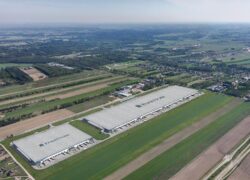
Panattoni is expanding Panattoni Park Zgierz by 70,000 square meters, increasing the total area of the logistics complex to 120,000 square meters. As part of this development, a leading drugstore chain has leased 50,000 square meters, establishing the facility as a key distribution hub for its operations in Poland.

Katarzyna Kujawiak, Development Director at Panattoni, noted that the selection of this site for a major distribution center reflects the company’s ability to deliver modern logistics infrastructure that meets industry standards.

The new logistics space will be designed to accommodate hazardous materials (ADR), including alcohols, deodorants, and household chemicals. It will feature advanced fire protection systems, such as in-rack sprinklers, smoke extraction, and ventilation systems, ensuring compliance with high safety standards.

Panattoni Park Zgierz is located 2.5 km from the A2 motorway junction and 13 km from the A1 motorway in Stryków, providing efficient connectivity to both domestic and international markets. Its proximity to Łódź and Zgierz offers access to a skilled workforce. The facility is set to achieve BREEAM Excellent certification, highlighting its commitment to sustainability and eco-friendly solutions.

UBM acquires full ownership of Rezidence Na Plzence in Prague

UBM Development Czechia has increased its stake in the Rezidence Na Plzence residential project from 50% to 100%, reflecting an improvement in market conditions and signaling the company’s intent for further expansion.

UBM reported strong sales in 2024, with 125 apartments sold in Prague, surpassing the company’s total apartment sales for 2023. Demand for high-quality residential properties in the Czech capital remains steady, prompting the company’s decision to increase its investment in the project. Thomas G. Winkler, CEO of UBM Development AG, stated that the residential market downturn has stabilized, with signs of recovery across all UBM markets.

The Rezidence Na Plzence development is situated in the Smíchov district and will comprise 160 apartments with 12,000 square meters of gross floor space and 122 underground parking spaces. The 3,850-square-meter site benefits from strong transport links, including a nearby metro station and a tram stop adjacent to the development. Construction and pre-sales have already commenced, with project completion expected in Q2 2027.

Colliers appoints Felix von Saucken as CEO for Germany

Colliers has announced the appointment of Felix von Saucken as Chief Executive Officer (CEO) of Colliers in Germany, effective 1 March 2025. He will report to Davoud Amel-Azizpour, CEO, EMEA, and will also become an equity partner in the company.

Von Saucken, who has led Colliers’ Residential division in Germany since 2018, is recognized for his expertise in local and cross-border capital markets, particularly in residential assets. With over 25 years of experience, he has established strong client relationships across various asset classes and service lines in the German and international real estate markets.

Expressing his outlook on the new role, von Saucken emphasized Colliers’ commitment to strengthening its market position in transaction services and professional services. He noted that despite the challenges of 2024, Colliers achieved leading market share positions in Lease Advisory and Capital Markets. He highlighted the company’s regional presence and global reach as key advantages for continued growth.

Von Saucken will succeed Achim Degen, who will remain with the company as Managing Director and will focus on establishing a Professional Services division in collaboration with von Saucken.

Commenting on the leadership transition, Davoud Amel-Azizpour, CEO, EMEA, acknowledged Degen’s leadership in navigating the German business through a challenging economic phase. While the market has not yet fully recovered, he noted signs of increased transaction volumes and improving sentiment. He expressed confidence that von Saucken’s experience and strategic approach will help drive Colliers’ growth in Germany. As an equity partner, von Saucken is expected to play a key role in shaping the company’s direction and enhancing its services for clients and stakeholders.

Western European investors dominate Romanian real estate market with €1.75 Billion in acquisitions

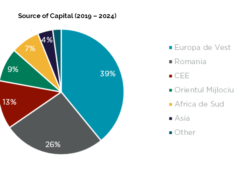
Western European investors, particularly from Austria, the Netherlands, Belgium, and the United Kingdom, have been the most active buyers of real estate assets in Romania over the past five years, investing a total of €1.75 billion. This represents 39% of the total transaction volume of €4.5 billion recorded between 2019 and 2024, according to real estate consultancy Cushman & Wakefield Echinox.

Romanian investors followed with acquisitions worth nearly €1.2 billion, accounting for 26% of the market. Investors from Central and Eastern Europe purchased real estate assets valued at €560 million (13% market share), while Middle Eastern investors contributed €388 million. South African investors saw a decline in activity, holding only a 7% share of the market.

Despite market volatility and global economic challenges, the Romanian real estate sector has continued to attract new international investors. Among the newcomers are M Core (UK), Supernova (Austria), Adventum Group (Hungary), Fortress (South Africa), Oresa Industra (Sweden), BT Property (Romania), Vectr Holdings (India), Vincit Union (Latvia), W&E Assets (USA), and AYA Properties (Belgium).

Existing players in the market made significant acquisitions, with Pavăl Holding, CTP, and AFI Europe leading the way. Pavăl Holding and AFI Europe expanded their office portfolios, while CTP focused on industrial and logistics parks. These transactions marked the exit of Austrian group CA Immo from Romania, NEPI Rockcastle’s withdrawal from the office sector, and Globalworth’s departure from the industrial segment.

According to Cristi Moga, Head of Capital Markets at Cushman & Wakefield Echinox, the Romanian real estate market has attracted capital from over 20 countries across four continents. European investors, including Romanian ones, accounted for approximately 80% of the total transaction volume. While Western European investors continue to demonstrate strong acquisition interest, growing activity from Central and Eastern European investors is also being observed.

Between 2020 and 2024, 159 real estate transactions were recorded in Romania, with an average transaction value exceeding €28 million. Office buildings were the most frequently traded assets, accounting for over €2.2 billion, nearly 50% of the total volume. Retail projects represented 24%, while industrial properties accounted for 19%.

Approximately 60% of the investment volume was directed toward Bucharest, while more than 25% involved portfolio acquisitions of properties in multiple Romanian cities.

EU housing costs surge: Rents up 19%, house prices climb 47% amid growing affordability crisis

Between 2010 and the third quarter of 2024, house prices in the European Union (EU) surged by 54.1%, while rents increased by 26.0%, according to Eurostat data. This significant rise in housing costs has outpaced both wage growth and inflation, intensifying affordability challenges across the bloc.

The housing crisis is particularly pronounced in countries like Spain, where rents have escalated by 80% over the past decade, compelling nearly half of the tenants to allocate 40% of their income to housing expenses. In response, the Spanish government has proposed a 12-point plan aimed at constructing affordable social housing, implementing rent caps, and imposing taxes on non-EU property buyers. However, these measures face political opposition and skepticism regarding their potential effectiveness.

Germany’s housing market is also under pressure, with house prices projected to climb by 3.5% in 2025. This increase is driven by strong demand and anticipated interest rate cuts by the European Central Bank. Nevertheless, rising construction costs and economic uncertainties pose risks to this forecast.

In Ireland, the housing shortage is acute, necessitating the construction of 93,000 homes annually until 2031, significantly surpassing the government’s target of 60,000 per year. Proposed solutions include reclaiming land for new developments and adjusting tax policies to encourage the construction of smaller dwellings.

The European Parliament has established a new committee to address the escalating housing crisis, acknowledging that average house prices have risen by 48% across the EU in less than a decade. This committee aims to explore comprehensive strategies beyond merely increasing housing supply, focusing on ensuring affordable and quality housing for all citizens.

Overall, the rapid escalation of housing costs in the EU underscores the urgent need for multifaceted policy interventions to enhance housing affordability and accessibility for all residents.

Eurofound Survey: Decline in life satisfaction and optimism across the EU

A new Eurofound survey has revealed a decline in life satisfaction and optimism across the European Union, with respondents in 2024 reporting lower expectations for the future compared to previous years. Findings from the Living and Working in the EU e-survey indicate a steady decline in optimism across all age groups since 2020, with the most significant drop among respondents aged 35–49 and 50–64. Younger participants, while the most optimistic, also reported a decline, with only 47% expressing confidence about the future—four percentage points lower than in 2023. The 50–64 age group recorded the lowest level of optimism at 24%.

The Quality of Life in the EU 2024 factsheet presents initial findings from the Eurofound survey, conducted online in spring 2024. The study captures Europeans’ current outlook and concerns in a post-pandemic environment, focusing on key challenges such as the rising cost of living, healthcare access, mental health, work-life balance, and telework opportunities.

The decline in optimism was found to be greater among women than men and was more pronounced in low-income households, widening the disparity in outlook between the wealthiest and poorest respondents. The optimism gap has expanded from 18 percentage points in 2020 to 29 points in 2024.

At the national level, the lowest levels of optimism were recorded in Greece and Italy, where only 20% of respondents expressed a positive outlook. In contrast, Ireland (49%) and Denmark (48%) had the highest levels of reported optimism.

Alongside declining optimism, life satisfaction also fell between 2023 and 2024, returning to levels observed in spring 2021. After rising between 2021 and 2023, satisfaction levels declined, particularly among respondents aged 35–49 and 50–64. In contrast, those aged 65 and older reported the highest life satisfaction scores, continuing an upward trend in 2024.

Commenting on the findings, Daphne Ahrendt, Eurofound Senior Research Manager, highlighted the widespread sense of uncertainty across Europe. “Life satisfaction and optimism are influenced by various factors, including income, employment, education, and disability status. However, these results, combined with an overall decline in mental well-being, particularly among younger groups, indicate a broader sense of malaise and a lack of hope for the future across the region.”

Obermeyer Helika advances conveyor bridge and warehouse project for Škoda Auto in Mladá Boleslav

Obermeyer Helika is overseeing the design and construction of fully automated conveyor bridges and a high-rise warehouse for car body transport and storage at the Škoda Auto production site in Mladá Boleslav. The project presents significant technological and logistical challenges, with the first phase involving the launch of the automated high-rise warehouse (HRL). The planning and construction documentation began in 2023.

The company is responsible for a range of tasks, including conducting comprehensive survey work using digital 3D scanning technology, preparing documentation for planning and construction approvals, and obtaining necessary permits. It is also managing construction scheduling, documentation updates, and author supervision during project execution.

The conveyor bridge network spans approximately 1.2 km across the Mladá Boleslav automotive plant, passing through existing facilities, over rooftops, and across exterior areas. The project also includes a high-rise warehouse with a capacity for 900 car bodies, designed to support a planned new paint shop.

According to Ing. Tomáš Zelenka, senior project engineer at Obermeyer Helika, the project integrates the conveyor bridges into existing site infrastructure while addressing utility relocations and road improvements. He emphasized the system’s automation and efficiency in managing car body transport within production processes.

The project represents a major contract for Obermeyer Helika, reaffirming its expertise in industrial facility design. Collaboration with Škoda Auto and the use of advanced technologies have enabled the project team to meet targets and deadlines effectively. A team of specialists is managing the project’s technical and organizational aspects to ensure seamless execution and coordination with stakeholders.

Project Manager and Deputy Director of the Architecture and Civil Engineering Division, Ing. Jan Korbut, MBA, highlighted the complexity and strategic importance of the project. He noted that collaboration with the automotive sector, known for its technological innovation, has required continuous planning and adaptation to meet client requirements.

The introduction of automated conveyor bridges and a high-rise body storage facility at Škoda Auto Mladá Boleslav is expected to enhance production efficiency and competitiveness at the automotive plant.

Mortgage payments and rents converging in the Czech Republic, but renting remains cheaper

The gap between mortgage payments and rents in the Czech Republic has narrowed in recent months, making rental housing a more viable financial option. In some regions with lower housing demand, taking out a mortgage has become increasingly cost-effective. Experts note that homeownership offers long-term security and wealth accumulation, particularly for retirement, whereas renting provides greater flexibility.

According to data from Banky.cz and Hyponamíru.cz, in 2020, the average monthly mortgage payment in the Czech Republic was CZK 10,567, compared to CZK 12,817 for rent. The biggest discrepancy between renting and mortgage payments occurred in August 2022, when the monthly cost of a mortgage for an average 52.6 square meter apartment exceeded rent by more than CZK 10,000.

Recent figures indicate a shift in affordability. In the Ústí Region, mortgage payments are now CZK 1,494 lower than rent. In the Central Bohemian and Moravian-Silesian Regions, rents remain CZK 2,000 cheaper than mortgages. However, in high-demand areas like the South Moravian Region, homeownership remains significantly more expensive. A 60 square meter apartment in this region costs approximately CZK 4.72 million. With 20% savings of CZK 944,484 and a mortgage of CZK 3.78 million, the monthly installment reaches CZK 21,603, compared to a rental price of CZK 15,300 per month.

Interest rates have declined by 1.2 percentage points over the past two years, currently standing at 4.78%, with further reductions expected. House price growth has slowed, bringing the housing market closer to equilibrium. However, rental prices continue to rise, increasing six to seven percent annually, a trend that is expected to accelerate in 2025, according to Miroslav Majer, Executive Director of Hyponamíru.cz.

Despite these trends, Jakub Vysocký, President of the Association of Rental Housing (ANB) and owner of SIAN, disagrees that mortgages have become more attractive than renting. He notes that the average mortgage payment rose six percent year-on-year in the third quarter of 2024. By the end of 2025, mortgage interest rates are projected to be around four percent, while housing prices are expected to rise by at least ten percent.

According to the Swiss Life Hypoindex, the average mortgage rate declined slightly in early February 2025, dropping by 0.02 percentage points to 5.11%, the lowest level since spring 2022. At this rate, the monthly payment for a CZK 3.5 million mortgage (covering 80% of a property’s value) with a 25-year maturity is CZK 20,692, approximately CZK 1,000 less year-on-year.

An analysis by UlovDomov.cz revealed that rental prices increased by seven percent year-on-year, averaging CZK 16,473 per month in the fourth quarter of 2024. While the costs of homeownership and renting continue to converge, the financial advantages of each option remain dependent on location, market conditions, and individual preferences.

Source: CTK

front page info
LATEST NEWS