European Commission unveils €100 billion clean industrial deal to drive decarbonisation

The European Commission (EC) has introduced the Clean Industrial Deal, an initiative aimed at accelerating decarbonisation while ensuring the future of industrial production in Europe. The agreement is set to mobilise over €100 billion in the short term to support clean manufacturing within the EU.

Commission President Ursula von der Leyen emphasised the urgency of the initiative, stating that while Europe remains a global leader in industrial innovation and production, the demand for clean products has slowed, and investments are shifting to other regions. High energy costs, regulatory burdens, and global competition have hindered European companies, and the Clean Industrial Deal aims to remove these obstacles and provide a clear economic rationale for maintaining production in Europe.

The initiative focuses on two key sectors:
1. Energy-intensive industries, which require urgent support for decarbonisation and electrification while facing high energy costs and competitive disadvantages.
2. Clean technologies, which are essential for Europe’s future competitiveness and industrial transformation.

The agreement also promotes a circular economy, aiming to reduce dependence on third-country suppliers of raw materials by maximising the EU’s limited resources. The Commission plans to introduce sector-specific action plans, including a strategy for the automotive industry in March and a plan for steel and metals later in the spring. Additional measures are expected for the chemical industry and clean technology sector.

Financial and Regulatory Support for Clean Industry

The Clean Industrial Deal includes a comprehensive financial framework to support clean production in the EU, with €100 billion in funding. This includes an additional €1 billion in guarantees under the current multiannual financial framework.

To support this initiative, the Commission will introduce a new State aid framework, expand the Innovation Fund, and propose the creation of a Bank for Decarbonising Industry, which will channel funding from sources such as the ETS (Emissions Trading System) and InvestEU.

The European Investment Bank (EIB) Group will also play a key role by launching new financial instruments, including:
• A network production package to support manufacturers of clean energy infrastructure.
• A counter-guarantee scheme for power purchase agreements (PPAs) benefiting SMEs and energy-intensive industries.
• A CleanTech guarantee instrument under the Tech EU programme, backed by InvestEU.

A Political Priority for the EU’s Future

In her 2024-2029 policy agenda, President von der Leyen committed to finalising the Clean Industrial Deal within the first 100 days of the Commission’s new mandate. The initiative is positioned as a key priority for ensuring Europe’s industrial competitiveness and economic prosperity in the transition to a cleaner economy.

Source: EC and ISBnews
Photo: European Commission President Ursula von der Leyen

Google sees AI and Cloud growth in Poland’s Cybersecurity, Health, and Energy sectors

Google sees cybersecurity, healthcare, and energy as the sectors with the greatest potential for cloud computing and artificial intelligence (AI) adoption in Poland, according to Magdalena Dziewguć, country director at Google Cloud Poland.

In an interview with Business Insider Polska, Dziewguć highlighted cybersecurity as the most pressing area for AI deployment, citing Poland’s exposure to frequent cyberattacks due to its geopolitical location. She emphasized the role of AI in enhancing security solutions and supporting local cybersecurity specialists by improving technological infrastructure.

The healthcare sector was identified as another critical area where AI could address systemic inefficiencies. Dziewguć pointed to a shortage of medical professionals and outdated infrastructure, suggesting that AI-driven solutions could improve resource management, optimize service access, and reduce costs. However, she noted that success would depend on cooperation from Polish companies and institutions.

The energy sector was also highlighted as a priority, as Poland pushes forward with an ambitious energy transition aimed at increasing renewable energy adoption, cutting costs, and improving resource management. AI, she explained, could facilitate more effective planning and implementation of these changes. However, she stressed that the impact would depend on industry and institutional engagement.

Google is actively investing in Poland’s AI and cloud infrastructure, including a collaboration with the Polish Development Fund (PFR) to expand AI capabilities. Dziewguć reiterated Google’s commitment to sustainable energy, stating that the company will continue investing in green energy sources to support its operations in Poland.

She also addressed concerns that AI primarily serves as a cost-cutting tool, dismissing fears about widespread job losses. Instead, she described the shift as a market reorganization, with outdated IT segments, such as legacy databases and older programming languages, gradually being phased out. While some jobs may disappear for those without updated skills, demand for new AI-related expertise is growing.

To illustrate the sector’s growth, she pointed to Polish AI-driven companies such as Nomagic, specializing in automation and robotics, and Synerise, which uses AI to optimize marketing and financial services. These companies, she said, are expanding rapidly as AI solutions improve efficiency, cost savings, and security.

The Polish government has also signaled strong support for AI development. In mid-February, the Polish Development Fund (PFR), National Cloud Operator (OPK), and Google Cloud signed a letter of intent to develop a strategic plan for AI implementation across key industries. During a meeting with Prime Minister Donald Tusk, Google CEO Sundar Pichai estimated that AI-driven solutions in energy, cybersecurity, and other sectors could boost Poland’s GDP by 8%.

Google has also pledged billions of zlotys in Polish investments, with a focus on government collaboration and AI deployment acceleration. Additionally, Google.org, the company’s philanthropic arm, announced a $5 million grant to support technology training programs in Poland. As part of its broader initiative, Google aims to train 1 million people in AI skills.

The company’s expanding footprint in Poland reflects the growing role of AI and cloud computing in shaping the country’s digital and economic future.

Source: Google and ISBnews

Loan companies in Poland see strong growth in special-purpose and cash loans in January

Loan companies in Poland issued significantly more special-purpose and cash loans in January 2025, according to data from the Credit Information Bureau (BIK). The number of special-purpose loans increased by 24.9% year-on-year (y/y), while the total value of these loans rose by 13.8%. Similarly, the volume of short-term cash loans, commonly referred to as “wemmies,” grew by 21.8% y/y, with a 35.8% increase in their overall value.

Loans granted for periods exceeding 60 days also saw substantial growth, with a 19.1% rise in the number of loans issued and a 39.6% increase in total value compared to January 2024.

The average amount of a newly issued special-purpose loan in January 2025 was PLN 644, which is 8.9% lower than the average loan amount from a year earlier. This suggests that borrowers were increasingly opting for smaller loans, leading to a decline in the average loan size despite the higher number of loans issued. BIK also noted that by January 2024, all granted special-purpose loans had been fully reported, meaning that the 2025 figures provide an accurate reflection of the current market conditions, without the impact of previous data underreporting.

The average payday loan issued in January 2025 amounted to PLN 2,487, reflecting an 11.7% increase from the previous year. The total value of payday loan sales reached PLN 1.053 billion, a 35.8% increase y/y, with wemmies accounting for 72.3% of the total value of cash loans issued that month.

For longer-term cash loans exceeding 60 days, a total of 74,000 loans were granted in January 2025, with a total value of PLN 404 million. This represented a 19.1% rise in the number of loans issued and a 39.6% increase in overall loan value compared to January 2024. The average loan amount for this category rose to PLN 5,497, an increase of 15.5% y/y.

Deferred Payments (BNPL) Gaining Popularity

Buy Now, Pay Later (BNPL) services continue to expand as an important segment of the Polish financial market. In January 2025, a total of 5.37 million BNPL transactions were recorded, reflecting a 21% increase y/y, with a total transaction value of PLN 931 million, up 25% y/y.

Loan Repayment and Default Trends

BIK data indicates that special-purpose loans have the highest repayment reliability, with a default rate of just 1%, similar to installment loans offered by banks. Short-term cash loans with repayment periods of up to two months showed a 4% default rate, whereas longer-term cash loans exceeding 60 days had a significantly higher default rate of 10%, surpassing the levels observed in the bank lending sector.

The Non-Performing Loan (NPL) index, which tracks overdue liabilities, showed improvement in January 2025. The overall quality of cash loans improved, with the share of outstanding loans exceeding 90 days falling to 18.2%, a 6-percentage-point improvement y/y. Meanwhile, the default rate for special-purpose loans remained relatively low at 4.3%, increasing slightly by 0.2 percentage points y/y.

The data suggests that while the demand for loans continues to grow, borrowers are managing repayments more effectively, particularly in short-term lending. At the same time, the rising popularity of BNPL services highlights shifting consumer preferences in Poland’s financial market.

Source: ISBnews and Credit Information Bureau (BIK)

Number of indebted companies in Poland rises to 331,200 in 2024

The number of companies struggling with overdue payments in Poland increased by 12,300 over the past year, bringing the total to 331,200, according to data from BIG InfoMonitor and BIK. The rise in financially distressed businesses is particularly noticeable in the transport, shipping, and logistics (TSL) sector and waste management industry, both of which are facing increasing credit risk.

At the end of 2024, the total credit and non-credit arrears of companies that had been overdue for more than 30 days and amounted to at least PLN 500 exceeded PLN 43.8 billion. While the overall increase in arrears was slightly slower than the previous year, the number of financially troubled companies grew at a faster rate. From January to December 2024, company debts increased by PLN 1.95 billion (4.7%), compared to PLN 2.4 billion (6%) in 2023. However, the number of companies with financial difficulties rose by 4% in 2024, doubling the 2% increase recorded in the previous year.

Sectors with the Highest Debt Levels

The wholesale and retail trade sector continues to have the highest level of arrears, nearing PLN 9 billion. It is followed by manufacturing (PLN 6.9 billion), construction (PLN 5.6 billion), and transport and logistics (PLN 3.3 billion). Other industries with significant outstanding debts include professional, scientific, and technical activities (PLN 2.8 billion), real estate services, and the HoReCa sector, both of which have arrears exceeding PLN 2 billion.

Despite the overall rise in indebtedness, some sectors recorded improvements. Construction companies reduced their overdue payments by PLN 421 million (7%), while the manufacturing sector saw a PLN 391 million (5.4%) decrease. In mining, overdue debt fell by PLN 60.5 million (8%), while the agriculture sector recorded a slight improvement with a PLN 4.6 million (1%) reduction in arrears.

Increase in Financial Distress Across Sectors

Some industries saw a significant rise in outstanding debt. Educational institutions recorded a 32% increase, reaching nearly PLN 280 million, due to declining student enrollment and rising infrastructure costs. Energy, gas, and hot water supply companies also experienced a 31% increase, with total arrears reaching PLN 173.4 million.

Other key sectors with rising debt include scientific and technical activities (+PLN 304.4 million, 12.4%), TSL (+PLN 237 million, 8%), finance and insurance (+PLN 206 million, 23%), and HoReCa (+PLN 189 million, 10%).

Industries with the Highest Financial Risk

The TSL industry continues to have the highest percentage of financially distressed companies, with 9% of all registered transport companies facing serious financial difficulties. The mining sector, waste management, and water supply services also show high levels of financial instability, with 7.6% of companies in these industries experiencing payment issues. The catering and accommodation sector follows closely with 6% of businesses struggling with overdue debts.

Despite a slower increase in total arrears, the average overdue debt per company continues to rise, now standing at over PLN 132,000 per entrepreneur. The growing number of distressed businesses underscores the challenges in multiple industries, raising concerns about financial stability and the risk of insolvencies in Poland’s corporate sector.

Source: ISBnews, BIG InfoMonitor and BIK

Entrepreneur bankruptcies in Czech Republic rise by 21% in January

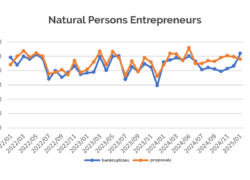
The number of bankruptcies among sole proprietors in the Czech Republic increased sharply in January, with 520 cases recorded, marking a 21% rise compared to December. Meanwhile, 480 new bankruptcy filings were submitted, a 3% decrease from the previous month. According to an analysis by CRIF – Czech Credit Bureau, the Moravian-Silesian Region continues to have the highest rate of bankruptcies relative to the number of active entrepreneurs.

January’s bankruptcy figures were 75 cases higher than the monthly average for 2024, signaling a significant increase in financial difficulties among business owners. Over the past 12 months, 5,398 bankruptcies were declared, reflecting a 7% increase compared to the previous year. In contrast, the number of new bankruptcy filings during the same period rose by 8%, reaching 5,870 cases.

The rise in bankruptcies follows a period of decline in previous years, but since mid-2024, the number of entrepreneurs has started to grow again. While credit activity has resumed, entrepreneurs’ savings remain three times higher than their debt, indicating cautious financial behavior.

Regional Disparities in Bankruptcy Rates

The highest number of bankruptcies in January was recorded in Prague and the Moravian-Silesian Region, both reporting 71 cases. In contrast, no bankruptcies were recorded in the Karlovy Vary Region. Year-on-year, bankruptcies increased most rapidly in the Olomouc and Central Bohemia regions, while the Karlovy Vary and Ústí regions—historically among the most vulnerable areas for entrepreneurs—saw a decline.

Over the past 12 months, the Moravian-Silesian Region had the highest number of bankruptcies per 10,000 active entrepreneurs at 85, followed by the Ústí Region (80) and Karlovy Vary Region (79). The lowest rates were recorded in Prague (35), Zlín Region, and Central Bohemia (42 each).

Sectors Most Affected by Bankruptcies

The construction sector was hit hardest in January, with 121 bankruptcies, followed by trade (105 cases) and manufacturing (55 cases). Over the past 12 months, the transport and storage sector recorded the highest bankruptcy rate at 73 bankruptcies per 10,000 businesses, followed by construction (50 cases) and accommodation and catering (36 cases). The lowest rates were observed in health and social care (2 cases), energy production and distribution (3 cases), and education (7 cases).

Year-on-year, the cultural and entertainment sector, along with transport, storage, and professional scientific activities, saw the fastest increases in bankruptcies.

Seasonal Trends in Bankruptcies

Historically, January has recorded the second-lowest share of bankruptcies, accounting for 8.3% of annual cases between 2013 and 2024. In contrast, May typically sees the highest number of bankruptcies, averaging 8.8% of annual cases.

The latest data reflects ongoing financial struggles for small business owners in the Czech Republic, with regional and sectoral variations indicating broader economic pressures in certain industries.

Source: CRIF

ZPPHiU highlights lack of transparency in shopping centre cost allocations

The Association of Polish Employers of Trade and Services (ZPPHiU) has raised concerns about the lack of transparency in how shared costs are allocated in shopping centres across Poland. According to the organization, landlords are significantly increasing service charges—often beyond inflation rates—without clearly detailing the breakdown of costs or justifying the increases.

ZPPHiU argues that this issue is systemic, with shopping centre owners passing financial risks onto tenants instead of assuming responsibility for proper budgeting. This results in uncontrolled cost increases, forcing tenants to scrutinize expenses that should be transparently managed by landlords. Despite commitments to transparency outlined in the PRCH Code of Good Practice, many shopping centres allegedly prevent tenants from conducting independent audits of shared costs.

Disputes Over Audit Rights and Rising Fees

A case highlighted by ZPPHiU involved Galeria Sfera in Bielsko-Biała, where tenants were reportedly denied access to audit shared costs, despite the PRCH Code explicitly granting them this right. In response, ZPPHiU and the Union of Polish Building Entrepreneurs and Landlords formally appealed to the Polish Council of Shopping Centres (PRCH) on 19 November 2024, requesting adherence to established standards. However, no response was received.

“The Code of Good Practice explicitly states that tenants have the right to audit costs incurred by landlords for property maintenance. A refusal to grant this right not only breaches lease agreements but also contradicts the principles outlined by PRCH itself,” said Zofia Morbiato, CEO of ZPPHiU.

According to Morbiato, the issue extends beyond Galeria Sfera. Several other shopping centres have allegedly obstructed or outright denied audits, raising concerns about accounting accuracy and cost justification. The rising service charge advance payments have led to financial strain for tenants, who argue that cost increases should be clearly explained and justified.

Challenges with Green Lease Agreements and Modernization Costs

Another point of contention is the “green annexes” included in lease agreements, which allow landlords to impose additional environmental compliance costs on tenants. ZPPHiU claims that these clauses often lead to unnecessary expenses, such as the mandated replacement of flooring, storefronts, and installations—despite no tangible benefit to customers or sustainability goals.

Modernization of common areas is another area where tenants feel excluded. Landlords frequently make upgrades without consulting tenants and then incorporate the costs into service charges. Similarly, the management of parking fees has become an issue, with tenants expected to fund parking operations through service fees while shopping centres reduce free parking time and generate additional revenue that is not factored into shared costs.

Ongoing Tenant Concerns and Proposed Solutions

ZPPHiU maintains that landlords must take full responsibility for investments required by aging infrastructure and evolving EU regulations. Under the law, property owners are obligated to ensure compliance and safety standards, yet many are shifting these financial burdens onto tenants.

These concerns were a key focus of the 3rd Congress of ZPPHiU and PSNPH, where industry leaders discussed strategies to reduce tenant risks and promote fair cost-sharing in lease agreements. A particular emphasis was placed on green lease agreements, contract negotiations, and comprehensive cost control measures.

The Congress also presented new research on shopping centre customer expectations and introduced a tool designed to assess customer experience at both the shopping centre and individual store levels.

Despite repeated calls for change, tenants continue to push for greater transparency, fairer cost distribution, and adherence to industry best practices, urging PRCH and landlords to uphold their commitments to ethical business standards.

Source: ZPPHiU

EU Leaders Affirm United Support for Ukraine and Strengthening Defence Capabilities

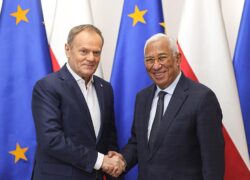
The European Union remains firmly united in its support for Ukraine, as emphasized during a meeting between Polish Prime Minister Donald Tusk and European Council President António Costa. Their discussions, held in preparation for the extraordinary European Council meeting on 6 March, focused on continued assistance to Ukraine and the need to strengthen Europe’s defence capabilities.

The EU reaffirmed its commitment to Ukraine with the recent adoption of a new package of sanctions against Russia, signaling continued pressure on Moscow. Strengthening defence, including securing the EU’s eastern borders, is among the priorities of the upcoming Polish Presidency of the Council of the EU, and leaders underscored the importance of a coordinated approach among Member States.

Following the meeting, Prime Minister Tusk emphasized the significance of Ukraine in Europe’s security framework:

“The next European Council will focus on helping Ukraine and strengthening our security. After everything that is happening in the world, European unity around Ukrainian affairs is an absolute necessity.”

European Security and Defence Cooperation

As part of a broader effort to ensure stability, EU leaders are preparing for potential peace negotiations, aiming for a lasting and just resolution to the conflict. Security guarantees for Ukraine and holding Russia accountable are central to these discussions.

The Polish Presidency’s motto, “Security, Europe!”, reflects the growing focus on defence and stability. President Costa highlighted this during the talks, stating:

“Our priority is to ensure collective defence and security across Europe.”

Regardless of future diplomatic efforts, Europe must bolster its defence capabilities. The European Commission has introduced proposals to enhance military readiness, a key topic for the special European Council session on 6 March.

“The European Commission is presenting a package of proposals to strengthen defence capabilities in Europe. This is why we are convening a special European Council meeting next week,” Costa announced.

Poland’s Role in European Defence Strategy

Poland has been recognized as a model for responsible defence spending, with other EU nations increasingly considering the use of frozen Russian assets to finance security initiatives. Prime Minister Tusk pointed out the shift in discussions, noting:

“The fact that some European countries are now openly talking about using frozen Russian assets shows that security is becoming a real EU priority.”

Ensuring the protection of the EU’s eastern border is also central to Poland’s approach. Both Tusk and Costa agreed that securing this region is vital for European stability. Poland will continue advocating for projects such as the East Shield, a defence initiative aimed at strengthening the eastern flank of the EU.

“Russia is not just a threat to Ukraine but to European security as a whole, particularly for Poland, Romania, the Baltic States, and the entire eastern flank of the EU,” said Costa.

Upcoming Diplomatic and Defence Meetings

Before the extraordinary European Council meeting, a group of European leaders will convene in London to discuss common defence plans. Additionally, a videoconference is scheduled for tomorrow with EU heads of state, where French President Emmanuel Macron will provide an update on his visit to the United States and his meeting with President Donald Trump.

With discussions intensifying across European capitals, Ukraine remains at the center of EU security strategy, reinforcing the bloc’s commitment to stability, defence cooperation, and long-term support for Kyiv.

Photo: Prime Minister Donald Tusk and President of the European Council António Costa

Czech energy company ČEZ wins arbitration against Gazprom

The Russian gas company Gazprom has been ordered to pay more than one billion Czech crowns (€40.1 million) to the Czech energy firm ČEZ for failing to deliver the agreed supply of natural gas. The ruling was issued by the arbitration tribunal of the International Chamber of Commerce (ICC), according to ČEZ and reports from news.cz and iDNES.cz.

ČEZ spokesman Ladislav Kříž confirmed that the arbitration panel fully upheld the company’s claim for damages. The dispute arose after Gazprom significantly reduced gas deliveries in 2022, despite prior contractual agreements made before Russia’s invasion of Ukraine. As a result, ČEZ had to purchase replacement gas at higher market prices, leading to financial losses.

In addition to the awarded compensation, Gazprom is required to pay interest on delayed payments and cover arbitration costs. If the Russian company does not comply voluntarily, ČEZ intends to enforce the ruling through legal means. “If Gazprom does not fulfill its obligation, ČEZ will proceed with the execution of the arbitration award through enforcement proceedings,” Kříž stated.

Despite the ruling, financial analysts remain skeptical about ČEZ successfully recovering the funds. Lukáš Kovanda, chief economist at Trinity Bank, noted that the market reaction was minimal, and precedent suggests that Gazprom may not comply with the decision. He cited similar cases where German energy firm Uniper and Austrian company OMV won arbitration against Gazprom but have yet to receive the awarded amounts.

The ruling underscores ongoing legal disputes between European energy firms and Gazprom following disruptions in gas supply linked to geopolitical tensions.

70% of EU citizens used online public services in 2024

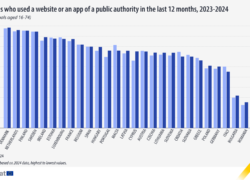
In 2024, 70.0% of EU citizens aged 16 to 74 reported using online public services via government websites or mobile applications in the past 12 months. This represents a modest increase of 0.7 percentage points compared to 2023, when the figure stood at 69.3%.

Denmark (98.5%), the Netherlands (96.0%), and Finland (95.4%) recorded the highest levels of e-government usage among EU countries. In contrast, Romania (25.3%), Bulgaria (31.5%), and Italy (55.1%) had the lowest adoption rates.

The most frequent use of e-government services was obtaining information about public services, benefits, laws, and administrative details, with 44.0% of EU citizens engaging in this activity, an increase of 2.4 percentage points from the previous year. Accessing personal information was the second most common service, used by 40.0% of individuals, reflecting a 0.8 percentage point rise from 2023.

Downloading or printing official forms was the third most widely used service, with 38.1% of citizens utilizing it, though this marked a 1.8 percentage point decline from the previous year. The least common use of online public services was submitting requests, claims, or complaints, reported by 5.3% of users, an increase of 0.5 percentage points from 2023.

The data highlights the continued expansion of digital public services across the EU, with some countries achieving near-universal adoption, while others still face challenges in increasing citizen engagement with online government platforms.

Source: Eurostat

Challenges in measuring carbon footprint in real estate

Calculating the carbon footprint in the real estate sector presents significant challenges due to the complexity of data collection and the lack of standardized methodologies. Companies often struggle to determine which data to consider, particularly across the entire construction lifecycle. “We lack standardization, and a single accepted model for calculation is missing,” notes Marcin Kosieniak, MEP specialist and co-owner of PM Projekt.

The carbon footprint of a building is influenced by multiple factors, including data comprehensiveness, emission sources, usage patterns, and technical constraints. Precise calculations require an extensive dataset covering the entire lifecycle of a building—from material production and transportation to construction, operation, and eventual demolition. However, obtaining complete and reliable data remains a major challenge.

Multiple Emission Sources and Methodological Gaps

Real estate emissions stem from various sources, including energy consumption for heating, cooling, lighting, elevator operations, and waste and water management. Each source requires a separate calculation methodology, adding to the complexity of assessing total emissions.

Changes in building usage over time also affect carbon footprint calculations. The number of occupants, operational hours, technological upgrades, and renovations all impact energy consumption and emissions, necessitating continuous updates to assessments.

Despite growing awareness of the importance of carbon footprint tracking, no universally accepted standards exist in the real estate sector. Different countries and organizations use varying methodologies, making it difficult to compare results and leading to inconsistencies in reporting.

Technical and Financial Barriers

Accurate carbon footprint calculations require advanced monitoring systems and infrastructure to measure energy and resource consumption. Older buildings, which often lack such technologies, face additional challenges in obtaining precise data.

The process is also resource-intensive, requiring both specialist knowledge and significant financial investment. “Accurately measuring emissions requires expertise in both the technical aspects of buildings and the methodology for emissions calculation,” says Kosieniak.

Forecasting Future Emissions and Verification Issues

Estimating future emissions over a building’s lifecycle involves multiple variables, including technological advancements, shifts in the energy mix, regulatory changes, and evolving building usage patterns. The complexity of these factors makes long-term forecasting difficult.

Verification of carbon footprint assessments is another challenge. The absence of independent institutions to validate results raises concerns about data reliability. A unified standard could improve transparency and consistency in reporting.

Opportunities for Precise Carbon Footprint Measurement

Despite these challenges, real estate projects that incorporate carbon footprint assessments from the outset can achieve more accurate tracking and better environmental outcomes. Kosieniak highlights that in new developments, emissions can be precisely calculated by integrating sustainable solutions into architectural designs, increasing long-term investment value.

Even in modernization projects or developments in post-industrial areas, strategies can be implemented to support decarbonization efforts and minimize climate impact. “By integrating sustainability measures, both new and existing buildings can contribute to reducing emissions and meeting environmental targets,” Kosieniak concludes.

As the industry moves toward greater environmental accountability, addressing standardization, verification, and technical challenges will be essential for accurate and reliable carbon footprint measurement in real estate.

Author: Marcin Kosieniak, MEP specialist and co-owner of PM Projekt

front page info
LATEST NEWS