New culinary experiences arrive at FORUM Shopping Centre in Gliwice

The FORUM Shopping Centre in Gliwice continues to evolve, expanding its range of offerings with fresh and diverse dining options. As part of this ongoing development, two well-known restaurant brands have recently joined the centre’s gastronomic lineup. In February and March, visitors gained access to new culinary experiences with the arrival of Makarun Pinsa & Pizza, which opened on February 27, and Pasibus, which welcomed customers on March 7.

Both establishments mark their first locations in Gliwice, bringing unique flavors and dining experiences to the city. Their introduction not only diversifies the food options available at FORUM but also coincides with the unveiling of a newly designed dining area above Pasibus. This new food court provides seating for 50 guests and offers a panoramic view of the shopping gallery, creating a comfortable and inviting atmosphere for visitors looking to relax and enjoy their meals.

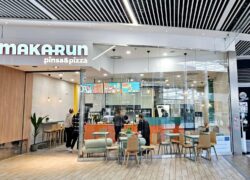
Makarun Pinsa & Pizza introduces a modern take on Italian cuisine. As a well-established Polish restaurant chain specializing in pasta, Makarun has built a reputation for offering both traditional Italian recipes and innovative flavor combinations. Customers can create their own meals by selecting from a variety of pasta types, fresh ingredients, and aromatic sauces, ensuring a personalized dining experience. With a growing presence across Poland, Makarun has become the country’s largest spaghetteria chain. The new restaurant at FORUM, however, offers more than just pasta. Under its expanded name, Makarun Pinsa & Pizza, the menu now includes freshly baked pinsa and crispy pizza, bringing additional variety to Italian cuisine enthusiasts. Guests can also opt for fresh and colorful salads as a lighter alternative. Located on level +1 next to McDonald’s, the restaurant combines a modern interior with a welcoming ambiance, making it a great spot for both quick meals and leisurely dining.

Pasibus, another highly anticipated addition, has built a strong reputation in Poland’s fast-casual dining scene, particularly for its signature burgers. Known for using high-quality ingredients and bold flavor combinations, the brand has redefined the burger experience by continually introducing new and seasonal menu items. While best known for its burgers, Pasibus also offers an extended selection that includes lunch specials, wraps, and chicken sandwiches, catering to a broader range of tastes. The brand’s roots trace back to its beginnings as a food truck in Wrocław in 2013, where it quickly gained popularity and a loyal following. Since then, it has grown into a national chain with locations in major Polish cities, maintaining its original street food character while providing professional service and high-standard dining spaces. With the opening of its Gliwice branch on March 7, Pasibus has now made its mark in yet another key urban centre.

To accommodate the increasing number of dining visitors, FORUM Shopping Centre has expanded its food court with a new seating area on level +2. Positioned above Pasibus, this newly designed space provides seating for 50 guests and offers a scenic overlook of the shopping centre. The addition of this seating area enhances the overall experience, giving visitors a comfortable and aesthetically pleasing environment to enjoy their meals.

According to Patrycja Duczmal, Director of the FORUM Shopping Centre, these changes reflect a broader strategy to enhance both the shopping and dining experience at the centre. She emphasizes that the goal is not only to provide a diverse selection of retail stores but also to create a vibrant space where visitors can enjoy high-quality cuisine and a welcoming atmosphere. She highlights that the recent openings, along with the newly added seating area, are part of a deliberate effort to elevate the overall experience for customers.

With these latest developments, the FORUM Shopping Centre continues to reinforce its status as a dynamic destination for both shopping and dining. Visitors are encouraged to explore the new restaurants and enjoy the expanded culinary offerings available within the centre.

Croatia’s industrial production rises 7.5% in January 2025, driven by manufacturing growth

The industrial sector in the Republic of Croatia recorded a notable increase in production at the beginning of 2025. In January, industrial production rose by 7.5% compared to the same month in the previous year, after adjusting for working days. This growth was primarily driven by the manufacturing sector, which experienced a 7.7% increase. The electricity, gas, steam, and air conditioning supply sector also contributed to the overall expansion, growing by 3.4%. However, the mining and extraction industry saw a decline of 2.0% over the same period.

On a month-to-month basis, total industrial production, adjusted for seasonal effects and working days, increased by 2.1% in January 2025 compared to December 2024. This suggests a steady upward trend in the sector’s output.

Inventory levels also reflected this growth. At the end of January 2025, total stocks of finished industrial products were 1.3% higher than at the end of the previous month. Compared to January 2024, inventories increased by 5.2%, indicating a buildup of goods ready for sale or further processing.

Despite the expansion in production, employment in the industrial sector continued to decline. The total number of employed persons in the industry fell by 0.7% in January 2025 compared to December 2024. On an annual basis, employment in the sector decreased by 2.2% from January 2024, suggesting ongoing structural adjustments or efficiency improvements that may be reducing labor demand.

These figures highlight the strength of Croatia’s industrial output at the start of the year, with manufacturing leading the way. However, the decline in employment indicates potential challenges in workforce dynamics, even as production volumes increase.

P3 Group reports strong financial performance for 2024, portfolio reaches €10 Billion

P3 Group S.à r.l has reported strong financial results for the year ended December 31, 2024, with its portfolio reaching a milestone of €10 billion. The company recorded an 11% portfolio growth, primarily driven by acquisitions and development projects, alongside a 17% increase in Net Operating Income (NOI) to €493 million, up from €423 million in 2023. The growth was attributed to a combination of like-for-like rental income expansion, lease indexation, and higher re-leasing rates.

P3 maintained a high occupancy rate of 98% across its portfolio, which expanded to approximately 9.7 million square meters of Gross Lettable Area (GLA), up from 8.4 million square meters in 2023. The company added 1.3 million square meters through acquisitions and completed developments, while minor disposals were made. Western Europe continues to represent the majority of P3’s holdings, accounting for approximately 60% of its assets, with the remaining 40% located in Central and Eastern Europe.

In 2024, P3 completed several key transactions, including the acquisition of 18 yielding assets in Germany, Czechia, and Italy, adding around 500,000 square meters to its portfolio. Additionally, the company completed 23 development projects across Europe, contributing approximately 800,000 square meters of new GLA. P3 also maintained a strong development pipeline with 11 projects under construction, totaling 410,000 square meters.

CEO Frank Pörschke commented on the company’s performance, stating, “Despite ongoing economic uncertainties, the structural tailwinds in the logistics real estate sector remain strong. In 2024, we successfully navigated the macroeconomic landscape, achieving rental growth and strategic acquisitions that increased our portfolio value to €10 billion. Our ability to maintain high occupancy rates and deliver robust operational performance underscores P3’s resilience and long-term strategic vision.”

CFO Thilo Kusch highlighted the company’s financial achievements, noting, “P3 delivered a strong financial performance in 2024, marked by a 17% increase in Net Operating Income and an improved EBITDA margin of 85%. These results reflect our disciplined approach to growth, efficient re-leasing strategies, and prudent financial management. We successfully raised €1.57 billion in new debt, including two significantly oversubscribed Green bond issuances in February and September, which collectively amounted to €1.1 billion. Our liquidity remained strong at €1 billion by year-end, reinforcing our ability to sustain long-term growth.”

Financial Highlights for 2024:

– Occupancy and Leasing: P3 maintained a high like-for-like occupancy rate of 98%, with 96% of leases linked to inflation, ensuring continued rent indexation.

– Income Growth: NOI increased by 17% to €493 million, supported by a 5% like-for-like NOI growth, acquisitions, and completed developments.

EBITDA Performance: EBITDA improved to €430 million, with a higher EBITDA margin of 85%, up from 84% in 2023.

– Leasing Activity: A record 2.2 million square meters were leased in 2024, driven by both renewals and new leases, with rental rates increasing by 21% on re-leasing events.

– Portfolio Valuation: The company’s portfolio value rose to €10 billion, reflecting acquisitions, development gains, and a 1.5% like-for-like revaluation of the operating portfolio.

– Development Pipeline: P3 maintained growth momentum with 11 projects under construction, covering 410,000 square meters of GLA.

– Liquidity and Debt Issuance: P3 secured €1.57 billion in new debt, including two Green bond issuances totaling €1.1 billion, priced at fixed coupons of 4.625% and 4.000%.

P3 Group’s results demonstrate the company’s ability to sustain growth despite economic headwinds, positioning it well for continued expansion in the logistics real estate sector.

Global trade faces uncertainty as tariffs threaten $3 trillion in commerce

The ongoing tariff tensions between the United States and its largest trading partners, including the European Union, Mexico, Canada, and China, have placed an estimated $3 trillion in trade at risk. The impact of these tariffs extends beyond direct commerce between these nations, as modern supply chains are deeply interconnected, amplifying the economic consequences across industries and regions.

The global trade system has evolved to rely on intricate networks where raw materials, components, and finished goods cross borders multiple times before reaching consumers. Tariffs imposed on specific goods do not only affect the direct exchange between two countries but also disrupt entire industries dependent on a steady and cost-effective flow of materials. Sectors such as automotive, technology, and manufacturing are particularly vulnerable, as production processes depend on parts and materials sourced from multiple countries.

For example, tariffs on automobile components from Mexico could impact production costs for US car manufacturers, which in turn affects suppliers in Canada and steel producers in the EU. Similarly, restrictions on semiconductor imports from China could delay production timelines for American and European technology firms, which rely on these critical components for everything from consumer electronics to industrial machinery. Agriculture is another sector under pressure, with tariffs on food products increasing costs for both producers and consumers across multiple countries.

The broader implications of these trade restrictions extend to financial markets and credit conditions. Increased tariffs often lead to higher input costs for businesses, reduced profit margins, and potential layoffs, creating ripple effects in capital investment decisions. As businesses adjust to higher costs, consumer prices could rise, impacting overall inflation levels in economies already struggling with post-pandemic recovery efforts.

Global financial institutions have expressed concerns about the potential for these tariffs to slow down economic growth. The International Monetary Fund (IMF) and World Trade Organization (WTO) have warned that escalating trade tensions could reduce global GDP growth by as much as 1% over the next two years. Analysts have also pointed to potential retaliatory tariffs, which could further disrupt trade flows and create greater uncertainty for businesses and investors.

Despite these concerns, negotiations between trading partners have shown little progress in de-escalating trade conflicts. The US has maintained its stance on tariffs as a tool to protect domestic industries, while affected countries have responded with their own trade barriers. As businesses navigate these challenges, companies reliant on global supply chains may seek alternative sourcing strategies, such as shifting production to different regions or increasing domestic manufacturing efforts. However, such adjustments take time and come with significant costs.

With supply chains so deeply intertwined, the effects of tariffs extend far beyond the immediate data on trade volumes. The evolving situation will be closely watched by governments, multinational corporations, and financial markets, as the long-term consequences of disrupted trade relationships become clearer.

Source: comp.

Topping-out ceremony held for Darwinbogen residential and commercial project in Königs Wusterhausen

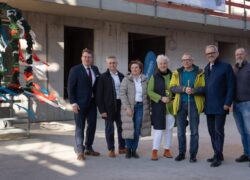
HIH Invest Real Estate and QUARTERBACK Immobilien AG marked a key milestone in their Darwinbogen development with a topping-out ceremony in Königs Wusterhausen, near Berlin. The project, which includes 295 residential units and 12 commercial spaces, is designed to support sustainable urban growth and is scheduled for completion in 2026.

The Darwinbogen project is part of the HIH Deutschland Wohnen Invest institutional fund and adheres to sustainable construction standards, having earned DGNB Silver and QNG certification. The residential units cover a range of apartment sizes across 22,000 square meters of rental space, catering to families, couples, and individuals. Additionally, the development includes 3,700 square meters of commercial space, aimed at enhancing local amenities and services for residents.

Mayor Michaela Wiezorek welcomed the progress, emphasizing the importance of new housing to accommodate both existing and incoming residents. Henrik Thomsen, CEO of QUARTERBACK Immobilien AG, described the project as a modern and sustainable urban development, responding to the growing demand for housing in south-east Berlin. Stefanie Löwe-Koch, Head of Asset Management Office East/West & Residential Germany, highlighted that the first apartments will be available for occupancy in about a year, strengthening the housing market in the Berlin metropolitan area.

The project follows the KfW 40 NH efficiency house standard, ensuring energy-efficient construction. The district’s transport infrastructure adds to its appeal, with direct rail access to Berlin city center in just 28 minutes and close proximity to the A10 motorway. The development includes 431 parking spaces, with 405 located in an underground facility to support individual mobility.

Königs Wusterhausen offers a blend of urban convenience and natural surroundings, with shopping facilities, schools, daycare centers, and recreational areas close to lakes and forests. The Darwinbogen neighborhood is expected to enhance the city’s residential landscape, providing modern, sustainable living spaces alongside commercial amenities.

Slovakia’s Q4 GDP growth aligns with forecasts, annual expansion at three-year high

Slovakia’s economy grew by 1.8% year-on-year in the fourth quarter of 2024, in line with preliminary estimates and accelerating from the 1.2% expansion in Q3, which had been the slowest growth rate in nearly two years. The fourth quarter marked the seventh consecutive period of GDP expansion, supported by improvements in household spending and government expenditures, despite continued declines in fixed capital investment.

The economy benefitted from positive contributions from net trade, with exports remaining stable while imports declined by 0.1%. The reduction in imports helped improve Slovakia’s trade balance, providing a net boost to GDP. Household consumption growth picked up momentum, rising by 2.7% compared to 1.5% in Q3, suggesting increased consumer confidence and stronger retail activity. Government spending also accelerated, increasing by 2.1%, up from 0.9% in the previous quarter, reflecting higher public sector investments and support measures.

However, challenges persisted in gross fixed capital formation, which saw a sharp decline of 11.5% in Q4, deeper than the 8% drop recorded in Q3. The contraction in capital investment reflects weak business sentiment and continued caution among companies, particularly in construction and industrial sectors, where higher financing costs and economic uncertainties have limited expansion plans.

On a quarterly basis, Slovakia’s GDP grew by 0.5% in Q4, following a 0.3% expansion in the third quarter. For the full year of 2024, the economy expanded by 2%, marking the fastest annual growth rate in three years, up from 1.6% in 2023. The improved performance was driven by resilient domestic demand, a gradual recovery in external trade, and fiscal support measures that helped sustain growth despite global economic headwinds.

Looking ahead to 2025, Slovakia’s economic trajectory will depend on several key factors, including interest rate policies, EU funding inflows, and global trade conditions. Policymakers will be closely monitoring investment trends, as business confidence and capital formation remain areas of concern. With inflation expected to moderate and real wage growth improving, consumer spending may continue to support GDP growth, but external risks, such as geopolitical uncertainties and energy price fluctuations, could influence overall economic momentum.

Despite ongoing structural challenges, Slovakia’s economy remains on a steady expansion path, with moderate but stable growth prospects for the coming year.

Trends and Market Outlook: Office rents in European capital cities in 2025

Office rental markets across Europe’s capital cities are experiencing varied trends in 2025, influenced by factors such as economic conditions, remote work adoption, and demand for high-quality, sustainable office spaces. While some cities are seeing stable or rising rents, others are facing downward pressure due to increased vacancy rates and shifting tenant preferences.

In London, prime office rents in central business districts have remained relatively stable despite ongoing challenges in the commercial property sector. The demand for high-quality, ESG-compliant office spaces continues to support rental levels, while secondary office spaces face declining interest, leading to higher vacancy rates and rent reductions. Paris is witnessing a similar trend, with top-tier office spaces in La Défense and the city center maintaining strong demand, while older buildings struggle to attract tenants.

Berlin remains one of the more resilient markets in Germany, with modest rental growth driven by continued demand in the technology and finance sectors. Other German cities, such as Munich and Frankfurt, have experienced a slight softening in rental prices due to an increase in available office stock. Madrid and Barcelona are seeing stable rents in prime locations, supported by a strong business climate and continued interest from international investors.

In Rome and Milan, office rents have remained steady, but tenant preferences have shifted towards modern, flexible workspaces. Companies are increasingly seeking energy-efficient buildings with enhanced amenities to accommodate hybrid working models. Similar patterns are observed in Amsterdam, where office supply is adapting to changing workplace needs, and vacancy rates in outdated properties have increased.

Warsaw continues to be one of Central Europe’s most dynamic office markets, with rents maintaining an upward trajectory in prime locations due to sustained corporate interest. In Prague, demand for premium office space remains stable, while rental growth has slowed in secondary locations. Vienna has shown resilience, with steady rental levels in core business districts and a focus on high-quality office developments.

The overall outlook for European capital cities suggests a continued shift towards high-quality, energy-efficient office spaces, as businesses prioritize employee well-being and regulatory compliance. The disparity between prime and secondary office stock is expected to widen, with older properties facing higher vacancy rates and potential rent adjustments. As economic conditions evolve, rental trends will likely continue to reflect the ongoing transformation in workplace dynamics and corporate real estate strategies.

Source: comp.

Study finds wealth in Germany remains concentrated in men’s hands

A study by Oxfam Deutschland and the Network for Tax Justice has examined for the first time the distribution of billion-euro assets between men and women in Germany. The findings reveal that 71 percent of billion-euro assets are held by men, while only 29 percent belong to women. The study, titled Billions, Power – How the Lack of Wealth Taxation Cements Gender Inequality, highlights how the absence of taxation on high-value assets contributes to financial disparities between genders.

The research indicates that wealth inequality increases at higher levels of net worth, with the gender gap becoming particularly pronounced among the wealthiest individuals. While women hold around 43 percent of total net wealth in Germany, their share of billionaire assets is significantly lower.

Inheritance patterns also contribute to this imbalance. According to the study, male heirs receive around 10 percent more wealth than female offspring when assets are transferred across generations. None of the cases analyzed showed a situation where a woman received a greater share of a company than a male descendant.

The lack of taxation on wealth and inheritance plays a key role in perpetuating this disparity. Women statistically earn lower incomes, accumulate less wealth, and inherit less frequently than men. Meanwhile, corporate assets—often inherited by men—benefit from substantial tax breaks, further widening the financial divide.

Pia Schwertner, Gender Equality Officer at Oxfam Deutschland, emphasized that the discussion on gender equality should extend beyond wage differences. “Equal Pay Day highlights the pay gap between men and women, but we also need to consider wealth inequality. The concentration of wealth among a small group of men comes with significant political and social influence, reinforcing broader gender disparities,” she stated.

Julia Jirmann, a consultant for tax law and policy at the Network for Tax Justice, pointed to tax privileges on high-value assets as a barrier to economic redistribution. She also noted that Germany lacks comprehensive data on gender-based wealth and financial income differences, making it difficult to address the issue effectively.

Ahead of upcoming coalition negotiations, Oxfam Deutschland and the Network for Tax Justice are calling for reforms to inheritance and wealth taxation to promote gender equality. Their proposals include removing exemptions for large assets in inheritance and donation taxes and introducing a billionaire tax of at least 2 percent. The additional revenue, they argue, should be used to expand social infrastructure, such as childcare and eldercare facilities, which disproportionately affect women. They also stress the need for these funds to support global development initiatives aimed at improving conditions for women and girls worldwide.

Average mortgage rate in Czech Republic drops to 5.05% in March

The average mortgage rate in the Czech Republic continued its downward trend at the beginning of March, declining by 0.07 percentage points to 5.05% compared to the previous month. This marks the lowest level since the spring of 2022, according to data from the Swiss Life Hypoindex, which tracks mortgage loan offer rates at the start of each month. The index reflects the average mortgage rate for loans covering 80% of a property’s value and provides insight into market trends.

An analyst at Swiss Life Select confirmed that this aligns with predictions of a gradual decline in mortgage interest rates. The decrease in the average supply rate of mortgage loans is primarily driven by reductions in interest rates offered by individual banks. However, significant differences remain among financial institutions, with notable variations based on the length of the interest rate fixation period.

Currently, the lowest rates are available for mortgages with a three-year fixation, making them one of the most common choices among borrowers. Some banks are offering special deals where clients can secure mortgage loans at rates just below four percent.

According to the Swiss Life Hypoindex, the average rate for a three-year fixation has remained below five percent for four consecutive months, while the five-year fixation dropped below this threshold for the first time in March. However, the month-to-month changes remain minimal, with fluctuations in the range of only a few hundredths of a percentage point.

Despite the downward trend, concerns about tariff wars and inflation expectations are keeping the market and the Czech National Bank cautious about further reductions in interest rates. “This uncertainty negatively impacts the potential for deeper mortgage rate cuts. Mortgage prices are closely linked to interest rate expectations over several years. If inflation uncertainty persists, a dramatic drop in mortgage rates is unlikely,” explained Tom Kadeřábek, head of the product department at Swiss Life Select.

He also noted that the financial market conditions do not currently support a significant reduction in mortgage rates, as the underlying rates remain stagnant. However, if banks slightly reduce their profit margins, which are currently above average, mortgage rates could see a more noticeable decline.

For homeowners, the impact of falling rates is already evident in their monthly mortgage payments. As of March 5, a CZK 3.5 million mortgage loan covering 80% of a property’s value, with a 25-year maturity and an average 5.05% interest rate, results in a monthly payment of CZK 20,555. This represents a monthly savings of CZK 2,800 compared to two years ago, when a similar mortgage had a 6.37% interest rate and a monthly payment of CZK 23,340 in February 2023.

While the mortgage market is gradually adjusting to lower rates, future developments will largely depend on economic stability, inflation trends, and the monetary policy decisions of the Czech National Bank.

Source: CTK

XXXLutz Group acquires Black Red White Group, strengthening its presence in Poland

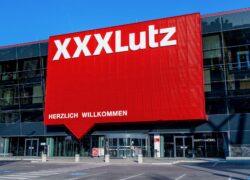
The XXXLutz Group has finalized the acquisition of Black Red White (BRW) Group, a leading Polish furniture retailer and manufacturer, securing full ownership of the company. This move follows the group’s initial purchase of a 50 percent stake in July 2022, and with the acquisition of the remaining shares, XXXLutz is now set to further expand its presence in Poland and beyond.

The transaction, pending approval from competition authorities, establishes a foundation for international growth under the XXXLutz umbrella, which ranks among the world’s top three furniture retailers. By integrating BRW Group into its portfolio, XXXLutz aims to enhance product selection, improve availability, and offer better pricing for customers in Poland.

BRW Group operates 82 stores, including 78 locations in Poland, and maintains a network of approximately 300 sales partners across the country. With a workforce of over 5,000 employees, BRW also exports its products to more than 30 countries worldwide. Despite the acquisition, the company will continue to function with its own management team, particularly overseeing furniture production operations independently. The terms of the agreement remain undisclosed.

Mariusz Sosnierz, CEO of BRW Group, expressed confidence in the strategic move, emphasizing that joining forces with XXXLutz provides opportunities for growth in an increasingly competitive market. He noted that the evolving landscape of online furniture retail requires significant investment and strong partnerships, making the economic strength and omnichannel expertise of XXXLutz a key advantage.

Thomas Saliger, spokesperson for the XXXLutz Group, highlighted the importance of blending physical retail with a strong online presence. He pointed out that while customers frequently research products online, they still value expert in-store consultation and the ability to see and test furniture in person, particularly for larger purchases. He emphasized that the expansion in Poland aligns with XXXLutz’s strategy of combining traditional retail with e-commerce, ensuring a seamless shopping experience.

The acquisition is expected to benefit BRW’s production plants, as they will gain access to XXXLutz’s extensive retail network across 14 European countries. This integration secures new sales markets and growth opportunities, reinforcing BRW’s position in the furniture industry while leveraging the international reach of XXXLutz.

front page info
LATEST NEWS