Poland’s housing loan inquiries rise by 37.2% year-on-year in February 2025

The value of inquiries about housing loans in Poland increased by 37.2% year-on-year in February 2025, according to the BIK Index of Housing Loan Demand. This means that on a working day in February, banks and credit unions submitted requests for housing loans that were, on average, 37.2% higher in value compared to the same period in 2024.

The BIK Index for housing loans measures interest in mortgage financing by tracking the total value of loan applications submitted by individual customers. It is a key indicator used by analysts and financial institutions to assess trends in the mortgage market and forecast future credit activity.

In February 2025, a total of 33,110 people applied for a housing loan, compared to 26,640 in February 2024, marking an increase of 24.3%. Compared to January 2025, the number of applicants grew by 17%. The average requested loan amount reached PLN 449,100, up 5.1% from the previous year and 1.7% higher than in January 2025.

According to Dr. hab. Waldemar Rogowski, chief analyst at BIK Group, the 37.2% increase in the index should be analyzed in the context of last year’s figures. In early 2024, demand for housing loans had slowed following the conclusion of the “Safe Loan 2%” program in December 2023. He also noted that February saw a 17% rise in the number of applicants compared to January, a month that historically records lower mortgage demand. Additionally, as many loan applications involve multiple borrowers, the increase may reflect a decline in the number of single applicants.

Another factor influencing the index is the average loan amount, which reached a record high in February despite a 6% decline in transaction prices on the secondary market and relative price stability in the primary market. The data suggests that buyers are financing higher-value properties, often requiring multiple borrowers per loan. Looking ahead, Rogowski expects further increases in housing loan demand in the coming months of 2025.

Source: BIK

Biedronka opens first store in Slovakia with plans for rapid expansion

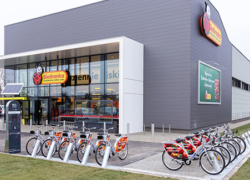
The Polish discount supermarket chain Biedronka has officially opened its first store in Slovakia, located in the village of Miloslavov near Bratislava. Known primarily in Poland, where it operates over 3,000 stores and employs more than 80,000 people, Biedronka’s expansion into Slovakia marks a significant development in the country’s retail sector.

The newly opened store is situated in a developing residential area, with apartment buildings on one side and open fields on the other. Upon entering, customers are greeted with floral displays, followed by a produce section featuring neatly arranged fruits and vegetables. Refrigerated units line the right side of the store. Unlike some Biedronka stores in Poland, where products are often stacked on pallets for efficiency, the Miloslavov location follows a more organized layout, with bananas and other fresh produce arranged neatly on shelves.

Retail analyst Ľubomír Drahovský notes that Biedronka’s presentation style reflects a broader trend in discount retailing. When Lidl entered Slovakia in 2004, it initially stocked products on pallets, but over time shifted toward a more refined shopping experience. A similar evolution is expected for Biedronka, which, despite its discount reputation, is aiming for a cleaner and more structured store design.

Biedronka had originally planned to open its first stores in Slovakia at the end of last year, but the timeline was delayed. The company now expects to launch five locations in March, with a total of 50 stores planned by the end of 2026. This expansion represents the most significant entry of a major grocery retailer into the Slovak market in recent years.

Increase in active enterprises in Poland in the fourth quarter of 2024

The number of active enterprises in Poland reached 2,788,814 in the fourth quarter of 2024, reflecting a 3.7% increase compared to the same period in 2023. The largest share of these businesses operated in the trade and motor vehicle repair sector, accounting for 18% of all enterprises. The highest concentration of active businesses was in the Mazowieckie voivodeship, where 20.1% of all registered enterprises were based.

Micro-enterprises, employing up to nine people, continued to dominate the market, making up 95.7% of all active businesses. Their number increased by 3.8% compared to the fourth quarter of 2023. Small enterprises, with 10 to 49 employees, accounted for 3.5% of the total and saw a modest growth of 1.6%, while large enterprises, employing 250 or more people, increased by 1.1%. In contrast, medium-sized businesses, with 50 to 249 employees, experienced a decline of 1.1%.

The most significant growth in business activity was seen in the energy generation and supply sector, which recorded a 20.9% increase. Administrative and support service activities rose by 7.7%, while the information and communication sector grew by 7.1%. Conversely, the lowest number of active enterprises was recorded in the mining and quarrying sector, which accounted for only 0.1% of the total, followed by energy generation and supply at 0.3%.

Regionally, Mazowieckie, Wielkopolskie (10.3%), and Małopolskie (9.9%) had the highest number of active enterprises. In contrast, Opolskie recorded the lowest share at 1.9%, with Lubuskie, Podlaskie, Świętokrzyskie, and Warmińsko-Mazurskie also accounting for less than 3% each. The fastest-growing regions were Mazowieckie and Małopolskie, with increases of 6.1% and 4.7%, respectively.

Among large enterprises, the manufacturing sector had the highest representation, comprising 42.5% of businesses in this category. Micro-enterprises were most prevalent in trade and motor vehicle repair (17.8%), construction (15.3%), and professional, scientific, and technical activities (14%).

The data reflects an overall positive trend in Poland’s business activity, with growth in key industries and a steady increase in the number of enterprises across various regions.

Sweden’s inflation rate rises to 1.3 percent in February 2025

The preliminary Consumer Price Index (CPI) inflation rate for February 2025 reached 1.3 percent, marking an increase from 0.9 percent in January, according to Statistics Sweden. The monthly CPI change from January to February was 0.6 percent. The final inflation data for February will be published on March 13.

Statistician Frida Stark from Statistics Sweden noted that the preliminary figures indicate a continued rise in the inflation rate. The CPIF (Consumer Price Index with fixed interest rate) showed an increase from 2.2 percent in January to 2.9 percent in February, with a monthly change of 0.9 percent. The CPIF-XE, which excludes energy prices, recorded an inflation rate of 3.0 percent in February, up from 2.7 percent in January. The monthly change for CPIF-XE was also 0.9 percent.

Flash estimates are released five working days before the official inflation report and provide preliminary figures for CPI, CPIF, and CPIF-XE at an aggregated level. Detailed statistics and final figures will be available in the full report on March 13.

Source: Statistics Sweden

YIT doubles sales and expands beyond Prague in 2024

YIT recorded its highest sales to date in 2024, selling 416 residential units, more than double the 198 sold in the previous year. The company reported a turnover of CZK 3 billion, an increase from CZK 2 billion in 2023, reflecting a steady recovery in the property market.

Last year marked YIT’s first expansion beyond Prague, with its entry into Kladno and plans for a new residential project in Brno. In the capital, the company launched four new developments: Sija Kamýk, Toivo Roztyly, the third phase of Ranta Barrandov, and the tenth phase of Tampere within the Suomi Hloubětín complex. Additional projects are in progress in Prague 4, 5, 9, 11, and 12, alongside plans for a larger residential development in Kladno.

As part of its regional expansion, YIT launched the Portti Kladno project, transforming a former freezing plant site into a residential area with 200 apartments featuring ecological elements and options for personal or cooperative ownership. In Brno’s Židenice district, the developer is working with investment group RSJ to develop Kalevala, a project set to include more than 750 residential units and commercial spaces. Construction is expected to begin this year. In the coming years, a larger development, Virta Kladno, is planned to add approximately 800 more apartments.

In Prague, YIT continued its development activity with the construction of Sija Kamýk in Prague 12, a project offering 122 units. The tenth phase of the Suomi Hloubětín district, Tampere, was launched in autumn, featuring 68 apartments and five commercial spaces. The company also initiated the first phase of the Toivo Roztyly project with 88 units and expanded Ranta Barrandov with a third phase, adding 56 apartments. Completion of Toivo Roztyly I, Sija Kamýk, and Tampere is scheduled for this year, with new residents expected to move in by mid-2025.

YIT has also continued its focus on prefabrication technology. The company completed the Rivi Bachova project in Prague’s Chodov district, which utilized cooperative housing financing, and the Happi Milánská building in Prague 15, which featured prefabricated elements for structural components. This method will be further implemented in new regional projects in Brno and Kladno.

Future developments include the final stage of Rosala within Suomi Hloubětín, followed by the multifunctional Osto phase in the neighboring Lappi Hloubětín complex, which will include additional amenities such as a supermarket. Plans are also in place to expand Ranta Barrandov with a fourth phase, initiate the second phase of Toivo Roztyly, and introduce a new residential project in Prague’s Modřany district.

Sustainability remains a priority in all YIT projects. The company continues to integrate eco-friendly technologies, including photovoltaic panels, heat pumps, green roofs, underfloor heating, air recuperation systems, LED lighting, rainwater retention tanks, and Smart Home solutions. These initiatives aim to reduce the environmental footprint of buildings while lowering costs for residents.

YIT is also committed to reducing greenhouse gas emissions through the Science Based Targets initiative (SBTi), with a goal of cutting operational emissions by 90% by 2030 and supply chain emissions by 30% compared to 2019 levels. The company is actively promoting the use of wood in multi-story construction as a member of the Platform for Sustainable Wood Construction. By combining prefabrication with cross-laminated timber (CLT) panels, YIT aims to support the development of sustainable and modern housing.

Slate Asset Management acquires 45 grocery properties in Germany for €420 million

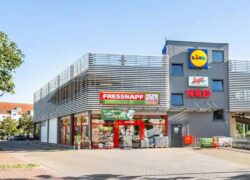
Slate Asset Management has completed the acquisition of 45 grocery properties in Germany, valued at over €420 million. The transactions were conducted through four separate portfolio deals, with closures expected in the first quarter of 2025, pending standard approvals. The properties are located near major population centers across Germany and are fully leased under long-term agreements to leading grocery and essential goods distributors, including REWE Group, Schwarz Group, Edeka Group, and ALDI.

Sven Vollenbruch, Managing Director of Slate’s European Investments, highlighted the firm’s continued expansion in the essential real estate sector. He noted that despite a subdued market environment, the firm has successfully executed nearly half a billion euros in transactions during the first three months of the year. The acquisitions add to Slate’s growing portfolio of stabilized grocery properties in Germany, reinforcing its presence in the market.

Since entering the European real estate sector in 2016, Slate has focused on acquiring and managing essential real estate assets, including grocery stores, warehouses, and logistics properties. The firm has completed transactions on more than 1,000 commercial properties across seven countries and currently operates a portfolio of over 500 essential real estate assets in Europe.

Advisors involved in these transactions included Goodwin Procter, KPMG, Gleeds, and REDEFINE Group.

Nowogrodzka 45: A Landmark of Poland’s Telecommunications History

The building at 45 Nowogrodzka Street in Warsaw has played a pivotal role in the history of Polish telecommunications. Originally constructed as the headquarters of the Telecommunications Office, it marked a significant step in the modernization of communication in the country. The development of this building signaled the widespread adoption of the telegraph, an invention that drastically reduced the time required to transmit messages, making near-instantaneous communication possible.

During the interwar period, the Telecommunications Office was one of the most prominent public buildings in the capital. Designed to consolidate previously scattered telephone and telegraph offices, it became the central hub for national and international telecommunication. The facility was equipped with state-of-the-art technology that connected Poland more efficiently, facilitating rapid communication across borders.

The foundation of Poland’s telecommunication system dates back to 1852, when the first Morse telegraph line was established along the Warsaw-Vienna Railway. By the late 19th century, telegraph and postal services were integrated into a single institution. After Poland regained independence in 1918, efforts were made to rebuild the damaged telecommunication infrastructure and create a cohesive national network. At the time, Poland’s telecommunication system was underdeveloped compared to other European countries, prompting the Ministry of Post and Telegraphs to prioritize modernization. As a major communication hub, Warsaw became the focal point of this transformation, necessitating the construction of new post and telecommunication offices, with the Nowogrodzka 45 building as the flagship project.

The competition for the design of the Telecommunications Office began in 1921, though the final decision was not made until 1928, when architect Julian Puterman-Sadłowski was commissioned for the project. Completed in 1932, the building housed the telegraph headquarters, a technical school, and the Post and Telecommunications Museum. It featured telegraph and radiotelegraph rooms, city and intercity telephone exchanges, technical service areas, and public service stations. At the time, it was considered one of the largest and most modern buildings in Poland. The facility also included amenities for staff, such as a canteen, changing rooms, terraces, and a gym.

The telegraph system at Nowogrodzka 45 was a major technological achievement, serving as the primary hub for wired communications in Poland and a key link in international networks. Messages were transmitted rapidly using Poland’s first belt-driven transporters, allowing telegrams to be processed and delivered efficiently without delays caused by intermediate stations. The facility handled communications with locations worldwide, including North America, Japan, Syria, and several European countries. By 1933, the office was equipped with a range of telegraph machines, including Morse, Hughes, Baudot, and Siemens systems.

The Telecommunications Office continued its operations until World War II, when it was taken over by Deutsche Post Osten under German occupation. Despite minor damage, it remained functional and was quickly restored after the war. However, later renovations, particularly those carried out in the 1980s, altered the building’s original aesthetic. Despite these changes, many modernist architectural elements remain, preserving the building’s historical significance.

The telegraph was a transformative technology that connected distant parts of the world long before the digital age. While modern telecommunications and the internet have revolutionized communication, it was the innovations of the 19th century that laid the foundation for the digital revolution of the 20th and 21st centuries. The ability to transfer information rapidly, whether through email, file sharing, or online communication, can be traced back to the technological advancements made possible by early telegraph systems.

The building at 45 Nowogrodzka Street is now undergoing revitalization under the management of ZEITGEIST Asset Management. Its restoration aims to preserve its historical significance while adapting it for contemporary use, ensuring that this landmark remains a symbol of Poland’s telecommunications heritage.

Source: ZEITGEIST Asset Management
Photos: Fotopolska and ZEITGEIST Asset Management

Czech hotel tech company Mews secures CZK 1.8 billion investment

Czech hotel reservation management provider Mews has secured a $75 million investment (approximately CZK 1.8 billion) from US investment firm Tiger Global. The company plans to use the funding to expand its presence in the United States as well as in Germany, Austria, and Switzerland.

Mews, which became a startup unicorn last year with a valuation exceeding $1 billion, aims to accelerate innovation and pursue strategic acquisitions. Founder Richard Valtr highlighted Tiger Global’s experience with high-growth technology companies in the US, such as Toast, Procore, and ServiceTitan, as a key factor in selecting the firm as a partner for Mews’ next phase of growth.

Last year, Mews’ revenue grew by approximately 50% to around $200 million (CZK 4.6 billion), with processed payments reaching $10 billion. The company’s customer base in North America doubled, while its market share in Germany, Austria, and Switzerland increased to 20%.

According to Tiger Global’s Sara Eadie, the partnership will support Mews’ expansion in North America and reinforce its position in the global hospitality technology sector.

In recent months, Mews has made strategic acquisitions, including Swedish revenue management software developer Atomize and French event technology firm Quotelo. Last March, Mews raised $110 million, bringing its valuation to $1.2 billion, making it one of the Czech Republic’s unicorn startups, alongside Rohlík and Productboard.

Founded in 2012 by former hotelier Richard Valtr, Mews provides cloud-based hospitality management solutions used by hotels in more than 85 countries. The company has offices in Europe, the United States, and Australia.

Source: CTK
Photo: Richard Valtr – Mews

Czech Republic fined by EU court over whistleblower protection directive

The Court of Justice of the European Union has imposed a €2.3 million fine on the Czech Republic for failing to implement the Whistleblower Protection Directive within the required timeframe. The European Commission filed a lawsuit against the country in March 2023, citing non-compliance with the directive, which was adopted in October 2019 and required integration into national legislation by December 2021.

At the time of the lawsuit, the Czech Republic had not yet incorporated the directive into its legal framework, as lawmakers were still debating its provisions. The Chamber of Deputies ultimately approved the bill in April 2023, and the Senate allowed its passage in June. The Whistleblower Protection Act took effect on August 1, 2023, initially applying to large companies. Its scope was later expanded to cover businesses with more than 50 employees from December 15, 2023.

The law provides legal protection for whistleblowers against employer retaliation and applies to reports of crimes and serious offenses with a penalty threshold of at least CZK 100,000. However, it does not cover anonymous notifications within state administration. Protection under the law extends not only to whistleblowers but also to individuals assisting in the preparation of reports and those closely associated with the whistleblower.

Other EU countries also faced penalties for delayed implementation. Germany was fined €34 million, while Luxembourg, Hungary, and Estonia received fines of €375,000, €1.75 million, and €500,000, respectively. Estonia was additionally ordered to pay a daily fine of €1,500 until it fully complies with the directive.

Czech Police conclude investigation into large-scale economic and tax crime

Criminologists from the Economic Crime Department of the Criminal Police Service, in cooperation with investigators from the Regional Directorate of Police in the Vysočina Region, have completed an extensive investigation into economic and tax fraud. The case, which involved an organized criminal group, resulted in an estimated financial loss of CZK 50 million. On February 25, the investigator submitted a proposal for indictment to the Public Prosecutor’s Office in Jihlava, citing charges of participating in an organized criminal group, tax evasion, money laundering, and unauthorized business activities. The investigation produced extensive documentation, amounting to 12,500 pages.

The case involves nine individuals, aged between 24 and 41, from the Czech Republic and Slovakia. Each played a specific role within the group, which included organizers, coordinators, administrative staff, and so-called “white horses” who acted as frontmen for the fraudulent operations. All suspects are being prosecuted while at large.

The fraudulent activities were carried out through a series of companies that operated in succession, with each being dissolved or placed into insolvency before a new company was established. Between 2017 and 2018, the group conducted its activities through Company “A,” which was subsequently closed. This pattern continued with Company “B” from 2018 to 2019, Company “C” from 2020 to 2022, and Company “D” in 2023, all of which are now in liquidation.

The companies operated under the guise of employment agencies without the necessary permits, supplying hundreds of foreign workers—primarily in manual labor roles—to at least forty businesses. These companies circumvented legal requirements by structuring employment contracts to avoid paying mandatory contributions, including social security, health insurance, and income tax. As a result, legal obligations for both employees and employers were consistently evaded.

Authorities found that when state agencies, including tax and labor offices, initiated investigations, the companies were transferred to “white horses,” typically Ukrainian nationals, in an effort to obstruct audits and prevent authorities from accurately assessing tax liabilities. The fraudulent operations would then resume under a newly established company.

According to Chief Commissioner Ing. Tomáš Mecera of the Economic Crime Department, the group’s deliberate restructuring aimed to complicate investigations and avoid legal consequences. He noted that the accused systematically repeated their activities under different corporate entities to maintain their scheme.

The total financial damage from unpaid taxes and mandatory contributions is estimated at CZK 50 million. If convicted, the accused individuals face prison sentences of up to twelve years.

Source: Police of the Czech Republic

front page info
LATEST NEWS