Avison Young Announces Promotions in Poland Team

Avison Young has announced a series of internal promotions within its Poland office, reflecting changes across its investment, project management and valuation teams.

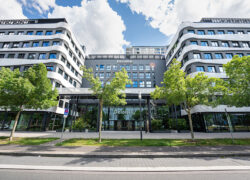
Patryk Błach has been promoted to Associate Director within the firm’s investment advisory department. He joined Avison Young in 2021 and has since progressed through multiple roles. Błach has been involved in a number of advisory assignments and transactions, including the sale of the Signum Work Station office building in Warsaw and advisory work related to the acquisition of the Quick Park retail scheme in Mysłowice. Prior to joining the firm, he worked at McKinsey & Company, Accenture and PwC. He holds degrees from the Warsaw School of Economics and the University of Warsaw.

Kamil Głowienka has been promoted to Senior Project Manager. With more than 10 years of experience in real estate and construction, he has worked on projects in Poland as well as internationally, including in Spain and China. His previous roles include positions at Warbud, Emmco Pomorze, Rivervial Grupo Constructor and White Star Real Estate. At Avison Young, he has been responsible for technical advisory services, including technical due diligence. Among the projects he has overseen is the redevelopment of the historic Czerwone Koszary complex in Gdańsk into the Noli Gdańsk Old Town co-living scheme.

Katarzyna Uzar has been promoted to Valuation and Innovation Specialist within the firm’s Valuation and Advisory department. She has been with the company for two years and has worked on commercial property valuation assignments. In her new role, she will focus on internal process improvements, including coordinating innovation initiatives and implementing tools and technological solutions. Her responsibilities will also include collaboration with other Avison Young teams internationally.

Poland’s Leading Indicator Edges Up as Business Sentiment Stabilises

Poland’s economic indicator (WWK), which provides an early signal of economic trends, increased by 1.4 points in April 2026 compared with the previous month. The rise offsets declines recorded in the prior two months, although the index remains below its recent peak at the start of the year.

Half of the indicator’s eight components showed improvement, while the remaining elements were largely unchanged.

Equity market performance was the main contributor to the increase. The WIG index on the Warsaw Stock Exchange has been on an upward trajectory since late 2024, with its real value rising by more than 30 percent over the past year. Market participants have remained positive despite external pressures, including geopolitical tensions in the Middle East, higher oil prices and elevated risk levels. A weaker US dollar has also supported capital flows into Polish equities.

However, the stock market continues to play a limited role in corporate financing. The capitalisation-to-GDP ratio in Poland stands at around 27 percent, significantly below the European Union average of approximately 60 percent.

Industrial data point to a modest improvement in demand conditions. The share of companies reporting declining order books fell in April, although the timing of public holidays at the start of the month affected the data. After adjusting for this factor, the improvement appears limited. At the same time, inventories of finished goods declined, which may support production levels in the near term, as seen in March.

Corporate financial conditions remain broadly unchanged. Since autumn last year, more companies have continued to report a deterioration rather than an improvement in their financial situation.

Business sentiment has nevertheless shown a slight improvement. This appears to reflect a degree of adjustment by companies to the current operating environment, including higher input costs, supply constraints and elevated uncertainty.

€130m Branded Residences Scheme Linked to Versace Ceramics Advances in Bucharest

A high-end residential project developed in collaboration with Versace Ceramics is underway in the Romanian capital, with total investment estimated at around €130 million.

The scheme, known as Edition 1011, is being delivered by Ten Eleven Development, led by entrepreneur Constantin Iacov. It will comprise 419 apartments, with full completion targeted for the end of 2028.

Located on a 13,500 sq m site between Șoseaua Fabrica de Glucoză and Bulevardul Dimitrie Pompeiu, the project sits within one of Bucharest’s established office submarkets. The development is designed to provide access to both thoroughfares and to nearby business, retail and education facilities.

Construction began in February, with RCTI Company, part of the Impact group, acting as general contractor. According to the developer, excavation works exceeding 45,000 cubic metres have been completed, with foundation and structural works currently in progress.

The project is positioned as a branded residences scheme, with Versace Ceramics involved in the concept and interior design elements. Materials from the brand are planned to be used across residential units and common areas, alongside products from other suppliers including Gessi, Weitzer Parkett and Mirage.

“The Edition 1011 Featured by Versace Ceramics is Romania’s first branded residences statement. The continuous collaboration with Versace Ceramics across the entire concept — from each residence to the lobby and leisure areas — has given rise to a collection that places Bucharest on the international map of residential exclusivity. We are not building just another Bucharest address. Square metres are universal. Signature is not,” said Constantin Iacov.

The development will include a range of unit types, from studios to larger apartments, alongside shared amenities such as a concierge-served lobby, private club facilities, a semi-Olympic indoor pool and a spa and wellness area.

The project is being developed to nZEB standards and is undergoing BREEAM certification.

Protected Areas and Managed Assets Shape Poland’s Holiday Property Market

The structure of Poland’s holiday property market is evolving, with demand increasingly shifting towards serviced apartments rather than traditional second homes. Market participants point to changing buyer expectations and lifestyle patterns as key drivers behind this trend.

According to Radosław Jodko of RRJ Group, the premium segment is being redefined around four main factors: maintenance-free ownership, access to hotel-style infrastructure, architectural quality and location.

“The new definition of luxury in vacation properties is based on four pillars: maintenance-free living, access to hotel infrastructure, architectural quality, and location,” Jodko said. “An apartment in a cozy complex with a year-round spa, swimming pool, gym, and concierge service is proving to be a more rational solution for a growing number of buyers than a traditional vacation home.”

This shift reflects broader changes in buyer profiles. Higher-income clients are typically more mobile and spend limited time in one location, while also expecting consistent service standards. Amenities such as wellness facilities, on-site restaurants and marina access are becoming standard in new developments, alongside operational models that allow owners to outsource maintenance and rental management.

“In the premium segment, buyers are increasingly asking not about square footage, but about what they get with the apartment,” Jodko added. “When we analyze our clients’ purchasing decisions over the last two years, we see very clearly that a spa area, a year-round pool, and a fully operational concierge can outweigh an additional fifty square meters of space. This is an experience, not real estate in the traditional sense.”

Proximity to protected natural areas is also emerging as a factor in project positioning, particularly in regions such as Masuria, where parts of the landscape fall within the Natura 2000 framework. While environmental protections can limit new development, they may also constrain supply and support the long-term positioning of existing schemes.

“We see this in the hard data,” Jodko said. “Projects located on the border of protected areas achieve higher average short-term rental rates and significantly higher guest retention. Natura 2000 is no longer perceived as a development barrier, but has begun to act as a bonus factor.”

The Masurian Lakes region remains one of the largest interconnected inland water systems in Central Europe, supporting a well-established tourism market. Locations along the main lakes and waterways benefit from developed marina infrastructure, hospitality services and seasonal accessibility, which together contribute to relatively stable visitor demand across different parts of the year.

From an investment perspective, pricing in the region remains below more established Western European holiday markets, while demand is supported by both domestic buyers and international visitors, particularly from Germany and Scandinavia.

“From a purely financial perspective, Masuria offers a rare combination today: a relatively low price base compared to Western European holiday markets, growing demand from Polish private clients, and growing German and Scandinavian demand,” Jodko said. “I currently consider Masurian premium apartments as an asset class in the early consolidation phase. It’s a market where the return on short-term rentals in well-managed projects fluctuates between 4 and 7 percent annually, and at the same time, there’s noticeable capital appreciation. For a client with a portfolio diversified across stocks, bonds, and Warsaw rental apartments, a Masurian premium apartment is beginning to serve as a third pillar – with additional utility value that no other portfolio component provides.”

At the same time, the segment remains relatively early-stage, with variations in development quality and operational standards across projects.

“When making a decision, it’s also important to consider that the Polish premium vacation rental market is still young, and the quality of projects can be inconsistent,” Jodko said. “Therefore, with this type of investment, it’s essential to thoroughly verify the operator, the rental management model, and the actual parameters of the common areas. Due diligence is a mandatory aspect of this type of premium investment. But certainly for the premium client seeking a place combining wilderness with a well-conceived apartment investment, Polish lakes offer a value proposition rarely matched anywhere else in Europe.”

Martin Wolfrat Appointed Managing Director at Art-Invest Real Estate Management

Martin Wolfrat has been appointed Managing Director of Art-Invest Real Estate Management, effective from the beginning of 2026. He will continue to lead the company’s Hamburg branch.

Wolfrat has been with Art-Invest Real Estate for more than a decade and has headed its northern German operations as Partner and Head of Hamburg since 2020. He was promoted to partner in 2023, having previously worked as an investment manager at the company from 2015. During that time, he oversaw projects including Altes Klöpperhaus, Görttwiete and Admi Ahoi.

In his expanded role, he will remain responsible for a number of developments in Hamburg, including the Alter Wall district, the ongoing Hammerbrooklyn scheme, the Reese House at Rathausmarkt and the Große Bleichen/Jungfernstieg complex. The Hamburg office manages assets valued at approximately €1.4 billion and employs 25 staff.

Before joining Art-Invest Real Estate, Wolfrat spent more than nine years at Strabag Real Estate, where he worked as a technical and commercial project manager. He studied architecture at Lübeck University of Applied Sciences and is also trained as a carpenter.

“I am delighted to be appointed Managing Director of Art-Invest Real Estate Management and appreciate the trust the shareholders have placed in me,” Wolfrat said. “Over the many years I have been with Art-Invest Real Estate, I have not only worked on exciting and challenging projects that have had a lasting impact on Hamburg’s cityscape, but I have also collaborated with many wonderful people both within and outside the company. A special thank you to my fantastic Hamburg team – the success of these projects would not have been possible without their cooperation. I look forward to continuing our collaboration and to developing and managing many more great projects together.”

Markus Wiedenmann, CEO, and Ferdinand Spies, COO of Art-Invest Real Estate, added: “We are delighted to appoint Martin Wolfrat, a long-standing and trusted employee from within our own ranks, as Managing Director in Hamburg. Over the past few years, Martin Wolfrat and his Hamburg team have managed several important projects for our company, projects that have had a significant impact beyond the region.”

PORR Improves CDP Environmental Ratings Following ESG Measures

Austrian construction group PORR has recorded an improvement in its latest assessment by CDP, reflecting progress in its environmental strategy and reporting.

The company received an A- rating for Climate Change, up from B in the previous year, and maintained a B rating for Water Security, with improvements noted in specific areas.

“Over the past two years, we have taken significant strategic steps in climate protection and sustainability and implemented them consistently. The improvement in the CDP rating confirms this course,” said Karl-Heinz Strauss, CEO of PORR.

The updated scores follow the implementation of a group-wide ESG strategy, the calculation of a full corporate carbon footprint and the introduction of a decarbonisation plan. The company is targeting a 43 percent reduction in Scope 1 and Scope 2 emissions and a 25 percent reduction in Scope 3 emissions by 2030, using 2024 as a base year. Its alignment with the Science Based Targets initiative was also reflected in the assessment. In water management, improvements were linked to expanded scenario analysis and enhanced data collection, including the use of water meters.

According to the company, its Sustainability Strategy 2030 delivered measurable results in its first year. Direct emissions (Scope 1 and 2) were reduced by 22.5 percent, while value chain emissions (Scope 3) declined by 12.9 percent. Emissions intensity decreased by 14.3 percent, supported by stable production levels. The company attributed these changes to increased use of alternative fuels, expanded renewable energy use and lower overall energy consumption.

Total energy consumption fell by 9.2 percent to 817.1 GWh, while the share of renewable energy rose to 19.9 percent, compared with 7.7 percent in 2024. Measures included the wider use of photovoltaics and green electricity on construction sites, as well as adjustments to equipment usage.

In materials management, PORR reported an increase in its internal recycling rate from 50 percent to 57 percent, with more than half of recycled materials sourced from its own operations. The company said this reduces reliance on primary raw materials and exposure to supply volatility.

“The CDP rating shows that we are increasingly implementing our strategic goals in day-to-day construction site operations,” Strauss added.

CDP is a non-profit organisation that provides a widely used framework for environmental disclosure. More than 22,000 companies globally report environmental data through its platform, making its ratings a recognised benchmark for climate and sustainability performance.

Germany’s Fuel Tax Cut Draws Criticism as Short-Term Relief Measure

Germany has approved a temporary reduction in fuel taxes, lowering duties on petrol and diesel by around €0.17 per litre for a limited period beginning in May. The measure, adopted by the Bundestag as part of a broader relief package, is designed to cushion households and businesses from rising energy costs linked to ongoing geopolitical tensions and elevated oil prices.

While the policy offers immediate financial relief, it has prompted criticism from economists and energy policy experts, who question both its effectiveness and longer-term implications. Among them, Claudia Kemfert, head of the Energy, Transport and Environment department at DIW Berlin, argues that such measures risk addressing symptoms rather than underlying structural challenges.

Kemfert describes the fuel discount as a costly and inefficient intervention, warning that a significant share of the financial benefit may not reach consumers. Instead, there is a risk that oil companies could absorb part of the tax reduction through pricing mechanisms, a concern acknowledged by policymakers who have indicated that market behaviour will be monitored.

Critics also point to the broad nature of the measure, noting that it does not differentiate between income groups. As a result, higher-income households, which typically consume more fuel, may benefit disproportionately. This has led to calls for more targeted forms of support aimed at vulnerable groups.

Beyond distributional concerns, the policy has raised questions about its alignment with Germany’s longer-term energy strategy. Analysts warn that reducing fuel costs, even temporarily, may weaken incentives to cut consumption or shift towards alternative energy sources. In this context, the measure is seen by some as reinforcing dependence on fossil fuels at a time when governments across Europe are seeking to accelerate the transition to cleaner energy systems.

Recent commentary at the European level has similarly emphasised that energy support measures should remain temporary and carefully targeted to avoid placing additional strain on public finances or undermining climate objectives. The European Commission has reiterated the importance of combining short-term relief with structural reforms, including investment in renewable energy, improved efficiency and demand reduction.

The German government, however, maintains that the tax cut is a necessary response to exceptional market conditions. Officials argue that the measure provides rapid and tangible relief at a time when energy costs are placing increasing pressure on both households and industry.

The debate highlights a broader policy tension currently visible across Europe: how to balance immediate economic support with the longer-term goal of reducing fossil fuel dependence. While the fuel discount may ease short-term pressures, its effectiveness in contributing to a more resilient and sustainable energy system remains contested.

Source: DIW

Russian Billionaire Wealth Climbs to New High as Sanctions Reshape Economic Landscape

The combined wealth of Russia’s richest individuals has reached a new peak, underscoring how commodity-driven sectors have adapted to shifting trade dynamics despite ongoing Western sanctions.

According to data published by Forbes and cited by Reuters, the total value of assets held by Russian billionaires rose to approximately $696 billion in 2026, marking an increase of around 11 percent compared to the previous year. The figures indicate a recovery and expansion beyond pre-war levels, when aggregate wealth stood at roughly $606 billion in 2021.

The ranking remains dominated by industrial and energy-focused figures. Alexei Mordashov, whose interests span steel and mining through Severstal, retained the top position, followed by Vladimir Potanin, a key player in the global nickel market. Oil sector veteran Vagit Alekperov and gas producer Leonid Mikhelson also remain among the country’s wealthiest individuals.

The rise in fortunes has been closely linked to the performance of natural resources, which continue to underpin Russia’s economic model. Elevated global prices for oil, gas and metals, combined with the reorientation of exports towards Asia and other non-Western markets, have supported revenues for major producers. At the same time, the withdrawal of some international competitors has strengthened domestic market positions for large, locally controlled groups.

However, the increase in wealth does not fully reflect liquidity or global accessibility. A significant portion of assets remains tied to domestic markets or subject to restrictions, limiting the ability of individuals to deploy capital internationally. Analysts note that valuation gains are often influenced by currency movements and local market conditions rather than a full restoration of external investment flows.

In a global context, Russian fortunes remain comparatively modest. The world’s richest individuals continue to be led by technology-sector entrepreneurs such as Elon Musk and Larry Page, whose wealth is supported by highly valued, globally integrated companies and deeper capital markets.

Macroeconomic indicators suggest a more constrained outlook. The International Monetary Fund expects Russia’s economic growth to moderate to around 1 percent in the near term, following stronger expansion in 2024. While energy revenues and state spending continue to provide support, the broader trajectory reflects ongoing structural pressures linked to sanctions, limited foreign investment and shifting trade patterns.

The latest wealth data highlights a divergence within the Russian economy. While key sectors tied to natural resources have demonstrated resilience and, in some cases, growth, the broader environment remains shaped by restricted access to international markets and a gradual reconfiguration of economic ties.

German Companies Adjust to Uncertainty as Geopolitical Pressures Disrupt Planning

Geopolitical developments are increasingly shaping how companies in Germany approach planning and decision-making, with many reporting reduced visibility over the economic outlook, according to a recent survey by Atradius.

The study, conducted in March among nearly 200 businesses across a wide range of sectors, indicates that more than half of respondents have experienced a decline in predictability over the past year. A large majority also acknowledge that geopolitical factors are influencing their operations, although the intensity of this impact varies.

“Geopolitical risks are no longer an abstract scenario, but have a concrete impact on business decisions,” said Frank Liebold, Country Director Germany at Atradius, highlighting that companies with international supply chains and export exposure are particularly affected.

Despite recognising these risks, many organisations do not feel fully equipped to respond. Around half of respondents describe their level of preparedness as insufficient, while fewer than half consider themselves well positioned to manage potential disruptions. Assessments of resilience remain moderate overall, with companies giving relatively low scores to their own ability to withstand external shocks.

“The results reveal a structural discrepancy: companies recognise the risks but do not feel sufficiently equipped to deal with them,” Liebold added.

In response, businesses are prioritising measures aimed at maintaining operational stability. Adjustments to pricing policies, strengthened risk management practices and the accumulation of financial buffers are among the most common actions. By contrast, more fundamental changes, such as restructuring supply chains or scaling back investment plans, are less widespread at this stage.

“Many companies are currently focusing on ensuring stability and managing risks in their day-to-day operations. This is understandable given the current situation,” said Liebold.

Companies are also concentrating on areas within their direct control. This includes reinforcing core activities, improving flexibility in operations, expanding digital capabilities and reviewing product portfolios. Some are also placing greater emphasis on internal communication with employees as part of their response to ongoing uncertainty.

The findings suggest that while geopolitical risks are now firmly embedded in corporate decision-making, most companies are responding with short-term adjustments rather than broader strategic shifts, as they navigate an increasingly complex operating environment.

Colliers Survey: Office Strategies Diverge by Company Size in Romania

Office strategies in Romania are becoming increasingly differentiated depending on company size, with large organisations focusing on stability while smaller firms show greater openness to expansion, according to a survey conducted by Colliers among 101 companies.

The data shows that approximately 87% of large companies, defined as those with more than 500 employees, plan to maintain their current office footprint in 2026. This points to a shift away from expansion toward optimisation and efficiency. By contrast, smaller companies, with fewer than 100 employees, are more likely to consider expansion, including into new cities, reflecting a higher degree of flexibility.

Mid-sized firms, employing between 100 and 500 people, appear to be in a more transitional phase, adjusting both workspace strategies and organisational structures in response to evolving collaboration needs.

Differences are also visible in how companies assess their business outlook. Around 68% of large organisations report a positive perspective on their performance, compared to roughly half of mid-sized firms. Workforce planning follows a similar pattern, with nearly two-thirds of large companies expecting stable employee numbers, while only about 40% of mid-sized firms indicate the same level of predictability.

Patterns of office use vary across segments. More than 40% of small firms report that at least 70% of their employees are present in the office on a typical day. In contrast, attendance levels in mid-sized and large organisations tend to be lower, reflecting more widespread adoption of hybrid working models. Formal office attendance policies are also more common among larger companies, with over 40% having introduced structured rules on physical presence, compared to around 30% of mid-sized firms and 12.5% of small businesses.

Organisational priorities differ significantly, particularly in relation to employee wellbeing and cost management. Approximately 85% of large companies have implemented mental health support programmes, compared to 26% of small firms. At the same time, high rent and maintenance costs remain a key concern across all segments, while mid-sized companies place greater emphasis on improving space efficiency.

Challenges related to office use also vary. Smaller firms most frequently cite accessibility, particularly distance from employees’ homes, as a constraint. Larger organisations, by contrast, highlight the rigidity of existing office layouts and the difficulty of adapting them to changing requirements.

Technology adoption continues to expand across the market. Mid-sized companies appear particularly active, with the use of artificial intelligence-based solutions exceeding 40%, approaching levels seen in larger organisations.

“The office space market is no longer evolving uniformly, but is becoming increasingly fragmented. Company size directly influences how decisions related to space, people, and technology are made. We are seeing a transition from a general hybrid work model to differentiated strategies, where the focus is increasingly shifting toward efficiency, adaptability, and employee experience,” said Daniela Popescu, Director, Tenant Services & Workplace Advisory at Colliers.

The findings suggest that both the labour market and the office sector in Romania are entering a more mature phase, with companies adopting tailored approaches to workspace strategy rather than following a single, uniform model.

front page info
LATEST NEWS