Sunday, 4 October 2026
Germany has approved a temporary reduction in fuel taxes, lowering duties on petrol and diesel by around €0.17 per litre for a limited period beginning in May. The measure, adopted by the Bundestag as part of a broader relief package, is designed to cushion households and businesses from rising energy costs linked to ongoing geopolitical tensions and elevated oil prices.
While the policy offers immediate financial relief, it has prompted criticism from economists and energy policy experts, who question both its effectiveness and longer-term implications. Among them, Claudia Kemfert, head of the Energy, Transport and Environment department at DIW Berlin, argues that such measures risk addressing symptoms rather than underlying structural challenges.
Kemfert describes the fuel discount as a costly and inefficient intervention, warning that a significant share of the financial benefit may not reach consumers. Instead, there is a risk that oil companies could absorb part of the tax reduction through pricing mechanisms, a concern acknowledged by policymakers who have indicated that market behaviour will be monitored.
Critics also point to the broad nature of the measure, noting that it does not differentiate between income groups. As a result, higher-income households, which typically consume more fuel, may benefit disproportionately. This has led to calls for more targeted forms of support aimed at vulnerable groups.
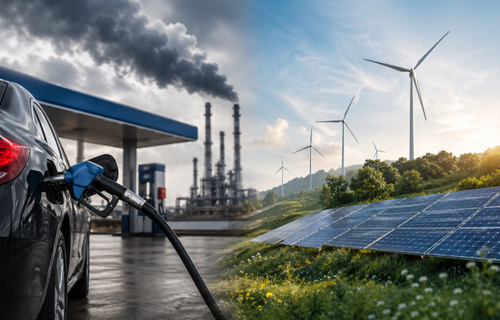
Beyond distributional concerns, the policy has raised questions about its alignment with Germany’s longer-term energy strategy. Analysts warn that reducing fuel costs, even temporarily, may weaken incentives to cut consumption or shift towards alternative energy sources. In this context, the measure is seen by some as reinforcing dependence on fossil fuels at a time when governments across Europe are seeking to accelerate the transition to cleaner energy systems.
Recent commentary at the European level has similarly emphasised that energy support measures should remain temporary and carefully targeted to avoid placing additional strain on public finances or undermining climate objectives. The European Commission has reiterated the importance of combining short-term relief with structural reforms, including investment in renewable energy, improved efficiency and demand reduction.
The German government, however, maintains that the tax cut is a necessary response to exceptional market conditions. Officials argue that the measure provides rapid and tangible relief at a time when energy costs are placing increasing pressure on both households and industry.
The debate highlights a broader policy tension currently visible across Europe: how to balance immediate economic support with the longer-term goal of reducing fossil fuel dependence. While the fuel discount may ease short-term pressures, its effectiveness in contributing to a more resilient and sustainable energy system remains contested.
Source: DIW