Thursday, 17 September 2026
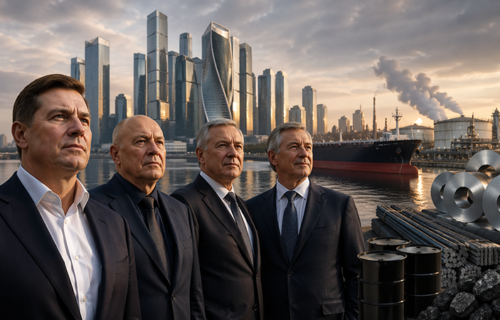
The combined wealth of Russia’s richest individuals has reached a new peak, underscoring how commodity-driven sectors have adapted to shifting trade dynamics despite ongoing Western sanctions.
According to data published by Forbes and cited by Reuters, the total value of assets held by Russian billionaires rose to approximately $696 billion in 2026, marking an increase of around 11 percent compared to the previous year. The figures indicate a recovery and expansion beyond pre-war levels, when aggregate wealth stood at roughly $606 billion in 2021.
The ranking remains dominated by industrial and energy-focused figures. Alexei Mordashov, whose interests span steel and mining through Severstal, retained the top position, followed by Vladimir Potanin, a key player in the global nickel market. Oil sector veteran Vagit Alekperov and gas producer Leonid Mikhelson also remain among the country’s wealthiest individuals.
The rise in fortunes has been closely linked to the performance of natural resources, which continue to underpin Russia’s economic model. Elevated global prices for oil, gas and metals, combined with the reorientation of exports towards Asia and other non-Western markets, have supported revenues for major producers. At the same time, the withdrawal of some international competitors has strengthened domestic market positions for large, locally controlled groups.
However, the increase in wealth does not fully reflect liquidity or global accessibility. A significant portion of assets remains tied to domestic markets or subject to restrictions, limiting the ability of individuals to deploy capital internationally. Analysts note that valuation gains are often influenced by currency movements and local market conditions rather than a full restoration of external investment flows.
In a global context, Russian fortunes remain comparatively modest. The world’s richest individuals continue to be led by technology-sector entrepreneurs such as Elon Musk and Larry Page, whose wealth is supported by highly valued, globally integrated companies and deeper capital markets.
Macroeconomic indicators suggest a more constrained outlook. The International Monetary Fund expects Russia’s economic growth to moderate to around 1 percent in the near term, following stronger expansion in 2024. While energy revenues and state spending continue to provide support, the broader trajectory reflects ongoing structural pressures linked to sanctions, limited foreign investment and shifting trade patterns.
The latest wealth data highlights a divergence within the Russian economy. While key sectors tied to natural resources have demonstrated resilience and, in some cases, growth, the broader environment remains shaped by restricted access to international markets and a gradual reconfiguration of economic ties.