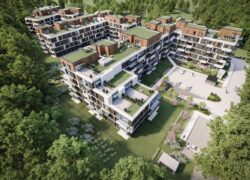
Develia to acquire Bouygues Immobilier Polska for EUR 66.5 million

Develia has signed a preliminary agreement to acquire 100% of the shares in Bouygues Immobilier Polska, the Polish arm of French developer Bouygues Immobilier. The agreed price is EUR 66.5 million (approximately PLN 283.6 million).

This acquisition will expand Develia’s residential development pipeline and strengthen its land bank in key cities including Warsaw, Poznań, and Wrocław. According to Develia CEO Andrzej Oślizło, the transaction aligns with the company’s ongoing strategy of growth through joint ventures and acquisitions, particularly in the Warsaw market. Develia plans to allocate over PLN 500 million annually for land and acquisitions, and the deal will be financed from the company’s own funds, with the option to refinance through a bank loan.

Bouygues Immobilier has operated in Poland since 2001 and has delivered over 9,500 residential units and commercial spaces across 70 projects. As of the end of 2024, Bouygues Immobilier Polska had about 1,300 units under development or preparation, of which 1,098 were covered by development agreements, along with roughly 2,800 units secured through preliminary land agreements. Most projects are located in Warsaw (71%), with the remainder split between Poznań (13%) and Wrocław (16%). Ongoing projects include Viva Cité, Lumea Estate, and Neo Praga in Warsaw, Vilda Arte in Poznań, and Vivre in Wrocław.

Karol Dzięcioł, a member of Develia’s management board, noted that the acquisition not only increases Develia’s scale but also provides diversification through new land locations and potential synergy effects. He pointed to Develia’s prior successful integration of Nexity’s Polish operations, acquired in 2023, as evidence of the company’s ability to effectively manage acquisitions and drive group development.

The transaction is expected to close by June 30, 2025, pending approval from the President of UOKiK (the Office of Competition and Consumer Protection) for market concentration in Poland.

ATAL Adds 191 New Apartments to Francuska Park Estate in Katowice

ATAL, a national real estate developer, has announced the next phase of its Francuska Park residential project in Katowice, expanding the offer by 191 new apartments. The development, which has been under construction for over a decade, has consistently attracted buyers, thanks largely to its location near recreational zones and close proximity to the city centre.

The newly launched stage, marked as phase VIII B, will include a 10-storey building featuring one- to four-room apartments, ranging in size from 30 to 99 square metres. All units will be equipped with large windows for ample daylight, and most will offer outdoor spaces such as balconies, loggias, or terraces. The price of the apartments ranges from PLN 9,900 to 13,600 per square metre. Buyers also have the option to purchase turnkey finishes through ATAL’s Design programme for an additional fee.

Agnieszka Majkusiak, sales director at ATAL, explained that the Francuska Park estate has been one of the company’s top-selling projects in Upper Silesia. She attributed this success to the scale and appeal of the development, which has gradually created a new residential district over several phases.

The estate is located along Szybowcowa Street, although its name reflects its connection to the earlier construction stages that began on Francuska Street. The project also includes recreational features, such as landscaped areas with benches, diverse greenery, walking paths, and a playground designed for families with children.

Nearby, residents can access the Valley of Three Ponds, a well-known recreational area offering sports facilities, bike and rollerblading paths, a bathing area with a beach, and several cafés and restaurants. The area’s green surroundings are complemented by convenient transport connections, including the A4 motorway and local public transport, which provide quick access to the Katowice city centre.

Sales are being handled directly through the developer’s office, located at Porcelanowa 10 in Katowice.

Czech shopping centers show steady growth amid stable rents and improving consumer confidence

The latest Shopping Centre Index from real estate advisory firm CBRE shows that regional shopping centers in the Czech Republic performed steadily over the past year. This performance was largely supported by real wage growth and low inflation, which lifted consumer confidence and encouraged household spending. According to the Czech Statistical Office, real retail sales grew by 4.5% in 2024, indicating stable sector development. CBRE’s April 2025 survey of 1,200 shopping center visitors across the country confirmed these trends.

Visitor numbers at regional shopping centers rose by 1.2% year-on-year, although they remain 7.4% below pre-pandemic levels. Most people continue to visit these centers mainly for grocery shopping once or twice per week, and food courts remain popular for regular dining. Chain cafés like Starbucks, Costa Coffee, and McCafé are among the most frequently visited. Clothing, shoes, and accessories purchases are typically monthly activities. Notably, younger visitors aged 18 to 25 show a higher frequency of visits compared to older age groups.

Quarterly patterns showed a mixed picture in 2024: the first quarter saw a 3% increase in footfall, followed by a slight decline in the second quarter and stagnation in the third. However, a gradual recovery was visible from September onward, with 3% growth in the final quarter. Larger experience-focused shopping centers with entertainment and leisure options saw the strongest gains, while inner-city centers recorded a slight decline. For the youngest shoppers, dining and social activities have become nearly as important as shopping itself, whereas older visitors remain primarily motivated by shopping and special discounts.

Occupancy levels have remained consistently high, exceeding 96% by the end of last year. Fashion continues to take up the largest share of shopping center space at 36%, followed by specialty retail such as opticians, pharmacies, health and beauty stores, toys, and books at 14%, and sports goods at 12%. The household equipment and furniture category recorded the most notable expansion, growing by 6% in floor area and 5% in tenant numbers. Growth was also seen in health and beauty services, opticians, men’s fashion, and travel agencies, while leased space declined in footwear, women’s fashion, sports, and toys.

Retailers’ cost increases, which had been pronounced in previous years, moderated in 2024. Average rents in shopping centers rose by 3.5%, with the most significant increases seen in experience-based centers. Gastronomy tenants faced the highest rent increases at 10%, followed by electronics at 8%, while fashion rents rose only 1%, reflecting longer-term pressure in that segment. Among unit sizes, small spaces up to 50 m² saw the highest rent increases at 6%, largely due to demand from food, services, and health tenants, while larger units over 1,000 m² showed minimal rent growth.

Turnover in shopping centers rose by an average of nearly 4% year-on-year, surpassing inflation. Inner-city centers led the way, posting turnover growth of over 6%. Gastronomy was again a top-performing segment, with sales up 9%, particularly in fast food. Electronics sales rose 7%, and leisure activities (excluding cinemas) increased 6%. In the services segment, cosmetic services, such as barber shops and nail salons, were the fastest growing, with turnover up 5%.

Specialized retail, especially health and beauty products, continued to perform well, though the pace of turnover growth slowed. By contrast, fashion, accessories, and sports segments remained subdued in Czech shopping centers, despite a recovery in these categories across broader European markets. Fashion turnover declined 1% overall, mainly due to weaker performance in women’s and mixed fashion, though youth fashion rose by 3%. Online shopping remains a significant factor, with 45% of respondents making about 30% of their fashion purchases online, favoring platforms like H&M, Zalando, Lidl, and About You.

The sports segment saw a 2% decline in turnover, mainly because of weaker performance among large chains selling both apparel and equipment. However, smaller, specialized sports retailers focusing on fashion and accessories managed to achieve 1% growth.

Despite ongoing economic and political concerns, consumer sentiment has improved. According to CBRE’s survey, 35% of respondents expect their personal financial situation to improve over the next year. Younger people under 25 show the least concern about the economic environment, with 63% reporting no change in their shopping behavior. High resilience was also observed among consumers aged 26 to 34 and those over 65, while respondents aged 35 to 44 were the most likely to cut non-essential spending, often due to the costs of raising young children.

The first quarter of 2025 followed similar patterns to the end of 2024. Although seasonal effects, such as the timing of Easter, slightly influenced results, the data points to moderate and steady growth in the retail market. Shopping center footfall rose by around 3%, and turnover increased by an average of 2%, with January proving to be the strongest month at 4% growth. Vacancy rates remained effectively unchanged, holding near 4% in the first quarter.

Overall, the Czech shopping center sector appears to be in a stable phase, marked by modest growth, strong occupancy, and cautious optimism among both retailers and consumers.

Source: CBRE

European Investment Outlook 2025: Selective optimism amid structural shifts

As Europe steps into 2025, investors are cautiously optimistic. After years of muted economic performance, the eurozone is expected to post GDP growth of around 1.3%, signaling a mild recovery — though still lagging the US and Asia. Industrial production and retail sales are showing green shoots, but weak consumer sentiment and geopolitical uncertainties continue to weigh on the broader outlook.

Capital Markets Reawakening

Investment volumes across European real estate are set to rebound in 2025 after multiple years of decline. Notably, capital is gravitating toward resilient sectors such as logistics, multifamily residential, and life sciences, where structural demand drivers remain intact. Prime office assets in top locations with strong ESG credentials are attracting investor appetite, while secondary stock increasingly faces discounts or repositioning requirements.

Fundraising for European real estate funds remains active, particularly in income-producing and value-add strategies. Cross-border capital flows from North America and Asia continue to play a key role, underpinned by the relative stability and transparency of European markets.

Sustainability as a Market Imperative

A defining theme is the rising importance of ESG compliance. Energy efficiency, green certifications, and sustainability credentials are no longer optional — they are now core to pricing and liquidity. Investors are sharply focused on assets that meet evolving EU environmental standards, while non-compliant properties risk becoming stranded or requiring heavy capital expenditure to remain competitive.

Financing and Debt Landscape

The European financing environment is stabilizing, but debt costs remain elevated relative to pre-2022 levels. While interest rate cuts are anticipated in late 2025, the timing and scale remain uncertain. Investors are approaching underwriting with caution but are increasingly comfortable backing deals with resilient income profiles and defensible tenant bases.

Key Risks to Watch
• Geopolitical volatility (Ukraine conflict, Middle East tensions, global trade disputes)
• Interest rate uncertainty, affecting borrowing and capital costs
• Occupier risk in offices, where the divide between ESG-compliant and legacy assets is widening
• Regulatory shifts, including foreign investment rules and new tax or ESG reporting requirements

Sector & Outlook
Logistics – Resilient, with yields stabilizing after prior corrections
Multifamily – Top investment target, underpinned by structural housing demand
Offices – Selective recovery; flight to quality ESG-compliant stock
Retail – Selective stabilization in prime, experience-based formats
Life Sciences, Data Centers – Strong demand, though limited investable supply

Summary
Europe’s real estate landscape in 2025 offers selective opportunities, particularly for investors aligned with structural growth themes and ESG imperatives. While macroeconomic and geopolitical headwinds persist, disciplined capital with a focus on prime assets and resilient sectors is well-positioned to capitalize on the continent’s gradual recovery.

Source: Savilles and comp.

Wealth of Nations Index 2025: Poland’s decade of catch-up and new economic challenges

The 2025 edition of the Wealth of Nations Index (WNI), produced by the Warsaw Enterprise Institute, marks a milestone: it allows a ten-year view back to the 2015 baseline. Though data timings mean the actual comparison spans 2014–2024, this year’s report offers valuable insight into how Poland — and the wider European and global landscape — has evolved economically over the past decade.

The WNI, which measures the accumulation of economic benefits per citizen, goes beyond GDP per capita by incorporating the quality of public spending, not just its monetary value. It weights the outcomes of government expenditure — in areas such as healthcare, education, infrastructure, internal security, and freedom of speech — alongside private sector spending, providing a richer, more nuanced assessment of national wealth.

Three Economic Eras in a Decade

The past ten years can be divided into three clear periods. From 2015 to early 2020, Poland and much of Europe enjoyed dynamic economic expansion, with Poland particularly standing out for its fast growth. Then came the global pandemic, which between 2020 and late 2022 threw economies worldwide into recessions of varying depths. Finally, the past two years have been marked by a period without one dominant global crisis, but instead by multiple simultaneous pressures: the war in Ukraine, persistent high energy prices, rising inflation, global supply chain disruptions, and renewed U.S. trade protectionism.

One striking conclusion of the 2025 WNI is how much more resilient the United States has proven to be compared to Europe. While the U.S. continues to inch forward, scoring 110.0 points this year (up 0.3 points from 2024), many leading European economies remain stagnant or have regressed. Germany (92.0 points), Austria (94.2), Denmark (103.4), and the UK (81.2) have all failed to improve year-on-year. Notably, the average WNI for EU countries has hovered around 75 points since 2021, with only Central European countries like Poland, Romania, the Czech Republic, and Croatia pushing that average slightly higher.

Poland’s Remarkable Convergence

Poland’s economic journey over the past decade has been one of impressive catch-up. In 2015, Poland ranked among the least prosperous EU nations, lagging behind even its Central European peers. Its WNI score was more than 25% lower than the EU average and nearly 50% lower than that of Austria, the region’s top performer at the time. But year after year, Poland steadily closed these gaps.

In last year’s edition, Poland’s WNI stood at 68.7, almost identical to the Central European average (68.9), effectively erasing a 13% regional shortfall over the decade. Poland now outranks Slovakia, Hungary, and Latvia, countries it once trailed, and the EU gap has shrunk to just 12%, down from 25% a decade ago. While catching up to the EU average entirely remains a future goal, overtaking countries like Portugal and Estonia seems achievable within the next two to three years.

A Warning Sign: Slowing Momentum

However, the 2025 report introduces a note of caution. This is the first edition where Poland’s WNI score declined compared to the previous year — and notably, its decline was sharper than the EU and regional averages. While a single year’s data might reflect temporary factors, the report urges attention to the underlying trends, especially the deterioration in the quality of public spending.

Poland’s public spending quality index rose steadily from 45.7 in 2015 to a peak of 61.2 in 2022, reflecting stronger state services and investments. But over the past three years, it has slipped consecutively, now standing at 56.5. The report notes that Poland’s government is currently delivering below-average quality for the level of spending it undertakes. For comparison, countries like Spain and Croatia, which spend similar amounts per citizen, score far higher on public spending efficiency (66.6 and 65.8, respectively).

Crucially, until now, Poland’s overall WNI growth was powered by private sector dynamism, which offset public sector weaknesses. But in the most recent data, both private and public components showed declines — a concerning signal that the country’s previous economic model may need recalibration.

The Global Context: U.S. Versus Europe

The WNI highlights how Europe, broadly, has struggled to regain momentum post-pandemic, while the United States has continued to widen its economic lead. In the mid-1990s, Germany’s national income per citizen was on par with that of the U.S.; today, European countries increasingly appear like “poor cousins,” not just in GDP per capita but also in the development of advanced economic sectors.

Journalists and economists such as Matthew Karnitschnig and Daniel Mitchell (author of the provocatively titled “European Policies = European Stagnation”) point to structural rigidities, over-regulation, and protectionist tendencies as key barriers holding Europe back. The WNI’s findings support this narrative, showing that Western Europe’s average score has remained flat for several years, while North America continues to inch upward.

The Mechanics of the Index

The Wealth of Nations Index measures two main components:
• Private spending per capita, adjusted for purchasing power differences, reflecting the real value of citizens’ consumption and investment decisions.
• Public spending outcomes, evaluated through a composite quality index covering national defense, security, infrastructure, healthcare, education, environmental stewardship, and civil liberties.

The final WNI score combines these elements, further factoring in a “public spending bonus” that recognizes the potential of well-managed government spending to outperform market-driven outcomes in certain sectors.

Looking Ahead

The WNI report argues that the coming years will likely test economies worldwide as geopolitical tensions and global protectionism dampen private sector momentum. In this environment, the quality and efficiency of public spending could play an increasingly critical role in sustaining national wealth.

For Poland, which has shown extraordinary progress over the past decade, the risk is that declining public sector performance may now drag on overall economic potential. As the report concludes, the “catch-up decade” may be ending, and the challenge ahead will be to shift from simply closing gaps with the EU average to sustaining quality-driven growth in a tougher, more uncertain global landscape.

Source: Warsaw Enterprise Institute (WEI)

Markets recover after a historic tariff-led volatility: GCC stays resilient amid global swings

April 2025 marked one of the most volatile months in global equity markets, driven by escalating tariff tensions and disruption to global trade. Investor sentiment was severely shaken as negotiations between the world’s two largest economies failed, pushing consumer confidence to its lowest point in a decade. This standoff resulted in sharp downward revisions to GDP forecasts globally and significantly lifted inflation expectations, particularly in the U.S. Investors began betting heavily on rate cuts, but the U.S. Federal Reserve clarified that future cuts would depend largely on inflation trends.

Other asset classes mirrored the turbulence. Oil prices dropped due to fears of shrinking global demand paired with an increase in OPEC+ supplies. However, the impact of these global jitters was less dramatic in the Gulf Cooperation Council (GCC) markets. The MSCI GCC Index posted only a modest decline of 1.2% in April, underscoring the region’s relative insulation from the direct effects of global tariffs. Yet even within the GCC, performance varied sharply across countries and sectors.

Saudi Arabia’s Tadawul All Share Index (TASI) saw the steepest drop among GCC peers, falling 2.9% during the month. This marked its third consecutive monthly decline, weighed down by weaker crude oil prices, regional geopolitical concerns, and disappointing corporate earnings. Notably, the Transportation sector was the hardest hit, with a 7.4% slide, followed by Utilities (-6.7%) and Financial Services (-5.9%). However, some bright spots emerged: the Pharmaceuticals and Biotech sector rose by 4.7%, and Telecommunications gained 4.3%.

Foreign investors were net buyers on the Saudi exchange in April, even as local institutions sold off in line with broader emerging market outflows. Trading activity in Saudi Arabia surged, with monthly share volumes up 17.5% to 6.7 billion shares and the total value of shares traded jumping 39.4% to SAR 124.2 billion.

Kuwait’s market also reflected mixed dynamics. While the overall All Share Index dropped 1.4%, the Main 50 Index managed a slim 0.2% gain thanks to strength in smaller, liquid stocks. Year-to-date (YTD), however, Kuwait remained one of the top performers globally, with the Premier Market Index up 9.1% and the All Share Index up 8.1%. Sectorally, Consumer Staples led gains with a 6.3% surge, driven by Mezzan Holding Co.’s strong rally, while the Insurance sector suffered a steep 15.1% decline.

Dubai stood out as the best-performing GCC market in April, rebounding 4.1% to erase part of March’s losses and lifting its YTD gain to 2.9%. This recovery was fueled mainly by heavyweight sectors like Financials (+5.9%) and Communications (+7.9%). Commercial Bank of Dubai surged 22.8%, and National General Insurance rose 16.4%, pushing the index higher. In contrast, the Materials sector dragged down overall performance, tumbling 22.7%, mainly due to the sharp decline in National Cement’s share price.

Abu Dhabi’s FTSE ADX General Index rose 1.8% in April, reversing declines seen in February and March. The Basic Materials sector led gains, up 6.1%, with Fertiglobe and Borouge shares delivering strong performances. Financials followed, rising 3.0%, supported by Abu Dhabi Islamic Bank (+14.1%) and Multiply Group (+28.9%). However, Utilities fell sharply by 9.7%, weighed down solely by Abu Dhabi National Energy Co.

Qatar’s market rebounded with the QE 20 Index gaining 2.2%, and the broader All Share Index up 2.5% in April. Telecoms was the star performer with a 12.2% jump, as both Ooredoo and Vodafone Qatar posted healthy gains. Banks also delivered solid results, with Doha Bank jumping 22.7% and Ahli Bank climbing 8.2%. Meanwhile, the Industrials and Transportation sectors slipped slightly, down 0.7% and 0.8%, respectively.

Bahrain’s All Share Index fell for the second consecutive month, dropping 2.0% in April and cutting its YTD gain to 3.7%. The Materials sector posted the largest decline at 11.6%, driven by Aluminium Bahrain’s share price drop. On the upside, the Consumer Discretionary sector rose 7.0%, with Gulf Hotels Group advancing 12.2%.

Oman’s MSX 30 Index saw its fifth consecutive monthly decline, slipping 1.2% in April. While the Industrial Index posted a 2.4% gain, led by National Aluminium Products Co.’s extraordinary 155% rally, it was not enough to offset broader losses, particularly in the Services sector, which fell 3.8%.

Looking beyond equities, GCC trading activity was robust in April, even amid global turmoil. Total monthly trading volume surged by nearly 28% across Kuwait, while Saudi Arabia and Abu Dhabi recorded volume increases of 17.5% and 33.3%, respectively. Notably, Oman bucked the trend, with only a marginal 1.4% volume gain, and saw a decline in the total value traded by 15.2%.

In terms of economic developments, Abu Dhabi’s real estate market showed strong momentum, with property transactions up 34.5% year-on-year in Q1 2025, totaling AED 25.3 billion. Foreign direct investment into Abu Dhabi real estate also rose, with 384 transactions worth AED 1.58 billion completed by investors from 68 countries.

Dubai’s tourism sector continued its steady recovery, welcoming 5.31 million visitors in Q1 2025, up 3.3% year-on-year. Western Europe remained the top source of visitors, followed by the CIS/Eastern Europe and the GCC region, boosting sectors like hospitality and retail.

However, Bahrain faced headwinds, with S&P downgrading its outlook from “Stable” to “Negative,” citing rising fiscal deficits and pressure from lower oil prices and increased social spending. The IMF also cut Bahrain’s 2025 GDP growth forecast by 40 basis points to 2.8%.

Oman, meanwhile, projected 2025 GDP growth at 3.4%, supported by strong foreign direct investment, though the IMF revised its estimate downward to 2.3%, citing global trade tensions and weaker oil price prospects.

Overall, despite April’s historic global volatility, the GCC markets showed resilience, selectively outperforming or cushioning the global downturn. Sector-specific gains in telecoms, financials, and real estate helped offset broader market weakness, while economic indicators across the region pointed to continued structural reforms and growth initiatives that could position the region well in the months ahead.

German economy weakens in April as DIW barometer falls sharply

Germany’s economic outlook deteriorated sharply in April, according to the latest economic barometer from the German Institute for Economic Research (DIW Berlin). The index dropped by nearly eight points to 82.9, its lowest level in over two years and well below the neutral 100-point mark that reflects average growth expectations.

The decline follows four consecutive months of improvement and highlights ongoing concerns surrounding global trade policy, particularly the uncertainty caused by U.S. President Donald Trump’s tariff decisions and the European Union’s planned responses. “Germany’s economic environment remains strained, primarily due to trade tensions and related unpredictability,” said DIW Chief Economist Geraldine Dany-Knedlik.

Although recent interest rate cuts by the European Central Bank were intended to boost investment, these measures have had limited impact so far. The protracted formation of a new German government has also delayed expected fiscal support, with policy initiatives unlikely to influence growth until later in the year. “While infrastructure spending may provide a lift, its effects won’t be felt in the short term,” Dany-Knedlik added.

The industrial sector remains under pressure, but there are signs of stability, with order intake and production holding steady. Some firms reported greater confidence in their current business situation. However, expectations for future exports and business activity over the next three to six months have worsened. “Ongoing uncertainty is limiting companies’ ability to adapt and plan ahead,” said DIW economist Laura Pagenhardt.

In the services sector, sentiment improved slightly in April, but consumer demand remains weak due to high prices and growing job insecurity. Inflation remains just above the European Central Bank’s 2% target, and unemployment has risen, especially in the manufacturing sector.

“With global trade continuing to stall, Germany’s export-driven economy is unlikely to find external support,” said DIW expert Guido Baldi. “It is increasingly important for Germany to address its domestic challenges, particularly in infrastructure and digital investment.”

Source: DIW Berlin

Aspire Group to open Spark by Hilton Wuppertal City Centre

Aspire Group has announced the acquisition of the former Hotel Kaiserhof Wuppertal at Döppersberg 50, which will be rebranded as Spark by Hilton Wuppertal City Centre. The property will begin operating under its new identity from 2 June 2025.

This will be the second Spark by Hilton location in Germany, following the opening of the brand’s first property in Stuttgart Sindelfingen earlier this year. Spark by Hilton is Hilton’s premium economy offering, aimed at travellers seeking practical accommodations with consistent service.

The Wuppertal hotel includes 172 guest rooms and a bar, and is located in the city centre near the main train station. Düsseldorf Airport is approximately 35 km away, and the nearby Wuppertal Suspension Railway is a well-known local landmark.

The property will include amenities such as garment steamers, a 24/7 self-service food and drink area, and other features designed for convenience and efficiency.

Aspire Group’s acquisition reflects its ongoing efforts to expand its presence in the German hospitality market and to grow its portfolio in the economy and midscale hotel segments.

Berlin-based The Grounds closes 2024 with losses, eyes stable recovery in 2025

Berlin-based The Grounds Real Estate Development AG reported a consolidated loss of €13.6 million for 2024, reflecting a sharp decline in sales amid continued market hesitation and project delays. Revenues dropped to €12.9 million from €23.8 million in 2023, driven by subdued demand in the residential sector and the slower-than-expected progress of new developments.

The company’s group EBIT stood at -€9.2 million, compared to -€4.8 million in the previous year. Earnings per share declined to -€0.59. Despite this challenging operational performance, The Grounds achieved notable milestones in 2024, including the successful completion of the Maggie development in Berlin and the Property Garden project in Magdeburg, which together contributed €8.1 million in revenues. Additional income was generated from apartment sales in Dallgow-Döberitz and Am Hasenknie, alongside €1.8 million from rental income.

A key positive development was the company’s capital increase in December, which helped strengthen the balance sheet and brought in a new anchor investor—H.I.G. Capital. This contributed to a €20.2 million rise in total assets, bringing the company’s balance sheet to €168.3 million and lifting the equity ratio from 14.2% to 30.1%. Cash reserves also saw a significant jump to €27.6 million, largely from the capital raise.

While non-current assets declined, due to the prudent write-down of goodwill and the sale of specific holdings, current assets increased by €25 million. Inventory levels remained stable at €92.6 million, reflecting ongoing construction activities.

On the liabilities side, there was a notable shift from current to non-current obligations, due in part to an increase in long-term financing from H.I.G. Capital—from €10 million to €17 million—as well as changes to a corporate bond structure.

CEO Jacopo Mingazzini acknowledged that 2024’s operational results fell short of expectations but emphasized the company’s strategic progress, including two new acquisitions in Potsdam-Fahrland and Werder (Havel), which signal a pivot toward future growth. CFO Andrew Wallis highlighted that H.I.G. Capital’s deepened involvement has not only stabilized the capital base but also enhanced the company’s long-term market positioning.

Looking ahead, The Grounds forecasts consolidated sales between €9 million and €11 million for 2025, with a goal of reaching a balanced EBIT. The outlook includes a projected €2.5 million gross profit contribution from a debtor warrant tied to the 2020 sale of logistics properties in Hangelsberg. However, the forecast does not yet factor in potential contributions from pending acquisitions or from three major development projects—Terra Homes, Börde Bogen, and Central Offices—which are expected to begin generating revenue from 2026 onwards.

Matadorka Living: Transforming Petržalka’s industrial past into a vibrant urban hub

Petržalka, originally envisioned as a vast modernist housing estate with a defined but unfinished core along the Croatian Arm, is undergoing a transformation. Reflecting broader urban development trends, it is evolving into a district of multiple vibrant centers. One of the most promising among them is the redevelopment of the former Matador industrial site, which is poised to become one of Petržalka’s most attractive areas. The preservation of historic industrial architecture, particularly within the upcoming Matadorka Living – Smaltovňa project, will play a central role in this transformation.

Revitalizing History: Stage One of Matadorka Living

Optimal Development is preparing to launch the first phase of the Matadorka Living project, titled “Enamel.” This marks the beginning of a broader redevelopment of the former Matador premises. The project blends the reconstruction of historical industrial structures with the construction of new residential and mixed-use buildings, aiming to rejuvenate the site while preserving its historical character.

The initial phase will adapt a section of the original enamel building, constructed between 1909 and 1912 under architect Heinrich Zieger. The redevelopment will involve the addition of five new residential buildings integrated into the preserved double-hall structure, which, while not protected as cultural monuments, will retain their original form for commercial use. This innovative architectural solution has been designed by Compass Architects and SuperAtelier, in collaboration with the civic association Čierne diery.

Residential Offering and Market Launch

The first stage will introduce 267 residential units and 25 serviced apartments, featuring a range of layouts from compact studios to spacious five-room residences, including distinctive loft-style apartments—a rarity in Bratislava. Following an initial exclusive sales phase, three of the buildings are now available to the broader public. Prices start at €127,447 for a 35 m² studio, rising to €621,955 for a five-room apartment with over 123 m² of interior space and an additional 40 m² of terraces. Apartments are currently being offered at discounted rates. Parking spaces must be purchased separately.

As of now, 93 apartments are available for sale, with 15 units reserved and 33 units sold. To support sales efforts, Optimal Development has introduced a virtual reality experience allowing potential buyers to tour model apartments.

According to Optimal Development, Matadorka Living is designed to create more than just residential spaces—it aspires to foster a vibrant urban community infused with history, design, and social spaces. The development will feature 2,200 m² of office space and 2,732 m² of retail areas, alongside amenities such as relaxation zones, galleries, art installations, cafés, and a gastronomic zone. Parking will be accommodated in an underground garage with 486 spaces, constructed beneath the existing structures.

Construction is expected to commence in the coming months, with a valid building permit already secured. Completion of the first stage is anticipated in 2027, with an estimated investment of approximately €22.8 million.

Part of a Larger Vision: New Matadorka

Matadorka Living forms part of the broader New Matadorka masterplan, which aims to comprehensively redevelop the former Matador site into a vibrant urban district featuring housing, offices, retail spaces, sports facilities, and educational institutions. Led by developer OXIO, the extensive project will include high-rise buildings up to 37 storeys, with around 2,500 residential units and a parking capacity for 4,262 vehicles. The total investment is estimated at €550 million, with phased construction projected to conclude by 2040.

Sustainable Urban Transformation

The Matadorka Living and New Matadorka projects represent significant strides in the adaptive reuse of brownfield sites in Bratislava, aligning with the city’s commitment to sustainable urban development. Rather than expanding into undeveloped areas, the focus is on intensifying existing urban spaces, thus minimizing environmental impact and promoting infrastructure efficiency.

The site’s strategic location—near shops, schools, parks, and excellent public transport links including the Petržalka railway station and a nearby tram line—positions it well to support the concept of a “15-minute city,” where all essential services are within easy reach.

As Bratislava continues to prioritize inward urban development and the revitalization of obsolete industrial areas, projects like Matadorka Living set a benchmark for quality urban living, blending modern architecture with historical legacy and public space enhancement.

Source: Yim.ba and Matadorka Living

front page info
LATEST NEWS