Galeria Katowicka expands retail and dining offerings

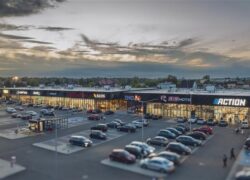
Galeria Katowicka has continued to expand and update its retail and dining options, with several new openings, relocations, and renovations completed in the first quarter of 2025. These changes are part of an ongoing strategy to diversify the centre’s offer and respond to evolving tenant needs and customer expectations.

The centre added multiple new brands during the past few months, including openings in the beauty, fashion, and dining sectors. The first regional outlet of Popeyes launched in the food court, offering New Orleans-style seasoned chicken. Additionally, Kreuzberg Kraft Kebap, a street food concept by Filip Chajzer, introduced a food truck outside the centre. Luca Bakery also joined the dining offer with a grab-and-go format focused on coffee and fresh pastries. Existing tenants such as Wedel and Starbucks reopened with newly renovated interiors.

In the beauty segment, Inglot’s arrival last year was followed by further developments: Douglas and Yves Rocher introduced new store concepts, while Notino relocated to a larger space. Fashion retailers Bytom and Kodano also moved to new premises, and the Marilyn brand opened a redesigned store.

“We carefully curate our tenant mix to match the centre’s identity and to meet customer expectations,” said Joanna Bagińska, director of Galeria Katowicka. “Each renovation or relocation signals a brand’s commitment to long-term development within the centre.”

Further changes are expected in the next quarter, with additional relocations and openings planned, including the expansion of the 4F store into a larger space.

Romania: Employees seek better recognition in 2025

A recent survey by Genesis Property, a major office building owner in Romania, shows that employees anticipate stronger collaboration with colleagues in 2025 but are seeking clearer recognition of their contributions. The survey, conducted nationally among 1,175 respondents, reflects both optimism about teamwork and a demand for improved employer support.

According to the results, over 83% of employees expect to collaborate well or very well with their teams this year, and nearly 90% foresee working conditions that are the same or better compared to 2024. However, more than half (52%) believe their employers should do more to recognize individual contributions, and 48% feel that organizations are not sufficiently addressing employee dissatisfaction.

Additionally, 41% of respondents indicated a need for greater employer support in achieving work-life balance, while nearly 38% would like to see stronger teamwork across their companies.

“The survey results highlight that employees value more than just the functional aspects of office work—they seek connection, recognition, and a sense of belonging,” said Elena Panait, Head of Leasing & ComYunitY at Genesis Property. “The office environment can play a key role in fostering relationships and building trust.”

In terms of flexibility, only 44% of employees reported being able to adjust their work schedule to meet personal needs when necessary, while 55% said they could do so only occasionally or not at all. Organizational initiatives supporting employee health and well-being are viewed as important or very important by 89% of participants. Furthermore, nearly 64% of employees believe there is room for improvement in how managers provide constructive feedback.

Genesis Property continues to invest in enhancing the workplace experience through projects like YUNITY Park. The first two phases of the project were completed in 2023, with an investment of over €30 million. The final phase, the Innovation Center, is set to open within the next 12 months, following an additional €20 million investment.

The survey was conducted via the iVox platform between January and February 2025. Respondents included 48% women, and nearly 57% reported a net monthly income of over 5,000 lei.

ATAL Jasieny: Eco-friendly residential project in Gdańsk

ATAL Jasieny is a new residential development by ATAL, a publicly listed, nationwide developer. The project is located in the Jasień district of Gdańsk, on Stężycka Street. The first phase of the investment includes 48 residential units across 12 buildings. Prices for apartments in the developer’s standard finish range from PLN 9,800 to PLN 10,900 per square metre.

Each building will contain four flats with separate entrances, designed to provide residents with a greater sense of privacy. The project incorporates several environmentally friendly features, including heat pumps, photovoltaic systems, and rain gardens. Additional amenities include underfloor heating and layouts designed to maximize natural light.

The apartments range in size from 43 to 96 square metres, offering two- and three-room units as well as larger two-level, four-room apartments. Ground floor units will have private gardens and terraces, while upper-floor units will feature balconies.

The development’s layout reflects the character of the surrounding single-family housing. Green spaces and rain gardens are integrated into the project, serving both environmental and aesthetic purposes.

The use of heat pumps and photovoltaic systems is intended to reduce energy consumption, and underfloor heating is included in all units to improve interior flexibility and comfort.

ATAL Jasieny is located approximately 8 kilometers from central Gdańsk, near Lake Jasień and Otomin. The estate offers convenient access to the Tri-City Ring Road and is located near public transportation. Essential services, such as a grocery store, kindergarten, nursery, and shopping center (Morski Park Handlowy), are within walking distance.

For buyers interested in turnkey finishing, ATAL offers four options through its ATAL Design programme, with package prices ranging from PLN 999 to PLN 1,699 per square metre.

May 2025 MPC meeting: Potential start of rate cuts

The May 2025 meeting of the Monetary Policy Council (MPC) is expected to be closely monitored by investors and economists as it may mark a shift toward monetary policy easing. Following a period of elevated interest rates, the MPC faces the possibility of initiating a cycle of rate cuts or implementing a one-off reduction.

Possible Interest Rate Cut in May

Analyst consensus suggests that the MPC may decide to cut interest rates at the May meeting, with a reduction of 0.5 percentage points seen as likely. Such a move would signal a strong adjustment while allowing the Council to monitor future inflation developments. Alternatively, a smaller cut of 0.25 percentage points may signal the beginning of a gradual easing cycle, with further reductions depending on the progress of disinflation and broader economic conditions.

Factors Supporting a Shift Toward Easing

Stabilizing inflation data, despite remaining above the inflation target, along with moderate economic growth and high real borrowing costs, are key arguments for adjusting monetary policy. In addition, decisions by major central banks to begin lowering rates are contributing factors, suggesting a broader trend away from the previous cycle of monetary tightening.

One-Time Adjustment or Broader Policy Shift?

If the MPC opts for a 0.5% cut, it could be viewed as a corrective measure to address an overly restrictive monetary stance. A 0.25% reduction, by contrast, might indicate the beginning of a gradual adjustment cycle, potentially targeting an interest rate level of 4.0–4.5% by the end of 2025.

Outlook

The outcome of the May meeting could represent an important signal for the direction of Polish monetary policy. Beyond the decision itself, attention will focus on the Council’s post-meeting communication, which may clarify whether further easing measures are being considered.

Author: Dawid Rog, Lendi expert

Decline in Poland’s leading economic indicator in April 2025

The Leading Economic Indicator (WWK), which signals future economic trends, fell by more than 1.6 points in April 2025 compared to March, reversing much of the growth recorded over the previous two months. The decline is attributed primarily to weak order volumes received by Polish companies, reflecting the country’s reduced competitiveness, ongoing slowdowns among major European trading partners, and elevated global political and economic uncertainty.

Of the eight components that make up the WWK index, two showed slight improvement, while six deteriorated compared to March. The most significant negative influence came from a renewed decline in incoming orders for manufacturing firms, particularly from domestic customers. Export orders showed a modest improvement, with industries such as electronics, car manufacturing, and other transport equipment reporting slower rates of decline compared to late 2024. In contrast, sectors including clothing, textiles, furniture, and wood manufacturing continue to experience notable challenges in export demand.

Some domestic industries, notably food and clothing manufacturing, recorded a slight increase in orders, though this is likely influenced by seasonal factors related to upcoming holidays.

The prolonged stagnation in orders and decreased production have contributed to a worsening financial situation for businesses. Across the manufacturing sector, the proportion of companies reporting a deterioration in their financial condition exceeds those reporting improvements by an average of about 15 percentage points. Sectors most heavily affected by declines in orders correspond to those reporting the greatest financial pressures.

On the Warsaw Stock Exchange, indices experienced a temporary downturn in April, largely attributed to shifts in U.S. customs policy under President Trump. Although markets recovered relatively quickly, underlying uncertainty remains.

Meanwhile, the M3 money supply in real terms, adjusted for seasonal effects, grew at a slower pace in March 2025 compared to February, increasing by nearly 0.4% versus 0.8% the previous month. Household debt from consumer bank loans also rose slightly, by nearly 0.2% month-over-month.

Source: BIEC

Neo Natolin – second phase of residential development in Warsaw’s Wilanów district underway

Real Management S.A. has received a building permit for the construction of 26 additional houses in the Neo Natolin residential development in Warsaw’s Wilanów district. Construction of this phase is scheduled to begin at the end of the second quarter of 2025. A further 32 houses are planned as part of the next stage, bringing the total number of new homes in the second phase to 58. The houses will be offered in six different layouts.

Neo Natolin is a residential estate consisting of semi-detached single-family homes, characterized by contemporary architecture and design solutions intended to balance privacy and functionality. Each property includes a private plot ranging from 647 to 1,512 square meters. The estate also features green courtyards, a decorative pond, playgrounds, and small architectural elements.

The development is being carried out in multiple stages. The first stage, comprising 84 homes, was completed and delivered to residents in summer 2024. The second phase, divided into two construction stages of 26 and 32 homes respectively, will offer residences with floor areas between 190 and 258 square meters and two façade color options: light and anthracite. Construction of the first part of the second phase is scheduled to start in late June 2025.

The project incorporates several environmental solutions, including the installation of heat pumps, mechanical ventilation systems with heat recovery, and infrastructure prepared for photovoltaic systems and electric vehicle chargers.

Neo Natolin is situated on ul. Korbońskiego, near the Natoliński and Kabaty Forest nature reserves. The location offers access to educational institutions, medical facilities, grocery stores, and restaurants, as well as good transport connections to central Warsaw and surrounding areas.

The architectural design of Neo Natolin was developed by APA Wojciechowski.

Newgate Investment completes first forward funding transaction in Poland

Newgate Investment (NGI) and Redkom Development are working together to deliver a new retail park in Bydgoszcz, Poland. The project, which will be the first large-scale retail park in the region, will include a mix of shops, service points, restaurants, and recreational facilities. It represents NGI’s first forward funding transaction in the Polish market.

The retail park will have a leasable area of approximately 16,000 square meters. It is being developed and commercialized by Redkom Development, with NGI providing the project financing. The site is located at Aleja Jana Pawła II 115, on the grounds of the former Glinki shopping center, in the southern part of Bydgoszcz. The location is near several residential neighborhoods and has access to a population of over 350,000 people within a 20-minute drive.

Carrefour will be the main grocery tenant, occupying 4,000 square meters of the facility. Around 20 additional units will also be established, offering services and retail options targeted to the local population. Construction has started, with Daldehog serving as the general contractor. Completion is expected in the first half of 2026.

This transaction follows two previous acquisitions by Newgate Investment from Redkom Development: Comfy Park Bielik in Bielsko-Biała and Ozimska Park Opole, each approximately 17,000 square meters. NGI is also in advanced stages of acquiring two further retail parks in the Silesia region. The company’s portfolio currently includes 35 retail properties with a total leasable area of more than 200,000 square meters.

Retail expected to drive Czech commercial real estate market in 2025

After a period of uncertainty and stagnation, the Czech commercial real estate market is showing signs of renewed investor interest in 2025. The recovery is supported by improved financing conditions and growing alignment between buyer and seller expectations. According to an analysis by consultancy RSM, retail assets, particularly retail parks and shopping centers, could account for approximately 40% of commercial real estate transactions this year.

While the volume of new office space in Prague remains limited — only 25,000 square meters are expected to be delivered in 2025, a third less than in 2024 — retail properties and successful hotel investments are drawing increased attention. Domestic investors continue to dominate the market, but foreign capital is beginning to return, as seen in Blackstone’s acquisition of ten logistics parks in 2024, valued at CZK 12 billion.

Lower interest rates are a major factor supporting market activity. Following several cuts by the Czech National Bank, the repo rate stood at 3.75% in February 2025, helping to reduce borrowing costs and stimulate investment.

Office market development remains constrained, with no major new projects anticipated before 2027. Investors are showing more caution in this segment, and slight yield growth is mainly observed in category B office buildings, while premium A-class offices remain relatively stable in value.

Retail Parks Attracting Increased Investment

Retail parks are emerging as a preferred asset class due to faster development timelines and steady demand. RSM’s analysis indicates that retail will be a key contributor to transaction volumes this year. The popularity of local shopping centers is extending beyond major cities into smaller towns, driven by continued consumer demand.

Modern shopping centers are increasingly offering a mix of retail, dining, entertainment, and even office space, enhancing their attractiveness to both investors and visitors.

“We are seeing sellers’ and buyers’ expectations becoming more aligned, a trend likely to continue throughout 2025,” said Jiří Skotnica, valuation expert at RSM CZ. He added that retail parks remain a stable long-term investment, supported by the stabilization of retail sales.

New retail space deliveries in 2025 are expected to match last year’s figure, exceeding 70,000 square meters. Development projects in Prague are also planning new retail units on ground floors, and there is significant market interest in larger assets such as the Palladium shopping center, which could be involved in one of the year’s major transactions.

Impact of Polish Market Growth

At a regional level, increased foreign investment in Poland is influencing the broader CEE market. While most real estate investments in the Czech Republic continue to come from domestic sources, foreign investors are showing renewed interest, particularly in the logistics sector.

In 2024, Poland recorded over €5.05 billion in real estate investments, with foreign investors accounting for the majority of transactions. In comparison, the Czech Republic maintained a much higher share of domestic investment, reaching up to 86% during certain periods.

“Poland’s growth is positive for the entire region, including the Czech Republic. However, building a competitive and independent investment environment remains essential to ensure long-term attractiveness,” Skotnica noted.

Source: Knight Frank

Slovakia: Industrial, agricultural, and construction producer prices increased in March 2025

In March 2025, producer prices rose across several sectors, including industry, agriculture, and construction. Industrial producer prices remained elevated year-on-year, largely due to higher electricity and gas costs. Agricultural producers saw price increases for both crop and animal products, while construction experienced rising labor and material costs.

Industrial producer prices for the domestic market increased by 2.6% year-on-year. Twelve out of sixteen monitored industrial sectors recorded higher prices. Key contributors included a 4.2% rise in electricity supply costs and a 3.7% increase in water supply prices. Significant price growth was also observed in the manufacture of rubber and plastic products (up 5.1%), transport equipment (up 3.6%), and food, beverages, and tobacco products (up 2.2%). However, the overall increase was partially offset by declines in the prices of coke and petroleum products (down 11.6%) and metals (down 1.6%).

Over the first three months of 2025, domestic industrial producer prices were up by 0.8%. On a month-on-month basis, prices showed only a slight decline.

For the non-domestic market, industrial producer prices rose by 1% year-on-year in March and by 0.7% month-on-month. Overall, non-domestic industrial producer prices for the first quarter of 2025 were 0.9% higher than a year earlier.

Agricultural Product Prices

Agricultural producer prices increased by 7.5% year-on-year in March. Crop product prices rose by 9.3%, while animal product prices grew by 6.4%.

Among crop products, cereals (up 17.4%), legumes (up 22.7%), and oilseeds and fruits (up 18%) showed double-digit growth. In contrast, prices fell for potatoes (down 6.1%), crops used for sugar production (down 8.4%), and vegetables (down 12.9%).

Among animal products, notable year-on-year increases were recorded for hen edible eggs (up 19.8%) and cow’s raw milk (up 10.1%). However, prices decreased for sheep and lambs for slaughter (down 0.9%), pigs for slaughter (down 1%), poultry for slaughter (down 1.9%), and raw sheep wool (down 40%).

Overall, agricultural producer prices rose by 7.4% in the first three months of the year.

Construction Producer Prices

In the construction sector, producer prices for construction work were 5.6% higher year-on-year in March 2025, marking the highest growth rate in six months. Cumulatively, construction work prices increased by 5.2% over the first quarter. Material prices used in construction rose by 2% year-on-year in March and by 1.9% over the first three months of 2025.

Source: Statistical Office of the SR

Zoning plan change for Žižkov freight station site approved

Prague city councillors have approved a modification of the zoning plan that will enable large-scale development on the land surrounding the former Žižkov freight station. Alongside the zoning change, the city also signed agreements with developers who will contribute financially and through land transfers to support the development of public infrastructure. This represents the largest zoning adjustment in Prague to date, paving the way for residential construction that could accommodate approximately 20,000 residents. Around 95% of the site will be designated for housing.

Deputy Mayor Petr Hlaváček stated that the new district will include both commercial and municipal apartments. City-owned plots are expected to support the development of approximately 150 apartments, with additional land, once property arrangements are finalized, providing space for a further 200 apartments.

Construction near the railway station, where no zoning plan change was required, is already underway by developer Central Group. The company will contribute CZK 441 million to the city, including funds for a kindergarten, a park, and land transfers. Sekyra Group has agreed to provide CZK 624 million, with CZK 411 million in cash and the remainder in land value. Penta has pledged CZK 122.5 million, partly in cash and partly in investments such as park developments. My Park will contribute CZK 10.4 million.

The new district will include five kindergartens designed for approximately 650 children and two primary schools with a combined capacity of 1,350 pupils. In addition, the city finalized an agreement last year with Czech Railways to purchase the historic freight station building. Plans for the site include extending the building to house school facilities, apartments, shops, and spaces for cultural activities.

Source: CTK

front page info
LATEST NEWS