Sunday, 18 October 2026
Russia’s fossil fuel export revenues increased significantly in March 2026, highlighting the continued resilience of its energy sector despite ongoing Western sanctions, according to a new analysis by the Centre for Research on Energy and Clean Air.
The report shows that Russia’s export revenues rose by 52% month-on-month to approximately EUR 713 million per day, driven primarily by higher global energy prices rather than a sharp increase in export volumes.
Crude oil remained the main source of revenue, with earnings from oil exports rising sharply as prices increased. At the same time, export volumes grew more modestly, indicating that price dynamics played a larger role in revenue growth.
The analysis highlights the continued importance of Asian markets. China and India remained the dominant buyers of Russian crude oil, together accounting for the majority of exports. In March, imports by India increased significantly, while China maintained its position as the largest single purchaser of Russian fossil fuels.
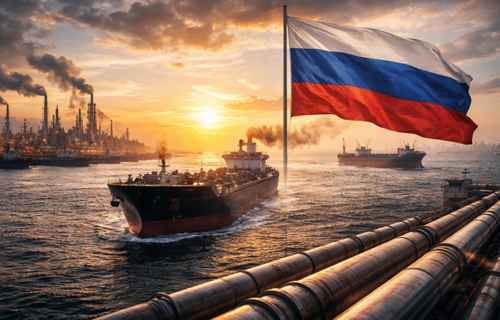
Despite sanctions, Russia continues to rely heavily on maritime transport networks that operate outside traditional regulatory frameworks. The report estimates that nearly half of seaborne oil exports were transported by so-called “shadow fleet” tankers, which are often used to bypass restrictions.
At the same time, Europe remains a relevant buyer in certain segments. The European Union continues to import a significant share of Russia’s liquefied natural gas, accounting for close to half of total LNG deliveries in March.
The report also points to disruptions in export logistics linked to geopolitical developments. Ukrainian drone strikes on key Baltic Sea ports temporarily reduced oil shipments, although the impact on overall revenues was offset by rising global prices.
According to CREA, stricter enforcement of existing sanctions could significantly reduce Russia’s export income. Estimates suggest that full compliance with price caps could have lowered revenues by several billion euros in March alone.
The findings underline the continued complexity of global energy markets, where sanctions have reshaped trade flows but have not fully curtailed Russia’s ability to generate income from fossil fuel exports.