Nonko Leases 4,100 sqm at MLP Wrocław

The transport and logistics company Nonko has leased more than 4,100 sqm of warehouse space at MLP Wrocław. The tenant moved into the facility at the end of October, with Litwiniuk Property advising on the lease process.

Nonko provides domestic and international transport, warehousing, and logistics services, including cross-docking and full supply chain management. Headquartered in Wrocław, the company coordinates its operations across Poland and Europe.

“As part of an international logistics group, Nonko has established a logistics centre in Poland to support customers in China and across the EU,” said Jingyi Wang, Director of Nonko sp. z o.o. “MLP has offered us effective support and flexible solutions, and we look forward to a long-term partnership.”

Agnieszka Góźdź, Management Board Member and Chief Development Officer at MLP Group S.A., commented: “We are pleased to welcome Nonko to MLP Wrocław. The project continues to attract companies seeking high-quality, well-located warehouse space with sustainable features.”

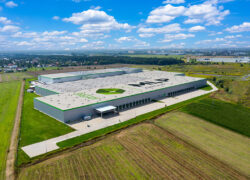
MLP Wrocław is a logistics park located in the Psie Pole district, approximately 14 km from Wrocław city centre. The complex comprises five Class A buildings with a total area of around 66,000 sqm. The development incorporates sustainable design elements such as LED lighting, low-emission heating, water-saving systems, and rooftop photovoltaic panels. The park is BREEAM certified and includes biodiversity features such as retention ponds and green landscaping.

The location provides convenient access to the E67 national road and the S8 expressway, connecting Wrocław with Warsaw and major European transport corridors. Existing tenants include Electrolux Poland, SPM Poland (BCUBE Group), Europe Distribution Group (EDG), and OL&D Poland.

“During the selection process for Nonko’s new logistics centre, we conducted a full analysis of Class A warehouse options in Wrocław,” said Patryk Litwiniuk, General Director at Litwiniuk Property. “MLP Wrocław met all key operational and technical criteria.”

Wrocław and the wider Lower Silesia region form one of Poland’s largest logistics markets, with over 5 million sqm of modern industrial space. The region continues to attract logistics, e-commerce, and manufacturing companies due to its strong infrastructure, cross-border connections, and skilled workforce.

Cukrovar: Breathing New Life into Trnava’s Industrial Heritage

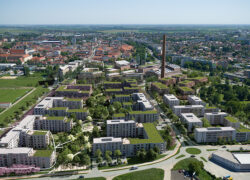
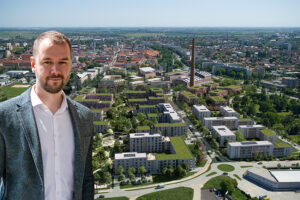
The Cukrovar project in Trnava stands as one of Slovakia’s most ambitious brownfield redevelopments — transforming a historic sugar factory into a contemporary urban district that unites housing, culture, commerce, and green public space. In an exclusive conversation with Karol Šebo, CEO of UNITED Real Estate, CIJ EUROPE explored the project’s vision, progress, and its delicate balance between heritage conservation and modern urban living.

“The site was originally a brownfield on the outskirts of Trnava 120 years ago — now it’s surrounded by the city,” said Šebo. “That makes it ideal for a mixed-use redevelopment. The challenge was how to integrate new residential buildings with the four national monuments on site, which are legally protected. We also decided to preserve three additional industrial structures that aren’t protected by law, bringing the total to seven.”

To achieve this, UNITED Real Estate formed two dedicated teams — one for the residential portion and another for the historical buildings, bringing together architects, historians, and conservation experts. “This dual approach allows us to start construction while developing a long-term plan for heritage renewal,” Šebo explained. “The residential part is helping fund the restoration, so the success of one leg supports the other.”

Even before reconstruction, the development is already celebrating its past. “We’re integrating history into public spaces,” said Šebo. “There are interpretive panels showing old photos of the sugar plant, and our new playground design takes direct inspiration from the original factory facades. Every piece of the playground is handmade and unique, featuring historic details like multilingual inscriptions — Slovak, German, and Hungarian — reflecting Trnava’s past. We even used the initials of the founder, Carl Stummer, as a motif throughout the project.”

The scale of Cukrovar underscores its significance for Trnava’s future. The 20-hectare site is divided into four main zones — A, B, C, and D — that will eventually deliver over 2,000 homes. “About 500 units are already built or under construction,” Šebo noted. “We’re finishing Phase 3 within months, with Phases 4 and 5 ongoing and Phase 6 about to start sales. Our goal is to launch one new phase each year to maintain consistent activity. In 2024, we sold 148 apartments, making Cukrovar the second best-selling project in Slovakia after Downtown Yards. We expect to match those numbers again this year.”

According to Šebo, buyers are evenly split between families and investors. “Roughly half are end-users and half are investors purchasing to rent out,” he said. “Our communications focus on the residential lifestyle, but that in turn attracts investors naturally. The playground, central park, and other amenities help build a sense of community, which strengthens long-term demand.”

The project’s seven historical buildings are also being carefully revitalised through a detailed program developed with local authorities and stakeholders. “About one-third will be for public uses — community and cultural spaces,” Šebo explained. “Another third will host semi-private functions like restaurants, hospitality, and flexible offices that can generate revenue. The final third may include residential lofts.” He added that UNITED Real Estate is working with a Czech consultancy to finalise a cost and operations model, ensuring that the restored buildings remain financially sustainable. “In early 2026, we’ll launch an architectural competition for the restoration design,” he said. “We’ve also reached an agreement with a specialty retail operator that will anchor one of the historic structures — a brand not yet present in Trnava, which should boost both the project’s visibility and its value.”

Among the most visible remnants of Cukrovar’s industrial past is its towering chimney — a 114-metre landmark that still dominates the skyline. “Absolutely, it will remain,” said Šebo. “The chimney is protected by law, it’s structurally sound, and it will stay as a visual centrepiece of the whole area. It symbolises the continuity between the industrial past and the new neighbourhood we’re creating.”

Sustainability is another defining element of the masterplan. “We’re creating a large central park, green roofs, and blue-green systems that retain water and reduce heat,” Šebo said. “All residential buildings meet A0 energy standards. The city’s unique heating system — using recycled thermal energy from the nearby nuclear plant — keeps energy costs low. Our landscaping also uses drought-resistant plants that require minimal irrigation, ensuring lower long-term maintenance for residents.”

When asked what the biggest lesson from the project has been so far, Šebo pointed to the lasting value of heritage. “Preserving history adds real value,” he said. “Destroying old industrial buildings might seem easier, but you lose character, community attachment, and long-term identity. At Cukrovar, history isn’t an obstacle — it’s an asset. The more we integrate it into daily life, the stronger and more meaningful the neighbourhood becomes.”

By blending historic preservation with modern living, sustainability, and a focus on community, Cukrovar is redefining what post-industrial regeneration can look like in Slovakia. UNITED Real Estate’s vision is turning a 19th-century sugar factory into a 21st-century community — one that honours Trnava’s past while driving its future growth.

© 2025 cij.world

Slovak Housing Market Holds Firm as Supply Shortages Sustain Price Growth

Slovakia’s housing market continues to defy broader economic pressures, with prices remaining elevated despite slower growth and weakened household purchasing power. Data from the National Bank of Slovakia show that while property price increases eased in the second quarter of 2025, the market remains under structural strain due to a shortage of new housing.

The average residential property price reached roughly €2,800 per square metre, maintaining a double-digit increase compared to the previous year. Apartments recorded stronger gains than family houses, particularly in the capital, where new projects continue to command record values. Analysts describe this phase as a cooling period rather than a correction, with prices stabilising at high levels rather than reversing.

The slowdown in price acceleration contrasts with a renewed surge in mortgage demand. Following a year of subdued lending, Slovak banks recorded a significant rebound in new housing loans through the summer months. Average interest rates dipped below 4 percent, encouraging buyers to re-enter the market. Financial advisors report a strong rebound in activity, especially among younger households seeking long-term fixed-rate loans.

Despite this, affordability continues to deteriorate. Wage growth has failed to keep pace with housing costs, and the stock of available apartments remains limited. According to official data, the number of completed dwellings in the first half of 2025 fell by nearly 20 percent compared with the same period last year, the lowest level in more than two decades in Bratislava.

Regional differences are becoming more pronounced. The Bratislava and Trnava regions continue to show moderate price increases, while parts of eastern Slovakia are seeing a mild decline after years of strong growth. Market observers suggest this shift signals a more mature phase of development, in which local economic conditions and infrastructure increasingly shape demand.

The overall outlook for 2026 points to continued stability rather than rapid expansion. While growth in housing prices is expected to remain in the single-digit range, shortages in supply and persistently strong urban demand mean that a significant drop in values appears unlikely. In essence, Slovakia’s housing market is moving into a slower—but still upward—cycle, sustained by limited new construction and the enduring appeal of homeownership.

CapitaLand Investment Raises Over US$650 Million for Second Asia Lodging Fund

CapitaLand Investment Limited (CLI) has closed its value-add lodging private fund, CapitaLand Ascott Residence Asia Fund II (CLARA II), after securing more than US$650 million in equity commitments and co-investments, exceeding its initial target of US$600 million. The new capital will contribute roughly US$1.6 billion to CLI’s total funds under management.

The fund attracted participation from both new and returning global institutional investors, including pension funds and financial institutions across Asia, Europe, and North America. CLI retains a 20 percent sponsor stake, maintaining alignment with investors.

CLARA II focuses on value-add opportunities in the living and lodging sector within major Asia-Pacific cities. Its strategy centres on redeveloping or repositioning underutilised assets to improve operational and financial performance. The fund collaborates closely with CLI’s lodging arm, The Ascott Limited, which manages and brands many of its assets.

Approximately half of the fund’s capital has already been deployed across three properties: lyf Shibuya Tokyo and Citadines Shinjuku Tower Tokyo in Japan, and lyf Bugis Singapore. The Tokyo properties were acquired in 2024 and repositioned under the lyf and Citadines brands, with refurbishments aimed at improving energy efficiency and flexibility for short- and long-stay guests.

According to Andrew Lim, Group Chief Operating Officer at CLI, the fund’s closure demonstrates investor confidence in the firm’s investment and asset management capabilities. “Investor interest in the living and lodging sector continues to grow, driven by urban mobility, hybrid travel, and flexible housing trends,” he said.

Mak Hoe Kit, Managing Director of Lodging Private Equity Funds at CLI, noted that the strong response from investors reflects trust in CLI’s long-term strategy. “Our experience in repositioning and managing lodging assets across their full life cycle has been key to creating value,” he said, citing prior successes such as lyf Ginza Tokyo and lyf Funan Singapore, both of which achieved returns above initial expectations.

The launch of CLARA II builds on the performance of CLI’s first lodging fund and marks a continuation of its focus on developing and managing targeted investment vehicles within Asia’s urban accommodation sector.

STRABAG Real Estate Launches Sustainable Housing Project “LISA” in Bad Mergentheim

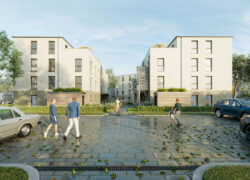
STRABAG Real Estate (SRE) is developing a new residential project named LISA – Living in Beautiful Shire in Bad Mergentheim, Baden-Württemberg. The project will deliver three residential buildings comprising 39 subsidised rental apartments, designed to meet the latest sustainability and social housing standards.

Developed on a 4,100 m² site acquired from the city, the LISA project is being realised in cooperation with MOLENO® WOHNEN and will meet the KfW 40 efficiency standard as well as the Sustainable Building Quality Seal (QNG). This combination ensures low energy consumption, reduced CO₂ emissions, and access to favourable depreciation and financing options.

Construction will employ the modular and serial MOLENO® LIVING wood-hybrid system from ZÜBLIN, which allows faster completion, lower embodied carbon, and efficient cost control. The method supports SRE’s aim to deliver affordable, high-quality housing while maintaining strong environmental performance throughout the building lifecycle.

“Thanks to its robust funding framework and long-term usage concept, the LISA project represents a model for sustainable and socially responsible housing,” said Axel Möhrle, Head of STRABAG Real Estate Stuttgart. “It embodies our strategy to develop neighbourhoods that balance ecological, social, and economic values, aligning closely with modern ESG investment principles.”

Bad Mergentheim’s Mayor Udo Glatthaar welcomed the project as a major contribution to local housing needs. “Social housing remains a key challenge for municipalities. Partnering with an experienced developer like STRABAG Real Estate allows us to make tangible progress in this vital area,” he said.

Construction will be led by ZÜBLIN AG, a STRABAG Group company, acting as general contractor. The development reinforces SRE’s growing focus on residential projects across Württemberg, which currently includes schemes in Leonberg (an IBA’27 project), Bad Friedrichshall, and the former Karstadt site in Esslingen am Neckar. Across these locations, the company expects to deliver around 400 apartments in the coming years, with further acquisitions planned to expand this pipeline.

WeMat Global Expands Its Regional Footprint with New Showrooms and Growth Ambitions

WeMat Global, the Romanian design-and-build company formerly known as Decor Floor, is entering a new stage of growth across Central and Eastern Europe. Following the opening of its showrooms in Budapest and Sofia, the company is positioning itself as a regional integrator for premium interior design and construction solutions, strengthening its network in markets where many of its long-standing clients already operate.

“So actually, somehow, this expansion for us, it comes very naturally, as it’s a market that we are already familiar with, and we used to work in for the past 20 years,” said Octavian Moroianu, Founder and CEO of WeMat Global, in an interview with CIJ EUROPE. “The customers, more or less, are regional customers. So the customers for whom we are working in Romania are the same customers that are also present in Hungary, or they are present in Sofia as well.”

Headquartered in Bucharest, WeMat Global evolved from a specialist flooring supplier into a full-service provider covering design, project management, and execution. The company works with Romanian producers of custom joinery and furniture, exporting their products for fit-out projects in Hungary and Bulgaria. Around 70 percent of some suppliers’ output is dedicated to WeMat projects, according to Moroianu.

In financial terms, the company has experienced strong momentum in recent years. “In 2024, we had a total group turnover of about EUR 25 million, out of which EUR 20 million was generated in Romania and EUR 5 million in other countries,” Moroianu explained. “Our expectations for 2027 are to reach between EUR 50 and 60 million in total revenue, with EUR 35–40 million coming from Romania and the remainder from neighbouring markets.”

Moroianu sees Budapest as the next major growth hub for the group, but also believes Bulgaria holds considerable long-term potential. “I strongly believe that Budapest will be our next booming hub let’s say” he said, adding that Sofia’s market conditions resemble Romania’s a decade ago. “Our aim is to have a balance or a steady business in Romania between 35 and 40 million euro yearly.”

The company’s operational model is built on integration and efficiency. WeMat has developed its own in-house digital system, managing nearly all workflows electronically. “Since 10 years already, we are using everything that you see in WeMat. The usage of paper is very small,” Moroianu said. “For us, let’s say over 90% of the processes are online.”

WeMat has also begun applying artificial intelligence to speed up design and project coordination. “Yes, we are using AI,” he confirmed. “The AI, it’s like a partner.”

Sustainability plays a key role in the company’s expansion strategy. All products supplied to its regional markets comply with European environmental standards and support BREEAM and LEED certifications. “All the products that we are importing to Hungary, Romania or Bulgaria are qualified for improving standards Bream or lead standards to the projects also those are complementary and compliant with ESG norms,” Moroianu noted. The firm is also working on new environmental certifications, including the EcoVadis system, which evaluates recycling practices and waste management on-site. “We are right now working on another one which is called the EcoVadis,” he said.

Looking ahead, Moroianu sees WeMat’s regional presence as a key competitive advantage. Few companies in this part of Europe have an established footprint across all three capitals. “Our approach is to provide a complete experience to the client, rather than a service” he said, describing a model that combines premium materials, technical expertise, and delivery certainty.

With its mix of physical showrooms, digital infrastructure, and growing cross-border portfolio, WeMat Global is positioning itself as one of the region’s most agile and integrated players in interior design and fit-out delivery. For Moroianu, the company’s growth is rooted in consistency: a belief that experience, relationships, and quality execution remain the foundation for expansion in a changing market.

© 2025 cij.world

German Logistics Property Market Gains Momentum in Q3 2025

The German logistics real estate sector regained strength in the third quarter of 2025, with both investment and leasing activity reaching their highest levels of the year, according to the latest LIP up to Date – Logistics Real Estate Germany market report published by LIP Invest.

The company’s quarterly analysis highlights renewed investor confidence, stable yields, and continued demand from e-commerce and pharmaceutical tenants. It also suggests that ongoing global disruptions — from trade tensions to cybersecurity risks — could accelerate the reshoring of production and a greater focus on “Made in Germany” supply chains.

Security concerns reshape supply chains

The report notes that recent revelations about foreign software and hardware vulnerabilities, such as remote access capabilities in imported vehicles or transport systems, have heightened sensitivity around supply-chain security. “International trade is still expanding, but concerns about technological dependence may increase the appeal of domestic manufacturing,” said Natalie Weber, Authorized Signatory and Head of Fund Management at LIP Invest.

Investment market strengthens

Germany’s logistics investment market posted a quarterly transaction volume of €1.5 billion, bringing the total for the first nine months of the year to €4.1 billion. Although the market continues to be driven largely by smaller, single-asset transactions, larger portfolios and corporate sales are beginning to re-emerge.

Investor appetite remains particularly strong for transshipment hubs and cold-storage properties, supported by growth in e-commerce fulfilment and pharmaceutical distribution. Among notable Q3 transactions was the sale of an 11,500 sq m cold-chain facility in Delmenhorst.

After months of volatility, interest rates have largely stabilised, with long-term financing costs steadying around mid-year levels. As a result, prime yields for new logistics buildings held at approximately 4.9 % to 5.1 %, indicating a stabilised pricing environment.

Leasing activity at annual high

Tenant demand accelerated in Q3, with 1.6 million sq m of logistics space taken up across Germany, lifting the year-to-date total to 4.2 million sq m. Many occupiers are opting for shorter lease terms and flexible extension options, allowing them to respond quickly to market changes.

E-commerce companies remained a major source of activity: Blitz Distribution leased 38,000 sq m in Werne and 35,000 sq m in Bremen during the quarter.

Construction output, however, remained restrained. Only 800,000 sq m of new space was completed in Q3, and total completions for the year so far reached 2.3 million sq m. Few speculative projects are being launched, and large developments exceeding 50,000 sq m are rare. One example of new construction was a 24,000 sq m logistics facility by Complemus Real Estate in Euskirchen, North Rhine-Westphalia, where MM Flowers Europe signed as the first tenant.

Pharmaceuticals drive specialist demand

The report identifies the pharmaceutical sector as a key growth engine for logistics. Following the 2023 introduction of stricter healthcare-supply regulations, demand for temperature-controlled storage and transport has risen sharply.

Medicines such as vaccines and insulin often require storage between +2 °C and +8 °C, or even as low as −70 °C. Facilities meeting these technical and regulatory standards consume significant energy but typically secure long-term rental commitments due to high fit-out and operational costs.

Outlook

LIP Invest expects both investor and occupier confidence to hold steady through the final quarter of the year. The company anticipates a gradual normalisation of transaction activity, supported by stable financing conditions and continued demand from resilient sectors such as e-commerce, pharmaceuticals, and food distribution.

Despite persistent geopolitical uncertainty, the report concludes that the German logistics real estate market remains one of Europe’s most robust, underpinned by its strategic location, strong infrastructure, and increasing emphasis on security, sustainability, and domestic production.

Source: LIP Invest

Carrefour Reshapes Its Global Footprint Amid Market Exits and Strategic Refocusing

Carrefour, one of Europe’s largest retail groups, is entering a new phase of global restructuring that has seen it scale back or withdraw from several international markets. The company has confirmed or is reportedly considering exits from Italy, Poland, Romania, and parts of the Middle East as it repositions itself around core markets such as France, Spain, and Brazil.

In Italy, Carrefour formally entered exclusive negotiations in July 2025 to sell its entire business to the NewPrinces Group in a deal valued at around €1 billion. The decision underscores Carrefour’s determination to simplify its structure and withdraw from markets where profitability has been persistently low. In parallel, reports indicate that the company is reviewing its operations in Poland and Romania, two markets where it has struggled to compete with rapidly expanding discount and proximity chains. While Carrefour has not confirmed any divestment, financial institutions including J.P. Morgan and BNP Paribas are reported to be advising on potential transactions.

Beyond Europe, Carrefour’s long-time franchise partner Majid Al Futtaim has closed or rebranded stores in Jordan, Kuwait, Bahrain and Oman under the HyperMax name. This development effectively marks the disappearance of the Carrefour brand from several Gulf markets, although the company remains active elsewhere through its franchise operations.

Industry analysts point to a common pattern across these moves. Carrefour tends to divest or review its business in markets where it lacks sufficient scale, faces structural challenges, or operates store formats that no longer align with local demand. The hypermarket model that once powered Carrefour’s expansion is losing traction across Europe, where consumer behaviour increasingly favours smaller stores, convenience shopping and online delivery. Analysts view Carrefour’s current restructuring as a transition toward a leaner, more focused business centred on core markets, proximity retail and e-commerce rather than broad global coverage.

According to the Financial Times, the company has been seeking ways to boost its market valuation amid stagnating share performance and tightening competition, with selective disposals forming part of this strategy. Gulf News has observed that while Carrefour continues to thrive in regions where the large-format retail model remains relevant, its European operations face pressure from rising costs and changing shopping habits. A commentary from DRC Discount Retail Consulting highlights that in Poland, Carrefour’s management has weighed both divestment and restructuring options due to weak margins and strong local competition. Similarly, a brokerage report from Whitelight Capital points to growing tensions within Carrefour’s franchise model in France as a source of operational risk and strategic reconsideration.

Several recurring factors underpin Carrefour’s recent and potential exits. The company continues to face narrow margins and intense price competition in mature grocery markets. Its management has repeatedly stressed the need to focus on geographies where scale advantages and stronger profitability can be achieved. At the same time, the shift away from traditional hypermarkets reflects an adaptation to evolving consumer preferences, where proximity stores, discount operators and digital channels increasingly dominate. Local market dynamics in Poland and Romania, where competition is fierce and operational costs high, have reinforced the case for a potential portfolio reshuffle. Meanwhile, structural issues in Carrefour’s franchise network and rising energy and labour costs across Europe have added further pressure to streamline operations.

Experts view these moves as part of a broader strategic repositioning rather than isolated market retreats. Carrefour appears to be concentrating its resources on areas where it can maintain a competitive edge while reducing exposure to low-margin markets and complex operational structures. By redirecting capital into stronger regions, the group aims to improve profitability, protect margins and support ongoing digital and logistics transformation.

Carrefour’s confirmed withdrawals include the closure of operations in Oman in January 2025 and in Jordan in November 2024, along with the rebranding of stores in Bahrain and Kuwait by its Gulf partner Majid Al Futtaim. In Europe, the sale of its Italian business marks the most significant divestment to date, while its presence in Poland and Romania remains under review.

In its most recent investor communications, Carrefour reaffirmed its focus on improving efficiency, expanding its loyalty programme Le Club Carrefour, strengthening private-label ranges and tightening promotional strategies. The company has not publicly confirmed further market exits, but the sale of Italy and continuing portfolio reviews indicate a clear direction: concentrating on markets where it can sustain long-term competitiveness and moving away from the traditional hypermarket model that once defined its global identity.

Source: CIJ EUROPE Analysis Team

Penta Real Estate Brings in Alto Real Estate as Partner for Chalupkova Project in Bratislava

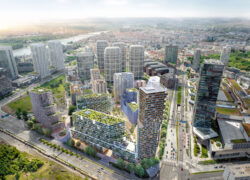
Penta Real Estate has announced a new partnership with Alto Real Estate for its flagship Chalupkova development in Bratislava’s downtown. Alto joins as a minority shareholder, taking a 49 percent stake in the project, while Penta will continue to lead development and construction.

The cooperation marks the next stage in the transformation of the Mlynské Nivy brownfield zone into a modern urban district combining offices, housing, and public spaces. “The entry of a financial partner who understands the local market and shares our long-term vision adds another dimension to this project,” said Michal Rehák, Executive Director of Penta Real Estate Slovakia.

Located near the Sky Park complex, the Chalupkova Offices building represents the project’s first phase. Designed by Jakub Cigler Architekti, it will deliver over 33,000 square metres of offices and retail space once fully developed, including a community rooftop, bike infrastructure, and direct access to a planned central park within the block.

For Alto Real Estate, the partnership aligns with its strategy of strengthening its position in Bratislava’s city centre. “Chalupkova offers exceptional potential in an area we know well. It stands at the heart of a growing urban district that connects seamlessly with our nearby Sky Park Square project,” said Ján Bryndza, Business Director at Alto Real Estate.

Beyond the office component, Penta and Alto plan to extend development across the wider site, gradually adding residential buildings, public amenities, and landscaped green areas. The aim is to create a new mixed-use quarter that integrates workplaces, homes, and services into a cohesive urban environment.

Penta Real Estate expects to move ahead with the next stages of permitting and preparatory works once all formal approvals are complete.

Czech Mortgage Rates Hold Steady at 4.91 Percent in November

Mortgage rates in the Czech Republic remained unchanged at the start of November, continuing to hover just below the five-percent mark. According to the latest Swiss Life Hypoindex, the average offered rate for home loans stayed at 4.91 percent, the lowest level recorded since the spring of 2022.

Market observers note that the current stability reflects both cautious pricing by banks and uncertainty surrounding the broader economic outlook. Three-year fixed-rate mortgages remain the most attractive option, averaging slightly above 4.5 percent, while five-year fixes stand just under 4.8 percent. Longer ten-year loans and one-year fixes continue to be priced closer to 5.4 percent.

Despite a modest recovery in new lending compared with last year, borrowing volumes remain far below the highs seen during the pandemic era, when cheap credit fuelled record demand. High property prices and households’ reluctance to take on long-term debt are still weighing on overall activity.

Analysts suggest that financial institutions are unlikely to make major rate adjustments in the near term. With both domestic and international markets facing persistent uncertainty, lenders appear to prefer maintaining stable pricing. At the same time, refinancing activity is rising as many borrowers who secured loans at below 2 percent between 2020 and 2021 now face renewals at more than double their original rate. For a standard 30-year mortgage of CZK 3 million, the shift translates into a monthly payment increase from around CZK 10,900 to CZK 15,900.

The current figures underscore the gradual normalisation of the Czech housing finance market, where interest rates have eased from last year’s peaks but remain challenging for many households seeking to buy or refinance a home.

Source: CTK

front page info
LATEST NEWS