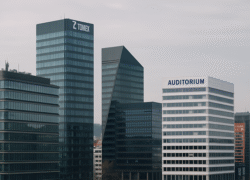
Banks head into 2026 forced to make hard strategic choices as digital money, AI and fraud risks accelerate

Banks are approaching 2026 with healthy capital positions but far less certainty about the year ahead. A new industry outlook from Deloitte signals that the next 12 months will be less about experimentation and more about execution, as lenders face pressure from shifting monetary conditions, rapid advances in financial technology and rising compliance expectations.

According to the analysis, economic growth in the United States — the world’s largest banking market — is expected to cool in 2026 after a stronger 2025. Bank earnings, the report suggests, will depend on lenders’ ability to defend margins while expanding other income streams, particularly in payments and digital services. Slowing credit demand and softer consumer sentiment could make revenue growth harder to capture, even as banks remain well-capitalised.

The most disruptive force highlighted in the report is the arrival of regulated digital cash, including payment tokens issued by private companies. With new legislation in the US now offering a framework for so-called tokenised money, Deloitte says deposit competition could intensify. If digital cash gains traction with consumers and merchants, banks may lose a source of cheap funding unless they develop offerings of their own or form partnerships with fintechs already active in the space.

Artificial intelligence is the second pressure point — not because the technology is experimental, but because banks have not yet reorganised themselves to use it at scale. Many institutions have completed pilot projects, but Deloitte argues that progress now depends on whether banks can build cleaner, better-integrated data systems. Without that, models may produce inconsistent results or sit unused because they cannot connect into day-to-day operations.

Financial crime has become more complex as well, and the report warns that criminals are already using sophisticated automation tools to move money quickly, exploit weaknesses in fragmented systems and disguise identities. Banks are being pushed by regulators to respond with end-to-end monitoring, better data consolidation and clearer accountability for compliance decisions. The cost of not modernising these defences — including regulatory penalties — is becoming harder to ignore.

Deloitte’s message is that 2026 will reward banks that decide on a direction and commit resources to it. Whether it is investing in digital cash capabilities, restructuring data around a single source of truth, or redesigning compliance systems, half measures will not be enough.

In essence, the outlook sees the sector at a turning point. The structural forces shaping banking — digital payments, AI and heightened oversight — have been building for years. In 2026, they converge. Banks that connect their strategy to clear, measurable delivery may benefit from the change. Those that delay may find that the market moves without them.

Source: Deloitte

Designed for Tomorrow: How Romania’s Leading Developments Are Raising the Residential Benchmark

Romania’s premium residential market has matured into a structured, investment-grade segment, shaped by trusted developers, strong locations, and a clear shift toward full community ecosystems rather than stand-alone buildings. The projects nominated for Premium Residential Development of the Year at the CIJ Awards Romania 2025 illustrate this evolution, with lifestyle, convenience, and long-term value now prioritised over speculative development.

The nominations share a common formula. The developments are anchored in desirable districts or in the northern metropolitan arc, led by developers with a proven history of delivery. Amenities such as landscaped parks, wellness facilities, retail elements, co-working spaces and international-grade design are no longer bonuses but baseline expectations. The new premium buyer is informed, mobile, and interested in what the property will feel like to live in on a daily basis—and how well it will retain value later.

AFI Home North, located in Bucharest’s main business district, shows how the rental-driven, institutional residential model has finally established itself in Romania. The project is placed at the centre of one of Bucharest’s strongest employment and mobility nodes, surrounded by retail and Metro transport. AFI’s regional experience is immediately evident in the level of services provided, from co-working spaces to onsite management and furnished turn-key units. The result is not just a building, but a professionally operated residential product designed for long-term occupancy rather than speculative resale. In an area where demand from corporate tenants consistently outweighs supply, rental stability is almost built in.

Amber Forest in northern Bucharest represents a different lifestyle model altogether. Instead of density, it focuses on land, greenery and neighbourhood cohesion. Schools, retail and sport facilities are being introduced not at the end of the project, but concurrently with residential delivery. The location, close to natural reserves and low-rise surroundings, presents both emotional appeal and investment logic. A large number of homes were sold early in the development timeline, which shows buyer confidence and shifts risk away from the developer. Because developable land in this part of Bucharest is scarce, the neighbourhood has strong prospects for long-term value retention.

Nusco City Phase II continues to expand an already functioning urban district in Bucharest’s north. Unlike standalone towers, this development benefits from being part of a multi-phase plan with integrated services, commercial spaces and community infrastructure. Buyers are not only purchasing an apartment, they are entering a district. Nusco’s long presence in the area gives the project credibility and the location is part of a well-established corridor with rapid price appreciation.

Within the same developer group, Nusco Green Homes takes a contrasting approach. It offers low-density living through a gated villa compound, tailored for residents who prefer privacy and individual land plots over vertical density. Villa compounds historically maintain value well because of limited supply and controlled neighbourhood character, and the developer’s track record removes the uncertainty often associated with new housing zones.

THE IVY from SPEEDWELL is positioned at the boundary where city life meets nature. The forest-side location provides a lifestyle advantage that is difficult to replicate. Buildings are designed with generous outdoor spaces, and the architecture emphasises wellbeing and comfort. SPEEDWELL’s strong delivery record across both mixed-use and residential developments reinforces confidence that the project will be completed at the same quality level as marketed. Premium in this case is defined by serenity and access to green space, not just finishing materials.

The Level Apartments III by REDPORT offers an entirely different proposition: exclusivity through scale. With fewer units and carefully curated interiors, it appeals to buyers seeking something more intimate than a large masterplan. High-quality lobby finishes and generous terraces emulate the feel of boutique hospitality. For resale, scarcity plays a major role—rare products in protected areas tend to retain value even during market corrections.

The Meadows, also by SPEEDWELL, is unique for its waterfront site. The development uses the existing lake and landscape as its central identity element. Low-rise architecture and the absence of heavy traffic prioritise walkability and calmness. Waterfront land near Bucharest remains extremely limited, which supports long-term price resilience. The natural landscape becomes an economic advantage, not just an aesthetic feature.

Each of these projects illustrates the same conclusion from different angles: the market is leaving behind the era of square-metre selling and embracing a new product class defined by experience, operational quality and community integration. Buyers are choosing neighbourhoods rather than just buildings, and investors are looking for developments that will remain desirable in ten years, not merely profitable at handover.

Premium residential real estate in Romania is no longer interpreted as luxury décor. It is now defined by the strength of the location, the reputation and financial discipline of the developer, and the depth of lifestyle features that sustain value over time. The strongest projects accelerate both city development and asset appreciation, proving that premium is not about excess—it is about intent, quality, and longevity.

Source: CIJ EUROPE Analysis Team © 2025 cij.world

Hotels With Purpose: How Romania’s New Developments Are Redefining Feasibility and Return on Investment

Romania’s hotel investment market has shifted into a phase defined by brand consolidation, mixed-use integration and the repositioning of landmark sites. This year’s CIJ Awards Romania 2025 nominees in the category Best Hotel Build-Up Project of the Year showcase developments that are not merely adding rooms to the country’s capacity but reshaping the hospitality landscape through international operators, new service models and destination-driven concepts. Across all projects, three elements determine performance and risk exposure: market demand and feasibility, financial strength and cost discipline, and the ability to deliver and operate at an international standard after opening.

The entry of Hyatt into Bucharest through Hyatt Place & Hyatt House, part of the wider Nusco City regeneration, is a strategic response to demand created by new corporate tenants and high office density in the northern business district. The mixed-use context directly supports feasibility: retail, residential and offices feed demand throughout the week, reducing reliance on seasonal peaks. By securing two complementary brands under one roof—one aimed at short-stay corporate travellers, the other at extended-stay guests—the project broadens its revenue profile and stabilises occupancy throughout the year. The investment commitment exceeds tens of millions of euro, signalling strong balance-sheet capacity from the developer, while the location within a growing urban district supports long-term asset resilience. From an operational risk perspective, the main challenge will be synchronising hospitality operations with a multi-phase district still under development, though affiliation with an experienced global operator mitigates the learning curve.

On the coast, Radisson Blu Hotel & Residences Mamaia tackles a different market challenge: seasonality. The northern edge of Mamaia has traditionally suffered from fragmented development, short tourist cycles and limited all-year operations. By introducing a premium, internationally recognised brand with a wide suite of amenities—spa, wellness, upscale dining and event spaces—the developer aims to shift the local business model from a ninety-day peak season to year-round monetisation. Financial feasibility depends on achieving premium rates and attracting off-season corporate and leisure events. The capital allocation is significant, and the return model will rely heavily on the property becoming the beach destination of choice, not just another hotel. The developer’s strategy, emphasising quality and service rather than speculative volume, suggests that the business case is driven less by unit sales and more by recurring hotel performance.

Further south, Rivaz Hotel Olimp, developed by the Alpin Group, focuses on lifestyle hospitality and premium leisure experiences. Unlike the Radisson Blu, Rivaz positions itself as a signature property within the developer’s expanding portfolio, and the group is financing the concept largely through internal resources and reinvested earnings from existing operations. This lowers exposure to external financing volatility and demonstrates confidence in the long-term performance of the coast. Amenities include a rooftop infinity pool, spa and private beach access, creating a resort model that commands high room rates and diversifies revenue across food, beverage and wellness. The operational plan benefits from the developer’s existing experience running one of Romania’s largest mountain resorts. The main risk lies in market over-reliance on premium domestic tourism; however, if the developer succeeds in positioning Olimp as a leisure destination rather than a summer-only alternative, Rivaz could help reset the narrative of the Romanian coastline.

Back in the capital, The Julius Bucharest is the most complex project from a risk and execution perspective. It involves the transformation of a historic building—formerly the Ambasador Hotel—into a contemporary hospitality destination. Heritage redevelopment heightens the risks: unforeseen structural requirements, heritage approvals and cost overruns are common in projects that involve both preservation and new systems installation. However, the reward is structurally different from new construction. A repositioned landmark brings instant brand equity, and hotels placed in cultural urban arteries typically outperform in occupancy and rate, particularly when supported by strong retail or café activation at the ground floor. The developer’s partner, a specialist project management company, reduces execution risk by integrating design, permitting and construction oversight within one coordinated process, which is crucial given the technical and financial sensitivities of restoring a protected façade. The feasibility here relies not just on room revenue, but also on capturing local spending through cafés, restaurants and event spaces—a hospitality model built equally on community and tourism.

Taken together, these nominations show a hotel sector investing not just in capacity, but in identity. Each project selects a distinct strategy. Nusco City leverages corporate density and mixed-use synergies. Radisson Blu Mamaia seeks to lead a regional transformation at the seaside. Rivaz Olimp introduces the lifestyle resort model to an area in need of reinvention. The Julius Bucharest uses heritage as an asset to attract both guests and locals.

Financial viability across the category is strengthened by the presence of experienced developers with access to financing and, in three cases, international hotel brands known for disciplined operating models and centralised distribution. Operational risks vary: mixed-use integration requires careful phasing, seaside resorts depend on market repositioning, and heritage redevelopment demands precise execution. But all projects share a clear and confident thesis. Demand exists, capital is committed and the operational frameworks are serious enough to sustain performance past opening night.

These developments are not simply new hotels. They signal a market that is finally valuing hospitality as an urban infrastructure asset—an anchor for neighbourhood identity, tourism growth and long-term return on investment.

Source: CIJ EUROPE Analysis Team © 2025 cij.world

Leasehold Under Scrutiny: Rising Charges, Management Disputes and a Push Toward Reform

England’s multi-billion-euro leasehold sector is undergoing a moment of reckoning. Nearly one in five homes in England is owned under a leasehold structure, with flats representing the majority of these dwellings. In major urban markets, particularly London, Manchester and Birmingham, leasehold remains the dominant model for multi-unit residential projects. Yet what was once considered a routine ownership structure is increasingly criticised by homeowners, legislators and property professionals.

The core appeal of leasehold should be simple: professionally managed buildings that protect asset value over time. However, recent data and case studies indicate growing dissatisfaction among owners, particularly around accountability, charges and oversight. Multiple studies of residential estates show that annual service charges have risen significantly in recent years, with some developments showing cost increases exceeding 40% within a five-year period. Average annual charges for a flat have climbed into the low thousands — a material cost of ownership that can fluctuate year to year.

Transparency remains the critical fault line. Leaseholders frequently report receiving invoices for maintenance, reserve-fund contributions or capital improvements without clarity on tendering processes or the justification behind major works. Data from advisory bodies show that disagreements over charges and repairs represent the most common disputes raised by leaseholders seeking professional guidance.

This has led many residents to pursue greater control. Increasing numbers of leaseholder groups are attempting to take over the management of their blocks, moving responsibility from professional agents to resident-led companies. In theory, resident control can improve cost efficiency and prioritise necessary interventions. In practice, success varies. Managing a multi-unit building requires technical understanding, compliance with safety regulations, long-term budgeting and the ability to make collective financial decisions. Without governance and experience, neighbour relations can deteriorate into conflict over spending priorities and risk exposure.

Legislators have taken notice. Recent legal reforms aim to strengthen homeowner rights, reduce barriers to extending leases or acquiring freeholds, and improve transparency around building budgets and decision-making. While these changes are seen as progress, industry analysts and leaseholder groups argue that incremental reform may not address the structural weakness of the model. Increasingly, there is public and political momentum behind replacing leasehold altogether with a modern commonhold framework, which transfers control of shared areas to homeowners collectively — a structure common across much of continental Europe.

What is clear is that leasehold is no longer viewed as an administrative detail of homeownership. For many households, it has become a point of financial unpredictability and legal complexity. For developers, investors and asset managers, the scrutiny on management practices and charging structures creates reputational risk.

As reforms progress, the sector faces a pivotal choice: incremental improvement or systemic replacement. The coming years will determine whether leasehold evolves into a more transparent and homeowner-centric model, or whether commonhold becomes the UK’s long-delayed replacement for shared residential ownership.

Source: CIJ EUROPE Analysis Team

Poland launches civilian readiness training as Europe reassesses national defence

Poland has opened a nationwide voluntary readiness programme that invites civilians to take part in structured crisis-response and basic defence training. The initiative, named wGotowości (“mReadiness”), enables adults to register for one-day weekend sessions held at military units around the country. Participants learn skills such as first aid, crisis survival techniques, digital security and basic emergency procedures. The format is designed to be accessible and non-militarised — attendees do not take an oath or enter any reserve list, and participation does not convert into military service.

The programme was presented by Chief of the General Staff Gen. Wiesław Kukuła together with Defence Minister Władysław Kosiniak-Kamysz and Deputy Defence Minister Cezary Tomczyk. Defence leaders described the training as a way to improve individual resilience and to strengthen the country’s reserve readiness. The wider aim is deterrence: to demonstrate that Poland can mobilise large numbers of people with basic preparedness skills without forcing anyone into service. Companies are also being encouraged to send employees to train as teams, reinforcing organisational resilience in the event of a crisis.

The launch comes at a moment of heightened security concerns. Since Russia’s full-scale invasion of Ukraine, Poland has repeatedly faced incidents along its border and within its airspace, including the entry of Russian drones in September 2025 that triggered a NATO response. These events revived public debate over whether Polish society would be prepared to defend itself if conflict escalated.

Opinion surveys suggest that the country is divided. Research by IBRiS for Radio ZET shows that just under half of respondents say they would volunteer in the event of war, while a nearly equal proportion say they would not. Trust in the army is equally mixed. Pollster data indicates that only a minority believe the armed forces would successfully defend the country. Younger adults are the least willing to enlist or volunteer, with almost seven in ten respondents aged 18 to 29 expressing reluctance to take part in defence. Psychologist Professor Adam Tarnowski from Nicolaus Copernicus University views the results with cautious optimism, arguing that even a quarter of the population ready to assist represents significant potential when supported by professional forces.

Poland’s model stands out within NATO. Other countries have voluntary defence or resilience programmes, but none in the same structure. Finland offers large-scale civilian courses focused on survival and crisis planning, Norway and Sweden run public-facing civil-preparedness training, and Estonia’s Defence League integrates volunteers more closely with the armed forces. Germany is preparing a new voluntary service track aimed at recruitment into the army. Poland’s approach differs by letting any adult attend training near their home without entering a recruitment pipeline. Defence officials describe it as the broadest civilian access to crisis-readiness training currently operating in the alliance.

The Polish government intends to expand capacity significantly. Prime Minister Donald Tusk previously said that by 2027 the programme could train as many as one hundred thousand volunteers annually. Kosiniak-Kamysz calls the initiative a step toward building societal resilience rather than simply enlarging the army.

“No other country engages citizens so broadly and so directly,” he said during the programme’s announcement.

As European defence policy evolves and security concerns intensify, Poland is positioning civilian preparedness as a strategic asset. The initiative reflects a shift from relying solely on traditional military structures toward treating the wider population — professionals, families, companies, communities — as an essential component of national security.

Source: IBRiS and CIJ EUROPE Analysis Team

Tech Giants Hit by Sharp Investor Pullback as AI Euphoria Cools

Global equity markets ended the week on edge as the world’s most influential technology and artificial-intelligence companies were struck by a wave of selling that wiped out almost $800 billion in market value within days. It marks the sharpest weekly drop for major tech shares since April and signals a clear shift in investor sentiment after nearly a year of relentless enthusiasm for AI.

The losses centred on the same companies that had driven markets to record highs since early 2024: Nvidia, Meta Platforms, Microsoft, Alphabet, Amazon, Palantir Technologies and Oracle. Nvidia — the company supplying the chips powering nearly every major AI model — saw the largest valuation decrease. Meta, Microsoft and Amazon were also heavily affected as investors reassessed the scale of investment required to maintain their leadership in the AI race. Palantir, which had surged on expectations of new state and defence contracts linked to AI adoption, experienced one of the most dramatic percentage declines.

MARKET ANALYSIS — WHY THIS HAPPENED

The correction did not stem from weak earnings or a sudden collapse in demand for AI. Instead, it shows a market transitioning from excitement to accountability.

Valuations had been running ahead of fundamentals. Many companies were priced at levels that assumed uninterrupted, exponential AI adoption. Nvidia in particular had been trading at earnings ratios far above historic norms, pushing investors to lock in profits.

At the same time, the cost of participating in the AI race has escalated dramatically. Companies are committing billions towards data centres, chip procurement, and cloud infrastructure. Meta’s spending plans for AI represent the largest capital investment cycle in its history, while Microsoft and Amazon are building new data-centre capacity at volumes that rival the energy use of small countries. The concern is no longer whether AI is transformative, but whether these investments will generate returns fast enough to justify the scale of spending.

Another factor is that revenue from AI, while visible, is not yet transformative. Tech companies are showcasing new AI assistants, enterprise automation tools and productivity upgrades — but monetisation depends on how quickly corporate customers roll out full adoption. Many businesses are still testing AI, rather than deploying it across their organisations, delaying revenue recognition.

The structure of the stock market amplified the downturn. Major US and global indices are dominated by large technology companies. When the megacaps decline at the same time, index-tracking funds and passive investment strategies accelerate selling, pushing prices even lower.

WHAT IT MEANS FOR THE AI SECTOR

Despite the violent market reaction, analysts are not calling this the end of the AI boom. In many sectors, demand continues to strengthen. Data centre construction pipelines are at historic highs and global demand for AI chips still exceeds supply. Corporations are expanding AI budgets across sectors including logistics, finance, manufacturing, cybersecurity and healthcare as automation benefits become tangible.

The difference now is that investors are demanding proof that the enormous investment in AI infrastructure will generate profitable revenue streams. The next earnings cycle will be pivotal. If companies can demonstrate accelerating customer adoption — particularly on cloud platforms operated by Microsoft, Amazon and Google — confidence could return rapidly.

THE TAKEAWAY

The AI correction is not a collapse. It is a reset. The market is moving from hype to measurable outcomes.

AI remains one of the most transformational technological shifts of this century. The sell-off merely signals that investors are no longer willing to finance ambition without evidence that those ambitions can convert into stable, recurring revenue.

If companies deliver proof in the coming quarters, this moment may be remembered not as the end of the AI rally, but as the point where the sector finally matured.

Source: Meta, Microsoft, Alphabet, Amazon, Palantir, Oracle, FT, Bloomberg and CIJ.World Analysis Team

Bratislava office market: lack of tenant transparency risks slowing investor confidence

Bratislava’s office market entered 2025 with renewed momentum. Leasing activity has improved after a quieter 2023–2024 cycle, and large contracts — some of them among the biggest in years — were concluded in the first months of the year. Yet despite these positive fundamentals, the market continues to struggle with one issue that puts it at a disadvantage compared to other capital city markets across CEE: most of the major leases are reported without naming the tenants involved.

Market data from leading real estate advisors confirm that sizeable contracts were signed in early 2025, including a deal of around 17,000 sq m in the city centre and several transactions in the 5,000–8,000 sq m range. These deals helped lift total take-up and signalled that occupiers are willing to commit to space in Bratislava. However, many of these agreements are not publicly attributed to specific companies. Instead, announcements typically list the size of the transaction, the submarket, and whether it was a renewal or new lease — but leave out who actually signed.

This habit stands in contrast to leasing disclosures in Warsaw, Prague or Budapest, where the names of tenants in major deals are often released as part of the marketing of the building and the city. For institutional investors, such transparency matters. When tenant information is public, it is easier to benchmark comparable leases, understand the depth of demand by business sector, and assess how innovative or future-proof the local office market is.

In Bratislava, many of the largest deals are renegotiations rather than new entries, according to agency research. Renewals are a normal part of any market, but when they dominate the data — and when their tenants remain anonymous — the picture that reaches investors is incomplete. Without knowing who is committing to buildings, the market loses an opportunity to showcase success stories and attract new capital.

This lack of visibility also limits the ability of developers to market new projects. In core markets across the region, announcing a major anchor tenant often unlocks further leasing traction. In Slovakia, non-disclosure makes it harder to build momentum, even for high-quality or ESG-focused schemes.

The irony is that Bratislava has plenty to promote. Vacancy in prime locations remains competitive, developers are repositioning older buildings toward energy-efficient standards, and the city’s location between Vienna and Budapest gives it a strong regional advantage. But those strengths are overshadowed when the market does not celebrate — or even name — some of its most significant occupiers.

Greater transparency does not require revealing commercially sensitive terms. Simply releasing the identity of tenants signing the largest leases would bring Bratislava in line with its regional peers. It would enable brokers and landlords to demonstrate where real demand is coming from and give investors the clarity they expect when evaluating new markets.

Slovakia is at a turning point. Capital is increasingly selective, competition among CEE cities is rising, and ESG-driven redevelopment is forcing older buildings to justify reinvestment. Tenant transparency is a low-cost, high-impact lever to demonstrate market confidence.

Bratislava has real momentum. It now needs to show the world who is behind it.

Source: CIJ EUROPE Analysis Team

Stock exchange investigations: A decade of regulatory pushback against market concentration

Competition authorities across Europe, the UK and the United States have spent the past decade increasing oversight of stock exchange groups and clearing houses. The operators of the world’s major trading venues — including the London Stock Exchange Group (LSEG), Deutsche Börse, Nasdaq, Intercontinental Exchange (ICE) and Japan Exchange Group — have all faced antitrust or regulatory scrutiny. The pressure reflects growing concern that consolidation in trading, clearing and market-data services could limit competition and ultimately raise costs for issuers and investors.

The European Commission’s recent launch of a formal investigation into possible collusion between Deutsche Börse and Nasdaq in the Nordic derivatives market fits into a clear regulatory pattern. Authorities intervene when control over trading or clearing becomes too concentrated, particularly where market data, derivatives or post-trade services are involved.

One of the most significant confrontations occurred between 2016 and 2017, when the European Commission blocked the planned merger between LSEG and Deutsche Börse. Regulators concluded that the combined group would have dominated the clearing of fixed-income instruments in Europe, reducing competition and giving the merged entity unacceptable market power.

LSEG again came under scrutiny in 2019 when it announced its acquisition of Refinitiv. This time, the Commission focused on data and trading platforms. The deal was cleared, but only after LSEG agreed to sell the entire Borsa Italiana business, which was subsequently acquired by Euronext.

In the same period, Intercontinental Exchange in the UK faced intervention from the Competition and Markets Authority following its acquisition of Trayport, a platform central to energy-market trading. The authority determined that ICE could use control of the software to disadvantage rival trading venues and required a full divestment of Trayport, which was completed.

Regulators have also intervened when risk management and clearing infrastructure did not meet supervisory expectations. Nasdaq Clearing in Sweden received one of the largest fines ever imposed on a European clearing house after a trader default exposed weaknesses in its margining and risk processes. Although this was not an antitrust case, it marked a significant regulatory enforcement action directed at a major market operator.

Outside Europe, Japan’s Fair Trade Commission reviewed the Japan Exchange Group’s acquisition of the Tokyo Commodity Exchange in 2020. Approval was granted only after the group committed to maintaining open access for market participants.

In Germany, Deutsche Börse has faced repeated questions from competition authorities over access to market data and pricing models. While no infringement decisions have been published, monitoring continues, reflecting concerns that data fees and licensing terms could limit competition.

The latest development — the European Commission’s 2024–2025 investigation into potential coordination between Deutsche Börse and Nasdaq — is testing whether cooperation linked to a long-standing Nordic derivatives agreement may have crossed into collusive behaviour. The inquiry focuses on whether the exchanges aligned their conduct on listing, trading or clearing to reduce competitive pressure in derivatives markets. The investigation is ongoing and no conclusions have been drawn.

A clear pattern emerges from these actions: regulators see clearing and market data as strategic infrastructure for the Capital Markets Union, and they resist anything resembling single-venue dominance. Most investigations do not result in fines. Instead, they lead to blocked mergers, forced divestments or binding commitments designed to preserve choice and market access. Exchanges benefit from scale, but authorities remain firm that scale must not translate into exclusivity or reduced competition.

With the Deutsche Börse–Nasdaq case now underway, Europe signals once again that the functioning of its capital markets — and especially derivatives and clearing — will remain tightly regulated to safeguard competition.

Source: ESMA, JFTC, EC, gov.uk and CIJ.World Analysis Team

U.S. Allows Hungary Temporary Exemption on Russian Energy

The United States has granted Hungary a one-year exemption from sanctions linked to Russian oil and gas purchases, following Prime Minister Viktor Orbán’s meeting with U.S. President Donald Trump in Washington in early November. According to U.S. and Hungarian statements, the exemption applies mainly to pipeline deliveries via Druzhba and TurkStream — infrastructure that supplies a large share of Hungary’s crude oil and gas.

Orbán publicly framed the decision as an agreement that Washington will not penalise Hungary for continuing to import Russian energy. The U.S. side described the move more cautiously as a one-year exemption, not an unlimited waiver. Media reports indicate that as part of the negotiations Hungary committed to purchasing additional U.S. liquefied natural gas and exploring greater cooperation on nuclear fuel supply.

Energy security is a critical factor in Budapest’s position. Hungary remains heavily dependent on Russia for pipeline crude and gas. Orbán argued after the meeting that geography and infrastructure leave Hungary with few short-term alternatives, a claim echoed by Trump, who said that Hungary lacks access to seaports and faces logistical limits on switching suppliers quickly.

The exemption places Hungary at the centre of a wider debate about how far Western governments can enforce sanctions on Russian energy revenue without destabilising countries that have high dependence on pipeline imports. Several EU members in Central and Eastern Europe, including Slovakia, are still tied to Russian gas flows and have resisted plans for a fast phase-out of Russian energy. In Slovakia’s case, political leaders have warned that an abrupt removal of pipeline supplies would threaten energy stability, pushing Brussels to consider transitional arrangements.

Outside the EU, the scale of Russian energy purchases by large emerging economies adds further complexity. India has become a major buyer of Russian crude since 2022, with refiners increasing orders when discounted cargoes are available. Analysis of shipping and trade data shows that Russian barrels continue to flow to India in volumes significant enough to soften the impact of Western sanctions. Some refiners briefly paused orders this year to assess exposure to new U.S. measures, but overall imports have remained high.

China remains the largest single buyer of Russian fossil fuels, taking deliveries both by sea and through pipeline networks. According to independent trade monitoring groups, China’s continued purchases represent a substantial portion of Russia’s export revenue and are a principal reason why sanctions have not fully constrained Moscow’s energy earnings.

Turkey also plays a role by importing discounted Russian crude and refined products, further illustrating how regional energy demand continues to sustain Russian export flows despite Western efforts to curtail them.

For investors, particularly those active in Central European real estate or corporate sectors, the Hungarian exemption temporarily reduces the risk of a sudden price shock or supply disruption driven by sanctions enforcement. However, the arrangement is explicitly time-limited. It does not eliminate longer-term transition risk associated with reliance on Russian energy, nor the possibility that investors could face renewed uncertainty when the exemption expires.

Diplomatically, the carve-out highlights the tension between geopolitical sanctions objectives and immediate energy-security needs. It offers a precedent that other countries could cite when seeking similar concessions and underscores how energy infrastructure — rather than policy ambition — may ultimately determine the pace of Europe’s decoupling from Russian supply.

Source: Reuters, AP, Politico, The Guardian and CIJ EUROPE Analysis Team

Metropolis Bratislava: A Case Study in Technical Residential Architecture

Bratislava’s new downtown has gained a distinctive architectural statement. Metropolis, developed by Mint Investments, is no ordinary residential project — it introduces a level of design refinement, technical sophistication, and lifestyle thinking rarely seen in Slovakia’s housing market. With two slender towers rising above the district, the project has become a visual anchor in an area that is rapidly transforming into the capital’s most contemporary urban neighbourhood.

Rather than creating a single mass, the architect divided the project into two vertical towers that appear to lean into one another. The resulting form gives the towers a strong M-shaped silhouette, making them instantly recognisable from key city vantage points. The height and spacing of the towers ensure natural daylight and open views, avoiding the sense of enclosure often associated with dense city schemes. From street level, the architecture appears both sculptural and accessible — a new building that allows the city around it to breathe.

Metropolis distinguishes itself through engineering. The apartments use ceiling-based cooling and heating, ensuring quiet and consistent comfort without visible equipment cluttering living spaces. Each unit is fitted with fresh-air recovery ventilation, maintaining air quality while reducing energy losses. Exterior shading is built into the façade strategy to reduce solar heat gain, stabilising indoor temperatures throughout the year. These are systems more commonly found in high-grade hospitality and office developments, not standard housing.

The interiors reinforce a clear design philosophy based on material quality and timeless detailing. Floors are finished with solid wood, surfaces use large-format materials, and full-height doors integrate flush with the walls, creating clean sightlines and generous proportions. Instead of decorative excess, the project focuses on proportion, texture and longevity. The fact that solid wood flooring and premium wall surfaces were selected signals intent: this building is meant to age gracefully rather than date quickly.

One of Metropolis’ most forward-thinking aspects is that every apartment includes a private exterior space. Whether in the form of a balcony, a terrace or a ground-floor garden, each home maintains a link to the outside. In the realities of vertical urban living, that connection has become increasingly valuable, and the project treats outdoor access as a standard feature, not an upgrade.

The ground level is designed as part of the city, not a closed compound. The active street frontage and landscaped courtyard allow pedestrians to move through the site and access neighbourhood services. The presence of daily-use retail units creates urban life at the base of the building, strengthening the neighbourhood and supporting community engagement.

Market response confirms the relevance of this design direction. A large majority of units were secured by buyers before the building was completed, demonstrating demand for architecture-led, technically advanced, premium residential living in the city centre. The project’s success shows that buyers recognise the value of comfort, quality and a building designed for long-term occupancy, not short-term speculation.

Ultimately, Metropolis represents a turning point for Bratislava. It proves that premium living is not defined by flashy finishes or tall heights, but by comfort, engineering, outdoor living, and urban integration. If future developments aspire to compete at this level, Metropolis will stand as the benchmark.

Urban living in Bratislava is entering a new phase. Metropolis demonstrates that a residential tower can be efficient, elegant and liveable — a building that serves both the skyline and the people who inhabit it.

Source: CIJ EUROPE Analysis Team

front page info
LATEST NEWS