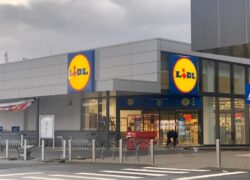
ROSSMANN to Open Largest Czech Distribution Hub at CTPark Prague North

CTP has agreed a lease with drugstore chain ROSSMANN for a new 30,000 sqm logistics centre at CTPark Prague North, with completion scheduled for 2026. The scheme will become the retailer’s largest distribution hub in the Czech Republic, designed to support both store expansion and e-commerce growth.

ROSSMANN is investing more than CZK 500 million (€20.6 million) in the facility, its biggest single outlay since entering the Czech market over 30 years ago. CTP is reported to be contributing a further CZK 750 million in construction costs.

The building will be fitted with advanced logistics technologies including AI-supported inventory management, automated pick-tower systems and goods-to-person flows, which are expected to reduce picker walking distances from around 12 kilometres to just two kilometres per shift. Sustainability is also central to the project, which is being developed to achieve a BREEAM Outstanding certification.

Situated on the D8 motorway north of Prague, CTPark Prague North offers direct links to the capital and the wider country. The park provides extensive on-site amenities through CTP’s Clubhaus concept, including a cafeteria, amphitheatre, medical point, minimarket and sports facilities.

The transaction was brokered by Cushman & Wakefield. Karol Jakubek, Managing Director of ROSSMANN Czech Republic, said the new distribution hub will serve as the heart of the company’s national network, with full utilisation expected by 2027.

EU Sends Further Recovery Funds to Czechia as Reform Progress Continues

Czechia has received another major instalment of European recovery funding, worth around €1.6 billion, after Brussels confirmed that the country had delivered on a new set of reform and investment targets. This is the fourth payment linked to Prague’s national recovery plan, which is supported by a mix of EU grants and loans.

The money follows a request submitted by the Czech government in June, which listed dozens of reforms and investment projects. These include efforts to expand renewable power, strengthen the electricity grid, and simplify the rules for connecting new capacity. Healthcare is another priority: funds will go into modernising hospitals and rehabilitation centres, alongside purchases of new equipment designed to raise the standard of patient care.

The European Commission gave its initial approval in July and, after clearing final checks with EU member states, released the money in late September. With this transfer, Czechia has now received roughly two-thirds of the money available to it under the programme, which altogether provides €8.4 billion in grants and just under half a billion in loans.

Brussels has made clear that payouts are tied to progress, rather than being automatic. In practice this means governments must prove they have met specific goals before further tranches are released. Analysts say this conditional approach has helped maintain momentum in Prague, which is seen as one of the more advanced countries in the region in drawing down the funds.

The focus on energy and health matches broader EU aims of accelerating the green transition and improving social resilience. However, observers caution that Czechia still faces the challenge of pushing reforms through a complex permitting system and ensuring that investment projects are delivered on schedule. There has also been some debate over the size of the latest disbursement, with Czech media citing figures closer to €1.8 billion depending on how the amounts are calculated, though the Commission put the net transfer at €1.6 billion.

For the government in Prague, the release of fresh funds is both a financial boost and a reminder of the work still required. More than half of the agreed milestones have now been met, but further reforms will be necessary if Czechia is to unlock the remainder of its recovery package.

Capital Edges Back Into Europe’s Real Estate Market

European property investment volumes remain well below the highs of the last cycle, but signs are emerging that capital is gradually returning to core markets and asset classes. A headline signal came in July when Union Investment completed the off-market sale of Finsbury Circus House in the City of London to DARE, a joint venture between Aware Super and Delancey. Trade press reports guided pricing around £140 million, making it one of the most significant prime office deals in London this year. For Union Investment, the disposal marked a first major transaction under Karim Esch, who joined the company’s management board on 1 July with responsibility for investment management.

Esch believes the market is entering a new phase. “Yes, a turnaround is in progress – at least in certain markets and asset classes,” he said. He argues that after a decade of artificially low rates, real estate is returning to normal conditions where it is a core component of portfolios but no longer a substitute for fixed income.

The wider market picture reflects this cautious optimism. According to Savills, European investment volumes reached roughly €95 billion in the first half of 2025, an increase of about 11 percent compared with the same period last year. BNP Paribas Real Estate, using a narrower scope, reported €76.7 billion, also slightly higher than in 2024. In Germany, CBRE tracked €14.2 billion of transactions in the first half, a two percent decline year on year. The divergence underlines the patchy recovery: while cross-border portfolios and gateway cities are seeing renewed attention, other markets remain subdued. David Hutchings, Head of Investment Strategy for EMEA Capital Markets at Cushman & Wakefield, said the market is already in the middle of a new cycle that will continue to accelerate over the course of the year. James Burke, Director of Global Cross Border Investment at Savills, added that several large portfolios brought to market over the summer had lifted confidence.

Esch sees logistics, grocery-anchored retail and hotels as sectors where buyers and sellers are already finding common ground. Residential is also moving, while shopping centres are regaining resilience as owners add food retail and improve occupancy. Burke points to renewed investor interest in retail in markets such as Spain, Italy and the Netherlands. Offices remain more selective. Space-efficient layouts, flexible fit-outs and strong ESG credentials are in demand, but secondary assets are harder to trade. “We’re seeing a kind of hotelisation of the office world, with more emphasis on community space and amenities,” Esch said.

He also believes Europe is well placed to attract international capital, particularly as some investors look for alternatives to the US. Economists abroad expect Germany to play a leading role in Europe’s recovery, and foreign capital will follow. Core and core-plus investors, including family offices and sovereign wealth funds, are increasingly active alongside opportunistic players, according to both Union Investment and Cushman & Wakefield. Hutchings noted that the market is becoming more balanced as the number of long-term holders willing to transact increases.

For Esch, the message to clients is clear: real estate remains a long-term component of diversified portfolios. “Anyone who redeems their fund units now is getting out just when property prices are rising again. It’s better to invest continuously in real estate through all cycles,” he said.

Source: Union Investment
Photo: Karim Esch, Chief Investment Officer (CIO), Union Investment Real Estate GmbH

Czech Savings Rates Hold Steady as Banks Compete With Bonus Offers

Czech households looking to grow their savings are finding little change in bank offers this autumn, with most institutions keeping rates in line with the central bank’s steady policy. The Czech National Bank has held its key rate at 3.5 percent since May, and the broader retail market has followed suit.

For the majority of savers, standard accounts return between two and three percent annually. Several banks advertise higher yields, but these are usually tied to additional conditions such as regular card payments, monthly income thresholds, or linked investment products.

Among the most competitive offers are those from banks willing to boost returns through bonus structures. Some lenders provide up to four percent interest if clients meet spending or investment requirements, though the underlying base rate is typically much lower. Other providers, such as Creditas and Česká spořitelna, combine modest headline rates with opportunities to earn extra percentage points when customers channel funds into pension savings or mutual funds.

Trinity Bank has positioned itself as an exception, promising close to three and a half percent without deposit caps or activity hurdles, but most large lenders continue to rely on incentive schemes. ČSOB, for instance, reserves its top tier of four percent for clients who combine salary transfers, card payments, and retirement contributions.

Smaller players such as Partners Banka and mBank offer just over three percent, while long-established brands including Fio and UniCredit hover slightly lower, again depending on which account package the client chooses. Moneta and Air Bank remain below the three percent threshold for their mainstream savings products, with limited chances to lift returns through bundled services.

Overall, the Czech retail market remains firmly anchored to the central bank’s rate path. Unless policymakers adjust borrowing costs, savers are unlikely to see dramatic shifts in account yields. Instead, competition is playing out in the form of conditional bonuses, leaving customers to weigh whether the extra effort is worth the marginal gains.

Source: CTK

Czech Builders Call for Stability as Survey Reveals Split Over Government Policy

A new industry survey has highlighted sharp divisions within the Czech construction sector over how the government is handling policy for the industry. While some firms see recent measures as helpful, a larger share remain unconvinced that the current direction is addressing the sector’s needs.

According to the research, just over a third of construction companies said the government’s current approach is not effective, while about three in ten respondents felt the measures had contributed to improvements. Fewer than half of the surveyed firms want the next administration to maintain the present course, with many warning against sweeping reforms that could drag out projects and introduce further uncertainty.

Companies were asked to evaluate the government’s record across several areas. The highest marks went to investment in transport infrastructure, which was seen as the most consistently supported. At the other end of the scale, efforts to digitalise permitting and streamline construction management drew the harshest criticism. The regulatory environment for planning and building approvals also scored poorly, reflecting longstanding frustrations in the sector.

Business leaders interviewed alongside the survey results said that speeding up approval processes remains a critical priority, with many pointing to the still incomplete rollout of the revised Building Act. They also underlined the importance of a predictable market for building materials and more accessible financing for housing through lower borrowing costs.

Executives stressed that stability is particularly needed in capital-intensive programmes such as infrastructure. Nearly three-quarters of companies in the survey said continuity in road and transport investment must be preserved, while more than half called for steady public investment to support the wider sector.

On housing, the responses suggested that progress has been limited, with calls for stronger government backing of both affordable and new residential development. Industry representatives also said that greater support for digital tools and simpler rules around zoning and permitting would help clear bottlenecks.

The findings arrive as debate continues over the country’s Building Act, which came into force during the current administration but had been originally shaped by the previous government. A third of construction firms surveyed judged that neither version of the reform was suitable. Sixteen percent said the earlier draft, which envisaged a centralised building authority, would have been better, while thirteen percent expressed more confidence in the current cabinet’s revisions.

Despite these criticisms, expectations for the industry remain cautiously positive. Separate forecasts suggest Czech construction output could grow modestly in 2025 and 2026, supported by public infrastructure spending, cheaper credit, and a gradual economic recovery. The survey results indicate, however, that the sector wants reassurance that future governments will prioritise consistency over constant change.

Source: CTK

Slovakia’s Logistics Market Slows in 2025, Eyes on Volvo Investment

Slovakia’s logistics market has cooled in 2025, with softening demand and higher vacancy rates reshaping the outlook for developers and tenants alike. According to Tomas Ostatník, Real Estate Executive at Holland & Company, the slowdown has become visible in both leasing volumes and construction activity.

The vacancy rate in industrial and logistics properties rose to just over six per cent in the second quarter of 2025 — the highest level in several years. Leasing activity was weaker than in previous periods, with about 103,000 sqm of space taken up, most of it new or pre-leases, and net take-up reaching around 73,000 sqm.

“Developers still have projects in the pipeline — roughly 318,000 sqm are under construction — but many of these were launched earlier as speculative builds,” Ostatník said. “Incentives are becoming more common in lease negotiations. Headline rents remain around €5.50 per sqm per month and €8.50 in prime locations, but landlords are more flexible, offering rent-free periods or other concessions.”

The market has seen some new activity, such as a recently completed facility in Brnolákovo for online retailer Alza, but this move is expected to leave behind vacant space in the Senec area, traditionally one of Slovakia’s busiest hubs. With more incentives now being offered to retain tenants, Senec is feeling pressure on rents. By comparison, neighbouring countries have enjoyed more momentum. Poland and the Czech Republic continue to attract the bulk of large-scale demand, while Hungary has also secured projects that might once have looked to Slovakia.

Looking ahead, a key development for the sector is the planned Volvo plant near Košice. The carmaker’s factory, now expected to begin production in early 2027 after a one-year delay, will also assemble the Polestar 7. “Several suppliers are already preparing sites nearby, and we expect more once contracts are finalised,” Ostatník noted, adding that investors such as IAD Investments are already involved in projects around the area. The plant could be a long-term boost for eastern Slovakia, a region that has traditionally lagged behind the west in terms of logistics activity.

While sustainability and ESG standards are increasingly integrated into development, cost considerations remain dominant for tenants. “Most occupiers want modern space and they welcome features like energy efficiency, but there is little evidence of them paying a premium for ESG-certified buildings,” Ostatník said. He expects stronger incentives or supply-chain pressure would be required to accelerate adoption.

On the macroeconomic side, construction costs have stabilised after sharp increases in recent years, which may support future projects. However, investment decisions remain cautious. Slovakia’s location makes it an attractive logistics hub within Central Europe, yet investors frequently compare it to Poland or the Czech Republic, where markets are larger and often better supported by state policies.

Geopolitics also looms large over the sector’s outlook. “Much depends on developments in Ukraine,” Ostatník said. “If reconstruction gathers momentum, Slovakia, along with Poland and Hungary, could benefit from demand for warehousing close to the border. For now, though, we are in a holding pattern — the fundamentals are strong, but growth has slowed compared to the past five years.”

© 2025 www.cijeurope.com

Retail Parks to Lead Romania’s Property Market as Investor Confidence Gradually Returns

In a recent CIJ EUROPE Q&A with Costin Nistor, CEO of Fortim Trusted Advisors, Romania’s commercial real estate sector is navigating a complex economic environment shaped by slower growth, persistent inflation and shifting investor priorities. According to Nistor, while the broader European context remains challenging, Romania’s property market continues to demonstrate resilience, particularly in retail and logistics.

Nistor explained that Romania is passing through a period of fiscal and legislative changes, with little concern from the authorities for stimulating economic growth. These measures overlap with difficulties across Europe, triggered by geopolitical uncertainties, global commercial tensions and rapidly changing business models. Even so, groups operating in Romania are keeping a vigilant eye on opportunities that arise during such times.

Despite these pressures, recent months have brought encouraging signs of recovery. In the first half of 2025, total real estate investment volumes in Romania reached €431.3 million, which marks a strong performance by regional standards. The office sector led with €189 million in transactions, while the retail market followed closely with €179 million. Retail parks in regional cities stood out as the most resilient and attractive segment, supported by rising consumer spending and demand for convenience-oriented shopping destinations.

“Retail assets are proving to be a solid investment, offering a reliable income stream and long-term potential,” said Nistor. He added that several high-profile retail transactions are currently in progress, suggesting the trend will only accelerate. By the end of 2025, he expects the retail segment to surpass the office sector and become the dominant asset class in terms of total transaction volume.

When asked about yield levels, Nistor noted that prime yields in Romania remain considerably higher than in other CEE capitals, but dynamics are shifting. He observed that there is upward pressure on yields, although the shortage of new projects is helping to counterbalance this, at least for the time being. In his view, the gap between investor expectations and achievable returns could narrow over the medium term, moving closer to the outlook of liquid buyers.

On the question of sector resilience, Nistor said that while office transactions such as Victoria Center and Ethos House have made headlines, they do not necessarily reflect a broader recovery trend. He argued that each of those deals was driven by specific circumstances. By contrast, appetite for retail projects, particularly retail parks, reflects a more general trend evident not only in Romania but across the CEE and EU regions. He pointed out that while the office sector may continue to generate deals, it is likely to remain under pressure for some time, whereas retail and industrial assets stand a better chance of remaining investor favourites.

International capital continues to play a crucial role in Romania’s investment market, accounting for more than half of transaction volumes in the first half of the year. However, Nistor underlined that domestic investors will be central to sustaining activity. He noted that attracting new international investors in the current environment is difficult, which means local capital—already an important driver in recent years—is likely to remain the most active in the near term.

Looking ahead to the second half of 2025, Nistor expects investment activity to remain strongest in retail and office, with hotel assets gaining ground as tourism continues to recover. He observed that the office market offers a sizable pool of investment product and is therefore likely to generate further deals, while retail is underpinned by strong fundamentals that will continue to attract capital. He added that hotel volumes could increase slightly as consolidation emerges as the next natural step, provided business and leisure tourism maintains its current trajectory. The industrial segment also has solid fundamentals, but in Romania it remains dominated by long-term owners and operators, meaning few assets are available for investors.

© 2025 www.cijeurope.com

MLP Group Credit Ratings Affirmed by Moody’s and Fitch

Moody’s Investors Service and Fitch Ratings have reaffirmed MLP Group’s credit ratings, keeping them at Ba2 and BB+ respectively, both with a stable outlook. The periodic reviews confirm the company’s standing at the same levels as in previous assessments.

The agencies’ decisions come against the backdrop of a challenging macroeconomic environment. Moody’s noted the quality of MLP Group’s logistics portfolio, which includes large distribution centers and urban parks in Poland and Germany. It also highlighted the concentration of assets near major transport routes and urban centers, as well as a tenant base made up of international firms with diversified operations. According to Moody’s, the company benefits from long lease terms averaging more than seven years, high occupancy, and steady rent growth, all of which contribute to predictable income.

Fitch emphasized the development of the company’s Polish portfolio of Class A properties, its internal management model, and its spread across attractive locations. The agency pointed to the value of diversification by both asset type and tenant industry, along with low vacancy rates and long lease agreements, as factors supporting resilience against market volatility.

MLP Group’s management described the confirmation of ratings as recognition of its long-term strategy. Radosław T. Krochta, President of the Management Board, said the reaffirmation reflects the company’s financial stability and supports expansion plans across Europe. CFO Maciej Müldner added that maintaining ratings provides access to capital markets on favorable terms.

The ratings place MLP Group just below investment grade, a position that reflects both the company’s strengths in logistics development and the inherent risks associated with its growth model. The stable outlooks from Moody’s and Fitch suggest that, barring a major shift in market conditions or company performance, the ratings are not expected to change in the near term.

Male Financial Habits in Poland: Balancing Stability and Debt

New survey and registry data from BIG InfoMonitor and BIK provide a nuanced picture of men’s financial behavior in Poland, showing that most manage day-to-day expenses without tapping into savings, even as a significant share of overdue household debt remains concentrated among men.

According to a survey commissioned by BIG InfoMonitor, 72 percent of male respondents said they do not need to use their financial reserves to meet regular expenses. Only 28 percent reported drawing on savings, suggesting that most men manage their household budgets from current income. When savings are used, they are typically spent on necessities: groceries (34 percent), utility bills (32 percent), medical services (31 percent), and medicines (26 percent). Less frequently, savings are directed to discretionary spending such as hobbies (14 percent), entertainment (13 percent), or pets (9 percent).

BIG InfoMonitor’s analysts note that men appear less likely than women to dip into savings for daily needs, though comparative figures for women were not disclosed in the current release. “Statistically, men in Poland still more often occupy higher-paid positions and earn more in the same roles, which may translate into greater liquidity and less frequent use of reserves,” said Dr. Waldemar Rogowski, chief analyst at BIG InfoMonitor, citing national pay gap data from Statistics Poland (GUS) and Eurostat.

The data also highlight debt pressures. As of the end of July, more than 1.5 million men in Poland had overdue liabilities totaling nearly PLN 60 billion, representing around 70 percent of the country’s total arrears held by individuals. While the number of male debtors has fallen by over 110,000 in the past three years, the value of outstanding debt has risen by nearly PLN 3 billion. On average, male debtors now carry around PLN 38,000 each, up over PLN 4,000 compared with July 2023.

Experts caution that this indicates a concentration of financial stress among a smaller group of men with higher arrears. “Gentlemen are balancing between common sense and risk,” said Paweł Szarkowski, president of BIG InfoMonitor. “The number of men with overdue payments has gone down, but the scale of obligations among those who remain in debt is increasing.”

BIG InfoMonitor’s survey also found that roughly one in five men report using savings to repay loans or other liabilities. Analysts suggest this may reflect a more cautious approach to debt management, with men turning to personal reserves rather than taking on new borrowing.

Taken together, the findings underline a mixed picture. Many men appear able to cover everyday costs from income and maintain liquidity, but a significant share continues to struggle with arrears, highlighting the ongoing tension between financial prudence and exposure to risk.

Source: BIG InfoMonitor and BIK

Union Investment Sells Texas Capital Center in Dallas Amid Mixed Office Market

Union Investment has sold the Texas Capital Center office tower in Dallas to a U.S. real estate investor, marking an exit from a property it had owned since 2016 through its UniImmo: Global fund.

The 21-story building, located on McKinney Avenue in Dallas’ Uptown district, offers more than 42,000 square meters of leasable space and parking for over 1,300 vehicles. Completed in 2008, the tower is primarily used for offices with a small share of retail. Its anchor tenant, Texas Capital Bank, occupies a significant portion of the building under a long-term lease extended in 2022 until 2040. At the time of sale, about 20 percent of the space was vacant.

Union Investment did not disclose the sale price. The company said the transaction reflects continued investor interest in Dallas, which remains one of the largest office markets in the United States. The sale also aligns with its strategy of reducing exposure to U.S. offices while broadening global portfolio diversification.

The deal comes at a time when Dallas’ office sector is facing pressure. According to Partners Real Estate, the metro’s office vacancy rate reached 25.3 percent in the second quarter of 2025, with negative net absorption of roughly 285,000 square feet. Leasing activity slowed, totaling about 3.7 million square feet for the quarter. By contrast, Class A properties performed somewhat better, with CBRE noting modest positive absorption and resilient rents, reflecting the ongoing “flight to quality” trend as tenants gravitate toward newer, amenity-rich buildings.

Union Investment was advised on the Texas Capital Center transaction by JLL, Metzler, and Mayer Brown.

front page info
LATEST NEWS