Penta Expands in Žižkov with CZK 731 Million Land Deal

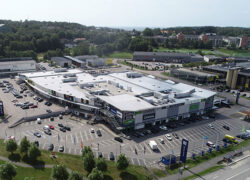
Developer Penta Real Estate has completed the purchase of a 4-hectare parcel from Czech Railways in the northern section of Prague’s former Žižkov freight station, marking another step in one of the capital’s largest brownfield redevelopments. The company paid CZK 731 million for the land and plans to transform the site into a new residential quarter with around 530 apartments and extensive public and green spaces.

The acquisition follows a recent change to the city’s zoning plan, which opened the way for large-scale regeneration of the long-derelict rail yards. Penta’s portion of the project is designed as a mix of housing, landscaped parks, water features and community facilities. Construction could start around the turn of the year, with completion targeted for 2029, although the schedule will depend on permitting and market conditions.

The redevelopment of Žižkov’s vast freight complex has been under discussion for more than a decade. Once a key industrial hub, the 1930s-era station has stood largely unused since freight operations ceased in the early 2000s. The city of Prague recently purchased the protected main station building and adjoining land from Czech Railways in a deal worth roughly CZK 1.43 billion, with plans to convert it into a cultural and public-service centre.

Under agreements reached earlier this year between the municipality, Prague 3 district, and private investors, developers involved in the Žižkov zone — including Penta, Sekyra Group and Finep — have pledged to finance public infrastructure and amenities valued in the hundreds of millions of crowns. These include new parks, a medical facility, sports grounds, and investments in local schools and kindergartens.

Czech Railways, which has gradually been divesting parts of the site, says proceeds from land sales will be reinvested into train upgrades and passenger-service improvements. The southern portion of the former yard was sold earlier this year to Sekyra Group, while the northern tract now passes to Penta, which joined the broader project in 2019.

City planners view the freight station area — spanning roughly 70 hectares in total — as a key opportunity to extend central Prague eastward and provide thousands of new homes in a mixed-use district linked by new transport and civic infrastructure. If completed as planned, the new neighbourhood could eventually house up to 20,000 residents, reshaping a major part of the city’s urban landscape.

Babiš Claims Road and Rail Projects Are Stalling; Transport Minister Rejects Accusation

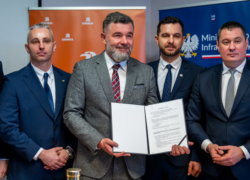
Former Prime Minister and opposition leader Andrej Babiš has accused the Czech government of halting major transport projects because of insufficient funding, a claim that Transport Minister Martin Kupka strongly denied.

Following a meeting with the head of the Road and Motorway Directorate (ŘSD), Radek Mátl, Babiš said that the shortage of money was leading to the suspension of key road and rail developments. He cited several examples, including the planned motorway between Jaroměř and Trutnov, sections of the Prague Ring Road, and the railway modernization projects between Hradec Králové and Pardubice as well as Prague and Kladno. “It’s complete paralysis. The whole transport infrastructure has stopped,” he told reporters.

Minister Kupka dismissed the allegations as misleading, insisting that all active construction projects are continuing. “The railways are being modernized, and the highways are being built,” he said in an interview with Czech Television. According to the Transport Ministry, more than 276 kilometres of motorways and first-class roads are currently under construction, with 67.5 kilometres expected to be completed by the end of the year. Kupka added that land purchases for the Prague Ring Road are still underway and fully funded for 2025.

While the minister admitted that securing financing for future years will be challenging, he attributed the pressure to the accelerated preparation of new projects, not to funding cuts. “Because preparations have advanced so rapidly, the next government will need to find tens of billions of crowns more to keep pace,” he said on the social platform X.

Under the draft 2026 budget, the State Fund for Transport Infrastructure (SFDI) will receive CZK 144.6 billion, about CZK 15.7 billion less than in 2025. The Road Construction Association has warned that the reduction could threaten the timely completion of the motorway network and delay the start of new projects.

Babiš also met on Sunday with Fire Chief Vladimír Vlček, who he said is short CZK 670 million for volunteer firefighters and lacks roughly 1,000 service positions. Vlček confirmed the talks centred on the fire service budget but declined to comment on speculation that he might take a government post in the new administration.

ŘSD director Mátl, meanwhile, said that while funding constraints remain a concern, no ongoing projects are being suspended. He expressed willingness to continue in his role, adding that future staffing decisions will depend on the next transport minister.

The exchange highlights mounting political tension over infrastructure spending as the Czech Republic faces tighter fiscal conditions and rising construction costs. While Babiš portrays the slowdown as a sign of government mismanagement, the Transport Ministry maintains that work is progressing and that the challenge lies in sustaining long-term investment levels amid a shrinking budget.

Source: CTK

Czech Court Rules Prostitution Income Must Be Taxed

The Czech Republic’s Supreme Administrative Court has ruled that money earned through voluntary prostitution should be treated as taxable income, marking a significant clarification in an area long seen as legally ambiguous.

The court’s decision overturns an earlier ruling by the Regional Court in Ostrava, which had rejected an attempt by the tax authorities to collect roughly CZK 1.8 million from a woman over a two-year period. That lower court had argued such earnings could not be taxed because they might be considered immoral or derived from unlawful activity.

In contrast, the higher court found no basis in current legislation to exempt prostitution from tax obligations. It noted that the country’s income-tax framework is built on the principle that all income is taxable unless the law specifically excludes it — and no such exclusion exists for prostitution.

The judgment also distinguishes between voluntary sex work and criminal offences such as trafficking, sexual coercion, or pimping. While those associated crimes are punishable, consensual prostitution between adults is neither banned nor formally regulated in the Czech Republic.

The court further observed that international agreements designed to combat the exploitation of people in prostitution, such as the 1949 United Nations convention, do not prohibit governments from taxing income that individuals earn from consensual sex work.

As a result, the case has been sent back to the regional court, which must now reconsider the matter under the new legal interpretation. The ruling does not legalise the prostitution industry or change criminal laws; it simply clarifies that individuals who earn income through voluntary sex work are not exempt from taxation.

While prostitution in the Czech Republic remains a grey area — tolerated but unregulated — this latest decision makes clear that its financial proceeds fall within the reach of the tax authorities. The outcome could prompt future debate on whether a clearer regulatory framework is needed for one of the country’s most persistent informal sectors.

Prague’s Pirates Prepare to Replace Hřib as City Leadership Faces New Power Balance

The leadership of the Czech capital is set for change as the Pirate Party begins the process of selecting a new deputy mayor to replace Zdeněk Hřib, who recently won a seat in parliament. The move opens a period of political adjustment inside Prague’s coalition government, already strained by differing priorities among its partners.

Hřib, a prominent figure in Czech politics and former mayor of Prague, confirmed that he plans to leave his executive post within six months but will continue to serve as an ordinary city councillor. He said the nomination process for his successor will begin this week within the Pirates’ council group, followed by talks with coalition allies. Once a candidate is chosen, the party’s wider membership will need to approve any amendment to the existing coalition agreement.

The decision comes at a sensitive moment for Prague’s governing alliance, which brings together the Pirates, the centrist group STAN, and the Spolu coalition led by TOP 09. Hřib’s departure could trigger broader reshuffling within the city’s leadership team, with other positions — including that of deputy mayor Jiří Pospíšil — also potentially changing hands. Pospíšil has signalled he intends to step aside after serving through months of political stalemate over his planned replacement.

Tensions have been building within the coalition over several policy issues, particularly transport and environmental planning. The Pirates have long pushed for reforms to the city’s parking system and tighter limits on vehicle access in the historic centre, arguing that Prague needs a more sustainable mobility strategy. Their partners in the Spolu bloc have resisted some of these proposals, warning of economic and logistical disruption. These disagreements have slowed progress on several parts of the city’s development agenda.

For the Pirates, the upcoming leadership vote is about more than filling a vacant seat — it is also an opportunity to reassert their influence in city politics after a year of uneasy cooperation. Party insiders say the new deputy mayor will need to balance continuity with renewed energy, maintaining relations within the coalition while advancing key elements of the party’s urban policy platform.

Hřib’s transition to national politics marks another step in his career but also highlights the blurred lines between local and parliamentary responsibilities in Czech public life. His continued presence as a city councillor will keep him involved in municipal affairs even after stepping down from the executive role.

Observers expect coalition negotiations to unfold over the coming weeks, with all parties keen to avoid destabilising the capital’s administration. If agreement can be reached, the changes could be approved in one vote by the city assembly later this autumn. If not, Prague’s coalition may again find itself navigating a delicate balance between political pragmatism and party priorities.

Source: CTK

Czech Rents Climb 15% as Autumn Demand Tightens Housing Market

Rental prices across the Czech Republic continued to rise sharply at the start of autumn, reflecting both persistent housing shortages and seasonal demand from students and returning tenants. According to a new market analysis, average rents in September reached roughly 368 Kč per square metre, about 15 percent higher than a year ago. Month on month, prices rose by just over one percent.

Analysts say the increase stems from a combination of factors — a steady inflow of new tenants after the summer holidays, limited availability of flats, and higher-quality properties entering the market. The pressure is most visible in university cities and commuter regions near Prague and Brno, where demand remains strongest.

In Prague, landlords are now asking an average of about 446 Kč per square metre, roughly 16 percent more than last September. The capital’s rental listings have fallen by around ten percent since early summer, intensifying competition for available units. Agents report that a typical listing in the city now attracts dozens of inquiries within days.

Rapid growth was also recorded in several regional centres. Rents in South Bohemia rose close to 30 percent compared with last year, partly because prices there had lagged earlier and are now catching up. The Olomouc Region followed with nearly the same pace, helped by an expanding supply of renovated apartments and new-builds. In Pardubice and Hradec Králové, the year-on-year rise exceeded 20 percent, though some analysts believe prices in eastern Bohemia may have reached a short-term peak.

While Prague remains the most expensive location, many households and students are shifting their searches to the Central Bohemian Region, where flats rent for about 308 Kč per square metre. Well-connected towns within commuting distance of the capital have become particularly sought after.

The data were compiled by the real estate platform Bezrealitky.cz, which tracks thousands of rental listings nationwide. Other professional market monitors, such as Deloitte’s rent index, also point to strong annual growth — though with some regional variation — and confirm that Czechia’s rental market remains one of the tightest in Central Europe.

Economists note that housing supply has not kept pace with population movements and new household formation. Although inflation has eased in other parts of the economy, rent growth continues to outstrip wage gains in many areas, keeping affordability under pressure.

With the new academic year underway and demand expected to remain high through the autumn, experts say a meaningful slowdown in rents is unlikely before early 2026, unless construction and renovation activity pick up.

Source: CTK and Bezrealitky.cz

Czech Bond Yields Ease After Election as Investor Confidence Returns

Yields on Czech government bonds declined on Monday, signaling renewed investor confidence following the weekend’s parliamentary election. The shift suggests that fears of a potential fiscal loosening under a new administration have eased, easing borrowing costs for the state after weeks of pre-election volatility.

Prior to the vote, yields on the 10-year Czech government bond climbed to around 4.5 percent — their highest level in nearly two years — as markets priced in political uncertainty and concerns about a possible rise in public spending. Following the results, yields have edged down to roughly 4.4 percent, reflecting improved sentiment among both domestic and foreign investors.

“Some investors worried that a change in government might bring a looser fiscal stance and faster debt accumulation,” said Jan Bureš, chief economist at Patria Finance. “Now that the election outcome points to a coalition that emphasizes budget responsibility, those concerns are fading.”

The victory of Andrej Babiš’s ANO movement, which secured 80 seats in parliament, has been welcomed by markets as a sign of stability. ANO is expected to form a coalition with the Motorists party and possibly the SPD. Analysts say that the inclusion of the Motorists, who have pledged to support balanced budgets by the end of the decade, is helping to reassure investors.

“The decline in yields shows investors are reacting positively to the political configuration,” said Tomáš Pfeiler, portfolio manager at Cyrrus. “With the ANO-Motorists alliance taking shape, the market is reading this as a sign that fiscal discipline will remain a key priority.”

Analysts also note that the likely exclusion of more radical parties from the governing coalition has contributed to the relief rally in bonds. “The market sees this as a pragmatic outcome,” Bureš added. “The absence of parties pushing for expansive public spending reduces the risk of sudden fiscal shocks.”

The Czech bond market has been volatile in recent months, reflecting wider uncertainty across Central Europe as elections and slowing growth tested investor confidence. With inflation now easing and the Czech National Bank keeping rates steady, analysts believe government borrowing costs may continue to stabilize in the coming weeks — provided that fiscal policy remains predictable.

“The reaction we’re seeing today is essentially a vote of confidence,” Pfeiler said. “Investors are giving the new government the benefit of the doubt — but they’ll be watching closely to see if promises of budget discipline turn into action.”

Source: CTK

Czech Inflation Slows to 2.3% in September, Easing More Than Expected

Inflation in the Czech Republic continued to cool in September, dropping to 2.3% year-on-year from 2.5% in August, according to a preliminary estimate released by the Czech Statistical Office (ČSÚ). Consumer prices fell by 0.6% compared to the previous month, marking one of the sharpest monthly declines this year.

The figures indicate that inflation is now approaching the Czech National Bank’s 2% target, supported by cheaper food and fuel. The slowdown follows a summer peak in June when prices were up 2.9% annually before gradually easing through July and August.

Energy remained the only category showing year-on-year price declines, falling by 3.3%. Without energy prices included, inflation would have stood at 3.1%. Price growth also moderated for food and other goods. The cost of food, alcohol, and tobacco rose 2.9% in September, down from 4% a month earlier, while goods prices increased just 0.8%. Service prices, however, held steady with a 4.7% rise, suggesting that underlying inflation pressures remain in parts of the economy less affected by global price shifts.

Economists say the weaker-than-expected data was largely driven by lower food prices, particularly for butter and seasonal fruit, as well as a continued fall in fuel costs. The koruna’s appreciation against the dollar and lower global oil prices helped ease transport-related expenses.

“The main reason for the decline was the drop in food prices, followed by cheaper fuel,” said David Marek, chief economist at Deloitte. “The strengthening of the koruna also played a role, cushioning the impact of global energy prices.”

Other analysts noted that the timing of this year’s harvest may have shifted the usual seasonal pattern. “Food prices rose unexpectedly in August but fell back in September, suggesting that the effects of this year’s harvest were simply delayed,” said Vít Hradil, chief economist at Investika.

While the overall slowdown is encouraging, most analysts caution against expecting an immediate policy shift from the Czech National Bank. “Inflation came in below the central bank’s forecast of 2.6%, but the CNB is unlikely to react by cutting interest rates,” said Radomír Jáč, chief economist at Generali Investments CEE. “Price growth in services remains elevated, which will make policymakers cautious.”

The CNB’s key interest rate currently stands at 3.5%. Many expect the central bank to keep rates unchanged for several more months to ensure inflation remains anchored near its target.

Jan Bureš, chief economist at Patria Finance, added that the downward trend in food and energy prices may continue into the final quarter of the year. “We could see inflation move closer to 2% in October or November, especially if the disinflationary trend in energy persists,” he said.

For now, the Czech Republic remains one of the few countries in the EU where inflation has returned close to pre-crisis levels, offering a sign of relief for households after two years of price volatility. Still, economists warn that service-sector inflation and wage growth could keep underlying pressures alive into 2026.

Source: CTK

Czechs Choose a New Political Course as Babiš Returns to Power

Czech voters have handed a fresh mandate to former prime minister Andrej Babiš, whose centrist-populist ANO movement emerged as the clear winner in this weekend’s parliamentary election. The result marks a shift in the country’s political mood after years of centre-right rule and could reshape Prague’s approach to both domestic and European affairs.

According to early results, ANO won roughly a third of the national vote, well ahead of the parties in the outgoing government led by Prime Minister Petr Fiala. While Babiš’s victory was decisive, it fell short of an outright majority, leaving him dependent on smaller right-wing or nationalist parties to assemble a workable coalition. That task may prove complicated, as some potential partners are demanding high-profile positions or policy concessions.

The election was widely seen as a referendum on the direction of the country after a turbulent period of inflation, rising living costs, and social division. Babiš capitalized on voter fatigue with the austerity-minded Fiala government, promising to boost wages, cut taxes, and reduce household expenses. His campaign focused on restoring economic stability and protecting “national interests,” a message that resonated strongly with voters outside major cities.

For Fiala’s coalition, which had presented itself as a pro-European, reform-driven administration, the result is a major setback. The outgoing government had invested heavily in foreign policy—supporting Ukraine, strengthening cooperation within the EU and NATO, and backing ambitious climate initiatives—but critics argued it failed to address domestic pressures at home. Many voters expressed frustration that while the Czech Republic had taken on a prominent role in Europe, ordinary families were struggling to cope with energy costs and stagnant wages.

Babiš’s return to power raises questions about the Czech Republic’s future course in Europe. He has long been critical of Brussels on issues such as migration quotas, climate targets, and the distribution of EU funds, yet he has stopped short of calling for any withdrawal from the bloc. His likely coalition partners, however, may push for a more confrontational stance toward EU institutions, potentially aligning Prague more closely with the governments of Budapest and Bratislava.

Foreign policy observers are also watching closely to see whether the Czech Republic will maintain its strong backing for Ukraine. While President Petr Pavel has urged continuity in military and humanitarian support, Babiš has signaled a desire to prioritize domestic spending and has questioned the scale of Prague’s aid commitments. How these differences play out could determine whether the country remains one of Kyiv’s most outspoken allies.

At home, the new government faces a delicate balancing act. Babiš, a billionaire businessman and one of the country’s most polarizing figures, will have to reassure investors and allies that he intends to govern pragmatically, not ideologically. His critics worry that a coalition dependent on fringe movements could erode institutional checks or deepen divisions in Czech politics. Supporters, however, say his victory represents a needed correction—an end to technocratic politics and a return to leadership focused on household prosperity.

The weeks ahead will test Babiš’s ability to turn his electoral win into a functioning government. Coalition talks are expected to be protracted, and the president retains the power to veto ministerial appointments. Whether this new chapter leads to greater stability or renewed confrontation will depend on how far Babiš is willing to compromise—and how united his potential allies prove to be once the governing begins.

Europe Edges Closer to Its 2030 Higher Education Goal, But Regional Gaps Remain

Europe’s ambition to raise the educational attainment of its young adults is taking shape, but the progress remains uneven across the continent. The latest data from Eurostat reveal that more than one-third of EU regions have already reached the Union’s 2030 goal for higher education, even as others continue to lag far behind.

In 2024, around 44% of Europeans aged between 25 and 34 held a university or equivalent qualification—just shy of the EU’s 45% target. This figure represents a steady climb over the past decade, driven by growing access to universities, international student mobility, and labour markets that increasingly reward advanced qualifications.

The success, however, is not evenly spread. The highest levels of educational attainment are concentrated in major cities and regions known for their research, technology, and innovation clusters. Young adults in capital areas such as Brussels, Copenhagen, Dublin, Madrid, Paris, Vilnius, Budapest, Amsterdam, Warsaw, Bratislava, and Stockholm are now among the most highly educated in Europe. Other top-performing regions include Luxembourg, Cyprus, and parts of Belgium, France, the Netherlands, and Ireland—all home to advanced industries and strong university networks.

By contrast, many regions in the south and east of the continent continue to struggle. Rural areas and island territories, where agriculture and traditional industries dominate, tend to show much lower rates of university completion. Large parts of Romania and Hungary, along with selected regions in Italy, France, Greece, Portugal, and Croatia, report fewer than one in four young adults with a tertiary degree. In many of these areas, vocational and apprenticeship routes remain the main path into employment, reflecting both economic structure and local tradition.

The divide underscores a broader challenge for the European Union: ensuring that education and training systems align with changing economic needs without leaving certain regions behind. Policymakers see the 45% goal as more than a symbolic milestone—it is a measure of how prepared Europe’s workforce will be for an economy increasingly powered by digital technology, green transformation, and high-value services.

While the overall picture suggests that the EU is close to meeting its target, maintaining momentum will require investment in regional universities, student mobility, and lifelong learning. As Europe enters the second half of the decade, the success of its education strategy may well depend on how effectively it can bridge the gap between thriving knowledge hubs and regions still waiting for their turn to catch up.

Source: EUROSTAT

G7 Experts Warn Financial Sector to Prepare for AI-Driven Cyber Risks

The G7’s Cyber Expert Group has issued a collective warning that artificial intelligence could reshape both the strengths and vulnerabilities of the global financial system. In a new statement to finance ministers and central bank governors, the group urged governments, regulators, and financial institutions to stay ahead of rapid advances in generative and autonomous AI technologies that are already altering the cybersecurity landscape.

The report emphasizes that artificial intelligence is transforming the way financial firms detect fraud, manage risk, and protect data. Yet the same technologies, if exploited by hostile actors, could increase the frequency, precision, and impact of cyberattacks. The statement highlights that tools once used exclusively to strengthen defenses are now accessible to criminals capable of generating realistic deepfakes, conducting sophisticated phishing campaigns, or developing self-adapting malware.

Officials stress that AI’s growing autonomy introduces new forms of uncertainty. Machine-learning systems trained on vast datasets can help identify anomalies or anticipate system failures, but they can also inherit or amplify hidden vulnerabilities. Poorly secured data, contaminated training sets, or weak human oversight could allow attackers to corrupt AI models, trigger system malfunctions, or leak sensitive financial information.

The G7 group’s position is not prescriptive but advisory. It calls on member states to strengthen cooperation between the public and private sectors, as well as with universities and research institutions, to better understand AI-related cyber threats. The document also urges authorities to promote “secure-by-design” principles when developing AI applications for finance and to ensure that regulatory frameworks evolve in line with technological change.

Financial institutions, the report notes, face particular exposure because of their dependence on complex data infrastructures and third-party service providers. A breach or disruption at a major AI vendor could ripple through global payment systems, credit networks, or customer-facing platforms. The G7 group therefore recommends stronger monitoring of supply-chain dependencies and clearer oversight of AI service providers that support the financial sector.

In the longer term, the experts argue that AI can serve as a powerful ally for cybersecurity—if it is governed and deployed responsibly. Machine-learning systems can improve fraud detection, identify vulnerabilities before they are exploited, and automate responses to incidents that once required hours of manual intervention. To unlock these benefits safely, financial institutions are encouraged to build internal expertise, update risk frameworks to include AI-specific threats, and train staff to recognize both the promise and the danger of AI tools.

As artificial intelligence becomes more embedded in the digital backbone of global finance, the G7 Cyber Expert Group calls for continuous dialogue among governments, regulators, and industry. Only through shared understanding, the statement concludes, can the financial system harness AI’s capabilities without compromising its integrity and resilience.

front page info
LATEST NEWS