Blue Bolt expands smart access solutions in residential developments

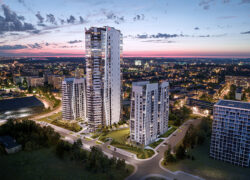
Smart building technologies are becoming more common in the residential real estate market, moving beyond their earlier association mainly with office buildings. An example of this trend is the ongoing cooperation between Blue Bolt, a provider of digital access systems for buildings and apartments, and ATAL on two residential projects in Katowice: ATAL Sky+ and ATAL Olimpijska.

Digital tools are increasingly influencing the daily use of residential buildings, particularly in the management of shared spaces. Solutions such as mobile access control, guest management and the digital booking of common facilities are becoming part of standard residential infrastructure rather than optional features. Blue Bolt’s application allows residents to open doors remotely, grant temporary access to visitors, report technical issues and reserve shared areas using a smartphone or smartwatch. ATAL has been among the developers implementing these solutions in its new projects, following several years of cooperation with Blue Bolt.

“We started cooperation with ATAL in 2021 at the Katowice facility, located at ul. Sokolska 30, where electronic access to the building was used. Our solutions have been evaluated so high that it has opened the way for us to cooperate on the developer’s next investments, including the latest – ATAL Sky+ and ATAL Olimpijska in Katowice,” said Maciej Grabowski, founder of Blue Bolt.

According to ATAL, the focus is on the practical value of technology rather than its marketing appeal. “We want technologies to really improve the comfort of everyday life, and not just be an additional slogan in marketing materials,” said Agnieszka Majkusiak, CEO of sales and marketing at ATAL. “Therefore, in the Katowice investments of ATAL Sky+ and ATAL Olimpijska, we offer residents an application that allows you to operate access based on the Blue Bolt platform, but this time we decided to go a step further and our customers in these facilities will be able to use the additional options. We are convinced that such solutions will soon become a market standard, and that the processes related to the use of common parts will be more and more automated and intuitive.”

In the ATAL Olimpijska project, the Blue Bolt system will include an extended range of functions. These cover not only access to elevators and parking areas, but also solutions related to residents’ safety and the management of shared amenities. One new feature is access control for the rooftop terrace of a 35-storey building, where capacity limits apply. Through the application, residents will be able to check in real time how many people are currently using the terrace and decide whether to enter or wait.

The use of such systems also reflects a broader convergence between residential and office buildings, where automated access and space management have long been standard. “Our technology works both in emerging projects and in existing facilities. More and more often, we are approached by investment administrators, who are only two or three years old, but already need an improved system of organization of common spaces. This shows how quickly the expectations of users change,” Grabowski added.

Blue Bolt’s system enables residents to move around buildings using a smartphone or smartwatch, without the need for physical keys, cards or remote controls. In buildings equipped with appropriate modules, the system can automatically call an elevator and select a default floor. The application also allows residents to book common areas digitally, reducing the need for manual scheduling or involvement of building staff. In parking garages, access can be managed through Apple CarPlay or Android Auto, allowing drivers to open gates directly from their vehicle interface.

“The opinions that come to us from property managers using the platform confirm that the implementation of the system organizes operational processes – it limits the number of technical notifications, facilitates the provision and reception of accesses and improves communication directly with and between residents. For users, convenience, fewer barriers and a sense of control over the spaces they use are crucial,” said Mikołaj Jędryczka, Director of Operations at Blue Bolt.

As a result, digital access and space-management solutions are increasingly being considered already at the design stage of residential developments. Blue Bolt reports that its systems are now implemented across a wide range of projects, from refurbished buildings and mainstream housing estates to higher-end residential developments. The company recently recorded a year-on-year increase of more than 20% in the number of supported projects and expects further growth, driven by rising interest from both developers of new residential schemes and managers of completed properties.

Arcona Capital sees continued investor interest in Czech retail property

Arcona Capital, which manages around €400 million of property assets across Central and Eastern Europe, expects investor interest in Czech retail property to remain solid over the coming year. The company points to recent market activity and financing transactions as indicators of continued support for the sector.

Chris Sheils, Head of International Business Development at Arcona Capital, said the firm expects the increase in Czech commercial real estate investment volumes recorded between 2024 and 2025 to continue, with retail assets accounting for a growing share of transactions.

Sheils referred to a refinancing completed in December for a private client in Prague. “The new loan was secured for a fixed seven-year term at very competitive market rates,” he said. “It covers a portfolio of thirteen fully-leased hypermarkets in Prague and other Czech cities.”

Jaroslav Sedivka, Arcona’s Head of Treasury, said the financing was provided by two international banks and reflected the characteristics of the underlying assets. “The thirteen properties enjoy average fifteen-year lease terms. The lessee is a highly-regarded multinational supermarket brand. In addition, the properties themselves have benefitted from substantial investment in environmental improvements and are Breeam certificated,” he said.

According to Sheils, macroeconomic conditions are also supportive of grocery-focused retail formats. He noted that disposable income in the Czech Republic is expected to rise by around 2% to 2.5% per year over the next two years, supported by forecasts of lower inflation. “This naturally has a significant effect on household expenditure in the retail grocery sector, and investors are making decisions based on perceived trends in evolving consumer preferences,” he said.

Arcona expects grocery-anchored retail parks to remain a stable segment, supported by essential consumer spending, established tenants and locations integrated into local communities. The company also anticipates rising interest in convenience-focused retail parks, reflecting consumer demand for accessible, everyday shopping formats.

The firm believes retail parks may also play an increasing role alongside e-commerce. “We believe that retail parks will progressively bridge the gap between traditional retail and the urban logistics centres required to meet consumers’ demands in ever-shorter timeframes,” Sheils said.

Looking ahead, Arcona expects investor interest in grocery-led retail to remain strong in both the Czech Republic and Poland. Guy Barker, Managing Director at Arcona Capital, said: “We remain very confident in the fundamentals of the convenience retail sector and are advising our investors accordingly. We are encouraged by the depth of the occupier market, by continuing urban and suburban growth, and by the evolving balance between conventional retail preferences and online alternatives. We believe the sector stands out by offering investors stable and sometimes exceptional performance while maintaining a conservative risk profile for their portfolios.”

Central Group delays new construction starts despite record sales and land acquisitions

Central Group reported strong results in 2025, including record apartment sales and continued expansion of its land bank, but has decided to postpone the launch of new construction projects by around one year due to high construction costs and capacity constraints in the sector.

According to the company, it sold 1,200 apartments last year and acquired land for the development of approximately 5,300 apartments, financed entirely from its own resources. Central Group said it now holds land suitable for the construction of around 40,000 apartments in total. Despite this, the developer stated that it will not start new projects until prices for construction supplies fall by at least 10%, based on its internal market analysis.

The postponement does not affect projects already under construction. Central Group currently has around 3,200 apartments under way, working with 15 general contractors. The company argues that limited competition among contractors and high capacity utilisation are pushing prices to levels it considers unsustainable.

Dušan Kunovský, Founder and CEO of Central Group, said: “Iconic world hockey player Wayne Gretzky always said that it doesn’t matter where the puck is now, but you need to see where it will be in a moment. And that’s how we need to look at the current construction and housing market. The huge overheating of the construction industry is no longer sustainable, and we need to let the market cool down for a while so that it can function normally again.”

Central Group pointed to broader market indicators, including a sharp decline in the number of building permits issued in the Czech Republic last year, which it expects to affect housing supply in the coming years. The company also referred to its experience during the 2022–2023 inflationary period, when construction costs later corrected after a slowdown in new project launches.

Kunovský added: “The prices of construction supplies have skyrocketed hysterically in the last year. Developers can no longer accept this and further increase the prices of apartments for people. This overheating needs to be calmed down. After all, over the last 10 years, the prices of new apartments in Prague have increased by an incredible 170%. The main reason is dysfunctional permitting and a shortage of apartments on the market. But another major problem is the disproportionate increase in construction supply prices.”

Despite delaying new starts, Central Group said it expects to have around 2,000 apartments ready for construction during 2026 and will proceed once cost conditions improve.

IMF lifts global growth outlook for 2026, warns of downside risks

The International Monetary Fund (IMF) has slightly upgraded its outlook for global economic growth, citing continued resilience in major economies despite trade frictions and elevated uncertainty. In its January 2026 update to the World Economic Outlook, the IMF now expects global real GDP to grow by 3.3% in 2026, an upward revision of 0.2 percentage points compared with its October 2025 forecast, while the projection for 2027 remains at 3.2%.

According to the IMF, the global economy continues to show an ability to absorb shocks, with stronger performance in the United States and China helping to offset weaker momentum elsewhere. The Fund noted that trade measures and policy uncertainty are likely to weigh on activity in the near term, but their impact is expected to gradually ease through 2026 and 2027. Investment linked to artificial intelligence, particularly in North America and parts of Asia, alongside supportive fiscal and monetary conditions, is seen as an important driver of growth.

Among advanced economies, growth for 2026 was revised up to 1.8%, while the outlook for 2027 remains unchanged at 1.7%. The IMF now expects the United States economy to expand by 2.4% in 2026 and 2.0% in 2027, reflecting stronger-than-expected activity in the second half of 2025 and a rebound following the end of the federal government shutdown. Growth in the euro area was also revised modestly higher for 2026, to 1.3%, with 2027 growth maintained at 1.4%, supported by public spending and relatively solid performance in countries such as Ireland and Spain, although structural challenges and high energy costs continue to weigh on manufacturing.

For emerging market and developing economies, the IMF forecasts growth of 4.2% in 2026 and 4.1% in 2027. China’s growth projection for 2026 was raised to 4.5%, supported by lower trade barriers following a temporary easing of trade tensions and ongoing policy stimulus, while growth is expected to slow to 4.0% in 2027 as longer-term constraints reassert themselves. India’s outlook for 2026 was also revised upward to 6.4%, reflecting stronger recent performance, with growth expected to stabilise at the same pace in 2027.

In the Middle East and North Africa, growth is projected to strengthen to 3.9% in 2026 and 4.0% in 2027, driven by higher oil output, domestic demand and continued reforms. Saudi Arabia’s growth forecast was revised upward to 4.5% in 2026 and 3.6% in 2027. The IMF based its oil price assumptions on futures data pointing to average prices of around USD 62 per barrel in both years.

Global trade growth, however, is expected to slow. The IMF forecasts world trade volumes to expand by 2.6% in 2026, down from 4.1% in 2025, before recovering to 3.1% in 2027. The moderation reflects adjustments in trade flows and earlier front-loading of activity in response to policy changes. Inflation is projected to continue easing globally, falling from 3.8% in 2026 to 2.4% in 2027, although price dynamics are expected to remain uneven across regions.

Despite the improved growth outlook, the IMF cautioned that risks remain tilted to the downside. It highlighted the possibility that productivity gains from AI may fall short of expectations, which could dampen investment and trigger financial market corrections. Renewed trade tensions, geopolitical conflicts or restrictions on key inputs could also disrupt supply chains and add to inflationary pressures, posing challenges for the global economy in the years ahead.

Source: kamcoinvest

Indian pharmaceutical group explores entry into UK wellness market through Vitabiotics talks

India-based pharmaceutical manufacturer Lupin Limited is reported to be evaluating a potential acquisition of Vitabiotics, a long-established British producer of vitamins and nutritional supplements. The discussions are understood to be at an exploratory stage and have not yet resulted in a binding agreement.

Vitabiotics, founded in the early 1970s by the Lalvani family, has built a strong position in the UK and international consumer health markets. The company is best known for a portfolio of branded supplements addressing different life stages and health needs, including products targeted at maternal health, bone care and women’s wellbeing. Over several decades, the business has expanded beyond its domestic market and now distributes products across multiple regions.

Market estimates circulating around the potential transaction suggest a valuation in the region of £1 billion, although this figure has not been confirmed by either party. If completed, the transaction would represent a sizeable overseas investment for Lupin and a step further into consumer-facing health and wellness segments, complementing its existing pharmaceutical activities.

Lupin, headquartered in Mumbai, has developed into a global supplier of medicines, with operations spanning generic pharmaceuticals, specialty products and complex formulations. Its portfolio is distributed across more than 100 countries, with a growing focus on expanding beyond traditional prescription medicines into adjacent healthcare categories.

Vitabiotics already maintains a notable presence in India through its local subsidiary, Meyer Vitabiotics, which is regarded as a meaningful contributor to the group’s overall revenues. This existing footprint could provide operational and commercial synergies should a transaction proceed, particularly in distribution and brand development within the Indian market.

The potential deal has also attracted interest from international financial investors, and other Indian healthcare and consumer health companies have previously been linked to discussions around Vitabiotics. Differences in valuation expectations are understood to have prevented earlier talks from progressing.

While no formal announcement has been made, the reported interest reflects a broader trend of Indian pharmaceutical companies seeking growth opportunities in preventive healthcare, nutrition and wellness. Demand for these segments has continued to expand globally in recent years, driven by demographic changes and a greater emphasis on long-term health management.

Any transaction would remain subject to due diligence, regulatory approvals and agreement on final terms. Until then, both companies continue to operate independently, with the outcome of the discussions still uncertain.

© 2025 cij.world

FWIP becomes a new tenant at MLP Business Park Poznań

FWIP has leased more than 1,400 sq m of space at MLP Business Park Poznań, joining the project as a new tenant. The company moved into the facility in December 2025. The leased area includes warehouse space, offices and staff facilities, as well as a representative showroom, supporting FWIP’s ongoing operational and logistics development. Colliers advised the tenant during the negotiation process.

Under the agreement, more than 1,000 sq m has been allocated to warehouse operations. The remaining space comprises offices, social areas for employees and a showroom of around 200 sq m, intended to support product presentation and customer engagement.

FWIP operates in the foodservice sector and focuses on compact, fully automated “mini ice cream parlours” designed for the production and serving of frozen desserts. Using proprietary technology and ice cream capsules, the systems enable the preparation of Italian-style gelato, sorbets, including vegan options, and frozen yoghurt within seconds.

The company’s flagship Portobello machine is designed as a plug-and-play solution that does not require complex installation or additional infrastructure. It operates on a standard 230V power supply, allowing deployment across a wide range of locations such as cafés, food trucks, retail outlets, hotels, foodservice venues and entertainment centres.

FWIP operates internationally, with branches and distribution partners across multiple European markets, including Poland, the United Kingdom, Ireland, Germany, Austria, Slovakia, Slovenia, Romania and Latvia, among others. Its presence in Poland supports the further development of regional sales and logistics activities while serving both retail and foodservice clients across Europe.

Commenting on the transaction, Tomasz Pietrzak, Leasing Director Poland at MLP Group, said that FWIP’s decision to locate at MLP Business Park Poznań demonstrates the flexibility of the project, which offers modular solutions combining warehouse, office and showroom functions suited to the needs of expanding businesses.

Michał Biegaj, Associate Director at Colliers, noted that the lease reflects increasing demand for urban business parks that integrate logistics, office and showroom space. He added that flexibility, technical standards and location were key considerations for the tenant, and that MLP Business Park Poznań aligns with FWIP’s development plans.

MLP Business Park Poznań is an urban logistics and business project located at Wołczyńska Street, approximately 9 km from Poznań city centre. Once completed, the development will offer a total of 43,300 sq m of modern space. The site benefits from access to public transport, including nearby bus and tram stops and the Poznań Junikowo railway station, as well as proximity to the A2 motorway, located around 2.5 km away.

The location supports last-mile logistics operations while also accommodating office and recreational functions. The project includes a padel centre, reflecting its mixed-use character, and is designed to meet the needs of e-commerce and other businesses seeking an urban setting combined with modern office and commercial standards.

Panattoni welcomes DPD to Panattoni Park Sittingbourne

Panattoni has completed the handover of a new distribution facility to DPD at Panattoni Park Sittingbourne. The completion marks the start of operations at DPD’s new parcel hub and represents a further step in the development of the logistics park.

The delivery of the facility underlines the role of Sittingbourne as an established logistics location within the South East and reflects continued demand for modern, sustainable logistics space in supply-constrained corridors. Panattoni acquired the Sittingbourne site in the summer of 2023 and completed planning, pre-letting and construction within 18 months. Following the letting of a 440,000 sq ft unit to ID Logistics last year, only one unit remains available at the park.

Panattoni Park Sittingbourne is located approximately four miles from Junction 5 of the M2 motorway, between London and the Port of Dover. The site offers access to the M2, M20 and M25, with links to key port and Channel gateways including London Thamesport, Dover and Port of Tilbury. This connectivity supports regional and national parcel distribution.

The DPD facility forms part of Panattoni’s net zero carbon development strategy at Sittingbourne. The park has been designed to support high-intensity logistics operations and includes infrastructure such as enhanced power supply and yard capacity. Sustainability features include BREEAM ‘Excellent’ and EPC A targets, supported by photovoltaic panels and electric vehicle charging infrastructure. Once fully operational, the automated hub is expected to increase DPD’s processing capacity in the South East.

Alex Mitchell, Associate Development Director for South East and London at Panattoni, said: “Announcing the completion of DPD’s state of the art hub at Panattoni Park Sittingbourne is an important step for the park and a strong endorsement of the location and specification we have delivered. Sittingbourne offers exceptional connectivity and labour access, and it is well suited to the operational intensity of a modern parcel hub.

“It follows a series of successes for Panattoni in Kent, including the full letting of our 1.1m sq ft Aylesford scheme; ID Logistics leasing 440,000 sq ft at Sittingbourne, the South East’s largest speculative letting last year; the submission of a planning application at Sevenoaks; and the recent acquisition of the in Lenham site in Maidstone, capable of delivering more than 1m sq ft of space.

“We are proud to be supporting DPD’s growth in the UK with a facility that combines scale, efficiency, and a net zero carbon development approach. We look forward to seeing the hub play a central role in DPD’s expanding South East distribution network.”

The final remaining unit at Panattoni Park Sittingbourne totals 205,000 sq ft and is available for immediate occupation. The unit offers a 15-metre clear internal height, 2.52 MVA of power capacity, a 50-metre service yard and installed photovoltaic systems, which Panattoni estimates could reduce occupier energy costs by up to £87,600 per year.

Prices of older apartments in the Czech Republic rise 19% year on year

Prices of older apartments in the Czech Republic increased significantly at the end of 2025. According to an analysis by FérMakléři.cz, the average price of older flats rose by 19% year on year to CZK 81,104 per sq m in the fourth quarter. Compared with the third quarter of 2025, prices were on average 3% higher.

The analysis shows that prices increased both year on year and quarter on quarter in all major cities. The strongest annual growth was recorded in Ústí nad Labem, where prices of older apartments rose by 29% compared with the fourth quarter of 2024. In quarter-on-quarter terms, prices in most cities increased by between 1% and 4%.

As in previous years, the highest prices were recorded in Prague. At the end of 2025, the average price of older apartments in the capital reached CZK 151,085 per sq m, representing an 11% increase year on year. This means that an 80 sq m apartment cost around CZK 12.1 million, approximately CZK 1.2 million more than a year earlier. Brno remained the second most expensive market, with an average price of CZK 118,040 per sq m, up 10% year on year. An 80 sq m flat in Brno was priced at roughly CZK 9.44 million, almost CZK 900,000 more than at the end of 2024.

The fastest growth was observed in traditionally more affordable regional markets. In addition to Ústí nad Labem, prices rose sharply in Ostrava, where older apartments increased by more than 20% year on year to CZK 64,697 per sq m. By contrast, the smallest annual increases, aside from Brno, were recorded in České Budějovice and Olomouc, where prices rose by around 10%.

In Hradec Králové, the average price reached CZK 93,190 per sq m, marking a year-on-year increase of 16%. In Plzeň, prices rose by 14% to CZK 83,956 per sq m.

Quarter-on-quarter growth at the end of 2025 was generally moderate. Prices in Prague, Brno, Plzeň and Olomouc increased by around 1% compared with the third quarter. Hradec Králové recorded a 3% rise, while České Budějovice saw prices increase by 2%. The strongest quarterly growth was again seen in Ústí nad Labem and Ostrava, where prices rose by 4%.

Overall, the data indicate that the upward trend in prices of older apartments continued across the Czech housing market in late 2025, with particularly strong momentum in regions that had previously been among the more affordable.

Source: CTK/FérMakléři.cz

Corporate bankruptcies in the Czech Republic rise to highest level since 2017

Courts in the Czech Republic declared bankruptcy for 751 companies in 2025, representing a year-on-year increase of 9% and the highest annual total since 2017. Over the same period, 1,164 insolvency petitions were filed, up 8% compared with the previous year, according to an analysis by CRIF – Czech Credit Bureau, based on data from the Information about Companies portal.

The number of corporate bankruptcies has now risen for the third consecutive year. At the same time, business formation activity also increased in 2025, with the number of newly established companies growing by more than 10% year on year. The number of companies leaving the market also rose, although at a slower pace than new formations, according to CRIF analyst Věra Kameníčková.

Financial indicators for companies showed mixed trends during the year. Growth in corporate lending slowed towards the end of 2025, while the volume of company deposits remained broadly stable and continued to exceed the level of corporate loans. Payment discipline improved slightly, with the share of non-performing loans in total corporate borrowing declining. However, Kameníčková noted that insolvency trends varied considerably by sector and region, both in terms of growth dynamics and overall bankruptcy rates.

In the final months of 2025, the gap widened between the number of insolvency petitions filed and the number of bankruptcies declared. This suggests that courts may have dismissed a growing number of petitions due to insufficient debtor assets. On average, 17 corporate bankruptcies were declared per 10,000 active companies nationwide, corresponding to a bankruptcy rate of 0.17%.

As in previous years, the highest number of corporate bankruptcies was recorded in Prague, where courts declared 340 cases. The second-highest total was reported in the South Moravian Region. Year-on-year increases in bankruptcies were observed in eight of the country’s 14 regions. The most pronounced rise occurred in the Pilsen Region, where bankruptcies increased by 64%. By contrast, the number of bankruptcies declined in the South Bohemian Region by 29%, and by 17% in both the Karlovy Vary and Zlín regions.

Sectoral data show that bankruptcies rose most sharply in information and communication activities, where the number increased by 46% year on year. Construction recorded a 25% increase, while wholesale and retail trade, including vehicle repair and maintenance, saw a rise of 14%.

In relative terms, the highest bankruptcy rate in 2025 was recorded in the water supply sector, with 26 bankruptcies per 10,000 registered entities. Transport and storage followed with 21 bankruptcies per 10,000 companies, while construction and manufacturing each recorded 18. The lowest relative risk of bankruptcy was observed in information and communication activities, with seven bankruptcies per 10,000 companies, followed by professional, scientific and technical activities with eight.

Source: CTK

Geopolitical tensions add to economic risks for Germany

At the beginning of 2026, international political developments are adding another layer of uncertainty to the global economic environment. Tensions involving major powers, unrest in politically sensitive regions and unresolved sovereignty disputes are increasingly shaping the conditions under which companies operate. For export-oriented economies such as Germany, these developments are becoming an additional risk factor alongside existing structural challenges.

Rapid political decisions and unexpected escalations are making long-term planning more difficult for businesses. Global supply chains, energy markets and cross-border investment flows are particularly exposed to sudden changes in political relations. German companies with international operations or dependencies are therefore facing a business environment in which stability can no longer be assumed.

Energy markets are one area where geopolitical developments can have indirect but noticeable effects. Even when Germany has limited direct economic ties to a particular region, instability in resource-producing countries can contribute to price volatility and uncertainty. For companies with high energy consumption or significant logistics costs, fluctuating prices complicate cost planning and weaken margins. While short-term disruptions may be manageable, prolonged uncertainty tends to discourage investment and increases the risk of miscalculation.

Industrial sectors are especially vulnerable to disruptions linked to global political tensions. Advanced manufacturing depends heavily on complex international supply networks, particularly for key components such as semiconductors. These components are produced within a highly concentrated global system, meaning that even limited disruptions can have cascading effects across multiple industries. Automotive manufacturing, mechanical engineering and electronics are among the sectors most exposed to such risks, as supply interruptions can quickly affect production schedules, delivery commitments and profitability.

Beyond operational challenges, geopolitical instability is also influencing financial conditions. Increased uncertainty tends to make lenders and investors more cautious, tightening access to financing and raising sensitivity to payment delays. Medium-sized companies with limited financial buffers are particularly exposed to these dynamics, as higher costs and delayed revenues can quickly affect liquidity.

Taken together, these developments suggest that geopolitical risk is becoming a permanent feature of the economic landscape rather than an occasional disruption. For German companies, this implies a growing need to strengthen resilience through diversified supply chains, flexible sourcing strategies and more active risk management. While international partnerships and open markets remain essential, reliance on predictability alone is no longer sufficient in an environment shaped by persistent political uncertainty.

In this context, economic stability increasingly depends on a company’s ability to adapt to external shocks. The changing geopolitical environment is reinforcing the importance of strategic preparedness, not only at the political level but also within corporate decision-making.

Source: Atradius

front page info
LATEST NEWS