STRABAG Real Estate Launches Sustainable Housing Project “LISA” in Bad Mergentheim

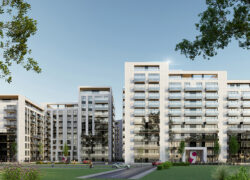
STRABAG Real Estate (SRE) is developing a new residential project named LISA – Living in Beautiful Shire in Bad Mergentheim, Baden-Württemberg. The project will deliver three residential buildings comprising 39 subsidised rental apartments, designed to meet the latest sustainability and social housing standards.

Developed on a 4,100 m² site acquired from the city, the LISA project is being realised in cooperation with MOLENO® WOHNEN and will meet the KfW 40 efficiency standard as well as the Sustainable Building Quality Seal (QNG). This combination ensures low energy consumption, reduced CO₂ emissions, and access to favourable depreciation and financing options.

Construction will employ the modular and serial MOLENO® LIVING wood-hybrid system from ZÜBLIN, which allows faster completion, lower embodied carbon, and efficient cost control. The method supports SRE’s aim to deliver affordable, high-quality housing while maintaining strong environmental performance throughout the building lifecycle.

“Thanks to its robust funding framework and long-term usage concept, the LISA project represents a model for sustainable and socially responsible housing,” said Axel Möhrle, Head of STRABAG Real Estate Stuttgart. “It embodies our strategy to develop neighbourhoods that balance ecological, social, and economic values, aligning closely with modern ESG investment principles.”

Bad Mergentheim’s Mayor Udo Glatthaar welcomed the project as a major contribution to local housing needs. “Social housing remains a key challenge for municipalities. Partnering with an experienced developer like STRABAG Real Estate allows us to make tangible progress in this vital area,” he said.

Construction will be led by ZÜBLIN AG, a STRABAG Group company, acting as general contractor. The development reinforces SRE’s growing focus on residential projects across Württemberg, which currently includes schemes in Leonberg (an IBA’27 project), Bad Friedrichshall, and the former Karstadt site in Esslingen am Neckar. Across these locations, the company expects to deliver around 400 apartments in the coming years, with further acquisitions planned to expand this pipeline.

WeMat Global Expands Its Regional Footprint with New Showrooms and Growth Ambitions

WeMat Global, the Romanian design-and-build company formerly known as Decor Floor, is entering a new stage of growth across Central and Eastern Europe. Following the opening of its showrooms in Budapest and Sofia, the company is positioning itself as a regional integrator for premium interior design and construction solutions, strengthening its network in markets where many of its long-standing clients already operate.

“So actually, somehow, this expansion for us, it comes very naturally, as it’s a market that we are already familiar with, and we used to work in for the past 20 years,” said Octavian Moroianu, Founder and CEO of WeMat Global, in an interview with CIJ EUROPE. “The customers, more or less, are regional customers. So the customers for whom we are working in Romania are the same customers that are also present in Hungary, or they are present in Sofia as well.”

Headquartered in Bucharest, WeMat Global evolved from a specialist flooring supplier into a full-service provider covering design, project management, and execution. The company works with Romanian producers of custom joinery and furniture, exporting their products for fit-out projects in Hungary and Bulgaria. Around 70 percent of some suppliers’ output is dedicated to WeMat projects, according to Moroianu.

In financial terms, the company has experienced strong momentum in recent years. “In 2024, we had a total group turnover of about EUR 25 million, out of which EUR 20 million was generated in Romania and EUR 5 million in other countries,” Moroianu explained. “Our expectations for 2027 are to reach between EUR 50 and 60 million in total revenue, with EUR 35–40 million coming from Romania and the remainder from neighbouring markets.”

Moroianu sees Budapest as the next major growth hub for the group, but also believes Bulgaria holds considerable long-term potential. “I strongly believe that Budapest will be our next booming hub let’s say” he said, adding that Sofia’s market conditions resemble Romania’s a decade ago. “Our aim is to have a balance or a steady business in Romania between 35 and 40 million euro yearly.”

The company’s operational model is built on integration and efficiency. WeMat has developed its own in-house digital system, managing nearly all workflows electronically. “Since 10 years already, we are using everything that you see in WeMat. The usage of paper is very small,” Moroianu said. “For us, let’s say over 90% of the processes are online.”

WeMat has also begun applying artificial intelligence to speed up design and project coordination. “Yes, we are using AI,” he confirmed. “The AI, it’s like a partner.”

Sustainability plays a key role in the company’s expansion strategy. All products supplied to its regional markets comply with European environmental standards and support BREEAM and LEED certifications. “All the products that we are importing to Hungary, Romania or Bulgaria are qualified for improving standards Bream or lead standards to the projects also those are complementary and compliant with ESG norms,” Moroianu noted. The firm is also working on new environmental certifications, including the EcoVadis system, which evaluates recycling practices and waste management on-site. “We are right now working on another one which is called the EcoVadis,” he said.

Looking ahead, Moroianu sees WeMat’s regional presence as a key competitive advantage. Few companies in this part of Europe have an established footprint across all three capitals. “Our approach is to provide a complete experience to the client, rather than a service” he said, describing a model that combines premium materials, technical expertise, and delivery certainty.

With its mix of physical showrooms, digital infrastructure, and growing cross-border portfolio, WeMat Global is positioning itself as one of the region’s most agile and integrated players in interior design and fit-out delivery. For Moroianu, the company’s growth is rooted in consistency: a belief that experience, relationships, and quality execution remain the foundation for expansion in a changing market.

© 2025 cij.world

German Logistics Property Market Gains Momentum in Q3 2025

The German logistics real estate sector regained strength in the third quarter of 2025, with both investment and leasing activity reaching their highest levels of the year, according to the latest LIP up to Date – Logistics Real Estate Germany market report published by LIP Invest.

The company’s quarterly analysis highlights renewed investor confidence, stable yields, and continued demand from e-commerce and pharmaceutical tenants. It also suggests that ongoing global disruptions — from trade tensions to cybersecurity risks — could accelerate the reshoring of production and a greater focus on “Made in Germany” supply chains.

Security concerns reshape supply chains

The report notes that recent revelations about foreign software and hardware vulnerabilities, such as remote access capabilities in imported vehicles or transport systems, have heightened sensitivity around supply-chain security. “International trade is still expanding, but concerns about technological dependence may increase the appeal of domestic manufacturing,” said Natalie Weber, Authorized Signatory and Head of Fund Management at LIP Invest.

Investment market strengthens

Germany’s logistics investment market posted a quarterly transaction volume of €1.5 billion, bringing the total for the first nine months of the year to €4.1 billion. Although the market continues to be driven largely by smaller, single-asset transactions, larger portfolios and corporate sales are beginning to re-emerge.

Investor appetite remains particularly strong for transshipment hubs and cold-storage properties, supported by growth in e-commerce fulfilment and pharmaceutical distribution. Among notable Q3 transactions was the sale of an 11,500 sq m cold-chain facility in Delmenhorst.

After months of volatility, interest rates have largely stabilised, with long-term financing costs steadying around mid-year levels. As a result, prime yields for new logistics buildings held at approximately 4.9 % to 5.1 %, indicating a stabilised pricing environment.

Leasing activity at annual high

Tenant demand accelerated in Q3, with 1.6 million sq m of logistics space taken up across Germany, lifting the year-to-date total to 4.2 million sq m. Many occupiers are opting for shorter lease terms and flexible extension options, allowing them to respond quickly to market changes.

E-commerce companies remained a major source of activity: Blitz Distribution leased 38,000 sq m in Werne and 35,000 sq m in Bremen during the quarter.

Construction output, however, remained restrained. Only 800,000 sq m of new space was completed in Q3, and total completions for the year so far reached 2.3 million sq m. Few speculative projects are being launched, and large developments exceeding 50,000 sq m are rare. One example of new construction was a 24,000 sq m logistics facility by Complemus Real Estate in Euskirchen, North Rhine-Westphalia, where MM Flowers Europe signed as the first tenant.

Pharmaceuticals drive specialist demand

The report identifies the pharmaceutical sector as a key growth engine for logistics. Following the 2023 introduction of stricter healthcare-supply regulations, demand for temperature-controlled storage and transport has risen sharply.

Medicines such as vaccines and insulin often require storage between +2 °C and +8 °C, or even as low as −70 °C. Facilities meeting these technical and regulatory standards consume significant energy but typically secure long-term rental commitments due to high fit-out and operational costs.

Outlook

LIP Invest expects both investor and occupier confidence to hold steady through the final quarter of the year. The company anticipates a gradual normalisation of transaction activity, supported by stable financing conditions and continued demand from resilient sectors such as e-commerce, pharmaceuticals, and food distribution.

Despite persistent geopolitical uncertainty, the report concludes that the German logistics real estate market remains one of Europe’s most robust, underpinned by its strategic location, strong infrastructure, and increasing emphasis on security, sustainability, and domestic production.

Source: LIP Invest

Carrefour Reshapes Its Global Footprint Amid Market Exits and Strategic Refocusing

Carrefour, one of Europe’s largest retail groups, is entering a new phase of global restructuring that has seen it scale back or withdraw from several international markets. The company has confirmed or is reportedly considering exits from Italy, Poland, Romania, and parts of the Middle East as it repositions itself around core markets such as France, Spain, and Brazil.

In Italy, Carrefour formally entered exclusive negotiations in July 2025 to sell its entire business to the NewPrinces Group in a deal valued at around €1 billion. The decision underscores Carrefour’s determination to simplify its structure and withdraw from markets where profitability has been persistently low. In parallel, reports indicate that the company is reviewing its operations in Poland and Romania, two markets where it has struggled to compete with rapidly expanding discount and proximity chains. While Carrefour has not confirmed any divestment, financial institutions including J.P. Morgan and BNP Paribas are reported to be advising on potential transactions.

Beyond Europe, Carrefour’s long-time franchise partner Majid Al Futtaim has closed or rebranded stores in Jordan, Kuwait, Bahrain and Oman under the HyperMax name. This development effectively marks the disappearance of the Carrefour brand from several Gulf markets, although the company remains active elsewhere through its franchise operations.

Industry analysts point to a common pattern across these moves. Carrefour tends to divest or review its business in markets where it lacks sufficient scale, faces structural challenges, or operates store formats that no longer align with local demand. The hypermarket model that once powered Carrefour’s expansion is losing traction across Europe, where consumer behaviour increasingly favours smaller stores, convenience shopping and online delivery. Analysts view Carrefour’s current restructuring as a transition toward a leaner, more focused business centred on core markets, proximity retail and e-commerce rather than broad global coverage.

According to the Financial Times, the company has been seeking ways to boost its market valuation amid stagnating share performance and tightening competition, with selective disposals forming part of this strategy. Gulf News has observed that while Carrefour continues to thrive in regions where the large-format retail model remains relevant, its European operations face pressure from rising costs and changing shopping habits. A commentary from DRC Discount Retail Consulting highlights that in Poland, Carrefour’s management has weighed both divestment and restructuring options due to weak margins and strong local competition. Similarly, a brokerage report from Whitelight Capital points to growing tensions within Carrefour’s franchise model in France as a source of operational risk and strategic reconsideration.

Several recurring factors underpin Carrefour’s recent and potential exits. The company continues to face narrow margins and intense price competition in mature grocery markets. Its management has repeatedly stressed the need to focus on geographies where scale advantages and stronger profitability can be achieved. At the same time, the shift away from traditional hypermarkets reflects an adaptation to evolving consumer preferences, where proximity stores, discount operators and digital channels increasingly dominate. Local market dynamics in Poland and Romania, where competition is fierce and operational costs high, have reinforced the case for a potential portfolio reshuffle. Meanwhile, structural issues in Carrefour’s franchise network and rising energy and labour costs across Europe have added further pressure to streamline operations.

Experts view these moves as part of a broader strategic repositioning rather than isolated market retreats. Carrefour appears to be concentrating its resources on areas where it can maintain a competitive edge while reducing exposure to low-margin markets and complex operational structures. By redirecting capital into stronger regions, the group aims to improve profitability, protect margins and support ongoing digital and logistics transformation.

Carrefour’s confirmed withdrawals include the closure of operations in Oman in January 2025 and in Jordan in November 2024, along with the rebranding of stores in Bahrain and Kuwait by its Gulf partner Majid Al Futtaim. In Europe, the sale of its Italian business marks the most significant divestment to date, while its presence in Poland and Romania remains under review.

In its most recent investor communications, Carrefour reaffirmed its focus on improving efficiency, expanding its loyalty programme Le Club Carrefour, strengthening private-label ranges and tightening promotional strategies. The company has not publicly confirmed further market exits, but the sale of Italy and continuing portfolio reviews indicate a clear direction: concentrating on markets where it can sustain long-term competitiveness and moving away from the traditional hypermarket model that once defined its global identity.

Source: CIJ EUROPE Analysis Team

Penta Real Estate Brings in Alto Real Estate as Partner for Chalupkova Project in Bratislava

Penta Real Estate has announced a new partnership with Alto Real Estate for its flagship Chalupkova development in Bratislava’s downtown. Alto joins as a minority shareholder, taking a 49 percent stake in the project, while Penta will continue to lead development and construction.

The cooperation marks the next stage in the transformation of the Mlynské Nivy brownfield zone into a modern urban district combining offices, housing, and public spaces. “The entry of a financial partner who understands the local market and shares our long-term vision adds another dimension to this project,” said Michal Rehák, Executive Director of Penta Real Estate Slovakia.

Located near the Sky Park complex, the Chalupkova Offices building represents the project’s first phase. Designed by Jakub Cigler Architekti, it will deliver over 33,000 square metres of offices and retail space once fully developed, including a community rooftop, bike infrastructure, and direct access to a planned central park within the block.

For Alto Real Estate, the partnership aligns with its strategy of strengthening its position in Bratislava’s city centre. “Chalupkova offers exceptional potential in an area we know well. It stands at the heart of a growing urban district that connects seamlessly with our nearby Sky Park Square project,” said Ján Bryndza, Business Director at Alto Real Estate.

Beyond the office component, Penta and Alto plan to extend development across the wider site, gradually adding residential buildings, public amenities, and landscaped green areas. The aim is to create a new mixed-use quarter that integrates workplaces, homes, and services into a cohesive urban environment.

Penta Real Estate expects to move ahead with the next stages of permitting and preparatory works once all formal approvals are complete.

Czech Mortgage Rates Hold Steady at 4.91 Percent in November

Mortgage rates in the Czech Republic remained unchanged at the start of November, continuing to hover just below the five-percent mark. According to the latest Swiss Life Hypoindex, the average offered rate for home loans stayed at 4.91 percent, the lowest level recorded since the spring of 2022.

Market observers note that the current stability reflects both cautious pricing by banks and uncertainty surrounding the broader economic outlook. Three-year fixed-rate mortgages remain the most attractive option, averaging slightly above 4.5 percent, while five-year fixes stand just under 4.8 percent. Longer ten-year loans and one-year fixes continue to be priced closer to 5.4 percent.

Despite a modest recovery in new lending compared with last year, borrowing volumes remain far below the highs seen during the pandemic era, when cheap credit fuelled record demand. High property prices and households’ reluctance to take on long-term debt are still weighing on overall activity.

Analysts suggest that financial institutions are unlikely to make major rate adjustments in the near term. With both domestic and international markets facing persistent uncertainty, lenders appear to prefer maintaining stable pricing. At the same time, refinancing activity is rising as many borrowers who secured loans at below 2 percent between 2020 and 2021 now face renewals at more than double their original rate. For a standard 30-year mortgage of CZK 3 million, the shift translates into a monthly payment increase from around CZK 10,900 to CZK 15,900.

The current figures underscore the gradual normalisation of the Czech housing finance market, where interest rates have eased from last year’s peaks but remain challenging for many households seeking to buy or refinance a home.

Source: CTK

HIH Projektentwicklung to Refurbish Cologne Office Building with Focus on ESG and Design

HIH Projektentwicklung has been appointed by an institutional investor to redevelop and reposition an office property on Zeughausstraße in Cologne’s city centre. The scheme aims to transform the existing structure into a high-quality, multi-tenant building offering around 6,600 square metres of modern workspace, with completion scheduled for the fourth quarter of 2028.

The project will convert currently vacant offices into flexible and efficient working environments, supported by extensive upgrades to the entrance and ground floor areas. Plans also include the addition of a new floor, landscaped inner courtyards, extra balconies, and a rooftop terrace offering views of Cologne Cathedral.

“The refurbishment follows a holistic ESG approach. Preserving the existing structure significantly reduces grey energy consumption and helps cut CO₂ emissions,” said Jens Fieber, Managing Director of HIH Projektentwicklung. “A comprehensive energy strategy featuring an innovative façade, advanced ventilation and cooling systems, insulated roofs, and modern glazing will ensure maximum efficiency. The result will be a sustainable and future-proof building.”

The Cologne project reflects HIH Projektentwicklung’s ongoing strategic focus on sustainable real estate transformation and the expansion of its third-party development business.

Cresco Real Estate Presents Q by Cresco, a Landmark Development on the Danube Waterfront in Bratislava

Developer Cresco Real Estate has revealed new details about its long-awaited riverfront project on the left bank of the Danube in Bratislava. The development, now officially branded Q by Cresco, will introduce premium residential housing to one of the last undeveloped sites along the city’s central waterfront.

The project has received a building permit, which is still awaiting legal finality, allowing preliminary work to begin once the process is complete. According to the developer, construction is expected to start between 2026 and 2027, with completion planned roughly three years after ground-breaking.

Designed by the London-based Bogle Architects, the project emphasises openness and light. The four-building composition will be positioned perpendicular to the river, ensuring that each apartment has a direct or partial view of the Danube or the city’s skyline. The layout also aims to maximise daylight throughout the interiors and create generous outdoor spaces.

Plans include 256 apartments and serviced units distributed across the buildings, complemented by extensive underground parking and shared amenities. Residents will have access to a private wellness area with a swimming pool and saunas, a fitness centre, and co-working and leisure zones.

A key feature of the design is its integration with the surrounding public realm. The project will extend the existing Danube promenade and include a landscaped inner courtyard accessible to the public, as well as a new square intended for community and cultural activities. The development is part of the ongoing transformation of the city’s central riverfront, near the site of the former PKO cultural complex.

Cresco Real Estate said the project aims to blend contemporary architecture with the natural and cultural character of the Danube. “We see Q as a continuation of Bratislava’s riverfront renewal,” a company spokesperson noted. “The focus is on high-quality housing and public space that opens the waterfront to residents and visitors alike.”

Once completed, Q by Cresco will join neighbouring large-scale developments, including JTRE’s River Park and future extensions of the promenade, further redefining Bratislava’s riverbank as a new urban district combining residential, leisure, and cultural uses.

McDonald’s faces increasing scrutiny across Europe as sexual-harassment allegations surface beyond the UK

The widening fallout from sexual-harassment allegations at McDonald’s has moved beyond the UK and is now drawing the attention of unions, regulators and workers’ organisations across Europe. What began as a domestic investigation by British media has evolved into a broader European issue as testimony, legal filings and union complaints reveal a similar pattern of alleged misconduct and inadequate protections at restaurants in several countries.

The most advanced regulatory action remains in the United Kingdom. In February 2023, McDonald’s UK signed a legally binding agreement with the Equality and Human Rights Commission (EHRC) after the watchdog intervened over concerns that young workers, some under 18, were facing sexual harassment and that internal systems were not sufficiently protecting them. By late 2024, the volume of new reports had not slowed. The EHRC confirmed that it had received around 300 submissions relating to harassment or abuse. The BBC received more than 160 additional reports, with workers describing unwanted touching by managers, sexual comments, explicit messages sent via social media and fear of retaliation when raising complaints. Earlier this year, the regulator strengthened its intervention, requiring McDonald’s to introduce more advanced training for managers, independent oversight of complaint handling, and new safeguarding measures tailored to a workforce that is predominantly young.

That level of regulatory oversight is rare for a multinational corporation in Europe and unprecedented in the UK fast-food industry. But what is increasingly clear is that the allegations are not isolated to Britain.

In France, the fast-food chain has faced a growing number of complaints from workers claiming harassment and inappropriate behaviour in restaurants. In 2020, French restaurant staff submitted more than one hundred formal testimonies documenting sexual harassment and abuse, according to the International Union of Food Workers, which represents workers in hospitality and catering sectors across Europe. These accounts were collected at a time when union activity intensified following high-profile global scandals involving US-based fast-food workers. The European Federation of Food, Agriculture and Tourism Trade Unions, which works across EU member states, later supported a cross-border complaint filed through the OECD National Contact Point mechanism, alleging that McDonald’s had failed to prevent a culture of harassment and gender-based misconduct in several countries, including France. That complaint, backed by unions representing millions of workers globally, also referenced concerns in the Netherlands, the United Kingdom and additional European jurisdictions.

The OECD procedure is not a court process and does not result in fines. Instead, it requires multinational companies operating across borders to meet due-diligence and human-rights standards. The fact that the case was accepted for review was notable: the mechanism is used only when complainants present evidence that a corporation may not be respecting obligations under the OECD Guidelines for Multinational Enterprises. The unions’ argument is that a franchising model, where restaurants are operated by independent business owners but carry the brand, creates structural gaps in accountability, particularly when safeguarding involves vulnerable or young employees.

While France and the UK represent the most visible European cases, the issue has also attracted attention from labour organisations in other EU markets. In the Netherlands, worker representatives have raised concerns about harassment allegations in franchise restaurants. In Spain and Italy, unions have echoed warnings that the prevalence of teenage workers in fast-paced environments may increase vulnerability when there is insufficient managerial oversight or training. In each instance, the challenge is the same: responsibility is distributed between the corporate headquarters, which sets standards, and franchise owners, who manage day-to-day staffing and supervision. That separation can leave staff unsure who to approach when a serious complaint arises and can slow responses during internal investigations.

McDonald’s maintains that it has made significant improvements to its processes and that the strengthened EHRC oversight in the UK will reinforce changes already underway across Europe. The company points to training programmes, new reporting channels and a “Speak Up” platform designed to allow staff to report concerns anonymously. It also notes that in the UK, twenty-nine employees were dismissed within a year following harassment investigations.

Critics argue that training and technology will only go so far if the underlying issue is cultural rather than procedural. Worker testimonies in the UK and France describe experiences where staff did not feel safe speaking up because the alleged perpetrators were shift managers or supervisors who controlled scheduling and performance reviews. Union representatives across Europe have repeatedly stated that corporate policies have limited effect if local management does not enforce them.

The growing number of allegations across multiple European markets suggests a systemic challenge for McDonald’s. Regulators are increasingly focused not only on whether companies have the right written policies in place, but whether those policies translate into a workplace culture where young employees feel secure. If additional European labour or equality authorities decide to follow the UK’s approach and introduce formal oversight mechanisms, the company may face further regulatory obligations in the EU.

For now, the decisive test is not whether new policies exist, but whether workers experience meaningful change inside restaurants. As one trade union representative in France put it when asked about McDonald’s reforms, “Policies are not safety. Practice is safety.”

The European regulatory environment has shifted. McDonald’s now finds itself at the centre of that shift.

Estonia’s Office Market Steadies in 2025 as Tallinn Absorbs New Supply

Estonia’s office property sector remained largely stable through the third quarter of 2025, balancing an influx of new space with moderate leasing activity and firm rents in the capital.

The latest figures indicate that the average vacancy in modern Tallinn offices held at around nine percent, reflecting both the steady pace of completions and a cautious approach from occupiers. Two new developments — including the Golden Gate complex near the Old Port and the smaller Ankur project — were completed during the quarter, adding roughly 17,000 square metres of new space to the market. These deliveries expanded the city’s prime office stock, offering tenants access to modern, energy-efficient workplaces at a time when sustainability and flexibility remain top priorities.

Demand softened slightly in the summer months. Leasing volumes were down from earlier in the year, yet transactions continued in core locations, particularly for compact, high-quality premises. Tenants remain selective, with many favouring properties that meet high environmental standards and offer adaptable layouts to accommodate hybrid work models.

Prime headline rents for top-tier offices in Tallinn’s central business areas stayed broadly unchanged at around €24 per square metre per month, while secondary properties continued to trade within the lower mid-teens range. This stability has persisted despite increased competition between landlords, who often use incentives or fit-out contributions to secure long-term tenants.

Developers and investors are now watching closely how quickly the market absorbs new projects. Roughly 100,000 square metres of additional space are still under construction across the city, including major schemes in Ülemiste City and the new Talsinki/SEB headquarters. While this pipeline underscores developer confidence, it also heightens pressure to differentiate buildings through design, amenities and ESG performance.

In the investment market, sentiment remains cautious but steady. Prime office yields in Estonia are estimated at around 6.75 percent, largely unchanged over the past year, reflecting both higher financing costs and investor preference for assets with secure income.

Across the Baltic region, analysts describe 2025 as a year of normalisation rather than expansion. Tallinn continues to outperform smaller cities, benefiting from its diversified occupier base and ongoing infrastructure improvements. Yet, as construction costs stabilise and borrowing remains expensive, developers are expected to slow new project starts in favour of completing and leasing existing schemes.

Overall, Estonia’s office market enters the final quarter of 2025 with stable fundamentals: limited rental movement, contained vacancy, and a cautious but functioning investment climate. While tenants now enjoy greater choice and negotiating power, high-quality, sustainable buildings in strategic locations continue to draw steady demand — ensuring that Tallinn’s commercial core remains one of the most resilient in the Baltic region.

Source: Newsec, Colliers, CBRE and CIJ EUROPE Analysis Team

front page info
LATEST NEWS