Studio A receives occupancy permit and leases more than 20,000 sqm in Warsaw

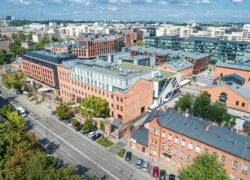
The Studio A office building, which represents the second and final phase of the Studio development in Warsaw, received its occupancy permit in December 2025. By the end of the year, more than 20,000 sqm of office space had been leased.

The tower rises over 100 metres and provides approximately 27,000 sqm of office space across 22 above-ground floors. The ground floor is planned to include a bistro or café unit intended for tenants and visitors.

Construction of the project began in November 2023. The development forms part of the frontage along Prosta Street and includes a publicly accessible pedestrian passage connecting Prosta and Łucka Streets. According to the developer, this element is intended to improve pedestrian circulation in the surrounding area.

Representatives of Skanska Commercial Development Europe stated that the occupancy permit marks the completion of the entire Studio complex and noted that the company remains active in delivering new office space in central Warsaw.

Studio A is located within walking distance of the Rondo Daszyńskiego and ONZ metro stations and near the Norblin Factory mixed-use complex, which offers retail and service functions. Tenants secured to date represent sectors including energy, pharmaceuticals, finance, IT, consulting and legal services.

The building was designed by Arrow Architects in cooperation with Grupa 5 Architekci and maintains architectural continuity with the first phase of the project. Public space in front of the building includes landscaped greenery and seating areas.

Studio A incorporates digital building management systems intended to support energy monitoring and access control via mobile devices. The project has obtained several building and sustainability certifications, including LEED, WELL, WiredScore and SmartScore, as well as a “Building without Barriers” accessibility certificate.

LivUp begins revitalisation of historic building at 8 Moniuszki Street in Warsaw

LivUp, a company active in Poland’s private rented sector (PRS), has started the revitalisation of a historic tenement building at 8 Moniuszki Street in central Warsaw. The property is known as the former location of Café Adria, a pre-war entertainment venue. Following modernisation, the building is planned to return to use as a residential project for long-term institutional rental, with additional retail and food and beverage units at street level.

The project involves reconstruction, extension and a change of use from office and service functions to residential. The renovated building will have six residential floors and a usable area of nearly 2,600 sqm, providing 65 apartments ranging from 25 to 64 sqm. Planned amenities include shared leisure and work areas, a reception lobby, a small fitness zone, bicycle storage and outdoor terraces, including a rooftop terrace. Ground-floor and underground levels are designated for approximately 1,200 sqm of commercial space. Construction works began in August 2025 and are scheduled for completion in the second half of 2027. Techbau has been appointed as general contractor.

According to LivUp, the project represents the company’s first major revitalisation scheme and combines residential and commercial functions within a single property in Warsaw’s city centre.

The architectural design has been prepared by APMD Architects. The building, constructed between 1928 and 1930 for the Riunione Adriatica di Sicurtà insurance company and designed by Edward Zachariasz Eber, is listed in the Municipal Register of Monuments as an example of classicising modernism. The planned works, carried out in line with conservation guidelines agreed with the Mazovian Conservator of Monuments, include façade renovation, restoration of original stone and stucco elements, reconstruction of architectural details and replacement of windows with wooden frames reflecting the historic appearance. A commemorative plaque related to a World War II event at the site is also planned to be reinstated after completion.

Interior design has been developed by the Warsaw-based studio IDSTUDIO, with a concept referencing interwar aesthetics interpreted in a contemporary manner. The apartments and common areas are planned to use durable materials and custom-made furnishings produced by local manufacturers.

Union Investment secures EUR 282 million in rental income for funds in 2025

Union Investment reported new and replacement lettings totalling approximately 890,650 sqm across its portfolio in 2025, resulting in annual net rental income of EUR 282 million for its commercial real estate funds, compared with EUR 273 million in 2024. The occupancy rate, measured by income, remained broadly stable at 95.3 percent at the end of 2025, up slightly from 95.1 percent a year earlier.

The majority of leasing activity took place within the company’s three open-ended real estate funds. The UniImmo: Deutschland fund recorded around 256,550 sqm of lettings, corresponding to annual income of EUR 105.6 million. UniImmo: Europa leased approximately 220,000 sqm, securing annual net rent of EUR 81.8 million, while UniImmo: Global concluded leases for roughly 132,000 sqm, generating annual rental income of EUR 31.7 million.

According to Union Investment Real Estate GmbH management board member Henrike Waldburg, lease renewals and follow-up lettings accounted for 68.7 percent of the total leasing volume, or around 612,000 sqm, reflecting a continued focus on retaining existing tenants in a competitive market environment.

Office properties represented the largest share of lettings in 2025 at around 66 percent, followed by retail assets at approximately 25 percent. The remaining activity was mainly in logistics and hotel properties.

Among the larger transactions during the year was a lease agreement with law firm Clifford Chance for the entire 11,000 sqm of office space at 59 Boulevard Haussmann in Paris, starting in 2027 for a term of 12 years. The building, constructed in 1927 and held in the UniImmo: Deutschland fund since 2021, is scheduled for renovation and restructuring by 2027. In Brisbane, Flight Centre Travel Group extended its lease in the Southpoint office building by 10 years for around 16,200 sqm; the asset has been part of the UniImmo: Europa portfolio since 2014. In Hamburg’s Wandsbek Markt district, Union Investment signed a lease with the Free and Hanseatic City of Hamburg for approximately 11,400 sqm in a former Karstadt property held within the UniImmo: Deutschland fund.

7R appoints Martin Ohly as Head of Germany

7R and Urban Partners have announced the appointment of Martin Ohly as Head of Germany. He joins 7R from Logicenters, where he most recently served as General Manager and Head of Logistics. In his new role, he will be responsible for leading 7R’s activities and planned expansion in the German market.

Ohly moves from Logicenters, Urban Partners’ logistics property management and development platform, to 7R, which is also part of the Urban Partners portfolio and owned by the Nordic Strategic Fund V. He brings more than 19 years of experience in commercial real estate, including work in investments, transactions, capital markets, leasing and asset management. Prior to Logicenters, he held positions at companies including Amazon Global Realty, JLL, Apleona and METRO Properties, working in both national and European roles.

According to 7R CEO Andrzej Wroński, the appointment is intended to support the company’s entry into Germany and strengthen its understanding of local market conditions and business requirements.

In his new position, Ohly will oversee the development of 7R’s German portfolio, which is expected to include acquisitions of existing assets, speculative and build-to-suit logistics projects, and potential joint ventures. The company states that its focus will be on operational efficiency and long-term cooperation with tenants across the lifecycle of its properties.

Ohly said that he intends to focus on expanding 7R’s presence in Germany and highlighted the company’s approach to ESG standards and a range of logistics formats, from large distribution facilities to urban logistics parks.

CA Immo completes sale of Millennium Tower I office building in Budapest

CA Immo has finalised the sale of Millennium Tower I, an office property located in Budapest’s Central Pest office submarket. The transaction forms part of the company’s ongoing capital rotation strategy aimed at concentrating its investment portfolio on modern, high-quality office assets within its core markets.

Millennium Tower I was completed in 2006 and is one of several buildings within the Millennium Towers office park on the Danube riverbank, adjacent to landscaped green areas. The multi-tenant building provides approximately 18,800 sqm of gross leasable area and around 270 parking spaces. As of November 2025, the property reported an occupancy rate of roughly 87 percent, a weighted average unexpired lease term (WAULT) of seven years and annualised gross rental income of about €3.1 million.

According to CA Immo CEO Keegan Viscius, the company reclassified Hungary as a non-core market in 2023 in response to market conditions and alternative capital allocation opportunities. He noted that the disposal represents another step toward a planned exit from the Hungarian market. Proceeds from the sale may be used for general corporate purposes, reinvestment into prime assets, debt reduction, share buybacks or external investments, depending on available opportunities.

Hedwig Höfler, Group Head of Investment Management at CA Immo, stated that while transaction volumes in Budapest were subdued in 2023 and 2024, investment activity strengthened in 2025. She added that the completion of three sales during the year reflects improving market sentiment and expressed confidence that the company’s remaining assets will continue to attract investor interest.

The disposal aligns with CA Immo’s long-term strategy to prioritise large, Class A office properties in prime inner-city locations. Assets that fall outside the company’s core criteria in terms of location, building quality, age or value-creation potential are being gradually divested as part of portfolio optimisation efforts focused on quality and sustainability.

CERHA HEMPEL Rechtsanwälte and CBRE acted as advisers to CA Immo on the transaction.

As of 30 September 2025, CA Immo’s portfolio in Hungary comprised six office buildings in Budapest with a combined lettable area of approximately 125,000 sqm and a book value of around €246 million. All properties hold either BREEAM Very Good or LEED Gold sustainability certifications.

Labour market indicator rises in January, pointing to potential increase in unemployment

The Labour Market Indicator (WRP), which signals possible future changes in unemployment, increased by 0.5 points in January compared with December 2025. Although the indicator remains below its most recent peak from July last year, recent movements suggest that the registered unemployment rate may rise slightly in the coming months.

In December 2025, the registered unemployment rate stood at 5.7%, up from 5.1% a year earlier. Part of this increase is linked to regulatory changes introduced in mid-2025 that altered the operation of public employment services and the rules for registering unemployed individuals at district labour offices. The impact of these changes is expected to diminish over the course of 2026. Beyond these regulatory effects, the labour market continues to face structural challenges, including limited labour supply, insufficient activation measures and persistently weak demand for workers, reflected in a low number of job vacancies.

The main factor currently pushing the WRP upward is the low number of job offers registered at district labour offices, which suggests upward pressure on unemployment. A secondary, smaller contribution comes from a rise in the number of unemployed people deregistering after finding work. Other components of the indicator show little evidence of improvement in labour market conditions.

One of the few positive signals comes from assessments of the overall economic situation by managers in the manufacturing sector. While negative views still outweigh positive ones, the gap has narrowed considerably over the past year. However, this improvement has not been matched by employment plans, as forecasts from industrial firms do not yet point to a clear increase in hiring, even though the number of companies planning workforce reductions has been gradually declining.

Labour demand reported through employment offices remains weak. The number of vacancies registered at these offices is close to historical lows. Online job postings show slightly more stability, with the Job Offer Barometer declining marginally month on month and remaining unchanged year on year. This divergence suggests that public employment offices are playing a reduced role in matching jobseekers with vacancies.

Flows out of unemployment into employment have remained broadly stable, with the average monthly number of people leaving unemployment for work in 2025 similar to that in 2024. However, the relationship between job creation and exits from unemployment has shifted. Whereas in previous years new vacancies exceeded the number of people finding work, the situation has now reversed, further indicating a diminished intermediary role for district labour offices.

Recent media reports have highlighted redundancies attributable to employers. Data from the Central Statistical Office (GUS) show that the number of such layoffs has been declining steadily over the past three months, suggesting that large-scale job losses are easing despite the overall weak labour demand.

U Boží Vody project highlights demand for energy-efficient family housing in regional cities

The U Boží Vody residential development in Mladá Boleslav suggests that demand for energy-efficient family homes remains solid outside Prague. Of the nine detached houses planned within the project, four have already been sold, accounting for more than 44% of the total, despite construction still being underway.

The project is being developed by Pierwood Capital and comprises nine standalone houses designed for family living. One unit serves as a show house, while four homes have been sold to date—one already completed and handed over, with three others currently under construction. The remaining four houses are still available.

Sales achieved during the construction phase indicate sustained interest in housing that combines low operating costs with a high standard of living. The project also reflects a broader shift in buyer activity toward regional cities that offer established infrastructure and suitable conditions for family life, rather than demand being focused exclusively on Prague and its immediate surroundings.

According to Pierwood Capital, the development follows a long-term approach that prioritises architectural quality, energy performance and healthy indoor environments over rapid delivery. The scheme was planned as a cohesive residential setting rather than a collection of individual units.

“For us, sustainability is not a marketing label. It must be evident in everyday living comfort, operating costs and in how a home performs over decades. The fact that a number of homes in this project were sold during construction clearly shows that this approach resonates with buyers,” said Frank Nourse, founder of Pierwood Capital.

Nourse’s development philosophy is informed by international experience gained in Africa, Ireland, the United States and across Europe, where he observed the long-term impact of poor construction quality and energy-inefficient housing. After more than 20 years working with conventional steel and concrete structures, he shifted toward timber construction as a way to improve energy performance and long-term sustainability.

Sustainability at U Boží Vody is defined through measurable design and performance criteria rather than formal certification. The homes focus on high insulation standards, the use of natural materials and modern building technologies aimed at reducing long-term energy consumption and operating costs.

The project is delivered under the ZEO Homes standard, which specialises in passive timber housing with very low energy requirements. Pierwood Capital applies this development standard across its residential projects in several regions of the Czech Republic.

Housing quality increasingly linked to mental well-being, says Geosan Development

As stress and burnout remain among the most common challenges facing modern urban populations, attention is increasingly turning to the role housing plays in supporting mental well-being. Recent European research highlights the importance of factors such as access to daylight, contact with greenery and a sense of privacy in reducing long-term stress. In response, residential developers are placing greater emphasis on design principles that frame the home as a place of recovery rather than simply a functional living space.

According to Eliška Koderová, Sales Director at Geosan Development, contemporary residential architecture is increasingly shaped by these findings. “The key elements of this concept are large windows that maximise daylight, connecting the interior with the exterior through terraces or winter gardens, high-quality acoustic insulation to protect against noise, and flexible spaces that allow for the creation of quiet zones separate from work activities. Contact with greenery, even if only visual, has been proven to reduce stress hormone levels,” she said.

The idea of the home as a “sanctuary” does not imply luxury in a traditional sense, but rather a carefully considered environment that supports natural daily rhythms and offers relief from the pace of city life. Design choices related to orientation, ventilation, acoustics and materials are increasingly viewed as factors with a direct impact on health, sleep quality and concentration.

Koderová notes that the growing prevalence of remote and hybrid work has reinforced the need for functional zoning within apartments, allowing residents to clearly separate work from rest. Similarly, attention to air quality, natural materials and interior greenery is seen as contributing to a calmer and more balanced living environment. “Home should be a place where we feel safe and can truly slow down. In today’s world of constant rush and digital overload, this is perhaps more important than ever before,” she said.

One trend reflecting these priorities is the rising interest in rooftop apartments and penthouses, which tend to offer greater privacy, reduced noise and direct access to outdoor space. Terraces are increasingly treated as an extension of the living area rather than an optional extra, providing space for relaxation, gardening or quiet activities away from street-level intensity.

Geosan Development points to its Radimova Residence in Prague’s Břevnov district as an example of how these principles are being applied in practice. The penthouses are designed to maximise daylight, connect interior spaces with terraces and provide enhanced sound insulation. They are offered in a shell-and-core format, allowing owners to adapt layouts and finishes to individual needs, and are equipped with systems such as heat recovery, underfloor heating, air conditioning and external blinds.

From an economic perspective, the company argues that investment in housing quality should be viewed as a form of prevention rather than an added cost. Prolonged exposure to noise, insufficient daylight or lack of privacy has been linked to lower productivity and higher health-related costs over time. “People often perceive quality housing as a luxury, but it is a basic investment in their own health and well-being. In the long term, this investment will pay off many times over—not only in the form of better fitness and vitality, but also higher productivity and overall quality of life,” Koderová concluded.

DIW Economic Barometer rises in January, recovery remains cautious

The Economic Barometer published by the German Institute for Economic Research (DIW Berlin) increased to 94.8 points in January, up from 93.4 points in December. While the indicator has moved closer to the neutral 100-point mark that signals average economic growth, it continues to point to a recovery with limited momentum.

According to preliminary data, Germany’s economy is estimated to have expanded by around 0.2% in the fourth quarter of 2025. DIW Chief Economist Geraldine Dany-Knedlik said that recently introduced investment measures are beginning to support domestic activity, but stressed that the recovery remains fragile. Ongoing structural challenges and the slow pace of additional reforms are continuing to weigh on growth prospects.

Despite ongoing trade tensions, global trade has remained relatively resilient. However, growth rates are expected to stay moderate in 2026, with German exports still facing strong competitive pressure, particularly from China. As a result, sentiment among companies and households is likely to improve only gradually.

German industry has shown early signs of stabilisation after several weak years. Industrial production and new orders have been recovering modestly since autumn. Business sentiment indicators also improved slightly in January, with the ifo Business Climate Index showing better assessments of both current conditions and expectations, and the industrial Purchasing Managers’ Index (PMI) edging higher. At the same time, weak domestic demand and subdued external momentum continue to constrain the sector. DIW economist Laura Pagenhardt noted that government investment programmes are expected to provide incremental support to industry over the course of the year.

The services sector has also shown tentative signs of improvement. The PMI for services has moved above the 50-point threshold that separates expansion from contraction and continues to trend upward. However, the ifo Business Climate Index still points to a cautious outlook, and consumer sentiment remains weak, partly reflecting ongoing tensions in the labour market. A gradual improvement is nonetheless expected in the coming months.

DIW experts conclude that the German economy is showing early indications of recovery, but that patience will be required before investment measures translate into a broader and more self-sustaining upswing in activity and confidence.

Source: DIW Berlin

Slovakia enters 2026 with easing price pressures but limited economic momentum

Slovakia began 2026 with mixed economic signals, as recent official data and international assessments point to stabilising price dynamics alongside modest growth prospects.

Data released by the Statistical Office of the Slovak Republic indicate that price pressures at the producer level softened toward the end of 2025. After several months of increases, industrial producer prices edged lower in December, while growth in agricultural prices slowed compared with earlier in the year. These developments suggest that cost pressures in parts of the supply chain may be easing, reflecting both weaker external demand and gradual adjustments in input costs.

At the same time, broader indicators show that the economy has yet to gain strong momentum. Preliminary figures for late 2025 point to subdued activity across several sectors, with business sentiment and household confidence remaining cautious. Consumer prices are still rising, although at a more moderate pace than during earlier inflationary peaks, keeping pressure on purchasing power.

International organisations published updated outlooks in January 2026 that broadly confirm this cautious picture. Growth in Slovakia is expected to remain restrained over the next two years, with expansion driven mainly by domestic demand rather than exports. External conditions, including slower growth among key trading partners and ongoing geopolitical uncertainty, continue to weigh on the outlook.

Inflation is projected to gradually move closer to more stable levels, but this process is expected to take time. Analysts note that energy prices, tax changes and labour market dynamics will remain important factors shaping price developments in the near term. While wage growth has supported household incomes, it has also contributed to higher costs for businesses, particularly in labour-intensive sectors.

Overall, the latest data suggest that Slovakia is moving away from the period of sharp price volatility seen in recent years, but without a strong acceleration in economic activity. Policymakers and businesses are therefore entering 2026 in an environment defined by adjustment rather than rapid recovery, with attention focused on whether easing cost pressures can translate into more robust growth later in the year.

front page info
LATEST NEWS