StudentSpace Starts Construction of Second Student Housing Project in Warsaw

StudentSpace has begun construction of its second purpose-built student accommodation (PBSA) project in Warsaw, further expanding its presence in Poland’s largest academic market. The development is being delivered by a platform established by SIGNAL Capital Partners, Griffin Capital Partners and Echo Investment.

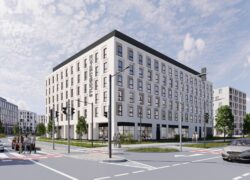
The new residence will be located in the southern part of Mokotów and is scheduled to open for the 2027/2028 academic year. Once completed, it will provide nearly 600 student beds, increasing the supply of professionally managed student housing in the Polish capital.

The six-storey building will include an underground level and four ground-floor retail units. The project follows the launch of StudentSpace’s first student residences in Kraków and the opening of its first Warsaw facility earlier this year.

According to StudentSpace, the latest development forms part of the company’s strategy to expand its student housing platform in response to growing demand for modern accommodation located close to universities and public transport.

Anna Czaplicka, Head of Sales at StudentSpace, said the project reflects the platform’s focus on delivering accommodation that combines residential, study and social functions while supporting the long-term growth of the PBSA sector in Poland.

The development will be built at the intersection of Beethovena and Dziekońskiego streets in Mokotów, with access to key transport routes including Jana III Sobieskiego and Ludwika Idzikowskiego streets. The location provides connections to universities, services, retail facilities and recreational areas.

In addition to student rooms, the building will include a range of shared amenities designed to support everyday living and study activities. These will include coworking areas, communal spaces, laundry facilities and dedicated areas intended to encourage interaction among residents.

The project will also provide more than 200 parking spaces and bicycle parking facilities.

Purpose-built student accommodation remains a relatively small but growing segment of the Polish residential market. Rising student mobility, increasing numbers of international students and limited availability of high-quality private rental housing have supported investor interest in the sector in recent years.

Warsaw remains the country’s largest higher education centre, attracting students from across Poland and abroad. As a result, developers and investors continue to identify opportunities to expand the supply of professionally managed student housing in locations with access to universities and public transport.

The new StudentSpace development will add further capacity to the Warsaw market as operators seek to address growing demand for accommodation specifically designed for student living.
Peakside Begins Construction of Fourth Building at City Point Targówek

Peakside Capital Advisors has started construction of Building B at City Point Targówek, an urban logistics and light industrial development located within Warsaw. The new facility will add more than 12,400 sqm of warehouse and business space to the scheme, with completion scheduled for the first quarter of 2027.

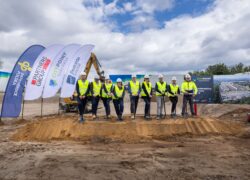
A groundbreaking ceremony marking the start of construction was attended by representatives of Peakside Capital Advisors and the project’s general contractor, Depenbrock Polska.

The new building has been designed to accommodate companies seeking smaller-scale warehouse, logistics, service or light manufacturing premises within the city. Building B will comprise nine units ranging from approximately 860 sqm to 2,000 sqm, providing occupiers with a combination of operational and office space.

According to Peakside, demand for smaller urban warehouse units remains strong as companies increasingly seek locations close to customers, employees and transport infrastructure. The limited availability of such space within Warsaw has supported interest in developments offering flexible unit sizes and urban locations.

Olga Wałkiewicz, Leasing Director at Peakside Capital Advisors, said the project responds to continued demand for compact warehouse and light industrial facilities within the capital.

The building will incorporate a number of sustainability features, including photovoltaic panels, energy-efficient building systems, electric vehicle charging stations and cycling infrastructure. Plans also include employee recreation areas and roof skylights designed to increase access to natural daylight.

Jakub Rzepa, Construction Manager at Depenbrock Polska, said the facility has been designed to accommodate a broad range of occupier requirements while maintaining flexibility for different business activities.

Building B will provide approximately 120 parking spaces, dedicated employee facilities and systems aimed at reducing energy and water consumption. The project is targeting certification under the BREEAM, LEED and WELL Health-Safety Rating standards.

City Point Targówek is being developed on a former industrial site and forms part of the urban logistics portfolio owned by a joint venture between Partners Group and Peakside Capital Advisors. Once completed, the scheme is expected to provide around 100,000 sqm of warehouse, production and service space.

Located within Warsaw’s city limits, the project reflects growing demand for urban logistics facilities that enable businesses to operate closer to end users while maintaining access to labour and transport networks. The development combines logistics, light industrial and service functions within a single location, targeting occupiers requiring flexible space in an urban setting.

Generali and SCF Acquire Portfolio of Polish Retail Parks for Nearly €110 Million

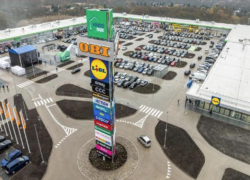
Generali Fond realit, managed by Generali Investments CEE, and Czech investment group SCF have completed the acquisition of a portfolio of six retail parks in Poland in a transaction valued at close to €110 million.

The portfolio comprises approximately 70,000 sqm of leasable space located across several regional markets in Poland. The assets were acquired from Patron Capital and Trei Real Estate, which developed the properties through a joint venture established in 2021.

The retail parks are anchored by grocery operators, a segment that continues to attract investor interest due to its ability to generate regular customer traffic and maintain stable occupancy levels. Key tenants across the portfolio include major food retailers such as Lidl, Aldi and Biedronka, alongside operators from the drugstore, household goods, pharmacy, DIY and pet supplies sectors.

The acquisition expands the retail holdings of both investors and strengthens their presence in the Polish market, one of the largest consumer markets in Central and Eastern Europe.

According to Marek Bečička, Head of Real Assets at Generali Investments CEE, the transaction aligns with the fund’s strategy of building a diversified property portfolio with a focus on assets that generate stable income. He noted that retail parks continue to benefit from regular customer traffic and a tenant structure centred on everyday consumer spending.

For SCF, the acquisition represents a further step in expanding its activities in Poland. Josef Malíř, CEO and owner of SCF, said the company views Poland as a key market due to its large consumer base, rising purchasing power and opportunities in regional retail locations.

Retail parks have become one of the most active segments of the Polish retail property market in recent years. Developers and investors have increasingly focused on smaller cities and regional centres, where modern retail provision remains below levels seen in major metropolitan areas.

The format has also demonstrated resilience during periods of economic uncertainty, supported by tenants providing essential goods and services. As a result, retail parks have attracted growing interest from institutional investors seeking assets with stable cash flows and diversified tenant bases.

The latest acquisition further underlines investor confidence in Poland’s retail park sector and reflects continued demand for income-producing retail assets across Central and Eastern Europe.

UK Commercial Leasehold Reform Targets Transaction Delays

The Law Commission has launched a consultation proposing reforms to key aspects of commercial leasehold law in England and Wales, aiming to reduce obstacles that frequently complicate and delay property transactions. The proposals form part of a broader review of commercial landlord and tenant legislation and sit alongside the ongoing consultation on reforming the Landlord and Tenant Act 1954.

The latest consultation, Commercial Leasehold: Overcoming Barriers to Transactions, focuses on modernising provisions within the Landlord and Tenant Act 1987 and the Landlord and Tenant (Covenants) Act 1995. Responses to both consultations are being accepted until 16 September 2026.

Clarifying the Right of First Refusal

One of the principal areas under review concerns the right of first refusal under the Landlord and Tenant Act 1987. Under current rules, landlords intending to sell all or part of their interest in a building containing qualifying residential leaseholders are often required to offer that interest to those leaseholders before selling to a third party.

While designed to protect residential occupiers, the legislation has created uncertainty in mixed-use developments that combine residential and commercial space. Questions frequently arise as to whether commercial lease transactions trigger the statutory process, creating delays and increasing legal complexity.

To address this, the Law Commission proposes that granting a lease of premises used exclusively for commercial purposes should generally fall outside the right of first refusal regime. A limited exception would remain for areas shared with residential occupiers where those areas are directly connected to residential use.

According to the Commission, the proposed change would maintain protections for residential leaseholders while removing unnecessary procedural requirements from commercial transactions that offer little practical benefit to those residents.

Greater Flexibility for Assignments and Guarantees

The consultation also examines certain anti-avoidance provisions contained in the Landlord and Tenant (Covenants) Act 1995.

The legislation was originally introduced to ensure that landlords and tenants would generally be released from future liabilities once a lease had been assigned. However, some of the rules designed to prevent parties from circumventing the legislation have created practical difficulties for modern commercial leasing arrangements.

The Law Commission is therefore seeking views on measures that could introduce greater flexibility while preserving the core objectives of the Act.

Among the options under consideration are changes that would facilitate assignments and guarantee arrangements between companies within the same corporate group. The proposals also address transactions involving partnerships where the partners of the outgoing and incoming tenant remain substantially the same.

Another significant proposal would allow so-called “repeat guarantees” in certain circumstances. This would enable a guarantor that supported an outgoing tenant to continue acting as guarantor for the incoming tenant where the commercial relationship remains closely connected.

The consultation additionally explores whether restrictions on assignments to guarantors should be relaxed in some cases.

Focus on Transaction Efficiency

The review reflects growing concern within the property sector that some leasehold rules, while originally introduced to provide protection and certainty, no longer align with the realities of modern commercial property ownership and investment structures.

If implemented, the reforms could simplify a range of transactions involving mixed-use developments, corporate restructurings and lease assignments, helping to reduce legal uncertainty and shorten transaction timetables.

The Law Commission’s wider review of commercial leasehold legislation is expected to play an important role in shaping the future framework governing commercial property transactions across England and Wales, with stakeholders from the real estate, investment and legal sectors expected to contribute to the consultation process over the coming months.

Source: CMS

European Logistics Market Sees Stronger Leasing Demand as Investors Focus on Income Stability

Europe’s logistics sector started 2026 with growing occupier demand, although investment activity slowed as investors remained selective amid geopolitical uncertainty and higher financing costs.

According to Savills, companies leased 6.58 million sqm of logistics space across Europe during the first quarter of 2026, representing a 6% increase compared with the same period a year earlier. Leasing activity was particularly strong in the Netherlands, the United Kingdom, Belgium and Spain, with Madrid and Barcelona together accounting for more than 540,000 sqm of take-up during the quarter.

The increase in demand comes despite a more cautious economic backdrop. A key factor supporting the market has been the limited availability of modern warehouse space. Developers have significantly reduced speculative construction over the past two years, resulting in fewer immediately available units across many European logistics hubs. This has created competition for high-quality space and supported rental growth in several markets.

Savills’ European prime logistics rental index increased by 1.3% during the first quarter and was 2.7% higher than a year earlier. Prime facilities in established logistics corridors continue to benefit from limited supply, while occupiers are increasingly planning their requirements further in advance to secure suitable space.

The current supply situation reflects broader changes in the development market. Higher construction costs, financing expenses and more cautious lender sentiment have reduced the number of speculative projects entering the pipeline. In several markets, development activity has fallen below long-term averages, limiting the volume of new space expected to reach the market in the near term.

While leasing activity strengthened, investment volumes moved lower. European logistics investment totalled €7.5 billion during the first quarter of 2026, a decline of approximately 19% compared with the same period last year. Nevertheless, the sector remains one of the most active areas of the European real estate market after reaching €43.3 billion in transaction volume during 2025, the strongest annual result since the pandemic period.

Market participants attribute the slowdown primarily to financing conditions and geopolitical developments rather than weakening fundamentals. Ongoing tensions in the Middle East, uncertainty surrounding interest-rate movements and a more cautious lending environment have encouraged investors to focus on assets with predictable cash flow and strong tenant profiles.

At the same time, several long-term trends continue to support demand for logistics facilities. E-commerce, supply-chain diversification, nearshoring strategies and increased inventory requirements are encouraging companies to maintain and expand distribution networks. Savills Investment Management notes that demand remains supported by structural factors despite the more moderate pace of economic growth seen across Europe. Average vacancy rates across core European logistics markets remain close to 5%, indicating that there is no widespread oversupply of warehouse space.

Central and Eastern Europe continues to attract attention from both occupiers and investors. Markets such as Poland, the Czech Republic, Romania and Hungary benefit from their strategic location within European supply chains, access to labour and modern logistics infrastructure. The region also offers higher yields than many Western European markets, which remains attractive to income-focused investors.

In Poland, the shortage of immediately available modern warehouse space is becoming increasingly visible. As available stock remains limited in several locations, occupiers are turning more frequently to build-to-suit developments or extending existing leases rather than relocating. This trend is supporting demand for customised facilities while encouraging developers to consider selective speculative projects in markets where vacancy levels remain low.

Investor preferences are also evolving. Capital is increasingly targeting prime logistics assets with strong occupancy, long lease terms and stable income streams. Income-oriented funds, net-lease strategies and institutional investors continue to be among the most active buyers, reflecting a broader emphasis on predictable returns in a more uncertain market environment.

Despite slower investment activity at the start of the year, the underlying fundamentals of the European logistics sector remain intact. Limited new supply, stable occupier demand and ongoing supply-chain restructuring continue to support the market. As financing conditions improve and economic confidence returns, logistics is expected to remain one of the most closely watched sectors within European commercial real estate.

Homeownership Remains a Priority for Poles Despite Mortgage Concerns

The desire to own a home remains deeply rooted in Poland, with many households continuing to view property ownership as a long-term goal despite concerns about financing costs and housing affordability.

According to a recent study commissioned by ING Bank Śląski and conducted by Ipsos, 28% of Poles plan to purchase a house or apartment within the next decade. Among those considering a property purchase, 44% expect that a mortgage will be necessary to complete the transaction.

The research highlights the continued preference for ownership over renting. Nearly two-thirds of respondents said they would rather repay a mortgage than pay rent, while more than three-quarters indicated that not having their own home would be a greater concern than taking on long-term debt associated with a housing loan.

Poland remains one of the countries with the highest rates of homeownership in Europe. According to the survey, approximately 87% of residential properties are owner-occupied, significantly above the European Union average. This preference for ownership continues to shape housing aspirations across different age groups, although attitudes vary between generations.

The survey found that younger adults place less emphasis on owning property than older generations, but homeownership remains an important objective for a majority of respondents aged 18 to 29. At the same time, many young adults continue to live with their parents well into adulthood, reflecting both economic realities and changing social attitudes.

More than half of respondents from Generation Z reported living with their parents, compared with around one-quarter of millennials. While financial constraints remain a factor, the study suggests that family relationships and shared living arrangements also influence housing decisions. Among young adults who continue to live at home despite having the financial means to move out, only a minority expressed a strong desire to establish an independent household immediately.

The findings point to broader demographic trends that could affect future housing demand. Poland’s population is ageing, and researchers note that housing choices made today may not always reflect future needs. Nevertheless, only a small proportion of prospective buyers currently consider how a property will accommodate them later in life.

The study also examined changing household structures. While 8% of Poles currently live alone, that figure is expected to increase over the coming decade. Among younger respondents, the proportion anticipating single-person households is even higher. These trends may influence demand for smaller residential units and developments designed to encourage social interaction and community engagement.

Satisfaction with housing conditions remains strongest among homeowners. More than seven in ten respondents who own their homes, whether mortgage-financed or fully paid off, reported being satisfied with their current living situation. Lower levels of satisfaction were recorded among tenants and adults still living with their parents.

The results underline the continuing importance of homeownership in Poland’s housing market, even as demographic change, affordability pressures and evolving lifestyle preferences reshape residential demand. For developers, lenders and policymakers, balancing these factors is likely to remain a central challenge as the market adapts to changing household needs.

Patron Capital and Trei Real Estate Sell Polish Retail Park Portfolio for Approximately €110 Million

Patron Capital and Trei Real Estate have completed the sale of a portfolio of six retail parks in Poland to a joint venture between Generali Investments CEE and SCF Investment Partners SICAV. The transaction value is approximately €110 million.

The portfolio comprises around 68,000 sqm of gross leasable area and includes retail parks located in Chorzów, Otwock, Skarżysko-Kamienna, Szczecin, Kostrzyn nad Odrą and Zambrów. All six properties are anchored by grocery retailers and focus on serving daily shopping needs in their respective catchment areas.

The assets were developed through a joint venture established in 2021 between Patron Capital’s Fund VI and Trei Real Estate. The partnership focused on the development of retail parks in regional Polish markets, targeting locations with demand for modern retail space and convenient access for local consumers.

The acquisition expands the retail portfolio of the purchasing joint venture formed by Generali Investments CEE and SCF Investment Partners SICAV, both active investors in the Central and Eastern European real estate market.

According to Patron Capital, retail parks have continued to attract investor interest due to stable occupier demand and their focus on everyday retail services. The format has demonstrated resilience in recent years as consumers increasingly favour accessible shopping destinations located close to residential areas.

Wiktor Lesinski, Investment Director and Partner at Patron Capital, said the transaction reflects both the performance of the assets and the continued attractiveness of the Polish retail park market. He noted that convenience-oriented retail schemes continue to benefit from changing consumer habits and a relatively limited supply of modern retail space in some regional locations.

Poland remains one of the largest retail investment markets in Central and Eastern Europe, with retail parks accounting for an increasing share of new retail development activity. Developers and investors continue to focus on regional cities and smaller urban centres, where demand for modern retail formats remains strong and development opportunities are still available.

The transaction represents one of the larger retail park portfolio sales in Poland this year and underlines continued investor appetite for income-producing retail assets with established tenant bases and exposure to everyday consumer spending.

Business Networks Face New Pressures as Companies Reassess Global Exposure

The way companies organize production, sourcing and distribution is undergoing a period of change as geopolitical developments increasingly influence business decisions. Political tensions, trade restrictions and regional conflicts are prompting businesses to look more closely at how their operations are structured and where potential vulnerabilities may exist.

Over the past decade, a series of events ranging from Brexit and the pandemic to the war in Ukraine and growing economic competition between major powers have exposed weaknesses in highly concentrated business networks. As a result, many companies are reconsidering long-established operating models that prioritized efficiency above all else.

Recent analysis suggests that businesses with activities spread across multiple regions have generally been better equipped to navigate periods of uncertainty than those heavily dependent on a small number of suppliers, production facilities or end markets. The findings reflect a broader shift in corporate thinking, where resilience is becoming an increasingly important factor in strategic planning.

The change is influencing decisions throughout the value chain. Companies are paying closer attention to where raw materials originate, where products are manufactured and how goods reach customers. For many organisations, reducing reliance on individual markets or supply routes has become an important objective.

This reassessment is also affecting investment and location decisions. Businesses are increasingly evaluating political stability, regulatory frameworks, transport connections and access to skilled labour alongside traditional cost considerations. The result is a growing preference for operational flexibility and geographic diversification.

Central and Eastern Europe continues to benefit from these developments. Countries such as Poland, the Czech Republic, Romania and Slovakia have strengthened their positions as manufacturing and logistics locations due to their proximity to major European consumer markets, established industrial bases and improving transport infrastructure. For companies seeking to serve Europe while reducing exposure to longer and more complex supply chains, the region remains an attractive option.

The impact can be seen across industrial and logistics real estate markets. Demand for warehouse and manufacturing space continues to be supported by occupiers seeking additional capacity, alternative distribution routes and locations that provide access to multiple markets. In many cases, businesses are expanding their networks rather than relying on a single production or distribution centre.

The shift is also changing how investors evaluate risk. In addition to financial performance, greater attention is being paid to the geographic distribution of operations and revenue streams. Companies with a broader operational footprint are often viewed as being better positioned to manage disruptions that could affect specific countries or regions.

At the same time, governments around the world are introducing policies aimed at strengthening domestic industries and securing access to strategic materials and technologies. These measures are contributing to a more complex international business environment and encouraging companies to review their long-term location strategies.

For the real estate sector, the trend is creating opportunities in markets that can offer stable operating conditions, modern infrastructure and access to regional and international transport networks. Industrial hubs, logistics corridors and locations with strong labour availability are expected to remain important destinations for occupier and investor interest.

While global trade and investment flows continue to evolve, one conclusion is becoming increasingly clear: decisions about where companies operate are no longer driven solely by cost and efficiency. The ability to adapt to political, economic and regulatory change is becoming a critical consideration, shaping the future direction of business networks and the property markets that support them.

Source: CIJ.World Research & Analysis Team

EQT Real Estate Completes Logistics Development Near Prague

EQT Real Estate has completed EQT Park Prague North, a logistics and light industrial development in Lužec nad Vltavou, located along the D8 motorway north of Prague. The project has received its occupancy permit and is available for lease.

The development provides 56,500 sqm of space across two buildings measuring 44,900 sqm and 11,600 sqm. The facilities have been designed for logistics, warehousing and light manufacturing operations.

The park is located within reach of Prague, northern Bohemia and transport corridors connecting the Czech Republic with Germany and Poland.

The buildings offer a clear height of 12 metres and floor loading capacity of seven tonnes per square metre. Space can be adapted to occupier requirements and is suitable for both single and multiple tenants.

The project includes a 320 kWp photovoltaic installation, LED lighting and a building management system that monitors energy consumption. The site has also been prepared for the future installation of additional solar panels, electric vehicle charging infrastructure and heat pumps. The development is currently undergoing BREEAM Excellent certification.

EQT Park Prague North is EQT Real Estate’s third logistics project in the Czech Republic. The company also owns logistics assets in Ostrava Mošnov and Nošovice, bringing its total logistics portfolio in the country to more than 300,000 sqm.

Marek Müller, Senior Director, Investment and Leasing, EQT Real Estate Czech Republic & Slovakia, said the location offers access to Prague, northern Bohemia and neighbouring international markets. He added that the company continues to seek investment and development opportunities in the Czech Republic and Slovakia.

The project was developed in partnership with 7R Czech Republic, which was responsible for permitting and construction and remains involved in leasing activities.

According to Jiří Duchoň, Managing Director of 7R Czech Republic & Slovakia, the project was developed on a brownfield site and included infrastructure improvements in the surrounding area, including a new junction on the I/16 road and upgraded access to Lužec nad Vltavou.

The development also incorporates a rainwater management system and landscaping measures using native plant species. The project adds new logistics space to the Prague region and expands the supply of modern industrial facilities in one of the country’s key distribution locations.

Investors Look to Existing Buildings as Urban Regeneration Gains Momentum

The European real estate sector is witnessing growing interest in the redevelopment and modernization of existing buildings as investors seek opportunities beyond traditional new-build projects. Rising construction costs, limited availability of development land and increasing sustainability requirements are encouraging a greater focus on improving assets that are already part of the urban landscape.

While new developments continue to play an important role in meeting demand for housing and commercial space, a growing share of capital is being directed towards the transformation of older properties, former industrial sites and underutilized urban areas. Investors increasingly view these projects as a way to unlock value while responding to changing market conditions and environmental objectives.

The shift is becoming visible across a range of property sectors. In office markets, landlords are investing in upgrades to maintain competitiveness as occupiers place greater emphasis on building quality, energy performance and workplace amenities. In residential markets, institutional investors are expanding professionally managed rental housing portfolios that often rely on modernization and operational improvements to enhance tenant experience and long-term asset performance.

The trend is also supported by wider changes in urban development strategies. Many European cities face growing pressure to increase housing supply while making more efficient use of existing infrastructure. Redevelopment projects offer an opportunity to create new residential, commercial and mixed-use space within established urban areas rather than relying solely on outward expansion.

Recent fundraising activity highlights the increasing attention being paid to regeneration projects. Investors are backing strategies focused on transforming former industrial and brownfield locations into new urban districts that combine housing, workplaces, services and public spaces. The growing availability of capital for such projects suggests that regeneration is becoming an increasingly important segment of the investment market.

Technology is playing a supporting role in this transformation. Property owners are introducing systems that improve the operation and management of buildings without requiring major structural changes. Digital access solutions, building management platforms and tools that support the use of shared spaces are becoming more common across residential, office and mixed-use developments.

According to Maciej Grabowski, founder of Blue Bolt, occupier expectations are becoming increasingly similar across property sectors.

“In practice, we are seeing a gradual blurring of boundaries between real estate segments. Solutions that work well in office buildings are moving into residential projects, while functions traditionally associated with housing or hospitality are increasingly appearing in commercial assets,” he said.

The growing adoption of such solutions reflects changing expectations among tenants and residents, who increasingly value convenience, flexibility and ease of use regardless of the type of building they occupy.

The private rented sector is expected to be one of the areas where these changes become particularly visible. Institutional rental housing continues to expand across Poland and other Central European markets, creating demand for technologies and management systems that support larger residential portfolios. According to market estimates, the number of professionally managed rental apartments in Poland is expected to continue growing over the coming years as institutional investors increase their presence in the sector.

Sustainability considerations are also contributing to the focus on existing assets. Redeveloping and modernizing buildings can help reduce the environmental impact associated with demolition and new construction while improving energy efficiency and extending asset life cycles. As environmental regulations become more demanding and occupiers place greater importance on sustainable buildings, refurbishment is increasingly becoming part of long-term investment strategies.

“The way buildings are assessed is changing. Beyond location and design, investors and occupiers are paying more attention to how buildings function on a daily basis and how effectively they respond to user needs. Technology should support the building and its users rather than require major alterations to the property itself,” Grabowski added.

Although new construction will remain essential in many markets, the growing emphasis on upgrading existing assets suggests that redevelopment and modernization will play an increasingly important role in shaping European cities. For investors, owners and occupiers, the focus is gradually shifting from simply creating new space to improving the quality, efficiency and usability of buildings that already exist.

front page info
LATEST NEWS