Allcon completes wind tunnel testing for SKYCITY Gdynia

Allcon has carried out wind tunnel research for its SKYCITY Gdynia residential development, with results indicating that the high-rise project meets established user comfort criteria. The tests were performed at the Wind Engineering Laboratory of the Krakow University of Technology.

Wind tunnel testing, commonly used in sectors such as automotive, energy and aerospace, is applied in building design to analyse the effects of wind on structures and surrounding spaces. For residential projects, the method helps assess potential impacts on structural behaviour and occupant comfort by considering local terrain and the urban environment.

“Tunnel testing is one of many above-standard activities that we carry out as part of the SKYCITY Gdynia project. It is still a rarity on the Polish housing market, yet the comfort of residents should be a priority,” said Łukasz Śledź, Member of the Management Board at Allcon.

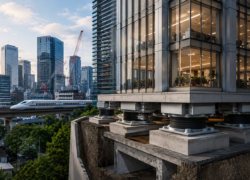
The research focused on the tallest planned tower, a 35-storey building. Engineers recreated site-specific wind conditions using a scaled aeroelastic model that reflected both the building and neighbouring structures. The analysis examined wind effects on façades, roofs and terraces, as well as the building’s dynamic response to wind loads.

According to Dr. Łukasz Flaga of the Krakow University of Technology, the testing allows designers to compare structural solutions and optimise performance. “Tunnel testing allows us to check alternative solutions and, as a result, consciously choose those that will make the building not only safe, but also comfortable and durable. Based on the research and analysis of the results, we can conclude that SKYCITY Gdynia meets all these standards,” he said.

A key objective of the study was to evaluate vibration comfort for future residents, particularly on the upper floors. The results indicated that wind-induced vibrations are expected to remain within levels considered imperceptible to occupants.

From the developer’s perspective, the testing provided an additional verification layer beyond standard computational analysis. Allcon stated that cooperation with the Krakow University of Technology and the use of wind tunnel modelling were intended to refine design assumptions and optimise structural solutions for the high-rise project.

BF.capital launches first BF.Private Debt Market Compass

BF.capital GmbH has published the first edition of its BF.Private Debt Market Compass, a new survey-based analysis of the international private debt market. The study is designed as a semi-annual panel of private debt fund managers covering Corporate Direct Lending, Real Estate Debt and Infrastructure Debt.

The inaugural edition is based on responses from 67 participants worldwide, with a focus on Europe, collected in December 2025. According to the findings, overall market conditions remain stable despite ongoing macroeconomic uncertainty.

The newly introduced BF.Private Debt Market Sentiment Index registered 60.1 points, above the neutral benchmark of 50. BF.capital attributes the positive reading primarily to steady fundraising activity, rising capital commitments from institutional investors and what respondents view as balanced risk-return conditions. The survey also indicates improving expectations for the first half of 2026.

Panel participants described financing conditions over the past six months as broadly stable, with a slight tilt toward borrower-friendly terms. Looking ahead, respondents expect market balance to shift modestly in favour of lenders. Across the main sub-segments, leverage levels remain at the lower end of typical market ranges. In direct lending, debt levels are generally reported below five times EBITDA, while in real estate debt, loan-to-value ratios are concentrated between 56 percent and 65 percent.

Fundraising conditions were assessed positively by most respondents. More than two-thirds reported stronger fundraising momentum, and 82 percent expect further improvement over the next six months. Nearly two-thirds also observed higher capital commitments from limited partners, and none of the respondents anticipate a decline in allocations. Existing investors continue to account for a large share of commitments, with so-called re-ups exceeding 80 percent of fundraising activity in some segments.

In terms of risk, respondents indicated that potential portfolio stress is more likely to stem from operational or sector-specific challenges rather than excessive leverage or refinancing pressure. Within Corporate Direct Lending, the consumer and retail sector was identified as facing the greatest pressure. In Real Estate Debt, stress was most visible in office and high-street retail assets, while in Infrastructure Debt the energy segment was most frequently cited.

Default and non-accrual rates have remained broadly unchanged over the past six months, according to nearly 85 percent of respondents. The outlook for the next half-year suggests that any deterioration, if it occurs, is likely to be limited to specific segments rather than the market as a whole.

REALOGIS: Logistics take-up across Germany’s Top 8 markets returned to growth in 2025

Logistics and industrial take-up across Germany’s eight major markets reached approximately 2.78 million sqm in 2025, representing a 21 percent year-on-year increase and marking a recovery after three consecutive years of decline, according to REALOGIS Unternehmensgruppe. The previous year had recorded the lowest level since 2014. The analysis covers Berlin, Düsseldorf, Cologne, the Ruhr region, Frankfurt, Hamburg, Munich and Stuttgart.

Rental performance across the markets showed mixed dynamics. Munich remained the most expensive location, with prime rents rising to €13.50 per sqm, an increase of €2.50 compared with 2024 and the strongest growth among the Top 8 markets. Berlin followed at €10.50 per sqm. Frankfurt and Stuttgart shared third position at €8.50 per sqm, with Frankfurt posting growth while Stuttgart remained stable year-on-year. Prime rents in Düsseldorf and Cologne held at €8.25 per sqm and €8.00 per sqm respectively, while Hamburg edged up slightly to €8.30 per sqm. The Ruhr region continued to offer the lowest prime rent level at €7.75 per sqm.

Average rents, excluding Frankfurt, increased modestly by around 2 percent compared with the end of 2024. Munich recorded €9.00 per sqm and Berlin €8.10 per sqm. Stuttgart and Düsseldorf each stood at €7.00 per sqm, followed by Cologne at €6.85 per sqm and the Ruhr region at €6.50 per sqm. Hamburg reported the lowest average rent at €6.40 per sqm.

After three years of contraction, take-up rebounded across the Top 8 markets in 2025, with the Ruhr region and Berlin posting the strongest percentage increases. The Ruhr region delivered the largest volume, contributing 603,200 sqm and accounting for 22 percent of total take-up. Frankfurt followed with 435,200 sqm, narrowly ahead of Berlin at 433,000 sqm. Compared with the five-year average, Munich and the Ruhr region exceeded their benchmarks, while Düsseldorf matched its average performance. Stuttgart recorded the weakest relative performance.

Leasing activity continued to dominate market structure. Tenant deals accounted for 94 percent of take-up, equal to 2.61 million sqm, while owner-occupiers represented just 6 percent, or 174,400 sqm. This distribution remained broadly unchanged compared with 2024.

By property type, big-box logistics space was the primary driver of activity, reaching 1.62 million sqm and representing a 58 percent share of total take-up. Space outside the big-box and business park categories totalled 758,900 sqm, or 27 percent. Business parks recorded 408,700 sqm, or 15 percent, and were the only segment to decline year-on-year, although this was more than offset by growth in other property types.

In terms of occupier structure, logistics and distribution companies were the most active group, accounting for approximately 1.33 million sqm, or 48 percent of total take-up, and overtaking retail as the leading sector. Retail and wholesale followed with 757,300 sqm, representing 27 percent. Within this segment, traditional retail accounted for 492,600 sqm, while e-commerce operators leased 264,700 sqm, a lower share than in the previous year. Manufacturing companies ranked third with 498,400 sqm, or 18 percent, showing moderate growth, while other sectors together represented 203,000 sqm.

Large units continued to dominate demand. Transactions for spaces of 10,001 sqm and above reached 1.54 million sqm, giving the segment a 55 percent market share. Units between 5,001 sqm and 10,000 sqm accounted for 475,000 sqm, meaning that almost three quarters of total take-up was concentrated in spaces above 5,000 sqm. Mid-sized categories between 1,000 sqm and 5,000 sqm declined slightly, while units below 1,000 sqm remained the smallest segment and recorded the sharpest fall.

NEINVER and OCHNIK expand cooperation across FACTORY outlet centres

NEINVER has expanded its partnership with Polish fashion and accessories brand OCHNIK by providing nearly 1,000 sqm of additional retail space across three FACTORY outlet centres in Poland.

A new OCHNIK store has opened at FACTORY Gliwice, occupying 406 sqm. At the same time, the brand has enlarged its existing outlet units at two other locations. In FACTORY Ursus in Warsaw, the store has been expanded from 164 sqm to 488 sqm, while in FACTORY Kraków the space has increased from 167 sqm to 321 sqm. OCHNIK has also indicated plans to further expand its outlet presence at FACTORY Annopol in Warsaw.

“Our outlet centres bring value both to customers and to retail chains,” said Andrea Aburra, Head of Leasing at NEINVER in Poland and Italy. He noted that retailers continue to adjust and modernise their space within the FACTORY network.

Szymon Łukasik, Manager for the development of OCHNIK company stores, said the decision to open and expand locations reflects the brand’s established customer base and observed sales potential in these regions. He added that the outlet format remains an important component of OCHNIK’s multi-channel sales strategy.

All three locations have been designed according to the brand’s latest store concept, featuring a layout divided into two zones: one dedicated to clothing and the other to accessories and travel products. The interiors follow a minimalist design approach with neutral colours and updated functional solutions.

OCHNIK’s outlet assortment typically includes previous-season collections offered at reduced prices, covering outerwear, apparel, footwear, leather goods and luggage.

Poland moves to withdraw from Ottawa Convention on anti-personnel mines

Poland has begun the formal process to withdraw from the Ottawa Convention, the 1997 international treaty prohibiting the use, production, stockpiling and transfer of anti-personnel mines, citing a deteriorating regional security environment.

The Polish government submitted legislation in 2025 to initiate the withdrawal, which requires parliamentary approval and a formal notification period under the treaty framework. Under the convention’s rules, a withdrawal takes effect six months after the deposit of the official notice to the United Nations. As of early 2026, Poland is in the process of completing these steps rather than having already fully exited the treaty.

Government officials have linked the move to the security implications of Russia’s war in Ukraine and the fact that Russia is not a party to the Ottawa Convention. Prime Minister Donald Tusk has indicated that Poland must reassess certain defence constraints in light of the changing threat environment on NATO’s eastern flank.

The potential withdrawal is also connected to Poland’s broader “Shield East” (Tarcza Wschód) programme, which focuses on strengthening defensive infrastructure along the country’s eastern borders with Belarus and Russia’s Kaliningrad region. The initiative includes physical barriers, surveillance systems and military fortifications.

Polish authorities argue that anti-personnel mines could serve a defensive role within a wider territorial defence system. However, critics — including humanitarian organisations and arms-control advocates — warn that the use of such weapons carries long-term civilian risks and undermines international humanitarian norms established by the treaty.

If the withdrawal process is completed, Poland would regain the legal ability under international law to produce and stockpile anti-personnel mines. Any actual deployment would remain a separate political and military decision.

The development reflects a broader debate in several frontline NATO states about balancing arms-control commitments with evolving security concerns following Russia’s full-scale invasion of Ukraine.

Source: WEI

GSP expands leasing footprint at CTPark Budapest Vecsés

GSP Global Solutions Provider has expanded its cooperation with CTP Hungary by leasing nearly 7,000 sqm in an existing hall at CTPark Budapest Vecsés under a long-term agreement.

The logistics service provider has signed the new lease as part of the continued growth of its operations in Hungary. The agreement marks an extension of the existing relationship between the two companies, with GSP now present in a second CTP logistics and industrial park.

GSP first entered CTPark Budapest East in 2025, where it provides contract logistics and 3PL services. The additional space in Vecsés is intended to support the company’s ongoing operational needs. According to the parties, the developer’s delivery capacity and available infrastructure enabled the space to meet the required technical and timing parameters.

“The logistics industry is evolving at a rapid pace, and flexibility and quick response are key to success. We needed a partner that could support our expansion with tailor-made solutions,” said Bence Andrási, Country Manager of GSP Global Solutions Provider.

The leased facility at CTPark Budapest Vecsés incorporates several energy-efficiency features, including rooftop solar panels, motion-controlled LED lighting and a building management system. Heating and cooling are provided by a heat pump system designed to operate without gas consumption. The building has achieved a BREEAM “Excellent” certification.

CTP stated that the transaction aligns with its strategy of building long-term tenant partnerships and further supports the positioning of CTPark Budapest Vecsés within the Budapest metropolitan logistics market.

“Based on its previous rental experience, GSP has already seen that CTP not only provides high-quality locations and technical standards, but is also able to respond flexibly to individual needs and tight deadlines. We are pleased that our existing cooperation has now expanded further,” said Péter Tar, Regional Business Development Lead of CTP Hungary.

Poznań office market records solid demand and the largest regional pipeline

At the end of 2025, Poznań’s modern office stock reached 677,500 sqm, with new completions remaining limited. During the year, only 4,900 sqm was delivered across two small projects. Despite the modest volume, this was the second-highest level of new supply among Poland’s regional office markets.

Poznań currently has the largest volume of office space under construction outside Warsaw. Approximately 72,900 sqm is underway, with most projects located in the city centre.

“Poznań combines stable demand with the highest volume of office space under construction among regional markets, which allows us to expect a revival in supply in the coming years. However, we predict that in the short term, tenants will continue to focus on optimising space and renegotiations,” said Mateusz Jakubowicz, Associate at Savills Poland.

Leasing activity remained relatively strong in 2025, with total demand reaching 71,800 sqm, up 8 percent year-on-year and above the long-term average. More than half of transactions were signed in central locations. At the same time, renegotiations increased to 53 percent of total deal volume, reflecting continued caution among occupiers regarding relocations and expansions. The average size of new leases declined to around 600 sqm, indicating ongoing space optimisation.

The vacancy rate stood at 13.9 percent at year-end, equivalent to roughly 94,000 sqm of available space. The highest availability was recorded in the western part of the city, while the lowest vacancy was observed in northern and southern areas. Newer, well-located buildings continue to show relatively limited availability.

“High-standard facilities in central locations maintain a competitive advantage, and limited new supply favours rent stabilisation and selective rate increases in the best projects,” Jakubowicz added.

Prime rents in modern Class A buildings remain stable at €14–17 per sqm per month. Some upward pressure may emerge in top schemes due to rising fit-out costs and constrained supply of new space.

In the near term, the Poznań office market is expected to operate under conditions of limited supply and increasing tenant selectivity. While the completion of larger projects in the coming years could support greater occupier mobility and transaction volumes, renegotiations and demand concentrated in prime locations are likely to remain the dominant trends.

Stokado opens second self-storage facility in Warsaw

Stokado has opened a new self-storage facility in Warsaw’s Bemowo district, marking the company’s second site in the capital and its second opening since the platform was acquired by Redefine Properties and Griffin Capital Partners in 2023.

The new property at Moździerzy Street provides more than 4,800 sqm of net leasable area within a total gross building area of 7,200 sqm. The scheme includes approximately 950 storage units and is located near residential neighbourhoods and key transport routes, including Połczyńska Street.

The building comprises three above-ground floors and one underground level. It includes a reception area, staff facilities, a covered loading zone, lifts and underground parking. According to the developer, the project was designed in line with BREEAM certification requirements and incorporates energy-efficiency features such as a ground-source heat pump, heat recovery ventilation, LED lighting and a stormwater retention system.

Pieter Prinsloo, Chief Executive Officer at Redefine Europe BV, said the project reflects changing urban living patterns and evolving customer expectations for flexible and secure storage solutions. Marcin Rękawiczny, Vice President Investments at Griffin Capital Partners, added that the company continues to focus on expanding a scalable self-storage platform in Poland.

The facility also features automated access systems that allow customers to manage entry and individual storage units via a mobile app or access codes.

Stokado, co-owned by Redefine Properties, Griffin Capital Partners and founders Dawid and Klaudiusz Bechcicki, manages more than 36,500 sqm of net leasable area across 19 locations in Poland, including Warsaw, Kraków, Wrocław, Poznań and Bydgoszcz.

Luxiona leases headquarters and showroom space at Greenwings in Warsaw

Luxiona has signed a lease for 430 sqm of office space at the Greenwings Offices complex in Warsaw. The premises will serve as the company’s Polish headquarters and include a showroom for its lighting solutions. AXI IMMO advised the tenant in the transaction.

Luxiona is a European lighting manufacturer and supplier headquartered in Barcelona, with operations across multiple markets including Poland, Germany, France and Italy. The group has been active for more than 90 years, delivering lighting systems for commercial, industrial and architectural applications. In Poland, the company operates a commercial office in Ożarów Mazowiecki and a production facility in Jacentów near Ostrowiec Świętokrzyski.

According to Luxiona, the speed of launching operations was a key factor in selecting the new location. The company noted the landlord’s flexibility and the ability to adapt the office space quickly to accommodate showroom requirements.

Anna Piłka-Sutkowska, Advisor in the Office Agency at AXI IMMO, said the search focused on office buildings in Warsaw’s Włochy district due to proximity to Chopin Airport, transport accessibility and convenient access to major exit routes. She added that the client prioritised Class A space offering strong technical standards and functionality.

Luxiona ultimately chose space in the Greenwings building, part of the Greenwings Offices scheme at 48 Komitetu Obrony Robotników Street in Warsaw. Annick Van Hool of Greenwings Offices said the tenant’s clearly defined requirements supported a smooth leasing process and highlighted the importance of providing sufficient parking for showroom visitors.

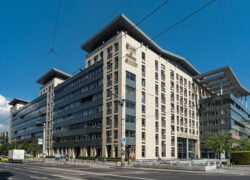
Greenwings Offices is a seven-storey Class A office building located near Warsaw Chopin Airport. The property offers more than 10,850 sqm of leasable space and 270 parking spaces across three underground levels, along with conference facilities, cyclist amenities and environmental features. The project was designed by JEMS Architekci and built by CFE Polska. The developer was OKRE Development.

Logistics take-up in North Rhine-Westphalia exceeded 1 million sqm in 2025

Logistics and industrial take-up in North Rhine-Westphalia reached 1,147,000 sqm in 2025, surpassing the 1 million sqm threshold for the first time in two years, according to REALOGIS. The analysis covers the submarkets of Düsseldorf, Cologne and the Ruhr area.

The result represents an increase of 203,900 sqm, or 22 percent, compared with 2024, when take-up totalled 943,100 sqm. The 2025 figure also exceeded the five-year average by 7 percent. The largest individual transactions were signed by Amazon (86,000 sqm), FIEGE (55,000 sqm), Goodcang (43,200 sqm), Blitz Distribution (37,000 sqm) and Winnet (36,000 sqm).

Rental levels remained stable across the three analysed markets. Düsseldorf continued to record the highest rents, with prime rents at €8.25 per sqm and average rents at €7.00 per sqm. Cologne reported €8.00 per sqm and €6.85 per sqm respectively, while the Ruhr area remained the most affordable at €7.75 per sqm prime and €6.50 per sqm on average. All figures were unchanged compared with both full-year 2024 and the first half of 2025.

The Ruhr area remained the largest submarket, with take-up of 603,200 sqm. Düsseldorf followed with 299,000 sqm and Cologne with 244,800 sqm. Year-on-year, activity in the Ruhr area increased by 75 percent, while Düsseldorf recorded a 6 percent decline and Cologne fell by 12 percent.

In terms of space type, existing properties accounted for the largest share of activity, totalling 587,800 sqm, or 51 percent of the market. Brownfield developments represented 350,200 sqm, or 31 percent, while greenfield projects accounted for 209,000 sqm, or 18 percent.

By occupier sector, logistics and distribution companies remained the main drivers of demand, leasing 686,200 sqm and representing 60 percent of total take-up. Retail and wholesale occupiers followed with 261,200 sqm, including 191,200 sqm attributed to e-commerce operators. Manufacturing companies leased 145,700 sqm, while other sectors accounted for 53,900 sqm.

Large transactions continued to dominate the market structure. Units of 10,001 sqm and above accounted for 893,000 sqm, or 78 percent of total take-up. Mid-sized categories between 5,001 sqm and 10,000 sqm totalled 104,300 sqm, while space between 3,001 sqm and 5,000 sqm reached 72,000 sqm. Units between 1,000 sqm and 3,000 sqm accounted for 64,500 sqm, and spaces below 1,000 sqm represented the smallest share at 13,200 sqm.

front page info
LATEST NEWS