Hranipex leases space at CTPark Bucharest South

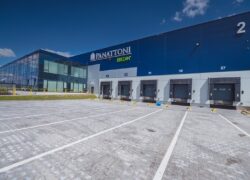
CTP has leased approximately 3,000 sqm of warehouse space at CTPark Bucharest South to Hranipex, a Czech supplier of materials and components for the furniture industry. The company has relocated its Romanian operations to the new facility and is now active from the park.

The space will be used for storage and distribution, supporting Hranipex’s local logistics network and customer base. The move forms part of the company’s expansion of its operations in Romania.

CTPark Bucharest South is located with access to the A0 Bucharest ring road, providing connections to the capital and wider transport routes. The park accommodates logistics, distribution and light industrial tenants.

According to CTP, additional units starting from around 2,500 sqm remain available for lease.

Slovakia Enters a New Real Estate Cycle as Recovery Meets Structural Constraints

Slovakia’s real estate market is moving into a new phase in 2026, where improving activity is being tested by structural limitations and a still uncertain economic backdrop.

Following a rebound in 2025, investment activity is gradually stabilising, with capital returning to the market in a more disciplined and selective manner. The gap between buyer and seller expectations has narrowed, supporting a slow recovery in transaction volumes, but decision-making remains cautious. Investors are increasingly prioritising income stability, tenant quality and long-term resilience over short-term yield opportunities.

This shift reflects a broader recalibration of risk. While financing conditions have improved compared with the previous two years, the market continues to be shaped by external pressures, including economic growth prospects across the eurozone and ongoing volatility in energy and operating costs. As a result, Slovakia is seeing a more selective investment environment, where capital is targeting core assets and well-performing locations.

In the residential sector, momentum has returned more visibly, supported by improved mortgage conditions and renewed buyer confidence. Demand has strengthened, particularly in Bratislava, where the market has regained activity following the correction period seen earlier in the cycle.

However, the recovery is taking place alongside persistent affordability pressures. Price growth recorded in 2025 continues to influence market dynamics in 2026, with housing costs in the capital remaining high relative to income levels. This imbalance is reshaping demand, as buyers increasingly adjust expectations toward smaller units, peripheral locations or older housing stock.

The structure of Slovakia’s housing market remains a defining factor. With one of the highest homeownership rates in Europe, the country continues to have a limited institutional rental sector. This restricts the development of large-scale professionally managed rental housing, even as demographic trends and lifestyle shifts begin to support more flexible forms of living.

As a result, the residential market is expanding within clear limits. Demand is present, but constrained by purchasing power and the availability of suitable product, leading to a more segmented landscape.

Taken together, these trends point to a market that is no longer in correction, but not yet in full expansion. Slovakia is entering a stabilisation phase, where recovery is evident but uneven, and performance will depend increasingly on asset quality, location and alignment with long-term demand.

For investors and developers, 2026 is shaping up as a year of positioning rather than rapid growth. Opportunities are emerging, but they require a more precise understanding of both macro conditions and the structural characteristics that continue to define the Slovak real estate market.

Energy Supply Risks and New Infrastructure Plans Reshape Slovakia’s Industrial Property Outlook

Slovakia’s industrial and logistics real estate sector is entering a more complex phase as recent disruptions to energy supply highlight structural vulnerabilities in the country’s infrastructure and broader economic model.

The interruption of oil flows through the Druzhba pipeline earlier this year has exposed Slovakia’s reliance on limited supply routes. Although alternative deliveries and reserves have helped avoid immediate shortages, the situation has underlined how dependent key industries remain on stable and predictable energy access.

This has direct implications for real estate. Industrial occupiers, particularly those in manufacturing, automotive and distribution, are highly sensitive to both energy availability and cost fluctuations. As uncertainty increases, these factors are becoming more prominent in lease negotiations, operational planning and investment decision-making.

For investors, the issue goes beyond short-term disruption. Energy resilience is increasingly being factored into how assets are evaluated, especially for properties tied to production and logistics networks. Buildings with higher energy efficiency, diversified supply options or modern technical standards are likely to be viewed more favourably, while older stock may face growing pressure.

At the same time, governments in the region are accelerating efforts to reduce dependence on single supply corridors. One of the most significant developments is a planned fuel pipeline linking Hungary and Slovakia, designed to strengthen regional connectivity and provide an additional route for refined products. The project is expected to play a key role in stabilising supply over the medium term and supporting economic continuity.

Alongside longer-term infrastructure plans, neighbouring countries are also exploring interim solutions to improve flexibility within the existing network. Proposals to adapt pipeline flows and increase cross-border cooperation reflect a broader shift toward a more integrated and resilient energy system in Central Europe.

For Slovakia’s real estate market, these developments mark an important turning point. The country continues to benefit from strong industrial demand driven by nearshoring and its strategic location, yet energy security is emerging as a critical variable shaping risk and performance.

As a result, the link between infrastructure reliability and real estate fundamentals is becoming more pronounced. In the current environment, the ability to secure stable energy supply is no longer just an operational consideration. It is increasingly central to the long-term attractiveness of industrial and logistics assets.

Building Urban Ecosystems for a New Generation of Residents, an interview with Cloud9 CEO Răzvan Brasla

The concept of residential living in major cities is evolving rapidly, shaped by changing lifestyles, mobility patterns and rising expectations for integrated urban environments. In Bucharest, premium residential developer Cloud9 is positioning itself at the forefront of this transformation. The company’s CEO, Răzvan Brasla talked with CIJ EUROPE and explains that the firm’s strategy has shifted from delivering high-quality residential buildings to creating complete urban ecosystems designed around convenience, community and long-term value.

Cloud9’s journey began in 2017 with the development of its first project in an area traditionally dominated by office buildings. At the time, residential construction in such locations was uncommon in Bucharest, but the company saw an opportunity to introduce a different type of urban living environment.

“The idea was to create something distinctive for that period,” Brasla recalls. “The area was mainly developed for office buildings, so very few developers considered residential projects there. We decided to take the challenge and introduce a premium residential concept.”

The first phase of the development, completed in 2021, delivered approximately 820 apartments and was fully sold. The project also distinguished itself technically. At the time, the use of fully ventilated façades across entire residential buildings was rare in Bucharest, where developers typically combined painted thermal insulation systems with smaller ventilated sections.

“For us, using a fully ventilated façade was part of positioning the project in the premium segment,” Brasla explains. “It was an important design and quality decision that helped define the brand.”

Since then, the company’s vision has expanded beyond premium materials and finishes. The next stage of the project, known as Cloud9 Evolution, reflects a broader ambition to create self-contained residential communities where essential services and amenities are integrated into the development itself.

“Our philosophy has evolved from building premium apartments to creating an urban ecosystem,” Brasla says. “Today the focus is not only on the apartment itself, but on the entire living environment.”

The Evolution phase incorporates a wide range of amenities within the development, including a school, grocery store, coffee shop, gym and various service facilities. The goal is to create a lifestyle where daily needs can be met within walking distance, reducing reliance on long commutes across the city.

This approach reflects the growing popularity of the “15-minute city” concept, which emphasizes proximity to essential services. For Bucharest residents, the idea carries particular relevance given the city’s heavy traffic congestion.

“People increasingly want to live close to everything they need,” Brasla notes. “If you can reach the office, school, park and daily services within 15 minutes, it changes the quality of life significantly.”

Cloud9 Evolution primarily targets young professionals and families seeking a dynamic urban lifestyle. The inclusion of educational facilities within the project is a key component of this strategy.

“Our main focus is young families, entrepreneurs and professionals who want a modern urban lifestyle,” Brasla explains. “Having a school inside the project was an important decision because it supports that community.”

At the same time, the development also attracts investors looking for long-term property value appreciation. While rental yields are a factor, Brasla says many buyers see residential real estate as a stable way to preserve capital.

“Investors come to us because they want to secure their money in a strong project in a good location,” he says.

Design innovation also plays a central role in the project’s evolution. One example is the introduction of so-called “2.5-room” apartments that incorporate dedicated workspace areas — a concept inspired by the shift toward hybrid and remote work following the pandemic.

Outdoor space has also been expanded, with larger terraces replacing the smaller balconies typical of earlier residential developments.

“We increased terrace sizes significantly so residents can spend time outside comfortably,” Brasla explains. “People realised during the pandemic how important these spaces are.”

Architectural detailing has been upgraded as well. The new phase features ceramic façades, high-quality aluminium window systems and premium interior materials sourced from leading European manufacturers. The aim is to deliver boutique-style design standards across a large-scale residential project.

“We want residents to feel like they are entering a hotel when they arrive home,” Brasla says. “From the lobby to the corridors and elevators, the design should create a hospitality experience.”

The development also places a strong emphasis on landscape design. Approximately one hectare of green areas, along with green roofs and carefully planned outdoor spaces, form an integral part of the project’s identity.

Despite rising construction costs across Europe, Cloud9 aims to maintain quality standards through rigorous planning and financial discipline. Brasla emphasizes that projects are not launched until the full architectural and engineering design is finalized.

“If the project is properly designed and all technical elements are coordinated from the beginning, you can maintain control over costs,” he explains. “Many budget problems arise when projects begin construction before the design is fully completed.”

The company works with specialized external architects selected for their expertise in specific asset classes. Close collaboration between designers, engineers and financial teams ensures the project remains aligned with its original concept and budget.

“Quality comes from taking the time to design things properly,” Brasla says.

Looking ahead, Cloud9 is exploring expansion into other Romanian cities. The company is currently evaluating several locations where it could replicate its integrated urban ecosystem model.

“We are looking for large plots of land where we can create the same concept — residential living combined with all the facilities people need,” Brasla explains. “Our goal is to expand the brand nationally.”

Consumer behavior in Romania’s residential market has also changed in recent years. According to Brasla, buyers have become more cautious following market volatility and regulatory changes affecting off-plan sales.

“Clients today want to see progress on site before making a purchase decision,” he says. “They visit projects multiple times to check construction progress and ensure the developer delivers what was promised.”

As a result, many buyers now prefer purchasing apartments closer to project completion rather than during early development phases.

For Brasla, this shift underscores the importance of financial stability in residential development. Developers should have sufficient capital to complete projects independently of early apartment sales, he argues.

“In my opinion, no developer should start a project unless they have the resources to finish it,” he says.

Cloud9’s current development pipeline includes two major phases totaling over 1.140 apartments along with integrated commercial and educational facilities. The company has already reached approximately 50 percent sales for the first stage currently under construction.

Despite regulatory challenges and market uncertainty, Brasla remains confident in the long-term prospects of Bucharest’s residential market.

“Compared with many European cities, Bucharest still offers relatively affordable property prices,” he says. “Over time, we expect values to continue growing as the city develops.”

The company’s brand name itself reflects its ambition to deliver a distinctive living experience. In English, the phrase “Cloud Nine” describes a state of happiness or contentment — a feeling Brasla believes the development aims to capture.

“Our idea was always to do something different,” he concludes. “If people feel they are living on ‘Cloud9’ when they come home, then we have achieved our goal.”

© 2026 cij.world

Defence Real Estate Emerges as a New Investment Segment in European Logistics

A new category of real estate is beginning to take shape across Europe as geopolitical tensions, rising defence spending and industrial transformation drive demand for security-related infrastructure.

According to a recent whitepaper by Periskop Logistics and Biberach University of Applied Sciences, properties linked to defence, security and advanced technologies are evolving into a distinct segment within the logistics and infrastructure market, attracting growing interest from institutional investors. 

The report highlights that demand for such assets has increased significantly since 2022, supported by a broader shift in European security policy and efforts to strengthen supply chain resilience. This is leading to the expansion of existing facilities and the reactivation of previously unused industrial sites, particularly in locations connected to manufacturing clusters, transport corridors and military infrastructure. 

Unlike traditional commercial real estate sectors, demand for defence-related properties is described as relatively stable and less sensitive to economic cycles. Long-term leases and the presence of government or government-linked tenants contribute to predictable income streams, positioning the segment closer to infrastructure investments in terms of risk profile.

“Defence real estate will develop into an independent, stable asset class,” said Thomas Beyerle, Professor at Biberach University of Applied Sciences. “Driven by rising security expenditures, sovereign tenant credit quality and low economic cyclicality, it offers long-term, predictable cash flows within a highly regulated and specialised market environment.” 

At the same time, the sector is expanding beyond traditional military uses. The whitepaper points to growing demand for facilities supporting cyber security, artificial intelligence, drone technology and advanced communications systems. This reflects a broader transformation in defence infrastructure, where digital capabilities and technological resilience are becoming as important as physical assets.

The investment landscape itself is also evolving. Public-private partnerships, sale-and-leaseback structures and institutional capital are playing an increasingly important role in financing new developments. Governments remain central as anchor tenants and regulatory authorities, but private investors are expected to contribute significantly to the expansion and modernisation of infrastructure.

“Investments in defence real estate combine stability and profitability,” said Kilian Mahler, Managing Partner at Periskop Logistics. “As a sector largely independent of economic cycles, with creditworthy tenants and long-term leases, it provides reliable returns.” 

The report also identifies substantial growth potential over the coming years, with demand expected to increase sharply before the end of the decade. This is likely to support new development activity, particularly in energy-efficient and technologically advanced facilities.

However, the sector comes with specific challenges. Projects typically require complex permitting processes, high security standards and strict compliance with environmental, social and governance frameworks. Investors must also navigate regulatory requirements and coordinate closely with public authorities throughout the development process.

A notable shift is also taking place in the interpretation of ESG criteria. The whitepaper argues that security and resilience are increasingly being viewed as foundational elements of sustainability, particularly in the context of protecting infrastructure, economies and democratic systems.

“Security is the foundation of all sustainability,” said Dirk Niebel, highlighting the growing alignment between defence infrastructure and broader ESG considerations. 

Overall, the findings point to the emergence of a new real estate segment positioned at the intersection of logistics, infrastructure and technology. As Europe continues to adapt to a changing geopolitical environment, defence-related properties are expected to play an increasingly important role in both economic strategy and institutional investment portfolios.

Photos below: Prof. Dr. Thomas Beyerle, copyright HBC Biberach and Dr. Kilian Makler, copyright Periskop Logistics

Cresco completes structural works on second phase of SO-HO Residence in Prague

Cresco Real Estate has completed the structural phase of the second stage of its SO-HO Residence project in Prague’s Holešovice district. The development includes 194 apartments ranging from one- to five-bedroom layouts, with more than 70 percent of units already sold. Completion of the phase is scheduled for the fourth quarter of 2026.

Following the completion of the shell, the project is moving into the next stage of construction, including installation of windows, façade works and interior fit-out. Work is also continuing on common areas and external landscaping.

The scheme incorporates green roofs and rainwater management systems designed to support irrigation and improve the local microclimate. Retention tanks have already been installed, and collected water will be used to maintain greenery within a planned courtyard park. A new landscaped pedestrian route is being created between Dělnická Street and the building, which will include retail frontages, public space elements and tree planting. As part of these works, the May 5th Memorial will be relocated to a new position within the development.

Aleš Svatoň, CEO of Cresco Real Estate Czech Republic, said: “We have successfully completed the structural work and are now moving into the phase that will give the project its final form and determine its character. Each phase, however, employs a slightly different architectural approach. The first phase involves the renovation of the original building, while the second and third phases consist of new constructions. Nevertheless, common elements that connect the entire SO-HO Residence are evident throughout. Now comes the part that is most visible, the facade, windows, and architectural details. It is precisely these elements that give the entire project its character and distinctiveness. At the same time, we are focusing on the interiors to offer future residents the comfort and quality they expect from us.”

The project has been designed by QARTA Architektura and reflects the industrial character of the surrounding area, while incorporating features aligned with current residential standards. Apartments have minimum ceiling heights of 2.75 metres and include balconies, loggias or terraces. Air conditioning is provided in larger units and in most smaller apartments.

The second phase follows the earlier redevelopment of the former Tesla Holešovice building, where loft-style apartments were delivered. Ground floor space in that phase is occupied by retail and leisure operators, including a bakery, café and fitness centre.

The current phase will also include eight retail units at ground level, alongside a two-classroom preschool that will be operated by the Prague 7 municipal district under an agreement with the developer.

Passerinvest starts construction of Sequoia office project in Prague

Passerinvest Group has begun construction of the Sequoia office building in Prague’s Nové Roztyly district, marking another phase in the redevelopment of a former brownfield site. The project, designed by A8000, is scheduled for completion in the first quarter of 2028 and is being developed in partnership with Gemo, which is also acting as the main contractor.

The eleven-storey building will provide a total of 33,130 sqm of leasable space, including approximately 32,700 sqm of offices and 375 sqm of retail. Floorplates of up to 3,778 sqm are planned, alongside shared meeting areas, a cafeteria, and supporting amenities. The project will also include four underground parking levels with 488 spaces, as well as infrastructure for cycling and electric mobility.

Sequoia is located near the intersection of the Jižní spojka and Prague’s ring road, with connections to the D1 motorway. The site is also served by the Roztyly metro station on Line C and a nearby bus terminal, providing access to local and regional transport networks.

The building is designed with a focus on energy efficiency and environmental performance. Planned features include heat pumps, photovoltaic panels and systems aimed at reducing operational energy demand. The developer is targeting a BREEAM Outstanding certification, while the building is expected to meet Class A energy consumption levels.

The project forms part of a wider transformation of the Nové Roztyly area, following the completion of Roztyly Plaza and the adjacent public park. Further development is planned through the Arboretum residential scheme, which is expected to introduce housing alongside office and service functions.

Commenting on the project, Radim Passer, founder and CEO of Passerinvest Group, said: “We are currently building and preparing more projects at once than ever before in our history. We are constructing two exceptional multifunctional buildings, Hila and Orion, in Brumlovka, Prague 4, and Sequoia represents our next brand-new office project, which raises the standards of the current market. With its size, quality, location, and unconventional architectural design, it creates a truly exceptional offering of top-tier offices with generous amenities in Prague, essentially without direct competition. With humility and sincere gratitude, we welcome the opportunity to bring something to this location that can enrich its development in the long term.”

Mattel to lease space at Panattoni Business Park Most Joseph

Mattel will become a tenant at Panattoni Business Park Most Joseph in the Czech Republic, where a logistics facility with a total area of more than 52,000 sqm is under development. The project is being delivered by Panattoni, with RSJ Group acting as investor.

Construction of the facility began in late 2025, with structural works underway as of March 2026. Mattel is expected to take occupancy in February 2027.

The building is being developed on a build-to-suit basis, with specifications tailored to the tenant’s operational requirements. It is located within the Joseph industrial zone near Havraň, which provides access to the D7 motorway, the I/27 road and rail connections, with links to Germany and Poland.

The project is targeting BREEAM New Construction certification at the “Excellent” level. Planned features include photovoltaic panels, rainwater reuse systems and infrastructure for electric vehicle charging.

Mattel, headquartered in El Segundo, California, manufactures and distributes toys and related products globally. The new facility is intended to support its logistics and distribution activities in Europe.

Panattoni Business Park Most Joseph forms part of the wider 190-hectare Joseph industrial zone, established to support investment and economic restructuring in the region.

Five SUMMA buildings in Chișinău receive LEED Platinum certification

BuildGreen and SUMMA announced that five buildings in Chișinău, with a combined area of around 90,000 sqm, have achieved LEED v4.1 Existing Buildings certification at Platinum level.

The certified assets include Shopping Malldova (25,000 sqm GLA), Malldova Office (15,000 sqm GLA), Medpark International Hospital (25,000 sqm GFA), Courtyard by Marriott (over 7,400 sqm GFA) and Radisson Blu Leogrand Hotel Chișinău (18,500 sqm GFA). All properties are part of SUMMA’s portfolio in the Republic of Moldova.

Răzvan Nica, CEO and founder of BuildGreen, said: “The certifications achieved by the buildings in SUMMA’s portfolio in the Republic of Moldova represent a dual validation, both of the consistent, long-term implementation of the company’s ESG policies and of the positive evolution and alignment of Chișinău’s real estate segment with European standards. The entire assessment process took five months and showed that, beyond the certifications themselves, continuous investments in improving building efficiency deliver significant returns, both from a business perspective and in terms of the projects’ long-term relevance.”

The five buildings are part of different asset classes, including retail, office, healthcare and hospitality. Shopping Malldova, developed in partnership with Fiba Commercial Properties through Anchor Group, together with Malldova Office and the Courtyard by Marriott hotel, form the Malldova Centre mixed-use scheme. Medpark International Hospital is a private healthcare facility, while the two hotels operate under international brands.

According to the companies, the certification process highlighted reductions in resource consumption across the portfolio. Measures included improved water efficiency at Shopping Malldova and energy optimisation across the office, hospital and hotel buildings. Medpark also recorded results in water performance through monitoring systems and efficient equipment.

All five properties achieved results above average in indoor environmental quality, supported by air quality measurements and ventilation standards. Waste management systems and selective collection processes were also assessed as part of the certification.

The process took approximately five months and included on-site evaluations, technical audits and analysis of operational data covering energy, water and waste over a 12-month period. Additional criteria included indoor air quality testing, system performance reviews and feedback from building occupants.

Garbe Industrial signs new lease at Multi-User Park Duisburg

Garbe Industrial has agreed a new lease at its Multi-User Park in Duisburg, Germany, with logistics service provider Patac. The agreement covers approximately 7,300 sqm.

Patac took occupancy of a full unit at the site on 1 March. The leased space includes 5,650 sqm of warehouse area, 1,000 sqm of mezzanine space and 650 sqm of offices. The tenant will use the facility to store and handle goods sold via Amazon and other e-commerce platforms. Kromeich & Partner advised both parties on the transaction.

The Multi-User Park is located in the Meiderich district on a site of around 56,000 sqm, redeveloped from a former steelworks. The project was delivered by Garbe Industrial in partnership with Bremer Projektentwicklung, with a total investment of approximately €50 million.

The park comprises three buildings with a combined area of nearly 29,500 sqm. Existing tenants include a Chinese logistics company occupying a 14,000 sqm hall, as well as a transport company and an industrial service provider. Around 3,500 sqm of space remains available.

Frank Soppa, Regional Manager Development West at Garbe Industrial, said: “Interest in logistics and commercial space in Duisburg has increased noticeably in recent months. We are therefore confident that we will also be able to lease the remaining capacity in the near future.”

The development is located بالقرب of key transport routes, including the A59 motorway, with access to the A42 and A2 corridors linking major cities across the Rhine-Ruhr region.

The buildings were developed with sustainability features, including rooftop photovoltaic systems and heat pump-based heating. The project is targeting DGNB Gold certification.

front page info
LATEST NEWS