Swiss Family Office Acquires LIXA D Office Building in Warsaw

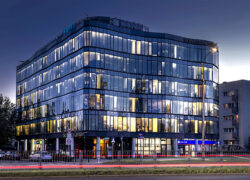
A Swiss family office, represented by OPG Property Professionals, has acquired the LIXA D office building in Warsaw from developer Yareal Polska. The transaction reflects continued activity in the city’s office investment market.

The property is located at 5 Giełdowa Street in Warsaw’s Wola district and forms part of the wider LIXA office complex. Completed in 2024, the building provides more than 10,000 sqm of gross leasable area and is positioned within the Class A office segment.

LIXA D is leased to a range of tenants including technology and healthcare-related companies such as Match-Trade Technologies, Sportradar, Exact Sciences Poland and Finmedica. The scheme also includes food and beverage and service units at ground level.

Advisory on the transaction was provided to the seller by CBRE and Gide Loyrette Nouel, with tax support from MDDP. The buyer was advised by OPG Property Professionals, alongside legal counsel MJH Moskwa Jarmul Haładyj i Partnerzy and tax advisor KODA Advisory. Financing for the acquisition was provided by BNP Paribas Bank Polska.

The transaction highlights ongoing investor interest in modern office assets in central Warsaw locations, particularly those with established tenant bases and recent completion.

South Africa’s Fintech Growth Tests Regulatory Balance Between Innovation and Stability

South Africa’s financial sector is undergoing a period of rapid digital transformation, with fintech evolving from a niche segment into a central component of the country’s broader digital economy. As adoption of technologies such as artificial intelligence and decentralised finance accelerates, regulators are increasingly focused on maintaining financial stability while supporting innovation.

A coordinated regulatory approach has been a key feature of this transition. The Intergovernmental Fintech Working Group brings together the National Treasury, the South African Reserve Bank and the Financial Sector Conduct Authority to align oversight of the fintech sector. The aim is to create a regulatory framework that provides clarity for investors and market participants while adapting to evolving technologies.

A significant milestone in this process has been the formal recognition of crypto assets within the regulatory perimeter. The Financial Sector Conduct Authority classified crypto assets as financial products under the Financial Advisory and Intermediary Services Act, requiring service providers to obtain licences and comply with conduct standards. In parallel, amendments to the Financial Intelligence Centre framework have extended anti-money laundering obligations to crypto-related businesses, aligning South Africa with international practices.

These changes are intended to strengthen consumer protection and improve transparency in a market that has historically operated with limited oversight. Bringing crypto assets under regulation is also seen as a step toward broader institutional participation, although further adjustments, including to exchange control rules, may be required to facilitate cross-border activity.

Beyond digital assets, fintech continues to play a role in expanding access to financial services. Mobile-based platforms, digital lending and electronic payments are increasingly used to reach underserved segments of the population, particularly in areas where traditional banking infrastructure is limited. This has positioned fintech as a contributor to financial inclusion and wider economic participation.

At the same time, the growing use of artificial intelligence in financial services is introducing new regulatory considerations. AI is already being deployed in areas such as fraud detection, customer interaction and investment decision-making. However, concerns around transparency, potential bias in automated decision-making and reliance on third-party technology providers are prompting closer scrutiny.

Regulators are expected to focus on issues such as explainability of AI-driven decisions, operational resilience and compliance with data protection requirements, including the Protection of Personal Information Act. As adoption increases, ensuring that these systems operate within clear governance frameworks is likely to become a priority.

Looking ahead, authorities are expected to continue using tools such as regulatory sandboxes to allow fintech companies to test new products under supervision before wider market rollout. This approach is intended to support innovation while identifying and mitigating potential risks.

South Africa’s experience reflects a broader global trend, where regulators are seeking to balance the opportunities presented by financial technology with the need to safeguard market integrity and consumer protection.

Source: CMS

Warsaw Extends Night-Time Alcohol Sales Restrictions Following Pilot Programme

The Warsaw City Council has approved the expansion of night-time restrictions on retail alcohol sales, extending measures previously tested at district level to a broader area of the city.

Under the regulation, off-premise alcohol sales are restricted between 22:00 and 06:00, in line with provisions available to municipalities under Polish law. The move follows a pilot programme conducted in selected districts, where local authorities assessed the potential impact of limiting late-night availability.

According to city officials, the pilot was associated with a decline in the number of police and municipal guard interventions, with reductions reported both during daytime and night-time hours. However, detailed data from the trial has not been widely published, and the results have been presented primarily through municipal communications.

The trial period, which took place over the winter months, has prompted some observers to note that seasonal factors may have influenced the recorded outcomes. Lower levels of outdoor activity during this period can affect patterns of public behaviour, making it more difficult to isolate the direct impact of the restrictions.

Warsaw’s decision reflects a broader trend across Poland, where municipalities have increasingly introduced limits on late-night alcohol sales in an effort to address public order concerns. Similar measures have been implemented in a number of cities, typically targeting off-premise sales rather than consumption in licensed venues such as bars and restaurants.

While local authorities point to early indications of reduced disturbances, the longer-term effects of the policy remain to be seen. The expansion of the restrictions to a wider urban area is expected to provide a clearer basis for evaluating their impact on public safety, retail activity and consumer behaviour over time.

Source: WEI (Warsaw Enterprise Institute)

Apollo to Lead $3.7bn Restructuring of Nippon Sheet Glass in Largest Japan Investment

Apollo Global Management has agreed a transaction valued at approximately $3.7 billion to restructure Japanese glass manufacturer Nippon Sheet Glass (NSG), in what is reported to be the firm’s largest private equity investment in Japan to date.

The deal is structured as a debt-for-equity reorganisation rather than a conventional acquisition, with Apollo expected to inject new capital while existing lenders convert part of their holdings into equity. The transaction remains subject to shareholder approval.

The restructuring is intended to address NSG’s long-standing balance sheet pressures, which have weighed on the company’s performance for more than a decade. A significant portion of this debt burden can be traced back to its 2006 acquisition of UK-based glassmaker Pilkington, a transaction valued at around £2.2 billion at the time.

While the Pilkington deal established NSG as a global player in the glass industry, it was largely debt-funded and was followed shortly by the global financial crisis, which weakened demand across key end markets. The combination of high leverage and cyclical pressures has continued to affect the company’s financial position in the years since.

NSG remains a major international producer of glass for automotive, architectural and technical applications, but has faced ongoing challenges in improving profitability and reducing debt. Recent reporting indicates that the company has continued to operate under a significant debt load, limiting its strategic flexibility.

Apollo’s involvement reflects a broader trend of private equity firms targeting complex corporate carve-outs and restructurings in Japan, where a growing number of companies are seeking external capital to strengthen their balance sheets and reposition their operations.

The outcome of the transaction is expected to determine the next phase of NSG’s turnaround, as the company looks to stabilise its finances while maintaining its position in global markets.

Villeroy & Boch Expands Outlet Presence Across FACTORY Centres in Poland

NEINVER has expanded the presence of Villeroy & Boch across its FACTORY outlet centres in Poland, with a new store opening in Poznań and the refurbishment of an existing location in Warsaw.

The brand’s first outlet in the region has opened at FACTORY Poznań. At the same time, its store at FACTORY Annopol has undergone refurbishment. A further outlet continues to operate at FACTORY Kraków.

The expansion forms part of NEINVER’s strategy to increase the share of home and living brands within its outlet portfolio. According to the company, this segment has gained importance in recent years in terms of both customer demand and sales performance.

Villeroy & Boch, which operates in more than 120 markets, offers tableware, glassware, cutlery and decorative home accessories. Its outlet stores in Poland provide a mix of permanent collections and seasonal items.

The centres’ homeware offer also includes brands such as Tefal and Dajar Home & Garden, alongside other household-focused tenants.

The updated stores follow the brand’s current retail concept, with layouts designed to present a broad product range within a standardised showroom format used across its European locations.

NEINVER Hosts Retail Event in Madrid, Highlights Pipeline and Portfolio Performance

NEINVER has hosted a retail-focused event in Madrid, bringing together brands from the fashion, sports, lifestyle and food sectors to discuss market trends and collaboration across the outlet segment.

The event took place at Santiago Bernabéu Stadium and focused on tenant partnerships, customer experience and operational efficiency. The meeting also served as a platform for the company to present updates on its European portfolio and development pipeline.

Among the projects highlighted was Alpes The Style Outlets in France, located near the Swiss border within reach of cities such as Geneva and Annecy. The scheme is planned to provide approximately 20,400 sqm of retail space across around 95 units and is scheduled to open in 2027.

According to NEINVER, its portfolio has recorded growth over the past three years, including increases in visitor numbers and sales, alongside stable occupancy levels. “These results reflect the strength of the outlet model and the importance of close collaboration with brands to boost conversion rates, enhance the centres’ appeal, and continuously adapt the retail offering to changing consumer demands,” the company stated.

The event coincided with the 30th anniversary of Las Rozas The Style Outlets, which opened in the mid-1990s and is widely regarded as Spain’s first outlet centre.

“With the first edition of GameChangers, we aim to strengthen collaboration with brands and create a platform for dialogue to support the continued development of our centres in a changing market environment,” the company added.

NEINVER stated that the initiative is intended to reinforce engagement with tenant brands and support the ongoing development of its outlet platform across Europe.

Office Market Shifts Toward Quality and Flexibility as Occupier Needs Evolve

The office sector is undergoing a structural shift as occupiers reassess how space is used in response to hybrid working patterns. Companies are increasingly reducing their overall footprint while prioritising higher-quality buildings that offer stronger locations, improved amenities and environments that support collaboration.

Market data from Savills and other advisory firms indicates that office utilisation across Europe remains below pre-pandemic levels, with attendance typically concentrated mid-week and lower on Mondays and Fridays. This has resulted in periods of underutilisation, prompting landlords to reconsider how office space is activated beyond traditional working hours.

“The biggest challenge for the commercial real estate market today is the shift in how office space is used. We are observing a dynamic increase in activity within office buildings outside standard working hours. Offices are hosting yoga classes, workshops, community meetings and corporate events,” said Maciej Grabowski, Founder of Blue Bolt.

In response, building owners are introducing additional functions within office schemes, including fitness facilities, event spaces and food and beverage concepts. These features are increasingly used to enhance tenant experience and support higher occupancy in prime assets, although adoption varies across markets and building quality.

“The traditional 9-to-5 model is becoming a thing of the past. A modern office building is a comprehensive ecosystem where work seamlessly blends with regeneration in spaces such as yoga studios or fitness facilities available within the building,” said Daria Stefaniak, Sales Strategy Manager at Brain Embassy.

The shift also reflects a broader move toward mixed-use environments, where office buildings are integrated with services that extend their use throughout the day. While this approach is more common in newer developments and premium locations, it is not yet widespread across the entire office stock.

“More than ever before, the boundaries between residential and office functions are becoming blurred. Residents and employees can use the same application to register for events, access coworking spaces or book participation in activities taking place within the building,” added Maciej Grabowski.

Technology is playing a growing role in managing these more complex environments. Digital platforms are being used to enable access control, workspace booking, visitor management and communication with tenants. These tools also provide data on space utilisation, supporting more efficient building operations.

“We clearly see changing expectations among tenants, who view office buildings not only as a place to work but as a space that supports everyday needs. Increasingly, users return to the building after hours to take advantage of services or sports infrastructure,” said Martyna Czarnota, Senior Asset Manager at Adgar Polska.

Sustainability and workplace quality are also influencing leasing decisions. Buildings that meet higher environmental standards and offer a wider range of amenities are generally more competitive in attracting tenants, although outcomes differ by location and market conditions.

“The office building is becoming a service and community platform rather than merely a place of work,” added Martyna Czarnota.

Overall, the office market is moving toward a model that places greater emphasis on flexibility, quality and user experience. While this transition is most visible in newer and refurbished assets, it is expected to continue shaping both occupier strategies and investment decisions in the coming years.

Corwin Advances Vysočany Brownfield Redevelopment with Mixed-Use Neighbourhood Plan

A new mixed-use development in Prague’s Vysočany district is progressing, as developer Corwin moves forward with the Dvory Vysočany project. The scheme will transform former industrial and commercial sites near Libeň railway station into a residential-led neighbourhood with supporting amenities.

The project, designed in collaboration with urban planners Jan Gehl and David Sim alongside Czech architectural studio OVA, is being developed on brownfield land previously occupied by the Včela cooperative and Pražírna facilities. The first phase is currently under construction, with the full project expected to deliver more than 1,000 apartments, along with office space and local services.

Local authorities have expressed support for the redevelopment, noting its contribution to the regeneration of underutilised land and its potential to improve connectivity between Vysočany and Žižkov. Prague has increasingly prioritised brownfield redevelopment as a way to accommodate growth while limiting urban sprawl.

According to representatives of the city, the project follows a traditional block-based urban layout, organising buildings around streets and internal courtyards. This approach is intended to create a clearer distinction between public and private spaces, while supporting pedestrian movement and local activity.

Officials from Prague 9 also highlighted the importance of the scheme for the wider area, which has long been identified for redevelopment. As one of the first large-scale projects in this location, it is expected to influence future development patterns in the district.

The Prague Institute of Planning and Development noted that the use of block structures and courtyards reflects established urban planning principles, contributing to a more coherent streetscape and functional public realm.

Beyond residential units, the project will include retail space, community facilities such as a preschool, and landscaped courtyards. The development aims to integrate housing with everyday services and public space, reflecting a broader trend toward mixed-use urban regeneration projects in Prague.

Once completed, Dvory Vysočany is expected to contribute to the ongoing transformation of Prague’s former industrial zones into residential and mixed-use neighbourhoods, supporting both housing supply and urban renewal.

CEE Real Estate Enters a More Disciplined Cycle as Capital Reprices Risk in 2026

Real estate markets across Central and Eastern Europe are entering a more selective and risk-aware phase in 2026, as global volatility and shifting capital dynamics reshape investment strategies. While the region continues to offer a relative yield premium compared to Western Europe, investor behaviour is evolving toward a more disciplined approach, where asset quality, income security and transparency are taking precedence over pure return.

This shift reflects a broader recalibration of global capital. Ongoing geopolitical tensions and periods of heightened market volatility have reinforced a more cautious investment environment, prompting investors to reassess both risk exposure and pricing assumptions. As a result, decision-making processes are becoming more data-driven, with greater emphasis on risk monitoring, downside protection and the durability of income streams.

In this context, CEE markets are not seeing a withdrawal of capital, but a clear repositioning. Investors remain active, particularly in core segments, yet the threshold for deployment has increased. Capital is increasingly directed toward assets that can demonstrate resilience across economic cycles, supported by strong tenant covenants, sustainable occupancy levels and long-term relevance.

The most visible beneficiaries of this shift are logistics, residential and prime office assets. These sectors continue to attract interest due to their ability to generate stable and predictable income. The logistics segment remains underpinned by structural demand linked to supply chain transformation and e-commerce, while residential assets benefit from ongoing housing shortages across key urban centres. Prime offices, although more selective, continue to perform where location, specification and tenant profile align with evolving occupier expectations.

At the same time, the gap between prime and secondary assets is widening. Properties with weaker fundamentals, shorter lease structures or higher capital expenditure requirements are facing increased scrutiny. In many cases, these assets are being repriced or postponed from transaction pipelines, reflecting a broader market correction rather than a contraction in demand.

This repricing of risk is also influencing how transactions are structured. Investors are placing greater focus on underwriting discipline, requiring more detailed insight into operational performance, cost structures and future capital expenditure. Transparency has become a central requirement, with market participants increasingly relying on more granular data to support investment decisions.

Across key markets such as Poland, Romania and Hungary, this shift is evident in transaction activity. Volumes remain below previous peak levels, yet deal flow continues to build around well-positioned assets. This suggests that liquidity is not absent, but more carefully allocated, favouring opportunities where pricing aligns with long-term fundamentals.

From a capital markets perspective, this environment is contributing to a more stable foundation for future growth. As financing conditions gradually improve and interest rates stabilise, investors are returning to the market with clearer expectations around risk and return. However, the approach is notably more selective than in previous cycles, reflecting lessons learned during the recent period of market correction.

Looking ahead, the CEE real estate market is expected to remain active, supported by strong underlying demand and its relative attractiveness within the European investment landscape. However, the nature of that activity will continue to evolve. The market is transitioning from a phase driven primarily by yield to one defined by quality, resilience and disciplined capital allocation.

In this new cycle, success will depend less on accessing capital and more on meeting its increasingly stringent requirements. For developers, asset managers and investors alike, the ability to deliver transparency, operational performance and long-term value will define competitiveness in a market where capital is present, but no longer unconditional.

Source: CIJ.World Research & Analysis Team

Housing Shortages and Shifting Demand Redefine CEE Residential Markets

Residential property markets across Central and Eastern Europe are entering a period of recalibration, as limited new supply, changing affordability and improving financing conditions reshape both pricing dynamics and housing preferences in the Czech Republic, Poland, Romania and Hungary.

Across the region, the imbalance between demand and available housing remains a defining factor. In major cities such as Prague, Warsaw, Bucharest and Budapest, the pace of new development continues to lag behind demand, sustaining upward movement in both property prices and rental levels. Transaction activity has stabilised following recent interest rate fluctuations, while underlying demand remains resilient, supported by urbanisation trends and limited existing stock.

In the Czech Republic, supply constraints are particularly evident. The delivery of new housing has been slowed by administrative hurdles and lengthy approval timelines, restricting the volume of new projects entering the market. As a result, prices in Prague are expected to continue rising at a measured pace, with regional cities seeing more moderate increases.

Poland presents a more advanced evolution of the residential sector, particularly in the rental segment. As home ownership becomes less accessible for part of the population, professionally managed rental developments have gained traction, attracting both domestic and international investors. This reflects a broader transition toward more diversified housing models, where renting plays a larger role than in previous cycles.

In Romania, the market remains largely driven by owner-occupiers, but early changes are becoming visible. Affordability pressures and tighter financing conditions in recent years have increased interest in rental housing, especially in Bucharest. The institutional rental segment is still developing, but it is gradually attracting attention from investors seeking long-term income opportunities.

Hungary follows a comparable path, with Budapest experiencing continued pressure on housing supply. Development activity has been influenced by cost increases and policy adjustments, yet demand for both ownership and rental housing remains firm, supporting price stability and gradual rental growth.

A common thread across all four markets is the growing importance of rental housing. As access to home ownership becomes more challenging, a larger share of households is opting for more flexible living arrangements. This is prompting developers and investors to allocate more resources toward projects designed for long-term rental, contributing to the expansion of a more structured rental market across the region.

At the same time, development activity continues to face structural constraints. Complex regulatory frameworks, slow approval processes and infrastructure limitations are frequently cited as key factors delaying new supply. These challenges are particularly pronounced in the Czech Republic and Romania, where permitting timelines can significantly affect project delivery.

Financing conditions are beginning to stabilise, offering some support to residential demand. Central banks, including the Czech National Bank and the National Bank of Romania, have signalled a more predictable interest rate environment, contributing to a gradual recovery in mortgage lending activity. Affordability constraints, however, continue to limit the pace of demand growth.

Looking ahead, residential markets across Central and Eastern Europe are expected to remain active, though increasingly selective. Demand fundamentals remain intact, while supply-side limitations continue to shape pricing trends and development strategies. The growing role of rental housing, combined with ongoing structural constraints, points to a more balanced but still constrained housing landscape across the region.

Source: CIJ.World Research & Analysis Team

front page info
LATEST NEWS