MLP Business Park Vienna welcomes new tenants, expands portfolio

MLP Group has secured two new lease agreements for its flagship MLP Business Park Vienna, adding 6,700 m² of modern space to its roster of tenants. The new occupants include Demetra GmbH, a facility management company, and Activeon GmbH, a subsidiary of Germany’s JUMP House Holding GmbH, which plans to launch Austria’s first innovative family entertainment complex.

Demetra GmbH, headquartered in Vienna, will lease 1,900 m², comprising 1,500 m² for warehouse operations and 400 m² for office and social facilities. Operations at the new facility are scheduled to commence in mid-2025.

“MLP Business Park Vienna perfectly matches our needs with its prime location and sustainable design,” said Volodymyr Dolyniak, Managing Director of Demetra GmbH.

Activeon GmbH, affiliated with Germany’s leading trampoline park operator, has leased 4,800 m² to bring a cutting-edge entertainment complex to Vienna in 2025. This marks the company’s first venture in Austria.

“We chose MLP Business Park Vienna for its ideal location in the heart of Vienna. This new family entertainment concept will be the first of its kind in Austria, and we are grateful for MLP Group’s support,” commented Florian Ruckert, Managing Director of Activeon GmbH and JUMP House Group.

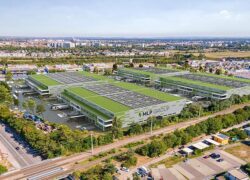
The MLP Business Park Vienna, spanning 53,600 m² across four modern buildings, offers flexible spaces starting at 1,300 m², designed for urban logistics, e-commerce, and light manufacturing industries. Situated on a 10-hectare plot, the park is just 13 kilometers from central Vienna, with convenient access to the S2/A23 highway and Vienna International Airport, located 23 kilometers away.

The park emphasizes eco-friendly solutions, incorporating green roofs, photovoltaic installations, and a recreational area with a pond. The development adheres to the ÖGNI Gold certification standards, underlining MLP Group’s commitment to sustainability.

The transactions were facilitated by OTTO Immobilien and OSWALD Immobilien. Alexandra Fischer, Team Leader at OTTO Immobilien, highlighted the project’s flexible design and MLP Group’s professionalism, stating, “Demetra GmbH’s trust underscores the high quality of these properties.”

Georg Peter Pühlhorn, Managing Partner at OSWALD Immobilien, noted the significance of the entertainment complex’s location near Stadlau retail park, which attracts approximately 5 million visitors annually, expressing confidence in its success.

MLP Group’s Chief Country Officer for Austria, Peter Falb, remarked, “These new leases affirm the appeal of MLP Business Park Vienna, blending prime location, modern architecture, and advanced sustainability.”

The MLP Business Park Vienna continues to attract diverse tenants, solidifying its status as a premier hub for innovation and growth in Austria.


Dispute ]over Žofín Palace lease sparks legal battle between Prague 1 and NKL Agency

The long-standing lease of the Žofín Palace in Prague has escalated into a legal standoff, with the current tenant, NKL Agency, refusing to vacate the premises and hand it over to Prague 1, as originally agreed. NKL Agency, which had leased the historic venue until the end of last year, declined to transfer control to the district authorities, citing a disputed lease agreement.

Representatives from the Prague 1 municipal office, along with officials from Zátiší Catering Group—the designated new tenant—arrived at the palace at 10:00 AM to facilitate the handover. However, the NKL Agency maintained its position, claiming that the lease agreement includes an option for a ten-year extension. According to NKL’s legal representative, Lucie Kolářová, this clause allows the company to retain tenancy until a court rules otherwise. Prague 1 disputes this interpretation, stating the lease did not automatically renew and that the legal grounds for occupancy have expired.

“The handover of Žofín Palace did not take place yesterday because the agency refused to vacate the premises. They continue to use the property without a valid legal basis,” stated Karolína Šnejdarová, spokesperson for Prague 1. She emphasized that the municipality does not recognize the validity of NKL’s claim.

NKL Agency asserts that the lease’s extension clause entitles them to continue operating the palace. “Our legal position is that we are legitimate tenants and users of the premises. The final decision on this matter rests with the court,” Kolářová said. A court hearing is scheduled for January 30, which may provide clarity on the lease’s validity.

Adding to the complexity, NKL Agency claims Prague 1 is obligated to purchase furniture and equipment installed by the company during its tenancy. The agency insists that until this financial obligation is met, the property cannot be vacated or handed over.

Žofín Palace’s leasing arrangements have been a contentious issue for years. Previous lease extensions, notably in 2010 and during 2018, were criticized for their timing ahead of municipal elections and perceived lack of transparency.

Prague 1 now faces the challenge of deciding its next steps while awaiting the court’s ruling, which will ultimately determine whether NKL Agency can continue its tenancy or if the palace will transition to the new lessee, Zátiší Catering Group. The dispute underscores the complexities and sensitivities surrounding the management of Prague’s historic landmarks.

Source: CTK
Photo: NKL Agency

Personal bankruptcies in the Czech Republic rise by 7% in 2024, marking a trend reversal

In 2024, the Czech Republic saw 13,751 personal bankruptcies, reflecting a 7% year-on-year increase and signaling a shift after four consecutive years of decline. This data, analyzed by the portal www.informaceofirmach.cz and provided by CRIF – Czech Credit Bureau, highlights significant changes in the country’s financial landscape. Alongside the rise in bankruptcies, 14,883 insolvency petitions were filed, representing a 10% increase compared to the previous year.

December alone accounted for 1,219 personal bankruptcies and 1,257 insolvency petitions, demonstrating a steady monthly trend of 1,146 bankruptcies and 1,240 petitions throughout the year. Despite the rise, the total number remains 4,763 fewer than in 2019, though analysts predict further increases in 2025.

Impact of Legislative Changes and Financial Challenges
The October 2024 amendment to the Insolvency Act has made personal bankruptcy more accessible to individuals in financial distress. However, CRIF analyst Věra Kameníčková points to declining repayment morale and rising consumer credit volumes as contributing factors to the increase.

“The amended Insolvency Act has eased conditions, enabling more people to address financial difficulties. However, this comes amid worsening repayment discipline and higher borrowing levels, adding pressure to the system,” Kameníčková explained.

Regional Breakdown of Personal Bankruptcies
The Moravian-Silesian Region recorded the highest number of bankruptcies in 2024, with 2,176 cases, followed by the Ústí nad Labem Region (1,934) and the Central Bohemian Region (1,493). In contrast, the Vysočina Region had the fewest, with only 436 cases, alongside the Karlovy Vary Region (516) and the Zlín Region (528).

Year-on-year increases were most notable in the Ústí nad Labem Region (+14%) and the South Bohemian Region (+12%). The Vysočina Region and Karlovy Vary Region saw the smallest increases, at 1% and 4%, respectively.

Bankruptcy Risk by Region
The Ústí nad Labem Region remains the most bankruptcy-prone area, with 28 bankruptcies per 10,000 residents aged 15 and above, followed by the Moravian-Silesian Region (22 per 10,000) and the Karlovy Vary Region (21 per 10,000). In contrast, Prague had the lowest bankruptcy rate, with just 9 bankruptcies per 10,000 residents, followed by the Vysočina Region (10) and the Zlín Region (11). The national average stood at 15 bankruptcies per 10,000 residents, up slightly from the previous year.

With rising insolvency petitions and the ongoing effects of legislative changes, experts anticipate a continued increase in personal bankruptcies in 2025. The data underscores growing financial pressures on Czech households, particularly in regions with historically higher bankruptcy risks.

Source: CRIF and CTK

Haná Barracks in Olomouc sold to Brno developer Richard Saliba for CZK 91 million

The historic Haná Barracks in Olomouc has been purchased by the Brno-based developer Salibara, owned by Richard Saliba, in an electronic auction conducted by the Office for the Representation of the State in Property Matters (ÚZSVM). The final sale price of CZK 91 million was reached after a competitive bidding process, narrowly surpassing the offer from the Redstone Group by CZK 100,000. This successful sale marks the culmination of the state’s tenth attempt to sell the property, which was first listed for CZK 262 million in 2021.

The auction, lasting 24 hours, saw intense activity in the final moments, with two active bidders driving up the price. Richard Saliba’s winning bid reflects his interest in the property, which he visited multiple times during the past year. Saliba is no stranger to significant redevelopment projects, having previously restored prominent Brno landmarks such as the Padowetz Palace and the Jalta Palace. He has already reached out to Olomouc Mayor Miroslav Žbánek, regional Governor Ladislav Oklešt’k, and representatives of Palacký University to discuss potential collaborations for the future use of the barracks.

The Haná Barracks, a listed 19th-century building, is a prime example of classicist military architecture. Situated in the historic heart of Olomouc, the site was previously used as a Regional Assistance Centre for Ukraine (KACPU) during the war in Ukraine, but has been vacant since January 2024. The property’s sale history has been complex, with prior auctions ending unsuccessfully due to procedural challenges. In a previous auction, Redstone Group had bid CZK 89.1 million, but disputes over the process led to another sale attempt.

Palacký University expressed interest in acquiring the site but withdrew due to limitations in its financial decision-making processes and the transparency required as a public institution. This left private developers, such as Salibara and Redstone, as the primary competitors for the property.

The purchase agreement will now move through formal approval by the Ministry of Culture. Saliba plans to expedite negotiations to minimize legal uncertainties and begin the redevelopment process. His plans for the Haná Barracks are expected to honor the site’s cultural significance while integrating modern functionality, bringing new life to one of Olomouc’s architectural treasures.

Source: CTK
Photo: denarchitektury.cz

Inflation in Slovakia slows to 2.8% in 2024, marking the sharpest year-on-year decline in 25 Years

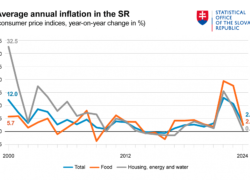
In 2024, Slovakia’s average inflation rate dropped significantly to 2.8%, a dramatic slowdown compared to the double-digit inflation rates of the previous two years. This represents the sharpest year-on-year deceleration in price growth over the past quarter-century, with inflation standing at 10.5% in 2023 and 12.8% in 2022. Notably, inflation never exceeded 4% in any month of 2024, signaling a marked stabilization in consumer prices.

The moderation in inflation was largely driven by subdued increases in food prices, which rose by just 2.5%, a stark contrast to the 17.3% spike in 2023. Prices in housing and energy, another major household expenditure category, grew by only 0.5%, influenced by stable electricity and gas prices and lower costs for items such as imputed rent and solid fuels.

Drivers of Inflation in 2024
The slowdown was primarily shaped by the easing of price growth in key consumer sectors. Food prices, which had been a major inflation driver in 2023, saw more modest increases, with notable price rises in bread and cereals (4%) and vegetables and fruits (above 3%). However, certain items, such as oils and fats and sugar and confectionery, saw sharper increases of 9% and 5%, respectively. Meanwhile, prices for milk, cheese, and eggs recorded a slight 0.2% decline.

The housing and energy sector, which accounts for a significant portion of household expenses, experienced minimal inflationary pressure. Electricity and gas prices remained stable, while some components, such as imputed rent and solid fuels, saw year-on-year price reductions. Price increases in less critical areas, such as waste collection and water and sewage services, contributed marginally to the overall inflation in this division.

In contrast, other sectors experienced more pronounced price increases. The restaurants and hotels division saw prices rise by 5%, driven by higher costs in restaurants and cafes. Alcoholic beverages and tobacco prices also rose, with taxes contributing to increases of nearly 9% for spirits and tobacco.

Transportation was the only division to record faster price growth than in 2023, with a rise of 3.2%. This was driven by increased fares for passenger transport, though fuel prices fell by 1.7%, tempering the overall impact.

The most significant price growth occurred in the education sector, which experienced a 10.5% increase in fees across all levels of study. Despite this, education remains a minor contributor to household expenses.

Core and Net Inflation
In 2024, both core and net inflation stood at 2.6%, reflecting the effects of stable regulated prices and minimal administrative adjustments. Core inflation, which excludes the impact of food and regulated price changes, indicates a stable underlying price trend.

The marked decline in inflation in 2024 reflects a stabilization in consumer prices following two years of extreme increases, signaling progress in Slovakia’s economic recovery. However, certain sectors, such as transportation and education, continue to see notable price pressures, underscoring the need for ongoing monitoring of inflationary trends.

Source: Statistical Office of the SR

Conseq Realitní acquires iconic EA Hotel Atlantic Palace in Karlovy Vary

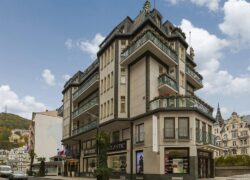
Conseq Realitní, a real estate investment fund, has finalized the acquisition of the landmark EA Hotel Atlantic Palace, a prominent five-star hotel in the heart of Karlovy Vary. The deal was facilitated by real estate consultancy Reals, which provided comprehensive advisory services throughout the process.

Located in the historic spa town renowned for its thermal springs and cultural heritage, the EA Hotel Atlantic Palace is a prime example of neo-Renaissance architecture. It offers high-end accommodations and stunning views of Karlovy Vary’s iconic landmarks, making it a favored destination for international tourists.

The transaction signals Conseq Realitní’s commitment to expanding its portfolio with premium assets in sought-after locations. A spokesperson for Conseq Realitní noted, “The acquisition of the EA Hotel Atlantic Palace reinforces our strategy to invest in properties with exceptional value and long-term growth potential. Karlovy Vary’s status as a premier tourist destination adds significant strength to this investment.”

Reals played a pivotal role in the successful completion of the deal, providing services that included due diligence, asset valuation, and transaction structuring. The consultancy leveraged its extensive knowledge of the hospitality sector to ensure that Conseq Realitní achieved its investment objectives.

“We are proud to have supported Conseq Realitní in securing such a prestigious property,” said a Reals spokesperson. “The EA Hotel Atlantic Palace is a cornerstone of Karlovy Vary’s hospitality sector, and this acquisition reflects the growing interest in high-value real estate in the region.”

Photo: hotelatlanticpalace.cz

Dekpol Budownictwo to build Świdnik Arena, the largest investment in Świdnik’s history

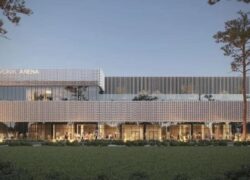
The city of Świdnik in the Lublin region is set to undergo a transformative development with the construction of Świdnik Arena, a Multifunctional Development Center designed to address the evolving needs of the local community. The ambitious project, which will be carried out by Dekpol Budownictwo as the general contractor and financed by the Municipality of Świdnik, marks the largest investment in the city’s history.

Spanning over 9,000 square meters and with a volume exceeding 70,000 cubic meters, the Świdnik Arena will include a modern sports and entertainment hall capable of accommodating more than 2,000 spectators. The facility will stand 18 meters tall and is set to be completed by the second half of 2026, establishing itself as a premier venue for cultural, athletic, and community events in the region.

The project is being hailed as a milestone for Świdnik’s development. Marcin Dmowski, Mayor of Świdnik, emphasized its significance, stating that the center will serve as a multifunctional hub for education, culture, and social interaction. He expressed confidence that the PLN 79 million investment would not only improve the quality of life for residents but also position Świdnik as a modern and integrated city.

Świdnik Arena will host a wide range of activities, including sports competitions, cultural events, concerts, conferences, and trade fairs. It will also become the home base for the PZL Leonardo Avia Świdnik volleyball team and other athletic teams, making it a central hub for sports in the region.

The project’s scale and vision are complemented by the implementation of advanced technical and technological solutions. According to Dawid Osmólski, Sales Director of Dekpol Budownictwo, the arena will adhere to international standards set by organizations such as FIFA, FIVB, FIBA, and IHF, as well as Polish sports unions. Osmólski highlighted the arena’s potential to become a cornerstone of cultural and social life in Świdnik, hosting events that will leave a lasting impression on the community.

Photo: Multifunkcyjne Centrum Rozwoju

Swiss MET Group enters Czech energy market with bold plans for expansion

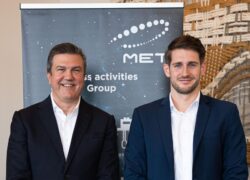
Swiss energy company MET Group has officially entered the Czech energy market by establishing a local subsidiary, marking its 17th country of operation. Renowned for its robust presence in the gas sector, including LNG capacities, and active electricity trading, MET Group aims to become a key player in the Czech Republic’s energy landscape.

Initially, MET Czech Republic will focus on wholesale services tailored to energy-intensive companies and industrial plants. Over time, it plans to expand its offerings to smaller customers and households. At a press conference, company representatives emphasized MET’s commitment to enhancing supply security, stability, and supporting the country’s energy transition.

Headquartered in Switzerland and managed by its leadership team, MET Group operates across 30 national gas markets and employs over 1,000 people. In 2023, the company reported consolidated sales of €24.5 billion, trading 88 billion cubic meters of gas and 68 terawatt hours of electricity. With new long-term LNG contracts from the United States, along with resources from Africa and Asia, MET is well-positioned to serve its new market.

MET Czech Republic has already secured the necessary licenses for electricity and gas trading, allowing it to immediately engage with potential customers. According to Pavel Balada, CEO of MET Czech Republic, the company will initially prioritize large industrial clients, a segment left underserved after the energy crisis led to the exit of several suppliers.

“We enter the Czech market as a full-fledged partner. Our goal is to bring security of supply, stability, and support the country in its energy transition. As part of the MET Group, we are a reliable partner for our customers,” Balada said.

In its early years, the Czech subsidiary will employ dozens of professionals, with ambitions to expand its workforce as operations grow. Looking ahead, MET aims to diversify into cogeneration and renewable energy projects. Although MET has previously supplied LNG gas to a Czech client, the company did not disclose specific details.

This entry marks a significant step in MET Group’s broader strategy to strengthen its presence in European markets and underscores its commitment to delivering innovative and reliable energy solutions to the Czech Republic.

Kajima acquires third student depot site in Warsaw

Kajima Europe, the pan-European real estate investor, developer, and manager with GDP 10 billion in assets under management, has acquired its third Student Depot development site in Warsaw. The new project on Ciołka Street in the Wola district will feature 628 rooms and premium amenities, further solidifying Kajima’s position as the leading investor in student housing in Poland.

Located just a four-minute walk from the Księcia Janusza metro station on Line 2, the eight-story development will provide 10,100 square meters of Net Lettable Area (NLA), with the ground floor dedicated to concierge and shared spaces, including a co-working hub, games room, gym, lounge, entertainment space, and retail facilities.

Since acquiring Student Depot in 2019, Kajima has rapidly expanded its platform, achieving full ownership in 2023. Student Depot now accommodates nearly 4,200 students across major university cities like Warsaw, Kraków, Poznań, and Wrocław, with an additional 1,500 beds in the pipeline. This includes the expansion of Student Depot Poznań and a second project in Gdańsk.

Construction of the Ciołka Street site is set to begin in March 2025, with completion targeted for September 2026.

Jan Trybulski, Head of Poland at Kajima Europe, emphasized the strategic importance of the acquisition, stating, “This prime project aligns seamlessly with our expansion strategy for the Student Depot platform. Kajima’s deep commitment to the Polish PBSA market and proven expertise in managing student housing assets will ensure continued exceptional performance.”

Michal Obara, CEO of Student Depot, added, “Our third site in Warsaw marks another milestone for Student Depot as the largest and most established PBSA developer in Poland. We are excited to collaborate with Kajima Europe to maintain our strong track record of occupancy and rental growth.”

Report: German logistics real estate booms in 2024 with 4.4 million square metres built

The logistics real estate market outperformed expectations in 2024, with new construction volumes reaching an impressive 4.4 million square metres, according to data from Logivest’s annual logistics real estate seismograph. This marks a 15% increase compared to the previous year. The measurement, taken at the groundbreaking ceremony, highlights a strong year for the sector despite broader economic challenges in Germany. The second quarter stood out as the most active, contributing nearly 1.4 million square metres of new construction and featuring several significant projects.

One of the year’s largest developments is the Mercedes-Benz logistics centre in Bischweier, Rastatt district, spanning 130,000 square metres on a brownfield site, developed by Panattoni. Other notable projects include the Log Plaza in Frankfurt Oder, a speculative build by Alcaro comprising a 90,000-square-metre section, and The Space in Halle an der Saale, another speculative centre of nearly 90,000 square metres, developed by BentallGreenOak.

Positive Market Trends and Optimism
“The logistics real estate market has demonstrated remarkable resilience and optimism, reflected in the rise of speculative new construction projects,” said Kuno Neumeier, CEO of Logivest. He emphasized that the slight decline in prime rents—such as Munich’s drop from €16 per square metre in 2023 to €14 in 2024—indicates a healthy market correction. Despite this adjustment, rents remain high, reflecting continued demand and investor confidence in logistics assets.

Top Logistics Regions of 2024
The Leipzig/Halle region maintained its position as the leading logistics hub, with 465,000 square metres of new construction. The Cologne Lowland followed with 335,000 square metres, reclaiming its spot in the top tier, while the Duisburg/Lower Rhine region ranked third with 290,000 square metres.

Unexpectedly, the Upper Rhine region achieved its best result in five years, largely thanks to the Mercedes-Benz logistics centre, with 200,000 square metres of new developments. Meanwhile, Berlin saw a decline, slipping from the top three to 16th place with just 105,000 square metres, while the Munich region re-entered the top 10 with 135,000 square metres.

Looking Ahead to 2025/26
With stability regained in 2024, the logistics real estate market shows no signs of slowing down. Logivest projects approximately 13 million square metres of planned new construction for 2025/26, with 2.6 million square metres already in user-specific negotiations.

Neumeier remains optimistic about the sector’s potential, citing logistics real estate as an attractive investment despite looming uncertainties such as the February 2025 elections and economic fluctuations. He highlighted potential challenges, including market adjustments due to insolvencies and consolidations, but pointed to opportunities in reducing bureaucracy and advancing sustainability initiatives.

As the logistics real estate market continues to adapt and expand, it remains a key player in Germany’s economic framework, balancing growth with innovation and resilience.

Source: Logivest GmbH

front page info
LATEST NEWS