Palacký University considers purchasing Haná barracks in Olomouc

The Academic Senate of Palacký University (UP) has approved the potential acquisition of the Haná Barracks in the center of Olomouc. This decision follows a recent auction where the development company Redstone won the property with a bid of CZK 89.1 million. However, under the auction’s terms, UP has until October 14 to match Redstone’s bid and secure priority purchase of the historic building.

The Haná Barracks, listed as a protected site, has been up for sale by the Office for the Representation of the State in Property Matters (ÚZSVM) since September 2021. Initially valued at CZK 262 million, the price was reduced to CZK 89 million by the ninth round of the auction, which concluded in early September.

The Academic Senate’s decision paves the way for UP to express formal interest in acquiring the barracks. However, the Senate also requested assurances from university leadership that the purchase would not jeopardize other planned investments or increase the financial burden on the faculties.

UP Rector Martin Procházka views the potential purchase as a strategic move, citing the favorable price. “The CZK 89.1 million purchase price is very advantageous, and the university will finance it from its own resources,” said Procházka.

According to Michaela Tesařová, spokesperson for ÚZSVM, the agency will await UP’s written decision and then notify Redstone. Redstone, which won the auction, is not surprised by the situation. “We will see how this plays out, but this possibility was always part of the auction conditions,” said Petr Hlávka, Redstone’s spokesperson.

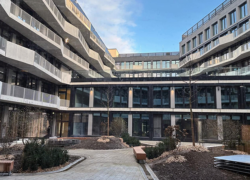
UP plans to renovate the 23,490 square-meter building, seeking state and European subsidies to cover the estimated CZK 1.896 billion cost. The renovated barracks would include much-needed student housing, offices, conference halls, catering facilities, and storage spaces. However, the Dean of the Faculty of Science, Martin Kubala, voiced opposition, warning that the purchase and extensive renovation could divert funds from other important university projects for years. He also raised concerns about the building’s future use and the uncertainty surrounding the full cost and funding sources.

The Haná Barracks, which had been used by the military for 170 years, has been vacant since 2013. The property’s deteriorating condition and the high cost of repairs have long been a concern for potential buyers. Previously, both the Olomouc Region and the city of Olomouc, along with UP, had expressed interest in acquiring the site, but those plans were eventually dropped due to the building’s poor state.

If Palacký University does not proceed with the purchase by the October 14 deadline, the state will finalize the sale to Redstone.

Source: CTK

Lightsource bp to launch 290 MW solar farm in 2026 near Polkowice in Lower Silesia

Lightsource bp, following the successful launch of its recent 50 MW photovoltaic (PV) project, is set to develop a 290 MW solar farm near Polkowice in Lower Silesia, Poland, with operations expected to begin in 2026. The farm’s capacity is projected to increase to 380 MW by 2027, according to Michał Głowacki, the company’s national director.

“The project is currently in the ‘ready-to-build’ phase, and will be developed in stages,” Głowacki told reporters.

Additionally, Lightsource bp plans to integrate wind farms into its solar projects using a method known as cable pooling. However, the company acknowledges that the process will take longer due to the need for local community engagement and regulatory procedures. Głowacki noted that around 30% of their current projects, or about 400 MW, have the potential for wind energy integration.

Lightsource bp has a total project pipeline of 3.2 GW in Poland, with 1.2 GW already approved for solar and storage projects.

While the energy market saw a 15-20% year-on-year decline in profitability, Głowacki mentioned that the company completed its first large storage project this year in the UK, boasting 25 MW capacity and 50 MWh storage.

Lightsource bp, a global leader in solar energy, manages 9.5 GW of solar assets and operates in 19 regions. In late 2023, bp announced plans to acquire full ownership of Lightsource bp, solidifying its position in the renewable energy sector.

bp has been active in Poland since 1991, with 575 petrol stations as of 2023, making it the second-largest player in the Polish market.

Source: Lightsource bp and ISBnews

PwC Poland: 85% of GenAI Users operate without official approval

A recent report by PwC Poland reveals that 85% of employees using generative AI (GenAI) in their work do so without formal approval, despite organizational policies. Nonetheless, more than 75% of companies have begun or are planning to implement GenAI solutions. A significant 69% of respondents highlighted a lack of AI specialists within their organizations.

“Artificial intelligence is being adopted by all consumer groups. Among older respondents, 56% are familiar with GenAI, showing how rapidly this technology is gaining traction,” according to PwC’s report titled Ready for Artificial Intelligence: Expectations of Polish Consumers and Businesses. Consumers, particularly younger generations, primarily use AI for learning support (56%), while older users seek help with information searches (78%).

Moreover, 83% of respondents expect AI to improve public sector processes. Convenience remains a key driver for consumers, with 67% wanting virtual assistants in online stores. However, concerns about AI persist, including fears of social exclusion (75%) and disinformation (80%).

While businesses see the potential in AI, especially in process automation and anomaly detection, a structured approach remains essential. The shortage of AI experts and the need for specialized training and clear regulations are significant hurdles for companies adopting AI technologies.

Source: PwC and ISBnews

Budimex completes PLN 1.9 billion port access project in Gdynia

Budimex has successfully completed a major contract aimed at enhancing railway access to the Port of Gdynia, valued at PLN 1.9 billion net, the company announced.

“We are currently in the final stages of project handover, with all major works completed. The project involved the installation of 39 tracks, marking the largest railway infrastructure project in Budimex’s history,” said Piotr Czupryn, the contract director.

The project involved a comprehensive reconstruction of the Gdynia Port railway station, pre-port areas, and associated infrastructure. This modernization will accommodate longer freight trains, up to 750 meters, significantly improving the capacity and efficiency of logistics services at the port.

The large-scale operation engaged nearly 600 workers and 200 pieces of equipment daily. It included the modernization of 115 km of tracks, installation of 359 switches, electrification of port access, and the reconstruction of 13 km of roads, a railway bridge, and 25 crossings. Additionally, two new viaducts, a Local Control Center, two railway yards, and a new PKP Cargo office building were constructed.

Budimex, a key player on the Warsaw Stock Exchange since 1995 and part of the WIG20 index, continues to contribute to strategic infrastructure projects, including upcoming works on the Outer Port in Gdynia.

Source: Budimex and ISBnews

Marvipol sells Warsaw warehouse project for €53.38 Million

PDC Industrial Center 135, a joint venture between Marvipol Logistics (a subsidiary of Marvipol Development), PG Dutch Holding I B.V., and Hermes Platinum, has finalized the sale of a logistics and warehouse project in Warsaw for a net price of €53.38 million, according to a statement from Marvipol.

The deal involves the sale of a 82,000-square-meter property located in the Białołęka district of Warsaw, Mazowieckie Voivodeship. The facility, operated by a special purpose vehicle (SPV), has been used for real estate rental activities. In addition to the net sale price, value-added tax (VAT) on goods and services will be added to the transaction.

Marvipol Development, a well-known Polish developer, specializes in two primary sectors: residential and logistics. Through special purpose vehicles, the company undertakes multi-family housing and warehouse construction projects, investing in both development and commercialization, with the goal of selling fully commercialized projects.

The company took over the development arm of Marvipol S.A. in 2017, continuing a legacy of real estate development that dates back to 1996.

Source: Marvipol and ISBnews

Polish KNF Reports 3% annual growth in loans, 7.1% rise in deposits by August 2024

The Polish Financial Supervision Authority (KNF) announced that the total value of loans in the non-financial sector rose by 3% year-on-year (YoY) by the end of August 2024, reaching PLN 1,195.5 billion. This marks an increase of PLN 10.1 billion or 0.9% month-on-month (MoM). Meanwhile, deposits in the non-financial sector also saw significant growth, climbing 7.1% YoY to PLN 1,873.2 billion, with an MoM increase of PLN 5.1 billion or 0.3%.

In the household sector, loans grew by 3.8% YoY, totaling PLN 785.6 billion, while loans to businesses rose by 1.6% YoY to PLN 428.16 billion.

The housing loan portfolio for households increased by PLN 2.2 billion in August to reach PLN 466.6 billion (+0.5% MoM, +4.4% YoY). Zloty-denominated housing loans now account for 92.7% of the total housing loan portfolio.

On the consumer side, the gross loan portfolio expanded by PLN 2.2 billion, reaching PLN 202.1 billion (+1.1% MoM, +7.6% YoY).

The loan-to-deposit ratio rose slightly to 61.4% by the end of August, an increase of 0.3 percentage points MoM but a drop of 2.2 percentage points compared to the previous year.

Source: KNF and ISBnews

Accolade secures €29.5 million green financing for Park Szczecin VI

International investor Accolade has successfully secured €29.5 million in green financing from BNP Paribas Bank Polska to develop Park Szczecin VI, a state-of-the-art industrial park located within the Dunikowo Special Economic Zone. Spanning over 54,000 square meters, this new facility marks a significant step in Accolade’s broader strategy to invest in sustainable industrial parks that contribute to the long-term economic growth of the region.

Joanna Sinkiewicz, Group Commercial Director and Managing Director at Accolade Poland, emphasized the importance of the development in the company’s expansion within the West Pomeranian region:
“Park Szczecin VI represents our response to the increasing demand for sustainable industrial facilities. We aim to offer tenants energy-efficient solutions while also supporting environmental care. Our goal is to provide long-term flexibility and optimization for our users, even amid changing economic conditions, while fostering the development of local communities,” she stated.

The financing was made possible under the framework of Accolade’s Green Finance Framework, which aligns with the EU taxonomy and Green Loan Principles. This framework ensures that all projects adhere to strict environmental guidelines, reinforcing Accolade’s commitment to sustainability.

Elżbieta Chmielowska, Head of Real Estate Finance at BNP Paribas Bank Polska, highlighted the bank’s long-standing partnership with Accolade and their shared commitment to sustainable projects:
“We are proud to support Accolade in its latest investment. As leaders in sustainable financing, we are particularly focused on projects with high energy efficiency, and Park Szczecin VI perfectly aligns with our strategy.”

In keeping with its sustainability goals, Park Szczecin VI will pursue BREEAM certification with a target rating of “Outstanding.” The facility will incorporate advanced energy-saving technologies such as heat pumps, a recuperation system, a 1MWp photovoltaic installation, and LED lighting with DALI control. Upon completion, the building will undergo airtightness testing and thermographic assessments to confirm construction quality. Its primary energy demand is expected to be more than 80% lower than current national standards, making it the third Accolade facility in Poland to achieve such high certification, and the eighth in Europe.

The project is being developed under the BTS (Build-to-Suit) formula, tailored specifically to meet the operational needs of a leading European discount chain. Of the total 54,000 sqm, 51,000 sqm will be dedicated to warehouse space, while the remaining area will be used for offices. The facility will also exceed standard fire safety requirements due to its specialized purpose.

Accolade continues to strengthen its position as the leading investor in modern warehouse space within the West Pomeranian region, currently offering over 417,000 sqm across five parks. With a long-term goal of reaching 900,000 sqm, Accolade’s developments are set to further support regional economic growth and benefit the local community.

Expo Real 2024 in Munich offers optimism for a rebound in real estate investments

Expo Real 2024, one of the world’s leading real estate trade fairs, is generating a sense of cautious optimism among industry professionals. Investors and developers attending the event in Munich are hopeful that 2025 could bring a return to peak years in terms of both transaction volume and investment value.

“There is a clear mood of moderate optimism among investors, especially those with interests in the Polish real estate market,” said Bartłomiej Zagrodnik, Managing Partner and CEO of Walter Herz. He noted that investors from the Baltic states, the Czech Republic, Slovakia, and Hungary have shown particular interest in Poland during this year’s event. “While the atmosphere remains cautious, there is a growing sense that the Polish market could see positive developments in the coming quarters,” he added.

Zagrodnik highlighted that much of the interest is focused on the Private Rented Sector (PRS) and the residential market. “Poland continues to stand out in the region for its stable and favorable investment climate. This has attracted investors and developers who see great potential for further growth in these sectors,” Zagrodnik explained. He also pointed to a rising interest in Data Centers, a sector still in its infancy in Poland but showing early signs of transaction activity.

According to Expo participants, the fourth quarter of 2024 is expected to be dynamic, with an increase in portfolio transactions and significant property acquisitions across the warehouse, office, and retail segments. “All signs point to a busy end of the year, with the potential to close 2024 on a high note and lay the groundwork for optimistic forecasts heading into 2025,” Zagrodnik remarked.

Expo Real 2024 has reinforced Poland’s reputation as an attractive market for real estate investments, driven by factors such as recent interest rate cuts in the eurozone. Investors are looking to capitalize on opportunities in Poland, confident that the market will continue to grow and stabilize.

Held annually in October since 1998, Expo Real provides a comprehensive platform for real estate professionals to explore emerging trends, innovations, and solutions within the industry. The event in Munich continues to attract global leaders from across the real estate and investment sectors, offering insights into the future of the market. As Expo Real 2024 draws to a close, participants are looking forward to a promising year ahead, with hopes for a resurgence in investment activity across Europe.

Automotive industry faces mounting debt: Over PLN 1.41 billion owed by sector

The debt of the Polish automotive industry surged to over PLN 1.41 billion at the end of July 2024, according to the latest data from the Register of Debtors BIG InfoMonitor and the BIK credit information database. Of this, more than PLN 1.2 billion is attributed to companies involved in the wholesale, retail, and repair of passenger cars and commercial vehicles. Additionally, the rental and leasing sector saw its debt exceed PLN 217 million.

According to BIG InfoMonitor, nearly 252,000 companies in the motor vehicle trade and repair sector were analyzed, with over 14,000 of them (5.6%) facing overdue liabilities. On average, these companies owe around PLN 86,300. In the rental and leasing sector, 1,795 entities have overdue payments, and with approximately 12,000 companies in this market segment, around 15%, or one in seven, are burdened by debt.

“For car retailers, the main challenge lies in the escalating costs of vehicle procurement, driven by rising raw material and component prices, which increase the cost of bringing a vehicle to market. Repair shops are contending with soaring prices of spare parts and consumables. Meanwhile, the car rental and leasing sector is grappling with higher fleet maintenance costs. On top of this, the entire automotive industry is facing increasing pressure from new EU regulations and stricter environmental standards,” commented Sławomir Grzelczak, President of BIG InfoMonitor.

The challenges are further compounded by a significant drop in customer traffic. Citing data from the Association of Car Dealers, BIG InfoMonitor reports that in 2023, the automotive sector experienced notable declines in showroom visits (-19.5%) and customer numbers (-18.9%), despite an increase in new vehicle registrations. The fleet customer segment now accounts for nearly 70% of all sales, a clear indication of the market’s shift.

Jakub Faryś, President of the Polish Automotive Industry Association, anticipates a rise in car prices next year, which may encourage some buyers to act sooner. “It’s possible that customers aware of the upcoming price hikes will make purchases in this quarter or the next. As a result, the end of this year could be as strong, if not better, than last year. However, the forecasted price increases will likely lead to a noticeable downturn in the market next year. Dealers will need to navigate this challenge carefully, but overall, despite rising prices and growing debts, the situation for most companies in the automotive sector remains stable,” Faryś said.

BIG InfoMonitor also highlighted an increasing interest in car-sharing services, a trend driven by declining profitability in car ownership and shifting consumer lifestyles. Data from the Polish Vehicle Rental and Leasing Association (PZWLP) showed a 7.9% year-on-year increase in long-term leasing in the first half of this year, while the “Rent a Car” industry grew by 1.1% year-on-year as of June. A recent survey by Santander Consumer Multirent found that one in five Poles now uses car rental services for personal use.

Despite the growing trend toward renting, many companies in the sector continue to struggle with debt. Of nearly 12,000 companies listed in the Register of Debtors BIG InfoMonitor and the BIK database, almost 2,000 – or 15% of the total – have accumulated debts totaling PLN 217 million. The entire automotive sector is under financial strain, and debt levels are a crucial indicator of the severity of the issue.

In the third quarter of this year, over 53% of companies across Poland reported invoice payment delays of more than a month, exacerbating the problem of payment bottlenecks. This creates a vicious cycle, with outstanding receivables generating more debt, pushing the sector into deeper financial challenges.

“The automotive industry continues to enjoy strong customer demand, but rising unpaid debts pose significant risks. Striking a balance between growth and responsible debt management will be critical. To minimize risks, companies should carefully vet the financial credibility of their business partners and consider registering unreliable contractors in debt registers,” concluded Sławomir Grzelczak, President of BIG InfoMonitor.

Source: BIG InfoMonitor and ISBnews
Photo: Sławomir Grzelczak, President of BIG InfoMonitor

Housing crisis deepens: 160 Czech municipalities see a surge in poverty

A new report reveals that in 160 municipalities across the Czech Republic, significantly more people are living in material need compared to other parts of the country. Over the past 15 years, the number of poor residents receiving benefits in these areas has grown dramatically. The findings, published today by the Platform for Social Housing and the For Housing Initiative, point to a troubling rise in what experts call the “poverty business” – a situation where vulnerable tenants are trapped in overpriced and substandard housing.

The report, which analyzes data on housing benefits and subsistence allowances, highlights the growing disparity between these municipalities and the rest of the country. While the number of people in households receiving subsistence allowances nationwide increased by 1.14 times between 2008 and 2023, the growth in these 160 municipalities was five times higher. Similarly, while the number of housing benefit recipients across the country grew by 1.38 times, it skyrocketed by 8.1 times in these impoverished areas.

“I was surprised to find 160 municipalities where the majority of the population relies on housing benefits. When we hear from local authorities about the so-called poverty business, it is not an exaggeration,” said Jan Klusáček, an analyst and co-author of the report.

The data paints a stark picture: in these 160 municipalities, an average of 12 people per 1,000 inhabitants receive housing supplements. In the 40 municipalities with the highest increase in poverty, the figure rises to 18 per 1,000. By comparison, the national average is just five per 1,000. Similarly, while 13 people per 1,000 nationwide receive subsistence allowances, in these municipalities, the number jumps to 31, with the hardest-hit areas seeing as many as 44 per 1,000.

The report suggests that people in financial distress are often forced into substandard housing, paying exorbitant rents for inadequate living conditions. “For 20,000 crowns a month, a family might get a single room in a hostel with a shared kitchen and bathroom or a moldy apartment without windows. This is the same price that would be paid for a standard apartment elsewhere,” Klusáček noted.

The rise in poverty in these municipalities has raised concerns about whether new generations are growing up in entrenched poverty or whether people in need are migrating to these areas. Further analysis is needed to understand the full impact of the so-called poverty business, where a disproportionately poor population is concentrated in certain municipalities, according to the report.

Experts on social issues argue that a comprehensive Housing Act could address the problem of the poverty business. Previous governments have promised such a law, but it has yet to materialize. The government of Prime Minister Bohuslav Sobotka (ČSSD) failed to reach an agreement on the law, and the subsequent cabinet led by Andrej Babiš (ANO) replaced the idea with subsidies and a set of 15 steps that were never fully implemented.

The current five-party coalition government of Prime Minister Petr Fiala (ODS) has committed to passing the Housing Act, but its exact form and how it will be enforced remain unclear. Experts believe that without significant legal reforms, the poverty crisis in these municipalities is likely to worsen, trapping more residents in a cycle of substandard housing and financial hardship.

Source: CTK

front page info
LATEST NEWS