cmT eyes dynamic growth with projected revenues of PLN 81 million in 2024

Poland-based engineering services provider cmT is gearing up for significant growth, forecasting revenues of PLN 81 million in 2024. The company, known for its work with major corporations like Mercedes-Benz and MAN, aims to expand its footprint in the industrial sector while increasing the volume of its services in other areas such as audits and projects in the hotel, office, and residential sectors.

In Poland, cmT collaborates with top industry players, including Mercedes-Benz, with which it is building the country’s first electric engine and battery plant in Jawor, and MAN, for the expansion of its truck manufacturing facility in Niepołomice. Other major clients include Viessman and Synthos. With a team of nearly 160 employees, 90% of whom are engineers, cmT’s portfolio is dominated by industrial projects, which account for around 65% of its work.

“Our experience in large industrial projects, such as the Mercedes-Benz electric engine plant, is a strong endorsement of our capabilities,” said Bernard Schiphorst, Senior Manager at cmT. “Increasingly, investors are turning to us to manage construction without a general contractor, recognizing our expertise in coordinating complex processes.”

In recent years, cmT has diversified its offerings, managing a wide range of investments both in Poland and abroad, from residential buildings and hotels to commercial and industrial projects, as well as special ventures like stadiums and wind farms.

“With our current dynamic growth rate of 20% per year, we aim to create a balanced revenue structure where large industrial projects will account for 50%, with the remaining share coming from the broader property market,” said Krzysztof Trembowski, Senior Project Director at cmT. “Audits and due diligence have become increasingly important, now representing 15% of our revenue. In addition, redevelopment and refurbishment of office and retail buildings are areas where we have extensive experience and expect to see more growth. We are also keen to take on new projects, including those in the defense sector.”

The demand for audits has surged, with the number of inquiries in the first half of 2024 surpassing the total for all of 2023. This signals a notable recovery in the investment and transaction markets, according to cmT representatives.

Another promising area for the company is the residential sector. While it has not been a major source of revenue in the past, cmT has completed several high-profile projects, including a luxury apartment complex in Mallorca. “Although our main focus has been retail, hotel, and office projects, we see significant potential in the residential market, particularly with mixed-use developments,” said Christopher Sieminski, International Business Development Manager at cmT.

With 20 years of experience, cmT’s long-term strategy is to solidify its position as a leader in engineering services for the real estate industry. “We have built an excellent reputation for delivering high-quality, safe real estate projects,” said Trembowski.

Recently, cmT announced its involvement in overseeing the construction of a 14,000-square-meter high-tech production facility for white goods manufacturer E.G.O. Poland. The project, which involves collaboration with developer Panattoni and general contractor Depenbrock, underscores cmT’s commitment to effective project management, including scheduling, documentation, and cost control.

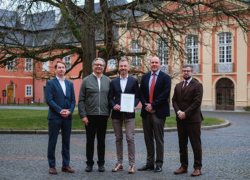
Photo: Krzysztof Trembowski, Christopher Siemienski and Bernard Schiphorst

Czech mortgage market sees slowdown in September after August surge

Banks and building societies in the Czech Republic issued mortgage loans worth CZK 24.2 billion in September, marking a significant drop of CZK 8.1 billion from the unusually strong performance in August. The year-on-year growth rate also slowed, dropping from an impressive 130 percent in August to 80 percent in September. According to the Czech Banking Association’s Hypomonitor, interest rates for new loans edged slightly down to 4.96 percent, compared to 4.98 percent in August.

The data, compiled from all banks and building societies offering mortgages in the Czech market, suggests that the August spike in demand was driven by upcoming changes to early repayment rules, which took effect in September. “The extraordinary demand for mortgages in August was likely caused by these legal changes,” said Petr Gapko, Chief Economist at Moneta Money Bank. “September’s development is more in line with previous trends, and the mortgage market continues its steady growth, supported by a positive consumer outlook and the gradual decline in interest rates.”

In September, the volume of newly granted mortgages, excluding refinancing, totaled CZK 19.7 billion, a decrease of CZK 6 billion compared to August. The number of new mortgage loans issued stood at 5,232, a similar figure to July but down 20 percent from the August peak. Refinancing activity also dipped following a temporary boost in August, although it remained slightly higher than June and July levels.

“Market rates have risen slightly in recent weeks due to global economic developments, but September’s average interest rate was still the lowest since late 2021,” said Jakub Seidler, Chief Economist at the Czech Banking Association. He predicted a further small decline in mortgage rates in the coming months, barring any major disruptions in the financial markets. “Banks are maintaining buffers to offset potential losses from early repayments, so it’s unlikely we’ll see a significant drop in mortgage rates this year,” added FinGO mortgage specialist Jana Vaisová.

Real estate market activity is closely tied to mortgage trends, with rising interest in property purchases. “The trend of increasing real estate transactions continued in September and October, as more buyers entered the market,” said Michal Macek, owner of Europe Reality Group. He attributed this uptick to decreasing interest rates and the perception that favorable purchasing conditions are starting to fade as prices begin to rise again. Macek expects this trend to persist in the coming months as more buyers move to secure properties before prices increase further.

Source: CTK

Panattoni sells core logistics asset in Warsaw in landmark €53.5 million deal

Panattoni has finalized the sale of City Logistics Warsaw IV, a 39,000-square-meter logistics complex in Warsaw, marking a significant transaction in the Polish industrial real estate market. The buyer, an international real estate investment firm, acquired the asset for €53.5 million.

“The City Logistics Warsaw IV transaction is a prime example for today’s core sellers. As the economic cycle progresses, we anticipate increased investment activity in this segment,” said Michał Stanisławski, Co-Head of Capital Markets Poland at Panattoni.

Located just 11 kilometers from Warsaw’s city center, City Logistics Warsaw IV is a modern industrial park offering access to key transport routes, including a rail terminal and the E67 road. Its strategic position makes it a prime location for companies in the manufacturing and technology sectors.

The park currently accommodates six tenants, including a major electronics manufacturer, which fully occupies a 22,400-square-meter building, producing solutions for markets in the U.S., Japan, Korea, and China. Other tenants include a ventilation and drive technology supplier and a Polish electric bicycle manufacturer, utilizing 4,200 square meters for production and warehousing.

Built to the highest sustainability standards, City Logistics Warsaw IV holds a BREEAM Excellent certification, reflecting its commitment to environmentally responsible construction.

Poland: Future inflation index shows decline, but risks remain for rising prices

The Future Inflation Index (WPI), which projects changes in consumer goods and services prices several months in advance, decreased by 0.3 points in October 2024 compared to the previous month. The decline was attributed to lower commodity prices on global markets and reduced expectations of price hikes from both consumers and producers. However, beneath this positive headline, risks remain, especially related to inflation seasonality, growing producer price pressures, and rising food costs globally.

Consumer inflation expectations fell in September, with the percentage of people expecting prices to rise dropping from 88% in August to 83%. Notably, fewer consumers anticipate rapid price increases in the near future. Those expecting prices to rise at the same or slower rates remained stable. Typically, seasonal price declines, particularly in fruits and vegetables at the end of summer, contribute to more optimistic consumer views on future inflation.

In the manufacturing sector, inflation expectations also eased. The proportion of producers planning price increases dropped slightly from 6 percentage points in August to 5.7 percentage points in September. However, this varied significantly across industries. Companies producing consumer goods—both durable and non-durable—showed a strong inclination to raise prices. Food producers were among the most likely to plan price hikes, with a 14 percentage point lead over those planning reductions. Similarly, companies producing clothing, electronics, furniture, and white goods reported an 11 percentage point advantage in favor of price increases.

Producers are being squeezed by rising labor and energy costs, even as demand for durable and non-durable consumer goods holds steady. This has led many companies to consider price increases to offset these rising operational expenses.

Meanwhile, the market for industrial raw materials has stabilized in recent months, with a slight downward trend, particularly in energy commodities. Metals have seen less price relief. However, in contrast, food commodity prices are climbing. The FAO Food Price Index recorded a 3% month-on-month rise in September, driven by higher prices for key staples like sugar, vegetable oils, and cereals, alongside increases in coffee, tea, and cocoa.

Despite the decline in the Future Inflation Index, the outlook for future prices remains uncertain due to both international and domestic pressures. While commodity prices are fluctuating and inflation expectations have moderated, factors like food price increases and industry-specific cost pressures pose potential risks to future inflation trends.

Top fields of study in Poland: High earning potential for graduates

A new report from Personnel Service has identified the fields of study with the best financial prospects for graduates in Poland, highlighting that earnings in certain disciplines can surpass the national median by as much as two and a half times. Notable fields include IT, medicine, management, and psychology.

According to the report, based on data from the Economic Loss of Graduates of Higher Educational Schools (ELA) monitoring system, the median gross wage in Poland as of April this year was PLN 6,500. However, graduates in high-demand areas can earn significantly more right after completing their studies.

The IT sector continues to see robust demand, particularly in key specializations such as programming, artificial intelligence, and cybersecurity. For instance, graduates from the University of Wrocław report starting salaries of nearly PLN 16,000 gross, while other universities see average earnings between PLN 9,000 and PLN 12,000. In data analysis, graduates from the Warsaw School of Economics can expect earnings of PLN 8,000 to PLN 10,000 right after graduation.

In corporate finance management and financial analytics, the demand for qualified professionals is also high. Graduates from Kozminski University in Warsaw earn approximately PLN 10,000 gross, while other institutions yield average salaries of PLN 6,000 to PLN 8,000.

Management studies are increasingly valued as companies in Poland invest in technology-driven strategies. Graduates from Jagiellonian University earn up to PLN 9,500 gross, though average salaries from other universities are lower.

The environmental sector is gaining traction, driven by climate change and sustainable development needs. Graduates in environmental protection and renewable energy technologies are finding opportunities in energy companies and research institutions. For example, environmental law graduates from the Higher School of Ecology and Management in Warsaw earn around PLN 6,500 gross, aligning with the national median, while those in environmental engineering at Koszalin University of Technology can expect salaries exceeding PLN 8,200 gross.

The health sector has faced a significant demand for skilled workers, exacerbated by the COVID-19 pandemic. Medical graduates typically earn around PLN 6,500 gross, while nursing graduates can secure over PLN 10,000 gross, with physiotherapists earning approximately PLN 6,000 gross.

Psychology graduates are also in demand, with opportunities in therapeutic roles, HR departments, and business consultancy. Graduates from SWPS in Warsaw can expect starting salaries of around PLN 7,000 gross.

Krzysztof Inglot, founder of Personnel Service, emphasized the importance of aligning career choices with personal interests and market trends. “Choosing a field of study should consider both passion and the potential for growth. This approach minimizes the risk of employment difficulties after graduation,” he said.

Personnel Service specializes in HR solutions, including recruitment and staffing for IT and medical sectors, focusing on connecting employers with talent from Ukraine.

Source: Personnel Service and ISBnews

immo lab joins PLN 270 million investment land sale in Poland

immo lab, a consulting firm specializing in real estate, is participating in the sale of investment land valued at PLN 270 million. This transaction is part of a busy year for the company, which has already been involved in deals totaling PLN 480 million since the start of 2024.

According to Immo Lab, the finalized and ongoing contracts from this year are expected to generate over PLN 1.5 billion in investments, leading to the creation of nearly 400,000 square meters of new residential and warehouse space.

The company is optimistic about the investment land market in Poland, with particular growth anticipated in the warehouse sector, largely driven by the ongoing expansion of e-commerce. The residential segment and Private Rental Sector (PRS) are also seeing significant activity, with developers actively broadening their portfolios.

Daniel Puchalski, Co-Founder and Managing Partner of immo lab, highlighted the vital role of private equity firms in this year’s transactions. “This will be a good year for Immo Lab and for the entire investment land market. Growth is primarily driven by the warehouse sector, supported by the continuous expansion of e-commerce. A significant group of investors this year are private equity firms, who see opportunities for high returns and are eager to invest in projects with substantial profit potential. Their commitment underscores the promising outlook for the Polish market,” Puchalski stated.

In less than four and a half years of operation, Immo Lab has successfully completed land transactions covering over 1.2 million square meters, with a total value nearing PLN 1.5 billion. These deals span key cities including Warsaw, Kraków, Gdańsk, Wrocław, and Łódź. The firm focuses on regional markets and specializes in managing complex projects that may require changes in purpose or entirely new investment strategies.

Source: immo lab and ISBnews
Photo: Daniel Puchalski, Co-Founder and Managing Partner of immo lab

Polish CEOs’ confidence in global economy declines to 48%, KPMG survey reveals

The confidence of Polish CEOs in the development of the global economy over the next three years has dropped significantly, according to a new KPMG report. The latest edition of the KPMG CEO Outlook 2024 shows that only 48% of Polish business leaders are optimistic about global economic growth, down from 72% in 2023.

The survey, which included responses from top executives in Poland and around the world, also highlighted a shift in hiring plans. While all respondents expressed the intention to increase employment over the next three years, fewer than a quarter of Polish CEOs plan to grow their workforce by 6-10%, a decline of 16 percentage points compared to last year.

New technologies emerged as a top investment priority for Polish CEOs, with 72% of respondents focusing on this area, compared to 59% globally. However, the majority (88%) of Polish leaders believe that artificial intelligence (AI) will have a negative impact on their organizations in the coming years.

The report highlights growing challenges for CEOs, with nearly three-quarters of respondents feeling the pressure to ensure long-term success in a volatile business environment. Globally, executives are most concerned about supply chain disruptions, operational issues, and cybersecurity. In Poland, new technologies, political uncertainty, and cyber threats top the list of concerns.

“Leaders today need to be more resilient, flexible, and innovative than ever before,” said Bill Thomas, KPMG International President and CEO. “Those who adapt to the rapidly changing landscape, invest in relevant technologies, and foster talent will be best positioned for sustainable growth.”

The confidence gap between Polish CEOs and their global counterparts is striking. While just 48% of Polish executives are optimistic about global economic growth, confidence among leaders in 11 key global economies – including the U.S., China, and Germany – declined by only 1 percentage point, remaining relatively stable. However, Polish CEOs showed strong faith in their domestic market, with 92% expecting improvements in Poland’s economy.

To address challenges, Polish CEOs are focusing on building resilience to rising capital costs and inflation. This operational priority has seen a surge, with 52% of leaders highlighting it, up from just 8% last year. Additionally, half of respondents are looking to grow through mergers and acquisitions, while fewer than a quarter aim to achieve organic growth.

Despite the emphasis on new technologies, there is a divergence in attitudes toward AI. Globally, 64% of companies see generative AI as an investment priority, but only 48% of Polish leaders share that view, and 36% do not see AI playing a major role in their strategy. However, 92% of Polish CEOs believe AI will not reduce jobs but instead require employees to upgrade their skills.

Cybersecurity also remains a pressing concern, with 64% of Polish CEOs worried about cyber threats, although only 48% plan to increase investment in this area.

The report also touched on ESG (Environmental, Social, Governance) issues, revealing that 40% of Polish companies feel prepared to meet new ESG reporting standards, compared to 76% globally. Additionally, 28% of Polish businesses aim to achieve climate neutrality by 2030, compared to 52% in key economies.

A notable trend emerging from the survey is the shift back to in-office work. 84% of Polish CEOs plan to fully return to traditional office settings within three years, signaling a departure from the hybrid work model, which only 12% of Polish companies continue to embrace.

With an aging workforce and a shortage of qualified replacements, 68% of Polish leaders are committing to invest in local communities to ensure future access to skilled staff. In terms of leadership diversity, 68% of Polish CEOs agree that changes at the senior leadership level are essential to achieving diversity, equality, and inclusion (DEI) goals, closely aligning with global sentiment.

The KPMG survey was conducted in late July and August 2024, targeting CEOs from companies with annual revenues exceeding $500 million across 11 key sectors, including banking, energy, life sciences, and technology. In Poland, 25 CEOs participated, with their responses compared to those from 1,325 leaders in core economies such as the U.S., China, and Germany.

Source: KPMG and ISBnews

BIS Chief: China poses as attractive partner while undermining democracy, warns Koudelka

China is positioning itself as a friendly and appealing partner to Western countries, while simultaneously working to undermine democracies and promote a world order based on the success of totalitarian states, warned Michal Koudelka, Director of the Security Information Service (BIS), during a conference held today in the Czech Chamber of Deputies. The conference focused on the risks of economic and technological dependence on China.

Koudelka highlighted that China’s ultimate goal is to become the dominant global economic power, and that the country subordinates all its actions toward achieving this objective. “China’s strategy relies heavily on maintaining and expanding its international contacts, using these relationships to build its reputation and position,” he stated. These contacts, according to Koudelka, are primarily established through business deals, investments, and by fostering ties with politicians.

“This is a tactic employed across all democratic nations, including the Czech Republic. A prime example is the pro-Chinese policy of former President Miloš Zeman,” Koudelka remarked. Zeman, who was known for his strong pro-China stance, had a strained relationship with BIS and its director, repeatedly refusing to approve the government’s recommendation to promote Koudelka to the rank of general.

Koudelka’s comments come amid growing international concern over China’s influence in global politics, particularly through its economic and technological outreach. Western nations are increasingly wary of the risks associated with becoming too dependent on China, especially in sectors like technology and infrastructure.

The BIS director’s remarks underline the complex and sometimes covert strategies employed by China to gain influence in democratic nations. “While China presents itself as a cooperative partner, its long-term vision is one of dominance, not collaboration,” Koudelka concluded.

The conference also explored the broader implications of China’s global ambitions and how democracies can safeguard their sovereignty while engaging with the economic powerhouse.

Source: CTK
Photo: Michal Koudelka, Director of the Security Information Service (BIS)

Gartner Intertrans moves into 9,900 sqm of logistics space at CTPark Budapest Vecsés

CTP has leased 9,900 sqm of logistics space at CTPark Budapest Vecsés to Gartner Intertrans Hungaria Kft, one of Hungary’s leading international transport companies. Located southeast of Budapest, the park offers ample room for future expansion, with 600,000 sqm of additional land available, providing the potential for a further 260,000 sqm of gross lettable area (GLA).

Gartner Intertrans, which handles supply chain logistics across Europe, has the option to expand its operations at CTPark Budapest Vecsés, a growing logistics hub expected to reach 350,000 sqm of GLA. The deal reflects the strong demand from third-party logistics (3PL) providers in Hungary and Central and Eastern Europe (CEE), as the region continues to emerge as a vital manufacturing base. This surge in demand is fueled by increased infrastructure investments and a growing trend toward nearshoring production from Asia to Europe.

Hungary’s strategic push to boost its manufacturing sector, aiming for 30% of GDP by 2030, is further driving demand for industrial and logistics spaces. The country’s geographic location, coupled with government policies, has attracted significant foreign direct investment (FDI), making it a hub for logistics and manufacturing.

CTPark Budapest Vecsés is a model of sustainable logistics development. It is home to Hungary’s second-ever BREEAM Outstanding In-Use certified building, recognized for its energy efficiency and environmental performance. Sustainability features include heat pumps, high-grade insulation, LED lighting, and rooftops designed for photovoltaic panels. The park also incorporates CTP’s Parkmaker model, transforming it into a vibrant business ecosystem with community hubs, sports facilities, and wellbeing-enhancing amenities.

“We chose CTPark Budapest Vecsés because of its strategic location and outstanding sustainability credentials,” said Bogdán Róbert, Managing Director of Gartner Intertrans. “The park’s flexibility allows us to grow according to our needs while aligning with our commitment to minimizing environmental impact – a priority for both us and our clients.”

Ferenc Gondi, Managing Director of CTP Hungary, welcomed Gartner Intertrans, emphasizing the long-term collaboration potential. “We’re excited to support Gartner Intertrans as they grow. A third of our new leases are with existing clients, reflecting our ability to adapt and meet evolving needs.”

CTPark Budapest Vecsés’ location on the M0 motorway, near Budapest International Airport, provides excellent connectivity to the rest of Europe, making it a prime logistics hub for international businesses.

Hungary’s central location in the CEE region, alongside its favorable business climate and minimal bureaucratic hurdles, continues to make it an attractive destination for investors and logistics operators alike.

Over 82% of employees ready to return to office full-time in Romania

A new survey by Genesis Property reveals that more than 82% of employees in Romania would be willing to return to the office full-time if their employer required it. While some admit it may be challenging to give up remote work, most respondents say they could quickly adapt. The study, which surveyed 1,168 employees across the country, highlights that a better separation between work and personal life (45%) and increased interaction with colleagues (53%) are the top factors encouraging a return to the office.

Despite the widespread adoption of remote work during the pandemic, fewer than 18% of employees would consider resigning or seeking a remote or hybrid job if their employer mandated daily office attendance.

“We have seen a noticeable shift toward pre-pandemic work routines since the start of the year. Employees are returning to more modern and amenity-rich office spaces that support collaboration and a stronger sense of community,” said Marcela Stancu, Community Director at Genesis Property.

However, the survey also highlighted that changes in office environments have been inconsistent. While 60% of employees reported no significant changes to their office space over the past four years, 11% said their office has become smaller, and nearly 8% feel they now have fewer amenities. Additionally, 27% find their current office too small for their team’s needs, and 33% reported inadequate facilities.

Genesis Property’s YUNITY Park project is an example of how office spaces can be transformed to meet the evolving demands of employees. The project includes an outdoor amphitheater with a 1,500-person capacity, pedestrian walkways, water features, and creative meeting spaces designed to enhance the office experience. The second phase of the project, completed last year, followed a EUR 20 million investment.

The survey, conducted via the iVox platform in July-August 2024, offers insight into the changing workplace preferences of Romanian employees. Of the respondents, 49% were women, and 42% reported a net income of over 5,000 lei.

As companies adapt to post-pandemic work trends, the survey indicates that employees are open to returning to the office, provided the spaces offer a modern, collaborative, and engaging environment.

front page info
LATEST NEWS