Poland: Are housing developers changing their investment plans

Is the lack of support for home buyers with preferential credit causing companies to change their sales assumptions for this year and their investment plans? What projects have entered the market in 2024? What investments are planned to be built?

Tomasz Kaleta, managing director of sales and marketing at Develia:
Our sales target of 2,900 to 3,100 flats in 2024 remains valid. Develia is one of the few developers who have not reduced their sales plans this year. We also maintain our target related to new investments. This year, we plan to introduce and start construction of 3,500 to 3,700 flats.

Zbigniew Juroszek, CEO of Atal:
We are acting in accordance with the adopted plan. Our goal is to have an offer that will meet the needs of customers from different segments of the primary market, in any period of market prosperity. In the event of an increase in the demand side, we will be ready with our expanded portfolio thanks to our consistent construction and sales launch schedules.

This year, we have launched almost 20 new projects or their subsequent phases, and we will launch several more in the fourth quarter of this year. We have recently launched sales of the second stage of the Atal Apollina project in Gdańsk’s Kowale and the new Akacjowa Wita project in Kraków.

In the Tricity, we also intend to start selling further stages of the investments already underway. We have similar plans, including completely new projects, in the Silesian agglomeration, Krakow, Wroclaw and Poznan.

Joanna Chojecka, sales and marketing director for Warsaw and Wrocław at Robyg Group:
The results of the first half of the year confirm that our targets set for the whole of 2024 are as realistic as possible. Regardless of government programmes, the demand for flats in Poland will continue for the next few years. We have about 3,900 flats under construction, and we are also planning new projects and phases for about 5,000 flats.

We are steadily expanding our land bank; in June we invested in extensive land in Warsaw and Gdansk. Currently, our land bank is one of the largest among developers operating on the Polish market and includes the potential to build more than 25,000 units. We are introducing new investments for sale and want to increase our market share, strengthening our position as one of the leaders among residential developers in Poland.

Andrzej Gutowski, Sales Director of Ronson Development:
Adjustment of sales plans depends on many factors. In the middle of the year we made changes based on the market situation, which was already shaping up at the end of March and the beginning of April this year.
In 2024, we introduced flats in the Zielono Mi development in Warsaw (92 flats), as well as in our key investments: Miasto Moje (2 buildings, 152 flats) and Ursus Centralny (2 buildings, 191 units).

In Szczecin, we started selling the fifth stage of the Nowe Warzymice estate (39 flats) and the Nowa Północ project (89 flats). In Poznań, meanwhile, we introduced units in the Grunwald Między Drzewami II development. Later this year, we plan to add to the sales offer with the second stage of the Zielono Mi development, which will include 106 flats.

Shraga Weisman, CEO of Aurec Home:
Changes in the property market do not affect our plans. With our own financial resources and land bank, we are implementing our projects in line with our strategy for the coming years. We are currently finalising the next stage of construction in the eco-friendly development of Tomorrowland Town – the Lavender Quarter. In March this year, we also started selling flats in the Fabrica Ursus development in Warsaw, which is characterised by its industrial style, with historical elements of the former Ursus factory integrated into the architecture. We plan to launch the second phase, in which we will put 250 flats on sale, in autumn 2024.

Zuzanna Należyta, commercial director at Eco Classic:
Sales in our investments are lower than at the end of 2023 and the beginning of this year, but stable enough to allow us to continue with our investment assumptions. We were supposed to launch two investments this year, but these dates have changed due to prolonged administrative procedures.

Marcin Michalec, CEO of Okam Capital:
For this year we have assumed the construction of units in the medium plus and premium segments in three cities, Warsaw, Łódź and Katowice. Soon, at the end of 2024, we will complete the construction of the first stage of Cityflow (over 330 flats) in Warsaw’s Wola and the first stage of Łódź’s Strefa Progress (nearly 260 units), and we are also conducting their subsequent stages.

Construction work around the Now project (over 300 flats) in Łódź is proceeding according to schedule, as is the construction of the fourth and fifth stages of Inspire (about 190 residential units) in Katowice and the Warzelnia by Bohema lofts (67 units) in Warsaw.

In turn, we recently received the occupancy permit for stages D, E and F of Bohema – Strefa Praga, which we were developing as part of a multi-stage complex in Warsaw. We are actively expanding our land bank. This year we purchased land in the Warsaw agglomeration and a plot in Łódź. We are also planning to expand our operations in Katowice.

Dawid Wrona, Chief Operating Officer at Archicom:
Regardless of market circumstances, we are aiming to achieve our medium-term goal of selling 4,000 flats as early as 2025. The intermediate target for 2024 is to achieve sales of 2,600 units. In recent months, we have focused on expanding our land bank, particularly with advanced permissions. Since the beginning of the year, we have secured plots of land enabling the construction of 4,000 flats in major Polish cities. In the first half of 2024, we launched around 2,500 units in 12 projects, including in Kraków, Warsaw and Wrocław.

We also started the construction of several new projects, among which it is worth mentioning Wita in Kraków, Apartamenty M7 in Warsaw and Powstańców 7D in Wrocław. In the coming months, we will continue with the adopted strategy. The company’s stable financial situation enables us to continue our dynamic development.

Damian Tomasik, CEO of Alter Investment:
The lack of support for buyers with preferential credit has not fundamentally changed our investment assumptions and sales plans. As a land developer, we implement projects for various purposes, not only strictly residential, and moreover, the process of preparing land for construction, which we specialise in, usually takes several years. We do not operate under the influence of short-term fluctuations in the housing market. We consistently pursue our investment strategy based on diversifying our product portfolio and taking into account long-term trends, including in the context of observing the evolution and direction of mature markets in Western Europe.

This year we have started several important projects. One example is the investment at Madalińskiego Street in Gdańsk, where we are developing sites for multi-family housing and PRS in collective housing. Although we are only at the initial stage of its implementation, we are already seeing a lot of interest from potential investors, for whom the temporary lack of preferential mortgages for individual customers is of no significance. We are also continuing our work in the Warmia and Mazury region, where we have designed investments of a diverse nature, including for the construction of a leisure and residential complex. In the near future, we also plan to launch investments in the attractive location of the eastern Sudetenland. Properties with an ideal location for hotel development.

Source: dompress.pl
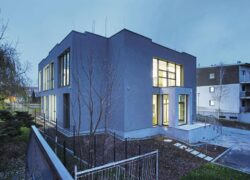
Photo: Chmielna, BPI

MLP Group accelerates European expansion with successful EUR 300 million Green notes offering

MLP Group S.A. has completed its debut senior green notes offering, raising EUR 300 million (approximately PLN 1.3 billion). The offering saw overwhelming demand from global investors, with the issue being oversubscribed multiple times. Citi and Santander Group served as Global Coordinators and Bookrunners for the transaction.

The senior green notes, which have a 6.125% coupon and a maturity date in 2029, were fully subscribed, underscoring the strong confidence in MLP Group’s growth strategy. The proceeds from the offering will be used to fund environmentally sustainable projects, aligning with the company’s commitment to sustainability and modern urban logistics development.

“This is a milestone for MLP Group. Despite current geopolitical uncertainties, our debut green notes offering was met with substantial interest, demonstrating the trust investors have in our strategy,” said Radosław T. Krochta, President of the Management Board of MLP Group S.A. “The funds raised will accelerate our expansion, particularly in urban logistics and data centers, solidifying our position as the developer of choice in key European markets.”

Monika Dobosz, CFO of MLP Group S.A., emphasized the significance of the oversubscription, with around 125 investors, including major asset managers and pension and insurance funds, participating in the offering. “The green notes will play a vital role in supporting our strategic investments, which focus on delivering measurable environmental benefits and contributing to sustainability goals,” she noted.

MLP Group’s investment properties have surpassed PLN 5 billion (nearly EUR 1.2 billion), with a portfolio that adheres to the highest environmental standards. The company’s projects are certified by BREEAM and DGNB, reinforcing its commitment to sustainability. Currently, MLP Group operates in Poland, Germany, Austria, and Romania, managing over 1 million square meters of certified space. The Group has set a target to achieve net-zero carbon emissions by 2026.

As part of its growth strategy, MLP Group plans to expand further into the German market, aiming for at least 30% portfolio allocation in Germany by 2028. Additionally, the company will focus on delivering small to medium-sized warehouse units, a sector highly valued by investors.

The senior green notes have been listed on the Luxembourg Stock Exchange’s Official List and are being traded on the Euro MTF market.

Mayors and Together move closer to signing coalition agreement in Central Bohemia

The political groups Mayors (STAN) and Together (a coalition of ODS, KDU-ČSL, and TOP 09) are on the verge of leading the next parliamentary term in the Central Bohemian Region. The two parties have advanced toward finalizing a coalition agreement, which they will soon sign.

Petra Pecková, the current governor of the region and the top candidate for STAN, confirmed that both groups have agreed on the main points of their future cooperation. Jan Skopeček, the leader of Together, stated that they successfully addressed any outstanding issues between the parties during recent negotiations.

In the proposed structure of the new regional council, which consists of eleven members, STAN is expected to hold five seats, including the governor’s position, while Together would have six seats. Mayors have expressed their desire to retain the portfolios they currently manage within the regional government.

Both groups are set to meet again on Tuesday for further discussions to finalize the details of their collaboration and move forward with governing the region.

Source: CTK

Mayflower Group supports children’s cardiac center with €8,000 donation for young patient

In a heartwarming show of support, Mayflower Group used a brief lull in its busy schedule to con-tribute to an important cause. Together with Eva Tarasovic and Natalia Sarkozi, President of the Mayflower Foundation, the team returned to the Children’s Cardiac Center to offer much-needed assistance to eight-year-old Jakub, a patient facing a challenging medical journey. The donation of €8,000 will provide critical support for Jakub, who has been under care at the Center for over a year.

Jakub’s situation is particularly difficult, as he relies on an external artificial heart—a device de-scribed as a “heart on wheels”—while undergoing treatment. Despite this complex and exhaust-ing battle, Jakub is surrounded by a dedicated team of medical professionals and loving, coura-geous parents who have been by his side every step of the way.

Reflecting on the experience, Mayflower Group shared that these visits are emotionally taxing but deeply rewarding. “Every time we visit, it reaffirms our commitment to giving more. Seeing firsthand the impact of our efforts is truly inspiring and gives us the motivation to continue,” the team said. These moments of giving serve as a reminder of the importance of community support in times of crisis.

In light of the profound experiences they’ve had, the Mayflower Group is now setting even great-er charitable goals. Moving forward, every open project undertaken by the company will incorpo-rate a philanthropic aspect to ensure that more lives can be touched. “We want every project to carry a charitable dimension, so there will be more opportunities for visits like this,” said Natalia Sarkozi.

Before the end of the year, the Mayflower team, led by Andrej Mardiak, plans to return to the Children’s Cardiac Center. This time, they aim to bring even more support, ensuring their visit leaves a lasting positive impact. The entire Mayflower team is dedicated to continuing these ef-forts, contributing both financially and emotionally to those in need.

Their involvement with the Children’s Cardiac Center is part of a broader mission to support the community and help vulnerable individuals through difficult circumstances. By integrating charity into the very fabric of their business, Mayflower Group hopes to make a lasting difference in the lives of many.

Catella partners with Sopra Steria for strategic business transformation

Catella has announced a strategic partnership with Sopra Steria to drive its business transformation. The collaboration aims to modernize Catella’s IT infrastructure across 12 countries and 25 cities, leveraging Sopra Steria’s expertise in digital solutions, cloud technology, cybersecurity, and regulatory compliance.

This partnership marks a significant step in Catella’s journey to becoming a digital frontrunner within the real estate industry. By transitioning routine IT tasks to Sopra Steria, Catella will be able to shift its focus toward innovation and business growth, freeing up valuable resources.

“This transformation is not just about upgrading technology—it’s about empowering our teams to make smarter, data-driven decisions and deliver more value to our stakeholders,” said Martin Johanson, CIO and Chief AI Officer at Catella. “With data and AI at the core of our operations, we can enhance our competitive edge and create superior value.”

The decision to partner with Sopra Steria was influenced by their ability to handle complex, multi-country IT operations and ensure a seamless transition across Europe. Sopra Steria’s expertise in cybersecurity and compliance provides a critical foundation for this large-scale transformation, ensuring the smooth rollout of solutions across Catella’s diverse markets.

“In a multi-country transformation like ours, it’s easy for organizational differences to slow progress,” Johanson added. “By staying focused on business impact and ensuring that every decision aligns with our broader objective of ‘Winning Together,’ we’re able to move forward with speed and precision.”

Sopra Steria’s collaborative approach and ability to work closely with Catella’s local technology partners have been crucial to customizing solutions that meet specific market needs.

“This partnership demonstrates the speed and efficiency achievable with the right people, technology, and vision,” said Amir Hantash, Business Unit Director at Sopra Steria. “We are proud to support Catella in redefining their business, and we look forward to delivering a comprehensive, pan-European solution that meets their full spectrum of technology needs.”

Sopra Steria is a European digital transformation specialist, employing over 60,000 people in 30 countries. The company excels in cloud technology, cybersecurity, and business process automation, making it an ideal partner for Catella’s ambitious transformation agenda.

Czech Republic only taps a fraction of renewable energy potential, analysis reveals

The Czech Republic is underutilizing its renewable energy resources, with the current usage rates revealing a significant gap between potential and actual production. According to a recent analysis by the Chamber of Renewable Energy Sources, the country harnesses only five percent of its wind power potential and less than six percent of photovoltaic energy from buildings. The data, derived from the Energy Regulatory Office, highlights stagnation in the development of biogas plants and small hydropower facilities in recent years.

Wind energy in the Czech Republic currently contributes a mere one percent to domestic consumption, despite a study by the Institute of Physics and Atmospherics of the Academy of Sciences suggesting that wind power could potentially satisfy 31 percent of the nation’s annual electricity needs. The analysis identifies regions with significant wind energy potential, particularly the Moravian-Silesian, South Moravia, and Vysočina Regions, with the Liberec Region leading at 26 percent. In contrast, the South Bohemian Region shows no potential for wind power generation.

Štěpán Chalupa, Chairman of the Chamber of Renewable Resources, noted that previous roadblocks to wind energy development, primarily due to regional authority constraints and lengthy permitting processes, have begun to shift following the recent energy crisis. “Some regions are now proactively preparing for wind power projects,” he stated.

The analysis further indicated that the Czech Republic is lagging in rooftop solar energy utilization, with solar power accounting for approximately four percent of consumption. The Vysočina Region has the highest penetration of solar installations, reaching 8.6 percent, while the South Bohemian Region follows with eight percent. However, Chalupa pointed out that nationwide, the potential for rooftop solar remains largely untapped, with only six percent of suitable building areas currently being utilized for photovoltaic systems. Alarmingly, Prague’s utilization rate stands at just 1.3 percent.

In 2023, wind power plants generated 693 megawatt-hours of electricity, marking a 9.5 percent increase from the previous year. However, the share of wind energy in total consumption remains stagnant at around one percent, significantly trailing the European average of 19 percent. Neighboring countries also report higher production levels from wind energy.

Currently, the Czech Republic boasts more than 191,000 photovoltaic power plants, collectively producing 3.94 gigawatts (GW). Last year, the country saw a record installation of 82,799 new solar sources, an increase of 49,039 devices compared to 2022, although growth has slowed this year.

Global Renewable Energy Trends Lagging Behind Goals

Meanwhile, the International Energy Agency (IEA) has projected that renewable energy sources will account for nearly half of global electricity demand by 2030, with solar and wind expected to double their share in the global energy mix to 30 percent by the decade’s end. However, progress remains behind the ambitious targets set during the COP28 climate conference on climate protection.

The IEA forecasts that global renewable electricity production capacity will increase by over 5,500 gigawatts (GW) between 2024 and 2030, nearly triple the growth observed from 2017 to 2023. This year alone, capacity is expected to rise by 670 GW. IEA Executive Director Fatih Birol emphasized the rapid expansion of renewables, stating, “Renewables are advancing faster than the goals of national governments can set.”

Despite this positive trajectory, UN representatives have called for a tripling of renewable capacity by the end of the decade, a target that appears increasingly unattainable given current trends. The COP28 conference in Dubai last December aimed to significantly reduce carbon emissions and mitigate global warming.

By 2030, approximately 60 percent of the newly installed renewable energy capacity is projected to be in China, indicating that by the end of the decade, nearly half of the world’s total renewable energy capacity will be concentrated in that country. While China leads in total volume, India is noted for its rapid growth in the renewable sector.

Technology forecasts suggest that 80 percent of the global growth in renewable capacity by 2030 will be driven by solar photovoltaic systems, fueled by new large-scale solar plants and increased rooftop installations in both commercial and residential sectors.

The IEA’s report highlights that nearly 70 countries, collectively representing 80 percent of global renewable energy capacity, are on track to meet or exceed their current renewable energy goals for 2030. Nevertheless, the expected growth is still not sufficient to meet the ambitious targets established at COP28. Governments must act swiftly, including modernizing extensive networks, to keep pace with these goals.

Source: IEA and CTK

German government lowers economic growth expectations, anticipates 0.2% decline

The German government has revised its economic forecast, announcing it no longer expects growth for 2024 and instead projects a decline of 0.2 percent in the country’s Gross Domestic Product (GDP). This update was revealed at a press conference by Economy Minister Robert Habeck, who indicated that initial estimates had predicted a 0.3 percent growth for the year under Chancellor Olaf Scholz’s administration.

Germany’s economy experienced a contraction last year, and despite these setbacks, the government anticipates a return to growth in 2025, forecasting an increase of 1.1 percent. Previously, the government had projected a one percent growth for next year. The Cabinet also released an outlook for 2026, predicting GDP growth to reach 1.6 percent, supported by expected increases in household consumption and industrial exports.

Inflation is projected to ease, with the government forecasting a slowdown to 2.2 percent for this year, followed by 2.0 percent in 2025 and 1.9 percent in 2026. This marks a significant decrease from last year’s inflation rate of 5.9 percent.

The decline in the German economy, the largest in Europe, is attributed to several factors, including a weakened industrial sector due to reduced natural gas supplies from Russia following the invasion of Ukraine, sluggish demand from China, and challenges facing the automotive industry amid the shift to electric vehicles. At the end of September, leading economic institutes downgraded their outlook for Germany, predicting a GDP contraction of 0.1 percent for the year. This follows a 0.3 percent decline in 2023, making Germany the weakest performer among Eurozone countries.

If the revised forecasts hold true, Germany would be the only member of the G7 group of advanced economies to experience an economic downturn this year. No other G7 nation currently anticipates a decline in GDP.

Despite the grim outlook, Minister Habeck expressed optimism regarding the German economy’s recovery. “The current economic framework conditions are not satisfactory, but we will work to overcome this,” he stated, highlighting ongoing geopolitical uncertainties, including conflicts in Ukraine and the Gaza Strip.

The government is preparing a “growth package” aimed at revitalizing the economy. Habeck indicated that if fully implemented, these measures could accelerate economic growth and boost employment. However, concerns have been raised that some of these measures may face opposition in the Bundestag from state governments led by the conservative CDU/CSU, which is preparing for parliamentary elections next September.

Economic unions have voiced skepticism about the adequacy of the proposed growth measures, calling for more comprehensive reforms to address high energy prices, bureaucratic burdens, and a growing shortage of skilled labor in Germany.

Czech Economy Impacted by German Outlook

The deteriorating outlook for the German economy is expected to have ripple effects on the Czech Republic, potentially leading to a decline in growth of up to 0.2 percentage points. Analysts indicate that while the Czech economy is anticipated to grow this year, its prospects are gradually diminishing due to interconnected economic ties.

“If Germany’s performance worsens by 0.5 percentage points compared to previous estimates, it could translate to a 0.1 or maximum 0.2 percentage point loss in the Czech Republic,” said Vít Hradil, an analyst at Cyrrus. He emphasized that domestic factors are likely to drive the Czech recovery, given the muted prospects for exports.

Deloitte analyst David Marek noted that the challenges facing the German economy are not merely cyclical but structural, further complicating the outlook for the Czech economy.

Petr Bartoň, an analyst at Natland, warned that the expected growth in the Czech economy, anticipated for the first time since the COVID-19 pandemic, is now at risk. “If the German economy continues to shrink, achieving even reduced growth estimates will be difficult,” he said.

Tomáš Cverna, an analyst at XTB, pointed to the automotive industry’s struggles, particularly at Volkswagen, as contributing factors to Germany’s economic woes, which are impacting the Czech economy as well.

As Czech exports remain heavily concentrated in traditional sectors, including automotive production, the impact of Germany’s economic difficulties is expected to persist. DRFG analyst Filip Emmer highlighted that ongoing energy crises and decarbonization efforts in Europe will continue to influence both German and Czech output.

Despite the challenges, Ron Renda, an analyst at the Chamber of Commerce, expressed cautious optimism for the Czech economy, suggesting that while growth expectations are being adjusted downward, the country is in a relatively better position than Germany. The Czech economy is projected to grow by around one percent this year.

Source: CTK

Survey: Czechs favor real estate investments, followed by savings accounts

A new survey reveals that the majority of Czechs prefer investing in real estate as their top choice for saving or growing their money. According to the IBRS Savings Barometer conducted in August for Golden Gate, 80 percent of respondents view owning a house or apartment as the most attractive investment option. Close behind, 72 percent of Czechs favor land ownership, while 54 percent prefer traditional savings accounts.

The survey, which polled 1,000 Czechs over the age of 16, shows a continued strong preference for real estate. Ownership of homes or apartments saw a one percentage point increase compared to last year, reflecting the sustained appeal of property investments. However, the appeal of land ownership and savings accounts dropped by one percentage point each.

Investments in precious metals remain attractive to 49 percent of Czechs, although interest in these assets has declined slightly, down by two percentage points. “Precious metals, particularly gold, are still considered a reliable way to preserve purchasing power in the long term,” said Pavel Řihák, customer care manager at Golden Gate. He added that the price of gold has surged by 28 percent this year, reaching a record high of over $2,600 per ounce.

Shift in Investment Preferences

The most significant change in recent years has been the growing interest in stocks and bonds. Currently, 36 percent of Czechs consider these financial instruments attractive, marking an 11-point increase since 2019. Savings accounts have also gained popularity, with a 10-point rise to 54 percent.

In contrast, support for building savings has halved over the last five years, dropping to 28 percent. Cryptocurrencies have seen a steep decline in popularity, with only 17 percent of respondents expressing interest, down from 32 percent in 2021.

“The drop in cryptocurrency popularity shows that Bitcoin is not perceived as a safe haven like gold during times of crisis,” said Martin Stránský, director of Bit.plus. “Despite this, there is still a market for cryptocurrency buyers and speculators.”

As Czechs continue to navigate an evolving financial landscape, real estate remains their preferred investment, while traditional savings accounts and precious metals provide familiar options for securing their wealth.

Source: IBRS and CTK

Court rejects Metrostav plea deal in corruption case involving governor Půta

The Liberec Regional Court has rejected a plea deal between construction giant Metrostav and the public prosecutor in a high-profile corruption case involving Liberec governor Martin Půta (Mayors for the Liberec Region). The case, centered around allegations of contract manipulation and bribery, also implicates several Metrostav employees. The court’s decision came after Metrostav had sought to resolve the charges through an agreement on guilt and punishment, a deal the company reached with the prosecutor but which the court ultimately dismissed.

“The conditions for approving the agreement are not met,” presiding judge Pavel Pachner said during today’s hearing. He noted that while the agreement could still be considered later, several factors weighed against its approval at this stage.

Reasons for the Court’s Rejection

Judge Pachner outlined multiple reasons for the decision, one of which was the absence of an acknowledgment of guilt from individuals linked to the company. “It is not enough for the legal entity to simply admit guilt; there must be accountability from individuals to whom the offense is attributed,” he explained. Representatives for Metrostav have consistently denied any wrongdoing in court.

Another concern raised by the court was the impact of the deal on other defendants. Accepting the agreement could create a presumption of guilt for individuals involved in related proceedings, which would likely extend the legal process even further.

The judge also questioned the timing of the plea deal, suggesting that such agreements typically make sense at the outset of legal proceedings, not when a case is already nearing its conclusion. “The deal is not suited for a case with such substantial evidence already presented,” Pachner said.

Governor Půta’s Response

Governor Martin Půta, who has maintained his innocence throughout the case, welcomed the court’s rejection of the agreement. He criticized the proposed deal as a mutually beneficial arrangement between the prosecutor and Metrostav. “This agreement would have allowed Metrostav to receive a light punishment and regain access to public contracts, while the prosecutor could claim success after a decade of legal battles,” Půta remarked on social media.

Case Background

The case revolves around two major projects in Liberec, including the reconstruction of the Church of St. Mary Magdalene, where Metrostav allegedly rigged contracts and promised inflated European subsidies. Metrostav and its subsidiary, Metrostav Infrastructure, are accused of bribing Governor Půta with CZK 530,000 to ensure the project remained eligible for subsidies, a claim Půta has repeatedly denied.

In total, 13 individuals and five companies have been charged in connection with the broader corruption scandal, which dates back to 2012–2014. The court has now concluded the evidence phase of the trial, with final arguments scheduled to begin in January 2025.

Looking Ahead

Although Metrostav’s plea deal was rejected, the company’s legal troubles are far from over. Prosecutors had proposed a fine of approximately CZK 55 million and a three-year ban on the company’s involvement in public tenders as part of the plea agreement. The details of the next steps in the trial will likely emerge in the coming months as the court prepares for final arguments and sentencing.

Governor Půta, who faces charges of accepting a bribe and abusing his public office, could face up to 10 years in prison if convicted. He remains one of the nine defendants still standing trial after several others reached their own plea agreements earlier in the case.

The legal saga, which has already spanned over a decade, continues to cast a shadow over local politics in Liberec, with more proceedings expected in the new year.

Source: CTK

Czech Republic and Poland strengthen ties in joint government meeting

Czech Prime Minister Petr Fiala reaffirmed the close alliance between the Czech Republic and Poland, emphasizing their similar positions on numerous international and regional issues. Following a joint meeting of both governments in Prague, Fiala described the relationship as “close and friendly” with shared interests in EU matters, global concerns, and cross-border cooperation.

One of the key agreements reached during the meeting was the accelerated completion of a contract for cross-border cooperation between emergency services. Both countries also plan to establish more direct communication protocols to manage natural disasters more effectively, Fiala told reporters. The meeting, attended by 26 ministers from both sides, marked the largest intergovernmental consultation between the two nations to date.

“Our countries are real allies, not just in terms of EU policies, but also in the global environment,” Fiala said.

Cooperation on Flood Response and Natural Disasters

The recent floods that devastated parts of both the Czech Republic and Poland were a major topic of discussion. Polish Prime Minister Donald Tusk described the floods as a true test of the two countries’ friendship, saying, “We worked seriously and with trust, which helped mitigate the consequences.” Both governments committed to evaluating their flood response and improving cross-border cooperation to better handle future natural disasters.

Fiala highlighted the need for more streamlined communication between the two countries during crises and underscored plans to enhance the Czech Republic’s flood defenses, including the construction of a dam in Nové Heřminovy, expected to begin by 2027. “The dam will significantly protect areas like Krnov and Opava from flooding,” Fiala said, adding that efforts are underway to repair flood-damaged wastewater treatment plants.

Tusk praised the cooperation between Czech and Polish emergency services, including the involvement of Czech helicopters in rescue operations in Poland. “Critical situations are the best test to check whether friendship is real or just a diplomatic slogan,” Tusk said.

Defense and Support for Ukraine

Defense and military cooperation were also central to the talks. Czech Defense Minister Jana Černochová and her Polish counterpart Władysław Kosiniak-Kamysz discussed the ongoing support for Ukraine in its defense against Russian aggression. Both countries are united in their efforts to provide military aid, training, and logistical support to Ukraine, Černochová said.

Poland’s significant role in supporting Ukraine was acknowledged, with Černochová praising the collaboration in logistics, military training, and equipment supplies. The ministers also discussed deepening defense-industrial ties, including potential partnerships in military vehicle production, air force modernization, and ammunition manufacturing.

The meeting concluded with both governments expressing a commitment to continue strengthening their alliance, particularly in areas of defense, energy, and disaster response, ensuring that the Czech Republic and Poland remain united on critical regional and international issues.

Source: CTK

front page info
LATEST NEWS