Brookfield commits €20 billion to AI and Data Center expansion in France

Brookfield Asset Management has announced a major €20 billion investment plan aimed at expanding artificial intelligence (AI) infrastructure and data center development in France. This strategic commitment marks one of the largest foreign investments in the French digital economy, reinforcing the country’s position as a key player in AI and cloud computing.

The investment will focus on the construction of new data centers equipped to handle the increasing demands of AI-driven applications, cloud storage, and high-performance computing. The initiative aligns with France’s ambition to become a European leader in AI and digital transformation, supported by government policies and funding aimed at fostering innovation and technological advancement.

“France has a rapidly growing digital ecosystem, and our investment will help strengthen the infrastructure needed to support AI and data-intensive industries,” said Bruce Flatt, CEO of Brookfield. “This commitment underscores our confidence in France as a strategic hub for the future of AI and cloud services.”

The expansion project will be rolled out over the next decade, with Brookfield partnering with local technology firms, energy providers, and government bodies to ensure the sustainable development of data centers. A significant portion of the investment will be dedicated to enhancing energy efficiency and incorporating renewable energy sources, aligning with France’s carbon neutrality goals.

With AI adoption increasing across industries—from finance and healthcare to manufacturing and entertainment—demand for data center capacity has surged. France, with its skilled workforce, regulatory support, and strategic location, has positioned itself as an attractive destination for global technology investments.

The French government has welcomed Brookfield’s announcement, viewing it as a boost to economic growth, job creation, and digital innovation. “This investment will further strengthen France’s digital infrastructure and competitiveness in the global AI race,” said Economy Minister Bruno Le Maire. “We are committed to supporting initiatives that advance technological sovereignty while ensuring sustainability and security in the digital sector.”

Brookfield’s move follows similar investments from tech giants such as Microsoft, Google, and Amazon Web Services, all of which have expanded their data center operations in Europe. As AI development accelerates, securing robust and energy-efficient data storage facilities has become a top priority for companies looking to scale their operations.

This €20 billion commitment signals not only Brookfield’s long-term confidence in the French market but also highlights France’s growing prominence as a European technology hub. The first phase of the expansion is expected to begin in late 2025, with the construction of multiple data centers across key strategic locations in the country.

Germany faces stagnation: Economic growth expected to lag behind industrialized nations

Germany is set to remain at the bottom of the league of industrialized nations, with a projected growth rate of just 0.4% by 2025, according to the latest Economic Experts Survey conducted by the ifo Institute and the Institute for Swiss Economic Policy. The survey, which gathered insights from 1,398 economic experts, paints a concerning picture of Germany’s economic trajectory.

“Germany urgently needs a shift in economic policy to reignite growth,” warned ifo researcher Niklas Potrafke. He emphasized that Germany has lost significant ground in the global competition for business attractiveness, calling for market-oriented reforms from the government to address these challenges.

On a global scale, economic growth projections appear more optimistic. The surveyed experts predict a 2.9% global growth rate for 2025, a modest increase from the 2.6% forecast for 2024. Africa (3.9%) and Asia (3.8%) are expected to see the strongest growth, while Europe (2.1%) and North America (2.4%) anticipate more modest increases.

Looking ahead, the outlook for the global economy remains positive, with 3.2% growth projected for 2026 and 3.1% for 2028. While Germany’s growth expectations improve slightly to 1% in 2026 and 1.3% in 2028, they still fall significantly below the average of other industrialized nations.

The findings reinforce growing concerns about Germany’s economic stagnation, highlighting the urgent need for policy changes to enhance competitiveness and stimulate long-term growth.

Source: ifo Institute and the Institute for Swiss Economic Policy

Controversy over new glass building on Prague’s Vltava riverbank

A newly constructed glass pavilion on Dvořák’s Embankment, part of the InterContinental hotel redevelopment, is drawing criticism for allegedly disrupting the historic character of the Prague waterfront. Critics argue that the modern structure, featuring two glass floors, will contribute to light pollution, increased heat retention in summer, and further commercialization of the area.

The building, named Concept Store, will be leased by KodlContemporary Gallery for exhibitions of contemporary Czech and international art. However, critics from heritage and civic groups—including Richard Biegel, chairman of the Club for Old Prague, and Tomáš Bajusz, head of the Citizens of Prague 1 association—have voiced strong opposition.

“This glass cube cannot escape key views from Čech’s Bridge and Dvořák’s Embankment, altering the visual connection between the surrounding historical buildings,” said Biegel, referring to the neoclassical law faculty designed by Jan Kotěra, the InterContinental Hotel built by Karel Filsak, and the previously open space between them.

Biegel also warned that the new development represents the privatization of public space, stating, “This is not a temporary kiosk; it signals how utilitarian development begins to encroach on public areas.” He pointed to recent city decisions, including an international architectural competition for Miloš Forman Square, as indications that more development may follow.

Bajusz expressed concerns about the building’s environmental impact, emphasizing that its glass façade will increase light pollution at night and contribute to the urban heat island effect during Prague’s increasingly hot summers. “While the larger glass structure planned for Miloš Forman Square was canceled due to public pressure, developers continue seeking ways to challenge its undevelopable status,” he stated.

KodlContemporary Gallery, founded by Jakub Kodl, son of auction house owner Martin Kodl, is scheduled to open in mid-2025. Terezie Kaslová, the gallery’s director of communications, defended the project, stating, “This is a gallery space, and our focus is art. The primary lighting will be on the exhibits, not the surroundings.”

The InterContinental hotel, owned by R2G, has been undergoing renovation since 2021 and is expected to reopen this spring. The Concept Store is one of two glass structures originally planned for the redevelopment. The second, a Brand Store, was scrapped following opposition from Prague’s ministries of culture and regional development.

Despite this concession, critics remain skeptical, fearing further commercial expansion in the city’s historic center. As Prague officials reconsider the future of Miloš Forman Square, the fate of additional development projects in this sensitive area remains uncertain.

Source: CTK

Asbestos removal underway at Kotva department store in Prague

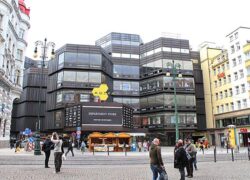
The long-anticipated asbestos removal process at the Kotva department store on Republic Square has officially commenced, marking a crucial step in the landmark building’s modernization efforts. A detailed health and safety inspection conducted by the Prague Hygiene Station (HSHMP) confirmed that all necessary protective measures are in place, ensuring that workers and the public remain safeguarded throughout the operation.

The remediation process, managed by Dilmun System s.r.o., involves the removal of approximately 308 tons of asbestos-containing material, found in various parts of the building, including fire dampers, structural panels, roof layers, pipe joints, and elevator brake pads. Specialized safety zones with vacuum-controlled environments have been set up to prevent the release of harmful asbestos fibers into the air.

Strict Safety Protocols in Place

The controlled zones are sealed and equipped with HEPA filtration units to maintain constant air purification. Workers will adhere to strict decontamination procedures, using designated personnel and material decontamination stations to prevent contamination beyond the worksite. Encapsulation methods, including the application of certified fixation agents, will be used throughout the process to stabilize asbestos fibers before, during, and after removal.

All asbestos waste will be securely sealed in thick-walled PE bags or Big Bags, transported to a sealed hazardous waste container, and safely disposed of at a certified hazardous waste facility. After the remediation work is completed, air quality tests will be conducted by an accredited laboratory to measure the concentration of respirable asbestos fibers. The safety measures will only be lifted once results confirm that asbestos levels are below the legislative limits.

Ongoing Oversight and Inspections

In addition to regular site inspections, an authorized supervisory body has been appointed to monitor compliance with safety regulations. The Prague Hygiene Station will conduct additional unannounced inspections to ensure adherence to health protocols and verify that asbestos removal continues without risks to workers or the public.

The Kotva department store, an architectural icon of Prague’s modernist retail scene, has been undergoing significant renovations to restore its historic significance while updating the infrastructure to modern standards. The asbestos removal process is a critical milestone in this transformation, paving the way for the next phase of redevelopment and modernization.

Photo: Wikimediacommons

Palmira Capital Partners reports 20% growth in leasing volume for 2024

Palmira Capital Partners achieved a 20% increase in its leasing volume last year, securing approximately 281,100 sqm of logistics, warehouse, and office space. The surge in leasing activity underscores the resilience and stability of the logistics and light industrial asset classes amid sustained demand.

A significant portion of this growth came from contract renewals, with existing tenants extending leases on 252,000 sqm of space. These properties form part of a diverse portfolio of successful funds, which Palmira continues to expand and actively manage.

In addition to strong leasing performance, Palmira kicked off 2025 with the acquisition of a business park in Ratingen, adding 18,700 sqm of rental space to its expanding portfolio. This latest investment aligns with the company’s strategy of strengthening its logistics and light industrial holdings across key European markets.

Accolade Industrial Fund expands with new acquisitions and tenant growth in Q4 2024

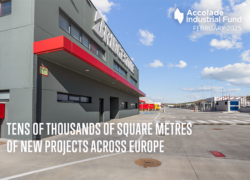
Accolade Industrial Fund closed 2024 on a strong note, significantly expanding its portfolio across multiple European markets. In the fourth quarter, the fund added two new industrial parks in the Czech Republic and Spain, valued at over EUR 61 million, while also increasing its Polish holdings by 80,000 square meters. The fund welcomed five new tenants across manufacturing, logistics, and e-commerce, resulting in an overall portfolio expansion of more than 141,000 square meters.

Despite this growth, the fund also saw the departure of Bama, a shoe care product supplier, from its Gorzów Wielkopolski Park in Poland following its bankruptcy. Negotiations are already underway for new tenants to occupy the 5,000-square-meter space left vacant, which represents just 0.25% of the fund’s total leasable area. Meanwhile, lease extensions and new contracts across Polish parks exceeded 40,000 square meters in Q4, reinforcing strong demand for industrial spaces.

New Acquisitions: Strengthening Presence in Spain and the Czech Republic

Park Burgos (Spain)

The 43,000-square-meter industrial park in Burgos, northern Spain, strengthens Accolade’s foothold in a key transportation hub. The Japanese tire manufacturer Bridgestone has fully leased the facility, reinforcing its strategic expansion in Europe. With easy access to Madrid, Barcelona, Paris, and Lisbon, Park Burgos is set to become a vital asset in Accolade’s growing Spanish portfolio.

Park Ostrov North (Czech Republic)

Accolade has also invested in Park Ostrov North, a 20,000-square-meter facility in the Karlovy Vary Region, near Germany. This site is a brownfield revitalization project built on the grounds of the former Škodovka plant. The facility has already secured two major tenants:
• Amphenol (Germany) – A global manufacturer of connectors, chip card readers, and cable harnesses.
• Kokiska (Czech Republic) – A family-owned e-commerce retailer specializing in home and garden products.

The park aims to achieve BREEAM Excellent certification, reflecting Accolade’s commitment to sustainability.

Expansion of Existing Parks in Poland

Park Koszalin

Koszalin, a key industrial center in Pomerania, added 46,000 square meters to the fund’s portfolio in Q4. The park now houses six new tenants, including heating equipment producer Kospel and electronics retailer RTV EURO AGD. Additionally, several existing tenants, including Autostore, Inpost, DPD, and logistics provider Röhlig, expanded their footprints.

Park Goleniów

Located within the Szczecin agglomeration, one of Poland’s fastest-growing industrial hubs, Park Goleniów added 32,000 square meters in Q4. The site remains a key logistics hub, with tenants such as DSV and Fiege, two major players in freight transport and supply chain management.

A Promising Outlook for 2025

Accolade’s latest investments underscore its continued expansion strategy in high-demand logistics and manufacturing hubs. With a strong pipeline of lease agreements and a growing footprint in Spain, the Czech Republic, and Poland, the fund remains well-positioned for further growth and value creation in 2025.

CIJ EUROPE Q1 2025 magazine now available

The Q1 2025 edition of CIJ Europe Magazine provides an in-depth overview of the Central and Eastern European real estate market, highlighting major trends, key developments, and expert insights.

The regional section features market updates, corporate news, and a special focus on the Timpuri Noi Square Phase Two project. Key industry leaders share insights into market shifts and sustainability strategies.

In Czech Republic, the magazine includes an interview with Martin Kubanek, discussions on Panattoni’s industrial real estate strategy, and an overview of the CIJ Awards Czech Republic 2025. Other highlights include an analysis of the growing logistics sector and rising residential property prices.

Hungary’s real estate landscape is covered through a review of its awards ceremony and market briefings on office and industrial developments.

In Poland, the report examines the growing luxury real estate market across Europe.

Romania’s real estate sector sees extensive coverage, including a deep dive into Bucharest’s office market, WDP’s sustainability focus, and Iulius Mall’s 25-year milestone. The Romanian CIJ Awards also feature prominently.

Slovakia’s market update discusses ITB Development’s new standards, the demand for shopping parks, and 365.invest’s investment strategies. The section also explores the industrial real estate sector and CIJ Awards Slovakia.

The magazine further provides updates on major investment projects, company expansions, and insights from legal and financial professionals regarding tax changes and market trends.

With expert commentary, in-depth analyses, and award recognitions, CIJ Europe Q1 2025 serves as an essential resource for real estate professionals across the region.

Use the link below to download your complimentary issue:

Slovakia drops in global corruption perception index

Slovakia has dropped 12 places in the 2024 Corruption Perceptions Index (CPI), ranking 59th globally with a score of 49 out of 100, according to Transparency International (TI). This marks a significant decline from 2023, when Slovakia achieved its best historical ranking at 47th place with a score of 54 points.

Denmark, Finland, Singapore, and New Zealand topped the rankings as the world’s least corrupt countries. Meanwhile, crisis-stricken nations such as Syria, Venezuela, and Somalia occupied the lowest positions, with South Sudan scoring the worst globally. The CPI, compiled annually by TI, evaluates corruption levels based on 13 independent institutional indices over the past two years.

Impact of Political Changes on Slovakia’s Decline

TI attributes Slovakia’s sharp decline to legislative changes introduced under Prime Minister Robert Fico’s government, which have weakened anti-corruption measures and reduced public oversight. Key concerns include the dissolution of the Special Prosecutor’s Office and the National Crime Agency, both of which were instrumental in tackling corruption and serious crime.

Slovakia’s ranking now places it below Austria, the Czech Republic, and Poland, but above Hungary and Ukraine. Across the European Union, the average CPI score fell by two points to 62, reflecting growing concerns over corruption and weakening institutional oversight across the bloc.

Global Trends in Corruption

According to Transparency International, more than two-thirds of countries scored below 50 points, signaling persistently high levels of corruption worldwide. The organization warns that global anti-corruption efforts are weakening, limiting the ability of nations to tackle pressing issues such as the climate crisis, governance failures, and institutional inefficiencies.

Despite ongoing efforts in some regions, the CPI results highlight a concerning global trend, with many governments failing to implement effective anti-corruption strategies. In Slovakia, the recent political shift has led to fears of further regression in transparency and accountability, raising alarms among civil society and watchdog organizations.

Source: Transparency International and TASR

Corruption impedes global progress towards sustainability

The 2024 Corruption Perceptions Index (CPI) has revealed that corruption remains a critical global issue, obstructing sustainable development and environmental efforts. Despite some positive changes in 32 countries since 2012, corruption levels have stagnated or worsened in 148 nations. The global average score of 43 has remained unchanged for years, with over two-thirds of countries scoring below 50.

Corruption is also a major threat to climate action, hindering both greenhouse gas reduction initiatives and adaptation strategies. Misuse of funds meant for climate protection is widespread, and undue influence from powerful industries weakens environmental policies, leading to further ecological damage.

Illicit financial flows remain a significant concern. Many high-ranking CPI countries possess the resources and influence to lead global anti-corruption and climate protection efforts. However, several of these nations prioritize the interests of fossil fuel industries and house financial hubs that attract illicit funds linked to corruption and environmental destruction.

François Valérian, Chair of Transparency International, stressed the urgency of addressing corruption, stating: “Corruption is a growing global threat that not only hinders development but also fuels authoritarianism, instability, and human rights violations. Tackling corruption must be a top priority for every nation and the international community to ensure a peaceful, free, and sustainable world. The dangerous trends revealed in this year’s CPI highlight the need for immediate and concrete action.”

The CPI assesses 180 countries and territories, ranking them based on perceived levels of public sector corruption. Scores range from 0 (highly corrupt) to 100 (very clean), offering a comprehensive overview of global transparency and governance.

Make Europe Great Again: Addressing economic challenges with a unified strategy

The German economy is facing significant challenges, with the federal government recently slashing its growth forecast for 2025 from 1.1% to just 0.3% in real terms. The decline is evident across industries, as nearly one in three German industrial companies is either relocating its research and development operations abroad or considering doing so. Meanwhile, Germany’s attractiveness as a production hub continues to diminish due to rising energy and labor costs, stringent regulations, and bureaucratic inefficiencies. These pressures are now also being felt in the logistics real estate market.

In late January, over 100 associations and businesses joined forces for “Economic Warning Day,” calling attention to the dire state of the economy. However, political responses have been muted. Meanwhile, the re-emergence of Donald Trump as a major political force in the U.S. introduces another disruptive factor. His threats of import tariffs and tax incentives to lure companies to the United States pose a serious risk to European industries, particularly those reliant on exports, such as mechanical engineering, automotive, and pharmaceuticals.

To counteract these threats, a comprehensive strategy is required—not just for Germany, but for all of Europe. Former Siemens CEO Joe Käser recently highlighted the problem, noting that while Europe is committed to doing the right things, it lacks focus, execution, and, most critically, speed. The solution must be a unified effort—what could be called a MEGA project: “Make Europe Great Again.”

Germany urgently needs an economic turnaround. However, standing strong against increasing competition from Asia and the U.S. will require more than isolated national efforts. Instead, a united European approach is essential to revitalizing the domestic economy and ensuring long-term economic stability.

Source: Analysis of the Current Economic Landscape by Kuno Neumeier, CEO of Logivest and Spokesperson for the Logistics Real Estate Theme Group at BVL

front page info
LATEST NEWS