Austria sees record low in building permits for new dwellings in 2024

Residential construction in Austria reached its lowest level in over a decade in 2024, as the number of building permits for new dwellings declined significantly. According to Statistics Austria, only 32,100 dwellings were approved for construction in new buildings last year, marking an 8.5% decrease from 2023. This downturn brings residential construction activity to its weakest point since 2010.

The overall number of approved dwellings in 2024 stood at 51,473. Of these, 44% were part of new residential buildings with three or more units, while 18% were in buildings with one or two units. Just 0.5% were approved in non-residential structures. Another 38% of permits were issued for extensions, additions, and conversions of existing buildings, amounting to 19,373 dwellings nationwide. Vienna accounted for 7,112 of these approvals.

Tobias Thomas, Director General of Statistics Austria, noted that the continued decline in building permits indicates a likely reduction in the availability of new apartments in the near future. This trend highlights persistent challenges in Austria’s housing construction sector.

Looking at longer-term trends, the volume of approved dwellings in newly constructed buildings has dropped by 37% over the past decade. In 2014, approximately 50,600 new dwellings were approved. The figure peaked in 2017 with a record 72,500 units, followed by fluctuations in the subsequent years. Since 2019, the sector has seen a steady decline, culminating in the current record low.

Private builders continue to play the most significant role in residential construction. Out of 16,182 buildings approved in 2024, 73% were developed by private individuals. Most of these were one- or two-family homes, with 7,232 buildings falling into this category. More than half of these were constructed in the same municipality where the builder resides, and an additional 22% were located within the same political district. However, about 10% were built in a different federal province.

In Vienna, a notable pattern emerged. Only 43% of private builders from the capital constructed homes within the city. Instead, 38% chose to build their detached or semi-detached houses in neighboring Lower Austria, underlining the capital’s housing challenges and the tendency of residents to seek more affordable or accessible options outside the city limits.

Overall, the sharp decline in building permits and continued dependence on private builders reflect broader structural issues in Austria’s residential development, including regulatory bottlenecks, affordability concerns, and shifting demographic and geographic trends in housing demand.

Czech Republic sees surge in entrepreneurs in early 2025

In the first quarter of 2025, the Czech Republic registered a significant rise in entrepreneurial activity, with 10,327 more entrepreneurs active compared to the same period last year—an eightfold increase year-on-year. This data comes from an analysis by CRIF – Czech Credit Bureau, based on information from the portal www.informaceofirmach.cz.

During the first three months of the year, 23,106 individuals launched new businesses, while 12,779 ended their operations. Although the number of new business registrations was comparable to early 2024, a sharp decline in business closures contributed to the net increase in entrepreneurs. Analyst Věra Kameníčková from CRIF noted that the number of closures is returning to levels seen before the mandatory introduction of electronic data boxes.

The largest number of new entrepreneurs appeared in Prague (4,429), followed by the Central Bohemian Region (3,123) and the South Moravian Region (2,587). These regions also recorded the highest number of business closures, with Prague leading at 1,727.

Only four regions saw an increase in new business registrations compared to the first quarter of 2024. The Karlovy Vary and Olomouc regions experienced the largest growth at 8%, while the Hradec Králové Region saw a 10% decline. Business exits decreased across almost all regions, most notably in the Zlín, Liberec, and Prague areas—each recording drops of around 48%.

Prague also saw the most dynamic net growth, with 26 new businesses created for every 10 that closed. By contrast, the Karlovy Vary Region experienced the slowest growth, with 13 new businesses for every 10 closures.

Sector-wise, most new businesses were launched in construction, manufacturing, and professional services. The construction sector saw a 12% year-on-year increase in new entrepreneurs. The most rapid growth, however, was in the mining and quarrying industry, where six new businesses opened for every one that closed. Cultural and recreational activities also saw notable gains.

The business and catering sectors continued to experience a decline in entrepreneurship, aligning with longer-term trends.

Demographic data shows an increasing share of business closures among entrepreneurs under 30. Meanwhile, those over 61 accounted for the highest number of closures. Women represented 38% of those who ceased business activities, mirroring their share of total entrepreneurs. A notable trend this year is the rise in closures among businesses that were less than five years old, which now make up more than one-fifth of all discontinued operations.

Source: CTK

New apartment sales in Prague surge 60% year-on-year in early 2025

Prague’s residential property market saw a sharp rise in demand during the first quarter of 2025, with developers selling 2,550 new apartments—marking a 60% increase compared to the same period last year. This figure represents the highest number of new units sold in the first quarter over the past 15 years. Only the second quarter of 2021, during a previous market peak, recorded higher sales volumes.

The average listing price for new apartments in the capital reached CZK 167,947 per square meter. This reflects a year-on-year increase of approximately 10% and a quarterly increase of 2.9%. Analysts from Trigema, Central Group, and Skanska Residential attribute the uptick in demand and pricing to declining interest rates and growing investor interest, particularly during a period of stock market volatility.

Sales were strongest in districts Prague 4, 5, 9, and 10. Prague 9 offered the most affordable units, with average prices slightly above CZK 147,000 per square meter. Conversely, the highest prices were recorded in central Prague and Prague 7, where averages exceeded CZK 200,000 per square meter.

Smaller apartments—mainly 1+kk and 2+kk layouts—dominated sales, accounting for more than 75% of transactions. These units tend to be more accessible for a wider range of buyers due to their lower price points and are also popular with investors for their rental potential.

“The Prague housing market has had its best start to the year in over a decade,” said Dušan Kunovský, Chairman of the Central Group Board of Directors. “Falling mortgage rates and fears of rising prices are pushing demand higher. If the current pace continues, total sales for 2025 could exceed 8,000 new apartments, setting a new record.”

Larger apartments, particularly 5+kk units, commanded the highest average prices and are often positioned in the luxury segment. More affordable options included the widely sought-after 2+kk and 3+kk units. The average listing price for new apartments in Prague stood at CZK 10.9 million in the first quarter, while the average transaction price was lower, at CZK 9.1 million.

Despite strong demand, the number of available apartments declined by 6% from the end of 2024, totaling approximately 5,350 units. This figure is relatively unchanged from a year ago, although developers launched 1,950 new units in the first quarter—well above the long-term average of 1,400.

Petr Michálek, Chairman of the Board of Skanska Residential, warned that without faster permitting processes, the housing supply could fall further behind demand. “The offer of around 5,500 new apartments has been stagnant for the past two years. If demand remains strong and permitting doesn’t accelerate, we could see an even deeper market shortage and worsening housing availability,” he said.

Source: CTK

Bratislava completes new city-owned rental apartment building in Petržalka

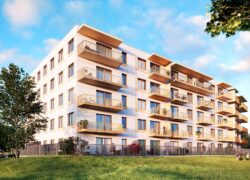
Bratislava has completed construction on a new city-owned apartment building in Muchovo Square, Petržalka, which includes 103 rental and replacement units. This marks the first time in 15 years that the capital has directly developed a new rental housing project. The building is part of the city’s broader strategy to address the shortage of affordable rental housing, and the first tenants are expected to move in starting in May.

The city continues to face a long-standing deficit in housing availability, particularly in the rental sector. Currently, the municipality manages about 870 rental units, with another 1,000 under the administration of city districts—numbers that fall short of the growing need. Since September last year, more than 1,000 applications for city rental apartments have been submitted. As of now, 228 applicants are waiting to be allocated a standard rental apartment, while about 450 are waiting for replacement housing. The average waiting time is around seven years, highlighting the urgent demand for new rental options.

Mayor Matúš Vallo emphasized that improving housing availability has been a key focus of his administration. Efforts include renovating neglected city-owned apartments, constructing new rental buildings, and launching a municipal rental agency to assist residents in finding stable, affordable housing. Bratislava also secured agreements with developers that allow the city to acquire a share of newly built apartments—5% in exchange for zoning plan adjustments—expanding its housing stock without direct investment in every project.

Construction of the new building in Petržalka began in August 2023. It was co-financed by the Slovak Ministry of Transport through a non-refundable subsidy, supplemented by a loan from the State Housing Development Fund and funds from the city’s own budget. The building also features park space and civic amenities to improve the surrounding area.

Vice-Mayor Lenka Antalová Plavuchová, who oversees housing development, described the project as a significant milestone in Bratislava’s approach to rental housing. She said it not only offers functional living space but also enhances the urban environment and marks the beginning of a more systematic, long-term effort to expand the city’s rental housing supply.

The apartments will be allocated to residents who face challenges in the housing market, including those in urgent need of accommodation and people working in public service sectors such as healthcare, education, social services, and law enforcement. New allocation criteria adopted last year aim to ensure transparency and fairness in distributing available units to those most in need.

Transport Minister Jozef Ráž also praised the initiative, noting the high demand for affordable rentals in Bratislava and expressing support for continued development in this area. He acknowledged that market-rate rentals remain out of reach for many, making public housing projects like this one essential.

The city’s rental housing efforts will not stop with this building. A second phase of the project, planned for the same area, will add approximately 50 more apartments. Additionally, new developments are being prepared in other districts, including Ružinov and Vrakuňa, with more projects expected in the coming years to further expand Bratislava’s municipal housing stock.

Source and Photo: Bratislava City

Bratislava’s new construction market slows, sales drop 60% in early 2025

Following a strong end to 2024, the new construction market in Bratislava experienced a marked slowdown in the first quarter of 2025. According to real estate data provider BuiltMind, 527 new residential units were sold during the first three months of the year, including 501 through public sales. This represents a 60% drop in total transactions compared to the final quarter of 2024.

Despite the decline, demand remains relatively high—comparable to the most active periods seen during the pandemic. The market supply has remained stable, with approximately 3,200 units available, similar to levels recorded at the end of last year.

The absorption rate, which measures how quickly properties are sold, dropped from a record high of 25% to around 16%. While this indicates a slowdown, it still marks the second-highest rate since mid-2022. Meanwhile, average listing prices have continued to rise, reaching €5,400 per square meter—up nearly 4% from the previous quarter.

Martin Decký, CEO of BuiltMind, described the drop in sales as expected following the end-of-year surge and the introduction of higher VAT rates. He noted that smaller apartments, particularly 1+kk units, recorded the highest prices, surpassing €5,600 per square meter, with many selling above €6,000. Larger units, such as 4+kk apartments, maintained an average of €5,000 per square meter, though prices in premium locations climbed as high as €7,100.

Analysts are observing a “two-speed” trend in the market. Higher-quality developments in sought-after locations continue to command strong prices and may see further growth. In contrast, more standard projects are facing increased competition and may need to adjust through pricing strategies or hybrid models, such as mixing sales with long-term rentals or cooperative housing formats.

Cresco Real Estate led the market in sales with 65 units sold, followed by Penta Real Estate with 47 and YIT with 42. Downtown Yards by JTRE was the best-selling project, recording 32 sales. Other strong performers included Bory, Kvarter, and Cherry.

Smaller units continue to attract the most interest. One-room and two-room apartments accounted for nearly 70% of all sales. Over the past year, 52% of 1+kk units offered on the market were sold, with those under 30 square meters showing the highest turnover.

Decký emphasized that today’s market is increasingly selective, with buyers prioritizing compact, well-designed apartments, often for investment purposes. These units tend to sell the fastest.

Looking ahead, BuiltMind expects quarterly sales in Bratislava to stabilize between 550 and 750 units, with average prices forecasted to reach €5,600 per square meter by the end of 2025, and potentially up to €6,000 depending on market conditions.

Source: BuiltMind and SITA

Eight new buildings planned for completion in southern Nová Zbrojovka by 2030

The transformation of Brno’s former Zbrojovka factory site continues, with CPI Property Group announcing plans to complete eight new buildings in the southern section of the Nová Zbrojovka development by 2030.

The new phase includes a mix of residential and commercial properties. Alongside the renovation of the site’s original headquarters, the project will feature three residential buildings and four structures designated for office and retail use. Once finished, the development will offer more than 400 apartments for sale, 200 apartments for rent, and approximately 50,000 square meters of space for offices and commercial tenants.

Following the conclusion of the current construction phase, expected between late 2026 and early 2027, work will begin on three additional buildings. This includes the Beraka offshore residence, which will provide 107 apartments ranging from studios to four-room units, as well as two office buildings—D5 Office and E Office—offering a combined 27,500 square meters of commercial space.

Infrastructure development is progressing in parallel with construction, in collaboration with the City of Brno. The city is also preparing documentation for the planned Nová Zbrojovka primary school and kindergarten, which will accommodate over 800 children, expanding local education capacity.

The broader Nová Zbrojovka development covers 22 hectares and is being repurposed from an industrial brownfield into a mixed-use urban district. When complete, it will include around 2,500 residential units, 200,000 square meters of office space, and an additional 100,000 square meters designated for retail and services. The first residents are expected to move in at the turn of 2026 and 2027.

Source: CTK
Photo: CPI Property Group

CTP expands Clubco coworking space in Brno with new facilities

CTP has announced the expansion of its Clubco coworking space in the Vlněna business district of Brno. The development adds 2,000 square meters to the existing premises, including private offices, event and meeting rooms, outdoor terraces, and a new relaxation area. A podcast studio, created in collaboration with Detail Studio, is also part of the expansion and will be accessible to both Clubco members and the public.

The expansion is CTP’s response to continued demand for flexible office solutions in central Brno. Clubco, which opened in 2021, is currently over 90% occupied. The space is used by a mix of freelancers, startups, and established companies. The latest addition follows a previous expansion in 2022 and includes more than 170 new office spaces and enhanced shared facilities, such as focus rooms and an expanded event area.

The newly introduced Clubco & Detail Podcast Studio is designed for recording podcasts and video content. In addition to equipment rental, the facility offers packages for post-production and training. Clubco plans to host workshops and live recordings, and it intends to launch its own podcast in the near future.

The coworking space continues to support a variety of community activities, including guest talks, coffee tastings, yoga sessions, and public workshops. These events are aimed at connecting members and engaging with the wider Brno business and creative communities.

The expansion in Brno is part of CTP’s broader strategy to grow its flexible office offerings. Clubco currently operates in Brno, Ostrava, and Nupaky near Prague. A new location is scheduled to open later this year at CTPark Brno, featuring coworking areas, an event venue, and a new LabSpace for prototyping and 3D printing.

Ukrainians appreciate Poland’s labor market, but few plan to stay permanently

Despite a broadly positive perception of the Polish labor market among Ukrainians, only a small proportion plan to remain in the country permanently, according to the latest “Barometer of the Polish Labor Market” published by Personnel Service.

The report reveals that 88% of Ukrainian respondents positively assess the employment conditions in Poland, citing economic stability, low unemployment, and cultural proximity as key advantages. However, sentiment toward Polish society has weakened. Currently, 64.25% of Ukrainians report a favorable view of Poles—down six percentage points from the previous survey. Only 14% of Ukrainians are considering long-term settlement in Poland, indicating that most still regard the country as a temporary workplace rather than a permanent home.

Gender differences in perception are notable. Ukrainian women are significantly more likely than men to express positive sentiments toward Poland, with 69.1% holding a favorable view compared to just 56.3% of men. This trend may be influenced by the strong support women and children received from Poland following the outbreak of the war in Ukraine.

According to Krzysztof Inglot, a labor market expert and founder of Personnel Service, the dynamic between Poles and Ukrainians is evolving. “The initial wave of solidarity is giving way to the realities of day-to-day life, bringing new social and economic challenges,” he explained.

Among Poles, attitudes toward Ukrainians are becoming more reserved. While the majority—48%—maintain a neutral view, the proportion expressing positive sentiment has dropped sharply to 23%, a 12-point decline from the previous year. Meanwhile, the share of those with negative perceptions has increased to 24%, up by six points.

Concerns about wage stagnation and job security are fueling some of this sentiment shift. Although only 18% of Polish respondents fear losing their jobs to Ukrainian workers, 41% believe the influx of Ukrainian labor is contributing to slower wage growth. About one-third (32%) see no impact, while 28% remain unsure.

“Poles understand that Ukrainian workers typically fill roles where there is a labor shortage,” Inglot added. “Yet in an environment of economic uncertainty, it’s natural to see a softening of positive sentiment.”

Despite this shift, Poland remains the leading employment destination for Ukrainian workers in the EU, highlighting its continued importance in regional labor mobility.

The findings are based on a survey conducted between January 20 and 28, 2025, using the CAWI method (Computer-Assisted Web Interviewing) on the Ariadna panel. The study included responses from 329 companies of various sizes across Poland.

Source: Personnal Service

Non-bank loan market in Poland sees dynamic growth in March 2025

The Polish non-bank lending sector continued to show robust growth in March 2025, with both special-purpose and cash loans experiencing notable increases in volume and value compared to the same period last year, according to recent market data.

The market is broadly divided into two main segments—special-purpose loans and cash loans—each catering to different financial needs and exhibiting distinct characteristics.

Special-purpose loans, which are granted for specific purchases of goods or services rather than direct cash disbursements, saw a 20.9% year-on-year increase in the number of new loans issued in March 2025. However, the total value of these loans rose by a slightly lower 15.9%, suggesting a higher frequency of smaller loans. The average value of these loans decreased to PLN 685, down 4.2% from March 2024.

Importantly, the reporting in March 2024 was already comprehensive, meaning this year’s figures offer a reliable reflection of the current market dynamics, unaffected by previously incomplete data.

In contrast, cash loans—which are deposited directly into borrowers’ accounts and can be used freely—are divided into two categories: short-term loans of up to 60 days, and longer-term loans exceeding that period.

Short-term cash loans saw particularly strong growth. The average loan value increased by 12.4% to PLN 2,340, while the total sales value surged to PLN 1.04 billion, marking a 29.3% increase compared to the same month last year. These loans made up the bulk of cash lending activity, accounting for 85.7% of the number and 70.5% of the value of all cash loans in March 2025.

Longer-term cash loans also experienced significant growth. A total of 74,000 such loans were issued, valued at PLN 436 million—an increase of 14.2% in number and 30.7% in value compared to March 2024. The average amount for these loans rose to PLN 5,903, up 14.5% from a year earlier.

Overall, the structure of the non-bank loan market in March 2025 remained consistent with previous trends. Special-purpose loans dominated in terms of quantity, while cash loans led in overall value.

Looking at the first quarter of 2025, loan companies reported a 21.7% year-on-year increase in special-purpose loans, while short-term cash loans and long-term cash loans grew by 17.3% and 17.5%, respectively. In terms of value, the growth was equally strong, with increases of 14.5% for special-purpose loans, 31.3% for short-term cash loans, and 33.8% for long-term cash loans, signaling a continued upward trajectory for the sector.

Source: BIK

Print still reigns: EU readers prefer physical books over digital in 2024

In 2024, online shoppers across the European Union continued to show a strong preference for printed reading materials over digital formats. According to a recent survey, 14.7% of EU residents reported purchasing printed books, magazines, or newspapers online during the three months prior to the survey—more than double the 6.8% who opted to download e-books or audiobooks.

Ireland led the way with the highest proportion of residents buying printed publications online at 28.3%, followed by the Netherlands at 23.5% and Luxembourg at 22.7%. On the other end of the spectrum, the lowest shares were observed in Cyprus (2.0%), Latvia (3.8%), and Romania (5.3%).

When it came to digital formats like e-books and audiobooks, the highest uptake was seen in Ireland again, with 22.3% of its population downloading these formats, trailed by Denmark at 19.7% and Luxembourg at 13.3%. The smallest proportions of digital purchases were recorded in Bulgaria (1.8%), Latvia (2.5%), and Romania (2.6%).

Interestingly, in three EU countries—Denmark, Cyprus, and Finland—digital purchases surpassed those of printed books, marking a notable shift in reading habits within these regions.

Source: Eurostat

front page info
LATEST NEWS