Next.Move to Open Largest Branch in Prague’s Churchill II Building

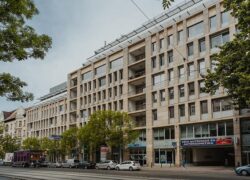
The Churchill II office building in central Prague, owned by Českomoravská Nemovitostní (ČMN), will add a new tenant at the start of 2026. Fitness and wellness operator Next.Move has signed on to open its largest location to date, expanding its network across the city.

Founded in 2022, Next.Move operates four branches in Holešovice, Karlín, Vinohrady, and Smíchov, serving more than 3,000 members. The new Churchill II facility will occupy 1,200 square metres and will be the company’s most extensive space so far. It will include a fitness zone, wellness area, and features such as saunas, cooling pools, red light therapy, and a relaxation lounge. Group classes will also be offered, including Pilates Reformer sessions and training programmes linked to Hyrox competitions.

ČMN’s Vice-Chairman of the Board, Josef Eim, said the addition of Next.Move will broaden the services available to existing Churchill tenants, which include Deloitte, FEG, and Red Bull.

Next.Move’s founder, Julián Jančík, noted that the expansion reflects the company’s focus on integrating exercise and wellbeing into daily routines and extending the concept in a central business district setting.

The Churchill II building, located next to Prague’s main railway station, is recognised as a prime office address. Its accessibility and range of on-site services have attracted a mix of corporate tenants. With Next.Move’s arrival, the complex will add a health and leisure component to its existing commercial offer.
Poland’s Office Market: Recovery Deepens as Limited Supply Supports Prime Assets

Poland’s office market is moving further into recovery, with Warsaw setting the pace amid historically low new supply and firm demand for prime, ESG-compliant space. In Warsaw, new completions totalled about 85,200 sq m in the first half of 2025, led by The Bridge and Office House, underlining a development pipeline that remains tight by historical standards. Market trackers note that the first quarter of 2025 marked the lowest quarterly new supply in more than two decades, reinforcing competition for best-in-class buildings.

Vacancy in the capital stood at just under 11 percent at the end of June, but central zones were tighter, with rates below 8 percent. Leasing in Warsaw reached roughly 301,400 sq m in the first half of the year, with the city centre accounting for the bulk of transactions. Regional hubs are also active: Kraków posted 172,000 sq m of take-up in the same period, its strongest half-year on record.

Tight supply and selective demand are supporting pricing at the top end. In Warsaw’s best buildings, headline rents typically range between €25 and €35 per sq m per month, while prime office yields in Poland are around 6.25 percent in the capital, with higher levels in regional cities. Advisors note that prime European office yields showed early signs of stabilisation and even compression through the second quarter of 2025, a trend investors are watching closely in Central Europe.

On the investment side, activity has been rebuilding. In 2024, Poland recorded around €5 billion in commercial real estate transactions, with offices and retail each accounting for roughly a third of the volume and logistics making up a quarter. In the second quarter of 2025, investment exceeded €1 billion across sectors, with offices remaining active but not always dominant each quarter. The market’s recent benchmark deal remains Warsaw UNIT, sold for €280 million in late 2024, the largest single office transaction in Europe that year.

Macro conditions provide a supportive backdrop. Poland’s nominal GDP is hovering around $1 trillion in 2025, placing it among the top 20 economies worldwide. EU funds and near-shoring continue to underpin occupier expansion in business services and technology. Against this context—and with few speculative starts in the pipeline—Warsaw’s prime segment looks set to remain tight, while older or peripheral stock continues to face higher vacancy and greater re-positioning pressure.

Source: Knight Frank

Villa Bogoria Reaches Topping Out Stage in Warsaw

A topping out ceremony has been held for Villa Bogoria, a residential development located at the intersection of Długa and Stara Nalewka streets, near the Krasiński Garden. The milestone marks the completion of the building’s structural works and moves the project into the next phase of construction.

Work on Villa Bogoria began in mid-2024. The development consists of six above-ground floors and two underground levels, with a total height of 21 metres. The scheme will contain 35 apartments averaging 160 square metres, each with a net room height of three metres. In total, the building offers over 15,000 square metres of floor space, of which around 6,500 square metres will be usable.

The architectural concept, prepared by Juvenes-Projekt, draws on the historical context of Długa Street and pre-war Nalewki Street. The façade is being finished in Piedra Paloma limestone imported from Spain, with large-format windows integrated into the design.

Future residents will have access to a wellness area including a 20-metre swimming pool, sauna, steam room, cooling pool and gym, as well as a lobby and atrium. Apartments will be equipped with a home management system designed to control temperature, humidity, air quality, lighting and shading.

Sales of the apartments are being managed by Villa Bogoria’s development team. STRABAG is acting as the general contractor, with MJL responsible for investment supervision. Interior design for the shared areas is by artist Jacek Synkiewicz, known for his work on Foksal Residence.

According to the construction schedule, façade installation and interior installations are currently underway, with finishing works to follow. The project is expected to be completed in the second half of 2026.

MDC2 Expands Partnership to Support Next Phase of Growth

Polish logistics developer MDC2 has expanded its leadership team by inviting nine senior members of staff to join the partnership, a move the company says strengthens its ability to deliver sustainable and transparent warehouse projects across the country.

The new partners are drawn from all areas of the business, covering development, construction, operations and marketing. They include Development Directors Andrzej Lasocki, Adrian Winiarek and Katarzyna Dudzik; Head of Development Ewa Zawadzka; Head of Development Wojciech Kosiór; Project Director Bartłomiej Kazirod; Head of Construction Jonathan Cohen; Head of Marketing Magda Cieliczko; and Operations Manager Paula Piątkowska-Teter.

Founder Hadley Dean described the expansion of the partnership as an important step for the company. “The appointment of these nine exceptional individuals to Partner is a pivotal moment for us. It is a powerful affirmation of our strategy, the strength of our team, and our confidence in the future of the Polish logistics market. By welcoming nine new partners, we are deepening the expertise and commitment at the very heart of our business. This expanded leadership team will be instrumental in driving our ambitious growth plans and ensuring we continue to lead the market in delivering sustainable, transparent, and class-leading logistics properties for our clients.”

The newly appointed partners join the existing management team of Dean, Jeremy Cordery (Founder and COO), Maciej Madejak (Founder and CDO) and Peter Love (Financial Director, Head of Asset Management).

Ewa Zawadzka said the decision reflects MDC2’s focus on integrating expertise across disciplines into its leadership model. “Joining the partnership is not just a personal honour; it’s a powerful validation and commitment to a ‘one team’ culture. This move embeds expertise from all areas of the business—development, construction, operations and marketing—into the leadership fabric of the company. It ensures we are well positioned to grow our market share in the next phase of development.”

Founded in 2021, MDC2 is focused on modern, environmentally sustainable logistics and industrial developments in Poland. Its current portfolio includes MDC2 Park Gliwice (59,000 sqm), completed in 2023 and rated among Europe’s ten highest BREEAM-certified new construction projects at the Outstanding level, as well as projects in Łódź, Kraków and Gdańsk backed by institutional investors including Invesco, Fortress and Generali Real Estate.

The company places ESG at the core of its operations, having established an ESG committee on its Board of Directors, and emphasises the principle of “building for good” in its approach to development.

From Poor Data Management to Billions in Losses: Construction Industry Under Pressure

The construction sector faces mounting losses from flawed data and fragmented communication. A 2021 study by Autodesk and FMI surveyed more than 3,900 industry professionals and estimated that in 2020, “bad data” cost the global construction industry around US$1.85 trillion. The same study attributes 14 % of construction rework—about US$88 billion—to inaccuracies, inconsistencies, or missing information.

In the Czech context, the local construction market in 2024 reportedly handled projects worth nearly CZK 700 billion—meaning even minor data inefficiencies could translate into losses amounting to billions of crowns.

PlanRadar, a digital construction documentation and management software provider, published an eBook linking those global trends to operational realities. It claims that 90 % of construction projects fail to meet their original timelines due to information flow breakdowns—a figure presented as part of its research-based marketing narrative. It also cites that 38 % of construction firms have experienced data breaches, with average damages around US$3 million.

PlanRadar’s own materials describe how delays and disputes often arise when information is stored in paper forms or scattered across emails, versioned files, and disconnected systems. One page states that many project participants spend hours weekly seeking missing data, slowing decisions and driving cost overruns.

In response, PlanRadar emphasizes digital document management tools like timestamped logs, centralized data platforms, and unified communication workflows as methods to reduce rework, dispute risk, and inefficiency.

The broader construction technology and consulting landscape generally supports the view that data quality and coordination are serious performance levers. However, while some of the precise figures in the PlanRadar report are traceable to its own publications, they should be viewed as illustrative or aspirational rather than independently validated.

35 Years After Reunification, East–West Divide Fades as Rich–Poor Gap Widens

Thirty-five years after German reunification, the country’s economic landscape no longer follows the traditional East–West fault line. According to new research by the German Institute for Economic Research (DIW Berlin), eastern states have caught up with the weaker western states, but the richest regions are extending their lead. The study warns that without continued support through Germany’s fiscal equalisation system, the divide between rich and poor areas could deepen further.

Bavaria, Baden-Württemberg, Hesse and Hamburg remain net contributors, while most eastern states are still recipients, joined by weaker western regions such as Saarland and parts of Lower Saxony. Demographic decline and shrinking tax bases are expected to weigh more heavily on these poorer states. DIW argues that maintaining comparable living conditions across Germany will depend on wealthier states supporting financial transfers, even as they voice concerns over the scale of their contributions.

On productivity, the East has made remarkable progress since reunification. Labour productivity, which in 1991 stood at around half the national average, has risen to roughly 90 percent. Much of this convergence came in public services such as education, health and administration, where eastern productivity now surpasses western levels. Yet while the East–West divide has narrowed, a new pattern is emerging. The most significant gap today lies between urban and rural areas. Output per worker in major cities far outpaces that of rural districts, leaving many non-urban regions increasingly behind.

DIW notes that the spread in productivity across Germany’s 400 districts has grown by more than 70 percent since 2014, largely because metropolitan areas have pulled ahead of rural counterparts. The institute recommends that regional policy shift its focus toward structurally weak regions in both East and West. Suggested measures include strengthening digital infrastructure, improving the supply of skilled labour outside metropolitan centres, and targeted support for small and mid-sized firms.

The conclusions echo findings in the federal government’s annual unity reports, which have also highlighted that the challenges of balanced development can no longer be understood simply as an East–West issue. Instead, the future of Germany’s cohesion will depend on addressing the widening divide between its strongest and weakest regions, regardless of geography.

Source: DIW Berlin

DRFG Enters Hungarian Market with Acquisition of Bartók Ház in Budapest

DRFG Investment Group has expanded into Hungary’s commercial real estate market, acquiring the Bartók Ház office building in central Budapest from CA Immo. The property offers over 17,600 sqm of leasable space. This transaction aligns with DRFG’s strategy of expanding its real estate portfolio across Central & Eastern Europe.

The move follows DRFG’s earlier acquisition of TriGranit in 2024. In July–August 2024, DRFG purchased 100 percent of shares in the regional developer TriGranit, which continues to operate under its brand. The TriGranit platform brings a portfolio of development expertise that supports DRFG’s expressed ambition in the CEE region.

In a statement, Jan Pelíšek, Director of Real Estate at DRFG, commented that Bartók Ház is DRFG’s first commercial property in Hungary and represents a platform for future opportunities in the market.

The building, completed in 2003 and located in a central district, classifies as Class A office space and enjoys good connectivity. Among its tenants are international and domestic firms such as DXC Technology, Lidl, Novartis, Sandoz, Mandiner Novum and Mathias Corvinus Collegium Alapítvány. The building holds a BREEAM “Very Good” environmental certification and includes above-standard parking facilities.

Christoph Buchgraber of CA Immo stated that he is pleased DRFG is a long-term investor for Bartók Ház and expressed confidence in TriGranit’s management of the asset. Legal, technical, and advisory teams supported the deal: CBRE advised DRFG, Bird & Bird handled legal counsel, Sentient provided technical advice, and ESTON advised the seller.

The building’s asset management and ESG enhancement, as well as leasing operations, will be handled by TriGranit, which was fully acquired by DRFG in 2024 and now serves as the group’s local platform in Hungary.

Tomasz Lisiecki, CEO of TriGranit, said that Budapest and Hungary are viewed as promising markets. He described Bartók Ház as a stable asset with a dependable tenant base, offering a solid foundation for value growth and further expansion in the region.

Urban Partners Completes Rebranding, Retires Nrep and Velo Capital

European real estate group Urban Partners has announced the completion of its rebranding process, bringing its activities under a single name and phasing out the former brands Nrep and Velo Capital. The change will not affect the company’s ownership structure, business strategy, or existing agreements with partners.

The rebranding process began in 2023, when Urban Partners was introduced as the umbrella brand for the group. Over the coming months, Nrep and Velo Capital will be gradually replaced, with the process scheduled for completion in the first quarter of 2026. The group’s venture capital arm, 2150, will continue to operate under its own brand, focusing on investments in sustainable urban technologies.

Founded in 2005 as Nrep, the group has grown into one of Europe’s largest private investors in urban real estate. Today, Urban Partners manages assets worth more than €22 billion across Denmark, Sweden, Finland, Norway, Germany and Poland.

“Our focus remains on real estate as the foundation of our business,” said Jens Stender, Co-CEO of Urban Partners. “What changes is the way we present ourselves globally. Operating under a single brand reflects our urban focus and long-term commitment to investing in projects that address the needs of cities, residents and businesses.”

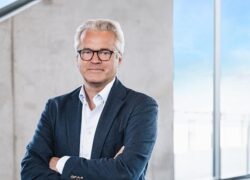
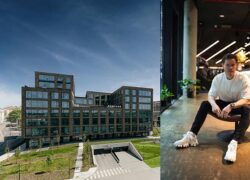
Photo 1: Jens Stender, Co-CEO Urban Partners
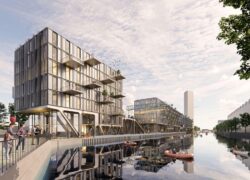
Photo 2: North Harbour Copenhagen, Urban Partners

Habyt to Operate Flexible Living Units at Berlin’s DOXS NKLN

Flexible housing operator Habyt will manage residential units within DOXS NKLN, a mixed-use development planned on the Neukölln Ship Canal. The project, developed by Trockland in partnership with architecture studio GRAFT, is scheduled to be completed in 2028 and will include around 317 flexible living units operated by Habyt.

The scheme is designed to redevelop a former recycling yard into an urban quarter with more than 30,000 square metres of gross floor area. It combines residential accommodation with office and retail space, gastronomy, and public amenities. Plans also include a canalside promenade and an urban square, intended to integrate the site into the wider Neukölln district.

The design preserves two historic cranes as part of the area’s industrial heritage and incorporates sustainability features such as green roofs, modular construction, solar power and the reuse of building materials.

Habyt’s units will be furnished for both short- and long-term stays, with layouts including a sleeping area, kitchenette and bathroom. Shared amenities such as coworking areas, a fitness centre and communal spaces are also planned.

“DOXS NKLN is an important project for Habyt, reflecting our approach to combining design, sustainability and flexible housing models,” said Patrick Breuer, Managing Director Germany, Austria and Netherlands at Habyt.

Barbara Sellwig, Senior Project Manager at Trockland, noted that maintaining elements of the site’s industrial past while opening the waterfront to the public had been a central goal of the development.

Union Investment Sells Berlin Hotel to German Civil Service Association

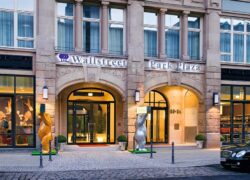
Union Investment has completed the sale of the Park Plaza “Wallstreet” Hotel in Berlin to the German Civil Service Association for approximately €36 million, a figure notably above the property’s most recent expert valuation. The price premium is linked to the expiring lease, which offers new value-add opportunities for the buyer.

“Berlin is an attractive location for national and international investors and, at the same time, a market with expansion potential for many hotel operators. Following refurbishment, the Park Plaza offers the opportunity for re-letting or can be operated as an owner-operator,” said Madeleine Groß, Head of Investment Management Hotel at Union Investment.

The sale is part of a broader strategy to rejuvenate the portfolio of UniImmo: Deutschland, the open-ended real estate fund that has held the asset since 1992. Originally built in 1910 as a commercial property, the building was converted and expanded for office use in 1995 before being redeveloped into a hotel in 2005. Today, it comprises 169 rooms and is situated in Berlin-Mitte, a central office and business district.

Union Investment was advised on the transaction by BNP Paribas Real Estate, Willkie, Farr & Gallagher, Alber & Schulze, and Heuking.

front page info
LATEST NEWS