Czech public wants greater state investment in affordable housing over transport

A recent survey conducted by residential developer Central Group reveals that 85% of Czech citizens believe the state should invest in affordable housing at least as much as it does in transport infrastructure. However, this sentiment contrasts sharply with current public spending. While approximately CZK 110 billion is being invested in transport projects this year, only a few billion crowns are allocated to public rental housing construction.

The survey, which gathered responses from 500 people across the Czech Republic, was presented at the Construction Industry Leaders Meeting. It shows that 51% of respondents believe housing and transport should receive equal investment priority, while 34% think affordable housing should be the higher priority.

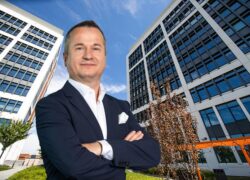
Central Group founder Dušan Kunovský, citing these findings, criticised the imbalance in state investment, arguing that housing affordability remains one of the country’s most pressing challenges. He noted that despite public demand, government policy continues to focus disproportionately on transport. He warned that this imbalance could become a decisive issue in upcoming elections.

Central Group alone is currently investing over CZK 25 billion into residential projects in Prague, building more than 3,000 new apartments. This investment is more than three times the CZK 9 billion the state has allocated nationwide through the State Investment Support Fund and the National Development Bank. The developer also plans to begin construction on over 1,000 additional apartments this year.

The company argues that meaningful improvement in housing availability requires increased public sector involvement, not just in funding but also in organisational capacity. Unlike transport, which benefits from the support of the Transport and Energy Construction Authority (DESÚ), large-scale residential development lacks a similar institutional framework.

Kunovský advocates for a more collaborative model involving the private sector. One example is the DESIGN-BUILD system from the Initiative for Affordable Housing, which uses standardised designs to support efficient and scalable public construction.

He emphasises that new public housing projects alone are not enough. Speeding up permitting processes, reforming spatial planning, and reducing overregulation in the construction industry are also essential. Without these systemic changes, progress in improving housing affordability will remain limited.

Central Group has long called attention to the worsening housing situation and identifies four main areas requiring reform: faster and simpler permitting processes, reduced construction regulation, improved spatial planning to unlock more building land, and stronger municipal involvement in affordable housing development. These priorities align with recommendations made by the National Economic Council of the Government (NERV).

According to Kunovský, these steps are necessary to address the long-standing imbalance between demand and supply, which continues to push home ownership and rental costs out of reach for many residents across the country.

CTP begins construction of first two-storey industrial building in the Czech Republic

CTP has started construction on a two-storey industrial and logistics building at CTPark Brno Líšeň, marking the first development of its kind in the Czech Republic. Located on the former Zetor complex, the building will provide nearly 50,000 sqm of production, logistics, and service space when completed at the end of 2025.

This project follows a similar model used by CTP in the Netherlands and aims to address space limitations in urban areas by building vertically. Each floor will have separate freight access, allowing for independent operations and a more flexible layout. The structure is designed to handle high loads and accommodate a range of production technologies.

Sustainability measures are integrated into the project, including the use of waste heat from the nearby SAKO Brno incinerator, green infrastructure, electric vehicle charging stations, and recycled materials from the site’s previous buildings. More than 40% of the space has already been pre-leased. Preliminary earthworks are underway, with full completion expected by the end of next year.

The project is part of a wider redevelopment plan for the former industrial site. Alongside the new double-storey building, other areas are also being revitalized. A former forge is being replaced with a custom facility for a specific client, with demolition set to finish by August and new construction continuing through the end of 2025. Existing buildings are also being used temporarily; one has been converted into a cultural and creative community space with music studios, workshops, and small business facilities.

The development includes plans for public infrastructure such as a pedestrian and bicycle link to the nearby Stránská skála public transport stop and a parking area with over 300 spaces. CTPark Brno Líšeň currently hosts 22 companies and over 1,300 employees, with further growth expected.

The location has a long industrial history tied to the Zetor brand, which produced engines and gearboxes on the site since 1946. The new development seeks to maintain this heritage while providing updated facilities and infrastructure to meet current and future needs.

Romanian office demand stabilizes amid cost and uncertainty

Nearly 40% of office tenants now require employees to work from the office two to three days per week, while 1 in 8 occupiers is planning to expand its leased space, according to Cushman & Wakefield’s latest global survey, What Occupiers Want 2025. The report reflects a shift in workplace strategies as companies move from reactive downsizing to more structured portfolio management.

After two years in which approximately two-thirds of tenants reduced their footprint, the trend toward contraction is slowing. Only 32% of respondents anticipate further reductions. Average lease sizes have increased by 13% over the past two years, pointing to a cautious rebound in office demand.

Occupancy rates have also begun to stabilize, with usage now averaging between 51% and 60%. Although still below pre-pandemic levels of 65–75%, the trend indicates a gradual return to office-based work. Regional variations remain: while 20% of organizations in the Americas report occupancy rates above 50%, over 40% of EMEA and APAC-based firms report similar levels.

Cost continues to be the dominant factor in real estate decisions. Real estate leaders across sectors identify financial efficiency as their top business concern, with strategic choices increasingly tied to key financial indicators. However, ongoing uncertainty—including economic volatility, evolving workplace behavior, and challenges in measuring return on investment—continues to hinder long-term planning.

The report notes a decline in the perceived importance of ESG at a global level, with its strategic priority falling from fifth to eighth place compared to previous years. Nonetheless, ESG remains a higher priority in the EMEA and APAC regions, where many larger organizations continue to rank it among their top two concerns. In Romania, newer commercial buildings offer a comparative advantage for investors focused on sustainability, as modernization costs are lower. Additionally, new non-financial reporting requirements and tenant expectations are encouraging landlords to align properties with ESG standards despite cost constraints.

Another key trend is rising tenant expectations. Beyond high-quality space, occupiers increasingly seek enhanced amenities, services, and community-oriented features. According to the survey, 85% of tenants expect greater engagement from landlords, and 46% are willing to pay a premium for improved facilities.

Despite these changes, the core function of the office remains consistent—supporting collaboration, interpersonal relationships, and company culture. Yet only around 60% of employees feel their current workplace effectively supports these goals.

Commenting on the findings, Mădălina Cojocaru, Partner Office Agency at Cushman & Wakefield Echinox, noted: “Cost pressure stems directly from rising competition for high-quality and well-located office space. Accessibility and proximity to transportation remain critical, but surrounding amenities are increasingly seen as part of the value proposition. Today’s real estate strategies go beyond square meters—they must respond to employees’ needs. Romania’s modern office stock is well-positioned to support this shift, especially as sustainability becomes a greater focus in investment decisions.”

The What Occupiers Want 2025 report surveyed over 235 corporate real estate leaders representing companies with a combined global workforce of 8.1 million and more than 32 million square meters of office space. The study explores evolving decision-making priorities, location preferences, and shifts in how organizations approach workplace strategy.

Savills Czech Republic expands its valuation team with new appointments

Savills has expanded its valuation team through a combination of new hires and internal promotion. Daniel Duchek has joined the firm as a Senior Valuer, Alena Arnoldová has been appointed Junior Valuer, and Ivana Horáková has been promoted to Valuer. The team, led by Marek Pohl, now comprises seven consultants providing valuation services across various property sectors, including commercial, residential, hospitality, healthcare, leisure, and land.

Daniel Duchek brings a decade of experience in real estate valuation, particularly in the banking and financing sectors. He previously worked as an internal valuer at Fio Bank, focusing on development finance collateral in the Czech and Slovak markets, and at Moneta Money Bank, where he contributed to the development of automated valuation models and worked on a range of asset types.

Alena Arnoldová joins as a Junior Valuer after holding roles at RSM CZ as an International Contact Partner and Business Development Specialist. She also has experience in compliance and internal controls at Cofidis and began her career as an internal auditor at the investment company AVANT. She is currently studying Real Estate Valuation at the University of Economics in Prague.

Ivana Horáková has been promoted within the team, which continues to support clients with valuations that reflect current market conditions and regulatory requirements.

Union Investment secures long-term lease renewal and expansion with HIL in Bonn-Hardtberg

Union Investment has extended and expanded its lease agreement with HIL Heeresinstandsetzungslogistik GmbH for office space in Bonn-Hardtberg, reinforcing a long-standing tenant relationship. The agreement includes a ten-year extension on 8,680 square metres of existing office space and an additional lease of 2,170 square metres for the same term, addressing HIL’s growing space requirements.

HIL has occupied the property at Josef-Wirmer-Strasse 2–8 since 2005. The building has been part of the UII GermanM special real estate fund portfolio since 2016. With the new agreement in place, the total lease term for HIL could reach up to 30 years, marking a significant milestone in the fund’s asset management strategy.

Sven Lintl, Head of Asset Management Germany at Union Investment, commented on the deal: “The successful renewal and expansion of this lease highlights the value of stable, long-term partnerships in high-performing office properties. It also demonstrates the effectiveness of sustainable asset management and the importance of maintaining strong tenant relationships.”

Located in the western part of Bonn, the property sits in a district known for its concentration of office buildings and proximity to various federal ministries. The city centre is approximately 15 minutes away by car, adding to the property’s strategic appeal.

HIL GmbH, a federal government-owned company, provides planning, management, and execution of maintenance services for most of the Bundeswehr’s land-based military systems. Headquartered in Bonn-Hardtberg and employing around 3,000 people, HIL has supported the Bundeswehr since 2005, working closely with military logistics teams, defence technology firms, and SMEs in the sector.

STRABAG PFS expands public sector facility management portfolio in North Rhine-Westphalia

STRABAG Property and Facility Services (STRABAG PFS) has secured a new contract from the Construction and Real Estate Management Agency of the State of North Rhine-Westphalia (BLB NRW) to provide technical facility management services at two key public buildings: the Bochum correctional facility and the Mont Cenis training academy in Herne.

The agreement marks a further extension of the longstanding cooperation between STRABAG PFS and BLB NRW. Notably, the contract was awarded by the Dortmund branch of BLB NRW, representing its first direct engagement with STRABAG PFS and expanding a regional portfolio that already includes sites in Münster, Duisburg, and Cologne.

In Bochum, STRABAG PFS will manage the prison complex, which comprises 14 operational units over approximately 60,000 square metres. The facility includes detention areas, administrative offices, a gatehouse, and multipurpose buildings, some of which are designated as heritage structures. The contract adds to STRABAG PFS’s experience in managing correctional institutions, building on its work at the Willich facility.

In Herne, the company will oversee technical services at the Mont Cenis academy, a prominent training centre operated by the Ministry of the Interior of North Rhine-Westphalia. Spanning roughly 10,600 square metres, the academy is known for its distinctive architecture, combining glass and wood elements to create a modern educational environment with flexible event and seminar spaces.

The new contract further strengthens STRABAG PFS’s position in managing training and education infrastructure. In addition to Mont Cenis, the company already provides services for the State Office for Training, Further Education and Personnel Affairs of the North Rhine-Westphalia Police (LAFP) in Münster.

STRABAG PFS was awarded the contract after submitting the top-rated bid in the tender process, reaffirming its reputation as a trusted partner for public-sector facility management and a specialist in complex, security-sensitive environments.

Solago expands in Düsseldorf with 18,000 sqm logistics lease brokered by Logivest

Solar start-up Solago is continuing its rapid growth with a move into a new logistics facility in Düsseldorf-Reisholz. Real estate consultancy Logivest has brokered the lease of approximately 18,000 square metres of combined warehouse and office space within “the tube”, a recently completed industrial and commercial park developed by Frasers Property Industrial.

Founded in 2022 by Janik Nolden, Julian Dienst, and Kevin Malek, Solago has quickly positioned itself as a leading online provider of solar energy systems. The company offers a range of products, from compact balcony solar kits to full-scale rooftop photovoltaic installations.

In response to rising demand, Solago sought a larger and strategically located site near its current base in Hilden. Logivest identified a suitable unit within “the tube”, securing roughly 17,000 square metres of warehouse space, including a mezzanine level, and 1,100 square metres for office and social use.

The site is located on the grounds of the former Vallourec Röhrenwerke and benefits from strong transport connectivity. Situated near the Düsseldorf Süd motorway junction, it offers access to the A46 and A59 motorways, and is also served by the local S-Bahn network—an important factor for Solago’s current workforce of around 100 employees. The facility supports efficient logistics operations with features such as ramps, ground-level loading bays, and sprinter gates.

Sustainability was a key criterion in the decision. The building aims to achieve DGNB Platinum certification and is equipped with a rooftop photovoltaic system, a modern heat pump-based heating solution, and smart metering technology for precise energy monitoring and optimisation.

“We found in ‘the tube’ a location that not only supports Solago’s expansion plans but also reflects the founding team’s values: sustainable, flexible, and forward-looking,” said Thomas Schmidt, Managing Director of Logivest NRW GmbH. “With its strategic position in Düsseldorf – a key junction between the Ruhr region and wider North Rhine-Westphalia – the site offers strong access to national and European markets.”

HSNF extends lease at Prologis Park Poznań I

HSNF, a UK-based e-commerce company in the beauty and wellness sector, has renewed its lease for approximately 2,300 sqm of warehouse and office space at Prologis Park Poznań I. The tenant was represented in the transaction by AXI IMMO.

HSNF has operated in the Greater Poland region for several years, using the site to serve both wholesale and retail clients. The company continues to lease 2,130 sqm of warehouse space and 170 sqm of office and social space at the logistics park. Established in 2009, HSNF sells cosmetic products online in over 20 countries and fulfills more than one million orders annually. It maintains offices in London, Tel Aviv, and Hong Kong.

According to Jeet Saini, Operations Director at HSNF, the decision to extend the lease followed an internal review of operational needs and development plans. He cited the location’s infrastructure and lease terms as factors supporting continued efficiency and a stable working environment.

Prologis Park Poznań I is located in Sady, within the Tarnowo Podgórne municipality, about 15 km from central Poznań. The site comprises three buildings with a total area of 43,108 sqm and is located near major transport routes, including the Swadzim interchange and the S11 expressway.

Piotr Roszkowski of AXI IMMO noted that the lease extension reflects a match between the tenant’s objectives and the landlord’s approach. Iwona Kotulska of Prologis added that the Clear Lease® model, which features fixed operating costs for standard services, was a contributing factor in HSNF’s decision to remain at the location.

Czech Republic sees moderate growth in company numbers despite rising liquidations

In May 2025, 2,645 new companies were established in the Czech Republic while 1,356 ceased operations, resulting in a net increase of 1,289 companies. According to CRIF – Czech Credit Bureau, this brings the total increase in the number of companies for the first five months of the year to 6,857, representing a 1% decline compared to the same period in 2024.

The data, based on figures from the portal www.informaceofirmach.cz, show that over the 12-month period ending in May, 31,950 companies were newly established, up 8% from the previous year. During the same period, 18,181 companies were closed, marking a 15% increase. The pace of company liquidations in the first five months of this year rose by 17% compared to last year. However, the number of companies entering the market grew at a similar rate to 2024, with 13,769 new market entrants over the past 12 months.

Regional developments indicate that the number of companies increased in 12 out of 14 regions. Prague accounted for more than half of all newly established companies during the 12-month period, followed by the South Moravian and Moravian-Silesian regions. The Olomouc and Vysočina regions recorded the fastest growth relative to company closures, with six new companies established for every ten that ceased operations. In the South Bohemian Region, the ratio was 25 new companies for every ten closures.

In contrast, the Liberec and Ústí regions recorded net declines. In Liberec, the number of companies dropped by 94, and in Ústí by 150. The Liberec region also recorded the sharpest increase in liquidations, where the number of companies that ceased to exist nearly tripled in the first five months. The Pardubice region saw a similar trend, with a 177% year-on-year increase in company closures.

From January to May 2025, the highest number of company registrations occurred in Prague, followed by the South Moravian and Central Bohemian regions. The Olomouc region saw the largest year-on-year growth in new company registrations at 13%, while the Zlín region experienced the most significant decline, down by 21%.

Sectoral analysis shows that the highest number of new companies were created in the business services sector, followed by real estate management and construction. These sectors also experienced the highest number of company closures. Business services saw 5,410 closures, while real estate and professional services followed with 3,519 and 2,577 respectively.

Despite higher numbers of closures in some sectors, others recorded rapid expansion. The highest relative growth was observed in services such as repair of personal items, hairdressing, and dry cleaning, with 62 new companies for every ten closures. The healthcare and social care sectors also expanded, with 50 new companies for every ten closures, closely followed by education with 49.

The structure of company longevity is also shifting. In the first five months of 2025, 14% of companies that ceased operations had been in business for 31 to 35 years, up from 10% the previous year and 4% in 2022. Meanwhile, the proportion of companies that closed within five years of operation dropped to 6%, down from 8% in recent years and 10% in 2022.

The findings highlight both resilience and volatility in the Czech business landscape, with overall company growth continuing amid a notable rise in closures and evolving patterns of business longevity.

Skanska to launch final phase of Albatros Kbely residential project in Prague

Skanska has announced the launch of the final phase of its Albatros Kbely residential development in Prague 19. The upcoming Charlie apartment building will introduce 89 low-energy units, completing the five-stage project that spans nearly 100,000 square meters. Construction of the final phase is scheduled to begin in 2026, with completion expected in 2028.

The Charlie building will include a mix of apartment layouts ranging from 1+kk to 3+kk, with 2+kk units making up the majority. Each apartment will feature a balcony and electric outdoor window shading. Top-floor units will offer private terraces prepped for whirlpools and pergolas. Shared amenities will include a rooftop terrace, bicycle and pram storage, waste management areas, cellars, and garage parking with shelters. All parking spots will be prepared for electric vehicle charging.

The development continues Skanska’s focus on sustainability. The building is designed to meet the highest energy performance classification (PENB-A) and aims to achieve BREEAM certification. It will incorporate smart home systems, underfloor heating, triple-glazed windows, and video intercom access. Materials used in construction meet EPD, FSC, and PEFC standards. Prefabricated bathrooms will be included in most units to ensure consistent quality and reduce waste on site.

The project includes energy-efficient features such as rooftop photovoltaic panels expected to produce up to 43 MWh annually. Water efficiency is enhanced by using water from the development’s own well for toilet flushing and laundry, as well as collecting rainwater for irrigating communal greenery. These systems are projected to reduce drinking water consumption by 30%, or 33 litres per resident per day.

Sustainability in construction is further supported by the use of Rebetong, a type of concrete made from recycled construction waste. It will account for 30% of the final phase’s monolithic structure, alongside low-carbon concrete materials.

The final phase also adds public infrastructure, including a children’s playground, cycle paths, a large public park of over 8,000 square meters, and access to 15,000 square meters of green areas in the surrounding space. Other community features planned include outdoor gyms, barbecue areas, vegetable gardens, a supermarket, a nursery school, and recreational facilities for all age groups.

Once completed, Albatros Kbely will include 688 apartments across 11 buildings. Three phases and a kindergarten are already complete. The fourth phase is under construction with a 2026 completion target, while the final phase has now entered the sales stage.

Named after the Aero L-39 Albatros training aircraft, the project incorporates aviation themes throughout its architectural elements and building names, reflecting the local heritage of the nearby Kbely Aviation Museum.

front page info
LATEST NEWS