Sunday, 4 October 2026
More frequent heatwaves, flooding and other extreme weather events are forcing property owners to rethink how buildings are designed, operated and maintained. Industry specialists argue that climate resilience is becoming an increasingly important factor for both asset performance and long-term value as rising temperatures place growing pressure on commercial and public buildings.
While energy efficiency has dominated sustainability discussions in recent years, attention is increasingly shifting towards buildings’ ability to cope with changing climate conditions. Real estate professionals say resilience measures are becoming as important as traditional environmental performance standards.
One of the most pressing challenges is managing indoor temperatures during prolonged periods of extreme heat. According to building technology experts, overheating has become a significant operational issue, particularly in hospitals, schools, care facilities and office buildings where indoor comfort directly affects health, productivity and occupant wellbeing.
Rather than relying solely on conventional air conditioning, specialists increasingly advocate integrated building management systems that combine sensors, predictive controls, heat pumps, building automation and weather forecasting to optimise cooling while reducing electricity consumption. Advances in artificial intelligence and digital building management platforms are making these systems more responsive to changing weather conditions and occupancy patterns.
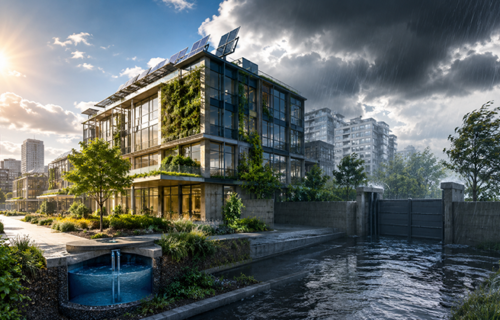
Developers and asset managers also point to the growing importance of passive design measures. External shading, improved insulation, energy-efficient glazing and low-carbon cooling systems are increasingly being incorporated into both new developments and refurbishment projects to reduce reliance on mechanical cooling while maintaining comfortable indoor environments.
Flood resilience is emerging as another priority. As urban areas experience more intense rainfall events, owners are investing in practical measures such as flood barriers, backflow prevention systems, improved drainage infrastructure and water retention solutions to reduce potential damage to buildings. At city level, investments in flood management infrastructure, including retention basins and diversion channels, are helping reduce risks in vulnerable locations.
Property managers note that resilience is becoming an increasingly important consideration for investors and occupiers alike. Buildings that are unable to maintain comfortable operating conditions during extreme weather or require significant emergency repairs may face higher operating costs, reduced tenant satisfaction and weaker long-term competitiveness.
The changing climate is also influencing investment planning. Rather than treating resilience improvements as isolated projects, many owners are incorporating adaptation measures into long-term maintenance and refurbishment programmes. This approach allows upgrades to be coordinated with other capital expenditure while helping extend asset life and reduce future operational risks.
Across the European real estate sector, climate resilience is increasingly being viewed as a core component of asset management rather than solely an environmental objective. As weather-related risks become more frequent, the ability of buildings to maintain safe, efficient and reliable operations is expected to play a growing role in investment decisions, occupier demand and long-term property values.