Potsdam Office Lease Renewal Highlights Stability Amid Retail Shifts

Sonar Real Estate has extended the lease with the Federal Agency for Real Estate (BImA) for roughly 8,000 sq m of offices at Behlertstraße 3A in Potsdam. Sonar oversees the asset on behalf of a pan-European investment manager. The four-storey building, completed in 1993 with around 11,000 sq m of space, is fully let. Walburg Rechtsanwälte advised the landlord during the negotiations.

The transaction comes as Potsdam’s city-centre retail continues to revolve around the pedestrianised Brandenburger Straße, where leasing activity has been visible in 2025. In February, Lührmann brokered a new store letting to Thalia on Brandenburger Straße 57, underscoring ongoing demand for prime, high-footfall frontages.

City-led mixed-use development is also progressing. In Potsdamer Mitte, the Kreativ-Quartier is scheduled to begin handovers at the end of 2025, ultimately adding about 25,000 sq m of rental space (around 15,000 sq m for cultural and creative uses) adjacent to key central-area footfall generators. This pipeline is expected to support surrounding high-street and service retail.

Tourism remains a structural demand driver for Potsdam’s retailers. A new 2025 study cited by the local chamber (IHK) links the city’s palaces and gardens to above-average value creation and employment, reinforcing the role of visitor flows in sustaining central retail trade.

Against the national backdrop, Germany’s retail investment market was comparatively resilient in H1 2025: CBRE reports ~€3 billion in retail transactions, making retail the strongest commercial asset class by volume after residential, even as total activity softened year-on-year. Leasing fundamentals also appear steadier: JLL notes high space turnover in H1 2025 with textiles and food as leading categories and easing availability in most “Big 9” markets, trends that typically filter into regional centres such as Potsdam through tenant expansion and refurbishment demand. Pan-European indicators show prime high-street rents largely stable in Q2 2025.

Local market snapshots from the city and chamber highlight the concentration of retail stock and purchasing power in the core, with Brandenburger Straße remaining the prime strip for visibility and footfall. While some published city statistics reference 2022 baselines, they remain directionally consistent with 2025 observations on tenant mix and centrality; current listings data reinforce the continued positioning of Brandenburger Straße as the top rental location.

Overall, the BImA lease renewal underlines stable occupier demand in Potsdam’s professional and public-sector ecosystem, while the retail core benefits from steady tourism-led footfall, selective new lettings on Brandenburger Straße, and incoming city-centre mixed-use supply by late 2025. If you want, I can add a short data box with current asking-rent ranges for Brandenburger Straße (from active listings) and a one-paragraph outlook for 2026.

Potsdam Office Lease Renewal Highlights Stability Amid Retail Shifts

Sonar Real Estate has extended the lease with the Federal Agency for Real Estate (BImA) for roughly 8,000 sq m of offices at Behlertstraße 3A in Potsdam. Sonar oversees the asset on behalf of a pan-European investment manager. The four-storey building, completed in 1993 with around 11,000 sq m of space, is fully let. Walburg Rechtsanwälte advised the landlord during the negotiations.

The transaction comes as Potsdam’s city-centre retail continues to revolve around the pedestrianised Brandenburger Straße, where leasing activity has been visible in 2025. In February, Lührmann brokered a new store letting to Thalia on Brandenburger Straße 57, underscoring ongoing demand for prime, high-footfall frontages.

City-led mixed-use development is also progressing. In Potsdamer Mitte, the Kreativ-Quartier is scheduled to begin handovers at the end of 2025, ultimately adding about 25,000 sq m of rental space (around 15,000 sq m for cultural and creative uses) adjacent to key central-area footfall generators. This pipeline is expected to support surrounding high-street and service retail.

Tourism remains a structural demand driver for Potsdam’s retailers. A new 2025 study cited by the local chamber (IHK) links the city’s palaces and gardens to above-average value creation and employment, reinforcing the role of visitor flows in sustaining central retail trade.

Against the national backdrop, Germany’s retail investment market was comparatively resilient in H1 2025: CBRE reports ~€3 billion in retail transactions, making retail the strongest commercial asset class by volume after residential, even as total activity softened year-on-year. Leasing fundamentals also appear steadier: JLL notes high space turnover in H1 2025 with textiles and food as leading categories and easing availability in most “Big 9” markets, trends that typically filter into regional centres such as Potsdam through tenant expansion and refurbishment demand. Pan-European indicators show prime high-street rents largely stable in Q2 2025.

Local market snapshots from the city and chamber highlight the concentration of retail stock and purchasing power in the core, with Brandenburger Straße remaining the prime strip for visibility and footfall. While some published city statistics reference 2022 baselines, they remain directionally consistent with 2025 observations on tenant mix and centrality; current listings data reinforce the continued positioning of Brandenburger Straße as the top rental location.

Overall, the BImA lease renewal underlines stable occupier demand in Potsdam’s professional and public-sector ecosystem, while the retail core benefits from steady tourism-led footfall, selective new lettings on Brandenburger Straße, and incoming city-centre mixed-use supply by late 2025. If you want, I can add a short data box with current asking-rent ranges for Brandenburger Straße (from active listings) and a one-paragraph outlook for 2026.

Union Investment Expands Ferio Shopping Center in Konin

Union Investment has completed an expansion of the Ferio shopping center in Konin, Poland, adding 2,700 square meters of rental space at an investment cost of around €5 million. The off-price retailer TK Maxx has opened a new store covering 2,000 square meters, joining the center as a new anchor tenant.

The newly created space was fully pre-leased before construction began. In addition to TK Maxx, new tenants include Polish fashion brand Medicine, menswear retailer Recman, jewelry chain Yes, and a TUI travel agency. Existing anchor tenants at Ferio include H&M, Inditex, and Castorama.

Ferio, part of a Union Investment real estate special fund since 2016 and managed by Multi Poland, now comprises a total rental area of about 38,400 square meters. The complex consists of a shopping center, retail park, and DIY store, with additional facilities such as a gas station and drive-thru restaurants. It offers around 1,000 parking spaces.

Located near the city of Konin in central Poland, the shopping center benefits from its proximity to a highway that connects directly to the A2 motorway between Berlin and Warsaw, one of the country’s main transport corridors.

Poland’s Job Vacancies Fall to Lowest Level Since Start of 2025

The Job Offer Barometer, prepared by the University of Information Technology and Management in Rzeszów together with the Office of Investment and Economic Cycles, declined in August to 254.9 points from 258.5 in July. This marks the lowest reading since the beginning of the year and reflects continued caution among employers in expanding recruitment. A year earlier, in August 2024, the index stood at 260.4 points.

The decline was modest but broadly based. The only province to record an increase in online job advertisements in August was Wielkopolska. Most other regions reported decreases, with sharper corrections in the south-east, particularly in Podkarpackie, Lubelskie, and Małopolskie, areas that also show higher unemployment. Nationally, the registered unemployment rate, excluding seasonal workers, rose by 0.1 percentage points in July to 5.5 percent, the highest level in more than three years.

Sectoral developments were mixed. Professions requiring education in science or engineering recorded their ninth consecutive monthly increase in job advertisements, though the rise was the weakest to date. Growth was driven mainly by demand for programmers, health and safety specialists, and e-commerce workers. Vacancies for administrative IT roles fell after several months of growth, while opportunities for engineers and system administrators also declined. In construction, job postings have been falling steadily since May, aside from a small increase in July.

In services, education and media saw higher recruitment activity, with education reaching its strongest level of postings since 2005. Tourism, however, registered its sharpest monthly fall since last December, continuing a downward trend that began in late 2024. Logistics also recorded another decline.

Occupations linked to social sciences and law saw limited demand. Modest increases were noted only for graphic designers and lawyers, while real estate, marketing, and finance showed the largest reductions. Marketing in particular fell after six months of steady growth, and real estate dropped following a strong second quarter. Banking and call center jobs remained largely unchanged.

The data indicate that while some recovery is visible in IT and education, overall recruitment momentum remains weak. Employers continue to exercise restraint, reflecting both regional labor market disparities and broader uncertainty in the economic environment.

Poland’s Job Vacancies Fall to Lowest Level Since Start of 2025

The Job Offer Barometer, prepared by the University of Information Technology and Management in Rzeszów together with the Office of Investment and Economic Cycles, declined in August to 254.9 points from 258.5 in July. This marks the lowest reading since the beginning of the year and reflects continued caution among employers in expanding recruitment. A year earlier, in August 2024, the index stood at 260.4 points.

The decline was modest but broadly based. The only province to record an increase in online job advertisements in August was Wielkopolska. Most other regions reported decreases, with sharper corrections in the south-east, particularly in Podkarpackie, Lubelskie, and Małopolskie, areas that also show higher unemployment. Nationally, the registered unemployment rate, excluding seasonal workers, rose by 0.1 percentage points in July to 5.5 percent, the highest level in more than three years.

Sectoral developments were mixed. Professions requiring education in science or engineering recorded their ninth consecutive monthly increase in job advertisements, though the rise was the weakest to date. Growth was driven mainly by demand for programmers, health and safety specialists, and e-commerce workers. Vacancies for administrative IT roles fell after several months of growth, while opportunities for engineers and system administrators also declined. In construction, job postings have been falling steadily since May, aside from a small increase in July.

In services, education and media saw higher recruitment activity, with education reaching its strongest level of postings since 2005. Tourism, however, registered its sharpest monthly fall since last December, continuing a downward trend that began in late 2024. Logistics also recorded another decline.

Occupations linked to social sciences and law saw limited demand. Modest increases were noted only for graphic designers and lawyers, while real estate, marketing, and finance showed the largest reductions. Marketing in particular fell after six months of steady growth, and real estate dropped following a strong second quarter. Banking and call center jobs remained largely unchanged.

The data indicate that while some recovery is visible in IT and education, overall recruitment momentum remains weak. Employers continue to exercise restraint, reflecting both regional labor market disparities and broader uncertainty in the economic environment.

Pilsen Region Gains Tenant Leverage as Vacancy Rises and ESG Demands Grow

Pilsen’s position in the Czech industrial and logistics market remains defined by access to Germany via the D5 and a maturing stock of modern space. As of Q2 2025, the region had about 1.83 million sq m of stock, a vacancy rate of 7.7% (above the national average), and prime headline rents up to €6.00/sq m/month—below Prague and Brno, which helps tenants on costs. Nationally, vacancy ticked up to roughly 4.0% in Q2 as demand softened quarter-on-quarter while construction activity climbed to nearly 1.2 million sq m. These dynamics point to more choice and negotiating leverage for occupiers looking at West Bohemia.

Tenant activity in 2025 has been led by logistics and transportation companies, with manufacturers following. In Q2, Czech gross take-up fell to about 305,000 sq m—around a third below the five-year average—while net take-up reached roughly 170,000 sq m. Logistics accounted for the largest share of H1 demand, consistent with the Pilsen corridor’s cross-border profile; recent leases across the country skew toward distribution and automotive-adjacent users. In the Pilsen micro-market, confirmed occupiers at P3 Plzeň Myslinka include ALLLOG Consulting, ICOM transport and WM Logistic Nýřany—illustrating a mix of 3PL, transport, and auto parts activity.

Labour conditions continue to shape site selection. Czech unemployment hovered in a low single-digit range through 2025, but availability varies by region. In the Pilsen Region, the share of unemployed persons was reported at roughly 3.5–3.7% in spring–summer 2025, with around 15,000–15,500 registered job seekers and about 7,800 vacancies—underscoring an historically tight market that nevertheless loosened slightly this summer. Wages are rising: the average gross monthly wage in Q2 2025 reached CZK 49,402 nationally; in Q1 2025, Pilsen’s average was CZK 43,498, the fourth-highest among Czech regions. For employers, that combination—still-low unemployment and upward wage pressure—makes the on-site working environment and amenities more than a “nice-to-have” when competing for staff.

Infrastructure remains a key differentiator. The region’s anchor is the D5 motorway to Bavaria, complemented by intermodal options at the METRANS terminal in Nýřany. On the rail side, national investment plans for 2025 include upgrades on sections in and around Pilsen (including the Pilsen–Nýřany–Chotěšov axis) as part of broader Czech rail modernisation financed in part by the EIB, which should incrementally improve freight flows toward Germany. These upgrades align with occupiers’ preference for locations that can mix motorway access with reliable rail capacity.

Sustainability expectations—especially from multinationals in automotive and logistics supply chains—now set a clear baseline. In Pilsen, new-build schemes are commonly designed for third-party certifications; at P3 Plzeň Myslinka, completed halls carry BREEAM Excellent ratings. The developer has also kept options for on-roof solar, water reuse and biodiversity planting. Tenants weighing like-for-like facilities increasingly view these features as standard risk-management (energy, ESG reporting, compliance) rather than marketing extras.

Quality-of-work environment is increasingly explicit in leasing briefs. The Pilsen market has seen parks emphasize greenery, outdoor spaces and better common areas; in Myslinka, the park’s forest-edge setting and landscape features sit alongside standard technical specs. With unemployment in the region still among the lower in Czechia even after a seasonal summer uptick, these “soft” factors support retention and recruitment on the warehouse floor, not just in offices.

Cost competitiveness versus nearby German locations continues to favour West Bohemia. Prime logistics rents in Germany’s top markets averaged about €8.6/sq m/month in Q2 2025, with Munich around €10.5; by contrast, Pilsen’s prime headline rent was reported up to €6.00. Even allowing for operating-cost differentials and labour considerations, the rent gap—combined with cross-border access—remains a central part of Pilsen’s pitch to exporters and distributors targeting southern Germany.

Looking ahead 12–24 months, most agencies expect a “normalising” Czech market: vacancy has risen off historic lows and could stabilise as the pipeline delivers, while prime rents appear steady after several years of sharp growth. With nearly 1.2 million sq m under construction nationwide in Q2 2025 and Pilsen showing both available second-hand space and a manageable development pipeline (~59,500 sq m under construction regionally), the balance of power is temporarily a little more tenant-friendly. That said, select submarkets with tight labour and superior infrastructure should hold pricing better than average, and sustainable, efficient buildings are likely to outperform on absorption.

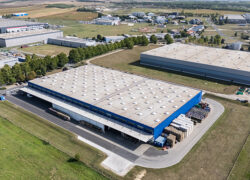
For readers considering specific parks in the region, P3 Plzeň Myslinka currently advertises roughly 11,720 sq m available immediately and the ability to deliver an additional ~29,469 sq m on a 9–12 month timeline, with BREEAM Excellent as standard—illustrative of how shovel-ready permitted projects can shorten lead times for light manufacturing and logistics users.

Source: comp.

Romania’s Prosumers and Farms Drive Solar Growth in First Half of 2025

Romania’s renewable energy transition gained fresh momentum in the first half of 2025, with both prosumer households and the agricultural sector accelerating their adoption of solar and biogas systems. The surge is reshaping not only rural energy consumption but also creating ripple effects for investors, developers, and the country’s broader real estate landscape.

According to data from the National Energy Regulatory Authority (ANRE), Romania counted more than 228,000 registered prosumers by the end of May 2025, with a combined installed capacity of 2,726 MW. That marks a 66 percent jump in numbers and a 53 percent increase in capacity compared to the same period last year. Ilfov county leads the way with almost 15,400 installations, followed by Timiș with more than 11,000 and Bihor with roughly 9,400. While households dominate by volume, businesses and industrial users hold a growing share of capacity, underscoring a shift from residential rooftops to commercial-scale applications.

This growth has been supported by generous grant schemes. The Agency for Financing Rural Investments (AFIR) launched a €150 million funding program for farms and food processors, covering up to 100 percent of eligible project costs. Most of the budget targets solar systems under one megawatt, aligning with the needs of medium-sized agricultural operators. “For farms, solar is no longer a side investment — it’s becoming central to cost control,” said one Bucharest-based energy consultant. “With grant coverage this high, we’re seeing interest not just from large agribusinesses but also from smaller family operations looking to stabilize margins.”

On the generation side, Romania added around 900 MW of new solar capacity in the first half of 2025, bringing the national total to approximately 4.2 GW. That positions the country firmly on track toward its National Energy and Climate Plan target of 10 GW by 2030. Analysts note that much of the recent growth is being delivered at distribution level, where grid capacity is under pressure in certain counties. “Investors are watching carefully how quickly upgrades and storage projects can catch up, as bottlenecks could otherwise limit deployment,” one regional developer told CIJ EUROPE.

Romania’s real estate and infrastructure sectors are beginning to feel the impact of this renewable wave. New warehouse and logistics parks in regional cities increasingly market themselves with onsite generation or green power procurement, while farmland values in solar-rich counties are benefiting from dual-use potential. Developers point to Ilfov, Timiș and Bihor as front-runners in terms of grid access and renewable integration, creating fresh opportunities for landowners.

Looking forward, Romania’s farm sector is expected to diversify beyond photovoltaics. A landmark 15 MW biomethane project under development by Black Sea Oil & Gas and DN Agrar aims to become the country’s first large-scale facility of its kind, cutting emissions by about 90 percent at one of the nation’s largest livestock farms. Such projects signal how agriculture can contribute not only to self-consumption but also to the decarbonisation of heating and transport fuels.

For investors, the momentum is clear: prosumer demand is surging, subsidy frameworks are generous, and utility-scale projects are accelerating. The challenge lies in ensuring grid stability and regulatory clarity. If those can be secured, Romania’s renewable build-out may position the country as a key Eastern European hub, bridging rural development, energy security, and new opportunities for real estate-linked infrastructure.

Sources: comp.

Drone Violations of Polish Airspace Test Alliance Defenses and Market Confidence

Airspace restrictions and defense deployments ripple into aviation, logistics, and infrastructure investment.

Poland has entered one of its most serious security episodes since the start of Russia’s war in Ukraine, after at least 19 Russian drones crossed into its airspace during overnight strikes on Ukrainian territory earlier this week. According to Reuters, Polish F-16s supported by Dutch F-35s, NATO surveillance aircraft, and refueling planes intercepted multiple drones, while one UAV struck a house in the village of Wyryki-Wola in Lublin Voivodeship, damaging its roof but causing no injuries. The government imposed sweeping air-traffic restrictions in eastern regions, banning drone flights and small aircraft operations until December 9, while allowing commercial flights above three kilometers to continue. The incident, which Polish Prime Minister Donald Tusk described as the gravest threat to national security since World War II, has prompted NATO consultations under Article 4 and an emergency UN Security Council debate scheduled for September 12.

The crisis coincided with a surprising diplomatic development. The United States announced that Belarus would release 52 political prisoners, including 14 foreign nationals, in exchange for partial sanctions relief on its national airline Belavia. U.S. envoy John Coale confirmed the move, which allows Belavia to service and source parts for its existing fleet, though broader sanctions remain in place. Minsk made the announcement just as it prepared to host joint military drills with Russia near the Polish and Lithuanian borders. For Warsaw, the juxtaposition of drone incursions launched from Belarusian territory and sanctions relief for a Belarusian state company sends a troubling message at a time when deterrence is critical.

Analysts interpret the drone violations as calibrated provocations designed to test NATO’s defenses, expose response times, and highlight the cost imbalance between low-cost UAVs and expensive allied interceptors. The Council on Foreign Relations has warned that such tactics are aimed at probing thresholds without triggering outright war. The Moscow Times described the operation as the boldest test yet of Western airspace readiness. NATO allies have reacted swiftly, with Germany expanding its air policing missions and the Netherlands deploying additional Patriot missile batteries, underscoring that the alliance is treating the incursions as a systemic threat rather than an isolated episode.

The investment implications are immediate. Airlines are diverting routes away from eastern Poland, insurers are reassessing premiums for aviation and cargo, and logistics operators in Lublin, Białystok, and Rzeszów report mounting pressure from tenants to incorporate resilience features such as backup power, secure communications, and alternative transport options. Some occupiers are shifting capacity toward hubs west of Warsaw, particularly Łódź and Poznań, which are seen as more stable in the current environment. In Warsaw itself, the capital’s position as NATO’s coordination center is bolstering demand from diplomatic, defense, and consultancy occupiers, partially offsetting the volatility further east.

For investors, Poland now represents a dual reality. On one side, the eastern border remains exposed to repeated probing, with elevated risk for assets closest to Belarus and Ukraine. On the other, NATO’s rapid deployments, Poland’s modernization program, and continued EU backing reinforce the country’s long-term appeal as one of the most resilient destinations in Central and Eastern Europe. The U.S. sanctions relief for Belavia adds a further complication: while the release of political prisoners demonstrates diplomatic progress, it raises concerns in Warsaw and Vilnius that Belarus is being rewarded despite facilitating drone incursions. Should Minsk continue to tolerate UAV launches, calls inside the EU for tougher sanctions on Belarusian aviation, energy, and potash sectors are likely to intensify.

The trajectory from here will depend on whether Belarus reins in drone activity and whether NATO deterrence proves sufficient to prevent escalation. A best-case scenario would see limited incidents, successful defensive interceptions, and gradual relaxation of restrictions by December. The more probable baseline is a prolonged period of tension, with continued drone harassment, NATO reinforcing its eastern flank, and aviation and logistics operators adapting to a climate of persistent uncertainty. The worst-case scenario, in which a drone strike causes civilian casualties or damages critical infrastructure, could force NATO into harsher military responses and raise investor risk premia across the region.

For the real estate and investment community, the lesson is clear. Geopolitics has moved from being a background risk to a frontline factor shaping market sentiment. Poland’s strong fundamentals, EU integration, and NATO security guarantees continue to underpin its attractiveness. Yet investors must now incorporate security overlays into their risk assessments, from infrastructure resilience to regional exposure.

Robert Fletcher, CEO & Editor-in-Chief of CIJ EUROPE, commented: “This crisis demonstrates that the investment story in Poland and CEE cannot be separated from the security environment. NATO’s response shows the strength of the collective backstop, but for investors it means factoring in resilience and risk management alongside yield and location. Poland remains one of the most compelling markets in Europe, yet it is also where geopolitics and real estate now intersect most directly.”

Editor’s note: The views expressed in this evaluation reflect professional analysis of potential implications for the real estate and investment markets, and are not definitive forecasts of government or military actions.”

Sources: comp.

External and Domestic Factors Support Disinflation in Poland

The Future Inflation Index (WPI), which forecasts changes in consumer prices several months ahead, remained unchanged in September compared with August. Despite this pause, the index has been on a downward trend since March, pointing to continued easing of consumer price inflation.

Most underlying factors currently support disinflation. On the external side, global commodity prices have been stable, particularly in food and energy, which typically have a strong influence on overall inflation. Domestically, inflation expectations among both households and businesses continue to decline.

The latest consumer survey shows that the share of households expecting higher prices is broadly unchanged from recent months and five percentage points lower than a year earlier. However, there has been a slight increase in the number of respondents expecting prices to rise faster than at present.

Among businesses, inflation expectations have also weakened. Since January, the balance between companies planning price increases and those expecting reductions has narrowed from 13.3 percentage points to 2.3. This indicates a broad shift toward more cautious pricing strategies, though differences remain across industries. Durable and non-durable consumer goods producers, including food manufacturers, along with transport equipment companies, are still more likely to raise prices, largely in response to higher household incomes and rising consumer spending.

Poland’s economy is currently in an early recovery phase, which reduces incentives for firms to increase prices. Businesses are prioritising turnover growth over margin expansion. Nevertheless, strong consumer demand, which has been a consistent driver of economic growth in recent years, poses a potential risk to price stability if production capacity cannot keep pace.

Source: BIEC

Fake E-shops Target Czech Consumers, Thousands Reported Defrauded

A new wave of fraudulent e-shops imitating well-known Czech retailers has appeared online, causing financial losses for thousands of consumers, according to the Czech Association of Trade and Tourism.

Over the past two weeks, websites copying established brands such as Sportisimo, Tescoma, and Super Zoo have been detected. These sites often advertise on Facebook with discounts of 70 to 90 percent, directing users—mainly via mobile devices—to counterfeit domains where payments are taken but goods are never delivered.

“The fraudulent pages and ads are technically sophisticated. The only clear warning sign is the unrealistic discounts,” said association president Tomáš Prouza.

Retailers affected say their warnings to regulators and platforms have had little effect. Luboš Rejchrt of Super Zoo noted that fraudsters frequently switch domains to avoid detection, and criticized the slow response of both Facebook and Czech authorities.

The Czech Trade Inspection Authority (ČOI) confirmed it is monitoring the issue but emphasized that criminal cases fall outside its direct remit. “If deficiencies are found, the inspection imposes measures to remove them, but the collection of money from consumers is a criminal matter,” said ČOI spokesman František Kotrba.

The Association of Trade and Tourism has urged stronger coordination between the Ministry of Industry and Trade, the Ministry of Justice, the police, and consumer representatives. It argues that current legislation does not provide sufficient tools to block fraudulent websites or compel platforms such as Facebook to remove deceptive ads.

The Association for Electronic Commerce (APEK) has also pointed out that enforcement against foreign online marketplaces has been inadequate. According to ČOI, inspections last year found legal violations in 82 percent of audited e-shops, resulting in fines totalling CZK 15.6 million. The most common breach was insufficient information provided to customers about complaints and claims procedures.

Source: CTK

front page info
LATEST NEWS