Rising Tensions Put Europe’s Security to the Test

A series of recent developments across Europe highlight how the conflict in Ukraine and its spillover effects are reshaping both military strategies and civilian security.

Reports from Western officials indicate that Russia has been modifying its short- and medium-range missile systems in ways that make them harder to intercept. The upgrades are said to involve changes in flight paths and targeting, which complicate the work of Ukraine’s Western-supplied air defense units. Analysts describe this as part of a continuing cycle of adaptation between offensive weapons and defensive systems.

At the same time, the United States is expanding its role in Ukraine’s long-range strike capability. According to people familiar with current planning, Washington is prepared to provide intelligence to help Kyiv identify and strike targets deeper inside Russia, including energy and infrastructure sites. This marks a more assertive posture compared with earlier phases of the war, when Western capitals were hesitant about enabling attacks beyond Ukraine’s borders.

Concerns about infrastructure vulnerability are also growing well beyond the frontlines. European security services have tracked Russian vessels and drones conducting surveillance of subsea cables and pipelines. These undersea connections carry much of Europe’s internet traffic and energy supply, making them potential weak points in any future escalation. The presence of Russian reconnaissance ships near key routes has revived debate over how well Europe is prepared to protect its critical networks.

Meanwhile, reports of temporary disruptions at Munich Airport following drone sightings underlined the potential risks posed by unmanned aerial systems in civilian airspace. While official confirmation of a prolonged closure was lacking, the incident reflects the broader unease in European capitals about drones being used for disruption or sabotage.

In financial circles, speculation has surfaced around how the European Union might respond to banks facing losses tied to their Russian operations. Austrian lender Raiffeisen, one of the most exposed Western banks in Russia, has been at the center of these discussions, though no formal EU policy has been announced.

Taken together, the stories reflect a common theme: the blurring line between direct battlefield operations in Ukraine and the wider set of security risks confronting Europe. Missile modifications, intelligence coordination, and surveillance of physical and digital infrastructure all form part of a contest that extends far beyond the trenches. For governments and businesses across the continent, the challenge is how to adapt quickly enough to protect both strategic interests and everyday stability.

Disclaimer: This article is based on publicly available information at the time of writing. Details may change as events develop.

Central European Central Banks Hold Rates Amid Wage Pressures and Fiscal Risks

Central banks in Central Europe are keeping interest rates steady this autumn, with policymakers emphasising caution as inflationary pressures persist alongside signs of weaker economic momentum.

In the Czech Republic, the National Bank has held its main policy rate at 3.5 percent since May. Minutes from the most recent board meeting indicate that members believe the current level, together with a strong koruna, is restrictive enough to contain price growth. The currency has been trading around 24.3 CZK/EUR, firmer than the central bank’s forecast. Board members pointed out that a stronger koruna itself dampens inflation, reducing the urgency to act. Still, wage growth running above 7 percent in the first half of the year and a widening fiscal deficit were identified as potential risks to the outlook.

Poland’s central bank has also kept rates unchanged, with its benchmark at 4.75 percent. After cutting aggressively in late 2023, the Monetary Policy Council shifted to a holding pattern in 2024 as inflation slowed but remained above target. Policymakers are weighing the effects of resilient consumer demand and government spending against a slowdown in exports. Analysts note that the zloty’s relative stability has allowed the bank to avoid further adjustments this year.

Hungary continues to operate with the highest policy rate in the region at 6.5 percent. The central bank paused its cycle of cuts in September, signalling that it wanted to consolidate stability after years of double-digit inflation and volatile market conditions. The forint has been steadier in recent months, but officials remain cautious about further moves until they see more durable disinflation.

For Slovakia, decisions are set in Frankfurt. The European Central Bank’s deposit rate remains at 2 percent after being lowered in June. Policymakers there have paused since, watching whether euro area inflation continues to converge toward the 2 percent medium-term target. Energy prices, wage settlements and geopolitical tensions are seen as key factors that could sway the outlook.

Across the region, central banks are treading carefully. Inflation has retreated from the peaks of 2022–2023, but pressures from wages, fiscal deficits and energy policy changes remain. In the Czech Republic, concerns have also been raised about the costs of new European climate rules, while in Poland and Hungary the balance between domestic spending and external demand is under close scrutiny.

Analysts expect that most of the region’s central banks will maintain their current settings at least into the end of the year, with the possibility of gradual easing only if economic growth slows more sharply and inflation continues to decline.

Central Europe’s Vegetable Trade Deficits Deepen

Central European countries remained heavily dependent on imports of fresh vegetables last year, with trade statistics pointing to widening deficits across the region.

In the Czech Republic, the shortfall reached a new peak. Imports of more than one million tonnes of vegetables were recorded, while exports covered only a fraction of that volume. The value of goods brought in exceeded 19 billion crowns, compared with roughly 5 billion crowns in sales abroad. As a result, the trade gap in this category climbed to nearly 13.8 billion crowns – the highest on record and continuing a rising trend seen since 2020.

Similar patterns are visible in neighbouring states. Eurostat data confirm that Poland, Hungary, Slovakia, Austria and Slovenia all imported substantially more vegetables than they exported in 2024, leaving each country with a negative balance. The structure is consistent: southern and western European producers such as Spain, Italy and the Netherlands remain the main suppliers to central markets, complemented by shipments from Morocco.

The underlying reasons are comparable across borders. Domestic production in Central Europe is constrained by shorter growing seasons, limited acreage and rising input costs, leaving the region unable to cover demand throughout the year. While greenhouse projects have expanded in recent years, they have not offset structural pressures, particularly in years of poor weather or higher energy prices.

Poland remains the largest player in terms of both imports and exports, given its scale of farming and role as a transit country, but still records a deficit in value terms. Hungary and Slovakia, with smaller agricultural bases, show proportionally larger gaps. Austria and Slovenia are likewise dependent on imports to satisfy consumer demand, despite investments in regional supply chains.

The European Union as a whole is a net importer of vegetables, with southern member states acting as major exporters to the rest of the continent. Central European countries continue to reflect this divide: they are consumers first and foremost, relying on external supply while their own output struggles to compete in terms of volume, cost and year-round availability.

Cavatina Holding Secures €270m Loan for Office Portfolio Refinancing

Cavatina Holding S.A. has signed a loan agreement worth €270 million with a consortium of international banks, including Erste Group Bank AG, Berlin Hyp (part of Landesbank Baden-Württemberg), and Raiffeisenlandesbank Niederösterreich-Wien AG.

According to the company, a substantial portion of the financing – €237.5 million and PLN 12.5 million – will be used to refinance existing debt across selected office projects within its portfolio.

The loan is structured for repayment in quarterly instalments beginning on 31 December 2025, with final repayment due no later than 31 December 2030. Interest is set at 3M EURIBOR plus the lenders’ margin. Disbursement of funds remains subject to conditions outlined in the agreement.

Cavatina stated that the refinancing allows for optimisation of its financing structure and cost base. The company noted that the transaction is among the largest refinancing deals involving office assets on Poland’s regional markets.

Legal advice in the transaction was provided by Wolf Theiss, with Centuria Investment & Corporate Advisory acting as financial advisor.

Cavatina Holding is one of Poland’s largest development groups, with projects in Warsaw, Kraków, Łódź, Wrocław, Gdańsk, and Katowice. While continuing to deliver and commercialise office projects, the group has been expanding into the residential segment. Current developments include three residential projects totalling 25,000 sqm of usable floor space (more than 650 apartments), with a further 47,000 sqm of residential space in preparation.

ATAL Launches Zakole Wisły Residential Project in Krakow

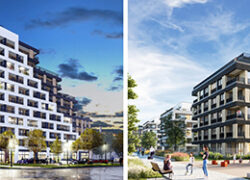
ATAL has opened sales for its latest residential development in the city, Zakole Wisły ATAL. The scheme will deliver 134 apartments in a two-segment, five-storey building located near Nowohucka Street, one of Krakow’s key transport corridors.

The project offers a wide mix of unit sizes, ranging from 28 sqm studios to 126 sqm five-room apartments, with prices between PLN 13,000 and PLN 18,000 per sqm in developer standard. Completion is scheduled for Q2 2027.

The design is described as contemporary with classical elements, using high-quality finishing materials and large glazing. All units are planned with outdoor space in the form of balconies, terraces or private gardens. The development will also include an underground car park and outdoor parking spaces.

According to ATAL, the location provides direct access to both central Krakow and nearby districts such as Kazimierz and Podgórze, as well as proximity to green and recreational areas. Shops, services, gyms, restaurants and co-working spaces are also in the vicinity.

Buyers can take advantage of the ATAL Design programme, which offers four optional turnkey finishing packages: Basic, Optimum, Premium and Invest.

Construction Underway at UrbanBox Park Gliwice

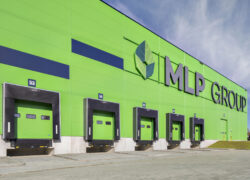
Construction has started on UrbanBox Park Gliwice, the latest Small Business Units (SBU) development by ILD. The project is located on ul. Rolników, directly at the A1/A4 motorway junction and approximately six kilometres from the centre of Gliwice, according to the developer.

The scheme will comprise around 30 modular units tailored to small and medium-sized enterprises, with sizes ranging from about 206 to 252 sqm. Completion of the first units is scheduled for winter 2025, UrbanBox confirmed.

The complex is being marketed by AXI IMMO, which lists the Gliwice site as offering a total warehouse area of around 6,500 sqm. “UrbanBox Park Gliwice is a brand-new product in the local market, designed specifically with SMEs in mind,” commented Anna Cholewa, Advisor, Industrial & Logistics at AXI IMMO.

Published specifications include 7 metres clear height, 5t/sqm load-bearing floors, electric sectional doors (3.5 × 4.2 m), and individual loading zones for each unit. The park will also feature utility connections (gas, water, electricity, telecoms, sewage) and two private parking spaces per module, with the option of turnkey fit-out packages.

UrbanBox positions Gliwice as a strategic location for SMEs, with direct access to the Silesian metropolitan area and quick links to neighbouring markets in the Czech Republic, Germany and Ukraine.

Piotr Wawrzyniak, Country Manager Poland at ILD, said: “UrbanBox Park Gliwice is our next development of this kind in Poland. Based on the success of our previous projects, we’re confident the concept will attract strong interest in this location. With its strategic positioning and robust industrial base, Gliwice is poised to become another success story for us.”

Beyond the Peak: Why Social Media is Losing Its Grip

For almost two decades, social media has been the beating heart of online life. Platforms promised connection, creativity, and a voice for everyone. Yet in 2025, there are growing signs that the tide has turned. What once felt essential is beginning to feel exhausting, and the numbers suggest users are spending less time scrolling.

Studies tracking global online behaviour show that the average time devoted to social networks has stopped growing and in many regions has already begun to decline. The trend is most visible among younger generations, who were once the most active. In North America, usage remains high and even continues to grow, but in Europe, Asia, and Latin America, the hours people devote to social platforms are slipping.

The reasons are not hard to find. The experience of using these platforms has changed. Early on, feeds were filled with posts from friends, local groups, and creative voices. Today, many are dominated by recycled video clips, automated accounts, and low-quality entertainment designed simply to grab attention. What used to feel spontaneous now feels mass-produced.

Another factor is the way platforms amplify anger. Content that provokes a reaction tends to spread faster than calm discussion. Posts that make people furious, fearful, or disgusted get more shares, more comments, and more time on screen. Over years, this dynamic has reshaped feeds, pushing extreme or emotionally charged material to the top while quieter, thoughtful contributions are drowned out. The result is an online atmosphere that feels more combative than conversational.

This shift has consequences for trust. Users who once turned to social media for community increasingly say they feel drained after using it. Some have begun to step back, limiting their time or leaving altogether. For others, the fatigue is subtle but constant — a sense that logging on has become more of a habit than a pleasure.

Researchers examining online debates describe a pattern in which small disagreements quickly spiral into mass hostility. What starts as an exchange of views often escalates into public condemnation, with thousands joining in. Even attempts to correct false information can fuel this cycle, because rebuttals themselves generate more conflict.

It is important to note that this picture is not uniform. In some countries, especially the United States, the appetite for social media remains strong, often linked to political polarization and the demand for provocative content. In other regions, users are withdrawing, shifting instead toward private messaging apps or smaller communities where conversations feel safer and less overwhelming.

The broader lesson is that social media no longer holds the same promise it once did. The very mechanics that made it so successful — algorithms rewarding what keeps us glued to the screen — have reshaped it into something far less appealing. Many people now describe feeling trapped between boredom and outrage whenever they open their apps.

What comes after this turning point is uncertain. We may see the growth of smaller, more private networks that return to the idea of genuine connection. Or the large platforms may double down, betting that enough users will keep watching, even if reluctantly. What is clear is that the era of constant expansion is ending.

Social media has reached its high point. What follows may not be collapse, but it will be something different: a gradual move away from the open town square and toward quieter, more controlled spaces. For a generation raised on the promise of global connection, that shift marks the beginning of a new chapter in digital life — one where logging off may feel less like loss and more like relief.

European Office Markets Face Pressure to Adapt as Occupier Demands Shift

The latest CBRE survey highlights the persistent gap between employer requirements and employee office attendance across Europe. While more than half of companies expect staff to work in the office at least three days a week, only 42 percent report that this level of attendance is achieved. The survey, which involved 117 European firms including those in the Czech Republic, illustrates the challenges organisations face in balancing hybrid work with workplace strategies.

The financial services sector shows the widest disparity, with 61 percent of firms demanding attendance three days a week but only 32 percent of employees complying. Simon Orr, Head of Tenant Representation at CBRE Czech Republic, explained that employees often avoid offices that feel half-empty, creating a cycle in which absence reduces workplace appeal. Average office utilisation across the week stands at 46 percent, rising to 71 percent on peak days, and technology companies in particular have seen higher use as work-from-home policies tighten.

One of the most significant developments is the growing demand for flexible office solutions. By 2027, companies expect these to account for nearly a third of their portfolios, up from just over a fifth today. The main motivation is the ability to adjust space without heavy upfront costs, as well as to align more closely with hybrid working patterns. CBRE also found that the traditional model of assigning one desk per employee is disappearing rapidly, with far fewer companies planning to maintain it in the coming years. According to Helena Hemrová, Head of Office Leasing at CBRE Czech Republic, firms are increasingly measuring the return on their office space in terms of occupancy, employee satisfaction, costs, and environmental performance.

JLL’s recent European outlook reinforces CBRE’s findings, noting that while companies remain cautious, leasing activity is improving as occupiers seek to secure suitable space in competitive markets. Cushman & Wakefield adds a sharper warning, pointing out that more than 70 percent of Europe’s office buildings could be obsolete by 2030 without substantial upgrades. With much of the stock more than 30 years old and only a small fraction modernised in the past decade, landlords face rising pressure from occupiers and regulators to deliver sustainable and flexible buildings.

Although office space reductions have dominated in recent years, CBRE notes that the trend is easing, with fewer companies planning further cuts and some beginning to expand again. Yet occupiers looking to relocate are increasingly concerned about whether high-quality offices in desirable locations will be available, particularly as public transport access and sustainability credentials remain top priorities. Analysts suggest the European office market is entering a stabilisation phase, with demand consolidating around modern, efficient and well-connected space, while outdated properties face growing risk of declining value.

Source: CBRE, JLL and Cushman & Wakefield

Local Capital and Retail Assets Drive Romania’s Property Market

Amid shifting economic conditions and heightened geopolitical uncertainty across Europe, Romania’s real estate market has continued to demonstrate resilience, particularly in retail and logistics. In this CIJ EUROPE Q&A, Costin Nistor, Managing Director of Fortim Trusted Advisors, shares his insights on how investors are navigating slower GDP growth, persistent inflation, and evolving fiscal policies. He discusses the sectors showing the strongest fundamentals, the balance between international and local capital, and what to expect from the investment pipeline in the second half of 2025.

Q: Romania’s GDP growth has been revised lower, and inflation remains relatively high compared with Western Europe. How are these macroeconomic conditions influencing investor appetite and deal structuring in Romania’s commercial property market?

Costin Nistor: Romania is going through a period of fiscal and legislative changes with little concern from the authorities about stimulating economic growth. These measures overlap with a period of economic difficulties for the whole of Europe, triggered by geopolitical uncertainties, global commercial tensions, and rapidly changing business models. That said, groups operating in Romania are keeping a vigilant eye on opportunities that arise during such times.

The past few months have brought encouraging signs, suggesting that the economy may be on a slow path to recovery. In H1 2025, total real estate investments in Romania reached EUR 431.3 million, signalling strong market performance. The office sector led the charge, attracting EUR 189 million in investment, with the retail sector not far behind at EUR 179 million in transaction volume.

The retail market, particularly retail parks in regional cities, has shown remarkable resilience and growth, continuing to captivate investor attention. This sustained demand is supported by rising consumer spending in these regions and a growing preference for shopping destinations that combine convenience with experience. Retail assets are proving to be a solid investment, offering a reliable income stream and long-term potential.

Looking ahead, several high-profile transactions are in progress in the retail sector, suggesting that this trend will accelerate. By the end of 2025, experts forecast that retail is likely to surpass the office sector and become the dominant asset class in terms of total transaction volume. This shift is being driven by favourable market conditions, regional economic growth, and a marked preference for mixed-use developments.

As retail continues to gain traction, investors are expected to diversify further, capitalising on opportunities across both urban and regional markets. With strong fundamentals supporting the segment, it is well positioned to become the leading force in Romania’s real estate market.

Q: Prime yields in Romania remain significantly higher than in other CEE capitals. How do you see yield levels evolving across office, retail, and industrial in the next 12–18 months, and are they aligned with investor return expectations?

Costin Nistor: On one hand, we see upward pressure on yields, while the shortage of new projects tends to counterbalance this, at least for a while. In the medium term, we estimate that the gap in expectations has a chance of being filled, moving closer to the views of the more liquid buyers.

Q: Beyond the headline deals in retail parks and logistics, we’ve seen office transactions like Victoria Center and Ethos House, as well as industrial assets changing hands. Which of these sub-sectors do you think signals the most sustainable recovery for Romania?

Costin Nistor: Although we had a significant volume of office transactions, each of these deals was based on specific reasons and does not necessarily reflect the broader market trend. By contrast, investors’ appetite for retail projects, especially retail parks, reflects a general trend noticeable not only in Romania but across the CEE and EU regions. While the office sector may still generate transactions, it will remain under pressure for a longer time. Therefore, we believe the retail and industrial sectors have the best chance of remaining investors’ favourites.

Q: International investors represented more than half of H1 2025 volumes, but domestic players such as Paval Holding remain very active. Do you expect the balance between foreign and local capital to shift in the near term?

Costin Nistor: It is difficult to attract new investors to the current Romanian market. Therefore, we believe local capital, which has represented a significant share of investment volume in the past few years, will continue to be the most active in the near term.

Q: Looking ahead to the second half of 2025, what is your expectation for the investment pipeline—are we likely to see more hotels, retail, or office assets come to market, and what will be the key factors determining whether these deals close?

Costin Nistor: As mentioned, retail has strong fundamentals to remain attractive, while the office sector has a sizable pool of investment product, so it is likely to generate some deals. The hotel segment may also see a slight increase, as consolidation in this sector seems to be the next natural step, supported by the recovery of both business and leisure tourism. Industrial remains underpinned by good fundamentals, but in Romania it is dominated by long-term owners and operators, meaning the market offers relatively few investment products.

Mitzilinka: The Great Parking Ballet at Galeria Mokotów

It was supposed to be simple: park the car, buy the socks, leave the car. Yet somehow, Westfield Mokotów has transformed this three-step dance into a full-scale theatrical production, complete with new choreography, ticketless technology, and an unsuspecting audience of motorists pressed into leading roles.

They call it “improved circulation.” I call it The Great Parking Ballet.

On ul. Rodziny Hiszpańskich, a name that once sounded like a street, now more like a riddle, one gate is now only for entry, the other only for exit. Choose wrong, and you pirouette straight out of the performance before Act I begins. Local drivers tell tales of searching for the –1 level like Odysseus seeking Ithaca, only to find themselves spat back onto Warsaw’s streets, baffled and ticketless, humming “Where did I go wrong?”

The mall promises a sleek ticketless system, cameras that recognise your license plate like paparazzi lying in wait at a red carpet. But in practice, some shoppers report a less glamorous welcome: machines sulking, cards refusing to swipe, and readers misbehaving as though allergic to Polish number plates. Nothing screams “modern convenience” quite like arguing with a metal box while an impatient line of honking cars builds behind you.

And of course, the beloved shortcuts through the mall’s grounds have disappeared. Transit to Al. Wilanowska is now a privilege reserved for those escaping the mall’s gravitational pull. For everyone else, it’s detour time, with drivers circling like bewildered actors who have missed their cue.

Meanwhile, the mall’s PR beams about two hours free, three if you’re a Westfield Club member, and a cap of seventy złoty a day. It’s lovely math, unless you’re the poor soul circling round and round, never actually making it into the car park in the first place. Free hours don’t mean much when you’re rehearsing U-turns outside.

Still, there is an odd solidarity in confusion. On social media, strangers bond over stories of missing entrances, bungled exits, and near-mythical-1 ramps. It is the sort of collective bewilderment that makes you laugh, because the alternative is crying into your shopping bags.

So if you are heading to Westfield Mokotów, take a deep breath, accept that you are now part of the Ballet, and remember that sometimes in Warsaw parking is no longer a mundane errand, it is an art form.

Author: Mitzilinka (Turning grim reality into comic relief—without losing the truth)

front page info
LATEST NEWS