Slovak Cities Call for Stricter Pawnshop Regulation to Address Urban Safety Concerns

Municipal representatives in Slovakia are calling for stricter regulation of pawnshops, citing concerns over their impact on public safety and quality of life in urban areas.

At a press briefing in Bratislava, city officials outlined proposals aimed at addressing what they describe as a lack of clear rules governing pawnshop operations. According to local authorities, these businesses can contribute to criminal activity, including the circulation of stolen goods and associated social issues in surrounding neighbourhoods.

Bratislava Mayor Matúš Vallo said: “We have a number of concrete solutions for the operation of the pawnshops. However, their implementation also requires legislative changes, so we are calling again to the state to proceed as soon as possible. For if this state does not, the communities living around the lien will continue to suffer.”

The proposed measures include stricter requirements on ownership transparency, mandatory identification and recording of goods and sellers, and increased oversight. Municipalities are also seeking greater authority to regulate the location and operating conditions of pawnshops.

Martin Chren, Mayor of Bratislava’s Ružinov district, said: “Therefore, to be able to regulate where the pawnshop may be and where not, what opening hours it can have, and if it is evident that there is a public order violation in connection with its operation, then also be able to cancel the operation of such a lien.”

Local residents have also raised concerns about the day-to-day impact of pawnshop activity. Ján Sabo, a resident of the affected area, said: “Every day we see the same scenario. People come with different goods, which often still contains anti-theft security features. After the monetization, a drug dealer is waiting a few meters further. And after a quick exchange, drugs are applied, often directly at our homes. There is a hazardous waste and people under the influence of drugs right in the space where we live. This doesn’t happen once in a while. This happens daily, in front of the eyes of the inhabitants, in a locality full of families with young children. People are often afraid to walk past their own home. It has a very specific impact on the quality of our lives.”

City authorities said they have already taken steps to improve safety in affected areas, including increased police patrols, infrastructure upgrades and traffic adjustments. However, they argue that these measures are undermined by the continued operation of pawnshops without tighter regulation.

Vallo added: “Over the past year, we have invested enormous efforts in this area to improve security. We radically intensified the patrol of the police here, people reported problematic behaviors, followed by prompt police exits. Last year, the number of interventions by the city police in this neighborhood has quadrupled. We have improved the lighting here, have made changes in transport, we are checking the places reserved for taxis, as it was those abused by dealers for drug sales. And it must be said that the state also reacted to our call for deteriorating security, and some of the things we have pointed out have moved forward. For example, repeated petty thefts are already a criminal offence again.”

Officials noted that similar issues have been identified in other parts of the city and argued that existing local measures are insufficient without changes at the national level.

Chren added: “If we look at companies providing, for example, fast loans or on a gaming room, this type of business is regulated in Slovakia. It’s a perfectly normal and common thing that such a business is regulated. Anyone who goes to the playroom must show an ID card. Similarly, in reserving, if someone takes over the goods, they should be responsible for their legal origin.”

Vallo concluded: “This is an acute problem that needs to be addressed. The problem of safety is one of the most important for residents and does not have a party T-shirt. I therefore ask all political parties to face this challenge and adopt a rapid legislative change that will return the lives of residents around troubled pawnshops to normal. We invest a lot of time, money and energy in solving the problem of security, and we don’t want it all to go out.”


Slovak Cities Launch Joint Initiative to Address Rising Availability of Psychoactive Substances

Union of Cities of Slovakia has prompted a coordinated response from Bratislava, Trnava and Nitra, which, together with several non-governmental organisations, are seeking to address the growing availability of new psychoactive substances.

The three cities, working alongside organisations including STORM, OZ Odyseus, OZ Prima and OZ KASPIAN, have highlighted increasing concerns over the accessibility of such substances, particularly among children and young people. The initiative builds on existing cooperation in risk reduction and addiction prevention, with stakeholders pointing to a rise in intoxication cases and potential impacts on mental health.

According to the participating organisations, the current lack of effective regulation remains a key issue, especially in relation to sales through vending machines and online platforms, where age verification and product oversight are limited.

The coordinated effort aims to introduce a more unified approach, combining policy engagement with practical measures based on field experience. This includes proposals to limit access for minors, strengthen prevention and education programmes, and improve oversight of sales channels.

The group has also expressed its readiness to contribute to the preparation of new legislation on psychoactive substances, offering expertise from direct work with communities, schools and young people. Their involvement is intended to ensure that any regulatory framework is both practical and enforceable.

A central focus of the initiative is improving awareness and prevention. Stakeholders emphasise the need for clear and accessible information about the risks associated with these substances, alongside education programmes that support decision-making, resilience and risk recognition.

Field experts continue to engage directly with young people in schools, public spaces and events, providing factual information and guidance on how to respond in potentially risky situations. The broader objective is to reduce harm by combining prevention, education and improved regulation, particularly in protecting minors from unrestricted access to these substances.

Polish Banks Record Stronger Profits and Balance Sheet Growth in 2025

Poland’s banking sector reported improved financial performance in 2025, supported by higher income generation and a reduction in risk-related costs. The sector’s overall profit increased compared to the previous year, reflecting a combination of stronger earnings from core activities and a more favourable cost environment.

The improvement in results was largely driven by higher income from lending activities, alongside a turnaround in other operational areas and lower provisioning levels. Despite rising operating expenses, the overall performance of the sector remained positive, with profitability indicators showing clear growth year-on-year.

At the same time, the size of the banking sector continued to expand. Total assets increased steadily, while capital levels strengthened, indicating a more solid financial position. The structure of bank balance sheets remained broadly unchanged, with loans and other financial assets continuing to represent the largest share.

Lending activity grew across both households and businesses. Loans to individuals, particularly for housing, remained the dominant segment, while corporate lending also expanded, with small and medium-sized enterprises playing a key role. Demand for investment and working capital financing contributed to this trend.

Deposits also increased, supporting liquidity in the system. Most funds were held in current accounts, while the share of longer-term deposits declined slightly, reflecting customer preferences in the prevailing interest rate environment.

The number of banks operating in Poland rose marginally during the year, driven by new market entrants, while the number of cooperative institutions decreased slightly. Foreign-owned banks continued to account for a significant portion of the sector.

Overall, the data suggests that Poland’s banking sector maintained stable growth in 2025, with improved profitability, expanding lending activity and a solid funding base.

Slovakia’s Market Production Rises 3.5% in January 2026, Led by Industry and Services

Statistical Office of the Slovak Republic reported that total market production in Slovakia increased at the start of 2026, following several months of decline.

According to the office, total market production rose by 3.5 percent year-on-year in January 2026. Growth was recorded across all main sectors of the economy, including industry, services, trade and construction. Industrial production had the strongest impact, increasing by more than 4 percent, while services also contributed with a similar rate of growth. Trade recorded a more moderate increase, and construction showed marginal growth.

The data is based on the Total Market Production Index (TMPI), a newly introduced indicator designed to provide a consolidated monthly overview of economic activity. The index combines four key sectors: industry, construction, trade and services, and has been developed in line with a broader initiative by Eurostat.

On a month-on-month basis, however, overall market production declined slightly by 0.1 percent. The decrease was mainly driven by weaker performance in trade and construction, while industry and services recorded moderate growth during the same period.

The TMPI is intended to offer an early indication of economic trends, with data adjusted for seasonal and calendar effects. Eurostat is expected to publish comparable aggregated figures for the European Union and euro area in April 2026.

Brose Opens Third Northern Moravia Facility at Ostrava Airport Multimodal Park

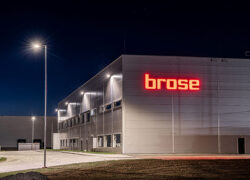
GRIDARCH has completed the second phase of the Ostrava Airport Multimodal Park (OAMP) in Mošnov, with the delivery of an 11,300 sqm industrial facility to Brose, which has launched operations at its third production site in Northern Moravia.

The new facility includes production, office, testing and development space and is focused on the manufacture of seat structures for automotive clients. The site forms part of Brose’s wider network in the Czech Republic, where the company already operates in Kopřivnice, Rožnov pod Radhoštěm and Ostrava.

“I am pleased that we are once again expanding our capacities and can continue to take advantage of the benefits offered by the Ostrava region. The plant in Mošnov not only includes extensive manufacturing facilities, but also testing and development departments as well as modern social amenities for our employees,” said Niclas Pfüller, Managing Director of Brose Czech Republic.

According to the company, the new plant is intended to strengthen coordination between its regional operations, supporting the exchange of expertise and improving production efficiency. Its location within a logistics park with direct access to road, rail and air transport is expected to support supply chains across the Czech Republic and Slovakia.

“With our investments in the Moravian-Silesian region, we are demonstrating our confidence in the Czech Republic as an important industrial location and its strategic role in the global footprint of the Brose Group. At the same time, I am pleased to bring new skilled jobs to the region and to offer opportunities for professional development through both technical and personal advancement,” Pfüller added.

The Ostrava Airport Multimodal Park is located near Leoš Janáček Airport and combines air, rail and road connections. Since its initial phase was completed in 2020, the park has developed into a logistics and light industrial location serving both domestic and cross-border markets.

“From discussions with our tenants, we know that they particularly appreciate the unique combination of transport connections – air, rail and road. This is also the case for Brose, which will supply automotive manufacturers operating in both the Czech Republic and Slovakia from Mošnov. The location of Brose’s operations in OAMP is further proof that the park is not only a premium logistics hub, but also an attractive location for manufacturing companies with high demands on the technical expertise of their workforce,” said Tomáš Novotný, CEO of GRIDARCH.

The park currently comprises multiple completed phases and continues to expand, with further industrial space under construction and additional phases in preparation.

Łódź Region Strengthens Position as Key Logistics Hub Amid Strong Demand and Limited New Supply

AXI IMMO reports that the Łódź region continues to strengthen its role as a logistics hub in Poland, supported by sustained tenant demand and improving vacancy levels, despite a slowdown in new development.

According to the firm’s latest report, total leasing activity in 2025 reached 1.17 million sqm, an increase of 17 percent year-on-year and one of the highest levels recorded across the country. At the same time, total industrial and logistics stock in the region exceeded 5.1 million sqm. New supply declined to 216,000 sqm, reflecting a more cautious approach by developers, while the vacancy rate fell to 7 percent by the end of the year.

Leasing activity was largely driven by renewals, which accounted for around 60 percent of total take-up. Net take-up, including new leases and expansions, reached 475,000 sqm, slightly below the previous year. The city of Łódź recorded the highest level of new leasing activity within the region. Demand continued to be led by retail, logistics and distribution operators, as well as manufacturing companies.

Development activity remained selective, with 189,000 sqm under construction at the end of 2025. Only a limited share of this pipeline was speculative, reflecting a preference for pre-let agreements. Earlier increases in vacancy had led some developers to delay projects, although the reduction in available space during 2025 indicates a tightening market, particularly for larger warehouse units.

Rental levels remained stable, with the region continuing to offer relatively competitive costs compared to other logistics hubs in Poland. Headline rents in older schemes ranged between €3.60 and €4.20 per sqm per month, while new developments achieved between €4.20 and €4.60 per sqm per month. Lower rental levels were recorded in Piotrków Trybunalski, while higher levels were seen within Łódź.

Hubert Wojtera, Director, Industrial & Logistics Agency at AXI IMMO, said: “The Łódź region has long served as one of Poland’s key logistics and distribution hubs. Its advantage stems primarily from its central location and excellent transport infrastructure, which enable efficient nationwide distribution. In 2025, we observed particularly high activity among companies serving the domestic market, which view the Łódź region as a natural base for building national logistics operations. In the coming years, demand may be further supported by the growth of the manufacturing sector and new infrastructure investments. Locations situated near the planned ‘Port Polska’ project will also gain strategic importance, potentially becoming a major driver of regional development in the longer term”.

Looking ahead, AXI IMMO expects the market to remain stable in 2026, with demand largely supported by lease renewals. Additional activity is likely to come from distribution companies and manufacturing firms, particularly those separating production and storage operations.

DHL Supply Chain Appoints Bernard Wierzbik as Managing Director for Poland

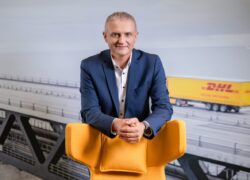
DHL Supply Chain has appointed Bernard Wierzbik as Managing Director for Poland, as part of its ongoing development strategy in Central and Eastern Europe.

He succeeds Petra Káňa, who has taken on the role of Managing Director of DHL Supply Chain in the Czech Republic. The company acknowledged his contribution to strengthening its position in the Polish market.

Bernard Wierzbik brings experience from several international organisations. Most recently, he served as Managing Director at Greiner Packaging in Poland. He previously held operational roles at Lantmännen Unibake and PepsiCo, where he was responsible for logistics and customer service across multiple Central and Eastern European markets.

Poland continues to be a key logistics market within the region, supported by its role in European supply chains. Commenting on his appointment, Bernard Wierzbik said: “Poland is today one of the most important logistics markets in Europe and a key hub for the entire CEE region. Our ambition is to further strengthen this position by developing modern, integrated, and resilient supply chains. Logistics is no longer just an operational function, it is about designing ecosystems that directly impact our customers’ competitiveness.”

The company operates across sectors including e-commerce, retail, FMCG, technology, automotive and life sciences, with an increasing focus on automation, digitalisation and data-driven solutions.

“In the coming years, the key will be combining technology with operational expertise. Artificial intelligence, automation, and advanced analytics enable not only greater efficiency, but also improved demand forecasting and risk management within supply chains,” he added.

Wierzbik also highlighted the importance of resilience in supply chains, noting: “Today’s supply chains must be prepared for volatility, whether geopolitical, economic, or operational. Our role is to provide our customers with stability and predictability, even in the most demanding environment.”

He added that the organisation’s workforce is a key factor in its operations: “The strength of DHL Supply Chain lies in its teams, highly committed professionals who bring deep expertise and a strong customer focus to everything they do. I am truly excited to become part of this great team and to work together in shaping the future of our business in Poland.”

DHL Supply Chain in Poland is part of the company’s global contract logistics platform, which continues to expand its capabilities in technology and supply chain services.

PORR Reports Higher Earnings and Expanding Order Book in 2025, Maintains Positive 2026 Outlook

PORR reported higher revenue, earnings and order intake in 2025, supported by infrastructure projects and a stable performance in building construction.

The company recorded revenue of €6.3 billion, broadly in line with the previous year, while production output reached €6.8 billion. Activity was concentrated in its core markets, including Austria, Germany, Poland and Romania, which together accounted for the majority of its business. Growth was driven by progress on transport and infrastructure projects as well as continued activity in the building segment.

Order intake increased by 14.1 percent to €7.8 billion, supported by several large-scale infrastructure contracts across Europe. These included railway and tunnel projects in Austria, Poland and Romania, as well as modernisation works in Germany and the Czech Republic. Additional contracts were secured in building construction, including industrial, healthcare, education and residential developments. As a result, the order backlog rose to €9.5 billion at year-end.

Profitability improved across all key indicators. Operating profit (EBIT) rose by 24.2 percent to €196.7 million, while net profit increased by 25.6 percent to €136.7 million. The company attributed the improvement to efficiency measures, cost management and stronger contributions from associated companies. Earnings per share increased to €3.00.

Cash flow and liquidity also strengthened during the year. Free cash flow rose significantly, and the company ended the year with a net cash position, compared to a slightly negative position in 2024. The balance sheet remained stable, with the equity ratio unchanged.

PORR also reported a reduction in emissions as part of its decarbonisation strategy. Direct emissions declined by more than 20 percent, while emissions across the value chain also decreased, supported by lower energy consumption and increased use of alternative fuels.

Looking ahead, the company expects continued demand in infrastructure, energy and digital network projects to support activity in 2026. Public investment, particularly in Germany, is expected to contribute to market growth, while building construction is showing early signs of recovery, including in the residential segment.

At the same time, the company noted that geopolitical tensions, including developments in the Middle East, could create uncertainty through potential impacts on energy and material costs. However, it indicated that many risks are mitigated through pricing mechanisms, early procurement strategies and secured energy contracts.

Based on its current order backlog and market outlook, PORR expects moderate growth in output and revenue in 2026, alongside a further improvement in operating margins.

Romania’s Regional Office Markets Show Growth but Remain Undersupplied Despite Strong Fundamentals

Cushman & Wakefield Echinox reports that office stock in Romania’s main regional cities has increased significantly over the past decade, but remains well below levels seen in more developed Central and Eastern European markets.

According to the firm’s latest Romania Office Report, the total modern office stock in Cluj-Napoca, Timișoara, Iași and Brașov stands at approximately 1.08 million sqm. No new office projects have been delivered in these cities over the past two years. Together, they account for around 25 percent of Romania’s total office stock, estimated at 4.5 million sqm.

The data highlights a gap between supply and demand. The four cities host around 197,000 students, compared with approximately 180,000 in Bucharest, suggesting a strong labour pool. However, office stock in these regional markets remains about 68 percent lower than in the capital.

In comparison, regional office markets in Poland have expanded more rapidly. Office stock outside Warsaw exceeds 6.7 million sqm, surpassing the capital’s total. Over the past ten years, more than 3.2 million sqm of office space has been delivered in Polish regional cities, compared with around 580,000 sqm in Romania.

The largest regional markets in Poland include Kraków, Wrocław, Poznań, Katowice and the Tricity area, which together account for the majority of stock. Several other cities, such as Łódź, Lublin and Szczecin, also have larger office markets than Brașov. Poland’s regional cities also benefit from a larger student population, with more than 650,000 students compared to around 259,000 in Warsaw.

In the Czech Republic, development has been more balanced between the capital and regional cities. Brno and Ostrava together have around 961,000 sqm of office space, compared with 3.9 million sqm in Prague, and host approximately 90,000 students.

Development activity remains limited in Romania. Around 23,000 sqm of office space is currently under construction in regional cities, compared with more than 150,000 sqm in Poland and 95,000 sqm in the Czech Republic.

Office density relative to the student population is also lower in Romania. In Bucharest, there are around 19 sqm of office space per student, compared with 24.1 sqm in Warsaw and 28.6 sqm in Prague. In regional Romanian cities, the figure averages 5.5 sqm per student, compared with over 10 sqm in both Poland and the Czech Republic.

Despite lower supply, vacancy rates in Romania’s regional cities remain relatively contained, ranging between 8.5 percent and 16.7 percent. Prime rents are also competitive, typically between €13 and €17 per sqm per month, below levels seen in cities such as Kraków or Brno.

Mădălina Cojocaru, Partner, Office Agency at Cushman & Wakefield Echinox, said: “The 2026 regional office market outlook reflects a resilient yet increasingly selective landscape across Romania’s main business hubs outside Bucharest, while also highlighting their significant untapped potential. Cluj-Napoca stands out both in terms of market size and leasing activity, while Timisoara, Iasi and Brasov compete through lower occupancy costs, access to skilled talent and improving connectivity. Solid demographics – more than 1 million inhabitants and nearly 200,000 students – support long-term growth prospects, while limited development activity is expected to put upward pressure on rents.”

Hungary Suspends Gas Supply Auctions to Ukraine Amid Ongoing Energy Dispute

Hungary has suspended gas supply auctions for deliveries to Ukraine for the third quarter of 2026, following a decision signed by Prime Minister Viktor Orbán.

The measure affects auctions organised by the country’s gas transmission system operator, which are typically arranged in advance to secure supply flows. The move forms part of a broader shift in Hungary’s energy policy, with the government indicating that gas supplies to Ukraine will be gradually reduced.

According to officials, the decision is linked to the disruption of oil deliveries through the Druzhba pipeline, which has been interrupted since the end of January. Hungary and Slovakia have attributed the disruption to Ukraine, while Ukrainian authorities have said the pipeline was damaged during a Russian drone strike and is undergoing repairs.

The Hungarian government has stated that gas supplies to Ukraine will be scaled back until oil transit through the pipeline is restored. The Druzhba pipeline remains a key route for Russian oil deliveries to both Hungary and Slovakia, which continue to receive exemptions from European Union sanctions allowing such imports.

Ukraine’s foreign ministry has indicated that it has not yet observed any immediate interruption in gas flows from Hungary following the announcement.

The decree also includes a requirement to increase gas reserves, mandating an additional 800 million cubic metres of natural gas to be stored in Hungarian facilities above previously planned levels.

The development reflects ongoing tensions over energy supply routes and infrastructure, which have been affected by the broader geopolitical situation following Russia’s invasion of Ukraine in 2022.

front page info
LATEST NEWS